USPSA Classifier Guide 2026: The New 26 Series, Hit Factor & Classes
USPSA classifiers in 60 seconds (BLUF)
- What it is: A classifier is a short, standardized course of fire you shoot at a local match. Your raw score becomes a hit factor (points ÷ time), and that hit factor is compared against USPSA’s benchmark for that stage to produce a percentage.
- How you get classified: You need four valid scores from four different classifiers in a division. After that, your class is set by the best 6 of your most recent 8 unique classifier percentages.
- The classes: Grand Master (95%+), Master, A, B, C, D — each division is scored separately, so you can be A-class in Production and C-class in Open.
- What changed in 2025: USPSA removed the old B/C/D flags, started averaging same-day attempts, and released the new 25-Series classifier stages. More on that below.
- What’s new in 2026: the 26 Series — five provisional stages (King Crab, Darwinism, Mike Who?, Uprange? Seriously, Downrange? Obviously) that clubs began running in June. They don’t count toward your class yet, but they will retroactively if the stages get adopted. Jump to the 26 Series breakdown.
- Two things no other guide tabulates: a hit factor → class chart for any HHF, and the full anatomy of the classic CM 06-03 “Can You Count”.
- The fastest way to move up: practice the exact mechanics a classifier measures — draw, splits, reloads — with a free Airsoft Shot Timer app between matches.
If you’ve shot a couple of USPSA matches, you’ve already run into classifiers — those short, oddly specific stages where everyone suddenly gets quiet and serious. And if you’ve ever logged into uspsa.org and stared at a wall of percentages, division codes and three-digit stage numbers, you’ve probably also wondered what any of it actually means for you. This guide unpacks the whole system in plain language: what a classifier is, how a stopwatch number becomes a letter grade, what the 2025 overhaul changed, and how to nudge your percentage upward without gaming it.
What a USPSA Classifier Actually Is
A classifier is not a regular match stage. Regular stages are designed by the local club to be fun, flowy and different every weekend — they’re never directly comparable from one range to another. A classifier is the opposite: it’s a fixed, standardized course of fire with an official stage number, identical target placement and round count everywhere it’s run, so that a Production shooter in Texas and a Production shooter in Ohio are taking the exact same test. That’s the whole point. The match stages measure how you did that day on that field; the classifier measures how you stack up against the entire country.
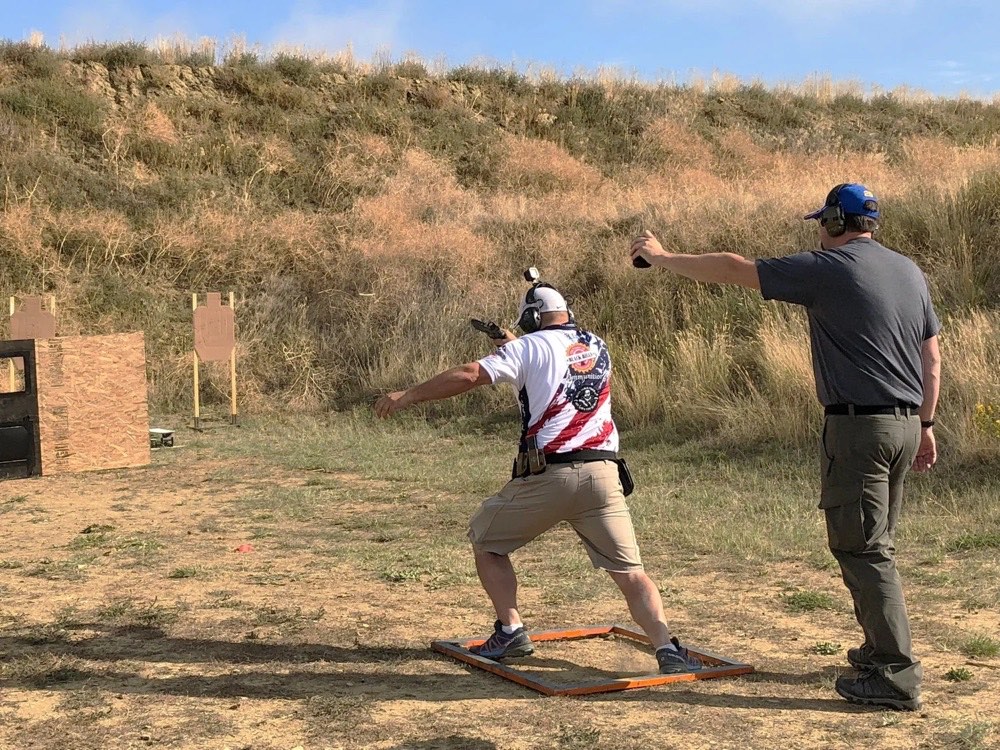
Most classifiers are short and deliberately mechanical. Many are stand-and-shoot affairs — you start at the buzzer, engage a handful of targets, maybe execute a mandatory reload, and you’re done in well under ten seconds. Some involve a little movement between positions, but you won’t find the sprawling 30-round field courses you see in a normal stage. The brevity is intentional: a classifier is supposed to isolate raw shooting skill — draw speed, splits, transitions, reload efficiency, and the discipline to call your shots — without letting stage strategy or athleticism muddy the measurement. When the match is uploaded, your classifier results are pulled out and fed into the national database; the rest of the stages stay local.
Hit Factor: Why a Shot Timer Decides Your Class
Everything in USPSA scoring — classifiers included — runs on one deceptively simple number: the hit factor. It’s your total points divided by your total time in seconds. Shoot 50 points worth of hits in 5.00 seconds and your hit factor is 10.0; take 6.25 seconds for the same hits and it drops to 8.0. That single ratio is the currency of the entire sport, and it’s why practical shooters obsess over their times the way other athletes obsess over splits on a track.
Here’s the part most beginners miss: because hit factor has time in the denominator, the timer is half of your score. You can put every round in the A-zone and still classify poorly if you’re slow, and you can drop a few points and still beat a more accurate shooter who took an extra second and a half. Speed and accuracy aren’t separate skills you train on alternate days — they’re two ends of the same number, and the only way to know where the optimal balance sits for you is to record both. That’s the honest reason a shot timer isn’t optional equipment in this sport: it’s the instrument that turns “I think I shot that well” into a hit factor you can actually compare to a national standard.
From Percentage to Class: How the Math Works
When you shoot a classifier, USPSA takes your hit factor and divides it by the High Hit Factor (HHF) — the benchmark performance for that specific classifier in your division — then multiplies by 100 to get your percentage. Score a 7.5 hit factor on a stage whose HHF is 10.0 and you’ve shot a 75% run. The HHFs are set and periodically recalibrated by USPSA’s classifier committee, which is why the same raw performance can be worth a slightly different percentage in Open versus Production: the benchmark reflects what the top shooters in that division actually do.
This gets a lot less abstract once you run the math on a classifier you can actually set up. Take CM 99-11, “El Presidente” — three targets, 12 rounds, 60 points, and a bay most clubs already have. Because the points are fixed at 60, a clean run converts straight into a time: 60 ÷ your hit factor. A 10 hit factor is a 6.0-second run with everything in the A-zone, which is roughly Grandmaster pace in the optics divisions. Our El Presidente drill guide walks through the official course of fire, the class-by-class times that math produces, and how to train the turn-draw and reload for it at home.
To earn an initial classification in a division you need four valid scores from four different classifier stages. Once you’re classified, the system keeps a rolling window: it looks at your most recent eight unique classifiers and averages the best six of them. That design rewards consistency and forgives the occasional disaster — one blown reload or a malfunction won’t tank your class, because your two worst recent runs simply fall out of the calculation. Each division is tracked independently, so your hard-won A-class in Carry Optics means nothing the day you pick up an Open gun; you start over in that division’s database.
The percentage you carry maps onto one of six classes (plus “Unclassified” for anyone without enough scores yet):
| Class | Percentage range | What it roughly means |
|---|---|---|
| Grand Master (GM) | 95–110% | Top fraction of a percent nationally; elite speed and precision |
| Master (M) | 85–94.9% | National-level skill, very few mistakes |
| A | 75–84.9% | Strong, well-rounded competitor |
| B | 60–74.9% | Solid fundamentals, the most common “I practice regularly” tier |
| C | 40–59.9% | Developing shooter, where many people land after a season |
| D | Below 40% | Brand-new or still building basics |
A reasonable first-season goal for most dedicated beginners is to climb out of D and settle somewhere in C or low B. That tracks with what experienced shooters see on the ground: one carry-optics Grand Master who films his own classifier breakdowns puts it bluntly — most people who already know how to hold and aim a pistol land in C or B “off the rip,” and getting stuck under D usually means something in the fundamentals is broken, not that you’re doomed. Reaching A takes a year or two of deliberate practice for most people, and the jump from A to Master is where the sport gets genuinely hard — that’s the wall where natural talent stops carrying you and only structured, measured training gets you through. That same GM took roughly 14 months of focused work to go from his first classification to Grand Master, and he’s the first to say the ladder from Master to GM is less about raw skill than about mindset and repeatable focus under the buzzer.
Power Factor: Major, Minor and Why It Touches Your Class
There’s a second number that quietly shapes your classifier percentage, and beginners almost always trip over it: power factor. USPSA calculates it as bullet weight (in grains) multiplied by velocity (in feet per second), divided by 1,000. Load that makes 165 or more scores Major; anything from 125 up to 165 scores Minor. The practical consequence is in the target scoring — a Major load earns more points for the same C or D hits than a Minor load does, so two shooters with identical hits and identical times can post different hit factors purely because of what they loaded. That’s also why the same classifier stage carries a different High Hit Factor in a Major-scored division than a Minor one; the benchmark you’re measured against already bakes in your power factor.
For most people starting out this matters less than it sounds, because divisions like Carry Optics and Production score Minor across the board — everyone’s on the same footing, so you can ignore the Major/Minor math entirely and just chase clean, fast hits. Where it bites is if you drop below the 125 floor: shoot “sub-minor” and your hits are scored at a heavy penalty, which can quietly tank a run you thought went well. If you reload your own ammo or run light target loads to soften recoil, chronograph them before a classifier so you’re not accidentally handing away points you worked hard to earn.
What Is a Good Hit Factor? Why the Number Alone Tells You Nothing
“What’s a good hit factor?” is probably the most common question new USPSA shooters ask, and the honest answer frustrates people: a hit factor on its own is meaningless. It’s points divided by time on one specific stage, and stages vary enormously. A hit factor of 5.0 might be a mediocre run on a short, wide-open stand-and-shoot and an outstanding one on a stage with hard cover, distant steel and a mandatory reload. Shooters who trade hit factors in isolation — “I shot a 7, is that good?” — are comparing numbers that were never on the same scale to begin with.
The number only becomes meaningful when you divide it by that stage’s High Hit Factor. That’s the entire trick, and it’s why USPSA maintains an HHF for every classifier in every division and power factor. Your percentage is your hit factor ÷ the HHF × 100, so a 6.8 hit factor is a 68% run against an HHF of 10.0 — solid B class — and an 85% Master-level run against an HHF of 8.0. Same performance, different stage, two completely different classification outcomes. If you want to run the numbers yourself, USPSA’s site hosts a classification calculator and a classifier lookup that will convert a hit factor to a percentage for a given stage and division, and most of the third-party hit factor calculators floating around do the same arithmetic.
There’s a shortcut worth knowing for the fixed-point stages. Plenty of classifiers are 60-point courses of fire, which means a clean all-alpha run converts hit factor straight into a target time: 60 ÷ hit factor = the seconds you need. A 10.0 hit factor is a 6.00-second clean run; an 8.0 is 7.50 seconds; a 6.0 is a full 10 seconds. That conversion is the single most useful thing you can carry into a practice session, because it turns an abstract classification goal into a stopwatch number you can actually chase in your garage. If you know your division’s HHF on a stage is around 9.5 and you want an A-class 75% run, you need a 7.1 hit factor, which on 60 points is an 8.45-second run with everything in the A-zone. Now it’s a training target rather than a mystery.
That’s also where the number stops being homework and starts being useful. Set the free Airsoft Shot Timer app to a PAR time matching whatever hit factor you’re chasing, and every dry-fire or airsoft rep tells you immediately whether you’re inside it — no scoring, no math, just a beep you either beat or you don’t. Chasing a percentage is vague; chasing 8.45 seconds is something you can do fifty times tonight.
Hit Factor to Class Chart: The Number You Need for Every HHF
Because classification is just hit factor ÷ HHF, you can build the “hit factor chart” everyone searches for with nothing but multiplication — there’s no secret table at USPSA, just the bracket percentages applied to whatever High Hit Factor your division carries on that stage. Look up the HHF for the classifier your club is running next weekend (it’s on the stage’s page at uspsa.org, and the classification calculator there will do the division for you), find the closest row below, and you’ll know exactly what hit factor each class requires before you’ve fired a shot.
| Stage HHF | GM (95%) | M (85%) | A (75%) | B (60%) | C (40%) |
|---|---|---|---|---|---|
| 6.0 | 5.70 | 5.10 | 4.50 | 3.60 | 2.40 |
| 8.0 | 7.60 | 6.80 | 6.00 | 4.80 | 3.20 |
| 10.0 | 9.50 | 8.50 | 7.50 | 6.00 | 4.00 |
| 12.0 | 11.40 | 10.20 | 9.00 | 7.20 | 4.80 |
Anything in between is linear, so an HHF of 9.0 is simply the 8.0 and 10.0 rows averaged: 8.55 for GM, 7.65 for M, 6.75 for A. Two things jump out of the chart once it’s in front of you. First, the gap between classes is not evenly spaced in effort — on a 10.0-HHF stage the difference between B and A is a full 1.5 hit factor, but the difference between M and GM is only 1.0, which is why the top of the ladder feels like it’s measured in tenths of a second. Second, hit factor scales with the stage: a “12” would be a Master-level run on an HHF-14 stage and an impossible score on an HHF-10 stage, which is exactly why the raw number tells you nothing on its own.
Where the chart becomes a training plan is when you turn the hit factor into time. On a 60-point classifier with an HHF of 10.0, a clean all-alpha run needs 6.32 seconds for GM, 7.06 for Master, 8.00 for A, 10.00 for B and 15.00 for C. Those are stopwatch numbers, and stopwatch numbers are things you can chase. Set a PAR time on the free Airsoft Shot Timer app at the class above yours, run the course of fire in dry fire, and you’ll know within a session whether the class you want is a technique problem or a consistency problem — which is a far more useful diagnosis than “I need to be better.”
What Changed in 2025: New Rules and the 25-Series Classifiers
If you classified years ago and are coming back, the system you remember has been overhauled. In 2025 USPSA rolled out a modernization package that fixed a few long-standing complaints. The old B, C and D flags — which used to discard certain low scores so they couldn’t count against you — were removed, so every legitimate run now feeds the calculation. To stop people from “stacking” attempts, the new rules average all attempts at the same classifier on the same day into a single score (Same-Day Average, or SDA), while different-day attempts simply use your most recent result (Most Recent Override, MRO). The Grand Master bracket was also widened to 95–110%, giving the top class room to breathe instead of jamming everyone against a 100% ceiling.
The bigger news for anyone shooting today is fresh stages. USPSA officially released the 25-Series classifiers on November 17, 2025, replacing a pool of aging stages that the internet had thoroughly memorized. The point of refreshing the classifier set is to keep the test honest: when everyone has watched the same walkthrough video a hundred times, the stage stops measuring skill and starts measuring memorization. Newer classifiers reset that, which is good news if you’d rather earn your class than YouTube your way to it. The recommended HHFs behind these stages are also now recalculated statistically against real score data, so the benchmarks track what shooters are genuinely capable of rather than a number someone guessed in 2008.
The 26 Series Classifiers: USPSA’s Five New Provisional Stages
On June 4, 2026, USPSA launched the trial of what it calls the 26 Series — five brand-new classifier stages released to clubs to set up and run. If you’ve shot a local match since early summer and found yourself staring at a stage briefing with a number you didn’t recognize, this is why. The five are 26-01 “King Crab”, 26-02 “Darwinism”, 26-03 “Mike Who?”, 26-04 “Uprange? Seriously” and 26-05 “Downrange? Obviously”, and between them they’ve been quietly spreading through club matches all summer while most of the written guides on the internet still stop at the 25 Series.
The word that matters here is provisional. These stages are in a trial phase, which means a score you post today does not immediately move your classification — clubs are running them largely to feed real score data back to USPSA so the committee can calibrate each stage’s High Hit Factor against what shooters actually do rather than an educated guess. The part people miss is that this isn’t wasted effort: USPSA’s stated position is that performances shot during the trial will count toward classification if the stages are later adopted. That’s exactly how the 25 Series played out — scores logged during its provisional window were folded into the next classification run once the stages went live. So the honest answer to “should I bother taking a provisional classifier seriously?” is yes, shoot it like it counts, because there’s a decent chance it eventually will.
The two stages you’ll hear talked about as a pair are 26-04 and 26-05, and the joke in the names is the design. Both are 12-round, 60-point Comstock stages, but one starts you facing downrange and the other has you standing the wrong way round — the whole point is to isolate how much a turn-and-engage start actually costs you. Shooters coming off a season of conventional starts have been finding the uprange version genuinely awkward, and if you shoot PCC the running-backwards element adds a layer most people have never practiced. It’s a smart bit of stage design: two nearly identical courses of fire where the only meaningful variable is the start position, which makes the time difference between them a very direct measurement.
26-02 is the one worth studying if you want a feel for how this series is put together. It needs no mandatory reload and starts with your hands touching marks rather than relaxed at your sides — an unusual choice for a classifier, and one that quietly removes the draw variability that dominates so many older stages. One carry-optics shooter running it cold for the first time posted a little over nine seconds for roughly a 6.8 hit factor, dropping a single Charlie, and his read afterwards was that the stage rewards getting your hits far more than it rewards raw aggression. That’s a theme across several of the 26 Series stages: the people shooting them keep reporting that you cannot simply outrun the points the way you can on some of the old stand-and-blast classifiers.
The practical takeaway for your own training is that a new classifier series is the closest thing this sport has to a level playing field. Nobody has a hundred reps on King Crab yet, and nobody has memorized the optimal footwork on Darwinism. What you can prepare is the underlying mechanics the stages measure — the draw or the touch-the-marks start, the transitions, the reload if there is one, and the discipline to shoot for points instead of noise. Those are all things you can drill at home tonight with a free Airsoft Shot Timer app and dry fire or an airsoft pistol, long before a 26 Series stage shows up on your club’s schedule. When the stage does appear, you’ll be shooting your mechanics rather than improvising them.
How to Read a Classifier Diagram (and What the Stage Codes Mean)
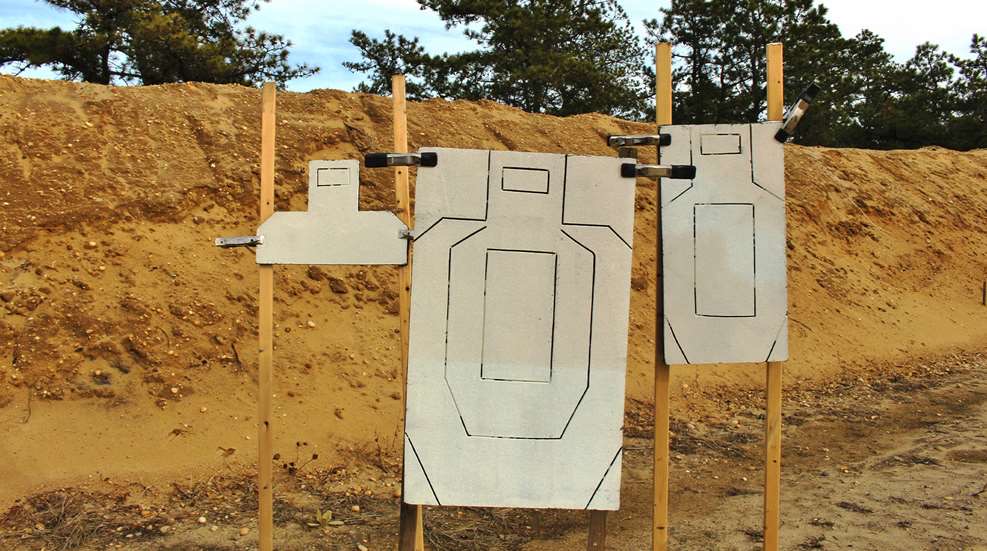
Every USPSA classifier has an official one-page diagram, and once you can read one you can set the stage up in your own bay or, more usefully, understand exactly what it’s about to test before you step into the box. The diagrams live on the classifier pages at uspsa.org — each stage has a card with its name, scoring type and round count and a link to the full PDF with the drawing and the Written Stage Briefing — and clubs print the same sheet for the stage briefing at the match, so what you see on the wall is what’s in the database.
Start with the code. A stage number like CM 06-03 or CM 99-11 isn’t random: the first two digits are the year the stage was released (06 for 2006, 99 for 1999, 25 and 26 for the newest series), and the last two are its sequence within that year. That’s why the 26 Series stages run 26-01 through 26-05 and why El Presidente, released in 1999, still carries 99-11 decades later. A “RETIRED” flag on a card means the stage has been pulled from the classification pool; scores on it no longer count, even if a club runs it for fun.
Next, the scoring line, because it changes how you should shoot. USPSA has three scoring methods. Comstock is the everyday one — shoot as many rounds as you like, the best two hits per cardboard target count, and points ÷ time gives your hit factor; steel is allowed and must fall. Virginia Count limits the number of rounds per target in the briefing: you get one attempt per shot, so a make-up shot draws an extra-shot penalty and an extra hit draws its own penalty on top. No steel, because steel can’t be counted. Fixed Time hands you a par time instead of a running clock — your score is simply points minus penalties, shots after the par draw overtime penalties, and there is no hit factor at all. Most classifiers are Comstock or Virginia Count, and the difference matters: on a Virginia Count stage a fast make-up on a marginal hit is a penalty rather than a fix, so the reflex you’ve built on Comstock field courses will actively cost you.
Then the drawing and briefing details that decide your plan: the size of the start box (a 3-foot square is common), the start position (hands at sides, wrists above shoulders, touching marks, facing uprange), which targets are engaged in which string, where the mandatory reload sits, target heights and the angle they’re set at, and whether a no-shoot overlays part of a target. “Best 2/paper” or “Best 5/paper” in the SCORED HITS line tells you how many hits per target will be scored, and “Audible – Last shot” in START-STOP tells you the clock runs from the buzzer to your final round. Read those four lines and you can dry-fire the whole stage at home with a timer a week before you shoot it for real — which, as the next stage shows, is exactly where most of the percentage on a classic classifier is won.
CM 06-03 “Can You Count”: Anatomy of a Classic Classifier
If there’s one older classifier worth studying in detail, it’s CM 06-03 “Can You Count” — partly because it shows up on club calendars constantly, and partly because it’s the purest example of a stage that measures draw and reload and nothing else. Released in June 2006 (designers Mark Ramsey and John Golson), it’s a 20-round, 100-point Virginia Count stage on four metric targets, scored best five hits per target, shot entirely from a 3-foot Box A with the gun loaded and holstered and hands naturally at your sides. The name is the instruction: on each string you engage one target with exactly five rounds, perform a mandatory reload, and engage the next with exactly five. String 1 is T1 then T2; String 2 is T3 then T4; targets within a string can be taken in either order. The official diagram sets T1 and T4 at 4 feet and angled 45 degrees off the centreline, T2 and T3 at 5 feet square-on, with a no-shoot pressed against each target so its edge sits on the C-zone line.
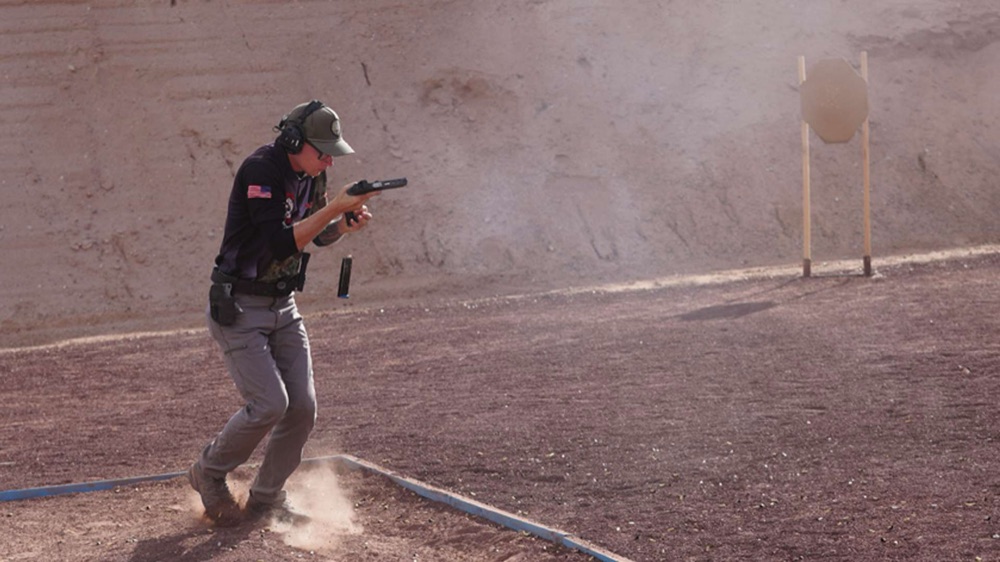
Everything about that design is a trap for habits. Five rounds on one target is an unnatural rhythm for anyone who has spent a season shooting two per target, so the first thing the stage tests is whether you can actually count under a buzzer — fire a sixth round and it’s an extra-shot penalty plus an extra hit, both of which come off a 100-point ceiling. The mandatory reload is the second test, and missing it is brutal: fail to reload and the briefing applies a penalty for every shot fired afterward. And because it’s Virginia Count there are no make-ups. A shot that catches the no-shoot on the C-zone edge is a ten-point penalty you can’t shoot your way out of.
What surprises people is how high the hit factors run. One Grand Master who breaks down classifiers on video calls it “all about raw time” and notes that in his division a hit factor in the 15s or 16s is a 100% run — well above the 6-to-10 HHFs you see on movement-heavy stages. His demonstration run came out at 3.50 seconds on each string, two Charlies, 96 points in 7.00 seconds total for a 13.71 hit factor, and he was quick to say he’d never cleared 85% on the stage because his draw isn’t quite scoop-fast and two strings punish any inconsistency: you can’t blaze one string and stumble the second, because both go into the same score. That math also tells you what the stage is worth to you. With 100 points fixed, your time target is simply 100 ÷ the hit factor you need — against an HHF around 15.5, an A-class 75% needs roughly an 11.6 hit factor, which is about 8.6 seconds across both strings, and B class buys you almost 10.8.
The practical point is that “Can You Count” is two draws and two reloads with ten rounds of shooting in between, and every one of those elements can be measured at home. Run it in dry fire or with a gas blowback airsoft pistol with the Airsoft Shot Timer app counting your shots and logging the split around the reload; if the app shows your draw at 1.4 and your reload split at 2.0, you already know that the reload is where the seconds — and the class — are hiding. Our magazine reload guide covers the mechanics; this stage is the test you’ll take on them.
How to Actually Rank Up (Without Sandbagging)
The cynical move in any classification sport is to “sandbag” — deliberately shoot classifiers poorly to keep a low class and clean up on prizes against weaker competition. It’s against the spirit of the rules, it’s increasingly hard to do under the new system, and frankly it’s a miserable way to enjoy a hobby. The honest path up is more satisfying and not complicated: you practice the exact mechanics a classifier measures, you measure them the same way the match does, and you let the numbers tell you what’s actually slow.
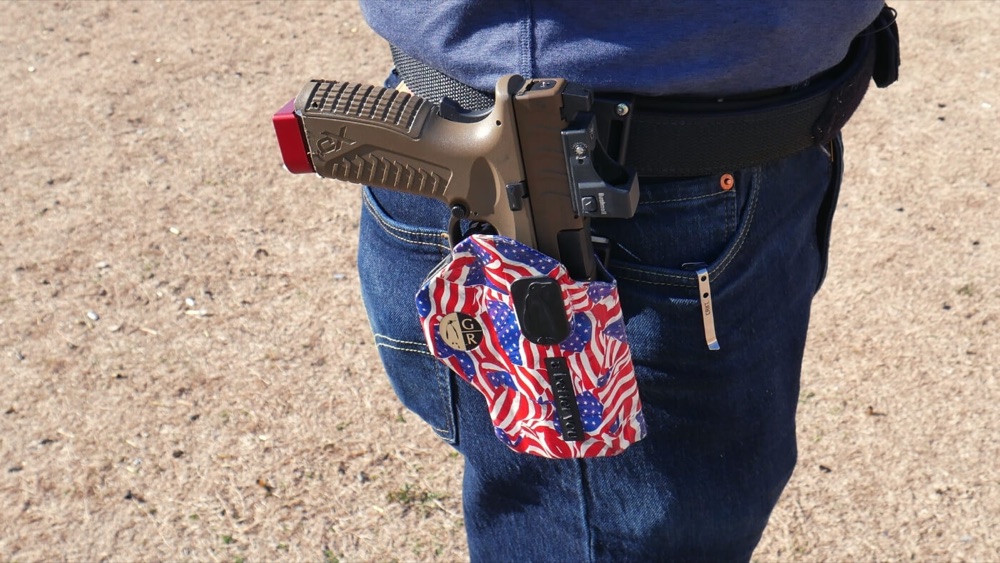
🎯 Train the timer, not just the target
A classifier rewards the draw, the splits and the reload — and all three are things you can drill at home for free. You don’t need to burn ammo or even own a live gun to build them. Put a free Airsoft Shot Timer app on your phone, set a random start delay, and run your draw-to-first-shot and reload reps in dry-fire or with an airsoft pistol. Because hit factor is points over time, every tenth you shave in practice is a tenth that shows up in your classifier percentage — and the app logs your splits so you can see which part of the run is actually costing you. Build the habit between matches and let the data, not your ego, pick what to work on next.
Concretely, that means turning your weak link into a measured drill. If your splits are fine but your draw is a half-second slow, that half-second is showing up on every classifier you shoot, and it’s the cheapest place to find percentage. If your reloads fall apart under the buzzer, a few hundred dry repetitions on a reload drill with a PAR time will fix more than any new piece of gear. The shooters who climb fastest aren’t the ones grinding the most rounds — they’re the ones who record their times, find the one mechanic that’s bleeding hit factor, and attack it specifically. For a full structure, our which pistol drill to shoot and USPSA beginner guide lay out the practice menu and the match-day basics.
A coach who works with shooters at every level puts the ladder more bluntly, and his description is useful because it tells you what to train rather than just how fast to be. His C-class students almost always have a fundamental gap — grip, sights or trigger — and the fix is consistency in those before anything else. B-class shooters can put accurate rounds on target but not at speed, and usually lack stage planning, transitions and movement. A-class shooters can hit alphas confidently out to 25 yards with no clock running, but it breaks down under speed, so the road to Master is largely a speed problem in transitions and movement. And from Master to Grand Master the foundation is already there; it’s every element ramped up another 5 to 10%. He’s also the source of a phrase worth knowing: the “paper GM” — a shooter who scraped the classification on a handful of good classifier runs but doesn’t perform at that level at matches. The cure he prescribes is the same at every rung: set the class as a goal, but train the specific skill that’s missing, and let the classification arrive as a byproduct. And for anyone who calls the system broken, his answer is to read the results from Nationals or an Area match: the top 50 names are Masters and Grand Masters, every time.
Don’t let the chase for speed talk you out of accuracy, though — the penalties are brutal by design. A useful rule of thumb from the top of the sport is to keep your C-zone hits (the “Charlies”) under about 10% of your shots; on an 18-round classifier that’s roughly one or two Charlies, no more, before your dropped points start eating the time you saved. And a single mistake can be catastrophic: that same Grand Master demonstrated a run with clean, fast hits that scored like an A-class performance until he clipped one no-shoot target — the ten-point penalty alone dragged the whole run down to a B-class hit factor. Speed wins classifiers, but one careless miss can erase a season’s worth of draw practice. The timer teaches you where that balance point sits, which is exactly why you want to find it in practice, not discover it live on the buzzer.
Practicing Classifiers at Home with Airsoft
You don’t need a live-fire range, a USPSA membership or even a centerfire pistol to start training the skills a classifier tests — and this is where airsoft quietly becomes one of the best practical-shooting trainers available. A gas blowback pistol like a Tokyo Marui Hi-CAPA gives you real recoil, a real trigger reset and real reloads, all in a garage or backyard with a target you can shoot at zero cost per round. Run a classifier-style sequence — buzzer, draw, six rounds, mandatory reload, six more — and you’re rehearsing the exact movements that decide your percentage, minus the ammo bill and the drive to the range.
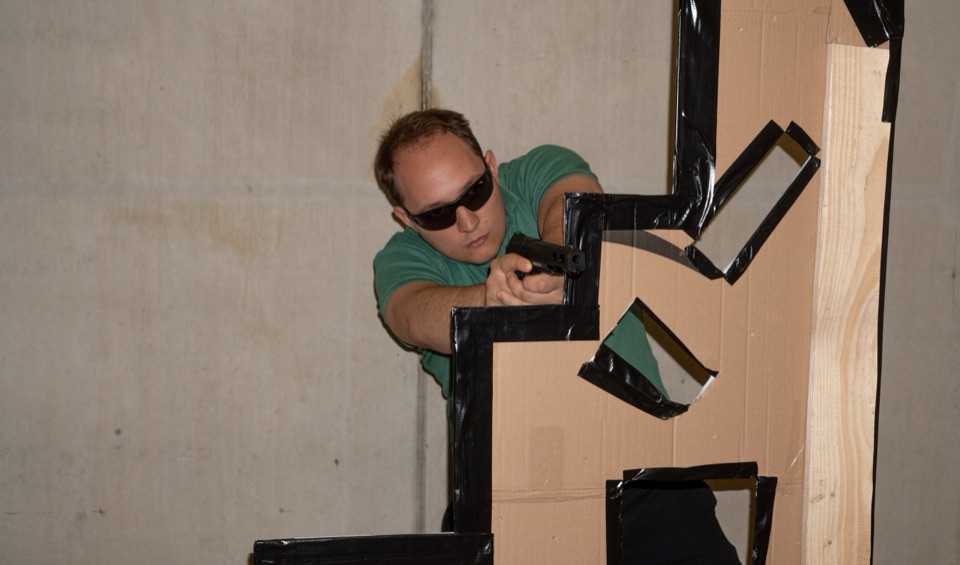
The piece that makes this real training instead of plinking is timing it. Set the Airsoft Shot Timer app to listen for your airsoft gun’s quieter report, give yourself a random delay so you can’t anticipate the start, and record every run the way the match would. If you compete in Action Air — IPSC’s official airsoft division — this isn’t even a substitute, it’s the actual sport, with its own classifiers and the same hit-factor math. Either way, the habit you build at home in ten-minute sessions is the same habit that moves the number on your classification card. The shot timer is the thread that ties dry-fire, airsoft and live-fire into one continuous progress curve.
Frequently Asked Questions
How do classifiers work in USPSA?
You shoot a standardized classifier stage at a local match, and the timer and scorer turn your run into a hit factor (points divided by time). That hit factor is divided by USPSA’s benchmark for the stage (the High Hit Factor) to give a percentage. Once you have four valid scores from different classifiers in a division, you get a class; after that, the best six of your most recent eight unique classifier percentages set your level.
What are the 26 Series classifiers?
The 26 Series is a set of five new classifier stages USPSA released for trial on June 4, 2026: 26-01 “King Crab”, 26-02 “Darwinism”, 26-03 “Mike Who?”, 26-04 “Uprange? Seriously” and 26-05 “Downrange? Obviously”. 26-04 and 26-05 are a deliberately matched pair of 12-round, 60-point Comstock stages that differ mainly in start position, so the time gap between them shows exactly what a turn-and-engage start costs you.
Do provisional classifier scores count toward your classification?
Not immediately. Provisional stages are in a trial phase, and clubs run them largely to generate the score data USPSA needs to calibrate each stage’s High Hit Factor. But USPSA’s position is that trial performances will count toward classification if the stages are later adopted — which is what happened with the 25 Series, whose provisional scores were picked up in the next classification run. Shoot them like they count.
What is a good hit factor in USPSA?
There’s no universal answer, because hit factor is stage-specific — a 5.0 can be poor on one classifier and excellent on another. The only meaningful measure is your hit factor divided by that stage’s High Hit Factor: 95%+ is Grand Master, 85%+ Master, 75%+ A class, 60%+ B class. On a 60-point classifier you can convert directly to a time target, since 60 ÷ your hit factor gives the seconds a clean run needs.
What is the “Can You Count” classifier?
CM 06-03 “Can You Count” is a 2006 classic that still turns up constantly on club schedules: a 20-round, 100-point Virginia Count stage on four targets, shot as two strings of “five rounds on one target, mandatory reload, five rounds on the next” from a single box. It measures draw and reload almost exclusively, runs to unusually high hit factors (a 100% run sits in the mid-teens in some divisions), and punishes miscounting with extra-shot penalties. The full breakdown is above. Older stages like this remain valid for classification as long as they haven’t been retired.
Can you go down a class in USPSA?
Under the current system your class generally won’t drop automatically just because you have a bad day — classification is treated as a record of demonstrated skill, and routine fluctuations won’t demote you. If your skill genuinely declines or you believe you’re misclassified, USPSA does have a process to request a lower classification, which is reviewed by the classification team rather than applied automatically.
What is the U class in USPSA?
“U” stands for Unclassified. It simply means you don’t yet have the four valid classifier scores needed to receive a classification in that division. It isn’t a skill level — a future Grand Master and a total beginner both start as U. Shoot your four classifiers and the system replaces it with your real class.
How many classifiers do I need to get classified?
Four valid scores from four different classifier stages in the division you want to be classified in. They don’t have to be shot at the same match or even the same month — they just need to be four un-duplicated stages logged in the USPSA database. Each division you compete in is classified separately.
What class will I get as a beginner?
Most people who already handle a pistol safely and can aim land in C or B class on their first four classifiers, not D. D class is really the floor for someone still building the basics — grip, sight picture, trigger control. If you shoot a bit and dry-fire between matches, expect to start around C and climb into B within a season. Chasing A class is usually a year-or-two project of deliberate, measured practice.
What is power factor in USPSA, and does it affect classification?
Power factor is bullet weight (grains) × velocity (fps) ÷ 1,000. Score 165+ and you’re Major; 125 to 165 is Minor. It matters because Major loads earn more points for the same non-perfect hits, so it feeds directly into your hit factor — and each classifier’s High Hit Factor benchmark is set per power factor. In Minor-only divisions like Carry Optics and Production everyone’s equal, so it’s a non-issue; just don’t accidentally drop below 125, because sub-minor hits get penalized hard.
How do I calculate my USPSA classification percentage?
Take your hit factor on a classifier and divide it by that stage’s High Hit Factor (the division benchmark), then multiply by 100. A 7.5 hit factor on a stage with a 10.0 HHF is a 75% run. USPSA’s website has a classification calculator and a lookup tool that do this for you, and your class is then the average of the best six of your most recent eight unique classifier percentages.
Do I really need a shot timer to train for classifiers?
For the match itself the range officer runs the timer, but for practice it’s the single most useful tool you can own, because hit factor literally has time in it — without measuring time you’re guessing at half your score. A free shot timer app on your phone gives you the random start delay, PAR times and split logging you need to train draws, reloads and transitions in dry-fire or airsoft, which is exactly what a classifier rewards.
What percentage of USPSA shooters are A class or above?
USPSA doesn’t publish a running head-count by class, but the statistical model its classifier committee adopted for setting High Hit Factors is built around percentiles: roughly the top 1% of scores on a stage correspond to Grand Master (95%), the top 5% to Master (85%) and the top 15% to A class (75%). In practice that means A class and above is roughly the top 15% of scores across a membership of more than 39,000, and B and C together make up the bulk of active shooters.
What do the numbers in a classifier code like CM 06-03 mean?
The first two digits are the year the stage was released and the last two are its sequence within that year — so 06-03 “Can You Count” was the third classifier released in 2006, 99-11 “El Presidente” dates from 1999, and the new 26-01 through 26-05 stages are the 2026 series. A “RETIRED” tag means the stage no longer counts toward classification.
What is the difference between Comstock and Virginia Count on a classifier?
Both produce a hit factor (points ÷ time), but Comstock lets you fire as many rounds as you like with the best two hits per target scored, while Virginia Count limits the rounds per target and penalises every extra shot and extra hit. Fixed Time is the third method: a par time with score equal to points minus penalties and no hit factor at all. On a Virginia Count classifier like “Can You Count”, a make-up shot costs you instead of helping.
What is a “paper GM”?
A “paper” Master or Grand Master is a shooter whose classification card says M or GM on the strength of a few strong classifier runs, but who doesn’t perform at that level across a full match. It’s the reason experienced coaches tell you to chase the skills rather than the letter: a classification earned as a byproduct of match performance holds up; one earned by grinding classifiers alone usually doesn’t.
Conclusion: The Classifier Is a Mirror, Not a Verdict
A USPSA classifier can feel intimidating the first time you face one, but it’s really just an honest mirror — a standardized way to ask “how good am I, against everyone, right now?” The number it gives back isn’t a verdict on your worth as a shooter; it’s a starting coordinate and a feedback loop. Get your four scores in, find out where you actually stand, and then let the system do what it’s designed to do: track your improvement, division by division, season by season.
And because the whole thing rests on hit factor, the work between matches is clear. Measure your draws, splits and reloads the same way the classifier will, attack whichever one is slowest, and watch the percentage climb. Download the AirsoftShotTimer App to drill those exact mechanics in dry-fire and airsoft training — it’s the same shot-timer math that decides your class at the match, just running on your phone at home.
Related reading: USPSA Divisions Explained · USPSA Beginner Guide · IPSC Classification System Explained · IPSC Action Air Guide · which pistol drill to shoot
Put a Shot Timer in Your Pocket
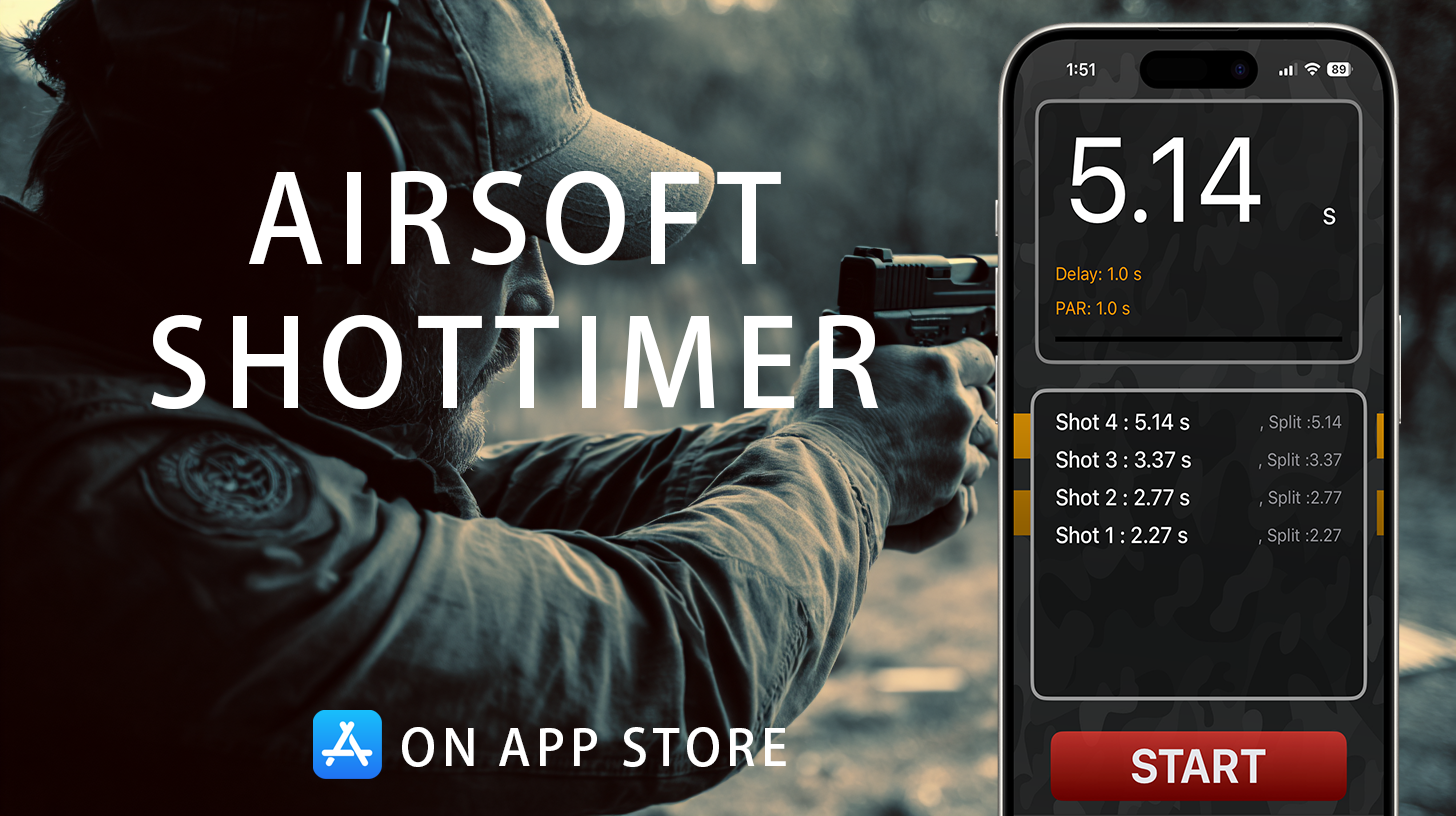
Airsoft Shot Timer is a free shot timer app tuned for airsoft and Action Air — it picks up BB gun shots, tracks your split times, and saves you the cost of a $150+ hardware timer for IPSC/IDPA practice.

- USPSA
- USPSA Classifier
- USPSA Classification
- USPSA Classes
- Hit Factor
- Good Hit Factor
- High Hit Factor
- HHF
- Power Factor
- Practical Shooting
- Competition Shooting
- Shot Timer
- USPSA GM
- Carry Optics
- Production
- Classifier Stage
- USPSA Classifier Stages
- USPSA Classifiers List
- Dry Fire
- Action Air
- USPSA 25 Series
- USPSA 26 Series
- 26 Series Classifiers
- USPSA 2026 Classifiers
- Provisional Classifier
- King Crab Classifier
- Can You Count Classifier
- Can You Count
- CM 06-03
- Virginia Count
- Comstock Scoring
- Hit Factor Chart
- Hit Factor to Class
- USPSA Classifier Percentages
- USPSA Classifier Ranking
- Classifier Diagram
- USPSA Classifier Codes
- Paper GM