El Presidente Shooting Drill: How to Run It, What's a Good Time & USPSA 99-11 Scoring (2026)
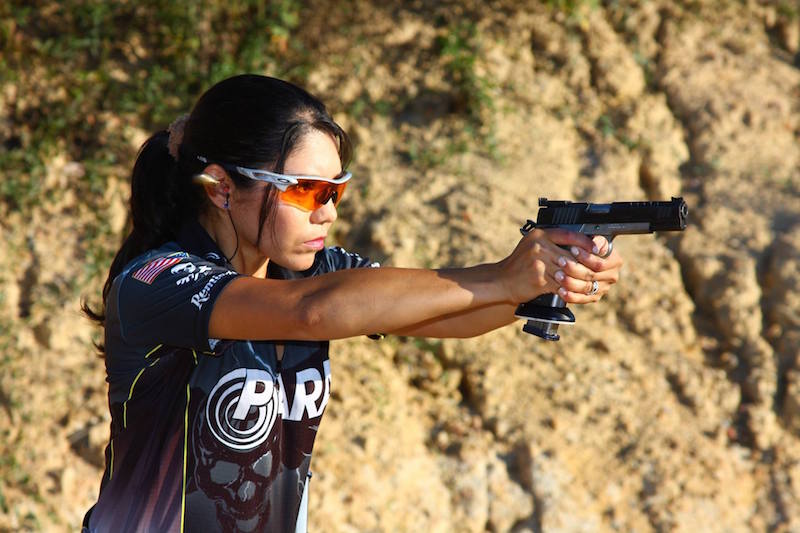
The El Presidente in 60 seconds (BLUF)
- What it is: Face uprange at 10 yards, turn on the beep, draw, fire two rounds on each of three targets, reload, and fire two more on each — 12 rounds total against the clock.
- Who made it: Jeff Cooper, who built it in the 1970s to gauge pistol proficiency for a presidential security detail in Latin America and published it in American Handgunner in 1979 — hence “El Presidente,” or “El Prez” for short. Full history below.
- It’s still a live classifier: El Prez is USPSA classifier CM 99-11 — a 12-round, 60-point, Virginia Count course. Shoot it at a match and it moves your classification.
- What’s a good time? The classic benchmark is a clean run in 10 seconds (all 12 in the A-zone). But USPSA scores it on hit factor, and for a clean run the conversion is dead simple: 60 ÷ your hit factor = your time. A 10 hit factor is 6.0 seconds with all twelve in the A-zone — roughly Grandmaster pace in the optics divisions.
- Why it’s the decathlon of drills: One run tests your turn, draw, target transitions, splits, a full reload, and recoil control — no single skill can hide. The common mistakes each leave a signature on the timer or the target, so you can diagnose your own run.
- Train it anywhere: The turn, draw, transitions and reload are all pattern skills. Run par-time reps with an airsoft pistol or dry fire on a free Airsoft Shot Timer app between range trips.
Ask a room full of shooters to name one pistol drill and more of them will say “El Presidente” than anything else. It’s been on range programs for fifty years, it shows up in USPSA classifiers, and it’s the first thing a lot of instructors reach for when they want to see whether a new student can actually run a gun rather than just shoot groups off a bench. If the Bill Drill is the honest test of your grip, the El Prez is the honest test of everything else.
That’s the whole appeal. Most drills isolate one skill — your draw, your splits, your reload — so you can drill it in a vacuum. El Presidente does the opposite: it stacks the turn, the draw, three target transitions, a reload under time pressure, and twelve rounds of recoil control into a single 10-second window, then hands you one number at the end. There is nowhere to hide, and that’s exactly why it’s survived every training fad since the 1970s.
What Is the El Presidente Drill?
The El Presidente was developed by Jeff Cooper, the father of modern practical pistol shooting, who reportedly built it to evaluate the pistol proficiency of a presidential bodyguard detail in South America. The name stuck — most people just call it “El Prez” now — and the course of fire has barely changed since. (Cooper is also the man who formalized the Mozambique Drill, the famous two-to-the-body-one-to-the-head failure drill, at Gunsite a few years later.)
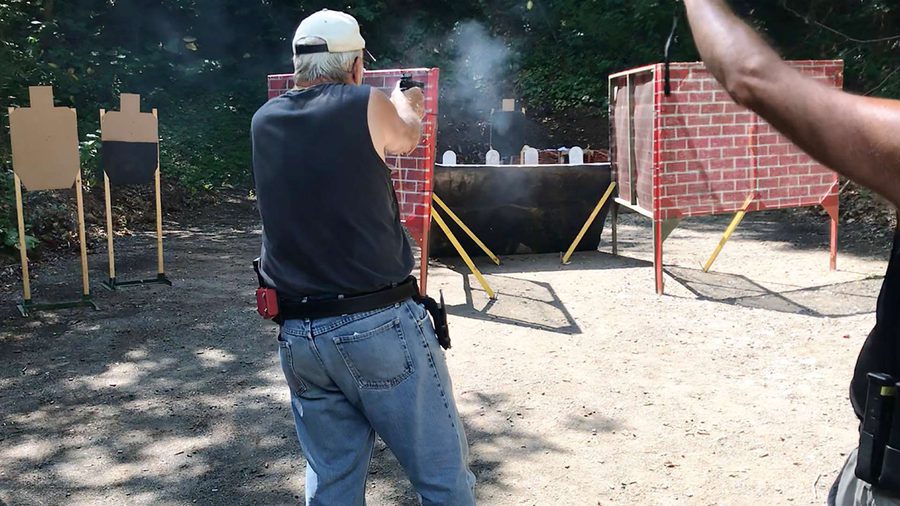
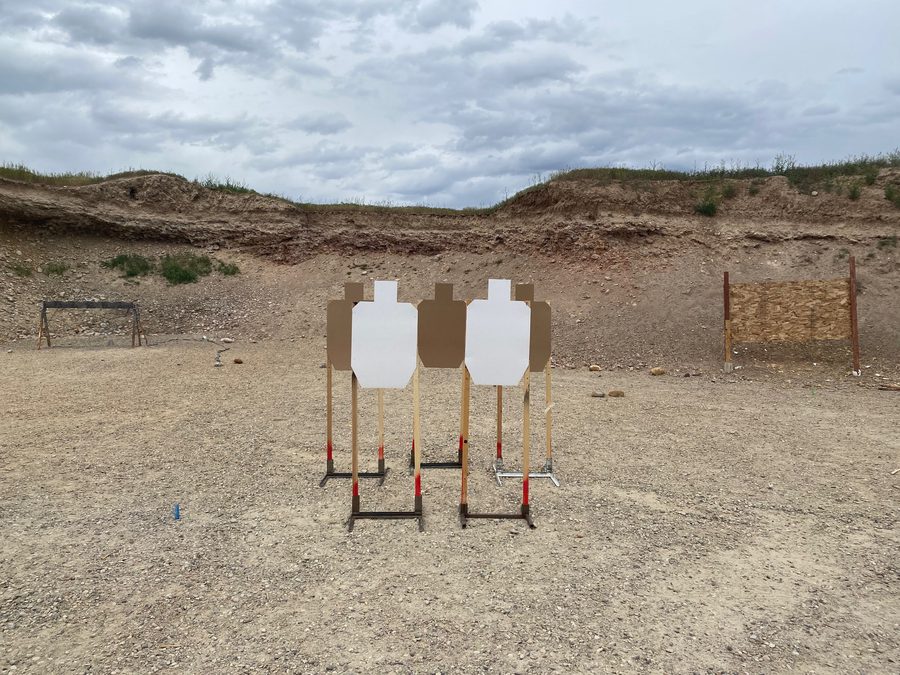
Here’s the standard version. You set three IPSC/USPSA silhouette targets one yard (about a meter) apart and stand at 10 yards (10 metres in the European version), facing uprange — that is, with your back to the targets — hands raised in a surrender position, pistol holstered. On the start signal you turn to face the targets, draw, and fire two rounds on each target. Then you perform a reload and fire two more rounds on each target, for a total of 12 rounds. The classic par time is 10 seconds, and a “clean” run means all twelve hits land in the A-zone.
What makes it such a complete test is that it forces every fundamental to work in sequence, under a clock. As one Gunsite instructor put it, El Prez is “a well-rounded exercise” precisely because a weakness anywhere — a clumsy turn, a fumbled draw, a slow transition, a dropped magazine — blows up the whole run. You can be a great group shooter and still fall apart on your first El Presidente, because it’s not testing marksmanship in isolation. It’s testing whether all your pieces work together when the timer is running.
One detail that surprises people who’ve only ever run the modern version: Cooper’s original had the three targets three yards apart, not one. Sweeping across a nine-yard array is a genuinely different problem — far more gun movement, far more time spent in transition — and the tighter modern spacing is part of why today’s times have collapsed into the 5–6 second range. If you ever want to feel what the drill was like in the 1970s, spread the targets back out and watch your transitions fall apart.
A Short History of the El Presidente (1979, Revolvers and Leather Holsters)
Cooper didn’t invent the El Presidente for competition. The most-repeated version of the story is that he built it in the 1970s while training a presidential protection detail in Latin America, as a quick way to find out whether a bodyguard could actually run a pistol under pressure. You’ll occasionally see the detail described as South African instead; that looks like a later mix-up that keeps getting copied from one article to the next, because the Spanish name only makes sense the Latin American way.
The drill went public in the January/February 1979 issue of American Handgunner, and reading it in that context explains several things about the modern version that otherwise look arbitrary. It was written for six-round revolvers and 1911s carried in leather holsters: two rounds on three targets is exactly six, which is why the reload lands where it does and why the course has 12 rounds and not, say, 15. The “surrender” start with hands raised was a bodyguard’s start, not a competitor’s. And the original benchmark, a 10-second clean run with a stock handgun, was set for a shooter drawing a 1911 from leather with iron sights, not a red-dot-equipped polymer gun from a kydex race rig.
That’s why the numbers have moved so much. With modern equipment, shooters running production guns with no compensator or optic routinely break five seconds, and the very top of the open divisions is knocking on the three-second door. The drill didn’t get easier; the gear did, and the 10-second standard silently became a beginner’s milestone instead of the mark of proficiency Cooper intended. Understanding that keeps you from two opposite mistakes: dismissing the drill as obsolete because a 10 is “easy,” and being crushed because a 10 doesn’t feel easy to you from concealment with a carry gun. Both are the same drill; only the gear and the era changed.
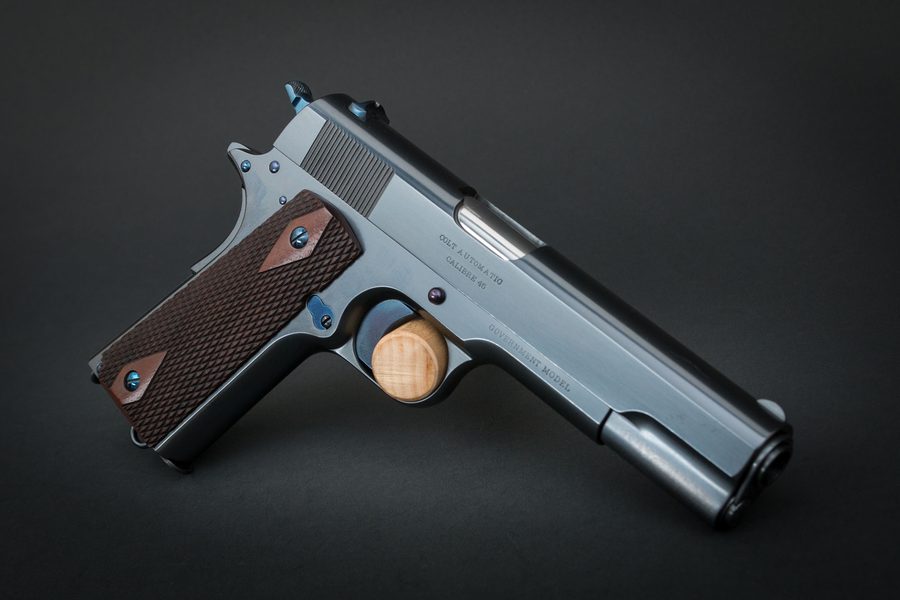
El Presidente Is USPSA Classifier CM 99-11
Here’s the part most El Prez articles leave out entirely, and it’s the difference between treating this as a range game and treating it as a measuring stick: El Presidente is a current USPSA classifier, CM 99-11. Shoot it at a sanctioned match and the score goes into your classification record like any other classifier. That’s why it’s worth knowing the official course of fire rather than the range-legend version.
The official briefing is tighter than the casual description. You start in a 3-foot by 3-foot shooting box, toes touching the forward line, facing uprange, with your wrists above your shoulders — not a vague “surrender position,” but a defined start you’ll be held to by a range officer. The three targets sit one yard apart edge to edge, and the box is centred on the middle target at 10 yards. On the beep you turn, draw, engage each target with two rounds, perform a mandatory reload, and re-engage each target with two more. Twelve rounds, 60 points available.
Don’t have a shooting box painted on your bay? You don’t need one. Put a stick or a paint line at the 30-foot mark and another at 33 feet — 10 and 11 yards — and stand between them. The dimensions are what matter, not the tape.
Two rules catch people out. The first is that it’s scored Virginia Count, not Comstock. Virginia Count means the round count is fixed and extra shots are penalised — you cannot make up a bad hit by throwing a third round at the target the way you would on a normal USPSA field course. Two rounds per target, twelve total, and that’s it. The discipline that demands is a real part of the challenge: when you see a shot go wide, the correct answer is to keep moving, not to fix it.
The second is the 180. Because you’re starting with your back to the targets, the muzzle has to stay behind the 180-degree line until you’re facing downrange — which in practice means your pistol does not clear the holster until your body has come around. Drawing as you pivot is the classic way to earn a match disqualification on this stage, and it’s worth building the correct sequence into your dry-fire reps long before you shoot it in front of an RO. Turn first, then draw. If you’re at all unsure about the safety framework this sits inside, our shooting safety rules guide covers the range commands and muzzle discipline that underpin it.
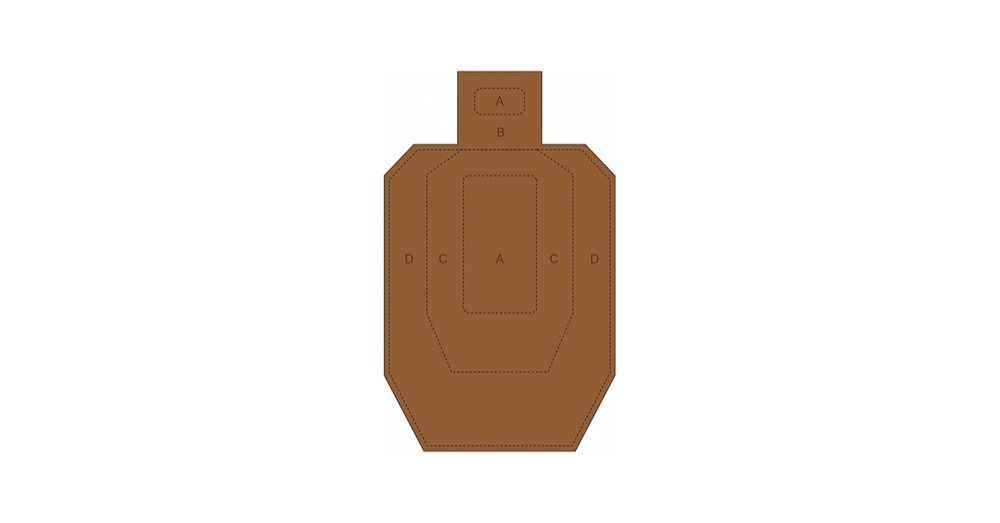
Scoring at a match uses whatever power factor you’re shooting. Under minor scoring — where most Carry Optics, Limited Optics and Production shooters live — an A-zone hit is 5 points, a C-zone hit is 3, a D-zone hit is 1, and a miss costs you 10. That miss penalty is brutal on a 60-point course: a single Mike wipes out two A-zone hits and then some, which is exactly why the drill punishes people who buy speed with recklessness.
The whole course of fire on one card
If you just want the spec to tape to a target stand, here it is in one place, covering both the classic and the USPSA-classifier flavour:
- Targets: three USPSA/IPSC silhouettes, one yard apart edge to edge, at the same height
- Distance: 10 yards to the centre target (10 metres in the metric version used across Europe)
- Start: facing uprange, wrists above the shoulders (classic: “surrender position”), pistol holstered and loaded with at least six rounds, spare magazine on the belt
- On the beep: turn, draw, two rounds on each target, mandatory reload, two rounds on each target, 12 rounds in all
- Scoring: 60 points available; USPSA CM 99-11 is Virginia Count (extra shots penalised) and hit factor = points ÷ time; the classic standard is “10 seconds, every hit in the centre”
- Safety: the muzzle stays behind the 180 until you’re facing downrange, so turn first, then draw
That’s six lines, which is the whole reason this drill has survived. You can explain it to a brand-new shooter in a sentence and run it on any bay with three target stands.
How to Run the El Presidente
Set your three targets a yard apart and pace off 10 yards. Load your pistol with at least six rounds, get a fresh magazine ready on your belt, and holster up. Start facing away from the targets with your hands up in a surrender position — that turn is part of the drill and part of the challenge.
On the beep, turn into your gun side and be careful not to cross your feet as you pivot — crossing your legs is the classic way to stumble and blow the run before you’ve even drawn. As you turn, your hands come down and your master hand gets a full firing grip on the pistol while it’s still holstered, so that the moment you’re facing the targets you can draw straight out and up to your first target. Fire your two rounds on the first target, then transition to the second and third.
Three ways to run the turn-draw
Almost nobody practises turning draws, which is precisely why this piece of the drill costs most shooters more time than they realise. There are three common pivots, and they genuinely feel different — it’s worth spending a range session finding out which one is yours rather than assuming.
The most popular is to spin on your firing-side heel: you turn your head to look at the targets first, and letting your eyes lead whips the rest of your body around behind them. The second is more of an about-face — you step your rear foot behind the other and rotate through it, which keeps your weight more centred than heel-spinning does, where you can end up shifting side to side as you come around. The third is to pivot off your support-side foot instead, moving that foot rather than planting on it, still rotating towards your gun side.
There’s no universally correct answer, and instructors who’ve tested all three on the clock often find the differences in first-shot time are smaller than the differences in how settled they arrive. One experienced instructor filming himself running all three back to back posted first shots of 1.76, 1.70 and 1.74 seconds from concealment — statistically identical — and went back to the heel spin simply because it felt least cluttered. That’s the useful lesson: pick the one you arrive balanced from, then stop rethinking it and bank the reps. For reference, top competitors running this from an open holster get the turn and the first shot done in about 1.0 to 1.2 seconds; from concealment, anything under 1.5 is genuinely quick.
Whichever pivot you use, the head turns first and the gun stays holstered until you’re facing downrange. Both of those are non-negotiable — the first because your eyes have to find the target before your sights can, the second because of the 180.
The mental key to the shooting is cadence. A proficient run isn’t six rushed shots and a pause — it’s a steady, even rhythm where the two shots on each target and the transition between targets all happen at roughly the same tempo. Think of it as a smooth “one-two-three-four-five-six,” not “bang-bang… find the next target… bang-bang.” The gun should flow across the array at a pace your eyes can keep up with. Then you reload and come back across for the second string. Many shooters go left-to-right on the first pass and right-to-left after the reload, so the reload lands them back on the target they just left — but shoot it whichever direction feels natural, as long as your reload is quick and your grip re-establishes cleanly.
When to move your eyes between targets
Everyone knows the slogan “eyes lead, gun follows.” Far fewer people know when the eyes are supposed to go, and that timing is where the transition time on a three-target array actually lives.
The mistake is to fire your two shots, let the gun settle back down on the target you’ve just finished, and then look for the next one. That feels controlled and it costs you a fortune across three targets. The correct moment is earlier than instinct suggests: as the second shot lifts the gun in recoil, your eyes leave for the next target, and your sights come back down onto a target your eyes are already on. You’re not waiting for the gun to settle — you’re using the recoil as the cue to move.
A lot of coaching describes this as “riding the recoil” from one target to the next, and for some shooters that clicks immediately. If it doesn’t, try a different handle on the same idea: tie the move to your trigger instead. You can’t really control recoil, but you can control exactly what your finger is doing — so as you release the trigger out of the second shot, that’s your cue to move your eyes and reset the trigger on the next target. Same timing, but attached to something you’re actively in charge of rather than something happening to you.
The reload is where the seconds are hiding
The mandatory reload sits right in the middle of El Prez, and it is reliably the single most expensive thing in the run. A three-step framework keeps it honest.
First, drop the mag and touch the fresh one at the same time — deliberately syncing those two actions so the timing lines up instead of doing them in sequence. As you get better, the hand going to the fresh magazine should be moving faster than the one hitting the mag release, so speed up the reach rather than the button. Second, pause at the insert. This is the counterintuitive one, and it comes from watching Max Michel’s reloads frame by frame: even with an enormous magwell, and even at a speed where the pause is invisible in real time, he is pausing — just long enough to confirm the first round has entered the well — before finishing the motion. Skipping that confirmation is what produces the fumbles that cost whole seconds. Third, send it home and get your grip back. Seat the magazine, hit the slide release if you ran the gun dry, and — the part people forget — get your support hand back into exactly the position it held on the draw. A reload that’s fast but leaves you with a broken grip just moves the lost time into the next three targets.
What should it cost you? Under two seconds is the honest working target for a competent shooter under match pressure. Realistic numbers from an instructor filming his own reps: a bad one at 3.98 seconds that wrecked an otherwise fine run, and good ones landing around 2.7–2.8 — with sub-2.0 as the stated goal. If your gap between shot six and shot seven is sitting north of two seconds, you have found your training priority, and no amount of trigger speed will make up for it.
Run it in strings of three to five repetitions and score every one honestly. A blazing time with four hits in the C-zone isn’t a good El Prez — it’s a signal you’re going faster than your fundamentals can hold together.
Common El Presidente Mistakes (and What Your Hits Tell You)
Run this drill with a group and the same handful of errors show up every time, in roughly the same order. The good news is that most of them leave a signature, on the timer, on the target, or both, so you can diagnose your own run without a coach standing behind you.
Stepping through the turn instead of pivoting. Newer shooters take three or four little shuffle steps to come around, and every step is a chance to cross your feet or arrive off balance. The turn should be one pivot, into your strong side, with your head leading. If your first-shot time is over two seconds but your draw from a normal facing-downrange start is under 1.5, the turn is where the half second went, not the draw.
Drawing before you’re square. Under the clock, the hand wants to clear leather while the body is still coming around. Besides being the fastest route to a DQ at a match, it also produces a rushed, low first shot because you’re presenting the gun from a twisted stance. Build the sequence, turn, then grip, then draw, until it’s boring.
Wild hits on the first target only. If targets two and three look fine but target one has a flyer, you’re breaking the first shot before the sights have settled after the turn, the classic sign of a draw that’s fast but arrives without a sight picture. Slow the first shot down by a tenth and watch that flyer disappear. Our pistol draw guide is about building a draw that arrives on the target instead of near it.
Hits strung out horizontally. A line of hits running across the target, especially the middle one, means you’re shooting while the gun is still moving through the transition: you swept across the array faster than your eyes and trigger could keep up. The fix is the eye-timing cue above. Leave early with your eyes, then let the gun catch up and stop before you press.
The rushed reload. Almost every blown run dies here, and a real example is instructive. Pat McNamara, filming himself running El Prez cold with an unfamiliar 2011-pattern pistol, posted a 7.43-second run with a 1.60 first shot and splits around 0.25 to 0.47, and a 2.45-second reload that he immediately called “not good.” His clean 7.42 a few runs later came with a 1.43 first shot; the gap between his honest 7.4 and a 6.5 was almost entirely the magazine change. If your shot-six-to-shot-seven gap is anywhere near 2.5 seconds, everything in the reload guide applies to you before anything about splits does.
Posting the hero run. The last mistake isn’t mechanical. You shoot the drill ten times, throw away the nine with a miss, and tell people you “shoot a 5.8.” McNamara’s rule is the honest one: a time only counts when you can show it three times in a row, because, in his words, a blind hog can find an acorn. His answer is to find what he calls your impossible-to-miss pace, the speed at which you never drop a hit, live there, and let the pace improve on its own as the mechanics get cleaner. The timer is still running; you’re just refusing to let it drive. If the beep makes you shake, our mental game guide is about exactly that problem.
El Presidente Par Times: What’s a Good Time?
Here’s the answer most people want first, and the good news is you don’t have to guess at it. Because El Prez is a classifier, USPSA already publishes what each class is worth — in hit factor. And because the course is exactly 60 points, converting a hit factor into a time is one division:
Clean-run time = 60 ÷ hit factor.
That’s it. If you shoot it clean — all twelve in the A-zone, no misses, no extra shots — a 10 hit factor is a 6.0-second run, and a 7.5 hit factor is an 8.0-second run. So here’s what the classes actually look like on the clock. The hit-factor figures are for the optics divisions (Carry Optics and Limited Optics), where a Grandmaster run sits right around the 10 mark:
| USPSA class | Hit factor | Clean run (all 12 in the A-zone) |
|---|---|---|
| Grandmaster | ~10.0 and up | ~6.0s or faster |
| Master | ~9.0 | ~6.7s |
| A | ~8.0 | ~7.5s |
| B | ~6.3 | ~9.5s |
| C | ~4.2 | ~14.3s |
Read that table carefully, because it contains the single most useful insight in the whole drill: those times assume you shoot it clean. Drop points and you have to be proportionally faster to hold the same class. A 7-second run with four hits in the C-zone scores 52 points, which is a 7.43 hit factor — B class, not A, despite the respectable-sounding time. The clock alone will happily lie to you; the hit factor won’t.
The 10-second clean El Presidente is the number Cooper set as the mark of genuine proficiency, and it’s still a meaningful goal for the vast majority of shooters — if you can turn, draw, put two clean hits on three targets, reload, and do it again, all inside ten seconds with everything in the A-zone, you can run a pistol. From there the standard keeps climbing: modern competitors routinely run the drill in the 5–6 second range, which means a draw around 1.3 seconds, transitions and splits in the 0.2s neighborhood, and a reload well under 2 seconds. If you want the full picture of how classifiers, hit factors and class percentages fit together, we break the whole system down in our USPSA classifier guide.
One honest caveat before you go chasing those numbers, and it’s the thing that separates a range score from a real one. When you run El Prez on your own you’ll shoot it twenty or thirty times and post your best. The Grandmaster whose time you’re comparing against didn’t get warm-up runs — his classifier was the first or second stage of the day, cold, on demand, in front of a range officer. So the more useful question isn’t “what’s my best?” It’s “can I hold that time ten times out of ten?” Consistency is the thing that actually transfers to a match, and it’s the thing a single hero run tells you nothing about.
Don’t anchor on the elite numbers either. If you’re newer, the honest win is watching your clean-run time drop from 15 to 12 to 10 seconds while your hits stay in the A-zone. That progression — faster without losing your hits — is the entire point of the drill. A time only counts if the hits back it up.
How to Score the El Presidente
There are two common ways to score El Prez, and knowing both helps you use it as more than a stopwatch game.
Cooper’s original scoring treated it almost like a mini-match: twelve hits on the A-zone were worth a fixed value, misses and hits outside the center cost you points, and the par was 10 seconds. In modern USPSA terms, the cleanest way to score it is hit factor — your total points divided by your time. That single number is the whole philosophy of practical shooting in a nutshell: it rewards you for being fast and accurate, and punishes you for buying speed with misses. Two shooters who both finish in 7 seconds aren’t equal if one dropped four shots into the C-zone; the hit factor sorts them out honestly.
Work one all the way through and it stops feeling abstract. Say you run it in 6.22 seconds with eight A-zone hits and four in the C-zone, shooting minor. Your points are (8 × 5) + (4 × 3) = 52. Divide by your time: 52 ÷ 6.22 = a 8.36 hit factor — a legitimately strong run, in the A-class neighbourhood. Now imagine that same 6.22-second run with one of those hits turning into a miss: you lose the 3 points and eat the 10-point penalty, so 39 points ÷ 6.22 = a 6.27 hit factor. One Mike dropped that run two full classes. That asymmetry is the entire reason experienced shooters would rather take a slightly slower, certain hit than gamble on a fast one, and it’s the lesson the drill teaches faster than any amount of coaching.
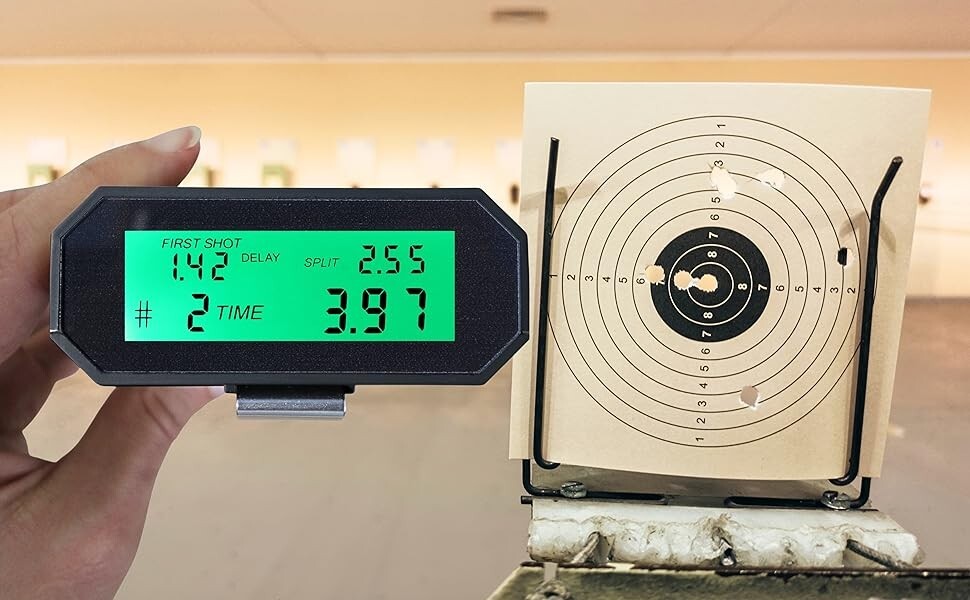
You can also read your hits diagnostically, exactly the way you’d read a group. If your rounds are all in the A-zone, you have room to push the pace. If they start spreading — walking up and out of the center as you transition — that usually means you’re breaking shots as the gun is still moving onto the target, or simply outrunning your sights. The fix is the same as the Gunsite coaching cue: if you’re outside the center zone, slow down and confirm your sight picture before you press; if your hits are stacked in a tight little cluster, you’re being too careful and leaving time on the table, so speed up. The El Prez is constantly telling you which of those two problems you have.
Reading the El Presidente on a Shot Timer
This is where the drill goes from “fun challenge” to “the most efficient diagnostic you own,” and it’s impossible without a timer. A shot timer doesn’t just give you a total — it records the time of every shot, which turns one El Prez run into a full data sheet: your draw (turn plus first shot), five splits and transitions across the first string, your reload time (the gap between shot six and shot seven), and the second string. Suddenly you’re not guessing where your ten seconds went — you can see it.
That reload gap is where the truth usually hides. Most shooters feel fast on the shooting and assume their time is bleeding out of the splits, when in reality a slow, uncertain reload is quietly eating a full second or more in the middle of the run. Look at the gap between your sixth and seventh shots on the timer: if it’s over two seconds, that’s your single biggest, easiest place to find time, and it points you straight at your reload technique rather than your trigger speed. Similarly, if your first shot (the turn-and-draw) is landing past 2 seconds, your draw and turn are the leak, not your shooting. The timer tells you which piece to train next instead of leaving you to train the piece that feels worst.
Train the El Presidente With Airsoft or Dry Fire
Here’s the part most El Prez articles skip: almost none of this drill actually requires live ammunition to build. The turn, the draw, the target transitions, and especially the reload are all pattern skills — and patterns are built through reps, not through burning ammo. That’s genuinely good news, because a 12-round live-fire drill you can only run at the range is exactly the kind of thing most people practice a handful of times a year and never really own.
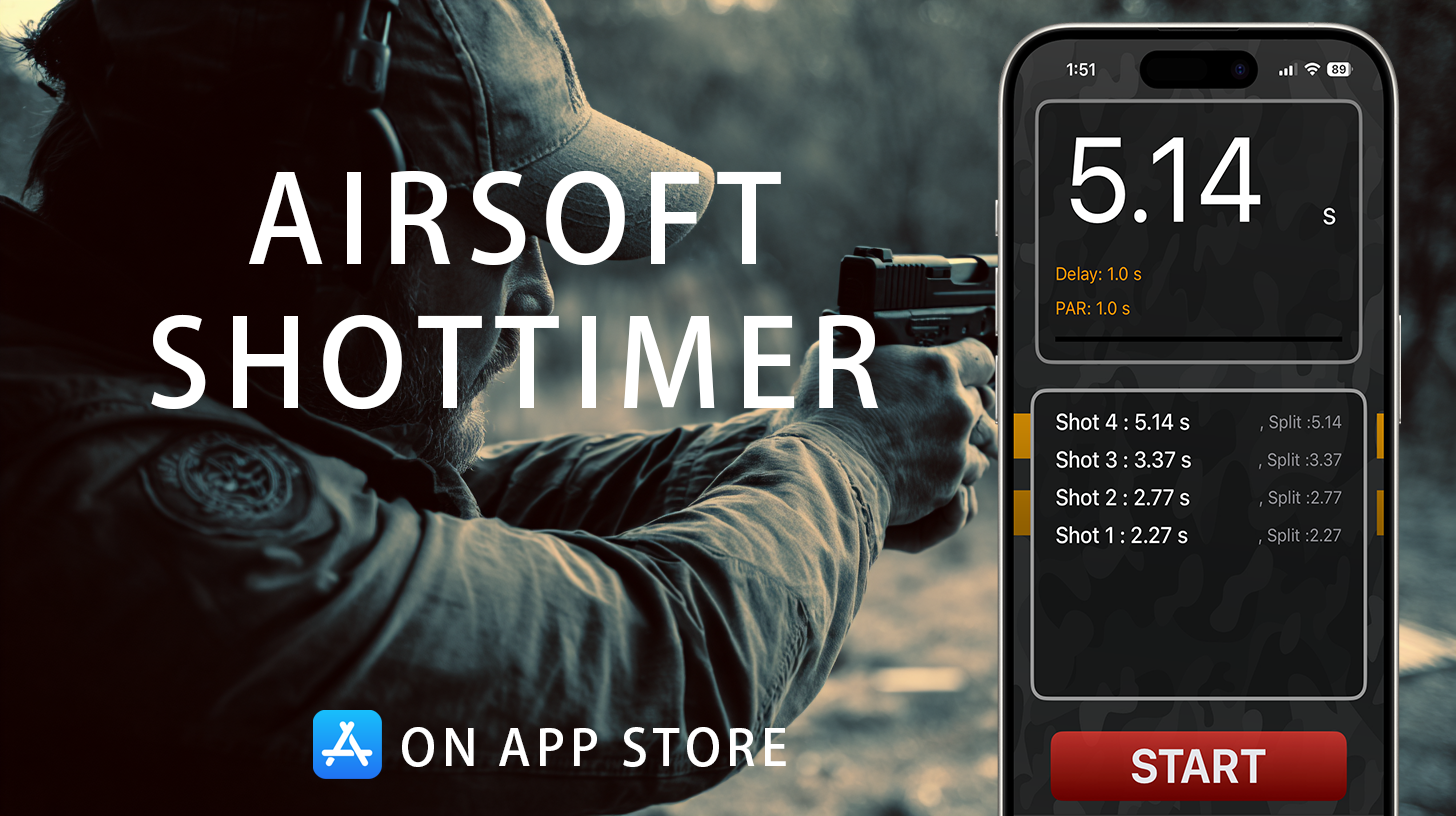
Dry fire is the cheapest way in. Clear and safety-check your pistol, set up three aiming points on a wall, set a par time on a shot timer — start somewhere realistic like 12 seconds — and run the whole sequence: turn, draw, two “shots” on each target, a dry reload with a dummy magazine, two more on each, all before the par beep. You’re training the identical choreography the live-fire drill measures. The Airsoft Shot Timer app gives you the random start beep and the par-time buzzer for free, so you can run par-time El Prez reps in your living room and actually track whether your reload is getting faster week to week. Pair it with the mechanics in our dry fire training guide and you’re rehearsing match-day movement, not just pressing a trigger.
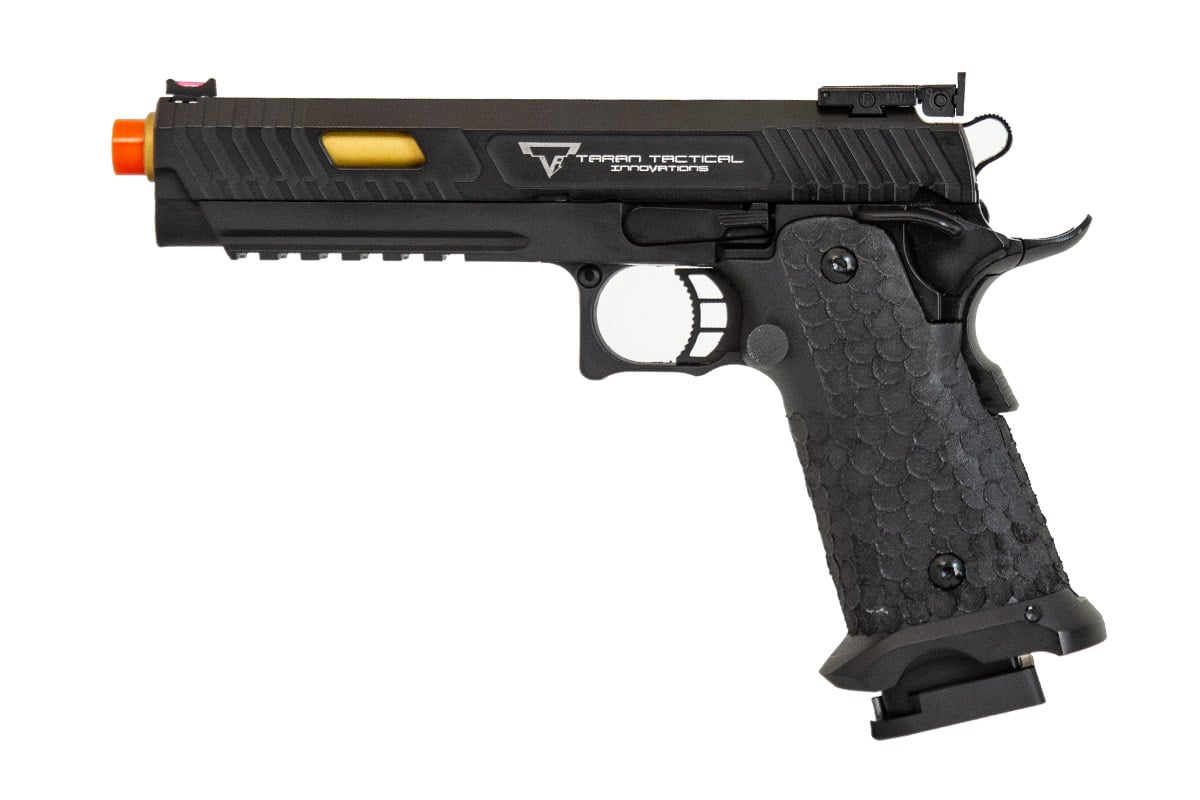
Airsoft takes it a step further because now you get feedback on your hits too. A gas blowback pistol runs the full El Presidente — turn, draw, transitions, a real reload with a gas magazine, twelve BBs downrange — with real trigger, real recoil impulse, and a real point of impact, at a fraction of the cost and with no range trip required. Scale the distance down to fit an indoor space and the choreography stays identical. If you shoot practical airsoft or Action Air, this is your most realistic off-range rep, and the timer doesn’t care whether the “bang” came from a 9mm or a green-gas GBB — it times your draw, transitions and reload exactly the same. For more on what carries over between the two, see our airsoft-to-firearms training crossover guide.
Is the El Presidente Still Relevant? The Fair Criticisms
Every few years someone writes “Is the El Presidente still relevant?”, and the honest answer is yes, but only if you understand what it is and isn’t. The criticisms are worth taking seriously because they tell you how to use the drill well.
The first criticism is that it’s too easy now. That’s largely true at the top. With a modern striker-fired gun, a red dot and an open holster, even relatively untrained shooters can get through the course in six or seven seconds, and Cooper’s 10-second par stops meaning much. Safariland’s instructors, running it with current polymer holsters and optics, reached exactly this conclusion: the drill is fairly easy in its stock form, and what keeps it alive is how easily it can be modified. That leads to the second criticism, which is that it isn’t tactical. Nobody in a real fight starts with their hands up and their back turned, engages three people with exactly two rounds each, and then politely reloads. Correct. But El Prez was never a tactical scenario; it was designed as a benchmark, a repeatable, scoreable way to compare skill across shooters and across time. Judge it as a measuring stick and the “unrealistic” objection evaporates.
The third criticism is subtler and, we think, the most useful one: the standard version lets good shooters hide. Because the targets are large and close, an experienced shooter can post a fast time while their fundamentals quietly degrade. The answer is to progressively make the drill honest again. Score only hits inside a 5×5-inch box taped on each target rather than the whole A-zone. Push the targets to 15 or 20 yards. Shoot the first string strong-hand only and the second string with the support hand after the reload. Add a second reload. Run it from concealment, and, hardest of all, run it cold, once, on demand, the way a classifier is actually shot, rather than as the tenth rep of a warm session. Each of those changes drags the drill back to the difficulty Cooper intended for his era, and each one exposes a different weakness.
For airsoft and dry-fire shooters this cuts the other way, and it’s genuinely good news. Because the drill is a pattern, not a tactic, the shortened distances you’re forced into indoors don’t invalidate it. Scale the targets down proportionally (a half-size IPSC target at 5 metres looks the same to your eyes as a full-size one at 10), keep the one-metre spacing between them, and the choreography you’re training is identical. Add the 5×5-inch box scoring and you’ll find the airsoft version is often harder to shoot clean than the live-fire one.
The El Presidente Around the World: 10 Yards or 10 Metres?
Search for the drill outside the United States and you’ll notice the numbers change. The Wikipedia entry and most European clubs describe it as three targets one metre apart at ten metres, not yards, because that’s how it crossed into IPSC, where courses are laid out in metric. Ten metres is about 10.9 yards, so the metric version is roughly nine percent longer: small, but enough to make your transitions slightly more demanding, and worth knowing if you’re comparing a time shot at a European club against a USPSA classifier score.
The drill turns up in surprising places. Norway’s armed forces list “El Presidente” as a standard exercise in the official handbook for their shooting instructors, right alongside plain five-shot strings, and Norwegian and Scandinavian pistol clubs run it as a regular club competition, which is why “el presidente skyting” (Norwegian for “shooting”) is a live search term. One Oslo club runs a deliberately range-friendly version for members whose bays don’t allow a 180-degree turn: you start facing the targets with the pistol already in hand, fire six, reload, fire six, and score it as points (60 possible) divided by time, which is just hit factor by another name. Czech and other central-European IPSC clubs publish it as a standard training exercise in the same form.
The practical takeaway is that whichever version your club uses, the four variables that define an El Presidente are always the same, distance, spacing, the turn, and the reload, and if you change one, write it down next to your time. A 6.5 without the turn at 10 metres and a 6.5 with the turn at 10 yards are two different achievements, and a shot timer log that records which one you shot is the only way your numbers stay comparable a year from now. If you shoot IPSC or Action Air rather than USPSA, our IPSC training guide covers how the metric course layouts and Comstock scoring change what you should be practising.
Variations to Keep the Drill Honest
Once your standard turning El Prez is repeatable, there are easy ways to keep it challenging. The simplest is to drop the turn: start facing downrange and you’ll take time off your clock, which is a good way to isolate the shooting and reload from the pivot when you want to work on those specifically. Going the other way, you can add concealment — run the draw from under a covered garment — which turns El Prez into a genuine carry benchmark and usually adds a second or more to an honest time.
You can also vary the reload. A slide-lock reload, where you deliberately run the gun dry and reload from an empty chamber, is slower and more demanding than a speed reload with rounds still in the gun, so alternating between the two trains different problems. Or drop the reload altogether: load a single magazine with all twelve rounds and shoot the array twice through without stopping. That version isolates your transitions and recoil control completely, and the gap between your no-reload time and your standard time tells you — to the tenth of a second — exactly what your reload is costing you.
And, as always, distance and spacing are the great equalizers. Push the targets back from 10 to 15 yards and the same splits that kept your hits centered up close will start scattering them, exposing any grip or trigger control that was only just good enough at 10. Or go the other way and rebuild Cooper’s original geometry with the targets three yards apart: the shooting gets no harder, but the transitions suddenly dominate the run, and you’ll find out very quickly whether your eyes are really leading your gun.
Frequently Asked Questions
What is a good El Presidente time?
For the standard turning, 10-yard, 12-round course with all hits in the A-zone, 10 seconds is Jeff Cooper’s classic benchmark for genuine proficiency. Solid club shooters break 8 seconds, and top competitors run it in the 5–6 second range. The time only counts as clean if every hit is in the A-zone — a fast run with hits in the C-zone means you’re going faster than you can control.
Is the El Presidente a USPSA classifier?
Yes — it’s CM 99-11, a current USPSA classifier and one of the few that needs only three targets and a stand-and-shoot bay, which is why so many clubs and training series use it. It’s a 12-round, 60-point, Virginia Count course of fire: the round count is fixed and extra shots are penalised, so you can’t make up a bad hit with a third round the way you could on a regular field course.
What hit factor do I need for each class on El Presidente?
In the optics divisions (Carry Optics, Limited Optics), a Grandmaster run sits right around a 10 hit factor, Master around 9, and A class around 8. Because the course is exactly 60 points, a clean run converts straight to a time — 60 ÷ hit factor — so a 10 hit factor is a 6.0-second run with all twelve in the A-zone. Drop points and you need to be proportionally faster to hold the same class.
What’s the fastest El Presidente ever shot?
There’s no officially sanctioned “world record,” but the top end is well documented: national-level competitors have posted runs in the 3.7 to 4.1 second range, including a 4.02-second run scored at a 13.68 hit factor — comfortably over 100% of the classifier’s high hit factor. Treat those as a horizon rather than a target. A far more meaningful benchmark for almost everyone is a clean run under 8 seconds that you can repeat ten times in a row.
Who invented the El Presidente drill, and why the name?
It was developed by Jeff Cooper, the founder of modern practical pistol technique, reportedly to test the pistol proficiency of a presidential security detail in South America — which is where the name “El Presidente” (often shortened to “El Prez”) comes from.
How is the El Presidente scored?
Two common ways. Cooper’s original scored the twelve hits like a mini-match against a 10-second par, with penalties for misses and hits outside the center. The modern practical-shooting method is USPSA hit factor — total points divided by your time — which rewards being fast and accurate at once and punishes buying speed with misses.
Can you practice the El Presidente with airsoft or dry fire?
Yes — and it’s one of the best drills for it. The turn, draw, target transitions and reload are all pattern skills you can build dry, and a shot timer’s par-time function lets you run the full sequence against a realistic clock at home. An airsoft pistol adds real recoil and a real reload with a gas magazine plus feedback on your hits. The Airsoft Shot Timer app provides the random start beep and par-time buzzer for both.
When was the El Presidente drill invented?
Jeff Cooper developed it in the 1970s and it was first published in the January/February 1979 issue of American Handgunner. It was written for six-shot revolvers and 1911s carried in leather holsters, which is why it uses exactly six rounds per string with a reload in the middle.
Is the El Presidente shot at 10 yards or 10 metres?
Both, depending on where you are. USPSA classifier CM 99-11 and most American sources use 10 yards with the targets one yard apart; IPSC clubs across Europe and the Wikipedia description use 10 metres and one metre apart. Ten metres is about nine percent farther, so note which version you shot when you log a time.
Is the El Presidente still relevant with modern pistols and red dots?
Yes, as a benchmark rather than a tactical scenario. Modern gear has made the stock 10-second par easy (untrained shooters with a dot and an open holster can run six or seven seconds), so make it honest again by scoring a 5×5-inch box instead of the A-zone, pushing the distance to 15 to 20 yards, shooting a string one-handed, adding a reload, running from concealment, or shooting it cold and once.
Why do I keep missing the first target on the El Presidente?
Because you’re breaking the first shot before your sights settle after the turn. A flyer on target one with clean hits on two and three is the signature of a draw that arrives fast but without a sight picture. Slow the first shot by a tenth of a second, confirm the sight, and the flyer usually disappears without touching the rest of your run.
What’s the difference between the El Presidente and the Bill Drill?
The Bill Drill is six shots into one target at seven yards — a focused test of your draw, grip and recoil control. The El Presidente is far broader: a turn, a draw, three target transitions, a reload, and twelve rounds at 10 yards. Think of the Bill Drill as isolating one skill and El Prez as testing all of them working together.
The El Presidente has outlived every training trend of the last half-century for one reason: it’s an honest, complete test that you can score with a single number. Turn, draw, transition, reload, and do it clean in ten seconds — the drill tells you the truth every time. Grab a shot timer, whether you’re on a live range, dry-firing in the living room, or running an airsoft pistol in the backyard, and start logging your draw, your reload and your splits. The number that isn’t moving is the one to train next. For a broader menu of drills to build around it, see our pistol drills by skill and par time.
Put a Shot Timer in Your Pocket
Airsoft Shot Timer is a free shot timer app tuned for airsoft and Action Air — it picks up BB gun shots, tracks your split times, and saves you the cost of a $150+ hardware timer for IPSC/IDPA practice.

- El Presidente
- El Prez
- El Presidente Shooting Drill
- Shooting Drills
- Pistol Drills
- Shot Timer
- Practical Shooting
- USPSA
- USPSA Classifier
- CM 99-11
- Hit Factor
- IPSC
- Jeff Cooper
- Gunsite
- American Handgunner
- Draw Speed
- Turn and Draw
- Reload
- Target Transitions
- Splits
- Common Mistakes
- Dry Fire
- Airsoft
- Pistol Training
- Par Time