IDPA vs USPSA 2026: Scoring, Reloads & Stage Design - Which One Should You Shoot First?
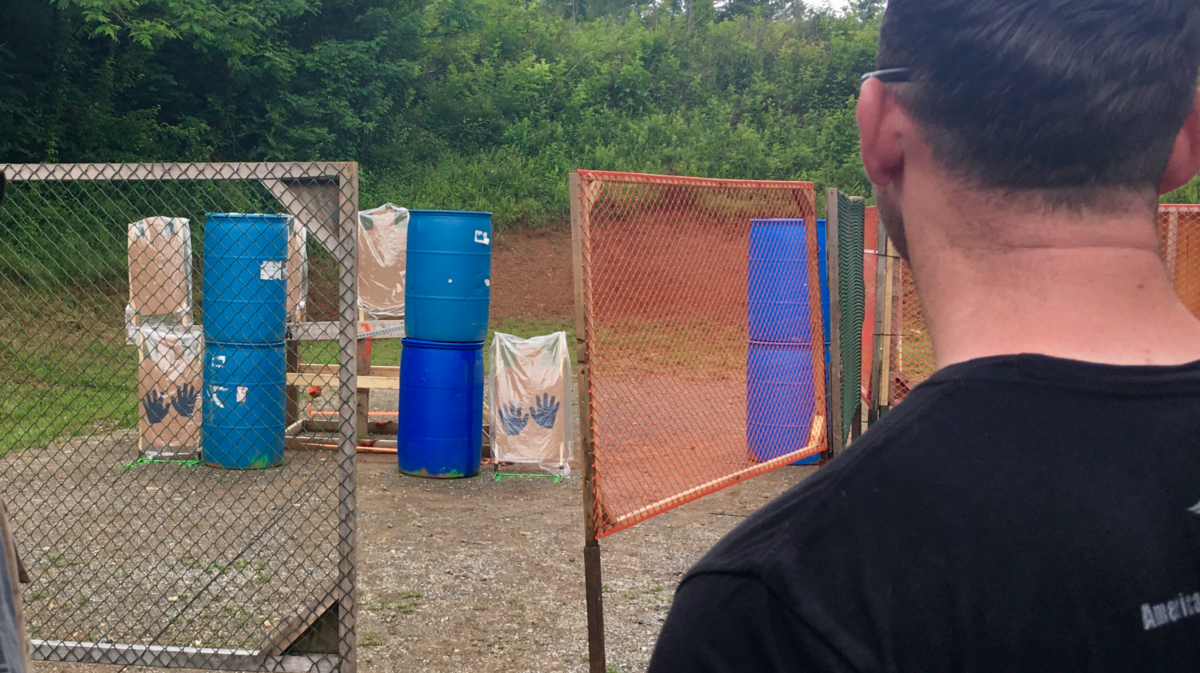
🎯 IDPA vs USPSA in 60 seconds: They differ on four things that actually matter. Scoring — IDPA adds penalty seconds to your raw time, so a hit outside the down-zero zone costs a full second; USPSA divides points by time (hit factor), so a slightly worse hit can still be the right trade. Stage freedom — IDPA tells you the engagement order (tactical priority, cover, fault lines); USPSA lets you plan the stage yourself. Reloads — IDPA won’t let you drop a magazine with rounds still in it, USPSA will, and that one rule makes them different skills. Cost — IDPA caps stages at 18 rounds, USPSA doesn’t, which is roughly $10-20 per match in ammunition. Which first? If you carry daily and want the concealment draw, start with IDPA. If you want raw speed and problem-solving, start with USPSA. Either way, the thing that improves fastest between matches is measured draw and reload time — a free shot timer app turns “I felt fast” into a number you can beat. Full breakdown below.
What’s the Real Difference Between IDPA and USPSA?
If you’re interested in competitive shooting, IDPA and USPSA are the two names you’ll hear most often in North America. Many newcomers face the same question when first getting into the sport: which one should I try first? Both involve shooting handguns at paper targets, but they differ fundamentally in philosophy, rules, and equipment requirements.
IDPA (International Defensive Pistol Association) was founded in 1996 with a focus on realistic self-defense scenarios. Match stages simulate everyday threats, shooters must use concealment garments, and targets are engaged from behind cover in tactical priority order. The core idea is that skills practiced in competition should translate directly to real-world defensive situations.
USPSA (United States Practical Shooting Association) is the U.S. affiliate of IPSC and has a longer history. It emphasizes the ultimate expression of speed, accuracy, and power. USPSA matches are more like track and field for shooters — stages are creatively designed, shooters freely plan their engagement sequences, and the goal is maximum efficiency.
This guide provides a thorough comparison across every major dimension to help you find the right starting point.
💡 Further Reading: If you’ve already decided on one sport, check out our dedicated guides — USPSA Complete Beginner’s Guide and IDPA Defensive Shooting Training Guide.
Competition Philosophy and Design
The most fundamental difference between IDPA and USPSA lies in their design philosophy. Once you understand this, every other rule difference makes sense.
IDPA’s starting point is defensive training. It assumes you’re someone who carries a gun daily and might face a threat at a parking lot, gas station, or home. Match rules simulate the decisions you’d need to make in a real defensive encounter — engage the closest threat first, use cover to protect yourself, reload behind cover. You must wear a concealment garment and draw from a concealed carry position, just as you would in everyday life.
USPSA’s starting point is shooting sport. It doesn’t pretend to simulate any scenario. Instead, it directly tests the limits of your shooting ability. Stage designers create all sorts of interesting challenges — you might need to sprint to a position, shoot on the move, and rapidly transition between targets at multiple angles. Shooters carefully plan their strategy before each stage, determining the most efficient target engagement order and movement path.
Neither philosophy is inherently better. If your primary reason for owning a handgun is home defense and daily carry, IDPA’s training approach is more directly applicable. If you treat shooting as a sport and want to push your personal limits, USPSA’s freedom and competitive depth will appeal to you more. Many experienced shooters do both and consider the skills complementary.
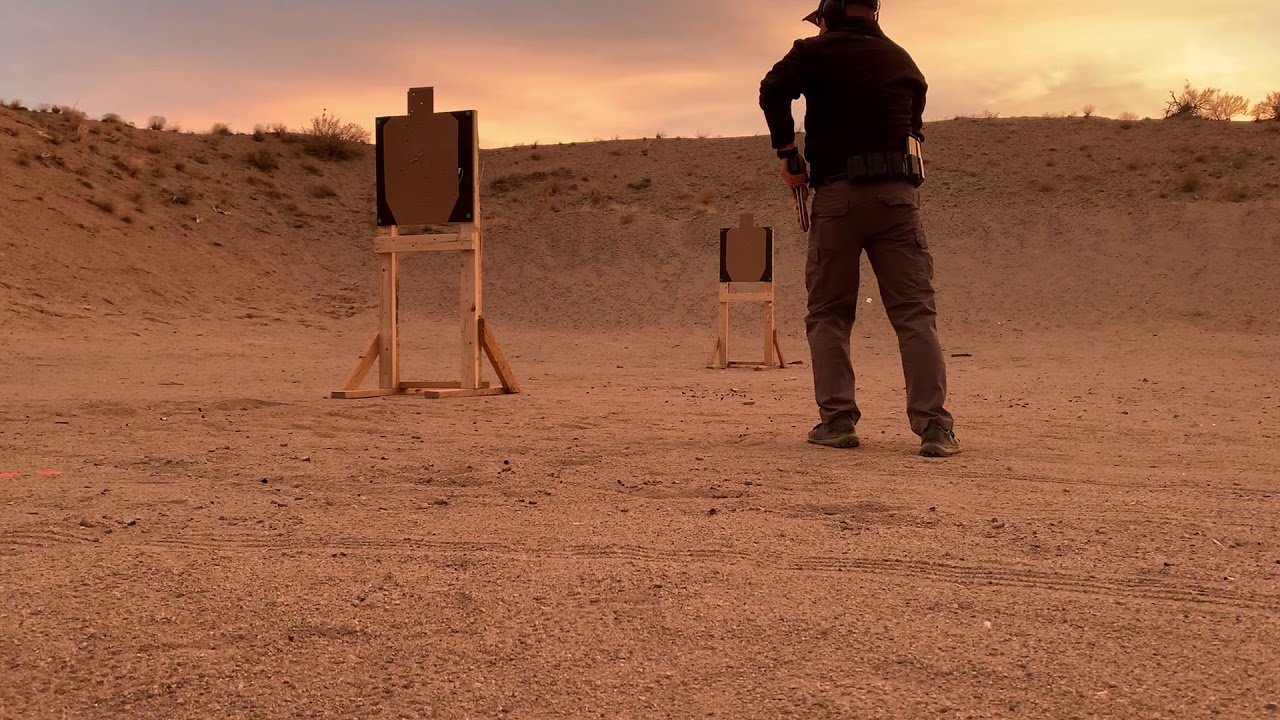
Which Division Do You Land In? A Side-by-Side Map
Choosing a division is the first step in entering competition, and it’s where beginners get confused fastest — the two organizations use different division counts and different naming conventions, so the same pistol can be called two different things depending on which sign-up sheet you’re standing at.
The useful thing to understand for a comparison is not every capacity number, but the shape of the two systems. IDPA sorts you by what kind of gun you would actually carry, which is why every division bans compensators and weight-adding modifications, and why there’s a compact-only division with no USPSA equivalent at all. USPSA sorts you by how far you’ve modified the gun, which is why its ladder runs all the way from iron-sighted Production up to Open, a division with essentially no equipment ceiling. That single difference explains most of the confusion newcomers run into.
For the exact capacity limits, weight ceilings and box dimensions in each system, we keep those in the two dedicated references rather than repeating them here: IDPA Divisions Explained 2026 covers all eight IDPA divisions with every box size and capacity limit spelled out, and USPSA Divisions Explained does the same for the USPSA ladder. What follows is the part neither of those can give you — the map between them.
Division Cross-Reference Table
| IDPA Division | Corresponding USPSA Division | Similarity | Notes |
|---|---|---|---|
| SSP (Stock Service Pistol) | Production | High | Both require near-factory pistols, iron sights |
| CO (Carry Optics) | Carry Optics | High | Both allow slide-mounted red dots, details differ |
| ESP (Enhanced Service Pistol) | Limited | Medium | USPSA Limited has more modification freedom |
| CDP (Custom Defensive Pistol) | Single Stack | Medium | Both lean toward 1911 platforms |
| CCP (Compact Carry Pistol) | No direct equivalent | — | IDPA-only, for small carry guns |
| REV (Revolver) | Revolver | High | Rule details differ but both are revolver divisions |
| — | Open | — | USPSA-only, virtually unrestricted equipment |
| — | Limited Optics | — | USPSA-only, Limited + red dot |
Note that even corresponding divisions have different rule details. For example, IDPA CO has a maximum weight of 45 oz, while USPSA CO limits magazine length (141.25mm) rather than gun weight. All IDPA divisions require a concealment garment; USPSA requires none.
💡 Division Advice: If you own a common 9mm handgun (like a Glock 19 or M&P 2.0), you can start in SSP/Production or CO in either organization without buying anything else. Before you pay an entry fee, check the current capacity and equipment limits for the exact division you’re entering in IDPA Divisions Explained 2026 or USPSA Divisions Explained — they change more often than people expect. For gun selection, see our IPSC Beginner Pistol Guide and IDPA Beginner Pistol Guide.
Scoring Systems Compared
The scoring difference may be the single most important practical distinction between IDPA and USPSA, because it directly affects your strategy and shooting approach.
IDPA: Time Plus Penalties (Vickers Count)
IDPA uses the “Vickers Count” scoring system with an intuitive core concept: your score is your raw completion time plus penalty seconds. The faster and more accurate you shoot, the better — but a single mistake can add seconds of penalties that ruin an entire stage.
The IDPA target has three scoring zones: -0 (zero penalty, equivalent to the A zone), -1 (1 second penalty), and -3 (3 second penalty). Each “point down” is added directly to your time. There are also procedural penalties (3 seconds each) for failing to use cover properly, shooting targets out of order, or not drawing from concealment. Hitting a non-threat target is even worse at 5 seconds per hit. A Flagrant Penalty costs 10 seconds.
The practical effect is that every single hit matters enormously in IDPA. If your raw time on a stage is 15 seconds and you have one -3 hit, you’re at 18 seconds — potentially dropping from first to fifth place. This is why IDPA shooters tend to slow down slightly to ensure solid hits rather than risking maximum speed.
USPSA: Hit Factor Scoring
USPSA uses Hit Factor scoring, which works completely differently: your score is total points divided by total time. Higher is better.
The USPSA target (IPSC target) has A, C, and D zones. With Minor Power Factor (9mm is typically Minor), A zone scores 5 points, C zone 3 points, D zone 1 point. With Major Power Factor (.40 S&W and above), A zone is still 5 points, but C zone scores 4 and D zone 2 — this is why many Limited division shooters choose .40 caliber. A miss deducts 10 points. If you’ve read an older guide that mentions a B zone, ignore it: Appendix B1 confirms the B zone on all USPSA targets is now scored as a C hit.
Hit Factor is calculated as total points ÷ total time. For example, if you score 80 points in 12 seconds, your Hit Factor is 80 ÷ 12 = 6.67. Another shooter might be slower but hit all A zones, scoring 100 points in 16 seconds for a Hit Factor of 100 ÷ 16 = 6.25. In this case, you were faster but less accurate, and you still won.
This scoring system makes USPSA a more complex strategic game. You must find the optimal balance between speed and accuracy — sometimes sacrificing a little accuracy for a big speed gain is worthwhile, sometimes spending half a second to confirm your sight picture is the smarter move.
How Scoring Affects Your Shooting
In IDPA, because penalties add directly to time, every round counts. A -1 hit costs you 1 second, which might be more than the time you saved by shooting faster. IDPA shooters tend to adopt a mindset of confirmed aiming, steady shooting, and using solid fundamentals to reduce time.
In USPSA, Hit Factor math creates more strategic flexibility. On close targets, you can aggressively push speed because even occasional C-zone hits lose little compared to the time saved. On distant targets, slowing down to confirm A-zone hits is often smarter because the gap between D zone (1 point Minor) and A zone (5 points) is massive.
IDPA vs USPSA Targets: Same Silhouette, Different Geometry
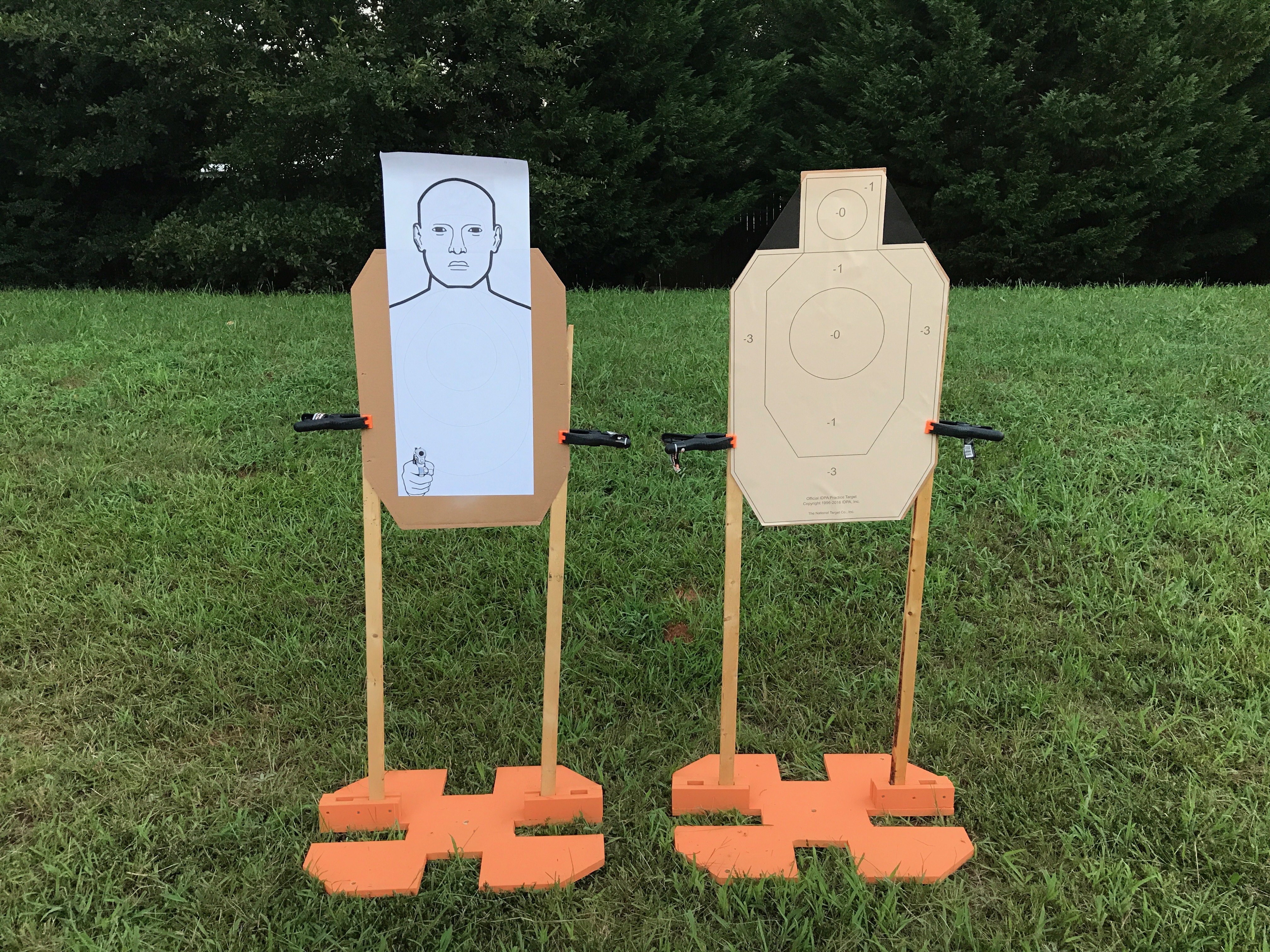
Here’s the part nobody mentions when they tell you the two sports “use different targets.” Stand ten yards back and the cardboard looks almost identical — both are man-size silhouettes about 18 inches wide and 30 inches tall, both die-cut from roughly eighth-inch corrugated board, and licensed manufacturers for the two sports quote overall dimensions within an inch of each other (official IDPA targets typically ship at 18⅛" × 30¾"). What differs is the lines printed on them, and those lines change how you aim far more than the silhouette ever will.
The official IDPA target puts its premium scoring area inside circles. There’s an 8-inch diameter down-zero circle high in the chest, and since the 2017 target revision a 4-inch down-zero circle in the head, sitting inside a roughly 6-inch head box. Everything outside those circles but still on the silhouette is -1 or -3, and the rulebook turns those straight into seconds. Stage designers are constrained by how much of that circle they’re allowed to hide, too: rule 6.5.23 of the 2026.2 rulebook requires any cardboard target inside ten yards to present at least 12 square inches of down-zero zone, with the smallest dimension at least 3 inches.
The USPSA target — the one that started life as the IPSC target and spent years being called the Metric target — puts its premium area inside a rectangle instead. The lower A-zone is roughly 6 inches wide by 11 inches tall, with a smaller upper A-zone in the head, and the C and D zones radiate outward from there. One detail still catches people out: the B zone is gone. Appendix B1 of the USPSA rulebook notes that the B zone on all USPSA targets is now scored as a C hit, with B-zoned cardboard on an indefinite phase-out since a 2018 board directive — so you may still see the old printing on a berm, but it gets scored A-C-D like everything else.
Now put the two shapes side by side and the practical consequence falls out on its own. IDPA’s premium zone is a circle, so it doesn’t care which direction you miss by: four inches low and four inches left cost you exactly the same. USPSA’s is a tall rectangle — roughly five and a half inches of vertical room above and below centre, but only three inches either side of it. Recoil-driven vertical stringing, which is exactly what most shooters produce the first time they try to push the trigger faster, is the error USPSA forgives most and IDPA forgives least. Sideways wobble from a sloppy grip or from breaking shots while still moving gets punished in both, but it falls out of a 6-inch-wide A-zone a lot sooner than it falls out of an 8-inch circle.
That asymmetry is also why the two sports want different things from your garage wall. Preparing for USPSA, a 6 × 11 inch rectangle of tape is a usable A-zone surrogate and you can let your hits string up and down a little without panicking. Preparing for IDPA, draw an 8-inch circle instead and judge yourself on your worst hit rather than your average — the circle is the entire test, and one shot falling out of it costs more than most people save by running the string half a second faster. Either way, the number worth writing down isn’t the group size, it’s how long it took to produce; a shot timer app with a par time set to your target stage pace will tell you which of those two errors you actually make when the beep is real.
Stage Design and Match Rule Differences
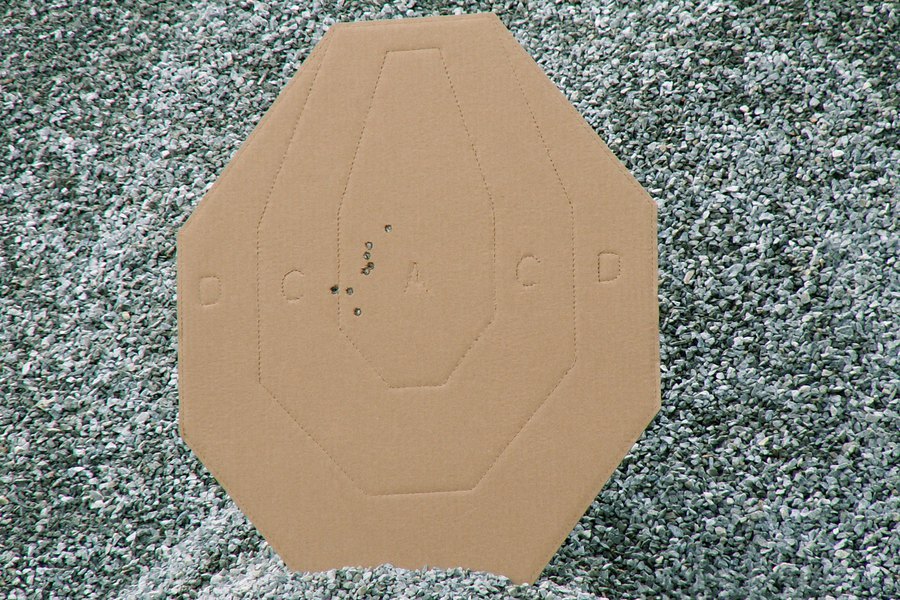
IDPA and USPSA stages look and feel very different, reflecting their distinct competition philosophies.
IDPA Stage Characteristics
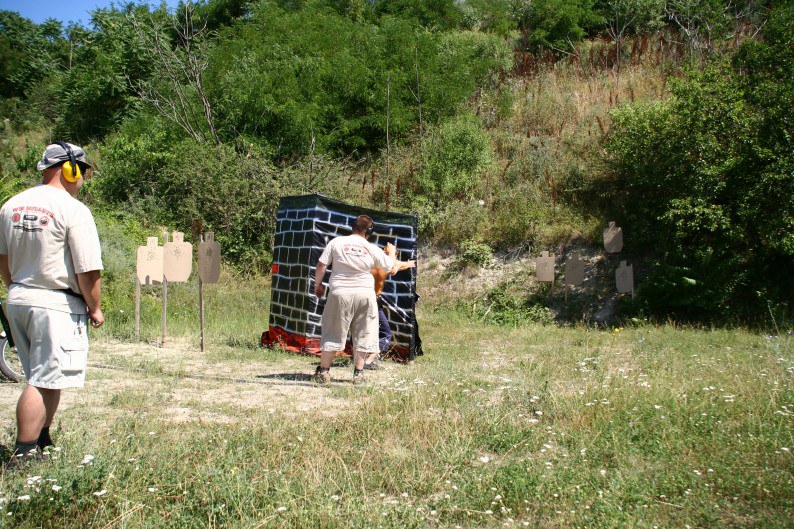
IDPA stages simulate real-world defensive scenarios. You might encounter stages modeled after gas stations, parking lots, offices, or restaurants. Stages include extensive cover (walls, vehicles, tables), and rules require you to properly use that cover — exposing more than 50% of your body earns a penalty.
IDPA has an important concept called “Tactical Priority”: when multiple targets are visible simultaneously, you must engage the closest target first. This simulates the real-world logic of neutralizing the greatest threat first. IDPA also prohibits shooting a target before you reach it — you must move along a tactically sound path.
Ammunition requirements are moderate: IDPA stages have a maximum of 18 rounds and two reloads, with entire matches typically requiring 90-120 rounds. This reflects the logic of everyday carry — you probably won’t have six spare magazines on you.
USPSA Stage Characteristics
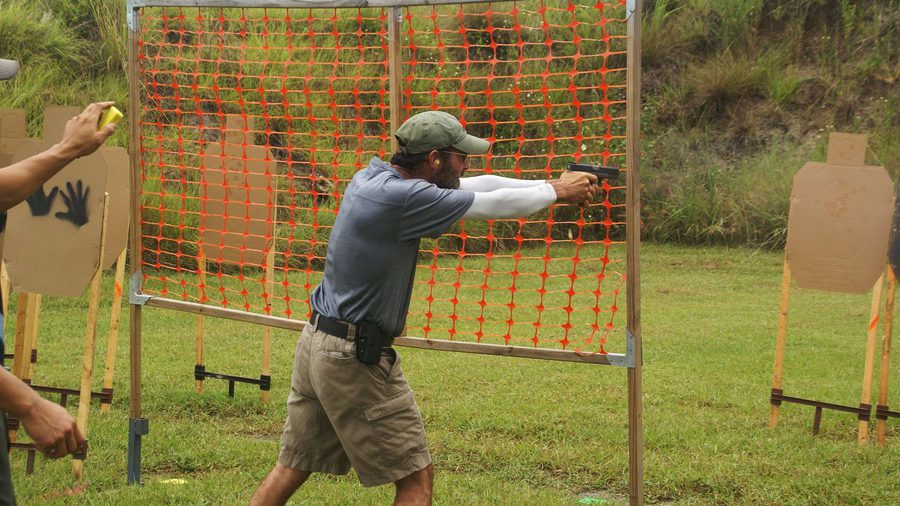
USPSA stages feel more like athletic courses for shooters. Stage designers have enormous creative freedom, producing challenges with 32 or more targets scattered across different positions that require running, turning, crouching, standing, and shooting from various positions. Stages use clearly marked “fault lines” (usually 2×4 lumber) to define shooting area boundaries — step outside the line and it’s a penalty. This is more objective than IDPA’s cover judgments.
USPSA has no engagement order requirements — you can complete a stage in whatever way you believe is most efficient. This is why USPSA shooters spend considerable time during walkthroughs planning their stage strategy, deciding which targets to engage from which positions, where to reload, and which movement path to take.
Ammunition requirements are higher: USPSA stages have no round limit and a single stage might require 32 or more rounds, with matches typically consuming 120-180 rounds total.
Movement and Strategy
In IDPA, cover requirements and tactical priority rules mean all shooters complete each stage in roughly the same way. Differences come down to execution speed and accuracy. This makes it more accessible for beginners who don’t need to worry about strategic planning mistakes.
In USPSA, the same stage might be shot completely differently by different competitors. Some shooters might engage more targets from the first position before moving; others might sprint to the next position quickly. This strategic diversity is one of USPSA’s greatest attractions, but it also means beginners need to learn stage planning in addition to shooting skills.
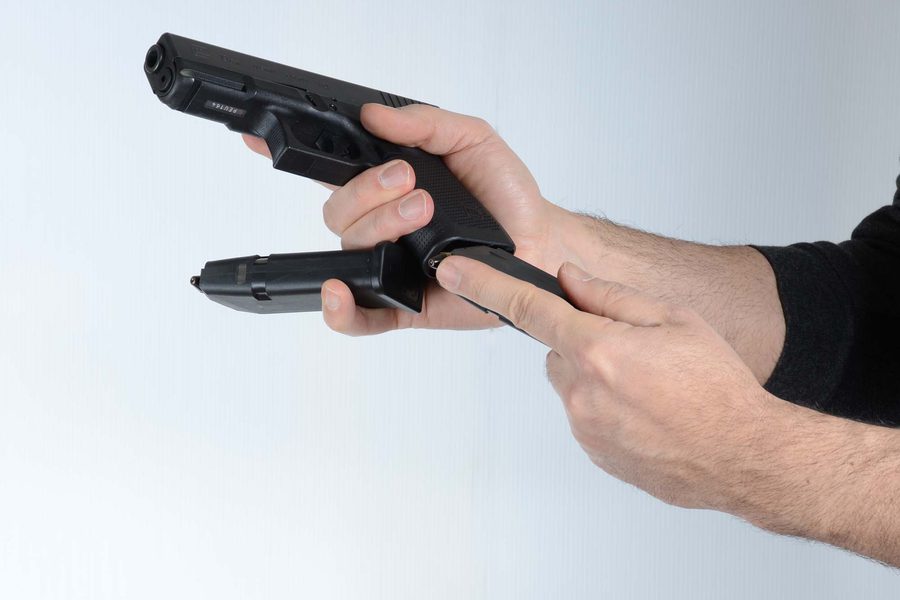
The Reload Rule Nobody Warns You About
Everyone comparing these two sports leads with scoring. The difference that actually changes what you do on a Tuesday night in your garage is the reload rule, and almost nobody mentions it until a Safety Officer hands you a procedural.
In USPSA, a magazine on the ground is nobody’s business but yours. You can dump a mag with twelve rounds still in it on the way to the next position, and the only thing it costs you is the price of the magazine and a bit of dirt. Stage planning openly assumes this: shooters decide during the walkthrough exactly where the “free” reload happens — during a long movement, where the reload costs zero extra time because you were running anyway.
IDPA does not allow that. If the magazine still has rounds in it, you have to retain it — the reload becomes a retention reload, where you take the fresh magazine in hand, strip the partial one out, stow it, and then seat the fresh one. The reasoning is that a defensive shooter would not throw away usable ammunition. It’s the single most argued-about rule in the sport, and the counterargument you’ll hear at every match is that anyone actually moving to a second room would drop the partial mag and start full. Whether you find the logic convincing matters less than the practical consequence, which is this: a retention reload is a genuinely different motor skill from a speed reload, and it is slower — typically by something in the region of half a second to a full second once both are clean.
That has three knock-on effects worth knowing before you pick a sport. Stage design changes: IDPA caps stages at 18 rounds and two reloads partly because a retention reload is expensive, so stages are shorter and the reload placement is dictated to you rather than chosen. Practice changes: you can’t just drill one reload and call it done — if you shoot both sports you’re maintaining two separate reloads, and the retention version needs its own reps because the stow step is where it falls apart under pressure. And your timer numbers change: don’t compare your IDPA reload against your USPSA reload and conclude you’re getting worse. They’re different drills and deserve different par times — run each one on its own PAR, ten reps at a time, and track them as two separate numbers.
If you’re coming from IDPA to USPSA, the good news is the speed reload is the easier of the two to learn. Going the other way is where people get burned: USPSA shooters entering their first IDPA match routinely eat a procedural on a stage they otherwise shot well, purely because the partial magazine hit the dirt out of habit.
Where IPSC Fits In (and Why It Isn’t Just “USPSA Abroad”)
A lot of people searching for this comparison are really choosing between three things, not two, because IPSC keeps showing up in the same conversations. The short version: USPSA is the United States region of IPSC, so the two share a scoring DNA — hit factor, A/C/D zones, freeform stage planning — but they’ve diverged enough in rules and division structure that they are not interchangeable.
The practical differences are mostly about stage constraints and division names. IPSC rules limit how much of a course can be seen and engaged from a single position, so IPSC stages tend to push you to move more than a comparable USPSA stage will. Division names differ too — IPSC uses Production, Production Optics, Standard, Classic and Open, so a USPSA Carry Optics shooter looking for the nearest IPSC equivalent is looking at Production Optics rather than something called Carry Optics. Power factor thresholds and magazine rules also differ by division.
So when you see “IDPA vs USPSA vs IPSC” framed as three options, the honest mapping is two philosophies, not three: IDPA on one side (defensive scenario, time plus penalties, retained reloads, concealment), and USPSA and IPSC on the other (shooting sport, hit factor, free stage planning) separated mainly by geography and rule detail. If you’re outside the United States, the choice is usually IPSC vs IDPA rather than USPSA vs IDPA, and everything in this article about scoring philosophy, stage freedom and reload rules maps across cleanly. Our IPSC beginner guide and practical shooting overview cover the IPSC side in detail, including Action Air, which is the airsoft division of the same organisation and the cheapest way to shoot IPSC stages anywhere in the world.
Cost and Entry Barriers
For most people, cost is an important consideration when choosing a shooting sport. The good news is that both IDPA and USPSA have reasonable entry-level costs.
Basic Equipment
Both sports require the same basic equipment: a handgun, at least three magazines, a holster, and magazine pouches. If you already own a 9mm handgun, the additional gear investment is modest.
IDPA additionally requires a concealment garment (a basic fishing or photography vest for about $20-30) and a concealable holster (IWB or OWB that can be covered by a garment, $40-80). IDPA’s equipment restrictions actually keep entry costs lower because you can’t and don’t need to buy fancy gear.
USPSA Production and Carry Optics have similar entry costs to IDPA. However, moving up to Limited or Open divisions dramatically increases equipment costs — an Open-division 2011 with a red dot and compensator can run $3,000-5,000. But that’s not something to worry about when starting out.
Per-Match Costs
IDPA local match entry fees typically run $15-25, plus ammunition for about 90-120 rounds (around $25-35 for 9mm), totaling approximately $40-60 per match. USPSA local match fees are similar at $15-30, but ammunition requirements are higher (120-180 rounds), putting total costs at approximately $50-75 per match.
Estimating 20 matches per year, annual IDPA costs run roughly $800-1,200 while USPSA costs approximately $1,000-1,500. The difference comes primarily from ammunition consumption.
Membership Fees
IDPA annual membership runs roughly $45 a year and USPSA roughly $80, with multi-year and lifetime options at both. That gap sounds bigger than it feels in practice, because what you’re buying is the same thing in both cases: a classification record, eligibility for sanctioned matches, and the organisation’s magazine. Most local club matches will happily let you shoot as a non-member — you just won’t be scored into a class, and at some clubs you’ll pay a couple of dollars more at the table.
The rule of thumb worth following: shoot four or five local matches as a non-member first. Membership only starts paying for itself once you want a classification, or once you enter your first sanctioned match (state, area or sectional), where it’s mandatory. Buying a membership before your first match is the single most common way beginners spend money a month too early.
💡 Money-Saving Tip: If you’re interested in both sports, start by alternating between IDPA and USPSA local matches with the same gun and gear. After experiencing both, decide where to focus your resources. For more on reducing ammunition costs, see our Handgun Ammunition & Caliber Guide.
The SIG P320 IDPA Ban — Still in Force Under the 2026.2 Rulebook
If you own a SIG P320, this is the one equipment question that actually decides which sport you can shoot this weekend, so it’s worth getting from the rulebook rather than from a forum thread.
On July 30, 2025, IDPA announced an immediate ban on all SIG P320 variants from any IDPA competition or event. This decision followed multiple agencies and military units reporting alleged “uncommanded discharges” with the P320 — including U.S. Immigration and Customs Enforcement (ICE) revoking P320 approval and the Air Force Global Strike Command pausing M18 (the military P320 variant) use following a fatal incident at F.E. Warren Air Force Base.
That announcement is no longer the only place the prohibition lives — it has been written into the rulebook itself. The current edition is Ver. 2026.2, adopted 10/26/96 and amended 1/10/26, and the Equipment Appendices that go with it carry it as A.8 Disallowed Firearms, A.8.1: “Sig Sauer P320 in all models and variants.” If you want to check whether anything has changed before a match, that single line is the thing to look at, and as of the 2026.2 appendices it is still there.
The prohibition covers the P320 series only. Every other SIG Sauer model — P226, P229, P365 and the rest — remains legal in IDPA, and IDPA has said it will re-evaluate if new credible information emerges.
USPSA is the more interesting half of the comparison, because its answer is not a clean yes. The USPSA rulebook (2026-09 edition) has no disallowed-firearms appendix at all, so there is no association-wide P320 prohibition to point to. In practice that doesn’t settle the question — it moves it down a level, to the individual club or host range, and a good number of ranges have posted their own P320 restrictions independently of either association. The practical advice is unglamorous: before you drive to a USPSA match with a P320 in the bag, read the host range’s own rules instead of assuming USPSA’s silence covers you.
💡 Further Reading: For a complete analysis of the P320, see our SIG P320 Complete Guide, which includes a detailed discussion of the safety controversy and alternative gun recommendations.
Which Competition is Right for You?
Choosing between IDPA and USPSA depends on your personal goals and preferences. Here are some considerations to help you decide.
If you own a handgun primarily for home defense and everyday carry (EDC), IDPA’s training approach is more directly applicable. Drawing from concealment, using cover effectively, engaging targets in threat priority order — these are actual defensive skills. IDPA rules also force you to practice techniques that might be overlooked in USPSA, like reloading behind cover and retaining partially loaded magazines instead of dropping them.
If you treat shooting as a sport and enjoy pushing your limits, USPSA’s freedom and competitive depth will be more appealing. Planning shooting strategies, optimizing movement paths, finding the ideal balance between speed and accuracy — these elements make every match feel like solving a complex optimization problem. USPSA’s Hit Factor scoring also makes progress easier to quantify.
If you’re still undecided, the best approach is to try both. Find local IDPA and USPSA matches near you and attend one of each. You can use the same gun and equipment for entry-level divisions in both. After experiencing each firsthand, you’ll naturally know which one appeals to you more. Many people end up doing both — they train different aspects of shooting skill and complement each other over time.
Transitioning Between the Sports
If you already have experience in one sport and want to try the other, there are some adjustments to be aware of.
Shooters moving from IDPA to USPSA typically find their speed is below average but their accuracy is excellent. The steady shooting habits developed in IDPA provide a great foundation for USPSA, but you’ll need to learn when to push speed harder and how to plan more efficient stage strategies. Another common adjustment is no longer being bound by the “closest target first” rule — in USPSA, you can ignore nearby targets and run to a position where you can see more targets at once.
Shooters moving from USPSA to IDPA tend to rack up procedural penalties. The most common mistakes are forgetting to use cover, shooting targets out of tactical priority order, or reloading outside of cover. USPSA shooters’ habit of pushing maximum speed sometimes needs to be dialed back, since a -3 hit in IDPA costs 3 seconds, which is usually more expensive than the time saved by shooting faster. However, the rapid shooting ability and composure under pressure developed through USPSA training are huge advantages in IDPA.
Using a Shot Timer to Improve Match Performance
Whether you choose IDPA or USPSA, a shot timer is an essential training tool. It precisely records your draw time, split times, and transition times, showing you exactly where improvement is needed.
For IDPA shooters, the most important shot timer drill is the concealed draw. Starting from a natural stance in concealment garment, draw and fire the first shot on the buzzer, recording your first-shot time. Beginners typically start at 2.0-2.5 seconds with a goal of working down to under 1.5 seconds. Another key drill is reloading behind cover — set a PAR time and practice completing a smooth reload from a cover position.
For USPSA shooters, the shot timer’s value lies in finding your speed-accuracy balance point. For example, practice Bill Drills (6 rounds on one target), trying different speeds and recording split times and hit distributions to find the speed range that produces your best Hit Factor. El Presidente (180-degree turn, 2 rounds on each of 3 targets, reload, 2 more rounds on each target) is a classic drill that trains skills relevant to both IDPA and USPSA.
During dry fire practice, a shot timer is equally valuable. Set random delay mode (1-4 seconds) to practice reaction speed and draw fluidity. Dry fire requires no ammunition and can be safely done at home, making it the most cost-effective training method available.
💡 Training Tool: Our AirsoftShotTimer App features professional FFT frequency-domain gunshot detection, PAR time mode, and random delay functions, perfect for airsoft and dry fire training. For detailed usage instructions, see our Shot Timer App Complete Guide.
Frequently Asked Questions (FAQ)
Q1: Can I use the same gun for both IDPA and USPSA?
Yes. Most 9mm handguns (like the Glock 17/19/34, CZ P-10, S&W M&P 2.0) qualify for both IDPA SSP/CO and USPSA Production/Carry Optics. You just need to ensure your holster can be concealed under a garment for IDPA and secured to a belt for USPSA.
Q2: Which sport is more beginner-friendly?
Both communities are very welcoming to newcomers. IDPA’s stage design and tactical priority rules mean beginners don’t need to worry about strategic planning — just follow the rules. USPSA beginners may need a little time to understand stage planning, but experienced shooters at the match are usually happy to help. If both are available near you, just show up — don’t overthink it.
Q3: Is IDPA’s cover judgment controversial?
This is indeed a commonly discussed topic in IDPA. Cover determinations have some subjectivity — different Safety Officers may have different standards. USPSA uses physical fault lines (2×4 lumber) to mark boundaries, which is more objective. However, IDPA has been working to make rules more consistent, and most local match SOs are reasonable and fair.
Q4: Do I need a membership to compete?
Most local matches allow non-members to attend a few times as “guests.” But if you plan to compete regularly, membership is recommended. IDPA annual dues are approximately $45; USPSA is approximately $80. Membership is typically required for sectional and higher-level matches.
Q5: Does USPSA’s Power Factor rule affect my gun choice?
If you’re shooting 9mm in Production or Carry Optics, you’re automatically Minor Power Factor — no need to worry. Power Factor mainly matters in Limited and Open divisions, where Major Power Factor (typically .40 S&W or .45 ACP) scores higher in the C and D zones. For beginners, 9mm’s lower recoil and lower cost are far more valuable than the Power Factor scoring difference.
Q6: What are good alternatives after the P320 IDPA ban?
If you were using a P320, there are many excellent alternatives for IDPA. In SSP/CO, the Glock 34/17, CZ P-10F, S&W M&P 2.0, and Walther PDP are popular choices. In CCP, the Glock 19, SIG P365XL, and S&W M&P Shield Plus are solid options.
Q7: How do the classification systems differ?
IDPA uses six levels: Distinguished Master (DM), Master (MA), Expert (EX), Sharpshooter (SS), Marksman (MM), and Novice (NV). USPSA also uses six levels: Grand Master (GM), Master (M), A, B, C, and D. Both classify shooters based on match performance, though the specific calculations differ.
Q8: Can you drop a magazine with rounds still in it in IDPA?
No — and this is the rule that catches USPSA shooters out at their first IDPA match. If the magazine still contains ammunition, IDPA requires you to retain it: you perform a retention reload, stowing the partial magazine rather than letting it fall. Dropping it earns a procedural penalty. USPSA has no such rule; magazines hit the ground freely there. If you shoot both, treat the two reloads as two separate skills with two separate PAR times rather than assuming one transfers to the other.
Q9: How many rounds does an IDPA stage have?
IDPA caps a stage at 18 rounds and two reloads, which keeps a typical local match in the 90-120 round range. USPSA has no per-stage round cap — a single field course can call for 32 or more rounds, and matches commonly run 120-180 rounds total. If ammunition cost is a factor in your decision, that difference is worth about $10-20 per match at current 9mm prices.
Q10: Is IDPA or USPSA better for a concealed carrier?
IDPA is the closer simulation on paper — you draw from concealment, you use cover, you retain magazines. But be aware of the honest counterargument you’ll hear from experienced shooters: the OWB competition holsters and fishing-vest concealment used at most IDPA matches don’t resemble how anyone actually carries either, so the “realism” is partial. The more defensible position is that USPSA builds raw gun-handling speed under pressure while IDPA builds the decision habits, and a carrier who shoots both gets more than either one alone. If you can only do one, start with IDPA for the concealment draw, then add USPSA once your draw is consistent.
Q11: Is IPSC the same as USPSA?
Not quite. USPSA is the United States region of IPSC and shares its hit-factor scoring and freeform stage planning, but rules and division names have diverged — IPSC uses Production Optics where USPSA uses Carry Optics, and IPSC stage rules restrict how much of a course you can engage from one position. If you’re shooting outside the US, your real choice is usually IPSC vs IDPA, and everything in this comparison about scoring and stage philosophy still applies.
Q12: Can I practice IDPA or USPSA skills with airsoft guns?
Absolutely. GBB airsoft handguns closely replicate the feel, weight, and operation of real firearms, making them excellent for practicing draws, aiming, and magazine changes. Combined with a Shot Timer App, you can conduct effective dry fire and timed training at home. See our Airsoft Gear Guide and Dry Fire Training Guide for details.
Q13: Is the SIG P320 still banned by IDPA?
Yes. The prohibition that IDPA announced on July 30, 2025 is written into the current rulebook package: the 2026.2 Equipment Appendices list it under A.8 Disallowed Firearms as A.8.1, “Sig Sauer P320 in all models and variants.” That covers every model and variant, at every IDPA match, and the dismissal of a class action against SIG has not changed it. USPSA has no equivalent entry in its 2026-09 rulebook, so there is no USPSA-wide ban — but individual clubs and host ranges have set their own P320 policies, so check with the range rather than assuming.
Q14: What are the dimensions of an IDPA target, and how does it compare to a USPSA target?
Both are man-size cardboard silhouettes around 18 inches wide by 30 inches tall, so the outlines are nearly interchangeable. The scoring zones are not. The IDPA target has an 8-inch diameter down-zero circle in the chest plus a 4-inch down-zero circle in the head inside a roughly 6-inch head box; everything else on the silhouette is -1 or -3. The USPSA target has a lower A-zone of roughly 6 × 11 inches, a smaller upper A-zone in the head, and C and D zones outside that. The practical difference is shape: a circle punishes every direction of error equally, a tall rectangle gives you more vertical room than horizontal.
Q15: Does USPSA allow red dot optics?
Yes, in several divisions — Carry Optics and Limited Optics are both built around slide-mounted red dots, and Open has allowed them for decades. IDPA has its own Carry Optics division too, so a dot doesn’t lock you out of either sport. What differs is the detail: sight-height limits, mounting rules and what else the division lets you change. Those specifics live in the dedicated references rather than here — see IDPA Divisions Explained 2026 and USPSA Divisions Explained for the current year’s wording before you enter.
Q16: Is IDPA or USPSA better?
Neither, and anyone who answers that question quickly is telling you about themselves rather than about you. They optimise for different things: USPSA’s hit-factor scoring and freeform stages build raw speed and problem-solving, while IDPA’s penalty-second scoring and mandated engagement order build deliberate, confirmed shooting and defensive habits. If “better” means “will make me a faster shooter in twelve months”, USPSA usually wins. If it means “looks more like the way I carry a gun”, IDPA does. The honest answer for most people is to shoot four or five local matches of each before deciding, because the club atmosphere near you will matter more to whether you keep going than the rulebook will.
Conclusion
IDPA and USPSA are North America’s two most popular handgun shooting sports, each attracting a large community of enthusiasts. There’s no universal answer to which is better — IDPA offers training that closely mirrors real-world defensive scenarios, while USPSA provides a freer, more competitively deep shooting challenge. Both will make you a better shooter, and both let you enjoy shooting in a safe environment.
If you’re a complete beginner, don’t spend too much time comparing. Find the nearest match to your home, bring your handgun, and show up. The shooting community is one of the friendliest sports communities I’ve encountered — everyone remembers their first-match nervousness and is happy to help newcomers get started.
💡 More Competitive Shooting Resources:
- USPSA Complete Beginner’s Guide — Scoring, classification & preparation
- USPSA Divisions Explained — All eight divisions and their equipment rules
- IDPA Defensive Shooting Training Guide — Tactical training deep dive
- IPSC Practical Shooting Training Guide — International competition training
- Steel Challenge Beginner’s Guide — Pure speed shooting entry point
- 3-Gun Competition Guide — Three-gun platform competition
- which pistol drill to shoot — Bill Drill, El Presidente & more
- Shot Timer App Guide — How to use timing tools
Image Credits
- USPSA/IPSC metric cardboard target: photo by Wikimedia Commons user Rude, released into the public domain, via Wikimedia Commons — cropped to 3:2 and resized, not otherwise altered.
- IDPA match stage: photo by hu.wikipedia user BelSE, CC BY-SA 3.0, via Wikimedia Commons — recompressed, not otherwise altered.


Put a Shot Timer in Your Pocket
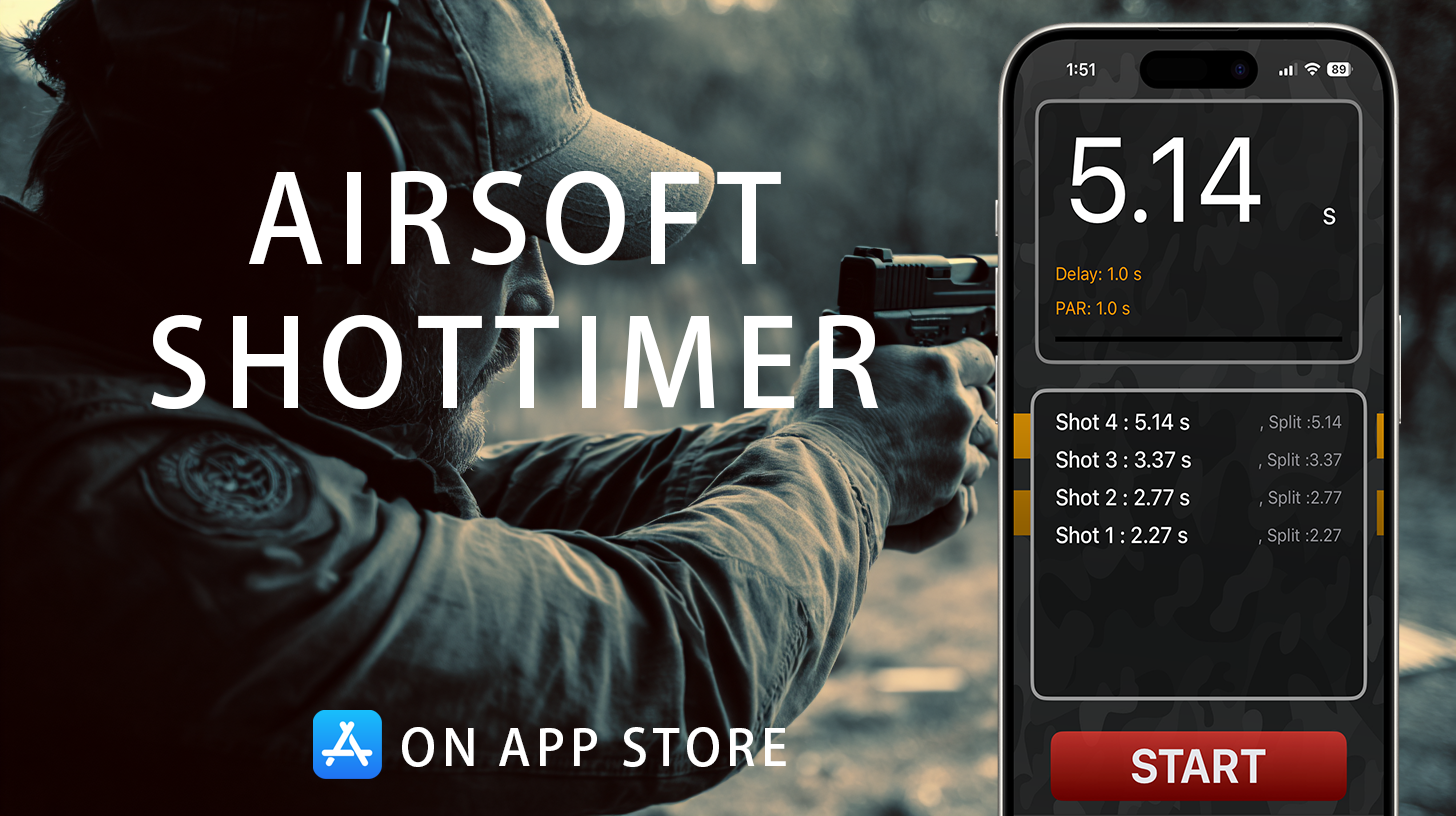
Airsoft Shot Timer is a free shot timer app tuned for airsoft and Action Air — it picks up BB gun shots, tracks your split times, and saves you the cost of a $150+ hardware timer for IPSC/IDPA practice.

- IDPA vs USPSA
- IDPA vs USPSA 2026
- USPSA vs IDPA
- IDPA vs USPSA vs IPSC
- IPSC vs USPSA
- Difference Between IDPA and USPSA
- IDPA
- USPSA
- IPSC
- Competitive Shooting
- Defensive Shooting
- Practical Shooting
- Hit Factor
- Vickers Count
- IDPA Reload Rules
- Retention Reload
- Tactical Priority
- IDPA Membership Cost
- USPSA Membership Cost
- Concealed Carry Competition
- Which Shooting Sport Should I Try
- Carry Optics
- Shot Timer
- SIG P320
- IDPA vs USPSA Targets
- IDPA Target Dimensions
- USPSA Target Dimensions
- IDPA Down Zero
- USPSA a Zone
- IDPA 2026.2 Rulebook
- P320 IDPA Ban 2026
- Is P320 Banned IDPA
- USPSA Optics Divisions
- Metric Target