Pistol Reload Times 2026: Average, Fast & Sub-1.5s (Speed vs Tactical)
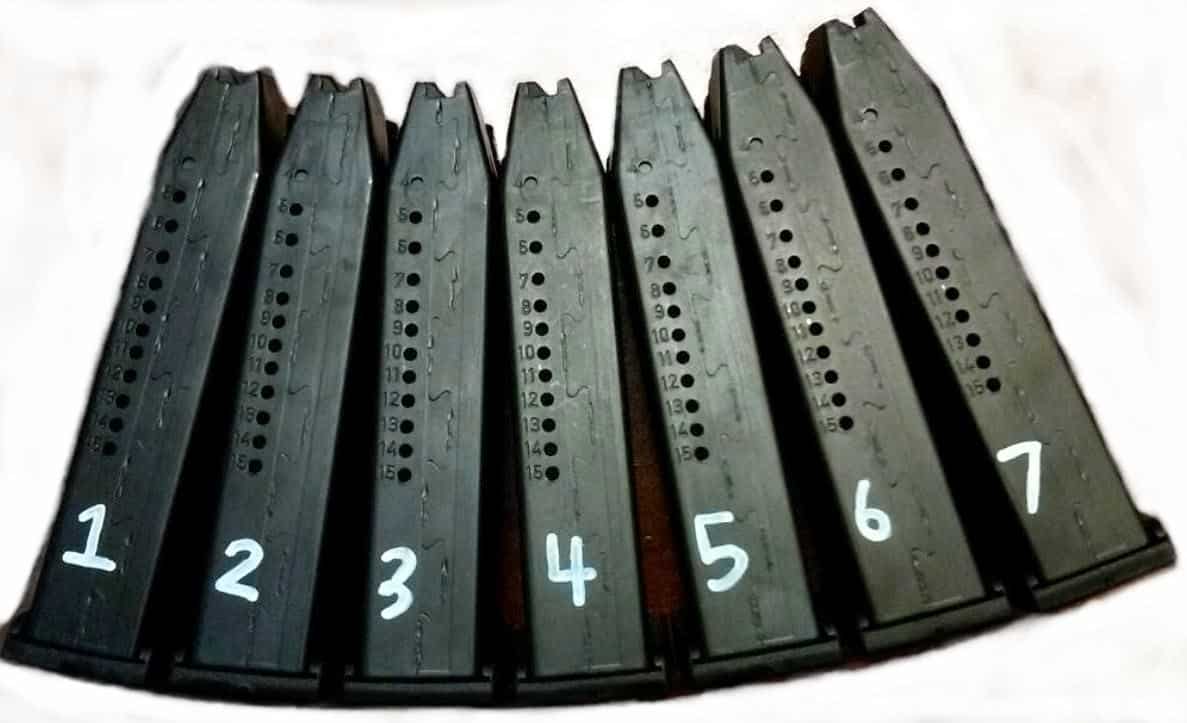
How Fast Is a Pistol Reload? Average vs Good
The honest answer almost nobody gives you: a typical shooter with a belt-mounted magazine pouch runs about 2.5 to 3 seconds from the shot that empties the gun to the shot that follows the reload. That number is not a target, it is a description — it is roughly what you get when someone who shoots a few times a year drops a magazine, finds a fresh one, and gets back on the sights. The widely repeated “under 3 seconds is a pretty good benchmark” you will find on carry forums is describing the same population, and in the competition-shooting corners of the internet people practising deliberately report averaging around 2.5 seconds from belt to shot.
That matters because average and good are two different questions, and most pages answer only the second one. If you are searching for the average, you want to know whether you are normal. If you are searching for a good time, you want a standard to chase on the day your hands feel clumsy. Here is both, on one ladder:
| Where you are | Slide-lock reload (shot to shot) | What it feels like |
|---|---|---|
| First time on a timer | 3.5 seconds and up | Looking the magazine into the well, fumbling the grab |
| Typical carry shooter from a belt pouch | 2.5-3.0 seconds | Smooth but deliberate, one conscious step at a time |
| Practising deliberately in dry fire | 1.8-2.2 seconds | The hand path has stopped being a decision |
| Solid club-level competitor | 1.5-1.8 seconds | Gun and magazine arrive together, eyes already leaving |
| A-class / advanced | 1.2-1.5 seconds | Reload happens inside the movement, not instead of it |
| Top tier | Under 1.2 seconds | Looks like an editing mistake on video |
Two numbers worth keeping separate from all of the above. The first is hand speed, not reload time: USPSA Grandmaster Rob Epifania trains the magazine from pouch to the bottom of the grip against a 0.6-second par time — that is one isolated piece of the reload, and he used to run it at 0.5 when he was, in his words, going crazy with it. The second is the record ceiling people are actually asking about when they search for the fastest reload ever. Jerry Miculek’s famous 1999 run put twelve shots including a reload through a six-shot revolver in 2.99 seconds, which is a revolver speedloader feat, not a semi-auto magazine change. There is no sanctioned world record for a pistol mag change, which is exactly why the honest ceiling to quote is “under a second, and only from people who do nothing else.”
The spread between the average and good rows is where your match finish lives. Two reloads on a stage at 2.8 seconds each versus 1.5 seconds each is 2.6 seconds of pure gift, and 2.6 seconds is several classification percentage points on a classifier. That is the whole argument for pulling this one skill out and training it on its own clock.
Speed, Tactical, Retention: Which Reload Are You Actually Doing?
Most shooters use “reload” as one word for three different things, and that is why the training so often goes nowhere. A speed reload dumps the empty magazine on the ground and gets the gun running again as fast as physically possible. A tactical reload swaps a partially loaded magazine for a full one during a lull, keeping the partial. A reload with retention does the same thing but stows the old magazine before the new one goes in. Different problems, different hand paths, different clocks.
Which one you should be practising depends entirely on what you are training for. IPSC and USPSA almost never reward anything but the speed reload — the rules let you drop magazines freely, so every tenth of a second spent retaining one is a tenth you gave away. IDPA is the opposite: its rules and its defensive premise both push you toward retention, and dropping a partially loaded magazine on the ground can cost you a procedural penalty.
Picking the wrong default is the most expensive mistake in this whole topic, and it is invisible until match day. Plenty of shooters arrive at their first USPSA match having spent a winter diligently practising tactical reloads because that is what the YouTube algorithm fed them, then spend the entire stage retaining magazines nobody asked them to retain. The reverse happens too: a competition shooter who only ever drops magazines shows up to an IDPA match and eats a procedural on the first stage.
The rest of this guide breaks down all three reload types, the IPSC and IDPA rule differences that decide which you should default to, where the seconds actually hide inside the motion, a three-phase training progression, the five mistakes that eat the most time, and how to put a number on each piece with a shot timer.
The Three Reload Types in Detail
Based on different scenarios and rule requirements, magazine reloads are divided into three main types. Understanding their differences and applications is the first step in establishing the correct training direction.
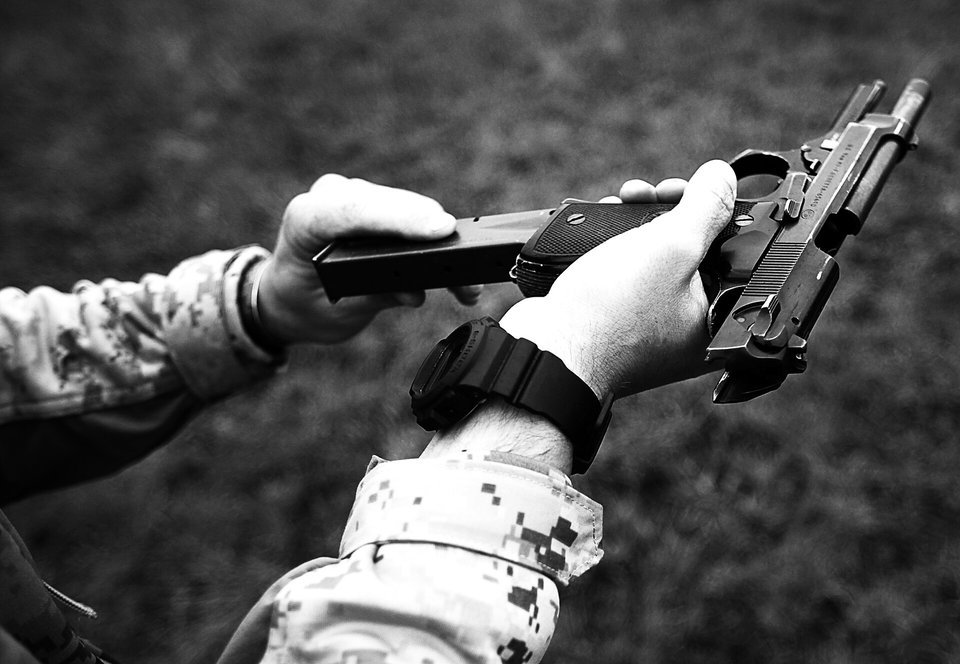
1. Emergency Reload (Slide Lock Reload)
Definition: A reload performed when the magazine is empty and the slide is locked back.
This is the most basic and common reload scenario. When you fire continuously until the magazine is empty, the slide automatically locks in the rear position, requiring you to:
- Release the empty magazine (let it fall freely)
- Grab a new magazine
- Insert into the magazine well
- Release the slide (chamber a round)
- Reacquire sight picture
Applicable Scenarios:
- All IPSC divisions
- IDPA emergency reload situations
- Real-world defense (when there’s no time to retain the magazine)
Target Times:
- Beginner: Under 3.0 seconds
- Intermediate: Under 2.0 seconds
- Advanced: Under 1.5 seconds
- Competition Expert: Under 1.2 seconds
2. Tactical Reload
Definition: A reload performed when the magazine still has rounds, requiring retention of the original magazine.
The core concept of tactical reload is “ammunition is precious, don’t waste it.” In tactical situations, you may need to replenish ammunition behind cover while retaining the remaining rounds in the original magazine for backup.
Standard Operating Procedure:
- Keep the firearm pointed toward the threat
- Support hand grabs new magazine (held between index and middle fingers)
- Pinch the bottom of the old magazine with thumb and index finger
- Press the magazine release, remove old magazine
- Insert new magazine
- Stow old magazine in pocket or pouch
Applicable Scenarios:
- All IDPA situations requiring magazine retention
- Tactical training
- Military and law enforcement scenarios
Target Times:
- Beginner: Under 4.0 seconds
- Intermediate: Under 3.0 seconds
- Advanced: Under 2.5 seconds
3. Reload with Retention (RWR)
Definition: Similar to tactical reload, but with a different sequence, usually faster.
Reload with Retention is commonly used in IDPA. The difference from tactical reload is: first stow the old magazine, then grab the new one. This way, your hand only needs to travel to the waist once instead of twice.
Standard Operating Procedure:
- Press magazine release
- Catch old magazine with support hand
- Stow old magazine in pocket
- Grab new magazine
- Insert into magazine well
Advantage: Simpler movement, only one trip to the waist Disadvantage: Gun is empty longer
Target Times:
- Beginner: Under 3.5 seconds
- Intermediate: Under 2.5 seconds
- Advanced: Under 2.0 seconds
IPSC vs IDPA Reload Rule Differences
Choosing the correct reload technique requires understanding different competition rule requirements.
IPSC (USPSA) Rules
IPSC pursues pure speed, with relatively relaxed rules:
- ✅ Speed reloads allowed: Magazines can be dropped freely
- ✅ No magazine retention required: Empty or partial magazines can be discarded
- ✅ No cover requirements: Can reload anywhere
- ✅ Free timing choice: Shooter decides when to reload
Strategy Recommendation: In IPSC competitions, always use emergency reload (speed reload) for maximum speed.
IDPA Rules (2025 Edition)
IDPA emphasizes “combat simulation” with stricter rules:
- ❌ Speed reloads prohibited: Cannot drop magazine when chamber has a round
- ✅ Magazine retention required: Partial magazines must be retained on body
- ✅ Emergency reload allowed: Only when magazine is empty
- ⚠️ Cover requirements: If cover is available on stage, must reload behind cover
Strategy Recommendation: Master both Reload with Retention and Emergency Reload, choosing based on situation.
💡 Note: In IDPA, using speed reload improperly will result in a Procedural Error penalty.
Magazine Reload Technique Breakdown
Complete Emergency Reload Breakdown
Let’s break down the emergency reload into individually practicable stages:
Stage One: Perception and Preparation
-
Perceive Slide Lock
- Visual confirmation: See slide retracted
- Tactile confirmation: Feel trigger lose resistance
- Avoid relying only on counting rounds
-
Finger Off Trigger
- Before starting reload, finger must exit trigger guard
- This is a basic safety requirement
Stage Two: Magazine Release
-
Strong Hand Thumb Presses Release
- Don’t change grip
- Natural thumb extension
- One decisive press
-
Let Magazine Fall Freely
- Don’t try to “help” the magazine fall
- Keep muzzle level or slightly forward
- Gravity will do the work
Stage Three: Grabbing New Magazine
-
Support Hand Moves to Magazine Pouch
- Elbow leads, palm facing body
- Establish consistent path
- Don’t look down
-
Correct Magazine Grip
- Index finger along magazine front edge (can touch top round)
- Thumb and other fingers wrap magazine sides
- Magazine oriented correctly (rounds facing forward)
Stage Four: Magazine Insertion
-
Guide Magazine to Magazine Well
- Tilt gun slightly toward support hand (magazine well facing support hand)
- Eyes can quickly confirm position
- Use magazine front edge to “find” the opening
-
Secure Insertion
- Push firmly until you hear a “click”
- Confirm magazine is locked
- Don’t use excessive force causing jams
Stage Five: Chambering and Shooting
-
Release Slide
- Method One: Press slide release lever (faster)
- Method Two: Pull and release slide (more reliable)
- Choose the method that suits your pistol and habits
-
Reacquire Sight Picture
- Push gun toward target
- Eyes through sights
- Ready for next shot
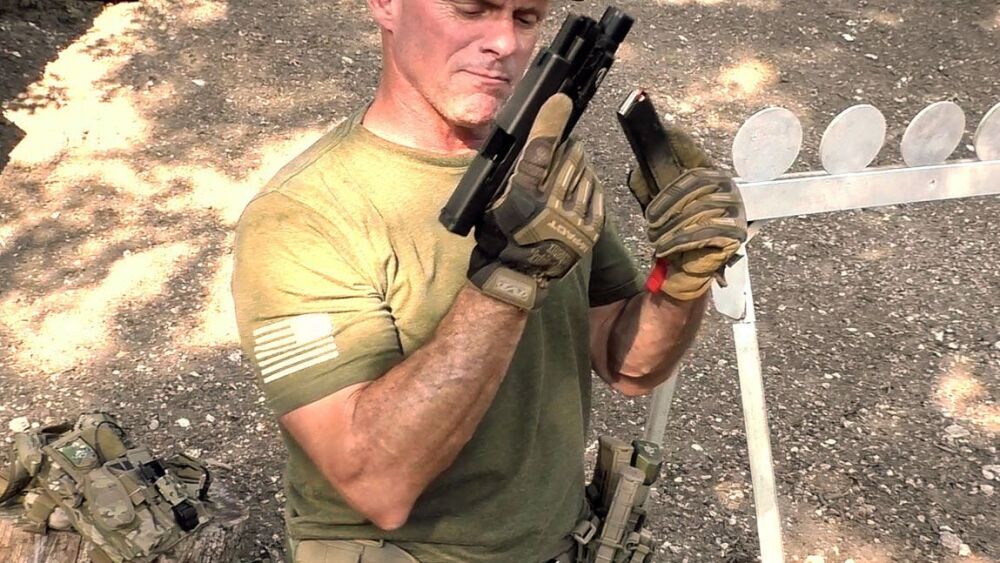
Where Your Reload Time Actually Goes
Knowing the five stages is not the same as knowing which one is costing you. When people time their reloads for the first time and find 2.8 seconds, they almost always assume the fix is to move their hands faster. It usually is not. The time is hiding in three places, and two of them are decisions rather than speed.
The first is the meeting point — the spot in front of your chest where the gun and the fresh magazine arrive at the same moment. USPSA Grandmaster Brantley Merriam frames the trade-off better than anyone: the further out from your body you make them meet, the less distance the gun has to travel, so it could be faster — but you now have to make two moving objects meet at the end of a long lever, and that stops being repeatable the moment you add footwork. Bring the meeting point in closer and consistency goes up while gun travel goes up with it. His starting point for finding your own compromise is disarmingly practical: hold your hands where you would hold your phone to read a text message. Not down at your belly button, not up in front of your face. That is where your reload lives.
The second is where your eyes are. Most shooters stare at the target through the whole reload and only glance down when something goes wrong, which means the glance arrives too late to help. Merriam’s instruction is the opposite: send your vision to the bottom of the magwell as the gun comes in, finish the insertion, then go back out to the target. The targets are not going anywhere. Rob Epifania adds the detail that explains why this works — if the magwell is genuinely pointed at your magazine pouch, you should see the bottom edge of the grip and not be able to see down into the magwell at all. If you can see into it, your wrist has broken and the magazine now has to turn a corner to get in.
The third is the exit, not the entry. Epifania calls it the trigger-break exit reload: the instant the shot breaks and your finger starts to reset, the reload is already starting. What most shooters do instead is fire, follow through, admire the sights for a quarter second, and only then move. That quarter second does not show up anywhere in your hand speed, which is why you can have genuinely fast hands and a mediocre reload time.
This is also where the two numbers separate. Hand speed is a par-time problem: start aimed at the target, hit the beep, and get the fresh magazine up to the bottom of the grip inside 0.6 seconds — a par-time function any shot timer app on your phone can run, with the random start delay that stops you anticipating the beep. Once you own that, Epifania’s advice is to stop running that drill off a beep entirely — you never reload on a buzzer in a real stage, so grinding the beep past the point of competence trains the wrong trigger. What you keep timing after that is the whole thing, shot to shot, because that is the number the match actually charges you.
A practical note on equipment that masquerades as technique: hit the magazine release with the gun still vertical, with no tactical flip and no tilting it sideways, so the empty magazine falls free under gravity. If some of your magazines do not drop free, mark those with an X and keep them out of your reload practice. Fighting a sticky magazine twenty times in dry fire teaches you to strip it with your hand, and that habit will appear on the clock at the worst possible moment.
Magazine Reload Training Plan
Systematic training is the key to improvement. Here’s a three-phase training plan.
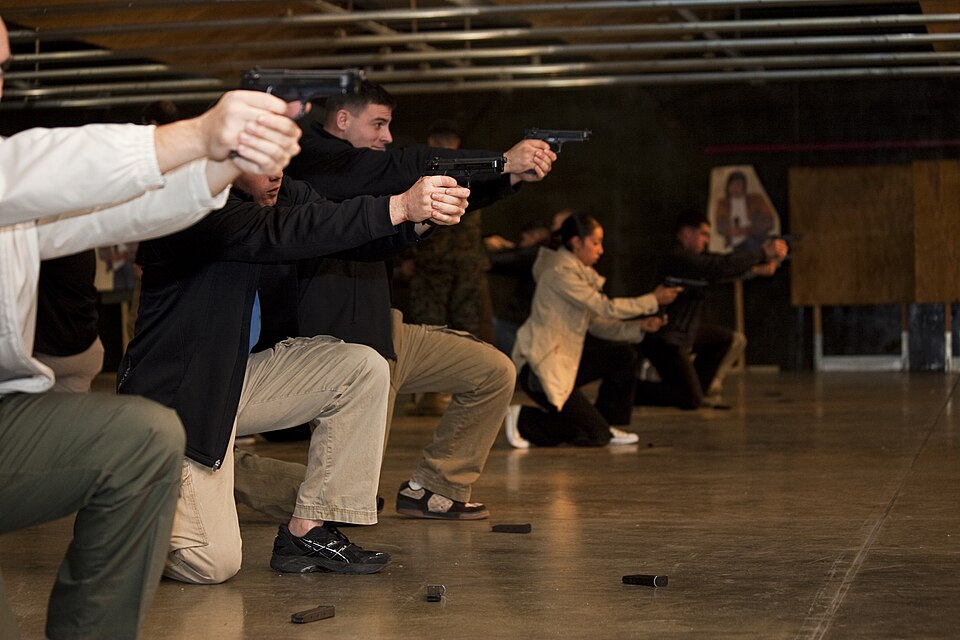
Phase One: Foundation Building (Weeks 1-4)
Goal: Establish correct movement patterns, build muscle memory
Daily Training Content (20 minutes)
| Item | Reps | Focus |
|---|---|---|
| Magazine release only | 20 | Correct thumb movement |
| Magazine grab only | 20 | No looking, accurate positioning |
| Magazine insertion only | 20 | Smooth entry |
| Complete emergency reload | 20 | Fluid movement |
Key Tips
- Slow motion practice: First achieve correctness, then speed
- Isolation practice: Practice each stage separately until proficient
- Use a mirror: Check if your movements are correct
- Don’t use timer: Focus on movement quality
Weekly Goals
- Week 1: Familiarize with each stage
- Week 2: Complete entire process without looking
- Week 3: Smooth movement without obvious pauses
- Week 4: Start using Shot Timer to establish baseline
Phase Two: Speed Development (Weeks 5-12)
Goal: Increase speed while maintaining correct technique
Daily Training Content (30 minutes)
| Item | Reps | Focus |
|---|---|---|
| Warm-up emergency reload | 10 | Activate muscle memory |
| Timed emergency reload | 20 | Track time improvement |
| Tactical reload practice | 15 | Magazine retention technique |
| Reload with retention | 15 | IDPA specific |
| Combined drills | 10 sets | Shooting + reload combination |
Using AirsoftShotTimer
- Set random delay (1-4 seconds)
- Record each reload time
- Calculate weekly averages
- Track progress curve
PAR Time Training
Set target times and challenge yourself to complete within the limit:
- Initial PAR: 3.0 seconds
- Gradually decrease: Reduce by 0.2 seconds each week
- Goal PAR: 1.5 seconds
Phase Three: Competition Refinement (Week 13+)
Goal: Reach competition level, adapt to pressure situations
Advanced Training Items
-
El Presidente Drill
- Face away from three targets
- Turn, draw, and shoot (2 rounds each target)
- Reload
- Shoot again (2 rounds each target)
- Target time: 10 seconds (advanced: 5 seconds)
-
Stress Reload Training
- Do 10 burpees first
- Immediately perform reload practice
- Record performance under fatigue
-
One-Handed Reload Training
- Complete reload with strong hand only
- Complete reload with weak hand only
- Adapt to injury or special scenarios
-
Reload While Moving
- Reload during lateral movement
- Reload while advancing/retreating
- Maintain safe muzzle direction
Competition Simulation Training
Schedule 1-2 complete match flow simulations weekly:
- Set up competition-like scenarios
- Include multiple reload requirements
- Record total time and segment times
- Analyze areas for improvement
Equipment Selection and Setup
Proper equipment setup can significantly improve reload efficiency.
Magazine Pouch Selection
Competition Magazine Pouches
| Type | Pros | Cons | Recommended Brands |
|---|---|---|---|
| Magnetic | Extremely fast extraction | Less secure | DAA, BOSS |
| Quick-release | Balance of speed and security | Requires angle adaptation | GHOST, CR Speed |
| Friction | Stable, reliable | Slower speed | Safariland |
Setup Recommendations
- Position: Magazine pouch should be easily accessible to support hand
- Angle: Slightly forward cant (about 15-30 degrees) aids extraction
- Height: Magazine top about 2-3 cm above belt
- Spacing: Maintain adequate distance between multiple pouches
Belt Selection
Competition shooting requires stable belt support:
- Competition belts: GHOST, DAA, CR Speed
- Tactical belts: Safariland, Blue Force Gear
- Key point: Belt should not shift or deform during reloads
Magazine Maintenance
- Regularly clean magazine interior
- Check spring tension
- Confirm feed lips aren’t deformed
- Mark and retire old magazines
Common Mistakes and Corrections
Mistake 1: Looking Down at Magazine Well
Problem: Looking down at gun during reload, losing sight of target
Cause: Unfamiliar with magazine well position, lack of confidence
Corrections:
- Extensive repetition to build muscle memory
- Practice insertion with eyes closed
- Trust tactile positioning
- Tilt gun slightly so magazine well “meets” the magazine
Mistake 2: Failed Magazine Grab
Problem: Can’t grab magazine or wrong grab angle
Cause: Poor pouch position or inconsistent grab motion
Corrections:
- Adjust pouch position and angle
- Establish consistent hand path
- Practice grab motion 50+ times separately
- Ensure consistent grab method each time
Mistake 3: Magazine Won’t Enter Well
Problem: Magazine hits edge of well, won’t insert
Cause: Incorrect guidance or too tense
Corrections:
- Use magazine front edge to “touch” well then push
- Tilt gun slightly toward support hand
- Slow down, feel correct path
- Reduce unnecessary force, keep motion smooth
Mistake 4: Slide Release Failure
Problem: Slide release press ineffective or too slow
Cause: Incorrect finger position or stiff slide release
Corrections:
- Use strong hand thumb (after establishing two-hand grip) to press
- Or switch to pulling and releasing slide with support hand
- Choose method that suits your pistol and hand size
- Consider installing extended slide release if needed
Mistake 5: Slow Target Reacquisition After Reload
Problem: Reload complete but can’t shoot immediately
Cause: Reload motion disconnected from shooting preparation
Corrections:
- Consider “push and aim” as part of the reload
- Practice immediate sight picture after reload completion
- Use Shot Timer to record “reload to next shot” complete time
- Integrated practice instead of separate practice
Dry Fire Training: Magazine Reload Focus
Magazine reload is one of the best skills for home dry fire training.
Safety Precautions
- Confirm all magazines are empty
- Remove all live ammunition to another room
- Use training-dedicated magazines
- Point in safe direction
Recommended Training Drills
Drill One: Pure Reload Timing
- Hold “empty” gun (slide locked)
- Reload on signal
- Chamber and dry fire one shot
- Record completion time
Goal: Under 2.0 seconds
Drill Two: Draw, Shoot, Reload
- Gun in holster
- Draw on signal
- Dry fire 2 shots (simulate empty)
- Reload
- Dry fire 2 shots
Goal: Under 4.0 seconds (complete)
Drill Three: Multiple Reloads
- Prepare 3 magazines
- “Shoot” 2 rounds per magazine then reload
- Record time to complete all 6 shots
- Analyze each reload’s efficiency
Advantages of Using AirsoftShotTimer
- Random delay simulates real reactions
- Automatically records segment times
- Tracks long-term progress trends
- Set PAR time challenges
Related reading: Complete Dry Fire Training Guide - More home training techniques
Live Fire Training Recommendations
Dry fire builds muscle memory; live fire validates and reinforces skills.
Recommended Live Fire Reload Drills
Slide Lock Reload Drill (7 yards)
- Load magazine with 2 rounds
- Fire 2 rounds to slide lock
- Reload
- Fire 2 more rounds
Target time: Under 5 seconds total
Bill Drill + Reload (7 yards)
- Load magazine with 6 rounds
- Draw and fire 6 rounds
- Reload
- Fire 6 more rounds
Target time: Under 8 seconds total (advanced: 5 seconds)
Failure to Stop + Reload (7 yards)
- Fire 2 rounds to chest + 1 to head
- Reload
- Repeat firing sequence
Training focus: Maintain accuracy before and after reload
Training Frequency Recommendations
- Dry fire training: 15-20 minutes daily
- Live fire training: 1-2 times per week, 50-100 rounds focused on reloads
Frequently Asked Questions
What is the average pistol reload time?
About 2.5 to 3 seconds, shot to shot, for a shooter using a belt-mounted magazine pouch who practises occasionally. That is a description of the population, not a target — forum consensus among carry-focused shooters lands on “three seconds or less is a pretty good benchmark,” while people deliberately practising in competition circles report averaging around 2.5 seconds. From a concealed carry position under a cover garment, add roughly half a second.
What is a good pistol reload time?
A good reload is 1.5 to 2.0 seconds from last shot to first shot, measured with a shot timer and from the gear you actually use. Under 1.5 puts you in advanced territory, and under 1.2 is competition standard. The useful way to set your own target is to take your current average, subtract two tenths, and make that the number you have to hit cleanly before you subtract another two.
What is the fastest pistol reload time ever documented?
There is no sanctioned world record for a semi-automatic magazine change, which is why you will never find a clean answer to this. The record people are usually remembering is Jerry Miculek’s 1999 run of twelve shots including a reload from a six-shot revolver in 2.99 seconds — a speedloader feat, not a magazine change. For semi-autos, the practical ceiling quoted by top competitors is under one second, from a competition belt with a flared magwell.
Is a 2-second reload good?
It is better than average and short of competitive. Two seconds means your hand path has stopped being a conscious decision, which is the hardest part to acquire — but it usually also means you are still following through on the shot before you start moving, and that you are collecting the magazine somewhere slightly different each time. Fix the exit first and most shooters find a tenth or two immediately.
What is a good par time for reload dry fire practice?
Use two. For the isolated hand-speed piece — fresh magazine from the pouch to the bottom of the grip, starting aimed at the target — 0.6 seconds is the par USPSA Grandmaster Rob Epifania trains to. For the complete reload, set the par at your current average minus 0.2 seconds and only lower it once you can hit it five times in a row without fumbling the seat.
What are the different types of pistol reloads?
Three, and the distinction is about what happens to the old magazine. The speed reload (also called the emergency or slide-lock reload) lets the empty magazine fall and prioritises pure speed. The tactical reload swaps a partially loaded magazine for a full one during a pause, catching the partial as it comes out. The reload with retention stows the partial magazine first, then inserts the fresh one — slower, but it never puts ammunition on the ground. Competition shooters live in the first; defensive training emphasises the other two.
Is a tactical reload actually worth practising?
If you shoot IDPA or train for defensive use, yes — the rules and the premise both assume you will not abandon usable ammunition. If you shoot IPSC or USPSA exclusively, it is close to wasted range time; the ruleset lets you drop magazines and the clock punishes anything slower than the speed reload. Know which game you are playing before you decide how to spend repetitions.
What is the most common reloading mistake?
Looking down at the magazine well. It feels like it helps and it does the opposite: your eyes leave the target, so after the magazine seats you have to reacquire the sight picture from scratch, which costs more time than the “aiming” of the magazine ever saved. The fix is to index off the magazine well with your support hand and let the taper of the magazine do the work while your eyes stay downrange.
How fast is a fast pistol reload?
Under 1.5 seconds from last shot to first shot is the mark of an advanced shooter, and serious competitors work below 1.2. Top-level competitive shooters do get slide-lock reloads under a second, but those runs come from thousands of repetitions on equipment set up specifically for it — a competition belt, a magazine pouch at the right angle, and a flared magwell. Chasing that number with carry gear is not a fair comparison.
Can I train reloads with dry fire or airsoft?
Yes, and this is the skill where it pays off most. A reload has no recoil component, so a dry-fire repetition is almost identical to a live one — the hand path, the index and the seat are the whole movement. Dummy magazines at home, or a gas blowback airsoft pistol, will get you almost all of the way. Time every repetition; an untimed reload rep just reinforces whatever speed you already had.
How long before I see improvement?
Expect the first big drop within two to three weeks of daily practice, because most beginners are losing time to one or two identifiable errors rather than to a lack of speed. After that, progress slows sharply — going from 2.0 to 1.5 seconds takes months, not weeks, and it comes from shaving hundredths off individual segments rather than from any single fix.
Conclusion
Magazine reload may seem simple, but it’s a critical skill affecting competition results and tactical survival.
Through systematic training, you can reduce reload time from 3-4 seconds to under 1.5 seconds. This requires not only correct technique but also extensive repetition to build muscle memory.
Remember These Core Principles
- Correctness before speed: Practicing wrong movements only reinforces mistakes
- Isolation practice: Break complex movements into manageable stages
- Use a timer: Quantify your progress, set clear goals
- Consistent practice: Muscle memory requires ongoing maintenance
- Simulate reality: Practice under pressure to perform under pressure
Start Your Reload Training
- Evaluate your current reload time (using Shot Timer)
- Identify areas needing most improvement
- Create a training plan
- Practice consistently every day
- Regularly assess progress
Smooth reloads = Less downtime = Better scores
Good luck with your training and competitions!
Related Articles
Competition Shooting Training
- IPSC Practical Shooting Complete Training Guide - Core competition shooting techniques
- IDPA Defensive Shooting Complete Training Guide - Tactical-oriented training
- IPSC Production Optics Beginner’s Guide - Red dot optics division
Pistol Training Guides
- Glock 17 Training Guide - Classic pistol training
- CZ Shadow 2 Complete Guide - Competition pistol of choice
- SIG P320 Complete Guide - Modular pistol
Basic Training
- Dry Fire Training Complete Guide - Home training techniques
- how to use a shot timer - Improve with data
Put a Shot Timer in Your Pocket
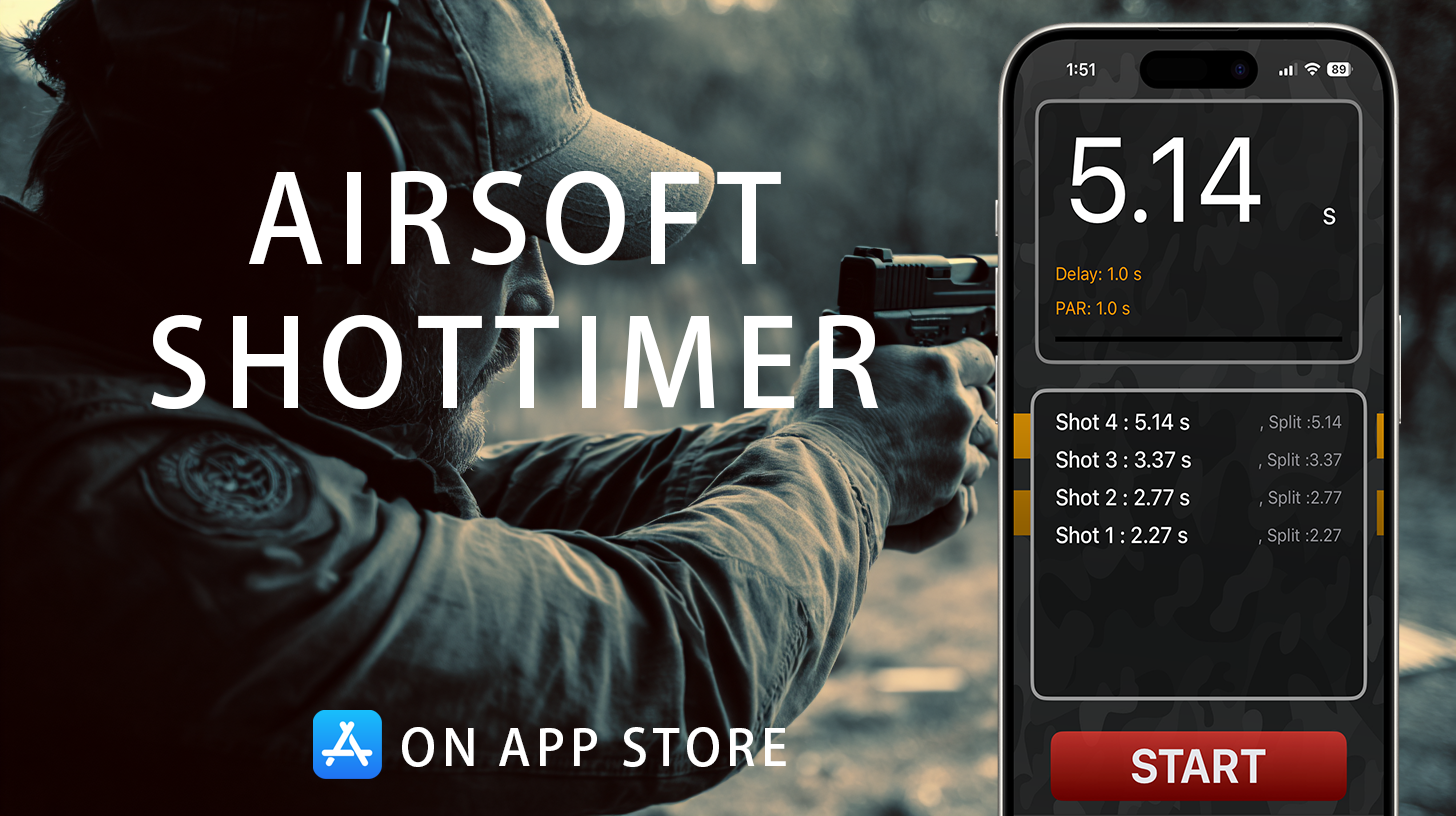
Airsoft Shot Timer is a free shot timer app tuned for airsoft and Action Air — it picks up BB gun shots, tracks your split times, and saves you the cost of a $150+ hardware timer for IPSC/IDPA practice.

- Pistol Reload
- Pistol Reload Time
- Average Pistol Reload Time
- Good Reload Time
- Reload Times
- Speed Reload
- Tactical Reload
- Tactical Reload vs Speed Reload
- Reload With Retention
- Retention Reload
- Slide Lock Reload
- Magazine Reload
- Reload Par Time
- Reload Drill
- 1 Reload 1 Drill
- Dry Fire Reload
- Airsoft Reload
- IPSC
- IDPA
- USPSA