Dot Torture Drill: Free Target, Course of Fire & How to Shoot It Clean
Dot Torture in 60 seconds (BLUF)
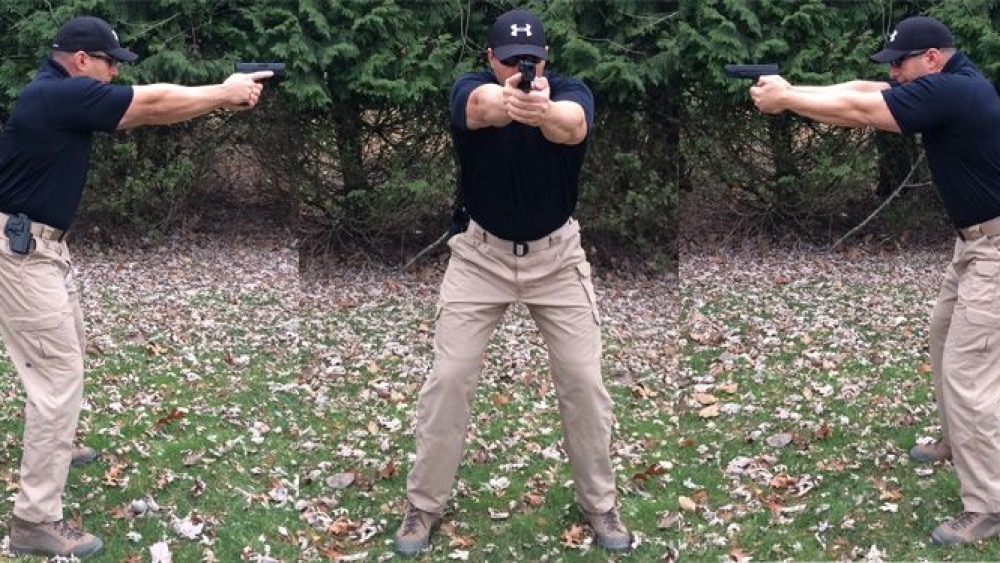
- What it is: A 50-round pistol drill shot at ten 2-inch circles printed on one sheet of paper, from 3 yards. Draws, transitions, strong hand, weak hand, and reloads are all built in.
- The catch: There is no time limit — and that’s exactly why it hurts. Nothing to blame. Every miss is pure trigger control.
- Passing score: 50 out of 50. One dropped shot means you run it again. Don’t move back to 4 yards until you can shoot it clean at 3 consistently.
- The target is free: Print the official 8.5×11" target from pistol-training.com on any home printer. No gear to buy.
- Train it anywhere: 3 yards is a hallway. Two-inch dots and an airsoft pistol or dry-fire reps at home build the exact same skill — and once you’re clean, a free shot timer app adds the pressure back in.
Three yards. Circles the size of a golf ball’s shadow. No timer, no pressure, all the time in the world. On paper, Dot Torture sounds like the easiest drill in shooting — right up until the first time you run it and watch round 37 land a quarter inch outside dot number eight, and the whole sheet is suddenly worthless. That’s the moment every shooter meets the real drill: it’s not a marksmanship test, it’s an honesty test.
Ask around any range and you’ll hear the same story. Shooters who can hammer a Bill Drill in under three seconds, who look untouchable on big silhouettes at speed, quietly fail Dot Torture at 3 yards — and it bothers them for weeks. That’s precisely why the drill has survived for three decades while flashier drills come and go. Fifty rounds, one sheet of paper, and no excuses left standing.
What Is the Dot Torture Drill?
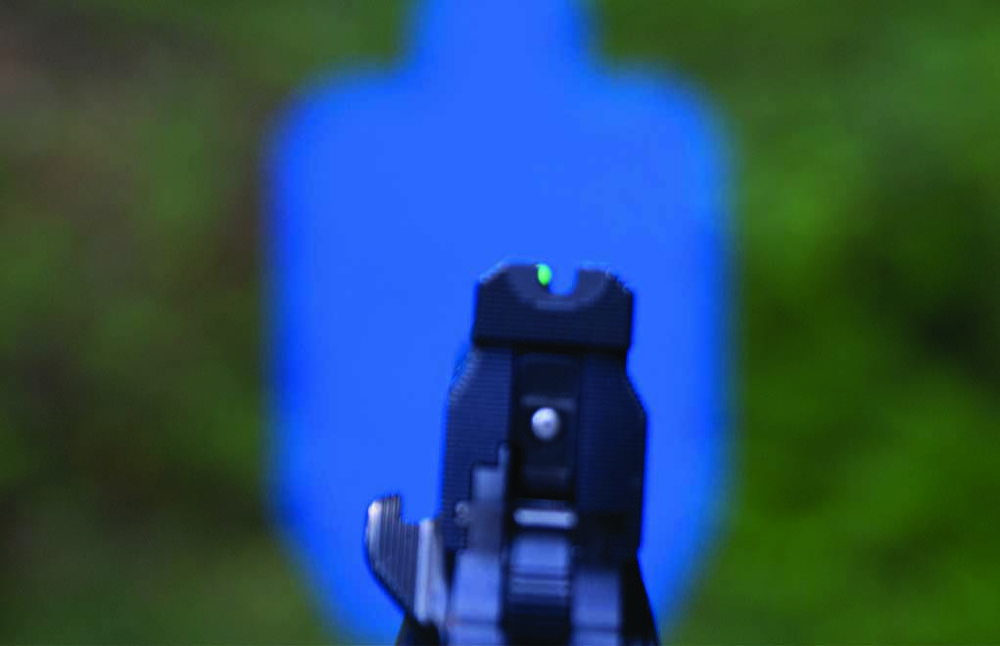
Dot Torture is a 50-round course of fire shot against a single sheet of paper printed with ten 2-inch circles, numbered 1 through 10. The standard starting distance is 3 yards, and each dot has its own assignment printed right below it: slow-fire groups, draws to a single shot, target transitions, strong-hand-only strings, weak-hand-only strings, and reloads. By the time you finish dot 10, you’ve touched almost every fundamental pistol skill that exists — one wobbly link at a time.
Two design choices make the drill brutal. First, the dots are only two inches across, about the size of the head box on a miniature silhouette, so there’s no generous A-zone to absorb sloppy presses. Second, there is deliberately no time limit. As trainer John Johnston puts it, the entire drill is really testing mental discipline, focus, and trigger control — you handle one problem at a time, with nothing to hide behind. Miss under time pressure and you can blame the clock. Miss with unlimited time and the only variable left is you.
That’s also what makes it the perfect complement to speed work. If the Bill Drill is pure gas pedal, Dot Torture is pure brake-and-steering — and most of us discover we’ve been driving with a loose steering wheel. If you’ve read our trigger control guide, this is the drill that grades your homework.
Where Dot Torture Came From
The drill has a cleaner paper trail than most range legends. The original version was created by firearms instructor David Blinder of Personal Defense Training, and IPSC shooters were using early incarnations as far back as the 1990s. It became a household name when the late Todd Louis Green adapted it and published the printable target on pistol-training.com in 2007 — the same free PDF that’s been taped to range walls ever since.
That distribution model is a quiet part of its success. The target is a standard 8.5×11 sheet you print at home; instructors joke that you should keep a stack of them in your car’s sun visor, because there is genuinely no excuse not to have one. The course of fire is printed under each dot, so you never have to memorize anything — walk up, read, shoot, weep, repeat.
The Course of Fire, Dot by Dot
Here’s the complete standard sequence. It adds up to exactly 50 rounds — one box of ammo, or one gas magazine session if you’re running it with airsoft.
| Dot | Task | Rounds |
|---|---|---|
| 1 | Slow fire, 5 rounds into one group | 5 |
| 2 | Draw, fire 1 — repeat 5 times | 5 |
| 3–4 | Draw, fire 1 on dot 3, transition, 1 on dot 4 — repeat 4 times | 8 |
| 5 | Draw, fire 5 rounds strong hand only | 5 |
| 6–7 | Draw, fire 2 on dot 6, transition, 2 on dot 7 — repeat 4 times | 16 |
| 8 | From low ready, fire 5 rounds weak hand only | 5 |
| 9–10 | Draw, fire 1 on dot 9, speed reload, 1 on dot 10 — repeat 3 times | 6 |
Each dot teaches something specific. Dot 1 is your warm-up and your baseline — the goal is five rounds through one ragged hole. Dot 2 isolates the draw stroke: five separate draws, each ending in a single precise shot, which is a completely different skill from drawing into a hosing string (our pistol draw guide breaks down that stroke). Dots 3–4 and 6–7 train transitions — driving the sights from one tiny aiming point to another and stopping them there, with 6–7 adding a recoil-control element since you fire two per dot.
Then come the strings everyone dreads. Dot 5 is strong hand only, and dot 8 — universally voted the least favorite — is weak hand only from low ready. One-handed shooting at a 2-inch circle exposes grip and trigger flaws your support hand has been quietly bandaging for years. Finally, dots 9–10 add a speed reload mid-string, which sneaks reload mechanics into an accuracy drill: shot, empty gun, fresh magazine, shot — three times, all of them counting.
What Counts as Clean — and When to Move Back
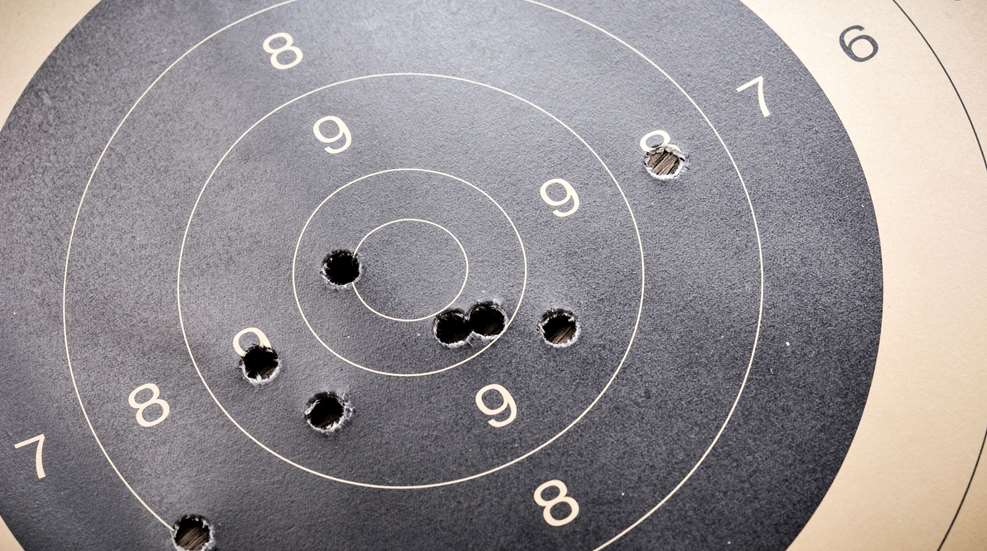
The passing score is simple and merciless: 50 out of 50. Hits touching the line count; anything clearly outside the circle doesn’t. There’s no “49 is basically a pass.” The zero-tolerance scoring is the drill’s entire personality — one careless press at round 12 means the run is already over, and knowing that changes how you shoot the remaining 38 rounds. That pressure, self-inflicted and clockless, is the torture in Dot Torture.
Progression is equally simple. Stay at 3 yards until you shoot it clean consistently — not once on your best day, but reliably. Then move back one yard and start over. Every yard roughly doubles the perceived difficulty; cleaning it at 5 or 6 yards puts you in seriously skilled company, and Johnston’s personal best of a clean run at 10 yards is the kind of number shooters bring up years later. A full run takes about 4 minutes of actual shooting, which makes it an efficient session opener: many instructors recommend it as your first drill of the day, before your ego warms up and starts negotiating.
And if you’re camped at 3 yards for a month? That’s normal, and no one worth listening to will mock you for it. One instructor ran the drill in a 10-degree semi-blizzard, dropped shots he’d normally never miss, and drew the right lesson from it: you don’t get to pick the conditions you perform under, so train in the ugly ones too. A “bad” Dot Torture run that you finish honestly teaches more than a good one you scored generously.
Making It Harder Without Ruining It
Once you’re cleaning the drill regularly, resist the urge to bolt on random difficulty. The classic progressions, in rough order of value: move back a yard, run it with a smaller gun (a subcompact carry pistol makes 2-inch dots feel half the size), draw from concealment instead of an open holster, and finally add time pressure. Purists will note the original drill is intentionally untimed — and they’re right, that’s the spirit of it — but Blinder and Green’s own community has always treated par times as the graduate course, not a violation.
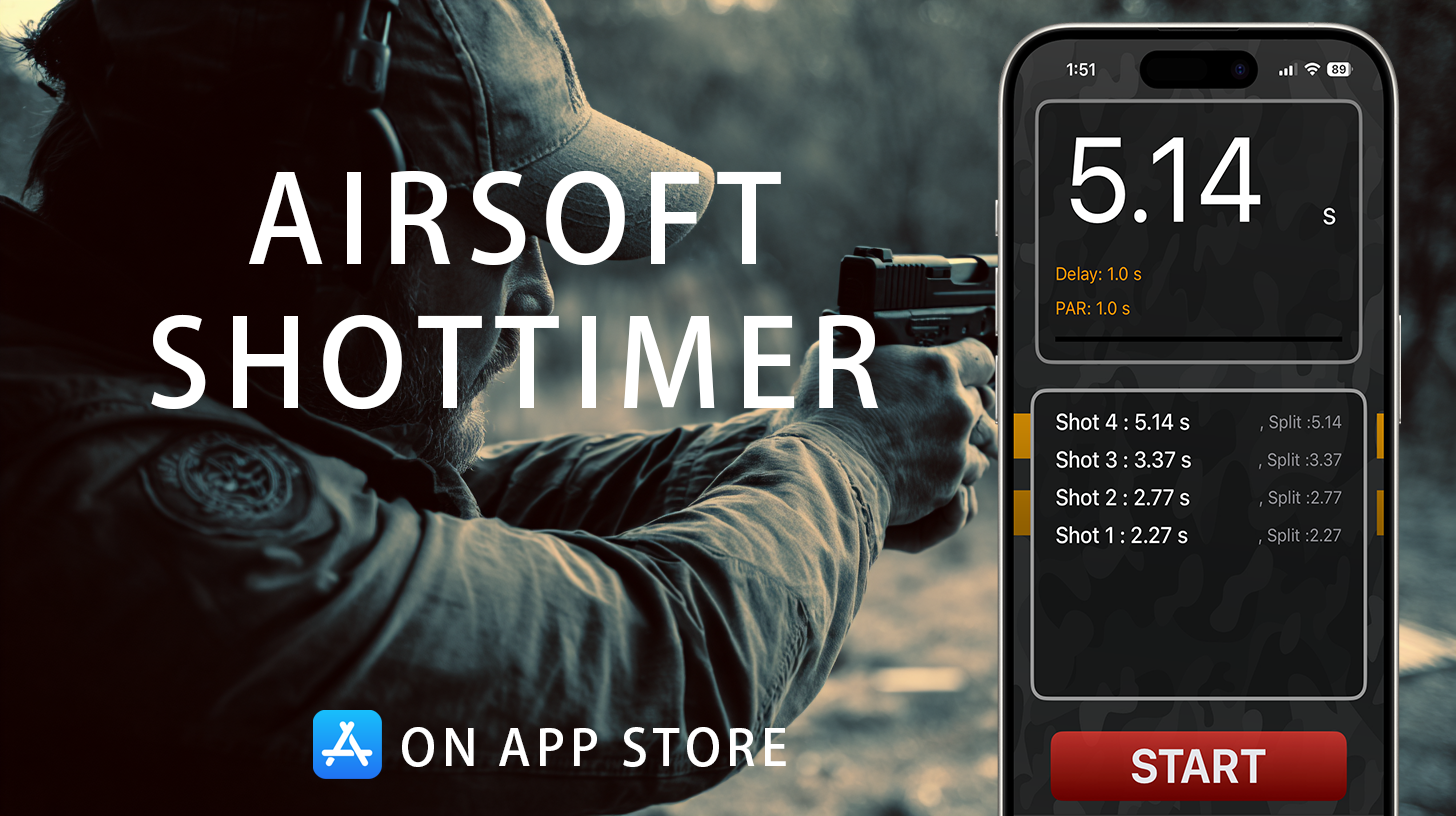
Time pressure is where a shot timer earns its keep. Instead of timing the whole 50 rounds, set a par time per string: say, 3 seconds for each draw-to-one-shot rep on dot 2, or 5 seconds for the draw-reload-shot sequence on dots 9–10. Shrink the par as your clean runs stack up. This turns one target into a semester of training — the accuracy standard never relaxes, the available time just keeps shrinking until your “slow and perfect” and your “fast” become the same press. The Airsoft Shot Timer app does this with a free PAR mode: set the beep, set the window, and every string gets graded on both axes at once.
Train Dot Torture at Home with Airsoft or Dry Fire
Here’s the part almost nobody mentions: 3 yards is a hallway. Of all the classic drills, Dot Torture is the single best fit for home training, because its official distance is one you actually have between your couch and the far wall. Print the target (or tape ten 2-inch circles of painter’s tape to a cardboard box), set up a safe backstop, and a gas blowback airsoft pistol will run the entire 50-round course of fire — draws, transitions, one-handed strings, reloads and all — for pennies a session. The 2-inch accuracy standard translates perfectly: a GBB pistol that groups fist-sized at 3 yards isn’t the limiting factor. Your trigger press is.
Dry fire covers the other half. Every string on the sheet except the reload pair can be run as dry-fire repetitions — draw to a perfect sight picture on dot 2, transitions across 3 and 4, agonizing weak-hand-only presses on dot 8 while the front sight tries to wander out of that little circle. A laser training pistol makes the feedback visible if you want it. And once your home runs are clean, bring the timer back in: the app’s microphone picks up gas blowback shots just like live fire, so your airsoft Dot Torture sessions produce the same string-by-string data a range session would.
That combination — 3-yard official distance, printable target, zero-cost repetitions — is why we’d argue Dot Torture belongs in every airsoft shooter’s rotation, even if you never plan to shoot a match. It’s the drill where practical accuracy is actually built. For where it fits among the other classics, see our shooting drills overview.
FAQ
What is the Dot Torture drill?
Dot Torture is a 50-round pistol drill shot at ten 2-inch circles printed on a single sheet of paper, from 3 yards. Each numbered dot has its own task — slow fire, draws, transitions, strong-hand-only, weak-hand-only, and speed reloads — and the goal is to hit all 50 shots inside the circles with no time limit.
What distance do you shoot Dot Torture at?
The standard starting distance is 3 yards. That sounds close until you try it — the dots are only 2 inches wide. You earn the right to move back one yard at a time by shooting the drill clean (50/50) consistently at your current distance.
Is Dot Torture timed?
No. The original drill is deliberately untimed, because it isolates trigger control and mental discipline with nothing to blame. Advanced shooters often add per-string par times with a shot timer once they can shoot it clean — but speed is the graduate course, never the entry requirement.
What is a passing score on Dot Torture?
Clean — 50 hits out of 50 rounds. Shots touching the line count as hits. One clear miss fails the run. If you’re scoring yourself “49, close enough,” you’re practicing self-deception, not shooting.
Where can I download the Dot Torture target?
The official target is a free printable PDF from pistol-training.com, published by Todd Louis Green and adapted from David Blinder’s original. It fits a standard 8.5×11 sheet, and the course of fire is printed under each dot so you don’t need to memorize anything.
Who invented Dot Torture?
Firearms instructor David Blinder of Personal Defense Training created the original version, which IPSC shooters were running as early as the 1990s. Todd Louis Green of pistol-training.com adapted it and published the now-standard target in 2007, which is how it spread worldwide.
Can I shoot Dot Torture with an airsoft pistol or dry fire?
Yes — arguably better than any other classic drill. The official 3-yard distance fits inside most homes, a gas blowback airsoft pistol can run the full course of fire including draws and reloads, and every string except the reload pair works as pure dry fire. Use a printed target or ten 2-inch tape circles and hold the same 50/50 standard.
How often should I run Dot Torture?
Many instructors use it as the first drill of every range session — a 4-minute, one-box warm-up that tells you exactly where your fundamentals stand today. As a home drill, one focused airsoft or dry-fire run two or three times a week is enough to move the needle without burning you out.
Related Reading
- Trigger Discipline & Trigger Control: The Complete Pistol Guide — the skill Dot Torture actually grades
- The Bill Drill: Pure Speed on One Target — the opposite end of the speed–accuracy spectrum
- Dry Fire Training Guide — how to structure the at-home half of your practice
- Shooting Drills Overview — where Dot Torture fits in a complete training rotation
- Shot Timer App Guide — add par-time pressure once your runs are clean
Put a Shot Timer in Your Pocket
Airsoft Shot Timer is a free shot timer app tuned for airsoft and Action Air — it picks up BB gun shots, tracks your split times, and saves you the cost of a $150+ hardware timer for IPSC/IDPA practice.

- Dot Torture
- Dot Torture Target
- Shooting Drills
- Trigger Control
- Accuracy Training
- Pistol Drills
- Dry Fire
- Airsoft
- Pistol Training
- Marksmanship
- David Blinder
- Todd Green
- Shot Timer
- Strong Hand Only
- Weak Hand Shooting
- Speed Reload
- Printable Target
- Practical Shooting