IPSC Training Guide 2026: Best Starter Pistols, Classification Path & Hit Factor Explained
What is IPSC?
⚡ Quick Answer (if you’re in a hurry)
- What it is: A dynamic shooting sport blending speed, accuracy, and power, scored by Hit Factor (points ÷ time). The motto is DVC.
- Which division to start in: Begin in Production — the tight equipment rules force you to build real fundamentals instead of buying skill.
- Best starter pistol: Glock 17/34 for reliability and parts, then CZ Shadow 2 (ergonomics) or SIG P320 (modularity). Airsoft players on a budget can start with a Tokyo Marui Hi-CAPA or Glock GBB.
- How to practice at home: 10 minutes of daily dry-fire plus airsoft stage walk-throughs, logged with the free Airsoft Shot Timer app PAR mode to track draw and split times.
Jump to Starter Pistol Selection for gun picks, or Training with AirsoftShotTimer to start drilling.
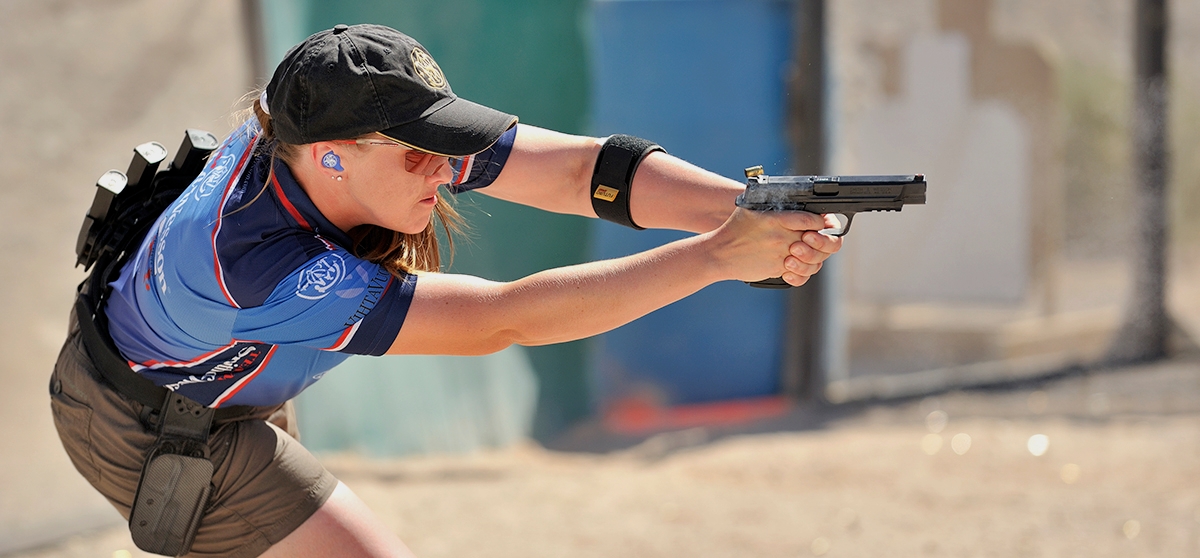
IPSC (International Practical Shooting Confederation) is a shooting sport that combines speed, accuracy, and power. Unlike traditional target shooting, IPSC emphasizes quick and precise shooting in dynamic environments, closely simulating real-world scenarios.
💡 Further Reading: Interested in more defense-focused practical training? Check out our Complete IDPA Training Guide to compare the differences between these two shooting sports.
IPSC Core Principles: DVC
- D (Diligentia) - Accuracy: Every shot must hit the target
- V (Vis) - Power: Use adequate power ammunition
- C (Celeritas) - Speed: Complete shooting in the shortest time
IPSC Competition Divisions
IPSC is divided into multiple divisions to accommodate shooters of all levels:
Production Division
- Closest to factory configuration pistols
- Suitable for beginners
- 15-round magazine limit
Standard Division
- Allows basic modifications
- 15-round magazine limit
- Minimum 9mm caliber
Open Division
- Most freedom in modifications
- Red dot sights and compensators allowed
- Pursuit of ultimate speed
Classic Division
- Traditional pistol designs
- Red dot sights not allowed
- For classic firearm enthusiasts
IPSC Classification System: Your Path to Grand Master
The first question almost every new shooter asks is: “What level am I actually at, and how do I climb?” IPSC answers that with a classification ladder that runs, from bottom to top, D → C → B → A → M (Master) → GM (Grand Master). Your class isn’t handed to you for showing up or paying dues — it’s earned by how you perform on Classifier Stages, so it’s a genuinely honest measure of where you stand against the rest of the world.
Here’s roughly what each rung feels like. D class is the raw-beginner stage: you’ve learned safe gun handling and a basic stance, and fumbling your way through a match is completely normal. C class means you can get through a stage cleanly without falling apart every time — your draw, reload and movement have some flow, even if the details are still rough. B class is the real watershed: you stop “just finishing” stages and start shooting them with a plan, and you begin to notice exactly where you’re bleeding time. A class shooters are regulars at regional matches, stringing movement together smoothly with a clear sense of time on every transition and reload — at a typical club match, the A-class shooter is usually near the top of the board. Master shooters have burned the fundamentals into muscle memory; they’re no longer thinking about how to do something, only how to do it faster. Grand Master is the tip of the pyramid — a tiny handful of shooters worldwide whose runs are basically a demonstration of the human ceiling.
How Classifier Stages Work
A Classifier Stage is one of a set of standardized courses designed by IPSC. They use the same layout, the same distances and the same target count everywhere on earth, so whether you shoot one in Taiwan or in Europe, the scores are directly comparable. Your Classifier result is converted into a percentage — your Hit Factor measured against the recorded high Hit Factor for that stage — telling you what fraction of the world-class benchmark you reached.
As a rule of thumb, 40% or higher earns C class, 60% moves you to B, 75% to A, 85% to Master, and 95% to Grand Master. The system averages your best recent Classifier scores (in most affiliates, the best six of your latest attempts), so a single hot run won’t promote you — you have to hold that level consistently. This is also why Classifier training is where a shot timer earns its keep: because the stages are standardized, you can rehearse the exact draw-and-two-shots or reload string at home with a free Airsoft Shot Timer app and watch your times close in on the class you’re chasing.
How Long Does It Take to Rank Up?
There’s no fixed answer — it depends heavily on how often and how well you train — but for a rough reference: D → C takes about 3 to 6 months of serious practice, and it’s the fastest jump because your room to improve is largest at the start. C → B usually runs 6 months to a year and a half, the point where systematic practice starts to matter more than raw talent. B → A can take anywhere from 1 to 3 years; plenty of shooters stall in B for a long time, because breaking through demands mental game, not just mechanics. Getting from A to Master and beyond is effectively a semi-professional commitment — expect 3 to 5+ years of high-intensity training.
Concrete Advice for Climbing D to C
If you’re sitting in D class and want to reach C as fast as possible, the shortcut is boring: drill the fundamentals until you don’t have to think about them. Too many new shooters chase flashy techniques early and end up with a sloppy draw and dropped magazines. Spend roughly 70% of every session on just three things — first-shot speed out of the holster, a clean reload, and muzzle control while moving between targets — and leave the other 30% for everything else. Just as important: shoot the Classifier at every match you can, even the layouts you dislike, because you need to bank scores and those “bad” stages are the ones exposing your weaknesses.
How Hit Factor Scoring Works
The single most important scoring concept in IPSC is Hit Factor, and the formula couldn’t be simpler:
Hit Factor = total points ÷ total time (seconds)
That one line shapes the strategy of the entire sport. On an IPSC paper target the scoring zones run from the inside out: the A zone (Alpha) is worth 5 points — the smallest, hardest center ring; the C zone (Charlie) is 3 points; the D zone (Delta) is 1 point; and a miss is worth 0 — plus a 10-point penalty on top. Read that again: a miss doesn’t just score nothing, it costs you ten points. A single miss wipes out the value of two perfect A-zone hits, which is exactly why “don’t miss” matters far more in IPSC than “shoot more Alphas.”
Put numbers on it. Say a stage has six targets, two shots each, twelve rounds total. You shoot eight Alphas (8 × 5 = 40), three Charlies (3 × 3 = 9) and one Delta (1 × 1 = 1) with zero misses — 50 points — in 8.5 seconds. Your Hit Factor is 50 / 8.5 = 5.88. Now picture a second shooter who chases speed and finishes in 6.2 seconds but sprays it: five Alphas, four Charlies, two Deltas and one miss. His raw score is 25 + 12 + 2 + 0 − 10 = 29 points, for a Hit Factor of 29 / 6.2 = 4.68. He beat you by a full 2.3 seconds and still lost, because one miss plus loose accuracy sank his efficiency. That’s the whole essence of IPSC scoring: the fastest shooter doesn’t win — the most efficient one does.
So how do you handle the speed-versus-accuracy tug of war every shooter agonizes over? The rule that works: at your current level, lock in zero misses and few Deltas first, then add speed. A practical gauge — if you run a stage and it’s all Alphas and Charlies with no Deltas or misses, you’ve got room to pick up the pace; the moment Deltas or misses start creeping in, your speed has outrun your accuracy and it’s time to ease off. Track both time and points per run with your timer and the pattern becomes obvious within a few sessions.
IPSC Training with AirsoftShotTimer
🎯 Grab a timer first — it’s free
Every drill below — draw, split time, reload, transitions, PAR — is built around a shot timer. The good news: you don’t need to drop $100+ on a CED7000 or PACT to get started. A free Airsoft Shot Timer app on your phone gives you random-delay beeps, PAR times and split-time logging, and it’s specifically tuned to pick up the quiet report of airsoft guns (GBB/AEG/CO2). That means the same data tracks your dry-fire at home, your airsoft walk-throughs and your live-fire range sessions on one progress curve. Install it first, then work through each drill below — whenever a step says “record your time,” that’s the tool it means.
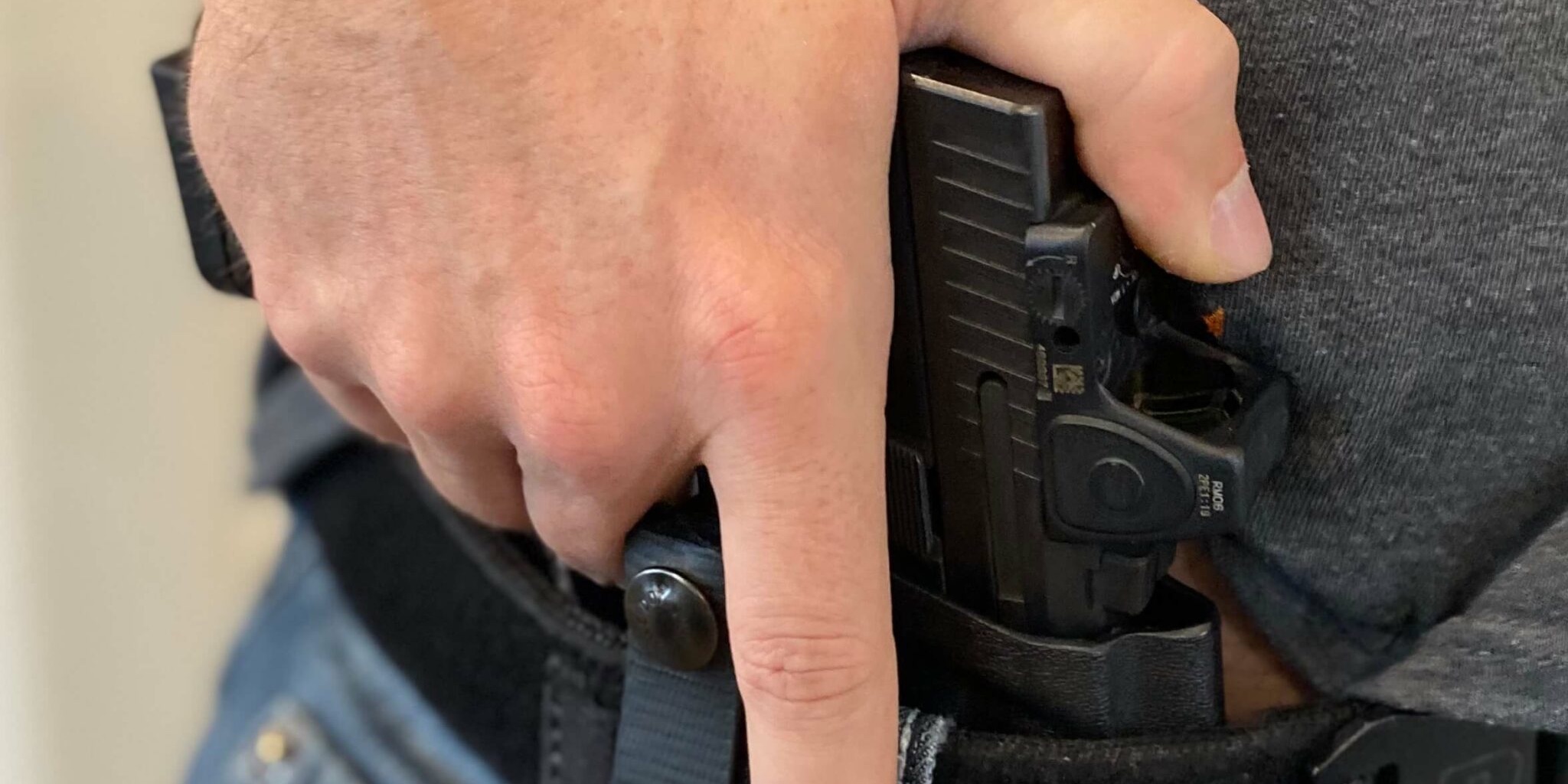
1. Draw Training
The most fundamental and important skill in IPSC.
Training Steps:
- Adopt competition stance (hands naturally relaxed)
- Upon hearing timer signal, quickly draw
- Fire 2 shots at target (Double Tap)
- Record “first shot time”
Target Times (Airsoft):
- Beginner: 1.5-2.0 seconds
- Intermediate: 1.0-1.5 seconds
- Advanced: 0.8-1.0 seconds
- Expert: < 0.8 seconds
Using AirsoftShotTimer:
- Set “random delay” mode (1-4 seconds)
- Train real reactions, avoid signal prediction
- Record each draw time
- Analyze movement fluidity
2. Split Time Training
Split time is the interval between two shots, a key indicator of shooting speed.
Training Method:
- Stand 7 meters from target
- Draw and fire 5 consecutive shots
- Analyze intervals between each shot
Standard Split Times:
- A-zone hits (close range 7m): 0.20-0.25 seconds
- A-zone hits (mid range 15m): 0.25-0.35 seconds
- Precision shooting (long range 25m): 0.40-0.60 seconds
AirsoftShotTimer Advantages:
- Automatically records each shot time
- Calculates average split time
- Tracks progress curve
3. Reload Training
Fast magazine changes can save precious seconds in IPSC competition.
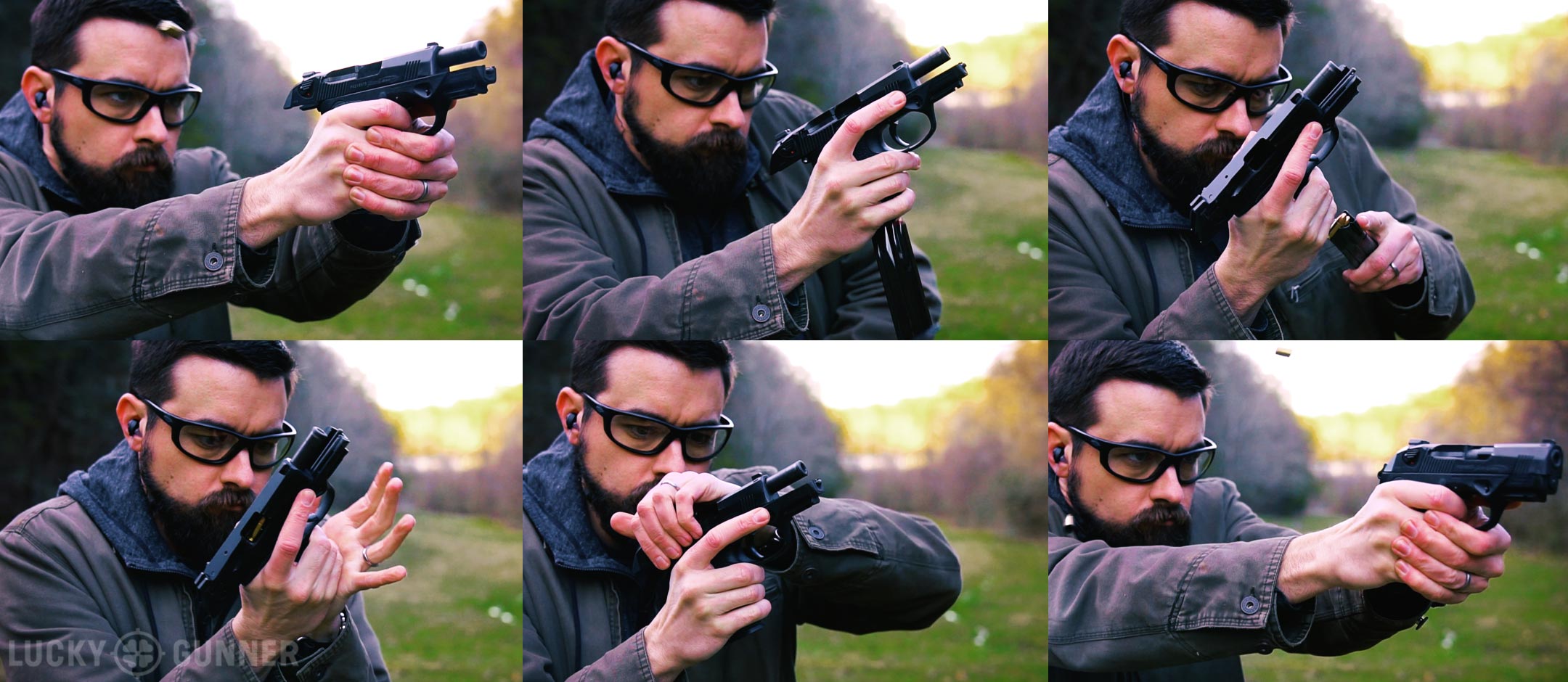
Tactical Reload:
- Change magazine while rounds remain
- Retain original magazine
- Used during cover or tactical movement
Speed Reload:
- Shoot until magazine empty
- Drop empty magazine
- Quickly insert new magazine
Training Focus:
- Smooth movement continuity
- Don’t look down at magazine
- Keep muzzle pointed at target direction
- Support hand accurately grabs magazine
Target Times:
- Tactical reload: 2.0-2.5 seconds
- Speed reload: 1.5-2.0 seconds
- Expert level: < 1.5 seconds
4. Multiple Target Transition Training
IPSC scenarios often have multiple targets; quick transitions are essential.
Training Setup:
- Set up 3-5 targets
- 1-3 meters spacing between targets
- 2 shots per target
Key Techniques:
- Eyes lead (look at next target first)
- Gun follows eyes (muzzle follows vision)
- Keep upper body stable
- Minimize footwork adjustments
Using AirsoftShotTimer:
- Record total time for all targets
- Analyze transition speed
- Identify hesitation points
- Practice repeatedly until smooth
5. Moving Shooting Training
IPSC is not static shooting; stability while moving is crucial.
Training Scenarios:
- Side Step shooting
- Moving Forward shooting
- Moving Backward shooting
Key Points:
- Keep upper body stable (imagine glass of water on head)
- Knees slightly bent, absorb shock
- Light footwork, avoid bouncing
- Timing shots (instant foot lands)
6. PAR Time Training
PAR (Par Time) training is essential for IPSC experts.
What is PAR Time? Set a target time; must complete shooting before time expires. If not achieved, timer sounds alert.
Training Benefits:
- Build shooting rhythm
- Overcome competition pressure
- Break through speed plateaus
- Train decision-making speed
Training Example:
- Set PAR Time to 2.0 seconds
- Draw and fire 2 shots
- Must complete within 2.0 seconds
- Gradually shorten PAR Time after achievement
Using AirsoftShotTimer PAR Mode:
- Fixed PAR: Train consistency
- Random PAR: Train adaptability
- Progressive PAR: Break personal limits
Advanced IPSC Training Techniques
Cover Shooting
Key Points:
- Minimize body exposure
- Quick exposure to shoot
- Immediately return to cover after shooting
- Maintain safe muzzle direction
Training Process:
- Stand behind cover
- Upon signal, expose and fire 2 shots
- Immediately return to cover
- Record complete movement time
Strong/Weak Hand Training
IPSC stage designs may require hand transitions.
Weak Hand Training:
- Shoot with non-dominant hand only
- Maintain same accuracy
- Target time: 150% of strong hand
Hand Transition:
- Smooth firearm transfer
- Maintain safe muzzle direction
- Don’t look down at gun
Stress Training
Simulate competition pressure scenarios.
Training Method:
- First perform high-intensity physical training (burpees, sprints)
- Immediately proceed to shooting training
- Record performance under fatigue
- Practice focus under pressure
IPSC Training Plan Recommendations
Beginners (0-3 months)
Train 2-3 times per week, 60 minutes each
- Draw training: 20 reps
- Static shooting: 50 rounds
- Reload practice: 20 reps
- Dry fire practice: 15 minutes daily
Intermediate Shooters (3-12 months)
Train 3-4 times per week, 90 minutes each
- Draw training: 30 reps
- Split time training: 100 rounds
- Multiple target transitions: 30 sets
- Moving shooting: 50 rounds
- PAR time training: 30 sets
Advanced Shooters (12+ months)
Train 4-5 times per week, 120 minutes each
- Comprehensive scenario training
- Simulate competition situations
- Weakness-specific training
- Stress testing
- Competition participation
Safety Rules (Always First Priority)
IPSC Safety Rules
- Always point gun in safe direction
- Finger off trigger when not shooting
- Identify target and background
- Follow range safety regulations
- Use appropriate protective equipment
Training Safety Checklist
- ✅ Eye protection worn
- ✅ Range safety confirmed
- ✅ Firearm function checked
- ✅ Magazine count confirmed
- ✅ Safety zone planned
IPSC Starter Pistol Selection Guide
For newcomers to IPSC shooting, choosing the right starter pistol is the first step to success. A good beginner handgun should be highly reliable, easy to operate, and have manageable recoil.
Recommended IPSC Starter Pistols
1. Glock 17 / Glock 34 (Most Recommended)
The Glock series is the most popular starter choice for IPSC Production division:
- Pros: Simple design, extremely low failure rate, abundant accessories, reasonable price
- Glock 17: Standard size, suitable for average hand size
- Glock 34: Extended slide version, longer sight radius, higher accuracy
- Recommended Reading: Complete Glock 17 Training Guide
2. CZ 75 / CZ Shadow 2
The CZ series is known for excellent ergonomics and trigger feel:
- Pros: Comfortable grip, excellent trigger feel, high accuracy
- CZ 75: Classic entry-level, great value
- CZ Shadow 2: Designed specifically for IPSC competition, advanced choice
- Recommended Reading: Complete CZ Shadow 2 Guide
3. SIG Sauer P320
A modern pistol with modular design:
- Pros: Modular design, interchangeable grip sizes, reliable firing system
- Suitable for: Shooters who prefer customization
- Recommended Reading: Complete SIG P320 Guide
4. Beretta 92FS
A classic military pistol, stable and reliable:
- Pros: Metal frame, excellent recoil distribution, high accuracy
- Suitable for: Shooters who prefer traditional metal-framed pistols
IPSC Starter Pistol Buying Tips
- Choose 9mm caliber: Manageable recoil, affordable ammo, suitable for extended training
- Prioritize Production division compliant models: No need to change guns for future competitions
- Try before you buy: Ensure grip size fits your hand
- Budget for accessories: Holster, magazine pouches, and extra magazines are equally important
IPSC Entry Tips for Airsoft Players
If you’re transitioning from airsoft to IPSC shooting, you can start with high-quality airsoft pistols for basic training:
- Tokyo Marui Hi-CAPA: High realism, suitable for draw and reload training
- WE Glock Series: Similar appearance to real guns, training transfers directly
- Use AirsoftShotTimer APP to record training data
💡 Benefits of IPSC training with airsoft: Lower cost, fewer venue restrictions, practice draws and aiming at home.
Equipment Selection Recommendations
Beginner Equipment
- Pistol: Glock 17/19, CZ 75, and other reliable models
- Recommended reading: Glock 17 Training Guide - Learn in-depth training techniques for the Glock 17
- Holster: Basic friction holster
- Magazine Pouches: Double magazine pouch
- Protection: Eye protection (mandatory)
Advanced Equipment
- Pistol: Custom modified gun
- Holster: Competition speed holster (GHOST, DAA)
- Magazine Pouches: Magnetic or quick-release
- Timer: AirsoftShotTimer APP
Frequently Asked Questions
Start in Production Division. Its strict equipment limits actually work in your favor — they keep you focused on fundamentals instead of letting gear paper over weak technique. Production also has the biggest turnout at most local matches, so you’ll have plenty of shooters to learn from. Once you’re solidly in B Class or above, you can decide whether to move up to Standard or Open.
For most newcomers it’s the Glock 17 or 34 — dead reliable, cheap to feed, and parts are everywhere. If you want better ergonomics out of the box, look at the CZ Shadow 2; if you like modularity, the SIG P320. Airsoft players can practice the exact same draw and movement with a Tokyo Marui Hi-CAPA or Glock GBB at a fraction of the cost. Whatever you pick, don’t cheap out on the belt and holster — a stable draw position directly determines your draw time.
Absolutely, and it’s one of the most cost-effective ways to train. Airsoft lets you rehearse stage movement, shooting cadence and walk-throughs at home — exactly the things that are hard to drill at a live range. Pair it with the AirsoftShotTimer app to log your time and shot count per run, and the carryover to live fire is excellent. Recoil and trigger feel differ from a real pistol, but for the “soft skills” of movement and target transitions, airsoft is the best value training tool there is.
The traditional choice is a dedicated unit like the CED7000 or PACT, but they’re pricey and add another gadget to carry. For most beginners and airsoft shooters, a phone app does everything you need — the Airsoft Shot Timer app has a random-delay beep, PAR time, split-time logging and history charts, so you can time your draw, reloads and transitions and review your progress over time. Build the habit with the app first; decide whether you need a physical timer later.
For 95% of shooters, a free app is all you’ll ever need. Hardware timers (CED7000, PACT) pick up shots more reliably at extremely loud live-fire matches, but they cost $100+ and are one more thing to charge and keep track of. A phone app gives you everything that matters — random delay, PAR, split times and history tracking — and the Airsoft Shot Timer app is specifically tuned to detect the low-decibel report of airsoft guns, something even many hardware timers struggle with. Build your daily dry-fire and airsoft habit with the free app first; upgrade to hardware later only if you reach the point of needing it at big matches.
Your class comes from your Classifier percentage — your Hit Factor against the recorded high for that standardized stage. Roughly, 40%+ earns C, 60%+ B, 75%+ A, 85%+ Master and 95%+ Grand Master. The system averages your best recent Classifier scores (typically the best six), so you have to hold the level consistently, not just spike it once. See the full classification path above for what each rung feels like and how long it usually takes to climb.
Hit Factor = total points ÷ total seconds. A-zone is 5 points, C-zone 3, D-zone 1, and a miss scores 0 plus a 10-point penalty. So one miss erases two perfect Alphas — which is why in IPSC “don’t miss” beats “shoot more Alphas.” The winner isn’t the fastest shooter but the most efficient one. There’s a worked example in the Hit Factor section above.
Conclusion
IPSC is a sport that combines technical skill and challenge, requiring long-term, systematic training for improvement. Use AirsoftShotTimer to record every training session’s data, analyze your strengths and weaknesses, and set clear improvement goals.
Remember: Speed is built on accuracy, accuracy is built on safety awareness.
Begin your IPSC training journey and make every shot faster, more accurate, and safer!
Happy training and good luck in competition!
Put a Shot Timer in Your Pocket
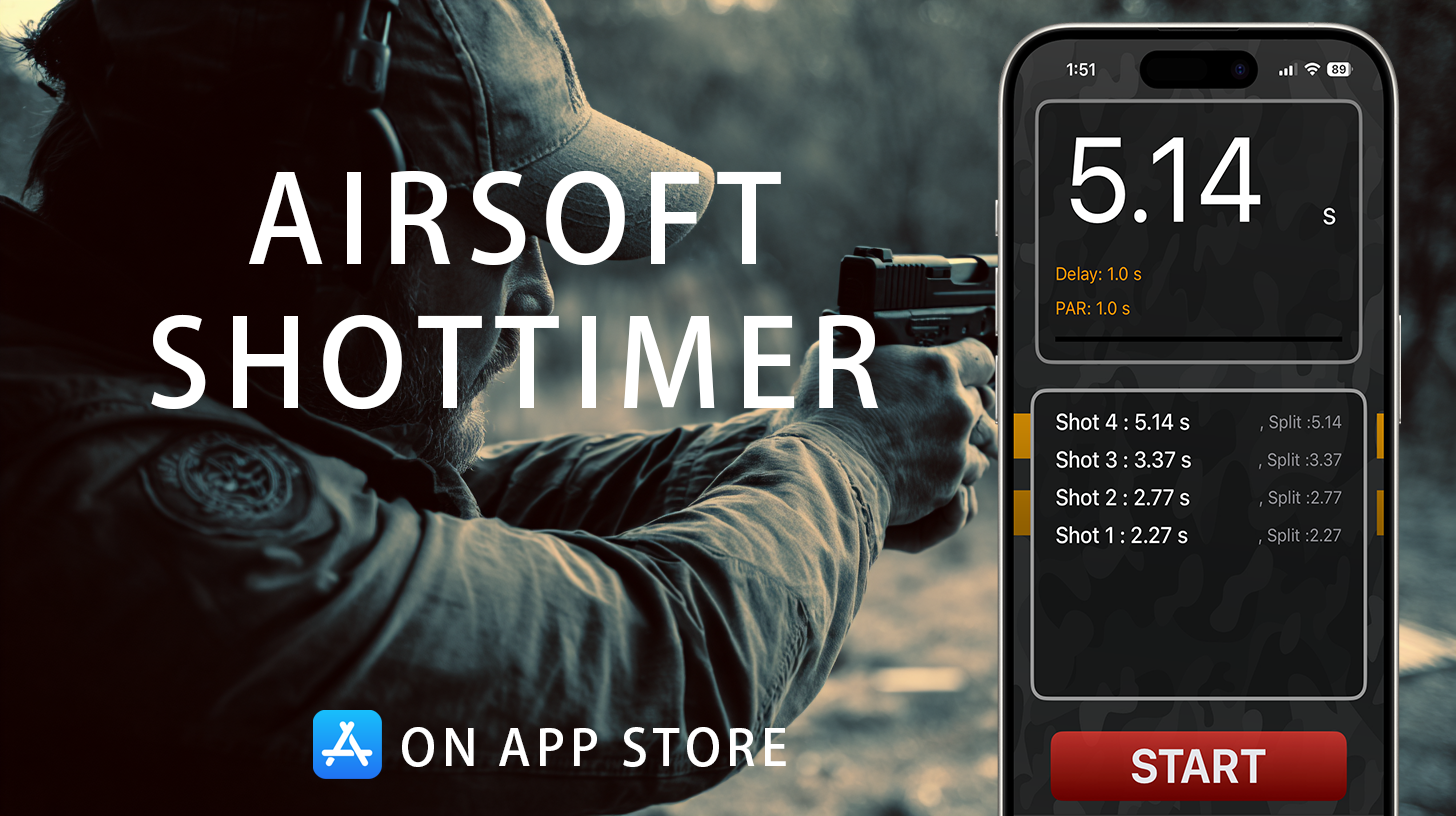
Airsoft Shot Timer is a free shot timer app tuned for airsoft and Action Air — it picks up BB gun shots, tracks your split times, and saves you the cost of a $150+ hardware timer for IPSC/IDPA practice.

- IPSC
- Practical Shooting
- Competition Training
- Timer Training
- IPSC Beginner
- Starter Pistol
- IPSC Shooting
- IPSC Pistol
- IPSC Training Drills
- Airsoft IPSC
- Shot Timer
- Free Shot Timer App
- Dry Fire Timer
- IPSC Classification
- Grand Master
- Hit Factor
- IPSC 2026