IPSC Classification 2026: 6 Classes, 28 Classifier Stages & How to Rank Up
IPSC Classification Explained in 60 Seconds (BLUF)
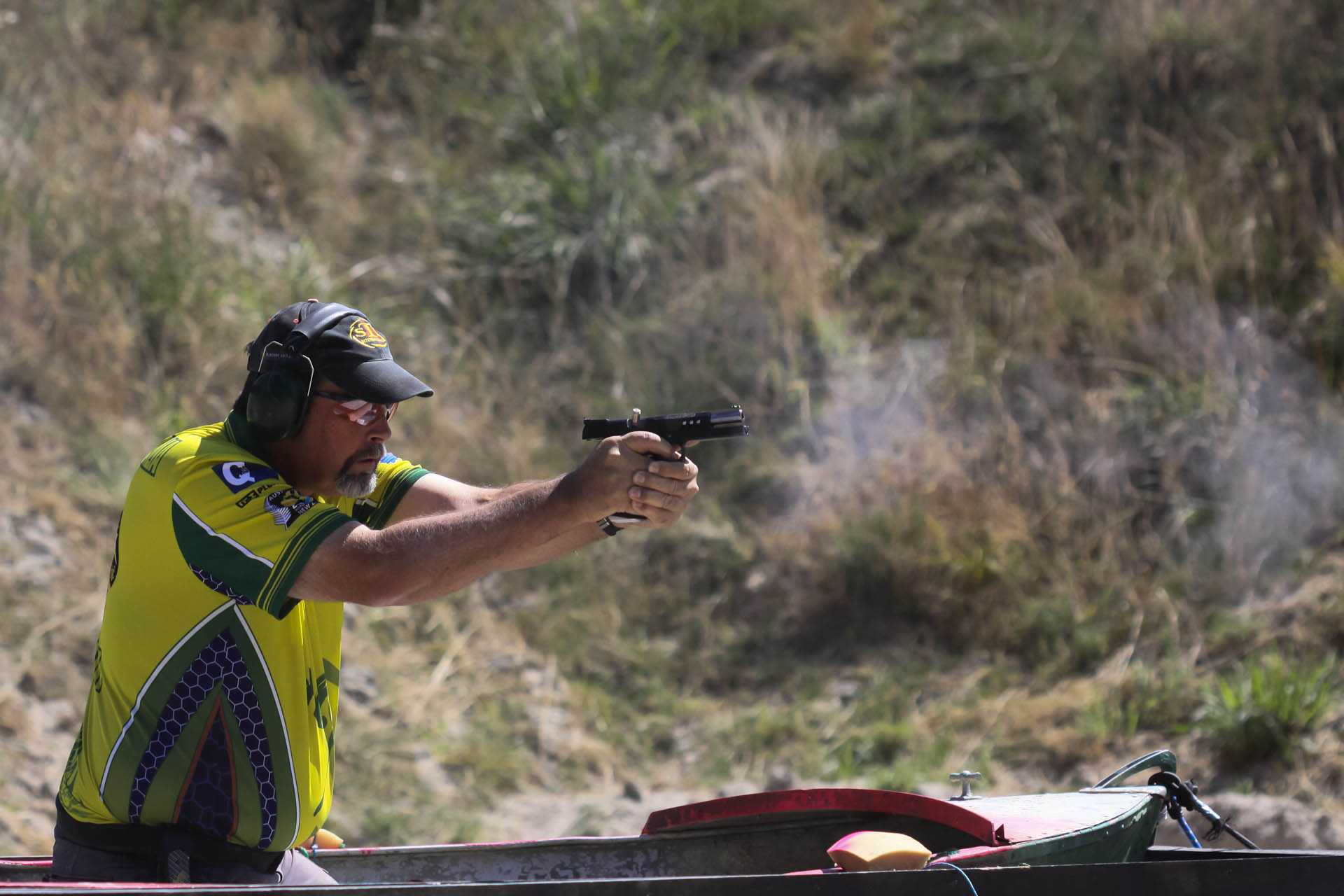
Short answer: IPSC ranks shooters into six classes — Grand Master (95%+), Master (85–94.9%), A (75–84.9%), B (60–74.9%), C (40–59.9%), and D (under 40%). The percentage is calculated against the highest hit factor ever recorded on a standardized Classifier Stage (CLS). You need a minimum of four CLS scores to get an initial class, and after that your classification is recalculated from the best 4 of your most recent 8 results. To keep your class active, you must shoot at least one classifier match or two CLS stages each calendar year, and your class is division-specific — being an A-class in Production doesn’t make you A-class in Open.
The measuring instrument behind all of this is the 28 standardised Classifier Stages (CLS), published by IPSC in the CLC-XX format and built to identical dimensions worldwide — that’s what makes a single global percentage scale possible. And before the terminology trips you up: your class is your skill rating, your division is your equipment bucket, your category is a demographic award bracket (Lady, Junior, Senior), and a match level (I–V) describes the match, not you. Those are four different things that people constantly mix up.
Three things every new shooter should know before reading further: IPSC and USPSA use the same percentage tiers but score them differently (IPSC uses a global CLS database, USPSA recently removed the old B/C/D flags so every classifier counts now), there is a separate IPSC ELO rating based on Level 3+ match placement that runs in parallel to ICS (you can look yours up at ipscelo.com — full explanation below), and going from D to Grand Master typically takes 3–7 years of consistent training and match shooting — not months.
Quick Picker: Which Class Am I Probably In?
| Where you are now | Likely class | What it means |
|---|---|---|
| First match, missed half the targets | Unclassified → D | Get four CLS scores in to seed your class |
| Hitting most A-zones but slow, scared of misses | C (40–59.9%) | Solid club shooter, focus on draw and reload speed |
| Comfortable at club matches, top half of D-class field | B (60–74.9%) | Skills are real, now drill movement and transitions |
| Regularly podium at clubs, place mid-pack at Level 2 | A (75–84.9%) | Equipment matters, dry-fire becomes mandatory |
| Top 5 at Level 2, top 30% at Level 3 | M (85–94.9%) | National-class skill, full-time training mindset |
| Top 10% at Level 3, podium at nationals | GM (95%+) | Elite — the ceiling that most shooters never reach |
The rest of this guide walks through each class in detail, explains how the math actually works, and gives you a realistic roadmap from D to GM.
What Is IPSC Classification? Why It Matters
IPSC classification is the worldwide grading system that ranks every IPSC competitor against a single yardstick — the highest hit factor ever recorded on a standardized course of fire. Without it, comparing a Tokyo shooter to a Hungarian shooter would be guesswork; with it, both shoot the same CLS stages, both get measured against the same world-record hit factor, and both get assigned a class that means the same thing in every country.
I remember my first match. I’d been dry-firing for months, felt fast on the timer, and assumed I’d at least crack B-class. The classifier results came back two weeks later: 44% — solid C-class with no headroom. That number was a punch to the ego, but it was also the most honest feedback I’d ever gotten about my shooting. The classification system doesn’t care how good you feel on the range — it cares about points divided by time, against the best in the world.
That’s the real value of classification. It’s not a trophy or a participation ribbon. It’s a calibration tool that tells you exactly how far you are from the top, what skills are holding you back, and whether the work you’re putting in is producing measurable progress. A shooter who jumps from 44% to 62% over a season knows their training is working. A shooter who has been a B-class for five years knows something needs to change.
Classification also matters for division movement and match assignments. At big matches, classes are squadded together or scored separately, which means a B-class shooter competes against other B-class shooters for class trophies, not against the GMs running optics-laden race guns. It keeps competition meaningful at every level, and it’s why a club shooter who wins their C-class can feel just as accomplished as the GM who wins overall.
💡 Further Reading: New to IPSC? Start with our Complete IPSC Practical Shooting Training Guide to understand the rules, DVC principles, and basic skills before diving into classification.
The 6 IPSC Classification Levels Explained
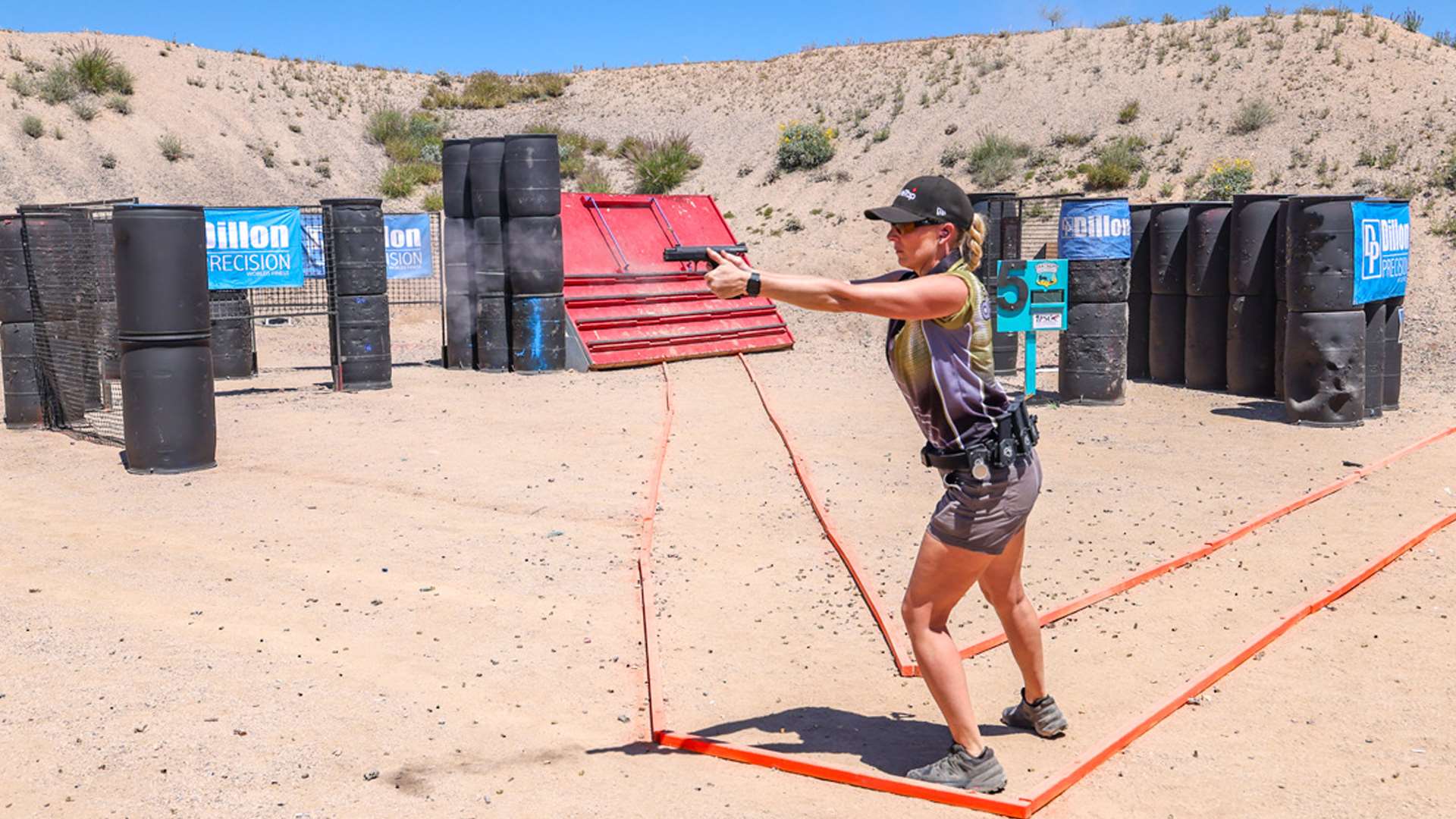
IPSC uses six classes that every shooter in every division will eventually be assigned to. The percentages below come from the official IPSC Classification System (ICS) and are also mirrored almost exactly in USPSA’s classification table.
| Class | Percentage | Approximate Skill Level |
|---|---|---|
| Grand Master (GM) | 95%+ | Top 1–2% of shooters worldwide, national/world team contenders |
| Master (M) | 85–94.9% | National-level skill, podiums at Level 3 matches |
| A | 75–84.9% | Strong regional shooter, mid-pack at Level 3, top at Level 2 |
| B | 60–74.9% | Solid club competitor, regular podium finishes locally |
| C | 40–59.9% | Developing competitor, the largest population of classified shooters |
| D | Below 40% | Brand new, just got initial classification |
Grand Master is the ceiling. It represents the top sliver of IPSC competitors globally — the shooters whose hit factors come within 5% of the all-time best ever recorded on each classifier. Reaching GM in any division is a multi-year project for most people, and many shooters who train seriously their entire competition career never get there. The number of active GMs in any country is usually small enough to fit in a single squad.
Master class sits just below, and at this level you’re shooting at roughly 85–94.9% of the world-record pace. Masters typically podium at Level 2 matches, place top-20% at Level 3 matches, and are often the people who show up to clubs on weekends with full-time training routines, dry-fire targets in their garage, and structured live-fire programs. Most shooters who reach M consider it the practical goal — GM is a stretch from there, but M is achievable with serious commitment.
There’s a distinction between those top two classes that rarely gets stated plainly, and it reframes what you should actually be training. Everything up to Master is skill: faster splits, cleaner transitions, better trigger control, more efficient movement — all of it measurable, all of it trainable through repetition. Master to Grand Master is largely mindset and consistency. Plenty of Master-class shooters can and do beat GMs on any given weekend; what separates the GM is that they produce that performance nearly every time, under pressure, on demand. That’s why shooters who stall at M usually don’t need another 0.02 seconds off their splits — they need to stop having the one bad stage per match that costs them the percentage.
A and B classes are where most “serious club shooters” land. An A-class shooter wins their local match consistently and is competitive at regional Level 2 events. A B-class shooter is the backbone of a typical club — solid fundamentals, fast enough to be respectable, but missing the polish in movement, transitions, and stage planning that A-class brings. The jump from B to A is often described as the hardest single class advancement because it requires moving from “shoot accurately at speed” to “shoot accurately at speed while solving stages efficiently.”
C and D classes are the entry tier — but here’s a correction worth making, because the assumption that you’ll open at D-class puts a lot of people off shooting their first classifier. Ask experienced Grand Masters what new shooters actually score and the answer is consistent: most first-timers classify into C or B, not D. If you can grip the pistol properly and you understand how to aim it, you will almost certainly clear the D threshold on your first attempt. D-class in practice represents a genuinely minimal performance — one GM demonstrated the point by deliberately shooting a classifier while assembling his gear on the clock, taking 97 seconds on a stage he normally shoots in 10, and still scoring comfortably above the D-class minimum. C-class, then, is where most people actually live for their first season or two. There’s no shame in being a C-class shooter — it actually represents the largest single group of classified IPSC competitors worldwide, and many people stay there for years simply because they enjoy the sport recreationally without training to advance.
IPSC Class vs Division vs Category vs Match Level: Four Rankings, Four Meanings
Here is the single biggest source of confusion for new IPSC shooters, and it’s worth clearing up before you go any further: IPSC sorts you into four completely separate buckets at the same time, and people constantly use the words interchangeably. Someone says “what level are you?” and means class; someone says “what category do you shoot?” and means division. Once you can keep these four straight, most of the rulebook stops feeling like a foreign language.
Your class is your skill rating — the GM/M/A/B/C/D scale this whole article is about. It’s earned through Classifier Stage scores and it’s the only one of the four you have to work for. Everything else on this list is something you either declare or show up to.
Your division is your equipment bucket. IPSC Handgun runs Open, Standard, Production, Production Optics, Production Optics Light, Classic, and Revolver, and each one has its own rules about optics, magazine length, holster position and gun modifications. The point of divisions is to make sure a $4,000 optics-and-compensator race gun isn’t competing directly against a stock service pistol. Divisions are also why your class is division-specific — the skills that make you an A-class Production shooter don’t automatically survive the switch to Open. IPSC Action Air mirrors the same division structure with airsoft replicas, which is exactly why Action Air works so well as off-season training for the live-fire divisions.
Your category is a demographic award bracket, not a skill or gear bracket. Everyone competes in the Overall results regardless, but IPSC also recognises Lady, Super Junior (under 14), Junior, Senior and Super Senior (over 60), with the exact age bands defined in the current rulebook. You don’t shoot a different course of fire or get a handicap — categories simply create additional award places so a 63-year-old Production shooter isn’t only ever measured against 25-year-olds.
Your match level is a property of the match, not of you. Level I is your local weekend club match, Level II is a regional match, Level III is a national or international-standard match, Level IV covers continental championships, and Level V is the World Shoot. This is the one that trips people up most in searches, because “IPSC levels” sounds like it should mean skill tiers and actually means match sanctioning. It matters practically for two reasons: match level determines how strictly the course-design rules are enforced, and — as covered below — only Level III and above feed the separate IPSC ELO rating.
💡 Further Reading: Competing under USPSA rules instead? The division structure differs in several important ways — see our USPSA Divisions Guide. For the airsoft equivalent, read the IPSC Action Air Guide.
How Classification Is Calculated
The math behind ICS is simpler than it looks once you see the three steps: hit factor → percentage → class.
Hit factor is the foundational number. For every stage you shoot, your raw score (points earned) is divided by your raw time (seconds taken), giving you a single decimal number that combines speed and accuracy into one metric. A stage where you scored 50 points in 5 seconds gives a hit factor of 10.0; the same 50 points in 10 seconds gives a hit factor of 5.0. The faster and more accurate you are, the higher your hit factor.
For classifier stages specifically, IPSC maintains a global database of the highest hit factor ever recorded on each CLS stage. That world-record number becomes the 100% benchmark. Your hit factor divided by that record, multiplied by 100, gives your percentage on that classifier. If the record on a given CLS is a hit factor of 12.5 and you shot a 7.5, your percentage is 60% — squarely in B-class territory for that one stage.
Your classification percentage is the average of your qualifying classifier scores. After your initial four classifiers, IPSC uses your best 4 of the most recent 8 scores rolling forward. This means a single bad day at a classifier match won’t wreck your class — but a single great day won’t fast-track you either. The rolling-window design forces consistency to be the thing that earns class advancement, not a one-off lucky run.
The 28 IPSC Classifier Stages (CLS): What They Are and How They’re Scored
If ICS is the scoring formula, the Classifier Stages are the measuring instrument — and they’re a genuinely unusual piece of design. IPSC currently maintains 28 classifier stages, published on the IPSC website and grouped into short courses and medium courses. Each one carries a code in the CLC-XX format — CLC-07, CLC-19, CLC-35, CLC-45, CLC-59, CLC-69 and so on — with a fixed diagram specifying target placement, distances, start position and procedure.
The word “fixed” is doing a lot of work there. A classifier is the opposite of a normal IPSC stage: a field course is designed fresh by each match director and is never shot twice, while a CLS stage is built to identical dimensions whether you’re shooting it in Germany, Australia or Taiwan. That standardisation is the entire reason a global percentage scale can exist at all. Your 62% on CLC-35 means the same thing as someone else’s 62% on the other side of the planet, because you both shot the same course against the same all-time-best hit factor.
Round counts follow IPSC’s general course-of-fire rules, which is why the classifier library splits the way it does. A Short Course must not require more than 12 rounds to complete, and a Medium Course must not require more than 24 (a Long Course tops out at 32 rounds, but classifiers don’t use them). In practice most CLS stages are compact affairs — CLC-35 is a 6-round, 30-point stage with two paper targets and two poppers; CLC-45 runs 8 rounds and 40 points with four poppers. They’re short on purpose: a classifier is meant to isolate one or two specific skills, not test your stage-planning ability. There are also sanctioning requirements around validity — IPSC’s classifier-stage page specifies a minimum of 10 competitors participating, and scores are submitted through your Regional Director’s administration, so a classifier you set up in your own back yard doesn’t count no matter how well you shoot it.
Understanding how classifiers are scored is where most new shooters leave points on the table. Nearly all of them run Comstock scoring, which means unlimited rounds are permitted and only your best hits count — if you throw a bad shot you’re allowed to fire a make-up shot at the same target. A minority use Virginia Count, where the round count is fixed and any extra shot earns a penalty rather than a second chance. Reading the stage brief carefully enough to know which one you’re on is worth more than any amount of extra dry-fire, because shooting a Comstock stage as if it were Virginia Count means accepting a bad hit you were entitled to fix.
The other thing that surprises people is how expensive a single penalty is on a short stage. Because hit factor is points divided by time, and a classifier has very few points available, one no-shoot hit can move you an entire class. Work through a realistic 18-round example: a clean run worth 90 points shot in 14.03 seconds gives a hit factor of about 6.4 — solidly A-class pace. Drop one hit from an alpha to a charlie (−5 points) and clip a no-shoot (−10 points) and that same 14.03-second run scores 75 points, for a hit factor of 5.3 — a B-class run. Identical speed, identical everything, one moment of carelessness, one full class lost. This is also why the practical rule of thumb among high-level shooters is to keep charlies under roughly 10% of your total shots — on an 18-round classifier that’s one or two, not five.
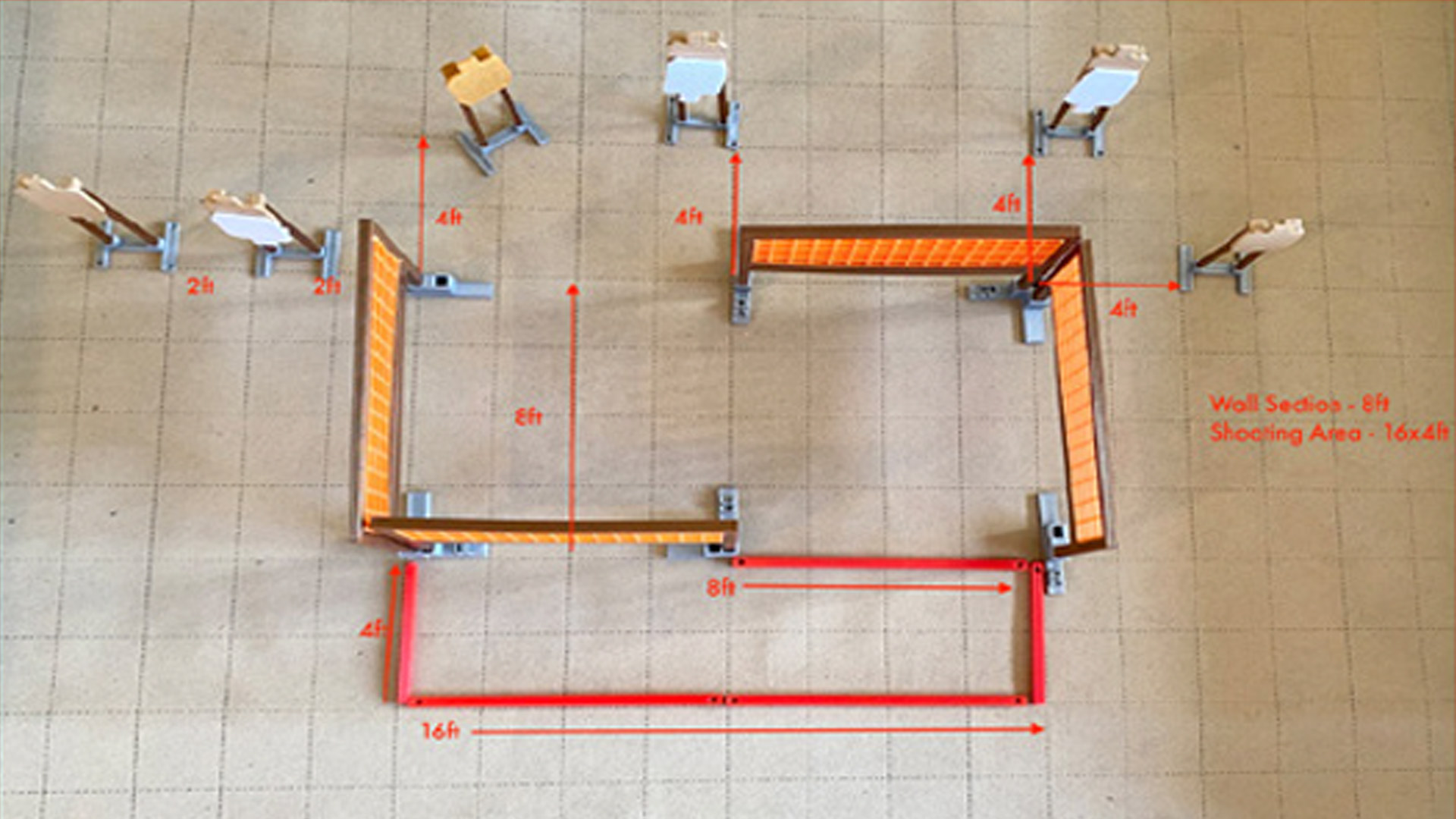
Because classifier stages are standardised and published, they’re also the single most trainable thing in the sport. You can set up an approximation of a CLS stage in your garage or on an airsoft field, run it against a shot timer with a par time, and know that the skill you’re building maps directly onto the thing your classification is measured on. Shooters who advance quickly almost always drill a handful of specific classifiers until the sequence is automatic, so that at the match they’re executing a rehearsed pattern rather than solving a puzzle.
IPSC ELO Rating Explained: How to Check Yours and How It Works
If you’ve heard shooters at your club talking about “their ELO” — or you’ve been searching for the IPSC ELO rating and landed on a wall of official classification rules instead — here’s the part nobody explains clearly: the IPSC ELO rating is a separate, community-built ranking system that runs in parallel to the official ICS classification. It lives at ipscelo.com, an independent site built by Steffen Burmeister and Sabine Renner, and it has quietly become the scoreboard serious competitors check after every big match. The database currently covers all five firearm types (Handgun, PCC, Rifle, Mini Rifle, and Shotgun) across 18 divisions, with over 190,000 match results and more than 16,000 shooters in the rankings.
The mechanics borrow from chess. Instead of measuring your hit factor against an all-time record like ICS does, ELO measures who you finish ahead of. The site uses the Elo-MMR algorithm — designed specifically for competitions where results can’t be standardized across events — and recalculates the entire ranking live every time a new match is added. Finish ahead of someone rated higher than you and your rating climbs; get beaten by someone rated lower and it drops. That’s why two shooters with identical ICS percentages can have very different ELO ratings: one grinds classifiers at home, the other shows up and wins against strong fields.
Not every match counts, which trips up a lot of people checking their rating for the first time. Only Level 3 matches and above feed the system, and you need results from at least three Level 3 matches in a division to appear in that division’s ranking (shooters at Level 4 and 5 matches get rated immediately). Stay away from big matches for four years and you’re dropped from the rankings entirely. Checking your rating takes about ten seconds: go to ipscelo.com, search your name, and every division you’re ranked in shows up. From there you can claim a free profile — photo, social links, and your ELO class — with a simple email verification. Wikipedia also lists IPSCRating.com as another third-party ELO service, but ipscelo.com is the one you’ll hear quoted at matches.
So which number should you care about? Both, for different reasons. ELO measures who you can beat; ICS measures how close you come to the all-time best on a fixed course. ELO only moves at Level 3+ matches, so between majors it can’t tell you whether your training is working — that’s exactly what classifiers and a shot timer are for. The shooters climbing both boards at once are invariably the ones tracking draw times and splits between matches, then converting that measured speed into match placements.
How to Rank Up in IPSC: A Step-by-Step Roadmap
Most shooters who genuinely want to advance follow a similar arc. There is no shortcut, but there is a clear path.
Step 1 — Get your initial classification. Shoot four CLS stages in your division, either at a classifier match or at club training nights that run sanctioned classifiers. Until you have those four scores logged, you are “Unclassified” and nothing else matters. Most clubs run classifier nights monthly, so this usually takes 1–3 months.
Step 2 — Build a baseline through honest self-assessment. Once you have an initial class, look at your percentages on individual classifiers. If you scored 70%, 45%, 50%, and 55%, your average is 55% (C-class), but the 70% tells you that on the right stage you can shoot at B-class pace. The gap between your best and worst classifier is the gap you need to close.
Step 3 — Drill the fundamentals with a shot timer. Draw to first shot, splits, reloads, and transitions are the four skills that show up in every classifier. A timer like AirsoftShotTimer lets you measure each of these in dry-fire and track week-over-week improvement. Most shooters who plateau in C or B class plateau because they stopped measuring — they “feel” fast, but their splits have been the same 0.45 seconds for two years.
Step 4 — Compete in classifier matches regularly. Internal training scores can give you confidence, but only sanctioned classifier scores count for ICS. Plan to shoot at least one classifier match every quarter, ideally one per month. The repetition matters: classifier stages are designed to test specific skills (Bill Drills, El Presidente variants, transitions, movers), and seeing those skills tested over and over forces you to drill them between matches.
Step 5 — Adjust equipment when it stops being the bottleneck. New shooters often blame equipment too early. If you’re a C-class shooter, a $3,000 race gun won’t move you to B — the bottleneck is skill, not hardware. But once you’re at the top of B or in A-class, equipment differences start to matter: trigger weight, sight picture quality, holster fit, and magazine reliability can each cost you 1–2% on a classifier, and at that level 1–2% is the difference between A and M.
Step 6 — Expect 3–7 years to reach GM if that’s your goal. USPSA Grand Masters typically have 3–10 years of structured competition under their belt by the time they hit GM, and many have full-time-equivalent training schedules. If you’re a club shooter who makes one match a month and dry-fires occasionally, GM is unlikely — but Master class is genuinely achievable within 2–4 years of focused work, and A-class within 1–2 years.
💡 Further Reading: Want a structured training plan to get faster on classifiers? Read our Complete IPSC Training Guide for drills covering draw, splits, reloads, and transitions.
IPSC vs USPSA Classification: Key Differences
Many shooters use “IPSC” and “USPSA” interchangeably, but the classification systems have small but important differences that affect how you plan your training and matches.
The percentage tiers are essentially identical. Both systems use GM at 95%+, M at 85–94.9%, A at 75–84.9%, B at 60–74.9%, C at 40–59.9%, and D below 40%. A USPSA A-class shooter who travels to an IPSC match is roughly equivalent in skill to an IPSC A-class shooter, and vice versa. This is the most common point of confusion among new shooters — they assume the systems are different when in fact the scale is shared.
USPSA recently simplified its classifier rules. Until a few years ago, USPSA used “B-flag,” “C-flag,” and “D-flag” scores that only counted toward classification if they were within a certain percentage of your current class. USPSA removed those flags, which means every classifier you shoot now counts, regardless of how well or poorly you did. IPSC’s ICS has always counted classifiers more straightforwardly, taking the rolling best-4-of-8 without flag-based filtering.
USPSA has more classifier stages and a denser classifier database. USPSA shooters in the United States can attend classifier matches almost every weekend in most regions, and the USPSA classifier library is huge. IPSC’s CLS library is smaller and the stages are standardized internationally, which means an IPSC classifier in Germany has the exact same setup as one in Australia. This is great for global comparability but limits how often shooters in low-density regions can rack up scores.
National championship results can trigger automatic Grand Master promotion in USPSA. If you score 95% or higher at a USPSA national championship, you’re moved to GM in that division regardless of your previous classifier average. IPSC’s ICS doesn’t have this exact shortcut — your class is always determined by your rolling classifier average — though the parallel IPSC ELO rating system reflects major-match performance separately.
Division-by-division classification works the same in both. You can be an M-class in Production and a B-class in Open in either system. This isn’t a bug — it reflects the reality that different divisions reward different skills, and a shooter who’s optimized for iron-sight Production might struggle when they pick up a red-dot Open gun for the first time.
Common Mistakes That Block Classification Progress
After watching dozens of shooters plateau over the years, the same patterns keep showing up. Most stuck shooters aren’t bad — they just keep making the same hidden mistakes.
Mistake #1 — Treating classifiers like normal stages. A classifier is not a “fun stage” — it’s a test of one specific skill, and the optimal approach is often different from a regular field course. Watch top GMs shoot a classifier: they walk through deliberately, plan every transition, and shoot at the specific pace the stage is designed to measure. Newer shooters treat classifiers like another stage and leave 10–15% on the table because they rushed when they should have steadied, or steadied when they should have pushed.
Mistake #2 — Only shooting classifiers at matches. You can shoot a classifier in dry-fire (with a timer and target placement that mirrors the official setup) every single day. Top shooters drill specific classifiers — Bill Drill, El Presidente, the standard 24 — until the motion is rote. When the real classifier comes up at a match, they’re not solving a stage; they’re executing a known pattern.
Mistake #3 — Ignoring split times and chasing draw time. Almost every new IPSC shooter obsesses over draw-to-first-shot time because it’s the most visible number on a timer. But classifiers reward consistent splits and accurate transitions far more than a fast draw. A 0.05-second improvement on every split across a 10-round classifier compounds into a 0.5-second total time reduction, which is often 5–10% on the hit factor.
Mistake #4 — Not tracking results over time. Shooters who advance keep spreadsheets. They know their classifier percentages on every CLS they’ve shot, their splits on Bill Drill at home, and their draw averages for the past 30 days. Shooters who plateau just “feel like they’re getting better” without data. The shot timer in your pocket is also a data recorder — use it as one.
Mistake #5 — Skipping the airsoft training crossover. Live ammunition is expensive, and most shooters can’t put in the volume needed to plateau out of C-class on live fire alone. Dry-fire and airsoft training with a shot timer lets you put in 10x the trigger pulls per dollar. The motor patterns transfer directly: draw, sight alignment, trigger press, transitions, and reload mechanics are all identical between an airsoft replica of your competition pistol and the real thing.
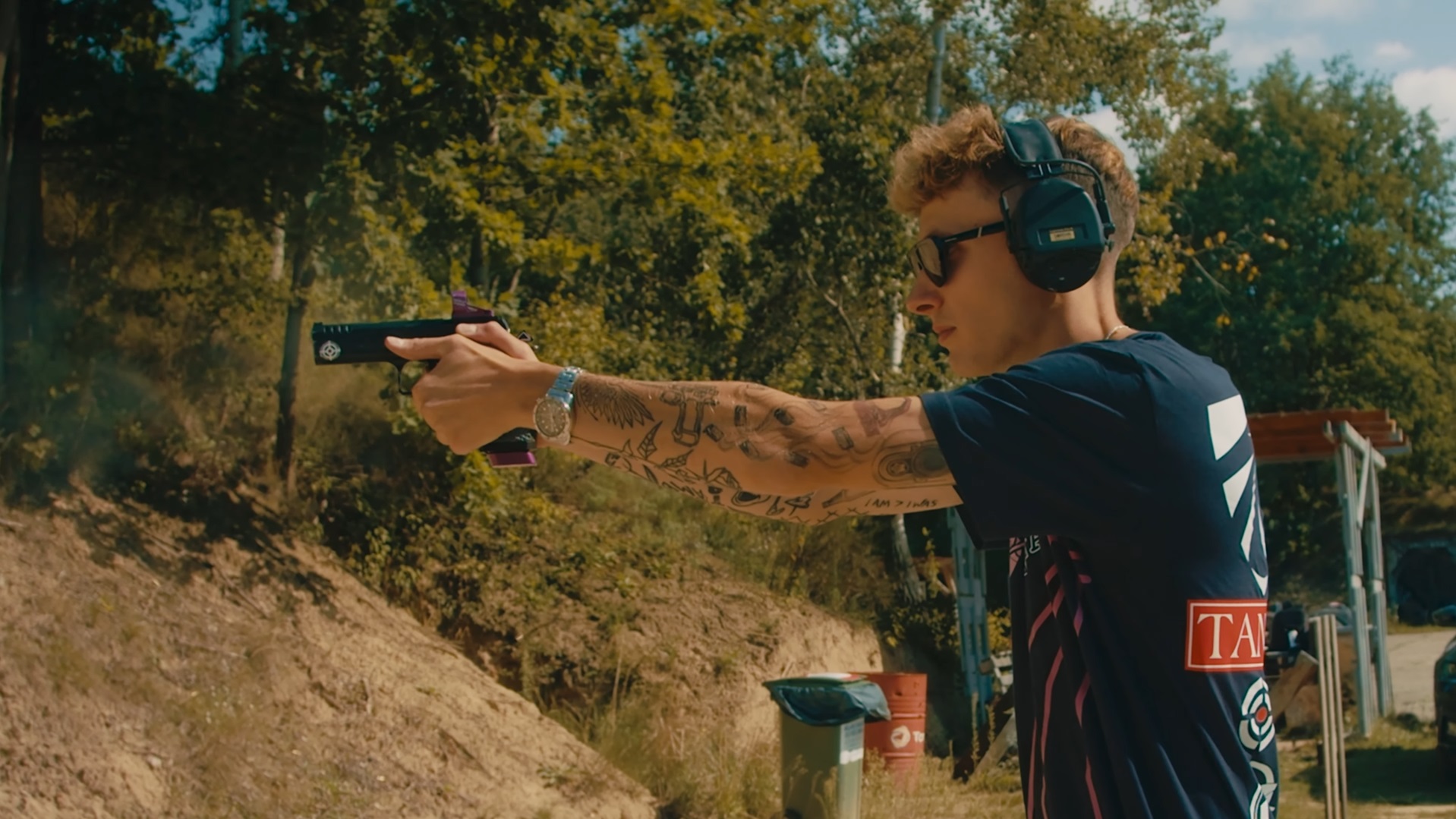
💡 Further Reading: Curious how airsoft training crosses over to live-fire competition? Read our Airsoft Firearms Training Crossover Guide for the science behind motor pattern transfer.
Recommended Equipment for Different Class Levels
Equipment matters, but only at the right time. Spending GM-budget money in C-class is usually a waste; running C-class gear in M-class is what holds people back.
For D and C-class shooters, the gear priority is reliability and basic fit. A factory Production-legal pistol like a Glock 17 or 34, a CZ Shadow 2, or a Canik Rival is more than enough. The goal at this stage is to remove equipment as a variable so you know your scores reflect your skill. A solid kydex competition holster, three reliable magazines, and a shot timer cover 90% of what you need.
By the time you’re shooting B-class consistently, equipment tuning starts to matter. A trigger job, custom grips, optic-ready slides (if you compete in Carry Optics or Open), and tuned magazines for fast reloads can each shave fractions off your stage times. This is also when investing in dry-fire infrastructure pays off — a shot timer with audio playback, par-time training, and split analysis becomes essential.
A-class and Master shooters often run highly customized setups: tuned race triggers, custom holsters fit to their exact draw stroke, ammunition that’s been pressure-tested for their specific gun, and dry-fire walls in their garage with full target arrays. By this level, equipment differences of 1–2% on a classifier compound across a match into a meaningful placement shift.
💡 Further Reading: Need a complete pistol setup for IPSC? Check out our IPSC Beginner Pistol Guide for division-by-division recommendations. For competition-focused shot timer training, see our AirsoftShotTimer App Guide.
Frequently Asked Questions
What does IPSC stand for?
IPSC stands for the International Practical Shooting Confederation, the world governing body for practical shooting founded in 1976. It sets the rulebooks, sanctions matches from club level up to the World Shoot, and administers the ICS classification system described in this article. Its US regional affiliate operates under its own name, USPSA.
How many classifier stages does IPSC have?
IPSC currently maintains 28 Classifier Stages, grouped into short courses and medium courses and published on the official IPSC website with full diagrams. Each carries a CLC-XX code (CLC-07, CLC-35, CLC-45, CLC-69 and so on) and is built to identical dimensions everywhere in the world, which is what makes a single global percentage scale possible.
Is there an IPSC classification chart or PDF?
Yes — IPSC publishes the classifier stage diagrams as downloadable documents on its match-sanctioning pages, and many regions mirror them as PDF packs. For the percentage tiers themselves you don’t need a download: the full chart is the six-row table earlier in this article (GM 95%+, M 85–94.9%, A 75–84.9%, B 60–74.9%, C 40–59.9%, D under 40%), and those figures are stable across divisions.
What class will I get on my first classifier?
Most likely C or B — not D. New shooters routinely assume they’ll open at the bottom of the scale, but the D-class threshold is low enough that any shooter with a correct grip and basic sight alignment clears it. Plan for C-class as the realistic starting point, and treat the first four scores as data collection rather than a verdict.
What’s the difference between Comstock and Virginia Count scoring?
Comstock allows unlimited rounds and counts only your best hits, so you can fire a make-up shot to fix a bad one. Virginia Count fixes the round count exactly, and any extra shot draws a procedural penalty instead. Most IPSC classifiers use Comstock, but the stage brief always states which applies — and shooting a Comstock stage as though it were Virginia Count means leaving a fixable bad hit on the target.
Do USPSA classifier scores count toward IPSC classification?
No. They are separate databases administered by separate bodies, so a USPSA classifier score doesn’t feed your IPSC ICS classification and vice versa. USPSA is IPSC’s US region, and the percentage tiers are essentially identical, but if you want an IPSC class you need CLS scores submitted through an IPSC region. Many shooters who compete in both simply carry two classifications.
What are the IPSC divisions?
IPSC Handgun runs Open, Standard, Production, Production Optics, Production Optics Light, Classic and Revolver, each with its own rules on optics, magazine length, holster position and permitted modifications. Divisions are equipment brackets, not skill brackets — and because your classification is calculated per division, you can hold different classes in each. IPSC Action Air mirrors the same structure using airsoft replicas.
What are the classes in IPSC?
IPSC uses six classes: Grand Master (95%+), Master (85–94.9%), A (75–84.9%), B (60–74.9%), C (40–59.9%), and D (below 40%). Each class is division-specific, so you can be classified at different levels in Production, Standard, Open, Classic, and other divisions.
How long does it take to become an IPSC Grand Master?
Most shooters who reach Grand Master have 3–10 years of consistent training and match shooting under their belt. Master class is achievable within 2–4 years of focused training for committed shooters, and A-class within 1–2 years. Reaching GM requires near full-time-equivalent training volume and is genuinely rare — only a small fraction of all IPSC competitors ever reach it.
How is IPSC classification calculated?
Your hit factor on a Classifier Stage (CLS) is divided by the highest hit factor ever recorded on that stage globally, giving you a percentage. After shooting four CLS scores you get an initial classification. Your ongoing classification is calculated from the best 4 of your most recent 8 CLS scores.
Is the IPSC ELO rating the same as classification?
No — they’re parallel systems. The IPSC Classification System (ICS) uses standardized Classifier Stages and measures your performance against the all-time best hit factor. The IPSC ELO rating is calculated from your placement at Level 3+ matches against other ranked shooters, similar to chess ELO. Both use GM/M/A/B/C/D labels but measure different things.
How do I check my IPSC ELO rating?
Go to ipscelo.com and search for your name. The site lists your rating in every division where you have results from at least three Level 3+ matches (Level 4 and 5 results are rated immediately). You can also create a free profile with a photo and social links via email verification. If you haven’t shot three Level 3 matches in a division yet, you won’t appear in that division’s ranking.
How is the IPSC ELO rating calculated?
The system uses the Elo-MMR algorithm on official IPSC match results from Level 3 matches and above. Your rating rises when you finish ahead of shooters rated higher than you and falls when shooters rated lower beat you — raw hit factor doesn’t matter, only relative placement. The entire ranking is recalculated live after every newly added match, and shooters are dropped four years after their last counted match.
What’s the difference between IPSC and USPSA classification?
The percentage tiers are essentially identical (GM at 95%+, M at 85–94.9%, etc.). The main differences are: USPSA recently removed the old B/C/D-flag filters so all classifier scores now count, USPSA has a much larger classifier database and weekly classifier matches in many regions, and USPSA promotes you automatically to GM if you score 95%+ at a national championship — IPSC doesn’t have that automatic shortcut.
How often do I need to shoot classifiers to keep my class?
IPSC requires each athlete to shoot at least one classifier match OR two CLS stages per calendar year to maintain their classification. If you don’t meet that minimum, your classification may go inactive and you’ll need to re-establish it.
Is Glock 34 allowed in IPSC Production division?
Yes, the Glock 34 is one of the most popular Production-division pistols in IPSC and USPSA. It meets the 5-inch barrel limit, the 15-round magazine restriction, and the iron-sights-only rule. About 16% of USPSA Production-division shooters compete with a Glock 34 or its variants.
Conclusion: Classification Is a Compass, Not a Destination
The IPSC classification system isn’t there to crown winners — it’s there to give every shooter, anywhere in the world, an honest answer to the question “how good am I really?” That answer might be uncomfortable the first time you see it, but it’s the most valuable feedback in the sport. From there, the path forward is the same for everyone: shoot more classifiers, drill the fundamentals, measure your splits, and let the numbers tell you whether the work is producing progress.
If you’re new to IPSC or about to shoot your first classifier match, the most important step is just getting those four initial scores in. Don’t worry about whether they’ll put you in D or C — worry about getting them logged so the system can start tracking your improvement. From the first classifier, every score after that is a data point on a curve you control.
Ready to start measuring? Download the AirsoftShotTimer App to track your draws, splits, and reloads in dry-fire and airsoft training between classifier matches — the same shot-timer mechanics that decide your classification percentage at the match.
Put a Shot Timer in Your Pocket
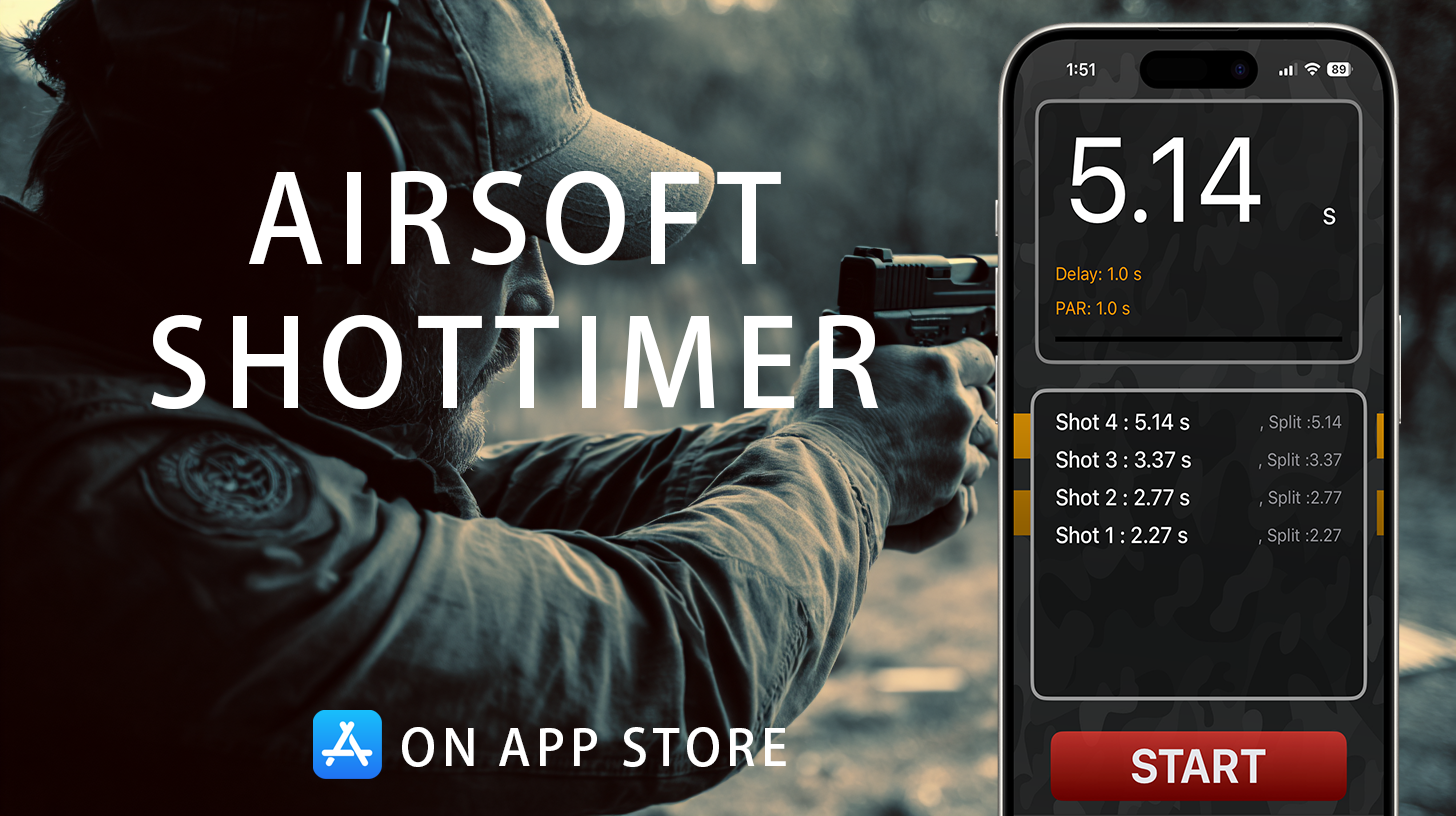
Airsoft Shot Timer is a free shot timer app tuned for airsoft and Action Air — it picks up BB gun shots, tracks your split times, and saves you the cost of a $150+ hardware timer for IPSC/IDPA practice.

- IPSC
- IPSC Classification
- Ipsc Classification System
- Ipsc Classifier Stages
- Ipsc Cls Stages
- Ipsc Classes
- Ipsc Categories
- Ipsc Levels
- Ipsc Divisions Explained
- Ipsc Match Levels
- Ipsc Scoring System
- Ipsc Grand Master
- Ipsc Ranking System
- Ipsc Class Explained
- How to Rank Up in Ipsc
- Ipsc Grading Percentages
- Ipsc Grading
- Uspsa vs Ipsc Classification
- USPSA Classification
- IPSC GM
- IPSC Master
- Hit Factor
- Comstock Scoring
- Virginia Count
- Practical Shooting Classification
- IPSC Beginner
- Ipsc Rules 2026
- Competition Shooting
- IPSC Production
- IPSC Open
- IPSC Standard
- Classifier Match
- How Long to Become Ipsc Grand Master
- Ipsc World Shoot
- IPSC ICS
- Ipsc Elo Rating
- Ipsc Rating