IDPA 5x5 Classifier 2026: Full Times Chart by Division, Par Times & Every Way to Make Your Class
The IDPA classifier in 60 seconds (BLUF)
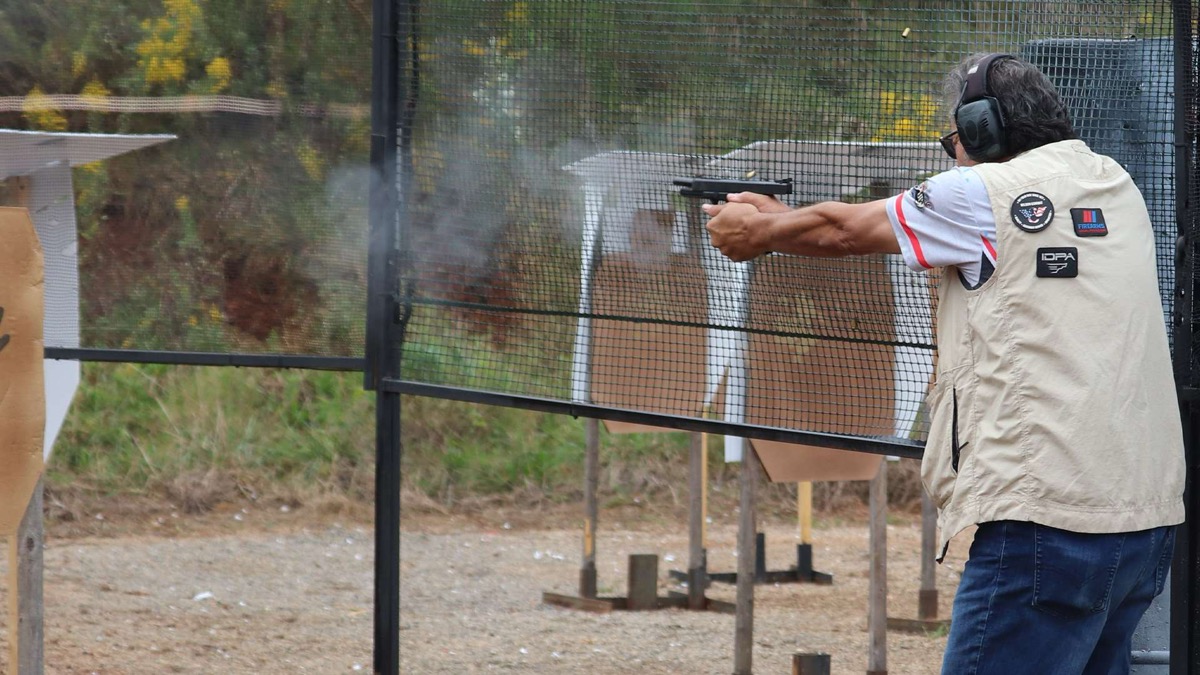
- What it is: A standardized skills test that sorts you into a class. Most clubs now use the 5x5 classifier — 25 rounds, four strings, one target at 10 yards, no concealment required.
- How it’s scored: Your final number is raw time + points down (1 second each) + penalties. Lower is better. Unlike USPSA’s hit factor, in IDPA your time is your score.
- The classes: Master (MA), Expert (EX), Sharpshooter (SS), Marksman (MM), Novice (NV) — set by hard time brackets that differ by division. Jump to the full times chart for all eight divisions ↓
- Three official methods: the abbreviated 5x5, the three-stage 72-round standard classifier, and a separate PCC classifier — plus a fourth route that isn’t a classifier at all, the match bump.
- You’re classified per division: you must shoot the classifier in a division to hold a class in it.
- The fastest way to move up: work out the four par times your target class actually requires, then drill the draw, the strong-hand string and the slide-lock reload against them with a free Airsoft Shot Timer app — every tenth you save is a tenth off your classifier.
There’s a particular kind of quiet that falls over a bay when the safety officer says “this is the classifier.” Everybody who was joking around two minutes ago suddenly gets serious, because this is the one stage of the day that follows you home. Your fun-stage hits stay at the club; your classifier time goes into the IDPA database and decides whether you’re a Sharpshooter or an Expert for the next year. This guide walks through exactly what that test is, how a stopwatch number turns into a class, what the current standards are, and — the part most people skip — how to actually train for it without burning a case of ammo.
What the IDPA Classifier Actually Is
A classifier is not a normal stage. Regular IDPA stages are built by the local club to be interesting — different walls, different target arrays, a fresh problem every month — which means a stage in Florida and a stage in Oregon are never the same test. The classifier is the deliberate opposite: a fixed course of fire that’s identical everywhere it’s run, so your performance can be compared against every other IDPA shooter in the country on the same yardstick. That comparison is the entire point of classification. It exists so that when you show up to a match, you’re scored against people of roughly your own demonstrated skill instead of getting flattened by a Master in your first season — or steamrolling beginners once you’ve gotten good.
For years the classifier was a long, three-stage affair that ate a chunk of your match day and a lot of ammo. That older standard classifier still exists and some clubs still run it, but the version you’re almost certainly going to shoot today is the 5x5 classifier: a tight 25-round test that fits on a single target in one bay and takes about a minute of actual shooting. It became the default because it measures the same fundamentals in a fraction of the rounds, which means clubs can run it on a quiet weeknight and still classify a whole squad. When people say “I need to go shoot a classifier,” in 2026 they almost always mean the 5x5.
The Three Classification Methods (and Which Stages You’ll Actually Shoot)
This is the part that quietly confuses newcomers, because “the IDPA classifier” isn’t one thing — the rulebook recognises three separate classification methods, and a club picks which one it runs. Knowing all three matters the moment you look at a club calendar and see “Classifier Match, 3 stages” and wonder why it isn’t the 25-round test everyone told you about.
The abbreviated method is the 5x5, and it’s what the overwhelming majority of clubs use now: four strings, 25 rounds, one target, one shooting position. The standard method is the classic three-stage, 72-round classifier that has been in the rulebook since the 2017 revision — and it is a genuinely different animal, not just a longer 5x5. Stage one is a precision and one-handed test built around head shots plus strong-hand-only and weak-hand-only pairs. Stage two adds movement: you start facing up-range, turn and draw, then engage while moving forward and while backing up. Stage three is the one that eats classifications alive — six shots at 20 yards and eighteen at 15 yards, worked around a Bianchi barricade with a slide-lock reload in the middle. Veterans describe that last stage as a bullseye match wearing an IDPA costume, and the standard advice for it is the exact opposite of everything else in the sport: slow down, because points down at 20 yards cost more seconds than you’ll ever save by rushing. The third method is the dedicated PCC classifier, used for Pistol Caliber Carbine, which naturally runs to much tighter times than any handgun division.
If your goal is simply to get a class next to your name, shoot the 5x5 — it’s shorter, cheaper, available almost everywhere, and the class it hands you is exactly as official as one earned the long way.
The 5x5 Classifier, String by String
The beauty of the 5x5 is that you can set it up anywhere you have a single IDPA target and a ten-yard lane. Everything happens at that one distance, and concealment is not required — this is a pure marksmanship-and-manipulation test, not a draw-from-concealment test. You’ll need five magazines (or speedloaders) and a careful eye on your round count, because the reload is part of the grade. Here’s the whole thing:
- String 1 — five rounds, freestyle. From the holster at the buzzer, draw and fire five rounds into the body with both hands. This is your baseline: clean draw, five good hits, no drama.
- String 2 — five rounds, strong hand only. Draw and fire five rounds into the body using only your dominant hand. This is where times start to spread, because one-handed recoil control is a skill most people quietly neglect.
- String 3 — five rounds, slide-lock reload, five rounds. Start with only five rounds in the gun. Draw, fire five into the body, run an emergency (slide-lock) reload, then fire five more. Ten rounds total, and the empty-gun reload under the buzzer is the single biggest time sink for most shooters.
- String 4 — four to the body, one to the head. Draw and fire freestyle: four rounds into the body and one into the head. There are no makeup shots, so that headshot at ten yards is all-or-nothing — miss the head circle and the penalty time stings.
Twenty-five rounds, four strings, and every one of them is something you can rehearse at home long before you ever stand in the bay. That’s worth sitting with for a second: there is nothing exotic here. A slow draw, a sloppy strong-hand string and a fumbled reload are what separate most Marksmen from most Experts, and all three are pure repetition problems.
Two procedural details catch people out on classifier day, and both are worth knowing before you’re standing at the line. First, there are no makeup shots — you fire the round count the string calls for and you live with the hits, which is why that single headshot in string four is so psychologically loud. The experienced advice from club safety officers is blunt and correct: do not miss the head, even if you have to slow down and aim for four full seconds, because a miss costs you five seconds and no amount of speed elsewhere buys that back. Second, a malfunction means you re-shoot the whole thing — all 25 rounds, from the top. That turns your magazines from an afterthought into part of your score. Load them carefully, seat them properly, and check them twice before you’re on the clock; a squib-quality reload from a tired magazine spring is a genuinely expensive mistake here in a way it never is on a club fun stage.
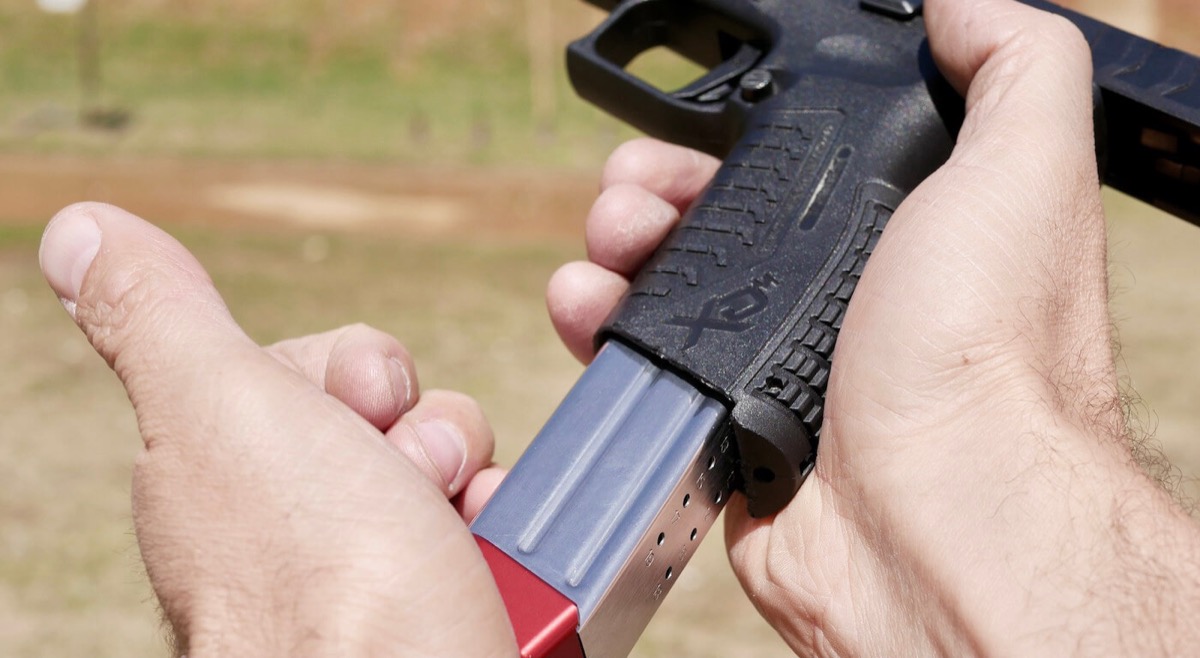
The reload itself rewards one small habit almost nobody teaches beginners: carry your magazines bullets-forward in the carrier and run your support-hand index finger up the front edge of the mag as you bring it to the gun. That finger becomes a guide rail into the magwell, and it’s the difference between a reload you can repeat under a buzzer and one that works fine in your living room and falls apart in the bay.
Why the Shot Timer Literally Is Your Score
Here’s the thing that makes IDPA so honest, and so unforgiving. In USPSA your score is a hit factor — points divided by time — so accuracy can buy back some speed. IDPA doesn’t work that way. Your score is raw time plus penalty time, full stop. Every hit outside the center scoring zone simply gets converted into seconds and added to your clock: a down-one hit adds one second, a down-three hit adds three, and a complete miss costs you five. A procedural error tacks on three more. There is no separate “accuracy score” to hide behind — bad hits just make your time slower.
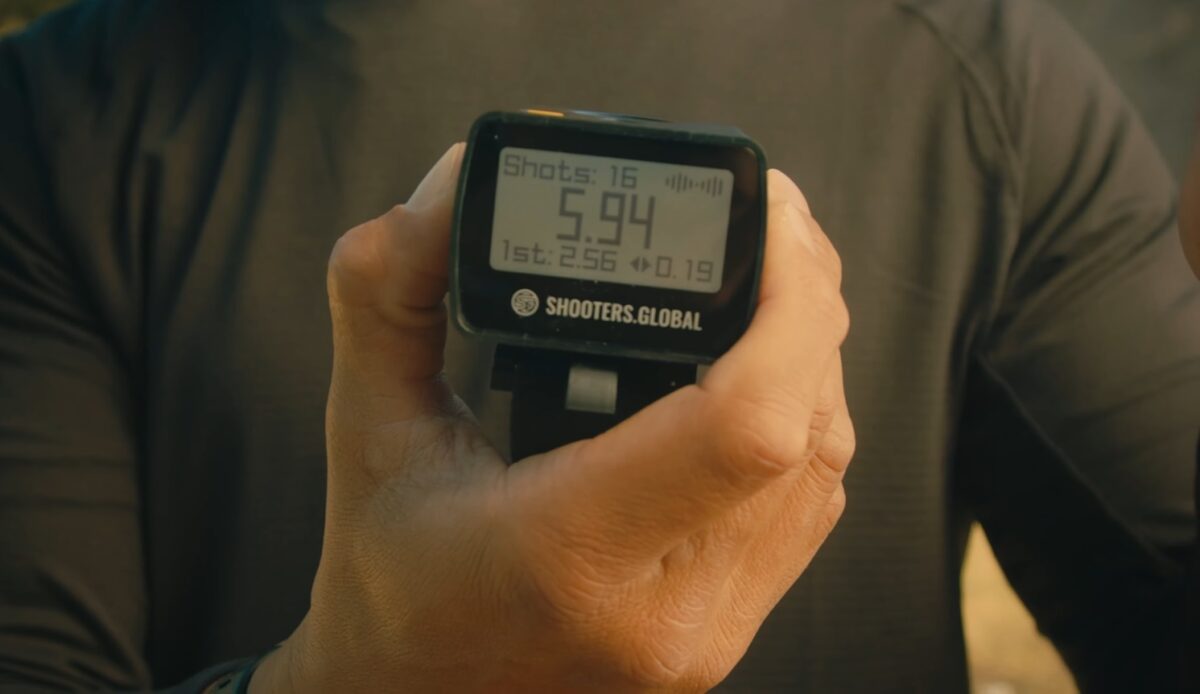
That changes how you should think about the buzzer. The shot timer isn’t measuring something next to your score, the way it might in a sport with a points column; in IDPA the number on the timer, plus the penalty seconds, is the entire result. Shoot the 5x5 in 16 seconds of raw time and drop four points and you’ve shot a 20.00 — and 20.00 in Stock Service Pistol is the difference between Expert and Sharpshooter. That’s why the people who climb fastest in IDPA aren’t the ones who shoot the most rounds; they’re the ones who measure every string the way the classifier will. A shot timer is the one instrument that turns “that felt fast” into a number you can actually compare to the standard you’re chasing.
The Full IDPA Classification Times Chart (Every Division)
Once you’ve shot the 5x5, your total time is matched against a bracket for your division, and that bracket assigns your class. The brackets are tighter for the fast divisions (a red dot in Carry Optics is expected to be quicker than iron-sighted Stock Service Pistol) and looser for revolvers and back-up guns, which is only fair given the hardware. Here is the complete abbreviated-method chart — every class, every division, in total seconds:
| Class | SSP | ESP | CDP | CO | CCP | REV | BUG | PCC |
|---|---|---|---|---|---|---|---|---|
| Master (MA) | ≤ 19.07 | ≤ 18.75 | ≤ 19.18 | ≤ 18.47 | ≤ 19.60 | ≤ 20.15 | ≤ 23.25 | ≤ 10.63 |
| Expert (EX) | 19.08–23.49 | 18.76–23.28 | 19.19–24.09 | 18.48–22.93 | 19.61–24.98 | 20.16–26.78 | 23.26–28.12 | 10.64–12.98 |
| Sharpshooter (SS) | 23.50–29.36 | 23.29–28.80 | 24.10–29.92 | 22.94–28.39 | 24.99–31.07 | 26.79–33.34 | 28.13–35.43 | 12.99–15.82 |
| Marksman (MM) | 29.37–36.97 | 28.81–36.27 | 29.93–37.63 | 28.40–36.18 | 31.08–39.26 | 33.35–41.91 | 35.44–44.65 | 15.83–18.33 |
| Novice (NV) | ≥ 36.98 | ≥ 36.28 | ≥ 37.64 | ≥ 36.19 | ≥ 39.27 | ≥ 41.92 | ≥ 44.66 | ≥ 18.34 |
If your club runs the long version instead, the numbers look completely different because you’re shooting nearly three times the rounds. On the 72-round standard classifier, Master is 73.00 seconds or less in SSP, 72.00 in ESP and Carry Optics, 75.00 in CDP, 78.00 in CCP, 83.00 in Revolver and 89.00 in Back-Up Gun, with PCC down at 45.00. The Novice floor sits at 232.01 in SSP, 225.01 in ESP and CO, 240.01 in CDP, 248.01 in CCP, 263.01 in REV and 283.01 in BUG. The one thing worth checking before you plan around any of these: brackets get recalibrated occasionally, so confirm the current figure for your division on the official IDPA site before you decide you’re half a second from Expert.
A few things fall out of that chart that are worth internalizing. First, the gap between a raw Novice run and a Master run in SSP is only about eighteen seconds across twenty-five rounds — under a second per shot of difference, which is both humbling and encouraging. Second, notice how narrow the Master-to-Expert band is compared to the Marksman band: roughly four and a half seconds separates Master from Expert, but Marksman spans seven and a half. The ladder gets steeper the higher you climb, and the seconds get harder to find. Third, your class is set per division: make Sharpshooter in SSP and then pick up a Carry Optics gun and you start unclassified in CO until you shoot the test again with the dot. Above Master sits Distinguished Master, but you don’t earn that on a classifier — it’s awarded for top finishes at sanctioned matches, which is IDPA’s way of saying the classifier can only measure so much.
Turn Your Class Bracket Into Four Par Times
Here’s the step almost everyone skips, and it’s the one that turns that chart from trivia into a training plan. A bracket is a total, but you don’t shoot totals — you shoot four separate strings. So work backwards.
Start with the number you’re chasing, subtract the points down you realistically drop, and what’s left is the raw time you actually have to hit. Say you’re a Sharpshooter in SSP hunting Expert: the boundary is 23.49, and if you’re honest about dropping four points on a decent run, that’s four seconds of penalty, so your raw time has to come in at 19.49 or better. Now spend that budget across the four strings. Something like 3.5 seconds for the freestyle string, 5.0 for strong-hand-only, 7.5 for the reload string and 3.5 for the headshot string adds up to 19.5 — and suddenly you’re not chasing a vague “get faster,” you’re chasing four specific numbers.
🎯 Set those four numbers as par times tonight
This is exactly what a par time is for. Put a free Airsoft Shot Timer app on your phone, set a random start delay so you can’t anticipate the buzzer, then set the par to your string budget — 3.5 seconds for the freestyle string, 5.0 for strong-hand-only, and so on. Run each string in dry fire or with an airsoft pistol until you’re beating its par consistently, not once. The moment you can hit all four budgets on demand, you’ve already shot the class you’re chasing; classifier day just makes it official. And because the app logs your splits, you’ll find out fast whether it’s the draw or the reload eating your time — which is information a stopwatch on a total simply cannot give you.
The honest version of this exercise is uncomfortable, and that’s the point. Most shooters discover their four budgets don’t add up the way they assumed: the freestyle string they were proud of was already fine, and the strong-hand string they never practise is quietly two full seconds over budget. That’s your class, sitting right there in one number.
How to Actually Earn Your Class (Without Sandbagging)
The cynical path in any classification sport is sandbagging — deliberately shooting the classifier slow to keep a low class and then cleaning up against weaker competition. It’s against the spirit of the game, it’s obvious to anyone watching your match scores, and it’s a genuinely joyless way to spend a hobby. The honest path is also the more satisfying one, and it’s not complicated: figure out which of the four strings is bleeding the most time, and attack that one specifically.
That’s a cheaper problem to solve than it sounds, because the 5x5 rewards exactly three skills you can drill at home for free: the draw, the strong-hand-only string, and the slide-lock reload. No live range required, and not even a centerfire pistol. Because your score is raw time, every tenth you shave in dry fire is a tenth straight off your classifier — there is no other sport where practice converts to score quite this directly.
The trap most shooters fall into is grinding the strings they’re already good at, because it feels good to shoot fast and clean. But the classifier doesn’t care about your best string — it adds up all four, so your worst one is dragging the whole result down. If your freestyle string is a tidy 3 seconds but your strong-hand string is 7, that strong-hand string is where your class is hiding. A few hundred measured repetitions on a reload drill and some one-handed dry-fire training will move your number more than any new holster. For the full practice menu, our IDPA training guide and which pistol drill to shoot lay out how to structure it.
Match Bumps: The Route to a Class That Isn’t a Classifier
There’s a second way up the ladder that a lot of shooters never find out about, and it can move you faster than the classifier ever will. Win your class at a sanctioned IDPA match — the tiered events above your regular club match — and you can be promoted to the next class on match performance alone. It’s called a match bump, and it exists because the classifier only measures a narrow slice of the sport. Standing and delivering on a 10-yard target is not the same as solving a stage.
The catch is that a bump needs a real field to beat: the rules require a minimum number of competitors in your class before a win counts for promotion, and depending on the current rulebook a strong second place in a deep class can qualify too. There’s also a floor going the other way — you generally need to be classified at Marksman or above before you can enter a sanctioned match at all, which is a large part of why people go shoot a 5x5 in the first place.
What that combination produces in practice is a stair-step career rather than a smooth curve. One Carry Optics shooter documented his climb to Master in detail: a year and a half, 783 stages and nearly 47,000 rounds. His first two classifiers both landed him in Marksman — and then he won Marksman at a state match and got bumped straight to Sharpshooter, where he then stalled for eight months because he’d been trying to build accuracy and speed at the same time and kept being one or the other. The unlock, in his telling, was committing to speed alone for a while and letting accuracy catch up, and then walking into his last match with a mental script small enough to actually execute under pressure: get low, get a good grip, one stage at a time. He drove home before the awards and found out he’d made Master from a phone full of text messages.
The useful lesson buried in that story isn’t the round count. It’s that the classifier and the match bump measure different things, so if your classifier time is stubbornly stuck, going and shooting more matches is not a distraction from ranking up — it’s the other half of the route.
Practicing the 5x5 at Home with Airsoft
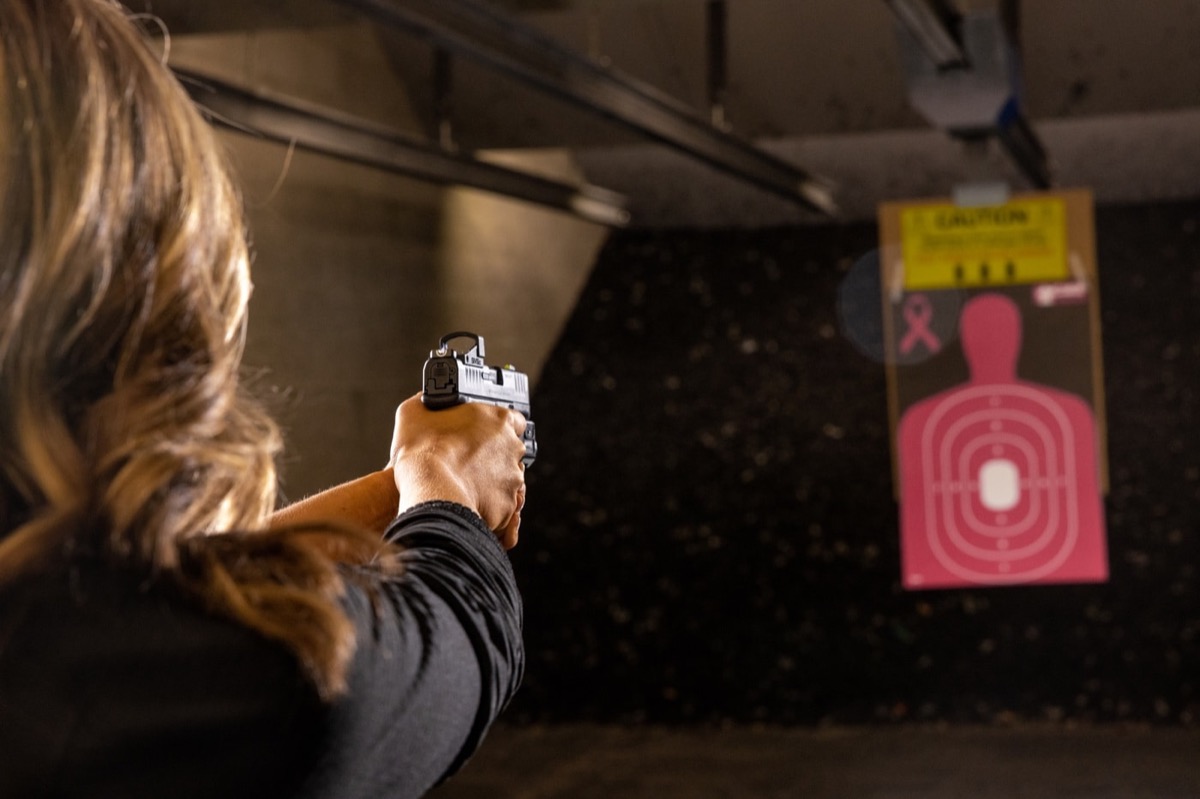
You can rehearse the entire 5x5 without spending a cent on ammo, and this is where airsoft quietly becomes one of the best practical-shooting trainers going. A gas blowback pistol like a Tokyo Marui Hi-CAPA gives you real recoil, a real trigger reset and real magazine changes, so a slide-lock reload with an airsoft gun rehearses the exact movement the classifier grades. Tape a scaled IDPA target to a backstop, set yourself at a proportional distance, and run the four strings in order — draw and five, strong-hand five, reload, headshot — and you’re drilling the test, not just plinking.
What turns that from plinking into training is timing it. Set the Airsoft Shot Timer app to pick up your airsoft gun’s quieter report, give yourself a random delay, and record every run the way the match will. If you compete in Action Air it’s not even a substitute — it’s the real sport with the same timed scoring. The habit you build in ten-minute sessions at home is the same habit that drops your number on classifier day, and the timer is the thread that ties dry-fire, airsoft and live-fire into one continuous progress curve instead of three disconnected hobbies.
Frequently Asked Questions
What is the IDPA 5x5 classifier?
It’s the standard IDPA skills test most clubs use to assign your classification. It’s 25 rounds across four strings, shot on a single IDPA target at 10 yards with no concealment required: five rounds freestyle, five strong-hand-only, five-reload-five with a slide-lock reload, and a final string of four body shots plus one headshot. Your total time plus penalties determines your class.
How is the IDPA classifier scored?
By time. Your raw time on the timer is added to penalty seconds, and the total is matched against your division’s bracket to set your class. The classifier uses the same points-down arithmetic as any IDPA stage — for the full table of what each penalty costs in seconds, and how Unlimited and Limited scoring differ, see IDPA scoring, penalty seconds and power factor. What matters here is the bracket: lower is better, and the second you save is worth exactly as much as the point you don’t drop.
What time do I need to make Master in IDPA?
It depends on the division. On the current 5x5 standards, Master is 18.47 seconds or less in Carry Optics, 18.75 in ESP, 19.07 in SSP, 19.18 in CDP and 19.60 in CCP. Revolver and Back-Up Gun get more time (20.15 and 23.25), while PCC needs an extremely fast 10.63. On the 72-round standard classifier the equivalent numbers are 72.00 for ESP and CO, 73.00 for SSP, 75.00 for CDP, 78.00 for CCP, 83.00 for REV, 89.00 for BUG and 45.00 for PCC. Always check the official standard for the exact division you shoot.
What are the different IDPA classifier stages?
It depends which method your club runs. The 5x5 isn’t divided into stages at all — it’s four strings shot from one position on one target. The standard classifier is the three-stage, 72-round version: stage one is a precision and one-handed test with head shots plus strong-hand-only and weak-hand-only pairs, stage two is a turn-and-draw with shooting while moving forward and backing up, and stage three is long-range precision at 15 and 20 yards around a Bianchi barricade with a slide-lock reload. There is also a separate PCC classifier for Pistol Caliber Carbine.
How many rounds is the IDPA standard classifier?
Seventy-two rounds across three stages, under the 2017-onward rulebook. That’s why most clubs have switched to the 25-round 5x5 — same fundamentals, roughly a third of the ammo and a fraction of the range time.
Can you get an IDPA classification without shooting a classifier?
Yes, via a match bump. Winning your class at a sanctioned match can promote you to the next class up, provided there were enough competitors in your class to meet the minimum in the current rules. You still generally need a classification of Marksman or above just to enter a sanctioned match, so most people shoot a 5x5 first and then let match results carry them upward.
What happens if my gun malfunctions during the classifier?
You re-shoot the entire 25 rounds from the top — the string count is not salvageable. It’s the strongest practical argument for treating your magazines as scoring equipment on classifier day: load them deliberately, use your best springs, and seat them firmly. Combined with the no-makeup-shots rule, gear reliability is worth more seconds here than on any club stage.
Do I have to be classified separately in each division?
Yes. Your class is tied to the division you shot the classifier in, because the hardware changes what’s achievable. If you’re a Sharpshooter in Stock Service Pistol and switch to Carry Optics, you’ll need to shoot the 5x5 again with the red-dot gun to get a CO classification. Until then you’re unclassified in that division.
Do I need a shot timer to train for the IDPA classifier?
For the classifier itself the safety officer runs the timer, but for practice it’s the most useful tool you can own, because your IDPA score is time — without measuring it you’re guessing at the only number that matters. A free shot timer app gives you the random start delay, par times and split logging to drill the draw, strong-hand string and reload in dry-fire or airsoft, which is exactly what the 5x5 rewards.
Conclusion: The Classifier Is a Mirror, Not a Verdict
The first time you shoot the 5x5, it can feel like a final exam. It isn’t — it’s a snapshot. It’s an honest, standardized way to ask “where do I actually stand?” and the number it hands back is a starting coordinate, not a judgment. Get your run logged, find out whether you’re a Marksman or a Sharpshooter today, and then use that information the way it’s meant to be used: as a map of which string to fix first.
And because the whole test comes down to time, the work between matches is clear. Find your division’s bracket in the chart above, subtract the points you realistically drop, split what’s left into four string budgets, and then go beat those four numbers at home. Attack whichever budget you’re furthest from, keep shooting matches so a bump stays on the table, and watch your total drop a class. Download the AirsoftShotTimer App to set those par times in dry fire and airsoft — it’s the same timed scoring that decides your class at the match, just running on your phone at home.
Related reading: IDPA Beginner Pistol Guide · IDPA Scoring, Penalties & Power Factor · IDPA Divisions Guide · IDPA vs USPSA · USPSA Classifier Guide
Put a Shot Timer in Your Pocket
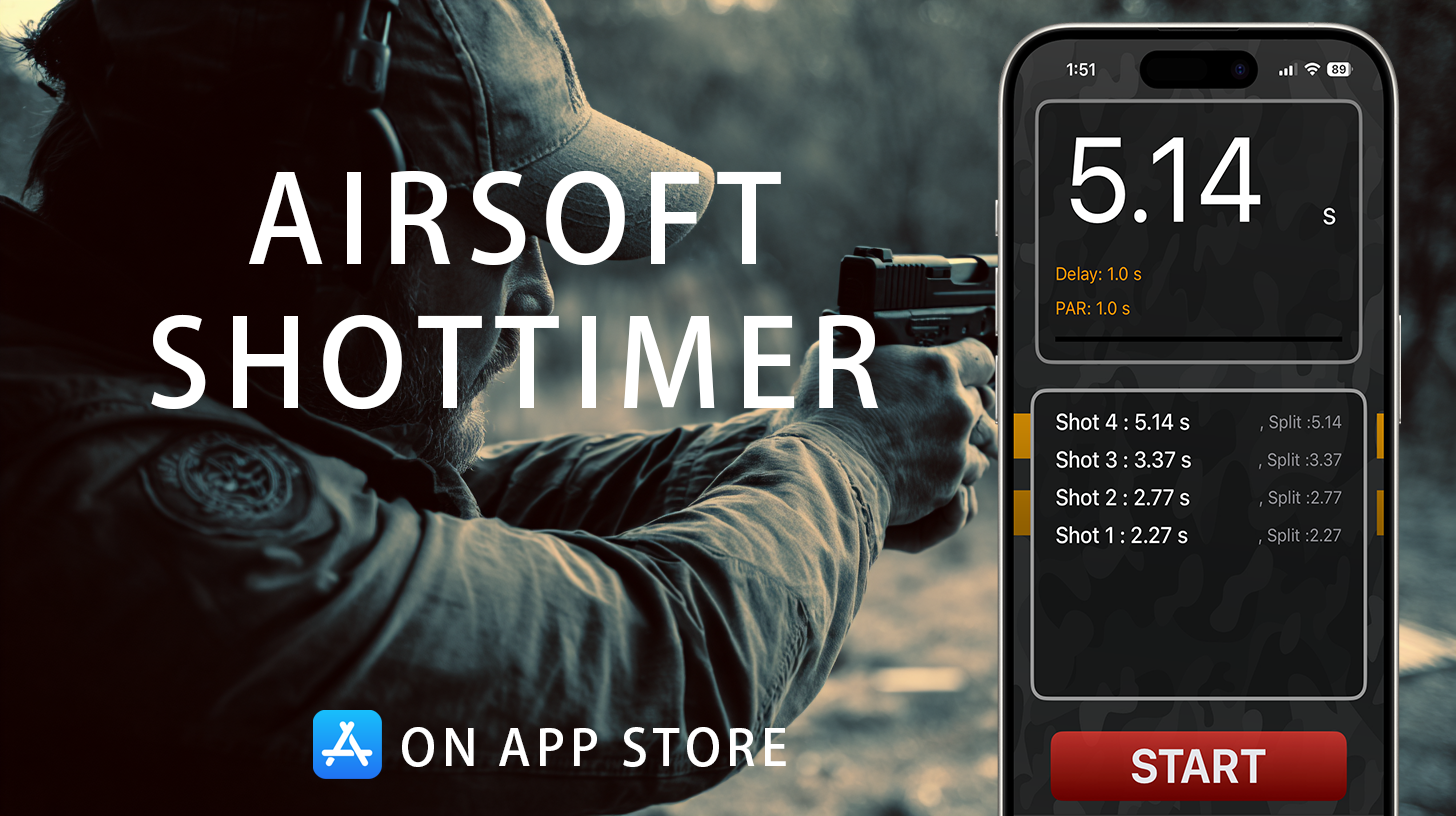
Airsoft Shot Timer is a free shot timer app tuned for airsoft and Action Air — it picks up BB gun shots, tracks your split times, and saves you the cost of a $150+ hardware timer for IPSC/IDPA practice.

- IDPA
- IDPA Classifier
- IDPA 5x5
- IDPA Classification
- IDPA Classifier Times
- IDPA Classifier Scoring
- IDPA Classifier Stages
- IDPA Classes
- Standard Classifier
- Match Bump
- Practical Shooting
- Competition Shooting
- Shot Timer
- IDPA Master
- Carry Optics
- SSP
- Dry Fire
- Action Air
- IDPA Divisions