Best Laser Training Pistol 2026: TitanX vs SIRT vs Mantis vs Strikeman

Why You Need a Laser Training System
If you’ve ever been serious about improving your shooting, you’ve run into the same problem everyone does: you want to practice, but you can’t hit the range every day. Between range fees, ammunition costs, and travel time, putting in a daily 30-minute practice session becomes a luxury.
Dry fire training has always been the classic solution — no ammo needed, practice at home, work on your draw, sight alignment, and trigger control. But traditional dry fire has one obvious weakness: after you pull the trigger, there’s no objective feedback telling you where that shot would have gone. You think your sights were aligned, but were they really? Did your trigger press push the muzzle off target at the last moment?
That’s exactly what laser training systems solve. They add instant visual feedback on top of traditional dry fire — every trigger pull sends a laser dot onto your target, showing you precisely where your shot landed. Paired with a smartphone app for data tracking, you can see your groupings, reaction times, and progress curves over time. What used to be a vague “I think that felt good” becomes hard numbers you can actually work with.
This guide breaks down the major laser training systems on the market in 2026, from $70 laser cartridges through the new $199 Mantis TitanX to the professional-grade SIRT training pistol, with current prices and the Mantis-versus-Strikeman comparison most buyers are actually trying to settle.
How Laser Training Systems Work
Before diving into specific products, it helps to understand the three basic approaches these systems take. The core concept is the same across all of them: replace the bullet with a laser and record where each shot lands. The implementation, however, falls into three distinct categories.
The first category is the laser training cartridge. This is the most straightforward design — a cartridge matching your firearm’s caliber that sits in the chamber. When you pull the trigger, the firing pin strikes a rubber pad on the cartridge’s base, activating a brief laser pulse. The biggest advantage is that you’re training with your own gun — grip angle, trigger feel, weight distribution — everything is identical to live fire. G-Sight and LaserLyte are the most recognized brands in this space.
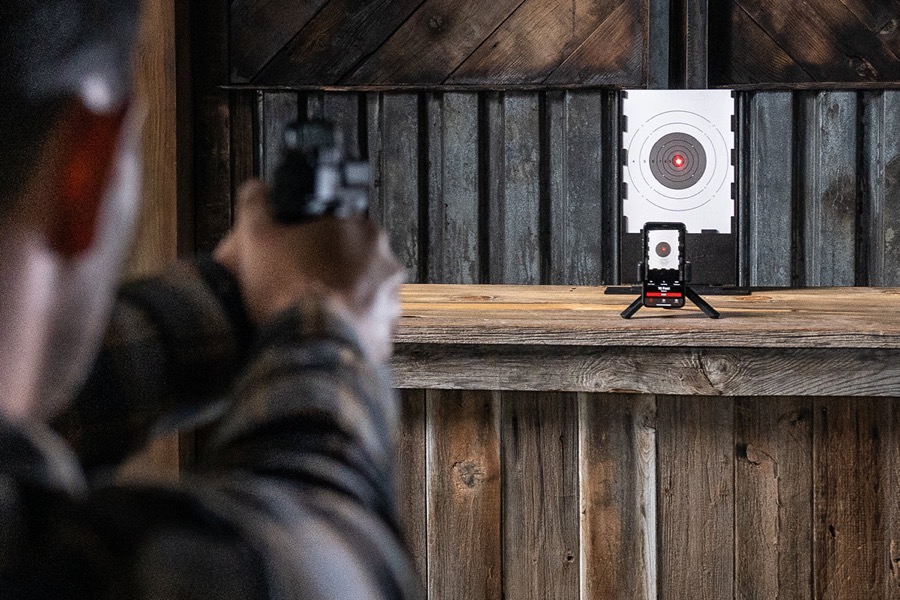
The second category is the app-based laser system, represented by Mantis Laser Academy and Strikeman. These also use laser cartridges, but add smart targets and a smartphone app to the equation. You set up your phone next to the target, and the app uses the camera to detect the laser dot’s position in real time, automatically logging each shot’s placement, reaction time, and score. This turns practice into something that genuinely feels like a game, and all your data gets saved for later review.
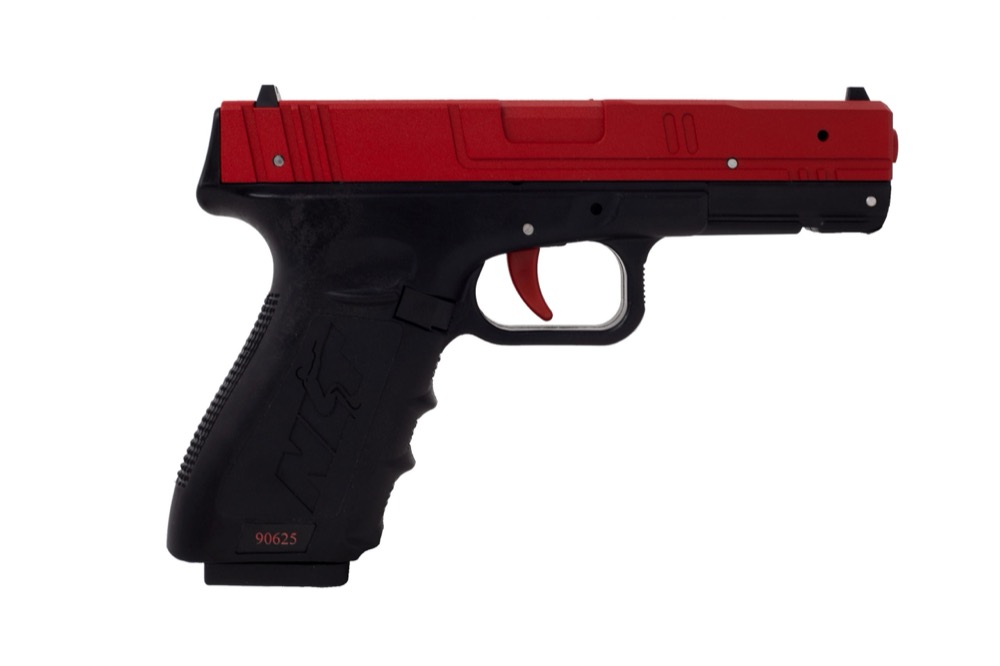
The third category is the dedicated training pistol, with the SIRT being the gold standard. It’s not an accessory — it’s a standalone training handgun that mimics the size and weight of a real pistol (typically a Glock 17), but with a built-in laser module and auto-resetting trigger. You don’t need to rack the slide between shots — the trigger resets on its own, letting you fire continuously without interruption.
Since late 2025 a fourth category has emerged, and it’s the one that scrambled everyone’s buying advice: the smart training pistol. Take the dedicated trainer above, build a motion sensor into the frame, and suddenly one device tells you both where the shot landed and what your hands did to put it there. The Mantis TitanX is the first product in this class, and because it landed at $199 — below every serious dedicated trainer before it — it’s the reason this guide needed a rewrite.

Mantis TitanX: The Laser Training Pistol That Reset the Price Floor
If you searched for “laser training pistol” and landed here, the TitanX is almost certainly the product you’re circling. It’s worth understanding exactly what you get for $199, because it’s a genuinely different value proposition from everything above it.
The TitanX is a replica semi-auto trainer built to Glock 17/19/45 dimensions, which matters more than it sounds: it drops into holsters you already own, so draw practice is real draw practice rather than an approximation. It ships in a case with two weighted magazines, charges over USB-C, and comes optic-ready with the RMR and RMS/RMSc footprints cut into the slide. There’s an adjustable laser zero, so if the dot doesn’t line up with the irons you can correct it rather than living with the offset.
The numbers that matter for feel: 8.2 oz unloaded, 9.4 oz per magazine, so about 1 lb 1.4 oz with a mag inserted. That’s noticeably lighter than a loaded Glock 17, and it’s the TitanX’s most honest weakness — reviewers who’ve put serious volume through one consistently describe the balance as grip-heavy, wanting more mass out front to match a real pistol’s inertia. The trigger, on the other hand, measures around 4 pounds with a defined wall and a clean break, and it resets on its own. No racking the slide between shots.
What actually separates the TitanX from a laser cartridge in your own gun is the MantisX motion sensor built into the frame. Every press gets scored, and when the score drops the app names the specific error — pushing, heeling, no follow-through, breaking the wrist down, too little trigger finger. That’s the difference between knowing your group opened up and knowing why it opened up. There’s also a TitanX-exclusive holster draw analysis drill that splits your draw into five measured stages — grip, pull, getting the muzzle horizontal, driving to target, and the shot — so you can see which stage is eating your time and drill that stage in isolation. It’s not perfect: drawing aggressively occasionally registers a phantom shot, though not often enough to ruin a session.
The reason people who own a real pistol still buy one comes down to arithmetic. One reviewer logged over 20,000 dry fire reps on a TitanX; at typical 9mm prices that’s roughly $4,000 of ammunition never fired. And for anyone who doesn’t own a handgun at all — a huge slice of readers outside the US — the TitanX is the only entry on this list that works standalone, because every laser cartridge system assumes you already have a gun to put it in.
Mantis Laser Academy: The Best All-Around System for Your Own Gun
If I had to recommend just one system, Mantis Laser Academy would be my pick. It strikes the best balance between feature completeness, ease of use, and value for money.
The system centers on a Pink Rhino laser cartridge (manufactured by G-Sight), paired with Mantis’s own smart targets and a free smartphone app. Setup is intuitive: stick the target to a wall, mount your phone, open the app, calibrate once, and you’re ready to train. The app tracks each shot through your phone’s camera in real time, providing instant audio and visual feedback.
What truly sets Mantis apart is the app experience. It includes over twenty preset training modes, from basic accuracy drills to timed competition scenarios. You can configure time limits, target count, and shot sequences, and the app scores automatically while logging every session. That addictive “one more try, I can beat my record” feeling transforms what should be boring dry fire practice into something genuinely hard to put down.
In actual use, Mantis’s detection accuracy is solid — laser dot recognition is nearly instantaneous. You’ll occasionally get a false positive (the app detects a hit before you’ve actually pulled the trigger), but this rarely disrupts training in practice. If your training space has complex lighting, dimming the ambient lights improves detection reliability.
Mantis offers two kit options. The Standard Kit runs $159 and includes the Pink Rhino laser cartridge in your caliber, a full set of 5x7 and 8x11 smart targets, a mini tripod and phone mount, and a Full Access code for the app — which Mantis prices at $99 on its own, so the hardware is effectively $60 if you were going to buy the drills anyway. The Portable Kit is $99 with a slimmed-down target set for travel or tight spaces. For home training, the Standard Kit is the one to get. Worth knowing before you buy: the free tier of the app gives you around ten drills, and the Full Access tier unlocks the full library of roughly thirty-three. There’s no subscription on either — it’s a one-time unlock.
One point of confusion trips up almost everyone shopping this ecosystem, and it’s worth clearing up before you spend anything: MantisX and Mantis Laser Academy are not the same product. MantisX is a Bluetooth motion sensor that clips to your rail and measures how the gun moves during the trigger press — it diagnoses why your shot went wide. Laser Academy is a camera-based shot placement system — your phone watches paper targets and logs where the laser hit. One tells you the cause, the other tells you the result. Serious shooters often end up running both, which is precisely why the TitanX bundling a MantisX sensor into a laser trainer is such a big deal.
SIRT Training Pistol: The Professional’s Choice
If your budget allows it and you demand maximum training efficiency, the SIRT (Shot Indicating Resetting Trigger) training pistol operates on a completely different level.
The SIRT’s defining feature is its auto-resetting trigger. With a regular laser cartridge, you have to rack the slide after every trigger pull to reset the firing pin, which breaks your rhythm and makes it impossible to practice rapid fire realistically. The SIRT’s trigger resets the instant you release your finger, letting you pull the trigger continuously just like live fire. For drills like El Presidente that require rapid strings of fire, this difference is enormous.
The SIRT also features a unique dual-laser system. The red laser activates during trigger take-up, showing you where the muzzle is pointing during the initial press. The green laser fires only at the moment of full trigger break, indicating your actual point of impact. The gap between these two lasers reveals exactly how much your muzzle shifts during the final stage of the trigger press. Many shooters realize for the first time, through this feature alone, just how much their trigger control needs work.
Two main models are available: the SIRT 110 simulates a Glock 17/22, while the SIRT 107 matches the Smith & Wesson M&P grip angle. The 110 now spans $239 to $439 depending on configuration — the student-grade builds sit at the bottom of that range, the metal-slide versions at the top. Both are carefully weighted to feel authentic in your hands, and this is where the SIRT still beats the cheaper TitanX outright: it feels like a gun in a way a $199 trainer doesn’t quite manage.
The SIRT’s downsides are equally clear: it’s expensive, and it’s not your gun. The grip angle and trigger feel you practice on the SIRT may differ from the pistol you actually compete or carry with. This is why many instructors recommend the SIRT as a supplementary tool rather than your only tool — use the SIRT for fundamentals and rapid-fire rhythm, use a laser cartridge in your own gun for draw practice and grip muscle memory.
Budget Entry Points: G-Sight and Strikeman
If you just want to dip your toes into laser training with minimal investment, a standalone laser cartridge system is the simplest way to start.
The G-Sight ELMS Plus kit comes in at around $70 and includes a laser cartridge, smart target, and phone mount. The app is free, and while it’s not as feature-rich as Mantis, it covers the basics of shot placement tracking and group analysis. The cartridge itself is reasonably durable — users report getting over two thousand trigger pulls before the rubber strike pad needs replacing, and spare parts come included in the kit. G-Sight supports a wide range of calibers from 9mm to .45 ACP, so just match the cartridge to your firearm.
Strikeman is another popular option, and it plays the price card hard. The base Laser Firearm Training System sits at roughly $100 and gets you a laser cartridge in your caliber, a target stand, one target and a tripod phone mount — the cheapest complete app-based setup on this list. The Marksman Kit steps up to around $159 with a three-piece target, a premium carry case and broader caliber coverage. Strikeman’s folding target stand makes the whole system genuinely portable — you can toss it in a suitcase and set up in a hotel room in five minutes. If you travel frequently but don’t want to skip training, that portability is a real selling point.
One important limitation shared by all laser cartridges: you must manually rack the slide after every trigger pull to reset the firing pin for the next shot. This differs from live fire rhythm, and the repeated dry cycling adds wear to your pistol. Most laser cartridge rubber pads are designed to withstand thousands of strikes, but if your pistol has a particularly sharp firing pin (like a Glock), the pad’s lifespan may be shorter.
2026 Newcomers: DryFireMag and the Steiner TOR-X
Two products from SHOT Show 2026 are worth knowing about before you commit, because both attack the same weakness — that laser cartridges force you to rack the slide between every shot.
DryFireMag’s Smart Mag series takes a different route entirely: instead of a cartridge in the chamber, it replaces your magazine, and the mechanism inside resets the trigger for you. The 2026 line covers the Walther PDP, Smith & Wesson M&P and CZ Shadow 2 platforms. A complete system — training magazine, laser cartridge, barrel block — lands around $325. That’s not cheap next to a $199 TitanX, but it has one advantage nothing else here can match: you’re getting resetting-trigger practice with your actual competition gun, not a replica of it.
The Steiner TOR-X is a laser training module from a collaboration between the optics maker and MantisX, and its trick is Auto-On activation — the laser wakes up when you clear the holster, no switch to flip. If most of your practice volume is draws and transitions, removing that one manual step matters more than it sounds; every operational fiddle you delete is attention that goes back into the movement itself.
Laser Training vs Airsoft vs Live Fire: Which Does What
A question that comes up constantly: “I already have a GBB airsoft pistol — do I still need a laser system?” It depends entirely on what you’re trying to build.
Laser training’s edge is that it costs nothing per rep and makes no noise. You can run it in an apartment living room at midnight without annoying neighbours or picking BBs out of the carpet. Because there’s zero recoil to interfere, it’s the purest environment there is for isolating trigger control and sight alignment — and with an app logging every press, you get a progress curve instead of a vague feeling.
A GBB airsoft pistol gives you the one thing lasers can’t: the slide cycling. You have to bring the muzzle back down before the second shot, which means you’re actually training recoil management rather than pretending to. Real slide lock and a real magazine release mean reload reps build the same muscle memory a live gun would. The costs are noise, gas or CO2, degraded performance in cold weather, and no late-night sessions.
Live fire is the closest thing to the real event and by far the most expensive — at typical 9mm prices a 200-round session runs $50 to $100 before range fees, which is why weekly range trips aren’t realistic for most people. The setup that actually works is all three in rotation: 15 to 20 minutes of laser work daily for fundamentals, GBB on weekends for recoil and reloads, and a range trip or two a month to verify none of it is self-deception. A shot timer is the common thread — it’s the one tool that measures all three the same way, so the numbers stay comparable no matter what you’re holding.
Mantis vs Strikeman: The Comparison Everyone Actually Searches For
Strip away every other option and most buyers are standing in front of exactly two: Mantis Laser Academy and Strikeman. Both vendors publish their own comparison page, and both conclude that they win, which is about as useful as you’d expect. Here’s the version without a horse in the race.
At the entry level Strikeman is genuinely cheaper — roughly $100 for a complete working setup versus $159 for the Mantis Standard Kit. But that gap narrows once you account for what’s in the box. The Mantis price includes the $99 Full Access code, so you’re comparing a $100 kit against a $159 kit that has $99 of software bundled into it. If you were only ever going to use the free drills, Strikeman wins on price. If you expect to still be training in six months, Mantis is the better deal on paper.
Where Mantis pulls clearly ahead is the app. The drill library is deeper, the scoring and progress tracking are more developed, and the whole thing is gamified in a way that keeps people coming back — which matters enormously, because the dry fire system that actually improves your shooting is the one you don’t abandon in a drawer. Mantis also sits inside a larger ecosystem: the same account carries over to MantisX sensors, the TitanX, and the BlackbeardX for AR training, so your data lives in one place as you add gear.
Where Strikeman holds its ground is hardware value and portability. You get a real target stand rather than wall-stick targets, broad caliber coverage, and a package that folds down small enough to travel with. Owners in forum threads consistently report it does the core job — laser hits register, the app logs them — while acknowledging the software feels a generation behind Mantis.
The honest verdict: pick Strikeman if you want the lowest-cost path to functional laser dry fire and you’re disciplined enough to stay motivated without gamification. Pick Mantis if you want the better training software and expect to expand your setup later. And if you’re comparing these two because you want a shot-placement system at all, ask yourself first whether you’d rather put that money toward a TitanX — for $199 you skip the “does my cartridge fit, will this wear my firing pin” question entirely.
Comparing All Five Systems: Which One Should You Choose?
When choosing a laser training system, the most important step is being honest about your training goals and budget. Everyone’s situation is different — there’s no universal “best” choice, only the best choice for you.
| System | 2026 price | Needs your own gun? | Trigger resets itself? |
|---|---|---|---|
| Strikeman (base kit) | ~$100 | Yes | No |
| Mantis Laser Academy Standard | $159 | Yes | No |
| G-Sight ELMS Plus | ~$70 | Yes | No |
| Mantis TitanX | $199 | No | Yes |
| SIRT 110 | $239–$439 | No | Yes |
If you’re new to shooting and just want to see what dry fire feels like at home, the G-Sight ELMS Plus is the lowest-risk entry point. A $70 investment won’t sting if you discover dry fire isn’t your thing. And because you’re training with your own gun, every bit of muscle memory translates directly to live fire.
If you’re already committed to serious training and want to systematically track your progress, the Mantis Laser Academy Standard Kit offers the best value. Its diverse training modes, thorough data tracking, and gamified design keep you engaged instead of quitting from boredom. Pair it with a Shot Timer App for simultaneous reaction time and accuracy tracking, and your training effectiveness doubles.
If you’re a competitive shooter or firearms instructor who needs high-volume repetitions of draws, rapid fire, and transitions, the SIRT’s auto-resetting trigger saves massive amounts of time. One hour of SIRT practice yields roughly three to four times the trigger pulls compared to a laser cartridge. Many IPSC and IDPA competitors own both a SIRT and a laser cartridge — the SIRT for speed and rhythm work, the laser cartridge with their match gun for draw and reload practice.
If you travel frequently and refuse to let training lapse, Strikeman’s portable design deserves serious consideration. Its folding target stand and compact packaging let you stuff the entire system into a carry-on, set up in a hotel room in five minutes, and get your reps in.
And if you don’t own a handgun — or you live somewhere private handgun ownership isn’t an option — the TitanX is the only system here that stands alone. Every cartridge-based kit assumes there’s a chamber to drop the cartridge into. At $199 with a resetting trigger and a motion sensor built in, it’s the cheapest honest answer to “I want to build real trigger and draw mechanics but I have nothing to build them on.”
Advanced Training Methods with a Shot Timer
The real value of a laser training system is enabling quality deliberate practice at home. But to maximize training effectiveness, you need a timer to track your speed alongside your accuracy.
Using the Airsoft Shot Timer App alongside your laser system, you can practice virtually every core competition shooting drill from home. Set the Shot Timer’s random delay beep, draw from the holster on the signal, acquire your sight picture, and press the trigger. The app records your reaction time while Mantis or G-Sight logs your point of impact. Combined, these two data streams show you exactly where the balance point lies between “fast” and “accurate.”
When practicing your draw stroke, prioritize correct mechanics first. Once you can consistently land in the A-zone on every draw, start compressing your time. An effective progression: week one target 2.5 seconds, week two push to 2.0, week three challenge 1.5. The Shot Timer keeps you honest — no fooling yourself about how fast you actually are.
Reload drills are also perfectly suited for laser training. Fire until empty, reload, re-acquire the target, and fire again — time the entire sequence with the Shot Timer and verify accuracy with the laser system. Many shooters discover their first shot after a reload drops significantly in accuracy, which is exactly what needs deliberate practice. For more reload techniques, check out our Magazine Reload Complete Guide.
After each practice session, spend two minutes reviewing the data in your app. Look for trends in your grouping — is it drifting consistently in one direction? Is your reaction time stable? Are your split times between rapid fire shots consistent? These details are easy to miss at the range, but in the quiet of your home training space, you can dissect every nuance.
One practical note on timers and laser systems: a shot timer listens for a sound, and a laser press makes almost none. That’s why the useful setting here is par time rather than shot detection — the app plays a start beep, then a second beep at your target time, and your job is to have the shot broken before it sounds. Set 1.5 seconds for a draw to first hit, run ten reps, and let the laser system score the hits while the par beep polices the clock. The Airsoft Shot Timer App does this for free on the phone that’s already mounted watching your target, which is the cheapest possible upgrade to any kit on this page. Our dry fire training guide walks through the par time method in more depth.
There’s also a path here for readers who can’t buy any of this hardware. Airsoft GBB pistols recoil, cycle, feed from magazines, and fit standard holsters — and unlike a laser cartridge, the hit is visible because a BB actually flies. Pair a GBB with a free shot timer app and you have draw practice, reload practice, and audible shot detection for the price of gas and BBs. It won’t diagnose your trigger press the way a MantisX sensor does, but for the fundamentals of speed under a beep it’s remarkably close. Dot Torture and the Bill Drill both run fine this way in a garage or hallway.
Safety Considerations for Home Laser Training
Even though laser training systems don’t use live ammunition, every firearms safety rule still applies. In fact, the familiar environment of home training often breeds complacency — which is precisely when accidents happen.
Before every session, the most critical step is confirming your gun is empty. Drop the magazine, lock the slide back, visually and physically inspect the chamber — do this sequence every single time, no exceptions. The majority of laser training accidents happen because someone “thought” they’d already checked, but a live round was still chambered. For a complete review of safety protocols, see our Shooting Safety Rules Complete Guide.
Your muzzle direction during training matters too. Even with a laser cartridge loaded instead of live ammo, always ensure your target is positioned against a safe backstop direction. Building this habit at home means you won’t slip up when it actually matters at the range.
If other people are home during your training, always inform them that you’re conducting dry fire practice, and keep your training area clearly separated from the rest of the house. Ideally, designate a fixed “training corner” so your household knows that when you’re in that space, firearms are being handled.
Frequently Asked Questions
What is the best laser training system?
There isn’t one answer, because the systems solve different problems. If you own a pistol and want shot placement data, Mantis Laser Academy’s $159 Standard Kit is the best-supported option. If you want the trigger to reset so you can run realistic strings, or you don’t own a handgun at all, the $199 Mantis TitanX is the most capable device for the money. If you’re a competitor or instructor putting thousands of reps a week through a trainer, the SIRT’s build quality justifies its $239–$439 range. And if you simply want to find out whether dry fire suits you, a $70 G-Sight cartridge kit answers that with the least money at risk.
Is the Strikeman system worth it?
For what it costs, yes — with a caveat. Around $100 buys a genuinely complete setup: cartridge, target stand, target, and phone mount, with a free app and no subscription. The laser detection works and the data logging is adequate. What you’re giving up compared to Mantis is app depth: fewer drills, less refined scoring, and none of the gamification that keeps people training. If you’re self-motivated, that’s a fine trade. If you know you need the system to nag you into practicing, spend the extra and get Mantis.
Is Mantis Laser Academy worth it?
If you’ll actually use it, the math works out well. The $159 Standard Kit includes a Full Access code that Mantis sells separately for $99, so you’re paying roughly $60 for the cartridge, targets and mount. There’s no recurring subscription. The reason to hesitate isn’t price — it’s that every laser cartridge system requires you to rack the slide between shots, which breaks your rhythm and rules out realistic rapid fire. If that limitation bothers you, look at the TitanX instead.
What’s the difference between MantisX and Mantis Laser Academy?
They measure completely different things. MantisX is a Bluetooth motion sensor that mounts on your rail and analyzes how the gun moves through the trigger press — it explains why a shot went wide. Laser Academy is a shot placement system where your phone’s camera watches paper targets and records where each laser hit landed — it shows the result, not the cause. Many shooters end up owning both. The TitanX is notable precisely because it packs a MantisX sensor into a laser trainer, giving you cause and result from one device.
Do laser training cartridges damage your gun?
Normal use won’t harm a modern centerfire pistol, but there are two real wear points. The cartridge’s rubber strike pad is a consumable — most last a couple of thousand strikes before needing rotation or replacement, and pistols with sharp firing pins like Glocks chew through them faster. More importantly, you’re cycling the slide by hand thousands of times, which adds wear to the slide, springs and extractor that ordinary shooting wouldn’t. If you’re training high volume, a dedicated trainer with a resetting trigger takes that wear off your carry or match gun entirely.
Is there a monthly fee for these systems?
None of the major systems charge a subscription. Mantis Laser Academy, Strikeman and G-Sight all run on free apps, with Mantis offering a one-time Full Access unlock ($99, bundled into the kits) that expands the drill library from about ten drills to roughly thirty-three. Budget for the hardware once and you’re done.
Can I use a laser training system with an airsoft gun?
Laser cartridges are made to sit in a real chamber and be struck by a firing pin, so they generally don’t work in airsoft pistols. But you don’t need them to — an airsoft GBB gives you something a laser cartridge can’t: a projectile you can actually see land, plus a working slide, real magazine changes, and a sound loud enough for a shot timer to detect. For draw speed, splits and reload practice, a GBB paired with a free shot timer app covers most of what a $159 laser kit does. What you lose is precise shot-placement logging and trigger diagnostics.
Conclusion: Invest in Training, Not Just Gear
Many shooters pour their entire budget into buying and upgrading guns while overlooking the fact that training is the most effective investment for improving skill. A $100–200 laser training system paired with 15-20 minutes of daily deliberate practice can yield more improvement than burning through an extra thousand rounds at the range — and at current ammunition prices it pays for itself faster than most people expect.
Whether you ultimately choose the TitanX, a SIRT, Mantis Laser Academy, G-Sight or Strikeman, the point isn’t how fancy the system is — it’s whether you actually pick it up and practice every day. Start the timer, run the reps, log the numbers. The best training system is the one you’ll consistently use.
💡 Recommended Reading:
- Dry Fire Training Complete Guide — Master the fundamentals of dry fire technique
- how to pick a pistol drill — Practice these classic drills at home with your laser system
- Dot Torture Drill Guide — The 50-round accuracy test that works perfectly with laser targets
- Best Shot Timer 2026 — Which timer to pair with your laser system, including free options
- Shot Timer App Complete Guide — Pair with laser training to track reaction times
- Pistol Draw Technique Guide — Drawing is the most effective drill for home laser practice
- Trigger Control Complete Guide — Laser systems clearly expose trigger control issues
- Magazine Reload Guide — Post-reload accuracy recovery requires deliberate practice
- Shooting Safety Rules Guide — Home training safety rules are just as important
Put a Shot Timer in Your Pocket
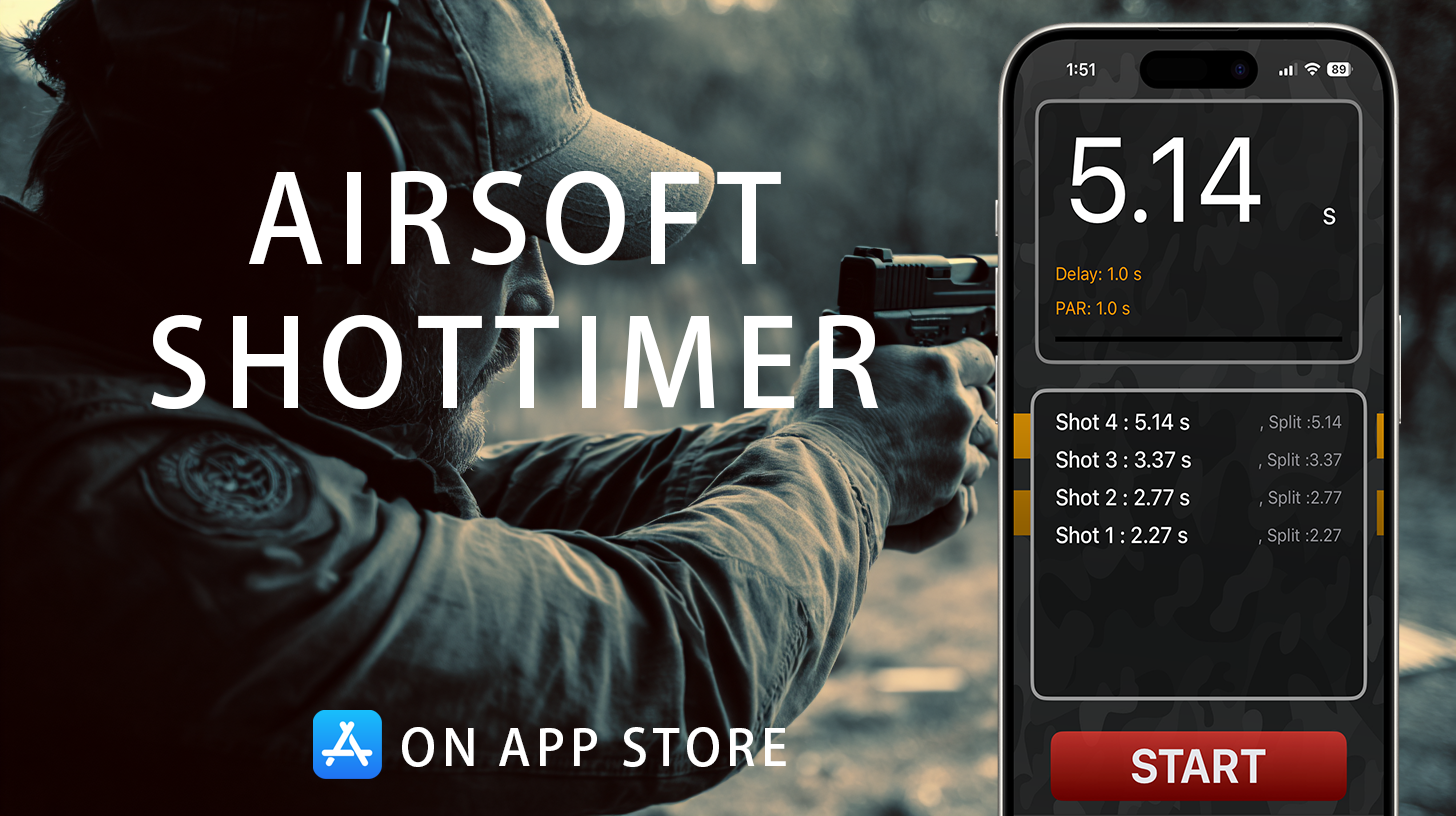
Airsoft Shot Timer is a free shot timer app tuned for airsoft and Action Air — it picks up BB gun shots, tracks your split times, and saves you the cost of a $150+ hardware timer for IPSC/IDPA practice.

- Laser Training Pistol
- Best Laser Training Pistol
- Dry Fire Training System
- Mantis TitanX
- TitanX
- Mantis Laser Academy
- Mantis vs Strikeman
- SIRT Training Pistol
- MantisX
- Pistol Dry Fire System
- Laser Training Cartridge
- Dry Fire
- Laser Training
- Home Training
- Shot Timer
- Free Shot Timer App
- Shooting Training
- G-Sight
- Strikeman