Dry Fire Training at Home: Do You Need a System? 6 Drills + Best Free App
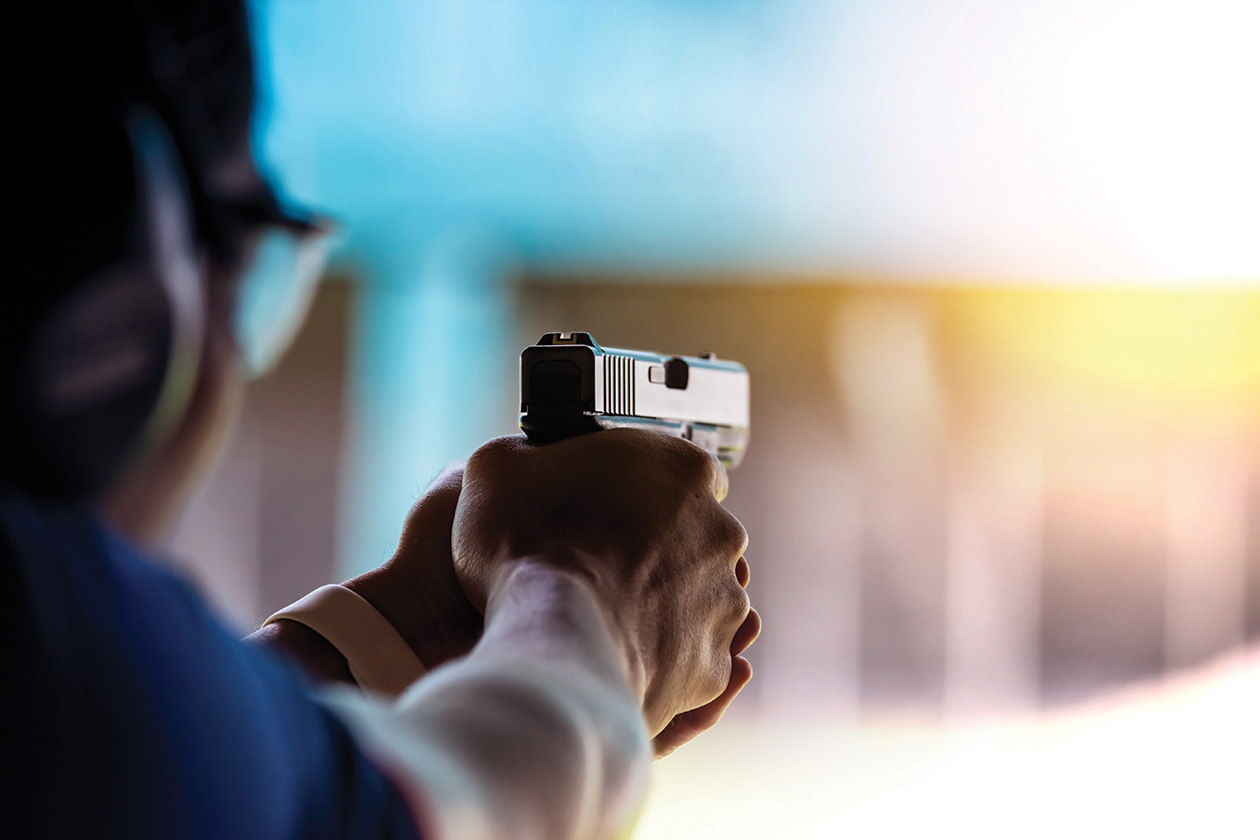
Quick Start: Dry Fire Training at Home Tonight
Short on time? Here’s everything you need to start dry fire training at home today, then the full guide below.
- What you need: an unloaded firearm (or an airsoft pistol), a safe backstop, and a way to time yourself. That’s it.
- The one rule that matters most: triple-check the gun is empty and keep all ammunition in a different room before you start.
- Your first session: 15 minutes of slow draws and trigger presses, aimed at a small target on a solid wall 3-5 meters away.
- How to actually improve: time your draw-to-first-shot and reloads. You can’t improve what you don’t measure, and you don’t need to spend a cent to start.
- The catch nobody warns you about: most shot timers cannot hear a dry fire trigger click at all. The fix is the par time method — a deadline beep instead of a detected shot.
That last point is where most beginners overspend. The dry fire SERP is full of $40-200 laser systems and recoil trainers, but the single most useful tool — a shot timer to measure your speed — is free. The AirsoftShotTimer app runs on the phone already in your pocket, records your draw and split times, and is tuned to pick up airsoft shots too, so you can start your first timed drill tonight and only buy gear later once you know you’ll stick with it.
What is Dry Fire Training?
Dry Fire Training refers to practicing shooting mechanics—drawing, aiming, and trigger pulls—without using live ammunition. This is one of the most commonly used training methods by professional shooters and competitive athletes worldwide, allowing you to safely hone your shooting skills at home.
Why is Dry Fire Training So Important?
Traditional shooting practice has many limitations:
- High range fees
- Rising ammunition costs
- Limited by range operating hours
- Restricted practice frequency
Dry Fire Training solves these problems:
- Practice at home with no range needed
- Zero ammunition cost, unlimited practice
- Train anytime, 15-30 minutes daily
- Focus on technique without recoil interference
- Quantify progress with a Shot Timer
“I dry fire practice 30 minutes every day, and the results are better than going to the range once a week.” — A common sentiment among IPSC champions
Dry Fire Training Safety Rules
Safety is always the first priority! Although dry fire training doesn’t use live ammunition, strict safety rules must still be followed.
Five Iron Rules of Dry Fire Safety
1. Confirm the Firearm is Completely Unloaded
Before every training session, you must:
- Remove the magazine
- Check the chamber (visual + tactile confirmation)
- Confirm there is no ammunition
- Triple check
“Treat it as if it’s always loaded” — This rule applies equally during dry fire training. Build the habit of checking every time.
2. Keep All Ammunition Away from the Training Area
- Lock all ammunition in another room
- No live rounds should be in the training area
- Magazines should also be emptied and confirmed
3. Choose a Safe Training Background
- Use dedicated dry fire training targets
- Background should be a solid wall (concrete, brick)
- Avoid pointing toward doors, windows, or thin walls
- Ensure no one can enter the line of fire
4. Establish Fixed Training Sessions
- Before training, announce aloud: “I am now starting dry fire training”
- Do not handle live ammunition during training
- After training, announce: “Dry fire training is complete”
- Create a ritual to avoid confusion
5. Never Train When Fatigued or Distracted
- Fatigue leads to forgotten safety steps
- Distraction can cause fatal errors
- Stay focused and treat every session seriously
Safety Checklist
Before starting, confirm each item:
- Magazine removed
- Chamber checked (visual + tactile)
- All ammunition in another room
- Training area cleared
- Safe background
- Good mental state
Setting Up Your Home Dry Fire Training Space
Basic Equipment List
Essential Equipment
| Equipment | Description | Budget Range |
|---|---|---|
| Training Firearm | Airsoft or confirmed unloaded real firearm | Varies |
| Dry Fire Target | Dedicated paper or electronic target | $5-20 |
| Shot Timer | AirsoftShotTimer APP | Free |
| Holster | For draw training | $20-80 |
Optional Equipment
| Equipment | Description | Budget Range |
|---|---|---|
| Snap Caps | Protect firing pin | $10-20 |
| Laser Trainer | Instant hit feedback | $30-160 |
| Training Magazines | Dedicated to dry fire | $15-30 |
| Mirror | Check stance and form | Varies |
Training Space Planning
Ideal dry fire training space:
- Separate room: Lockable door to prevent others from entering
- Safe background: Solid wall, no doors or windows
- Adequate distance: At least 3-5 meters training distance
- Good lighting: Clearly see target and sights
- No distractions: Turn off phone notifications, focus on training
Minimum Space Requirements:
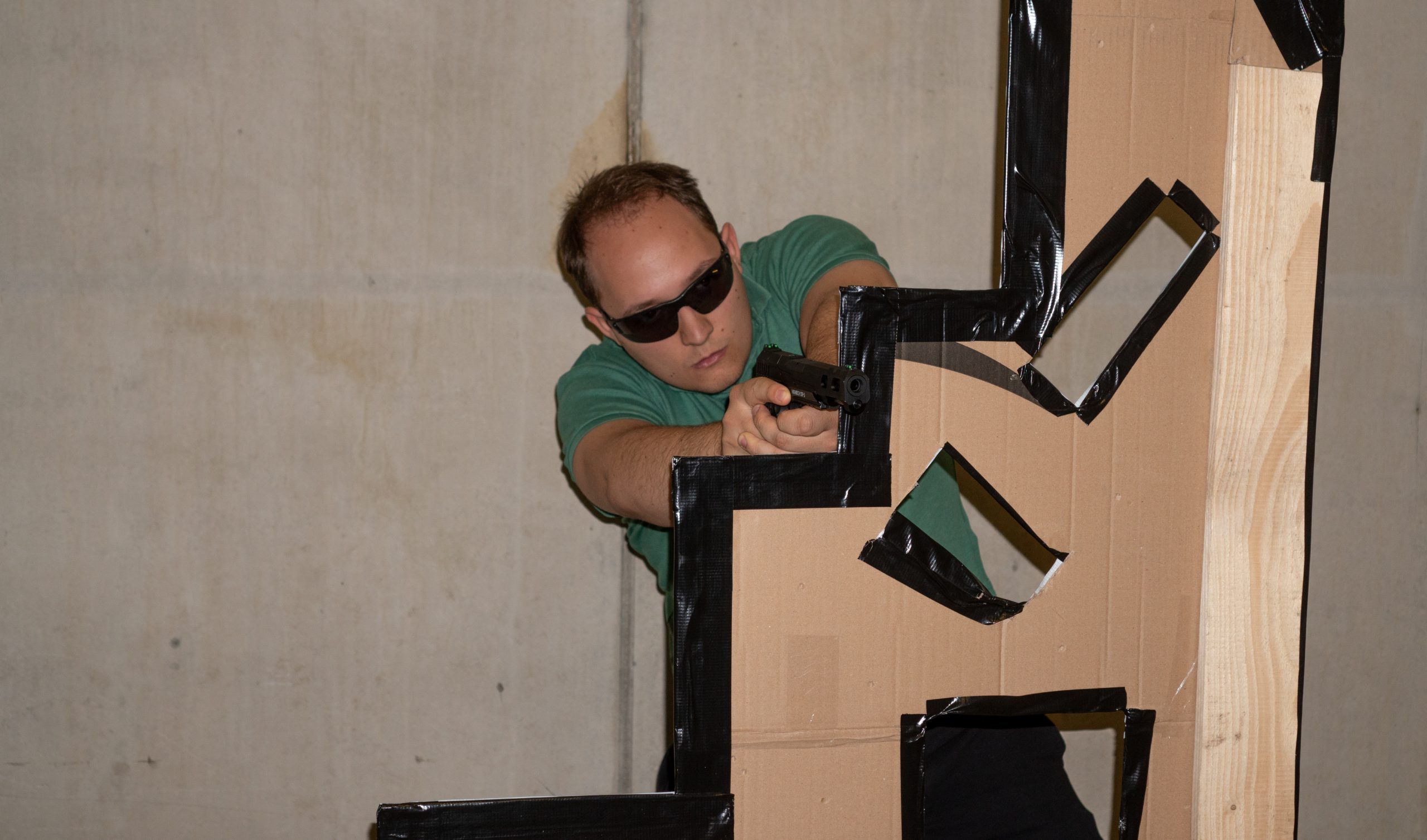
Even with limited space, 2-3 meters is sufficient for most dry fire training. Close-range training allows better focus on movement details.
Do You Actually Need a Dry Fire Training System?
Search for dry fire advice and within about thirty seconds you’ll be looking at a laser cartridge kit, a motion sensor that clamps to your rail, or a “complete training system” with a price tag somewhere between a decent holster and a decent pistol. It’s a genuinely confusing moment, because every one of those products is being sold as the thing standing between you and getting better — and none of the roundup articles will tell you the honest thing, which is that they answer three completely different questions and you probably only care about one of them right now.
Here’s the framework that makes the whole category legible. Every dry fire tool on the market is answering one of these:
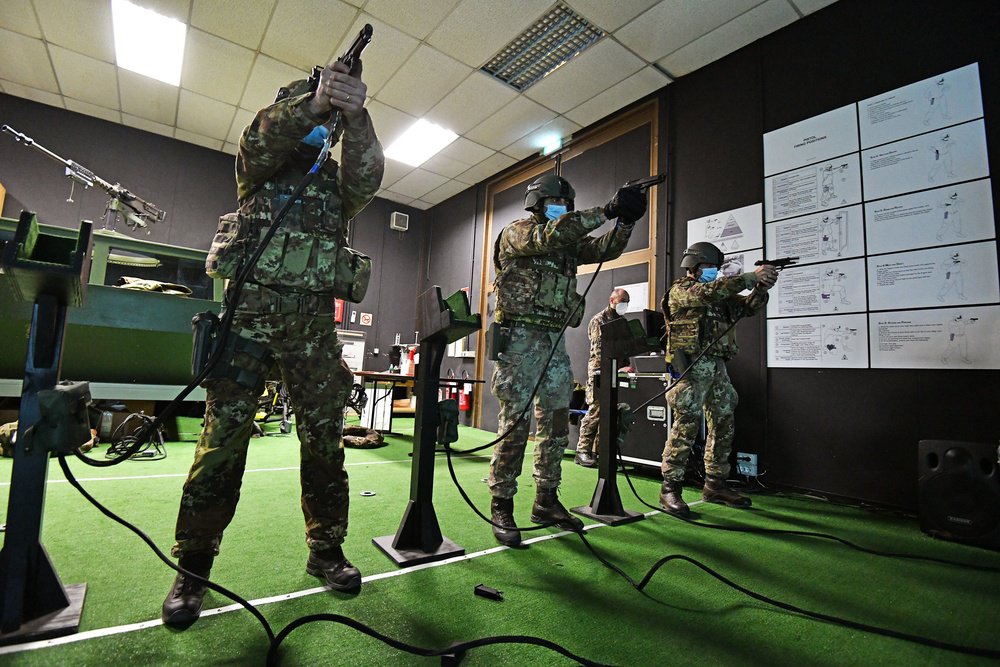
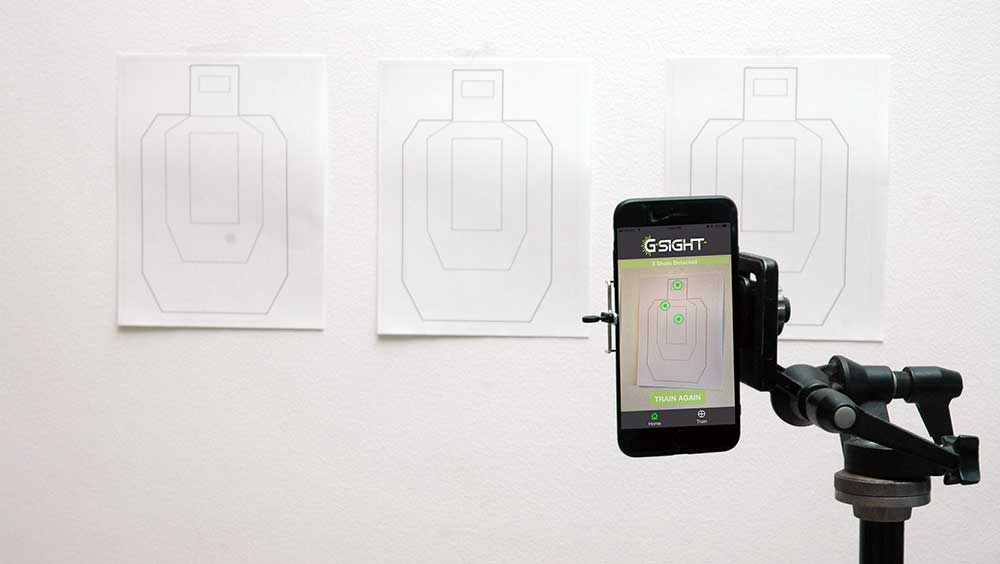
“Where did that shot go?” — This is the laser cartridge category. You drop an inert cartridge into the chamber, it flashes when the firing pin drops, and a target or a phone camera records the hit. Mantis Laser Academy and Strikeman are the two names you’ll see most. Strikeman’s standard kit — target, tripod, phone mount and one cartridge — runs around $100-125 depending on discounts, with spare cartridges near $40; Mantis Laser Academy’s standard kit sits around $160. Worth knowing before you buy either: the part doing the actual work is the cartridge, and bare laser cartridges sell for roughly $30. What you’re paying extra for is the target system and the app that scores it.
“Why did it go there?” — This is the motion sensor category, and it’s a different product entirely even when it’s made by the same company. A MantisX unit clamps to your rail and uses a gyroscope and accelerometer to track exactly what the muzzle was doing immediately before, during and after the trigger press — so instead of a hole on a target, you get a diagnosis of how you pushed the gun off-target. The X3 is the entry unit and works in both dry and live fire; the X10 Elite, at around $250, adds a Holster Draw Drill that breaks your draw into five analysed steps, plus a live-fire recoil meter. Note that Mantis is explicit that Laser Academy “does not do diagnostics and will not provide corrections” — the laser tells you where, the sensor tells you why. They are not substitutes.
“How fast?” — This is the shot timer, and it’s the one the gear roundups consistently underweight, because it’s the only category where the good answer is free. Neither a laser hit nor a trigger-press diagnostic has any concept of time, and time is the dimension that actually separates shooters in competition and under pressure. A clean draw is worthless if it takes 2.4 seconds when the stage demands 1.4.
If you’re deciding where the first money goes, the order that makes sense for most people is uncomfortable for the industry but obvious once it’s laid out: start with a timer (free), because it’s the only one that tells you whether anything you’re doing is working. Add a laser cartridge (~$30, or a full kit if you want the scoring app) once you’ve got a repeatable draw and you want to confirm your hits without a range trip. Add a motion sensor last, when you’ve plateaued and need a coach-grade explanation of why rather than more repetitions. Buying in the reverse order — which is the order the ads push — means spending $250 to be told your trigger press is jerking before you’ve ever established whether you’re getting faster.
One more thing worth being blunt about: the MantisX Holster Draw Drill is an X10 Elite feature, which means the cheapest official way to put a clock on your draw through the Mantis ecosystem is about $250. A par time on a free phone app puts a hard deadline on the same draw tonight, for nothing. The data is different — Mantis measures your muzzle’s behaviour, a timer measures the clock — but the discipline of being held to a number is the part that changes your practice, and that part costs zero.
If you do decide you want hardware, don’t take a one-paragraph summary as gospel. Our laser training system guide compares the TitanX, SIRT, Mantis and Strikeman options head to head with current pricing and the tradeoffs of each — that’s the page to read before you spend anything.
What’s the Best App for Dry Fire Training?
This question gets asked constantly and gets answered badly, because “dry fire app” covers three product types that need different things from you.
Sensor-dependent apps (the MantisX app, the Mantis Laser Academy app) are free downloads that are useless without the hardware they pair with. Whatever the app store listing says, the real price is the unit.
Camera-and-laser apps (Strikeman, Laser Academy) need a laser cartridge and a target, and generally a phone propped at a fixed distance. Excellent for hit placement, blind to timing.
Timer apps work with nothing but the phone in your pocket, which is why they’re the right first app for almost everyone. The catch is that most generic timer apps were built around live gunfire and human speech — their microphone thresholds are tuned for volume, so a dry fire trigger click or the quiet pop of an airsoft gun simply doesn’t register. That’s a real problem, not a user error, and it’s the reason so many people conclude that timers “don’t work for dry fire.”
For dry fire specifically, what you want is an app that can run par time mode (a countdown beep you have to beat, which works whether or not the app can hear anything), plus random start delay so you can’t anticipate the buzzer, plus enough microphone sensitivity to pick up an airsoft shot if you train with one. The free AirsoftShotTimer app was built around exactly that gap — it uses frequency analysis rather than a raw loudness threshold, which is what lets it hear the low-decibel sounds a live-fire-oriented timer ignores. The full par time method is in the next section, and it’s the part of this guide worth reading twice.
The Best Shot Timer for Dry Fire (And Why It’s Free)
Here’s the part most dry fire guides quietly skip. You can spend a lot of money on a home setup — laser cartridges, recoil trainers, electronic targets — and if you do go that route our laser training system guide compares the TitanX, SIRT, Mantis and Strikeman options with current prices — but the tool that actually drives improvement is the one that puts a number on every rep. Without a timer, dry fire turns into mindless repetition where “that felt fast” is the only feedback you get. The first time I timed my draw I was sure I was around 1.5 seconds; the timer said 2.3. That honest number is what gives your practice a direction.
The good news is that the best shot timer for dry fire doesn’t cost $130. For at-home practice in a quiet room, a phone app does everything a hardware timer does — start beep, par time, draw-to-first-shot, and the split between each shot — and it costs nothing. Generic timer apps do struggle with one thing: their microphones are tuned for human speech, so they choke on the faint trigger “click” of dry fire or the quiet “pop” of an airsoft gun. That’s exactly the gap the free AirsoftShotTimer app was built to close, using frequency analysis to lock onto those low-volume sounds instead of a crude loudness threshold.
For dry fire specifically, set it to random delay mode so you can’t anticipate the beep — that forced reaction is what makes the rep realistic. If you train with an airsoft pistol (a genuinely smart way to dry fire, since you get realistic handling plus an actual trigger break), the same app reads your GBB or AEG shots at roughly half the decibel level of live fire, which is why a phone app actually works better than a hardware timer in this one scenario. You can run your first timed draw drill tonight, free, and put the money you saved toward range time later. If you want the full feature breakdown, our shot timer app complete guide walks through every mode; if you eventually move to a live-fire range and need hardware-level buzzer volume, our best shot timer buying guide covers the hardware picks.
How to Use a Shot Timer for Dry Fire: The Par Time Method
Here’s the thing nobody tells you until you’ve already bought a timer: most shot timers cannot hear dry fire at all. A hardware timer like the Competition Electronics Pocket Pro 2 is built to trigger on a gunshot — a 150+ decibel pressure spike. The trigger click of a dry fire rep, or the clack of a slide being racked on a reload, sits somewhere around normal conversation volume. Put the two next to each other and the timer simply sits there, showing nothing, while you stand in your living room wondering whether the battery died.
This is the single most common frustration in dry fire, and it has a standard answer that top instructors have been using for years: you stop asking the timer to listen, and start asking it to push. That’s the par time method, and it changes dry fire from “that felt fast” into a measurable, progressive workout.
How Par Time Actually Works
Set a par time and the timer gives you two beeps. The first beep is your start signal — that’s when you draw, reload, or transition. The second beep is your deadline. You don’t need the timer to detect anything; you just need to know whether your sights were on target before that second beep landed. Made it, or didn’t. That binary answer is all the feedback a dry fire rep needs.
The reason this works so well is that par time behaves like weight on a barbell. If you bench press the same 135 pounds every single session, you will never bench 185 — you have to keep adding resistance. Par time is that resistance. Set it slightly faster than you can currently perform the rep, and every repetition becomes an honest attempt at the edge of your ability rather than a comfortable rehearsal of what you already do.
The practical progression looks like this. Run a few draws with the par set generously — say 1.2 seconds — and see whether you beat it consistently. If you do, tighten to 1.0. Beat that, go to 0.9. Keep walking it down in one-tenth increments until you land on a number you almost make, missing it maybe one rep in three. That’s your working par, and it’s where all the improvement happens. The free AirsoftShotTimer app adjusts par time in exactly 0.1-second steps from 0 to 10 seconds, which is precisely the granularity this method needs, and it has a repeat mode that restarts the par clock after each shot for multi-shot strings.
Spend Your Dry Fire Time in Speed Mode
There’s a framework that competitive shooters like Steve Anderson and Scott Jedlinski of Modern Samurai Project have popularized, and it explains why so much dry fire produces so little progress. There are three modes of practice: accuracy mode, where you go slow and prove you can press the trigger straight back without disturbing the sights; speed mode, where you deliberately go faster than you can cleanly perform and find the edge; and match mode, where you run at the pace you’d actually shoot in a competition or a defensive encounter.
Once you’ve proven you can break a clean trigger — and that usually takes a few weeks, not a few years — there is very little reason to spend dry fire time in accuracy mode. You already know you can do it slowly. What you don’t know is how fast you can do it, and the only way to find that out is to push past your comfortable pace and see where things fall apart.
This is where most people quit too early, because speed mode feels awful. You will fumble the magazine. You will get a bad grip coming out of the holster. You will miss the par beep three reps in a row. That’s not failure — that’s the entire point. You are mapping the edge of your current ability, and the edge is by definition the place where you’re not clean yet. Let the fumbles go, reset, run it again.
The Draw Rep That Shouldn’t Include a Trigger Press
Here’s a genuinely counterintuitive habit worth adopting, and it’s one that separates thoughtful dry fire from mindless repetition. On single-shot draw reps, don’t press the trigger. Draw, get acceptable sights on target, stop.
The reasoning is uncomfortable once you see it. If every draw rep you’ve ever done ends in a trigger press, you’re training your brain that the gun coming out of the holster and the trigger breaking are one continuous motion. In a match, that shows up as a shot dropped into a no-shoot target because you fired before you’d actually confirmed what you were looking at. In a defensive situation, the consequences are considerably worse than a procedural penalty. The draw should end with your sights on target and your brain making a decision — not with a reflex.
So for draw-speed work, the drill is: beep, draw, sights on target, beat the par. The trigger stays out of it. Save the trigger presses for dedicated trigger control work, where that’s the actual skill you’re isolating (more on that in our trigger control guide).
Recommended Dry Fire Settings
For a quiet room at home, the settings that work are narrower than you’d expect. Turn on random delay so you genuinely can’t anticipate the start beep — the AirsoftShotTimer app randomizes between 1 and 4 seconds, which is long enough that you can’t count your way into a jump start. Sensitivity is the setting people get backwards. On the AirsoftShotTimer scale of 0 to 40, higher means more sensitive, so if you want the app to have any chance of registering a bare trigger click you have to push it up toward 30-40 — and in a room with a ceiling fan and a humming refrigerator, that same setting will happily log your neighbour’s door slamming as a shot. For indoor dry fire the honest answer is to keep sensitivity in the 5-15 range where it stays quiet, and let the par time do the work instead of chasing a detection that a real gun’s trigger click just isn’t loud enough to trigger reliably.
And here’s the useful exception to everything above: if you dry fire with an airsoft pistol rather than an unloaded real firearm, you can skip par time entirely and get real measured splits. A gas blowback pistol fires at roughly half the decibel level of live fire — far too quiet for a hardware match timer, but well within what a phone app tuned for low-volume frequency detection can pick up. That’s exactly what AirsoftShotTimer was built to do, and it’s why an airsoft gun plus a phone gives you something a real gun plus a $130 hardware timer can’t: an actual number on every single rep, not just a pass/fail against a beep.
Six Essential Dry Fire Training Drills
Drill 1: Draw Stroke Training
Drawing is the most fundamental and important skill, worth spending significant time practicing.
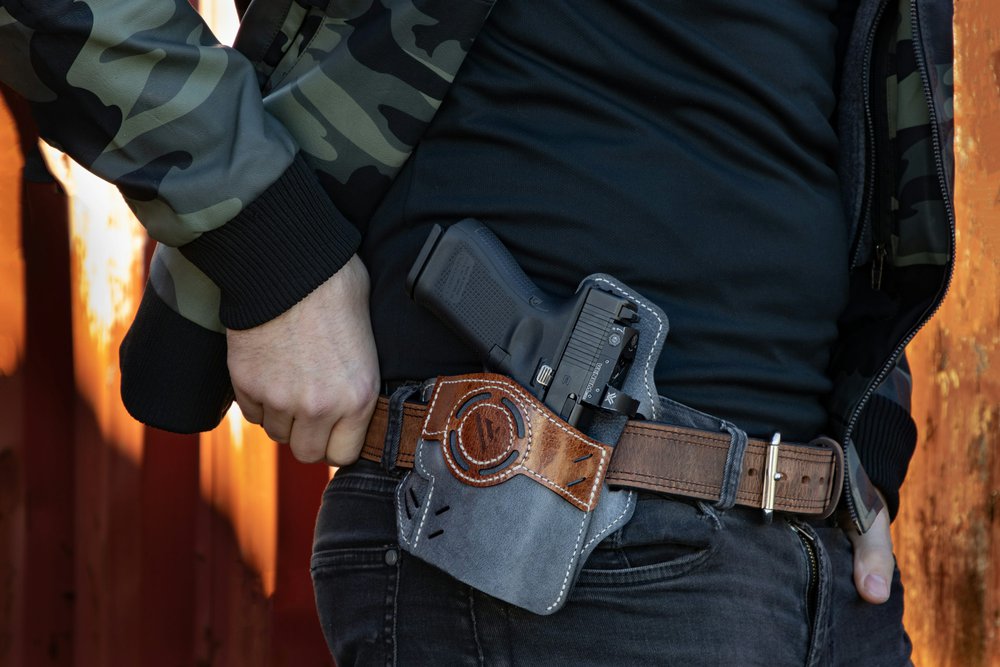
Training Setup:
- Pistol in holster
- Target distance 3-5 meters
- AirsoftShotTimer set to random delay
Movement Breakdown:
-
Ready Position
- Hands naturally at sides or on chest
- Eyes focused on target
- Body relaxed but alert
-
Grip Acquisition
- Strong hand moves quickly to grip
- Establish proper grip position
- Finger outside trigger guard
-
Draw Phase
- Firearm lifts vertically, clears holster
- Muzzle begins rotating toward target
- Support hand prepares to meet
-
Extension Phase
- Both hands meet, establishing full grip
- Firearm pushes toward target
- Eyes align through sights
-
Aim and Fire
- Acquire sight picture
- Press trigger
- Maintain follow-through
Use Shot Timer to Record:
- Record time from “signal to trigger press”
- Beginner goal: Under 2.0 seconds
- Intermediate goal: Under 1.5 seconds
- Advanced goal: Under 1.0 seconds
Daily Practice Recommendation: 20-30 repetitions
Further reading: For more draw techniques, see Glock 17 Training Guide and CZ Shadow 2 Training Guide
Drill 2: Trigger Control Training
Trigger control is the core of accuracy, and dry fire training most effectively improves this skill.
Balance Coin Method:
- Place a coin on the barrel or slide
- Aim at target, slowly press trigger
- Coin should not fall
- If coin falls, movement was not smooth
Target Time Practice:
- Aim at bullseye
- Slowly, steadily press trigger
- Maintain sight picture until after “firing”
- Note if front sight moved
Common Errors:
- Anticipating recoil and pushing down
- Grip pressure changing during trigger press
- “Pushing” trigger instead of “pressing”
- Neglecting follow-through
Daily Practice Recommendation: 50-100 repetitions (in sets)
Drill 3: Magazine Reload Training
Fast magazine changes are a critical competitive shooting skill.
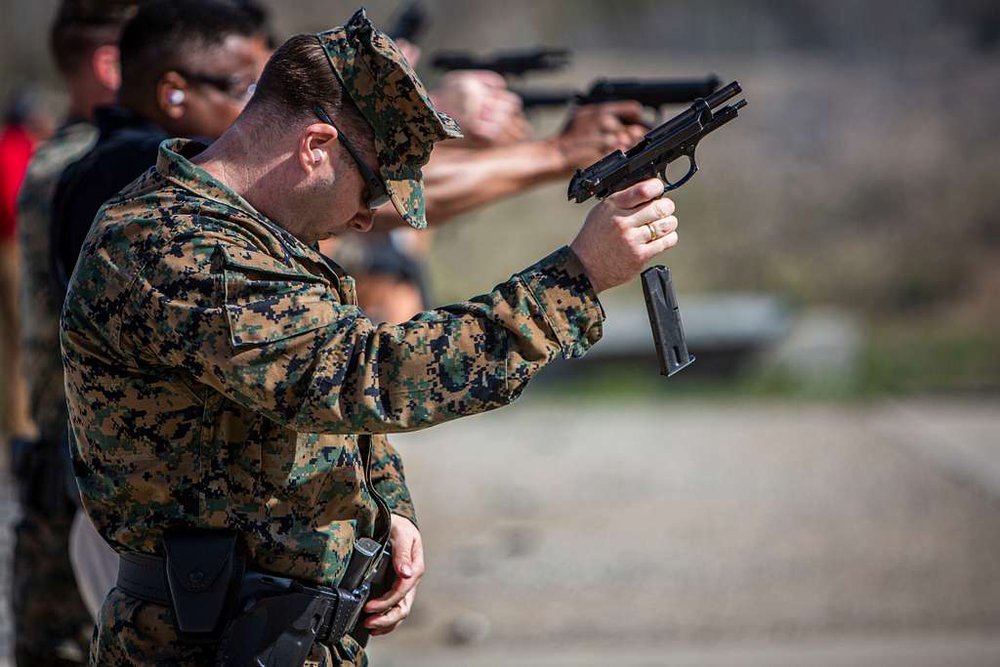
Emergency Reload Training:
- Aim at target and “fire”
- Slide locks back (simulating empty magazine)
- Press magazine release
- Empty magazine drops naturally
- Support hand grabs new magazine
- Insert into magazine well
- Release slide
- Re-aim and “fire”
Technique Points:
- Eyes stay on target, don’t look down
- Magazine placement relies on feel and muscle memory
- Movement should be fluid and continuous, no pauses
- Use Shot Timer to record complete time
Tactical Reload Training:
- Change magazine when still has rounds remaining
- Retain original magazine (pocket or mag pouch)
- Suitable when behind cover
Target Times:
- Emergency reload: Under 2.0 seconds
- Tactical reload: Under 2.5 seconds
Daily Practice Recommendation: 15-20 repetitions
Drill 4: Multiple Target Transition Training
Rapid movement between multiple targets is a core IPSC/IDPA skill.
Training Setup:
- Prepare 2-3 training targets
- Target spacing 30-50 cm apart
- Arranged horizontally or irregularly
Training Method:
-
Eyes Lead
- Eyes look to next target first
- Muzzle follows eyes
- Avoid “blind transitions”
-
Body Coordination
- Upper body leads the turn
- Feet remain stable
- Avoid excessive movement
-
Stop and Shoot
- “Fire” immediately upon reaching target
- Don’t over-aim
- Trust your sight picture
Using Shot Timer:
- Record total time to complete all targets
- Analyze transition time between each target
- Identify slowest transition and focus practice there
Daily Practice Recommendation: 10-15 sets
Drill 5: Movement Shooting Training
Maintaining stability while moving is an advanced skill that can be safely practiced with dry fire.
Lateral Movement:
- Face target
- Move laterally 2-3 steps
- Maintain aim while moving
- “Fire” when movement ends
Forward/Backward:
- Face target
- Move forward or backward
- Keep firearm stable
- “Fire” when feet are set
Technique Points:
- Knees slightly bent, absorb shock
- Keep upper body stable (imagine balancing water on your head)
- Light footwork, avoid bouncing
- Eyes and muzzle always point at target
Daily Practice Recommendation: 10-15 sets
Drill 6: Combination Training
Combine multiple skills to simulate actual competition scenarios.
El Presidente Dry Fire Version:
- Start facing away from targets
- On signal, turn and draw
- “Fire” 2 rounds at each of three targets
- Reload
- “Fire” 2 more rounds at each target
Custom Combination Practice:
- Draw + fire 2 + reload + fire 2
- Draw + move to cover + fire
- Two-handed shooting + transition to one-handed
Weekly Practice Recommendation: 2-3 combination training sessions
Dry Fire Training Program
Beginner Program (Weeks 1-4)
Daily Training Time: 15-20 minutes
| Drill | Reps | Notes |
|---|---|---|
| Safety Check | 1 | Required before starting |
| Draw Training | 15 | Focus on correct form |
| Trigger Control | 30 | Use coin method |
| Magazine Reload | 10 | Emergency reload focus |
| Closing Confirmation | 1 | End of training ritual |
Weekly Goals:
- Week 1: Familiarize with movement sequence
- Week 2: Start using Shot Timer to record
- Week 3: Establish stable baseline data
- Week 4: Set improvement goals
Intermediate Program (Weeks 5-12)
Daily Training Time: 20-30 minutes
| Drill | Reps | Notes |
|---|---|---|
| Safety Check | 1 | Required before starting |
| Draw Training | 25 | Focus on speed improvement |
| Trigger Control | 50 | Add movement elements |
| Magazine Reload | 15 | Tactical + Emergency |
| Target Transitions | 10 sets | 2-3 targets |
| Movement Shooting | 10 sets | Lateral movement |
| Closing Confirmation | 1 | End of training ritual |
Weekly Goals:
- Compare Shot Timer data weekly
- Focus on improving weakest areas
- Gradually reduce time for each drill
Advanced Program (Week 13+)
Daily Training Time: 30-45 minutes
| Drill | Reps | Notes |
|---|---|---|
| Safety Check | 1 | Required before starting |
| Warm-up Draws | 10 | Activate muscle memory |
| PAR Time Training | 15 sets | Push speed limits |
| Weak Hand Training | 15 | Develop fully |
| Combination Training | 5 sets | Simulate competition |
| Stress Training | 5 sets | Shoot after exercise |
| Closing Confirmation | 1 | End of training ritual |
Using AirsoftShotTimer to Track Progress
The Importance of Training Records
“You can’t improve what you can’t measure”
Use a Shot Timer to record every training session, making progress visible.
AirsoftShotTimer Dry Fire Setup
Recommended Settings:
- Mode: Random delay mode
- Delay Range: 1-4 seconds
- Sensitivity: 5-15 for indoor rooms (the scale runs 0-40; higher values indoors just log the refrigerator as a shot)
- Par time: On, adjusted in 0.1-second steps to sit just past your current ability
- Par repeat: On for multi-shot strings, off for single draw reps
Recording Points:
- Record drill type and repetitions each session
- Record best time and average time
- Note any factors affecting performance
Progress Tracking Recommendations
Weekly Review:
- Compare this week’s data to last week’s
- Identify improving drills
- Identify stagnating drills
Monthly Assessment:
- Comprehensively evaluate all drills
- Adjust training focus
- Set next month’s goals
Quarterly Summary:
- Review three-month progress curve
- Evaluate training plan effectiveness
- Plan next phase goals
Further reading: how to use a shot timer - Learn how to use data to improve shooting skills
Dry Fire Training FAQ
Q1: Will dry firing damage the firing pin?
A: This depends on firearm design:
- Modern pistols (Glock, SIG P320, etc.): Designed for safe dry fire
- Older pistols: Recommend using snap caps to protect firing pin
- Airsoft: No issue at all
Recommendation: Check your firearm’s manual to confirm if safe dry fire is possible.
Q2: How long should I practice each day?
A: Quality matters more than quantity:
- Minimum effective dose: 15 minutes daily
- Ideal training volume: 20-30 minutes daily
- Avoid overtraining: More than 45 minutes leads to fatigue and bad habits
Recommendation: Short, high-focus training sessions work best.
Q3: Can I use airsoft guns if I don’t have a real firearm?
A: Absolutely! And there are many advantages:
- Handling feels similar to real firearms
- Can actually fire (dual-use for dry fire and live fire)
- Lower cost
- Fewer legal restrictions
Recommended Airsoft:
- Tokyo Marui Hi-CAPA (competition favorite)
- WE Glock Series (high realism)
- KSC/KWA Series (excellent build quality)
Further reading: Airsoft Beginner’s Complete Guide - Learn about airsoft selection
Q4: Can dry fire training completely replace live fire training?
A: It cannot completely replace, but can significantly reduce live fire needs:
- Dry fire training: Movement technique, muscle memory, speed
- Live fire training: Recoil control, hit confirmation, mental conditioning
Ideal Ratio: 70% dry fire + 30% live fire
Q5: How do I avoid developing bad habits?
A:
- Record regularly: Video your movements, review playback
- Use a mirror: See if posture is correct in real-time
- Practice in slow motion: First aim for correct form, then speed
- Regularly verify with live fire: Confirm dry fire results transfer
Q6: What’s the best time to train?
A: Choose when you’re most alert and focused:
- Morning: Mind is clear, habit formation is easier
- Evening: Relaxed after work, but avoid being too tired
- Fixed time: Training at the same time daily forms habit
Avoid: Right after eating, too fatigued, after drinking alcohol
Q7: Do I need to buy a shot timer for dry fire, or is a free app enough?
A: For dry fire at home, a free app is genuinely enough — you do not need to buy hardware to start. In a quiet room, a phone app measures your draw, par, and split times just as accurately as a $130 hardware timer, so the smart move is to start free and only buy hardware if you later train on a live-fire range where buzzer volume and microphone noise become real problems. The free AirsoftShotTimer app is purpose-built for exactly this: quiet dry fire clicks and low-volume airsoft shots that generic timer apps miss.
Q8: What’s the best shot timer for dry fire training?
A: For dry fire specifically, the best shot timer is whichever one reliably catches a very quiet sound and gives you a random start delay — and that points to a phone app rather than a loud competition buzzer. Set it to random delay mode so you can’t pre-empt the beep, and use the par-time function to push your draw speed under a fixed deadline. Because phone microphones, not loudness, are the limiting factor with quiet trigger clicks, an app tuned for low-decibel detection beats a generic timer here. See our full shot timer app guide for the recommended dry fire settings, or the best shot timer comparison if you also want a hardware option for the range.
Q9: Can a shot timer detect dry fire?
A: Most of them can’t, and that surprises a lot of people who’ve just spent money on one. Hardware match timers are designed to trigger on a gunshot at 150+ decibels, so a trigger click at conversation volume never registers — the Competition Electronics Pocket Pro 2 is the classic example, and instructors demonstrate it picking up nothing from trigger presses or reloads. The standard workaround is the par time method: set a deadline beep instead of asking the timer to hear you. There is one real exception — if you dry fire with an airsoft pistol, the shot is loud enough for a phone app with low-decibel frequency detection to log genuine split times, which is why airsoft plus a phone gives you more data than a real gun plus a hardware timer.
Q10: What par time should I set for my draw?
A: Set it slightly faster than you can currently make it — that’s the whole principle. Run a few draws at a generous par (1.2 seconds is a reasonable starting point for most people drawing from a concealed holster to sights on target), and if you beat it every time, tighten by one-tenth. Keep walking it down until you land on a number you miss roughly one rep in three. That’s your working par. Once you consistently beat it, drop another tenth. The par time is resistance, and like weight on a barbell it has to keep going up for anything to change.
Q11: Should I press the trigger on every dry fire draw rep?
A: No, and this is one of the more valuable habits to break. If every draw you’ve ever practiced ends in a trigger press, you’re wiring the gun clearing the holster and the shot breaking into a single reflex — which shows up in a match as a round dropped into a no-shoot, and in a defensive situation as something considerably worse. For draw-speed work, the rep ends when you have acceptable sights on target. Keep the trigger presses for dedicated trigger control work, where that’s the skill you’re actually isolating.
Q12: Why does my dry fire feel sloppy when I use a par time?
A: Because you’re in speed mode, and that’s exactly where you should be. Once you’ve proven you can press a clean trigger, there’s little value in more slow, comfortable reps — the useful work happens at the edge of your ability, and the edge is by definition the place where you fumble the magazine and blow the grip coming out of the holster. Competitive shooters describe three modes of practice: accuracy, speed, and match. Dry fire is where you live in speed mode, get messy, and find out how fast you actually are. Live fire is where you confirm it transferred.
Q13: What is the best dry fire trainer for home use?
A: It depends entirely on which question you’re trying to answer. If you want to know where your shots land without going to a range, a laser cartridge system (Strikeman’s standard kit, or Mantis Laser Academy) is the category you want, and the cartridge itself — around $30 bare — is doing most of the work. If you want to know why your shots land where they do, a MantisX motion sensor analyses the muzzle movement through your trigger press, which no laser system does. If you want to know how fast you are, that’s a shot timer, and a free phone app does it as well as hardware in a quiet room. Most people should start with the timer, because it’s the only one of the three that tells you whether your practice is producing progress.
Q14: Is a laser dry fire training system worth it?
A: Worth it for confirming hit placement at home, especially if range trips are expensive or inconvenient, and genuinely useful for practising on small or multiple targets. Not worth it as your first purchase, and not a substitute for a timer — a laser kit will happily tell you that all six hits were centred while saying nothing about the fact that it took you five seconds. Buy the cartridge first if you want to test the concept cheaply; the kits mostly add a scoring target and an app on top. Our laser training system guide compares the major systems if you decide to go that route.
Q15: Can I do dry fire training at home with no equipment at all?
A: Yes, and this is the honest starting point. A confirmed-unloaded firearm (or an airsoft pistol), a safe backstop, and a target you drew on a piece of paper covers the first several weeks. Add a holster when you start draw work, and add a par time on a free timer app as soon as you can execute a clean draw — that’s the point where reps stop being mindless repetition and start being training. Everything beyond that is refinement, not a prerequisite.
Conclusion
Dry fire training is a skill every serious shooter must master. It allows you to safely, freely, and efficiently improve your shooting skills at home. Many world-class competitors spend significant time on dry fire training daily—this is no coincidence.
Core Values of Dry Fire Training
- Zero cost, unlimited practice
- Train anywhere, anytime, without range limitations
- Focus on technique without recoil interference
- Quantifiable progress tracking with Shot Timer
- Build muscle memory and reaction speed
Start Your Dry Fire Training
- Set up a safe training area: Ensure all safety measures are in place
- Prepare basic equipment: Training firearm, targets, Shot Timer
- Start with basics: Practice draw and trigger control first
- 15-30 minutes daily: Consistency is most important
- Track and record: Use AirsoftShotTimer to record every session
Dry Fire Training + Shot Timer + Consistency = Rapid Shooting Skill Improvement
Start your dry fire training today and improve every day!
Safety first, happy training!
Related Articles
Shot Timer Guides
- Best Free Airsoft Shot Timer App - The free timer for dry fire and airsoft
- Best Shot Timer 2026 Buying Guide - Hardware picks for the live-fire range
- how to use a shot timer - Improve shooting skills with data
Dry Fire Drills to Run With a Par Time
- Dot Torture Drill - 50 rounds, 10 dots, the ultimate accuracy diagnostic
- Bill Drill - Six shots, one target, the classic speed benchmark
- Trigger Control Guide - Isolate the skill that dry fire improves fastest
- Pistol Draw Guide - Break the draw stroke down before you time it
Training Guides
- Glock 17 Training Guide - Classic pistol training methods
- CZ Shadow 2 Training Guide - Competition pistol training tips
- SIG P320 Training Guide - Modular pistol training
Competitive Shooting
- IPSC Practical Shooting Complete Training Guide - Core competitive shooting techniques
- IDPA Defensive Shooting Complete Training Guide - Tactical-oriented training
Beginner’s Guide
- Airsoft Beginner’s Complete Guide - Start your Airsoft journey from zero
Put a Shot Timer in Your Pocket
Airsoft Shot Timer is a free shot timer app tuned for airsoft and Action Air — it picks up BB gun shots, tracks your split times, and saves you the cost of a $150+ hardware timer for IPSC/IDPA practice.

- Dry Fire Training
- Dry Fire Training at Home
- Dry Fire Practice
- Dry Fire
- Dry Fire Drills
- Dry Fire Training for Beginners
- Home Training
- Shot Timer
- Best Shot Timer for Dry Fire
- Free Shot Timer App
- Shot Timer for Dry Fire
- Dry Fire Shot Timer App
- Par Time
- Par Timer
- Speed Mode
- Dry Fire Airsoft
- Shooting Training
- Pistol Training
- Draw Speed
- Trigger Control
- Dry Fire Training System
- Best Dry Fire Training System
- Dry Fire Trainer
- Best App for Dry Fire Training
- Dry Fire App
- Laser Cartridge
- MantisX
- Mantis Laser Academy
- Strikeman
- Laser Training System