Bill Drill Time Standards 2026: Par Times for Pistol, Concealment & Rifle
The Bill Drill in 60 seconds (BLUF)
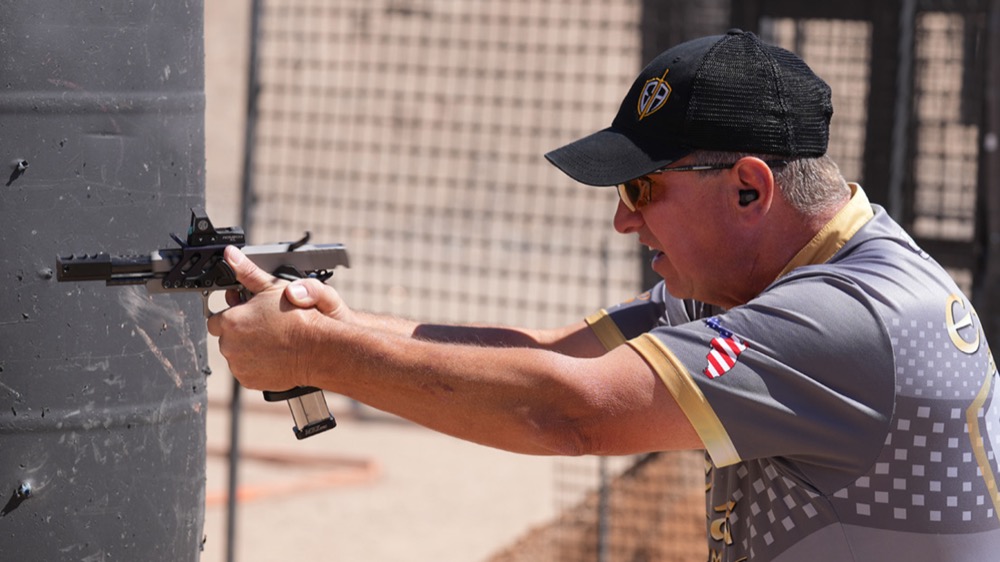
- What it is: Draw and fire six rounds into the A-zone of one target at seven yards, as fast as you can keep them all in. That’s the whole drill.
- Why it’s brutal: Six shots leaves nowhere to hide. A bad grip, a slow draw, or flinching all show up instantly in your hits and your times.
- What’s a good time? From an open holster: roughly 4.5s for a new shooter, sub-3s for a solid club shooter, sub-2s for someone who can genuinely shoot. From concealment, add roughly half a second to every one of those — a clean sub-2 from concealment is genuinely rare, not a weekend goal.
- How fast is the record? Around 1.1 seconds for six A-zone hits, with a draw near 0.40s. It’s a legitimate number and a terrible training target — see below for why.
- What do real people shoot? In a documented advanced handgun class, students ran it in 2.85–4.03 seconds raw. Sub-2 is an internet standard, not an average one.
- With a rifle? Same six rounds, same seven yards, but from low ready instead of the holster — which puts the whole score on your recoil control. Around 1.5 seconds is the working par; under a second is the real ceiling.
- Does the gun matter? Not to the course of fire — six rounds and no reload means a revolver, a 1911 or a 21-round double-stack all run it unmodified. It matters enormously to the number: a compact carry pistol typically costs you a few tenths against a full-size competition gun, so log the gun next to the time.
- The two levers: Your draw (first shot) and your splits (time between shots). A shot timer breaks both out for you so you know which one to fix.
- Train it anywhere: You don’t need live fire to build the pattern. An airsoft pistol or a dry-fire rep with a par time on a free Airsoft Shot Timer app trains the exact same draw-and-run mechanics.
If you’ve ever watched someone at the range draw and rip six shots into a single target in about two seconds, you’ve probably seen a Bill Drill without knowing its name. To a bystander it looks like a John Wick impression. To anyone who trains seriously, it’s one of the most revealing tests in shooting — because there is absolutely nothing to it, and that’s exactly why it’s so hard to fake.
Most drills let you cover for a weakness. A slow reload can be hidden behind good movement; a shaky first shot can be excused on a hard target. The Bill Drill strips all of that away. One target, seven yards, six shots, one timer. Either your grip holds the gun steady enough to fire six fast rounds into the A-zone, or it doesn’t — and the timer and the target tell you which, every single time.
What Is the Bill Drill?
The Bill Drill was created by Bill Wilson, the founder of Wilson Combat, and named after him. There’s a running joke that the name comes from Bill Rogers, or Bill Jordan, or from the idea that you should be able to cover your six-shot group with a one-dollar bill — but Wilson himself will tell you it’s simply his drill. It became a staple of practical shooting because it distills the two skills that win matches into one clean rep: getting the gun out fast, and controlling it once it’s up.
The course of fire hasn’t changed in decades. You stand at seven yards facing a single IPSC/USPSA (or IDPA) target, pistol holstered, hands relaxed at your sides or in a surrender position. On the buzzer you draw and fire six rounds into the A-zone as fast as you can while keeping every hit inside the scoring zone. Miss the A-zone and the run doesn’t count the way you want it to — speed only means something if all six are where they belong.
What makes it such a good diagnostic is that six shots is just enough to expose a grip that comes apart under recoil. One or two shots, most people can muscle through. By round four or five, a weak grip lets the muzzle climb, the sights stop returning to the same place, and the hits start walking up and out of the A-zone. The Bill Drill doesn’t test whether you can shoot fast; it tests whether you can shoot fast repeatably.
Why Six Rounds, Seven Yards, and That Particular Box?
None of those three numbers is arbitrary, and understanding why they were chosen tells you what the drill is actually measuring.
Six rounds is the smallest string long enough to break a bad grip. The first shot comes from a static, perfectly-set position, so it tells you about your draw and nothing else. Shot two is still riding the momentum of a fresh grip. It’s usually somewhere around shot four or five that a support hand which isn’t clamped down starts to slip, the muzzle stops returning to the same place, and the group opens upward. Cut the drill to three rounds and most shooters pass it; run it to ten and fatigue starts contaminating the result. Six sits exactly on the line where recoil control either holds or doesn’t. There’s also a practical reason it stuck: six rounds means the drill is revolver-neutral and works from any magazine, which is part of why it spread so widely in the 1980s.
Seven yards is close enough that the A-zone is a generous target for a competent shooter, which is the point — the drill is not supposed to be an accuracy test. At seven yards, a miss out of the A-zone is almost never a sight-alignment problem; it’s a recoil problem. Push the same drill to fifteen or twenty-five yards and you start measuring something else entirely, which is why the distance variations get treated as separate drills rather than harder versions of this one.
The scoring box is 6 inches wide by 11 inches tall — the A-zone of a USPSA/IPSC metric target. If you don’t have official targets, you can draw that rectangle on a piece of cardboard with a marker and the drill works identically; plenty of instructors run it exactly that way. What matters is that the box is fixed and every hit is accountable. A “fast” Bill Drill with one round in the C-zone isn’t a Bill Drill at all, it’s six rounds fired quickly.
How to Run the Bill Drill
Set a single target at seven yards. Load six rounds, holster, and get into your normal start position — for most people that’s hands hanging naturally, though many competitors practice from a surrender or “hands up” position to standardize the draw. Start your shot timer, wait for the random beep, and on the tone draw and fire all six into the A-zone.
The mental cue that separates a clean run from a scattered one is where your eyes go. As USPSA champion Ben Stoeger describes it, you want to look at a specific spot on the target, bring the gun up to your eye-target line, and fire all six without your grip coming apart — without your support hand loosening, without your firing hand driving the gun down to chase the recoil. Pick the spot before the beep, not after. If you draw and then go looking for where to aim, you’ve already lost half a second.
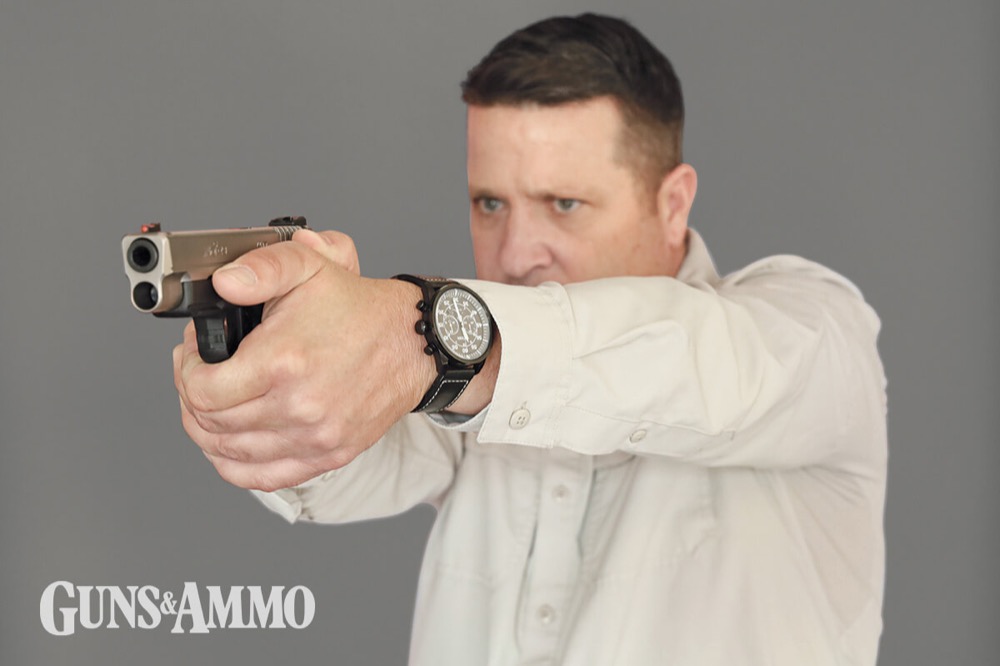
Run it in strings of five or six repetitions, and score honestly. A run with a great time but two shots in the C-zone isn’t a good Bill Drill — it’s a warning that you’re pushing past your current control. The goal is the fastest time at which all six still land in the A-zone, and that number should creep down slowly as your grip and recoil control improve.
Bill Drill Time Standards: What’s a Good Time?
Here’s the honest answer most people want first — with the caveat that almost every chart you’ll find online quietly leaves out. A Bill Drill time means nothing until you say what you drew from. A competition rig with an open-front race holster and a belt-mounted magazine is a completely different starting line than a concealed appendix rig under a t-shirt, and comparing the two is how people end up either badly discouraged or wildly overconfident. So here are both, draw-to-last-shot at seven yards with all six hits in the A-zone:
| Level | Open / competition holster | From concealment |
|---|---|---|
| New shooter | 4.5s or slower | 5.0s or slower |
| Developing shooter | 3.5s | 4.0s |
| Solid club shooter | 2.5–3.0s | 3.0–3.5s |
| Advanced / “you can shoot” | 2.0s | 2.5s |
| Competitive / expert | 1.7s | 2.0s |
| Top-tier | 1.4s or faster | 1.7s or faster |
The rough rule behind that second column is that clearing a garment costs most shooters somewhere between a third and a half of a second, every single rep. It doesn’t touch your splits at all — it lands entirely on the draw, which is why the concealment column shifts by about the same amount at every level rather than scaling.
The sub-2-second Bill Drill has been the classic gold standard for years — the line that separates people who think they’re fast from people who actually are. But it’s worth knowing that the standard keeps moving. As trainer Brennan Brennecke puts it bluntly, “the internet will tell you that in order to shoot a good Bill Drill you need to shoot it sub two seconds — that’s an old standard, and the new standard is way faster than that.” At the top level, shooters are running the drill in the low 1.4s from an open holster, which means a roughly one-second draw and five splits around 0.10–0.15 seconds each.
Don’t anchor on the elite numbers, though. If you’re a new shooter, getting six clean A-zone hits in 4.5 seconds is a genuine milestone. The value of the drill isn’t hitting someone else’s time — it’s watching your time come down while your hits stay in the A-zone. That progression is the whole point.
The Times Chart Nobody Publishes: What Real Shooters Actually Run
Every chart above — including ours — is a chart of goals. It’s worth putting a chart of reality next to it, because the gap between the two is the single biggest reason people conclude they’re bad shooters when they aren’t.
The most useful published dataset comes from an advanced handgun course, where the instructor recorded the whole class running a standard seven-yard Bill Drill. These were not beginners; they had already worked through a prerequisite course. Their raw times landed between 2.85 and 4.03 seconds, and once accuracy penalties were applied, several of them finished past five seconds. The instructor placed that cohort in the USPSA C-class band — roughly 40% to 60% of the skill needed to shoot Grand Master scores — and, in John Hearne’s framework for measuring how automatic a shooter’s skills have become, in the tier described as “performance suggests some automaticity.” That’s not a group of people failing. That’s what a room full of committed, above-average, actively-training shooters looks like on a timer.
Move the same class back to fifteen yards and the range stretched to 5.37–9.84 seconds including penalties. The A-zone didn’t move; their tolerance for a mediocre grip simply ran out.
Set that against the number the internet has settled on. If sub-2 seconds is “the standard,” then a room of advanced students shooting nearly twice that means the standard describes maybe the top few percent of shooters, not a competent one. The practical way to use this: stop asking whether your time is good and start asking whether it’s moving. Log ten clean runs, take the average, and compare it to your own average from a month ago. That comparison is real. Comparing a single run against a chart written by people who shoot for a living is not.
How Rare Is a Sub-2 Bill Drill From Concealment?
This is the single most-argued question about the drill, and the honest answer is: much rarer than the internet makes it look. Ask on any concealed carry forum and you’ll get a version of “I’ve been shooting for years and my fastest clean run from concealment is 1.64” — from people who train regularly, not casual range visitors. A sub-2 from concealment requires a draw at or under one second plus splits in the high teens to low twenties, and that combination is uncommon enough that most shooters who claim it are quietly dropping a shot or two into the C-zone.
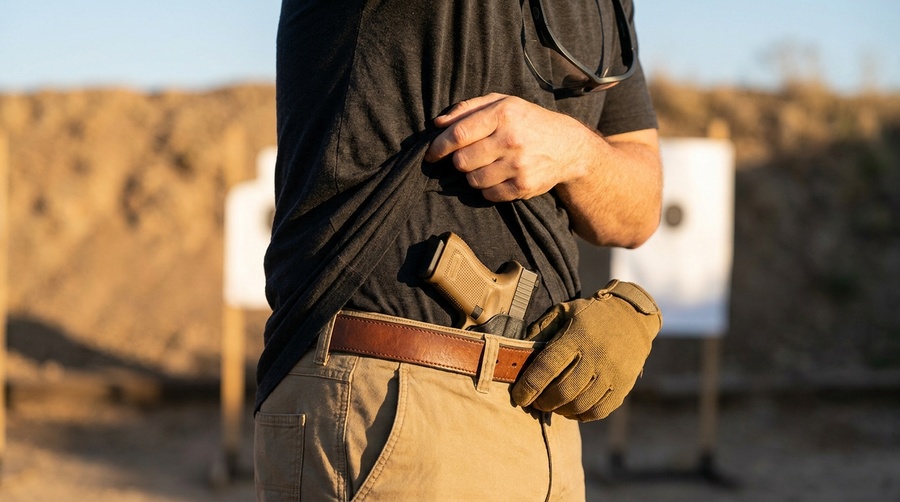
It’s worth watching what a room full of full-time instructors actually shoots, because it recalibrates the target fast. In one filmed training session, a group of professional instructors ran Bill Drills from concealment for the better part of an afternoon and settled into a consistent band of roughly 1.6 to 1.9 seconds clean, with first-shot times between about 0.77 and 1.07 seconds. Their honest self-assessment of that band was “consistently in the 1.7s from concealed is really, really solid.” One of them had been chasing a personal record of 1.5 from concealment for a long time and still hadn’t gotten it that day.
Two details from that session are more useful than the times themselves. First, the word “clean” is load-bearing. A 1.56 with three Charlies was immediately dismissed in favour of a slower run with six Alphas — the group scored every single rep and refused to count anything that wasn’t all-A. Second, one instructor named the thing that quietly stops most people from improving: “I’m pretty happy with 1.59, I’m not hungry anymore — that’s the issue.” Plateaus are usually a satisfaction problem long before they’re a technique problem, and the number on the timer is what makes that satisfaction visible.
If you carry concealed and want an honest benchmark, forget sub-2 for now. Run ten clean reps, take your average rather than your best, and set a par time about 0.2 seconds under it. A free shot timer app will log every run so your average is a real number and not a memory of your best day.
How Fast Is the Record — and Why It Shouldn’t Be Your Target
Because everyone eventually asks: the fastest widely-circulated Bill Drill sits at around 1.11 seconds for six hits, with well-documented runs in the 1.14–1.20 range from top USPSA Carry Optics shooters. Six shots in a shade over a second means a draw near 0.40 seconds and splits around 0.14 — numbers that feel physically impossible until you see them on a timer.
Here’s the part worth understanding, though, because it changes how you should read that number. Shooters chasing records openly admit they aren’t shooting the drill the way you should train it. One record-chaser explained that his 0.40-second draw only exists because he begins pressing the trigger before the gun reaches full extension — he knows the round will land because he has a feel for where the gun points, not because he’s confirming a sight picture. As he put it, if he waits until he’s fully extended, he can’t shave that half second, and “when you’re going for a world record, you need that advantage.”
That’s a valid answer to a very narrow question — how fast can six rounds leave a pistol and hit paper — and a terrible model for the skill the Bill Drill is supposed to build. The drill’s whole value is that it forces you to confirm and control six shots in a row. Train the record technique and you’ll build a habit of firing before you’re actually looking, which falls apart the moment the target gets smaller, further away, or is standing next to a no-shoot. Use the record as a fun fact and a reminder that the ceiling is higher than you think; use your own clean average as the number you actually chase.
Reading Your Draw and Splits on a Shot Timer
This is where the Bill Drill goes from “fun party trick” to “the most efficient training tool you own” — and it’s impossible without a timer. A shot timer doesn’t just give you a total time; it records the time of every shot, which means it hands you a full breakdown of the run: your draw (time to first shot) and your five splits (the gaps between shots two through six). Those two numbers tell you exactly where your time is going.
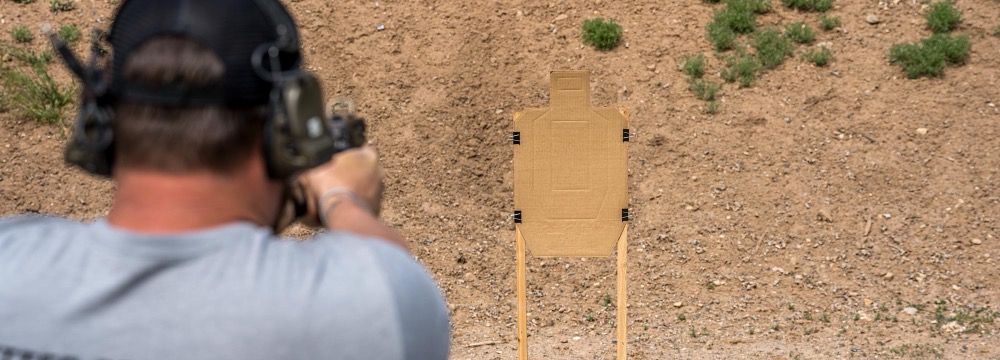
Break it down the way top shooters do. A one-second draw plus five 0.20-second splits already puts you at 2.0 seconds even. So the question every run answers is simple: is your time bleeding out of the draw, or out of the splits? Most amateurs assume they need faster splits, when in reality the biggest, easiest gains hide in the draw and even in the start signal itself.
Brennecke demonstrated this with real timer numbers. On one run his first shot landed at 1.23 seconds because he waited for the beep to fully end before moving. On the next run, reacting to the very front of the tone instead, his first shot came at 0.72 — half a second saved on a two-second drill, without changing his grip or his splits at all. Half a second is a quarter of the whole run, bought purely by reading the timer and reacting to the start signal a hair sooner. You would never find that free time by feel; the timer put a number on it.
The splits themselves reveal grip quality. If your first two splits are tight (0.15s) and your last three balloon (0.25s+), your grip is degrading under recoil and the sights aren’t returning to the same spot — that’s a grip-and-recoil problem, not a trigger-speed problem. Brennecke’s cue for fixing it is to “paint the A-zone” rather than shoot reactively: instead of see the dot, bang, see the dot, bang, you see your red dot or front sight settle once on a specific spot, then let it streak up and down through that same point while you trust the grip to bring it back. That mental shift — trusting a grip you built out of the holster instead of re-aiming every shot — is what flattens those late splits.
What Pistol Should You Run the Bill Drill With?
The question comes up constantly, and the honest answer irritates people: the Bill Drill doesn’t care what pistol you bring, and that’s exactly what makes it useful. Six rounds means it runs from a revolver, a single-stack 1911 or a 21-round double-stack without modification, and because there’s no reload, capacity buys you nothing. Nothing in the course of fire advantages one gun over another. What the gun changes is the number — and the size of that change is worth knowing before you compare your time to somebody else’s.
A full-size competition pistol — a Glock 34, a CZ Shadow 2, a 9mm 2011 — is the easy-mode version, and everyone who has run both knows it. Longer sight radius, more weight sitting between your hands to soak up the impulse, and a grip long enough that your support hand actually has something to clamp onto. Take the identical drill to a compact carry gun and the time moves the wrong way on every front at once: the shorter grip gives your support hand less to hold, the lighter slide comes back harder, and the muzzle travels further between shots. A shooter on r/CCW documented precisely this after a heavy week of practice — 1,350 rounds in, he switched to a smaller pistol and the run came in at 2.38 seconds with one hit down to C. That’s not a technique failure. That’s the gun.
Which is why “what’s your Bill Drill time?” is a meaningless question without two footnotes: what you drew from, and what you drew. A 2.4-second run from concealment with a compact carry pistol is a genuinely better piece of shooting than a 2.0 from a race holster with a full-size competition gun, and the timer will never tell you that. Log the gun alongside the time, and only compare runs where both footnotes match.
Optics change the drill more than any other single piece of gear, and they change it in two directions at once. On the draw, a red dot has to be found — a new optics shooter usually watches their first-shot time get worse before it gets better, because presenting the gun to a slightly wrong angle means hunting for the dot instead of picking up a front sight that was roughly where they expected. Splits two through six, meanwhile, get easier almost immediately, because you’re watching a single object lift and settle rather than trying to re-stack three of them six times in a row. If your draw slows by two tenths after mounting an optic but your splits tighten, that’s the expected trade and it resolves with reps rather than with a different mount. Our pistol red dot guide covers the presentation fix that gets the draw back.
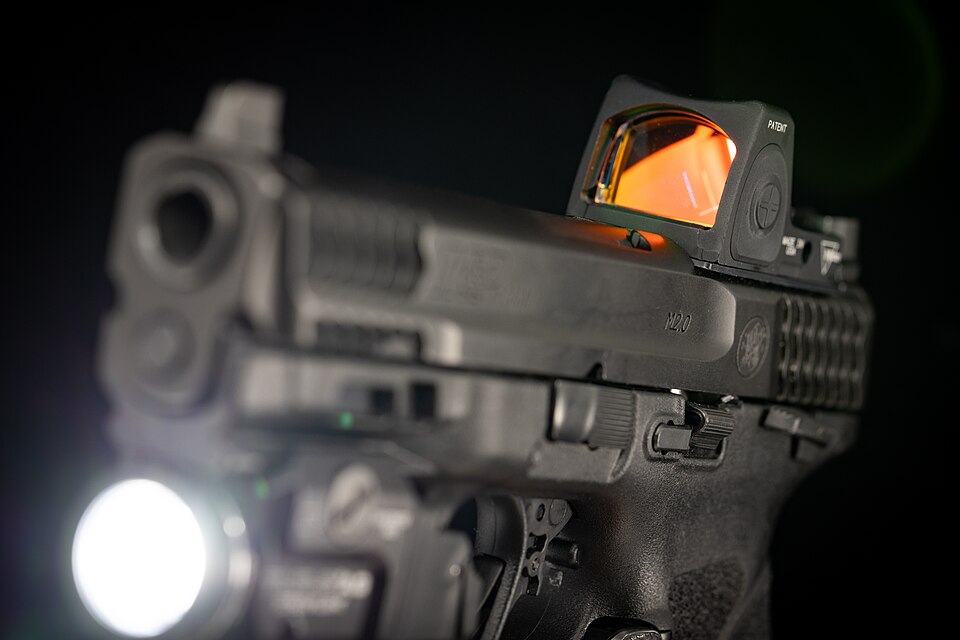
The gear the drill actually punishes isn’t the pistol at all — it’s the holster and belt. A rig that lets the gun shift position between draws makes your first-shot time random, and a random first shot contaminates the only number the drill produces. If your draw times swing by more than about 0.15 seconds across six clean reps with the same start position, suspect the rig before you suspect yourself; the competition holster guide covers how position and cant move that number.
For airsoft and Action Air players, the same logic maps across cleanly. A gas blowback Tokyo Marui Hi-CAPA is the full-size competition gun of this world — heavy, long-gripped, and forgiving under fast strings — while a compact GBB will make you work for every split in exactly the way its live-fire counterpart does. Run the drill with whatever you actually compete with, time it with the Airsoft Shot Timer app, and keep the gun in your log next to the number. The comparison that matters is you against your own last session with the same pistol, not you against a stranger shooting a different one.
The Rifle Bill Drill: Same Six Rounds, Completely Different Test
Almost every Bill Drill article treats it as a pistol drill, and that’s a strange gap, because the carbine version is common on ranges and it quietly measures something the pistol version can’t isolate.
The course of fire barely changes. One target at seven yards, six rounds into the same 6×11-inch A-zone, timer running. What changes is the start position: you begin from low ready or high ready with the rifle already mounted, not from a holster. That one difference reshapes the whole drill. On the pistol version, the draw is roughly half your total time, which means a shooter with a great draw can hide mediocre recoil control behind a good number. Take the draw away and there is nothing left to hide behind — the rifle Bill Drill is very nearly a pure measurement of your splits and your ability to bring the dot back to the same place six times in a row.
The times reflect that. The most commonly cited working par is 1.5 seconds, a baseline that traces back to Matthew Little (Greybeard Actual). One instructor who documented a full session posted runs of 1.61, 1.37, 1.56, 1.45, 1.40 and 1.44 seconds, with splits averaging around 0.16 seconds — noticeably tighter than the 0.20-second splits that a good pistol shooter runs, because the rifle’s weight and the four points of contact do a lot of the recoil management for you.
The real ceiling is lower still. A shooter running an ordinary AR-15 — his own words: a regular trigger, a plain A2 flash hider, “the Indian not the arrow” — documented clean six-round runs at 0.95 and 1.05 seconds, all six in the A-zone. His honest caveat is the useful part: he can’t do it every time. Most of his runs land at 1.05, and on a bad day 1.10 to 1.15. That’s the correct way to hold any of these numbers. The best run tells you what’s possible; the average tells you what you own.
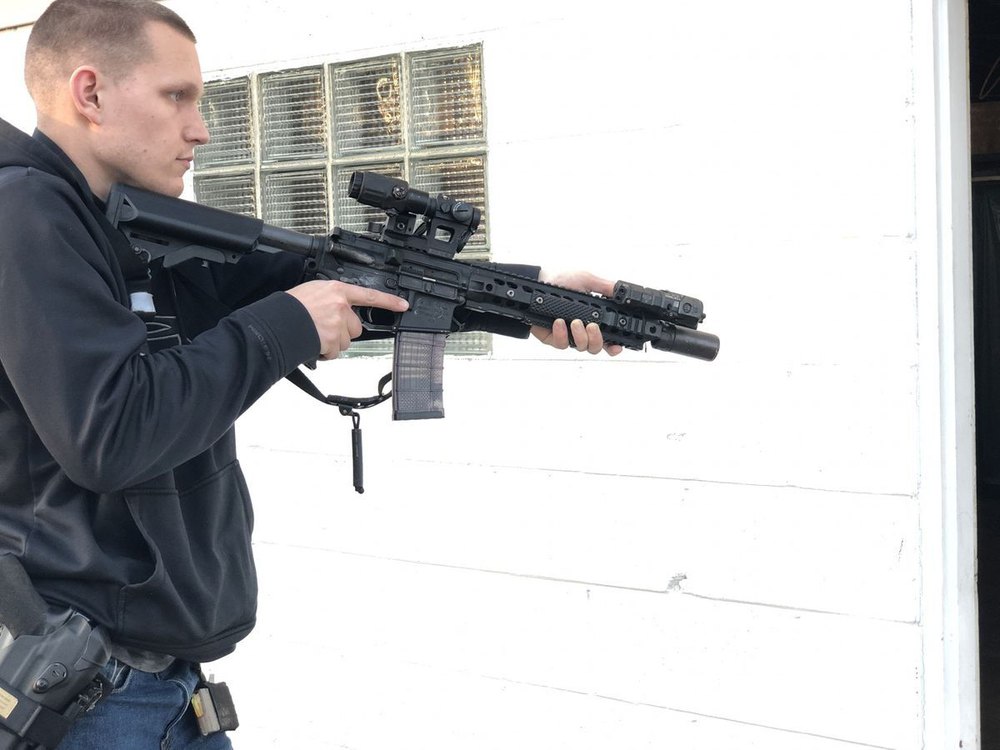
Two coaching points come up constantly and both are worth stealing for the pistol version. The first is that your trigger finger should never leave the face of the trigger between shots — no slapping, no resetting off the trigger, just working it as fast as it will cycle. The second is that you should be watching the dot lift and return rather than firing on a rhythm. If you’re shooting to a cadence, the dot is a passenger; if you’re shooting on the return, the dot is the timer. The tell is in your splits: rhythm produces suspiciously even splits and a group that walks upward, while shooting on the return produces slightly uneven splits and a group that stays put.
Worth noting for anyone about to search for an official standard: there isn’t one. Unlike the pistol version, the carbine Bill Drill has no governing body’s par time behind it, which is exactly why the advice from people who run it is always some version of “find where your skill is today, then chase your own number.” That makes it a drill you should be logging rather than passing or failing.
Run the Bill Drill With Airsoft or Dry Fire
Here’s the part almost every Bill Drill article skips: you don’t need live ammo to build most of this. The two things the drill actually trains — a fast, consistent draw and a grip that survives recoil — are pattern skills, and patterns are built through reps, not through burning through a case of ammo. Ammo cost and range access are exactly why so many shooters plateau, and it’s a solvable problem.
Dry fire is the cheapest option. Set a par time on a shot timer — start at a realistic target like 2.5 seconds — clear and safety-check your pistol, then draw and press the trigger six times before the par beep sounds. You get the draw, the sight settle, and the trigger press against a real clock. The Airsoft Shot Timer app does this for free: it gives you the random start beep and a par-time buzzer, so you can run par-time Bill Drill reps in your living room and actually track whether your draw is getting faster week to week. Pair it with the mechanics in our dry fire training guide and you’re training the identical draw you’d use on match day.
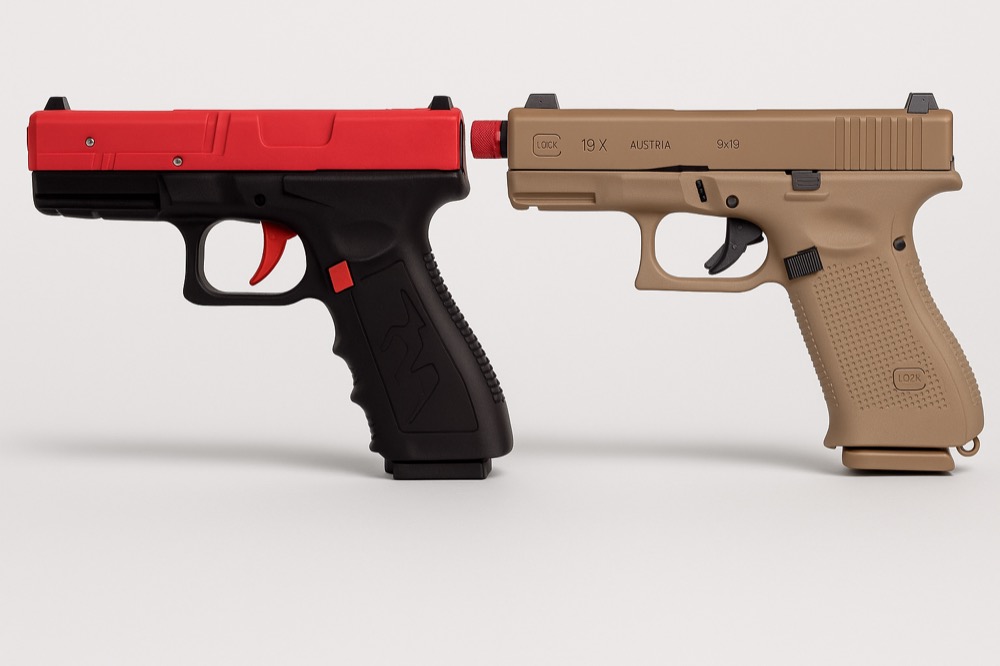
Airsoft takes it a step further, because now you get feedback on your hits too. A gas blowback pistol at seven yards (or a scaled-down distance indoors) gives you a real trigger, real recoil impulse, and a real point of impact, so you can run the full Bill Drill — draw, six shots, check your group — without a single live round. If you shoot practical airsoft or Action Air, this is your most realistic off-range rep, and it’s where the shot timer earns its keep: the app doesn’t care whether the “bang” came from a 9mm or a green-gas GBB, it just times your draw and splits the same way. For more on bridging the two worlds, our airsoft-to-firearms training crossover guide covers what transfers and what doesn’t.
The version most airsoft players can run tonight, though, is the rifle one — and it’s the closest match of the two. An AEG starts from low ready, needs no holster and no belt setup, and the rifle Bill Drill deliberately removes the draw, which is the one element an airsoft rig can’t replicate honestly anyway. What’s left is exactly what an AEG does reproduce: mounting the gun the same way every time, working the trigger without slapping it, and driving your eye back to the aiming point six times in a row. Scale the distance down to whatever your field or garden allows, keep the scoring box proportional (a 6×11-inch A-zone at seven yards is roughly a 3×5.5-inch box at half the distance), and the number on the timer means something. Your absolute splits will be faster than a live carbine’s because there’s almost no recoil to recover from, so don’t compare them to the 0.16-second figures above — compare them to your own previous session. The skill you’re actually building is the visual discipline, and that transfers completely.
Variations to Keep the Drill Honest
Once your standard seven-yard Bill Drill is repeatable, there are a few ways to keep it challenging. The simplest is distance progression, and it’s worth knowing roughly what each distance should cost you. Five yards is the speed lane — expect to run about 0.2 seconds faster than your seven-yard time, because the A-zone is subtending wide enough that you’re barely confirming anything. Ten yards typically adds 0.2 to 0.4 seconds and is where sloppy grips get exposed, since the same splits that stayed inside the A-zone at seven will walk straight out of it here. Twenty-five yards turns the drill into a completely different animal — most shooters roughly double their seven-yard time, and plenty discover they can’t keep six rounds in the A-zone at any speed. There’s even a fifty-yard version floating around the competition world, where a sub-2 run is treated as a genuine feat. The A-zone never gets bigger; only your margin for a mediocre grip disappears.
There’s a counter-intuitive payoff hiding in that progression, and instructors bring it up constantly: training on a small, demanding target at distance makes the close-range drill feel easy. Spend a session drilling a steel plate or a point target at fifteen yards where every hit is accountable, then walk back in to seven yards and open up on a full USPSA target, and the same speed that felt reckless before suddenly feels controlled. Instructors regularly set new personal records on the seven-yard Bill Drill immediately after a long block of accuracy-focused reps at distance. If your times have stalled, the fix is often not more speed reps at seven yards — it’s harder accuracy reps further back.
Ben Stoeger’s favorite variation adds target transitions. Set three targets edge to edge, draw, and fire two rounds on each while shifting your vision to the next target between pairs — a “moving” Bill Drill that trains how fast you can drive your eyes and the gun together. Start with the targets touching, then spread them apart so the gun has to travel farther each time. Stoeger’s warning is worth repeating: this is a training exercise, not a match technique, because shooting that aggressively makes mistakes easy — but for pushing your visual speed and finding your real limits, it’s excellent. Shrinking the scoring zone is the variation that humbles almost everyone. Instead of the full 6×11-inch A-zone, use only the upper A-zone — roughly 2 inches by 4 inches — and keep the same six rounds at seven yards. Competitive shooter Tim Herron treated a 2.0-second run into that box as the “holy grail” of practical shooting and documented what it cost him to get there: 260 repetitions and 1,560 rounds, with the run before the successful one landing at 1.89 seconds but with a hit half a bullet-width outside. That’s a useful calibration for anyone frustrated after a handful of sessions. A meaningful jump on this drill is measured in months and cases of ammunition, not in range trips.
The Bill Drill Rundown and the Moving Variants
Two named variants circulate that turn the static drill into something closer to a match stage, and they’re worth knowing because they answer the “my times have stopped moving” problem from a different direction than distance progression does.
The Bill Drill Rundown stacks the drill onto itself down a range: start at twenty-five yards and shoot a full Bill Drill, run in to ten yards and shoot another, take a mandatory reload somewhere between ten and five, then finish with a third at five yards. Three Bill Drills, one continuous clock, with movement and a reload wedged between them. What it exposes is the thing the seven-yard version deliberately hides — whether your grip and your vision survive an elevated heart rate and a gun that arrives back on target while you’re still settling. Most shooters find their twenty-five-yard string is fine and their five-yard string is where the hits scatter, which is the opposite of what they expect.
The Moving Triple Bill Drill is the transition version, and it’s the one Ben Stoeger’s target-transition variation grows into: three targets, two rounds each, but shot while you’re actually moving between positions rather than standing still and swinging the gun. Both of these are training exercises rather than benchmarks — there’s no standard time for either, and chasing one would miss the point. Run them on a total-time basis with the shot timer app and compare only against your own previous attempt, because the variables are too different from anyone else’s setup for a shared number to mean anything.
The variation almost nobody writes about is Bill Wilson’s own follow-up, the Bill Drill 2. It’s five separate strings, each starting from the holster: draw and fire one round, then draw and fire two, then three, then four, then five, at seven yards on an IDPA target. You add all five string times together and add half a second for every point down. It tests something the original can’t — whether your draw holds up when it has to be repeated five times under a clock, rather than performed once — and like the original it’s deliberately revolver-neutral, since no string exceeds five rounds and there are no reloads. It’s a long enough drill that the total score is the honest number; a single good string won’t rescue it.
The last useful twist is adding concealment: run the draw from a covered holster and you’ve turned the Bill Drill into a genuine self-defense benchmark, which is exactly what that “sub-2-second from concealment” question on every shooting forum is really asking about.
Frequently Asked Questions
What is a good Bill Drill time?
For all six shots in the A-zone at seven yards from an open holster, roughly 4.5 seconds is a realistic new-shooter time, sub-3 seconds marks a competent club shooter, and sub-2 seconds is the classic benchmark for someone who can genuinely shoot. Elite competitors run it in the low 1.4-second range. Add roughly half a second at every level if you’re drawing from concealment. The number only counts if every hit is in the A-zone — a fast time with hits in the C-zone means you’re going faster than you can control.
What is the fastest Bill Drill ever shot?
The fastest widely-circulated times sit at around 1.11 seconds for six A-zone hits, with well-documented runs in the 1.14–1.20 range from top USPSA Carry Optics shooters. That requires a draw near 0.40 seconds and splits around 0.14. Be aware that record attempts are shot differently from training reps — shooters chasing the number start pressing the trigger before the gun reaches full extension, relying on feel rather than a confirmed sight picture. It’s a real number, but it’s not a technique to copy.
Can you shoot a sub-2-second Bill Drill from concealment?
It’s possible, and it’s much rarer than the internet suggests. It requires a sub-one-second concealed draw plus splits in the high teens, and even full-time instructors typically run clean concealed Bill Drills in the 1.6–1.9 second band. Most people who claim a sub-2 from concealment are dropping a shot or two out of the A-zone. Score every rep honestly and use your clean average, not your best-ever run, as your real number.
What’s the difference between the Bill Drill and the Mozambique Drill?
They test opposite things. The Bill Drill is six rounds into one scoring zone on a single target, so it measures your draw plus sustained recoil control under speed. The Mozambique drill is two rounds to the body followed by one deliberate shot to the head, so it measures your ability to change gears — to break the fast cadence and place a precise shot. Most shooters find the Bill Drill exposes grip problems and the Mozambique exposes transition and trigger-control problems. Running both gives you a much fuller picture than either alone.
Why is it called the Bill Drill?
It’s named after Bill Wilson of Wilson Combat, who developed it. Despite the popular myths, it’s not named after Bill Rogers or Bill Jordan, and it has nothing to do with covering your group with a dollar bill — that’s just a memorable coincidence people repeat.
How do you shoot a sub-2-second Bill Drill?
Break the two seconds into a roughly one-second draw and five 0.20-second splits. The fastest free time usually hides in the draw and in reacting to the start beep sooner — shooters routinely save half a second just by moving on the front of the tone instead of after it. The splits come down when your grip stops the muzzle from climbing, so you “paint” one spot in the A-zone and trust the sights to return rather than re-aiming each shot. A shot timer showing your draw and each split tells you which one to work on.
Can you practice the Bill Drill with dry fire or airsoft?
Yes — and you should. Dry fire with a par time on a shot timer trains the draw, the sight settle and the trigger press; an airsoft pistol adds real recoil and a real point of impact so you can check your group too. Both build the exact draw-and-grip pattern the live-fire drill measures, at a fraction of the cost. The Airsoft Shot Timer app provides the random start beep and par-time buzzer for both.
Can you shoot a Bill Drill with a rifle or carbine?
Yes, and it’s a common range drill. Six rounds into the same A-zone at seven yards, but starting from low or high ready with the rifle mounted rather than from a holster. Removing the draw is the whole point — with roughly half the pistol version’s time deleted, what’s left is almost purely your recoil control and how fast your dot returns to the aiming point.
What is a good rifle Bill Drill time?
There’s no governing standard, but 1.5 seconds is the most widely used working par. Documented sessions from experienced shooters cluster around 1.37–1.61 seconds with splits near 0.16, and shooters chasing the ceiling with an ordinary AR-15 have posted clean runs at 0.95–1.05 seconds — while openly admitting they can’t repeat that every time. Sub-2 seconds is a fair first goal, and sub-1.5 means your recoil control is genuinely good.
Why is a Bill Drill six rounds?
Six is the shortest string that reliably exposes a grip that comes apart. The first two shots ride a fresh, static grip; problems usually surface around round four or five as the support hand loosens and the muzzle stops returning to the same place. Three rounds is too few to catch that, ten starts measuring fatigue instead. Six also keeps the drill revolver-neutral, which helped it spread.
How far away is the Bill Drill target, and how big is the scoring zone?
Seven yards, into the A-zone of a USPSA/IPSC metric target — a box 6 inches wide by 11 inches tall. A rectangle of that size drawn on cardboard works exactly as well for training. Distance variations at 5, 10, 15, 25 and even 50 yards all exist, but they’re better treated as separate drills than as harder versions of this one, because past about ten yards you stop measuring recoil control and start measuring marksmanship.
What target should I use for the Bill Drill?
The standard is an IPSC/USPSA metric target or an IDPA target at seven yards, scoring the A-zone (or the down-zero zone on IDPA). Any target with a defined center scoring area works for training — the point is that “fast” only counts when all six rounds land inside that zone.
What gun should I use for the Bill Drill?
Whatever you actually shoot — the drill was built to be gun-neutral. Six rounds and no reload means a revolver, a single-stack 1911 and a full-capacity double-stack all run it unmodified. A full-size competition pistol (Glock 34, CZ Shadow 2, a 9mm 2011) will give you a faster number thanks to the longer sight radius, extra weight and longer grip, while a compact carry gun typically costs a few tenths because the muzzle climbs further between shots. Neither is wrong; just record which gun produced the time so you’re comparing like with like.
Does a red dot make the Bill Drill faster?
Eventually, yes — but not immediately, and not in the part you expect. Your splits improve almost at once because you’re tracking one object lifting and settling instead of re-aligning sights six times. Your draw usually gets slower first, because a dot has to be found rather than roughly picked up, and a slightly off presentation means hunting for it. If your first-shot time jumps a couple of tenths after mounting an optic while splits two through six tighten, that’s the normal trade and reps fix it.
What is the Bill Drill Rundown?
It’s a three-stage version shot down the length of a range: a full Bill Drill at twenty-five yards, run in to ten yards for a second one, a mandatory reload between ten and five yards, then a third at five — all on one continuous clock. It adds movement, a reload and an elevated heart rate to a drill that normally isolates just the draw and recoil control. There’s no standard time for it, so score it against your own previous attempt rather than anyone else’s.
How often should I shoot the Bill Drill?
Once or twice a session is plenty, and it belongs early rather than at the end — it’s a measurement, and measurements taken when you’re tired tell you about fatigue rather than about skill. Run five or six clean reps, write down the average, then go train whichever number was worse. Improvement on this drill is measured across months; shooting it twenty times in one afternoon mostly measures how quickly your grip strength runs out.
Does the Bill Drill really improve your shooting?
It does, because it isolates the two skills that carry over to almost everything else in practical shooting: a fast, repeatable draw and recoil control under speed. Six shots is just enough to expose a grip that fails, and the timer turns every run into measurable feedback. Track your draw and splits over a few weeks and you’ll see exactly where you’re improving.
The Bill Drill’s genius is its honesty. Six shots, one target, one number — no room to fool yourself. Pick the column that matches how you actually draw, write down your clean average rather than your best run, and stop comparing it to a record shot with a technique you don’t want to build. Grab a shot timer, whether you’re on a live range, dry-firing in the living room, or running an airsoft pistol in the backyard, and start logging your draw and splits. Watch which number moves and which one sticks, and you’ll always know exactly what to train next.
If your draw is where the time is going — and for most people it is — our pistol draw guide breaks the draw stroke into four phases you can train separately, and the competition holster guide covers how rig choice and holster position change that first number. For a broader menu of drills to build around the Bill Drill, see our pistol drills by skill and par time and the Mozambique drill guide.
Put a Shot Timer in Your Pocket
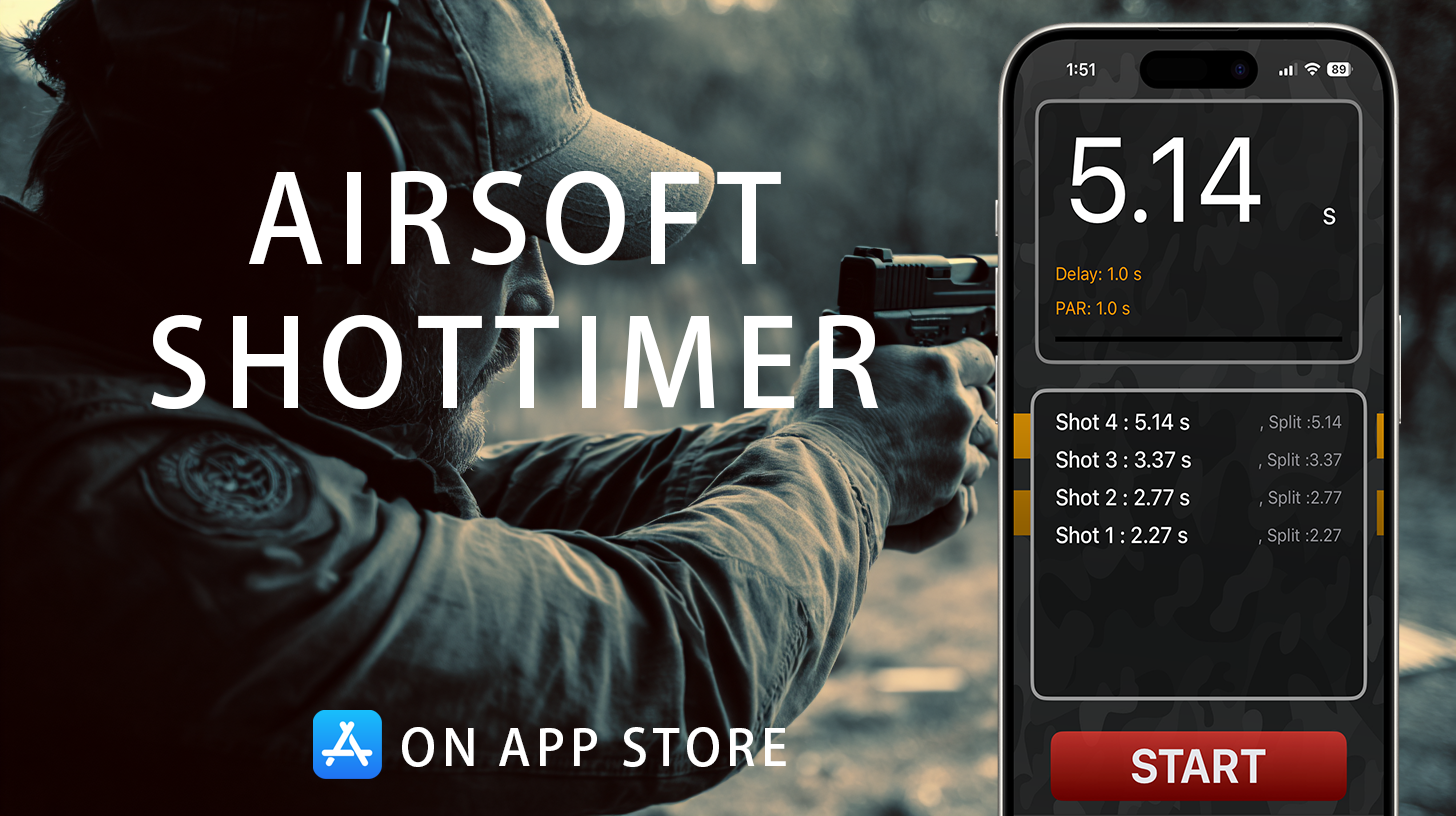
Airsoft Shot Timer is a free shot timer app tuned for airsoft and Action Air — it picks up BB gun shots, tracks your split times, and saves you the cost of a $150+ hardware timer for IPSC/IDPA practice.

- Bill Drill
- Bill Drill Time
- Bill Drill Time Standards
- Bill Drill Rifle
- Carbine Bill Drill
- Bill Drill Times Chart
- Bill Drill Target
- Shooting Drills
- Shot Timer
- Practical Shooting
- USPSA
- IPSC
- Recoil Control
- Draw Speed
- Concealed Carry Draw
- Splits
- Dry Fire
- Airsoft
- AEG
- Carbine Training
- Pistol Training
- Par Time
- Wilson Combat
- Bill Drill Gun
- Bill Drill Pistol
- Bill Drill Rundown
- Moving Bill Drill
- Red Dot Pistol