Best IDPA Pistol for Beginners 2026: SSP, CCP, Budget Picks Under $500 + First Match Guide
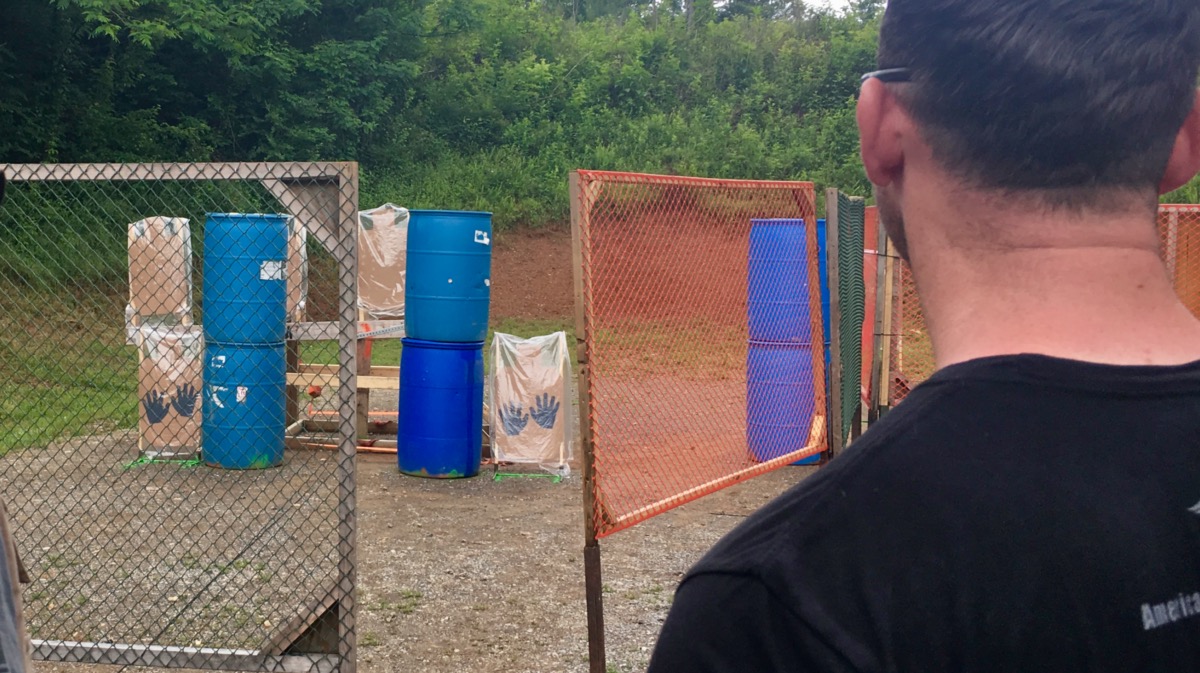
What Is the Best IDPA Pistol for Beginners?
Quick answer: Use whatever 9mm pistol you already own. If you’re buying new, Glock 19 ($550) for CCP, Glock 34 ($700) for SSP, CZ 75D PCR ($450 used) for budget builds. Skip the race gear — your EDC pistol, a concealment holster, and a cover garment will get you to your first match for under $640.
I remember standing at the gun counter before my first IDPA match, overwhelmed by choices. The clerk asked me which division I planned to shoot, and I had no idea what he was talking about. If you’ve been searching for the best IDPA pistol, you’ve probably hit the same wall — there’s no single answer because it depends entirely on which division you compete in. A Glock 34 dominates SSP, a 1911 in .45 ACP owns CDP, and a Glock 19 fits CCP like it was designed for it (because it literally was). The good news? Your everyday carry pistol is probably already IDPA-legal.
That’s what makes IDPA (International Defensive Pistol Association) different from every other shooting sport. You draw from concealment, use cover tactically, and retain your partially loaded magazines — skills that transfer directly to real-world self-defense. With eight divisions covering everything from full-size service pistols to pocket-sized backup guns, there’s a place for virtually every handgun owner.
The barrier to entry is refreshingly low. Your daily carry pistol, a concealment holster, a sturdy belt, and a cover garment are genuinely all you need for your first match. No race holsters, no competition belts, no expensive optics required. A used CZ 75D PCR or a new Canik METE will get you onto the range for half the price of a Glock, and Reddit r/idpa is full of stories of new shooters who placed mid-pack on day one with a $400 used pistol. The 2026 IDPA National Championship heads to The Cardinal Center in Marengo, Ohio this September — registration opens April 20, and it fills up fast.
💡 Further Reading: New to IDPA? Start with our IDPA Defensive Shooting Complete Training Guide for training methods. Want to understand the scoring and penalty system before your first match? Our IDPA scoring and penalty rules covers Vickers Count scoring, cover rules, and common penalties. For a detailed breakdown of each division’s requirements, see our IDPA Divisions Complete Guide. Curious how IDPA compares to USPSA? Check our IDPA vs USPSA Complete Comparison Guide.
IDPA Division Overview
Before purchasing your first IDPA pistol, understand the main divisions. This will help you choose the most suitable firearm. For a deeper dive into each division’s rules, equipment lists, and competitive strategies, see our IDPA Divisions Complete Guide — All 8 Divisions Explained (SSP, CCP, ESP, CDP, CO, REV, BUG, PCC).
SSP (Stock Service Pistol)
SSP is the most popular IDPA division and the top choice for beginners. This division accepts most factory-condition striker-fired or DA/SA pistols.
Division Rules:
- Minimum caliber: 9mm (125 Power Factor)
- Magazine capacity limit: 15+1 rounds
- Only minimal modifications allowed
- Factory trigger and sights must be retained
Suitable Pistols: Glock 17/34, SIG P320, S&W M&P, HK VP9, CZ P-09
ESP (Enhanced Service Pistol)
ESP allows more modifications and accepts single-action (SA) pistols. All SSP-legal firearms are also legal in ESP.
Division Rules:
- External magwells allowed
- Single-action pistols accepted (1911, 2011)
- More aggressive grip texturing permitted
Suitable Pistols: 1911 (9mm), CZ Shadow 2, Modified Glocks
CCP (Compact Carry Pistol)
CCP is specifically designed for everyday concealed carry. This division’s specifications were designed around the Glock 19, emphasizing pistols that can actually be carried daily.
Division Rules:
- Must fit the IDPA compact box (7.75" x 5.375" x 1.375")
- Barrel length not exceeding 4 3/8"
- Magazine capacity limit: 10+1 rounds
- Minimum caliber: 9mm
Suitable Pistols: Glock 19/48, SIG P365XL, S&W M&P Compact, Walther PPS M2
CDP (Custom Defensive Pistol)
CDP is the home of the classic .45 ACP. This division was created for shooters who believe in the stopping power of a big-bore round and love the 1911 platform. The rules require .45 ACP chambering, and magazine capacity is limited to 8+1 rounds, which means you’ll practice efficient reloads far more than in other divisions. If you own a quality 1911 or similar .45 ACP pistol, CDP lets you compete with it under rules specifically tailored to that platform.
Suitable Pistols: 1911 (.45 ACP), Springfield TRP, Dan Wesson Specialist, SIG P220
CO (Carry Optics)
Carry Optics has become one of the fastest-growing IDPA divisions, mirroring a broader industry trend toward red dot sights on defensive handguns. The rules allow slide-mounted optics on otherwise SSP-legal pistols, making it an excellent division for shooters transitioning to optic-equipped carry guns. If you’ve mounted a red dot on your daily carry pistol and want to compete with it, CO is where you belong.
Suitable Pistols: Glock 17/19 MOS, SIG P320 RXP, S&W M&P with optics cut, Walther PDP
REV (Revolver)
The Revolver division keeps the wheelgun tradition alive in competitive shooting. With a six-round capacity, revolver shooters develop exceptional trigger control and master the art of speed loaders. It’s a smaller community, but fiercely dedicated. If you carry a revolver for self-defense, this division provides highly relevant training.
Suitable Pistols: S&W 686, Ruger GP100, S&W Model 66
BUG (Back-Up Gun)
BUG is designed for the smallest concealment pistols — the ones you’d carry as a backup or in situations where deep concealment is necessary. The gun must fit in a very small IDPA box (6.5" x 4.625" x 1.375"), and stages are shot at closer distances. This is a fun division that lets you compete with your pocket pistol.
PCC (Pistol Caliber Carbine)
PCC allows shoulder-fired carbines chambered in pistol calibers (9mm, .40 S&W, .45 ACP). Magazine capacity is limited to 30 rounds. PCC inclusion in IDPA matches is at the match director’s discretion, so availability varies by club.
What’s New in the 2026 IDPA Rules?
IDPA released Version 2 of the 2026 Rulebook in January 2026, bringing several important changes that beginners should know about. The most notable update is that a firearm with a non-functional manual safety now results in an immediate disqualification — so if your pistol has a manual safety, make sure it actually works before showing up to a match. This might seem obvious, but worn or neglected safeties on older 1911s have tripped up more shooters than you’d expect.
The BUG division saw two significant changes: .380 ACP has been removed entirely, and magazine capacity has been bumped up to 8+1 rounds. If you were considering a .380 pocket pistol for BUG, you’ll need to go with at least 9mm now. On the positive side, the increased capacity means you won’t need to reload as often on shorter stages.
Stage design rules also evolved — targets in the open are now considered higher priority than targets available from cover, and muzzle exclusion zones are only required for doorknobs and handles rather than all props. These changes affect how stages flow and how you’ll prioritize your engagement sequence.
The 2026 IDPA National Championship is scheduled for September 24–26 at The Cardinal Center in Marengo, Ohio. Registration opens April 20, 2026, and tends to fill up fast, so mark your calendar if you’re ready to take on the national stage.
Top SSP Division Pistol Recommendations
Based on IDPA World Championship statistics, here are the most popular entry-level choices for the SSP division.
Top Choice: SIG P320 X-Five Legion (~$900)
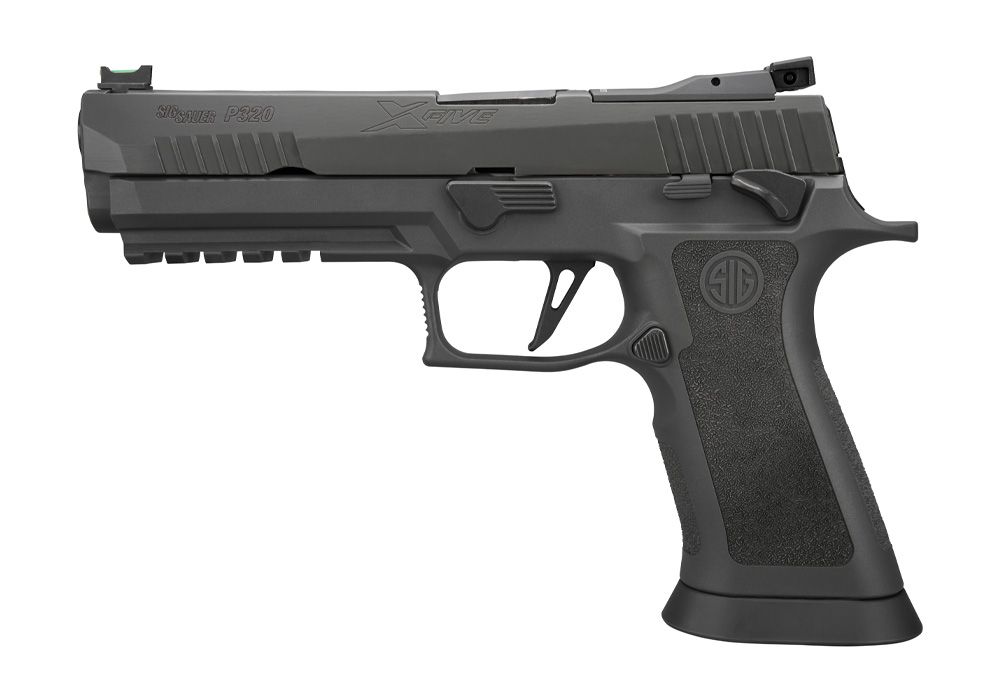
The SIG P320 X-Five Legion has become the benchmark for IDPA and USPSA competition shooting. Its unique feature is the tungsten-infused grip module—this polymer grip is embedded with tungsten, giving it a weight feel similar to a steel frame while retaining modularity.
P320 X-Five Legion Advantages
- Tungsten-weighted grip: Effectively reduces recoil and muzzle flip
- Modular design: Swap different grip modules to fit various hand sizes
- Factory flat trigger: ~4 lb pull with short, crisp reset
- Low bore axis: Naturally suited for rapid fire
- Optics cut: Easy upgrade to CO division
Best For: Shooters seeking top out-of-the-box performance who value modularity
💡 Further Reading: Learn more about this modular masterpiece in our SIG P320 Complete Guide
Value Choice: Smith & Wesson M&P 2.0 (~$550-650)
The S&W M&P 2.0 is an American-made reliable choice, second only to Glock in IDPA SSP usage. Its ergonomic design and aggressive grip texture make many shooters fall in love at first grip.
M&P 2.0 Advantages
- Four palm swell inserts: Swap different sizes to fit various hand types
- Aggressive grip texture: Excellent traction even with sweaty hands
- 18-degree grip angle: Points naturally at target, quick to learn
- American made: Reliable quality, easy maintenance
- Affordable price: Best value in its class
Best For: Budget-conscious shooters who value ergonomics and prefer American brands
💡 Further Reading: Smith & Wesson M&P Complete Guide
Classic Choice: Glock 34 Gen5 (~$700)
The Glock 34 has the highest individual model usage rate in IDPA SSP, at 16.2% of all SSP competitors. Its legendary reliability and massive aftermarket ecosystem make it many shooters’ first choice.
Glock 34 Advantages
- Legendary reliability: Works in any environment
- 5.31" barrel: Longest SSP-legal barrel for better sight radius
- Lightweight design: Empty weight only 655g
- Aftermarket ecosystem: Countless upgrade options available
- Easy maintenance: Simple disassembly, parts available everywhere
Best For: Shooters who prioritize reliability, plan long-term development, and value upgrade potential
💡 Further Reading: Glock 17 Training Guide and Glock Complete Introduction
Other Excellent Choices
| Pistol | Price | Features |
|---|---|---|
| HK VP9 | ~$700 | Top-tier ergonomics, swappable grip panels |
| CZ P-09 | ~$500 | DA/SA operation, high capacity |
| Walther PDP | ~$650 | Excellent factory trigger, great ergonomics |
| Canik TP9SFx | ~$500 | Ultimate value, outstanding factory trigger |
CCP Division Pistol Recommendations
If you want to compete with your everyday carry compact pistol, CCP is the best division.
Top Pick: Glock 19 Gen5 (~$550)
The CCP division specifications were literally designed around the Glock 19, making it the “official recommendation” for CCP. It’s one of the world’s most popular concealed carry pistols and many shooters’ first gun.
Glock 19 Advantages
- CCP division standard: Dimensions perfectly match division specs
- 15-round capacity: Ample firepower in a compact size
- Balanced size: Effective concealment without being too small to control
- Massive ecosystem: Unlimited accessory and holster options
- High resale value: Stable used market demand
Best For: Shooters who want one gun for both daily carry and competition
Runner-up: SIG P365XL (~$600)
The P365XL is the “big brother” of micro-compact pistols, extending the grip and slide of the P365 for better shooting control.
P365XL Advantages
- 12-round standard capacity: Highest capacity among micro-compacts
- Optional optics cut: Easy upgrade to CO division
- Truly concealable: Smaller than Glock 19
- Excellent trigger: Outstanding among micro-compacts
Best For: Shooters who prioritize true concealability and want a smaller size
SIG P365 Family for CCP (P365, P365XL, P365 X-Macro Comp)
The SIG P365 family has become the dark horse of CCP division since 2023, and Pew Pew Tactical now ranks the P365 X-Macro Comp as their top recommended IDPA carry-class pistol. The lineup gives you three meaningful options at different concealability/shootability trade-offs:
- P365 (~$500): The micro-compact original — 10+1 capacity, easiest to actually carry concealed every day, but the short grip is harder to shoot fast on stages with multiple targets.
- P365XL (~$600): The sweet spot — 12+1 capacity, longer grip, optics-ready slide. Most CCP-bound buyers should land here.
- P365 X-Macro Comp (~$700): A built-in compensator and 17+1 capacity. Recoil control rivals a full-size Glock 19 while still fitting the CCP compact box. The current Pew Pew Tactical top pick for serious IDPA CCP competitors who also carry daily.
If you already own a Glock 19, you don’t need to switch — but if you’re buying new for IDPA + concealed carry duty, the P365 X-Macro Comp is hard to beat in 2026.
Other CCP Options
| Pistol | Price | Features |
|---|---|---|
| Glock 48 | ~$450 | Slim design, 19-round magazine (extended) |
| S&W M&P Compact | ~$500 | Great ergonomics, American made |
| Walther PPS M2 | ~$400 | Ultra-slim design, excellent ergonomics |
| Springfield Hellcat Pro | ~$550 | 15-round capacity, optics ready |
Best Budget IDPA Pistol Picks (Under $500)
If you’ve been priced out by $700-900 Glocks and SIG P320s, here’s the honest truth: you can absolutely shoot competitive IDPA with a $300-450 pistol. The Reddit r/idpa thread “Best IDPA Starter Handgun” mentions the same handful of budget guns over and over, and every match in the country has at least one shooter showing up with one of these:
CZ 75D PCR / CZ P-09 (~$400-500)
The CZ 75D PCR is the unicorn of budget IDPA — a compact, alloy-framed DA/SA pistol that runs CCP perfectly, and the CZ P-09 is its full-size SSP-legal sibling at the same price point. Both have outstanding triggers out of the box (better than most $700 striker-fired pistols), and the CZ 75 platform has been winning competitions since the 1980s. The PCR holds 14+1 (limit-to-10 in CCP), the P-09 holds 19+1.
Why it’s a steal: A used CZ PCR at $400 will outshoot a new $700 striker pistol in trained hands. The DA/SA trigger has a longer learning curve, but once you master it, you have a concealment-friendly competition pistol that costs less than a Comp-Tac holster setup.
Canik METE SFx / TP9SFx (~$400-500)
The Canik METE SFx is the current value king of striker-fired pistols. It comes with a flat trigger, fiber-optic front sight, optics plate system, and three magazines — accessories that would cost $200+ if added separately to a Glock. The trigger is genuinely competition-ready out of the box, which is something you cannot say about a stock Glock.
Why it’s a steal: $450 gets you a pistol that’s mechanically equivalent to a $900 P320 X-Five for the first 10,000 rounds. The downside: smaller aftermarket support and slightly less proven long-term durability than Glock or SIG.
Taurus G3 / G3X (~$300-380)
The Taurus G3 is the absolute floor of usable IDPA pistols — full-size, 17+1, and around $300 new. Reliability used to be a question mark, but post-2020 production has been solid, and there are now multiple competitive shooters running G3s in club-level matches. It will not win you a Nationals title, but it will absolutely get you to your first match without breaking the bank.
Why it’s worth considering: At $300, it leaves $300+ in your budget for ammo, a quality holster, and a couple of practice sessions before your first match — which will improve your performance more than upgrading to a $700 pistol would.
Used Gun Strategy: Where Smart Money Goes
A common Pew Pew Tactical and Reddit r/idpa recommendation: buy used. A 3-year-old Glock 19 that retails new for $550 typically sells used at $375-425, and Glocks are essentially indestructible for the round counts a club-level IDPA shooter will ever put through them. Same for used CZs, M&Ps, and even older P320s (post-voluntary upgrade serials).
Used gun shopping tips:
- Check GunBroker, Armslist, and your local gun shop’s used case
- Inspect the locking block, recoil spring, and breech face for wear
- Ask for round count if known (anything under 10,000 is essentially new)
- Avoid heavily-modified used competition guns unless you know exactly what was changed
A $400 used Glock 19 + $200 holster/belt/mags + $100 ammo = $700 to your first match, fully equipped. That’s the cheapest legitimate path into IDPA competition in 2026.
Budget Pistol Comparison
| Pistol | Price | Division | Capacity | Trigger |
|---|---|---|---|---|
| CZ 75D PCR (used) | $400-450 | CCP | 14+1 | DA/SA, excellent |
| CZ P-09 | $480-500 | SSP | 19+1 | DA/SA, excellent |
| Canik METE SFx | $400-450 | SSP/CO | 18+1 | Flat-faced striker |
| Canik TP9SFx | $400-500 | SSP | 20+1 | Flat-faced striker |
| Glock 19 (used) | $375-425 | CCP | 15+1 | Stock striker |
| Taurus G3 | $300-380 | SSP | 17+1 | Striker, improved |
IDPA Division Comparison Table
| Feature | SSP | CCP | ESP | CDP | CO |
|---|---|---|---|---|---|
| Purpose | Full-size service | Compact carry | Enhanced | .45 ACP classic | Optics-equipped |
| Caliber | 9mm+ | 9mm+ | 9mm+ | .45 ACP only | 9mm+ |
| Magazine Capacity | 15+1 | 10+1 | 15+1 | 8+1 | 15+1 |
| Barrel Limit | Standard box | ≤4 3/8" | Standard box | Standard box | Standard box |
| Optics Allowed | No | No | No | No | Yes |
| Representative Pistols | Glock 34, P320 | Glock 19, P365XL | 1911 (9mm), CZ | 1911 (.45) | Glock MOS, PDP |
| Best For | Most beginners | EDC users | Advanced | .45 fans | Optics shooters |
Essential IDPA Equipment: Concealment Setup
The biggest difference between IDPA and IPSC is the requirement for concealed carry equipment. This is the core philosophy of the sport and key to equipment selection.
1. Holster Selection ($40-150)
IDPA requires holsters “suitable for all-day concealed carry.” Since 2022, IDPA has allowed AIWB (Appendix Inside Waistband) holsters, providing more options.
IWB Holsters (Inside Waistband)
Pros:
- Truly usable for daily carry
- Best concealment
- Training matches actual carry method
Cons:
- Slower draw
- May be less comfortable
Recommended Brands:
- Comp-Tac MTAC: Classic IWB design, stable and reliable
- Blade-Tech Klipt: Lightweight design, good for daily carry
- Crossbreed SuperTuck: Hybrid materials, high comfort
OWB Holsters (Outside Waistband)
IDPA allows OWB holsters, but they must meet concealment requirements—the holster’s outer edge cannot protrude more than 3" from the body.
Pros:
- Faster draw
- Easier to establish good grip
- More comfortable
Recommended Brands:
- Blade-Tech Signature: Classic design, IDPA legal
- Black Scorpion IDPA Holster: Designed specifically for IDPA, ultra-lightweight
- Comp-Tac International: Adjustable cant, multi-functional
Required Holster Features
According to 2026 IDPA rules:
- Stay-open mouth: Must allow safe holstering without muzzle sweeping yourself
- Trigger guard coverage: Must fully cover the trigger guard
- Adequate retention: Won’t fall out during normal daily activities
- Neutral or muzzle-rear cant: Muzzle cannot cant forward
2. Belt Selection ($30-100)
IDPA rules specify belts must be no wider than 1¾", no thicker than 5/16", and must pass through at least all but two belt loops.
Recommended Options:
- Nexbelt EDC Supreme: Ratchet design for micro-adjustment
- Blue Alpha Gear Low Profile: Nylon material, lightweight and sturdy
- Beltman Horse Hide: Traditional leather, formal appearance
Key Point: The belt must be stiff enough to stably support the holster and pistol weight.
3. Magazine Pouches ($15-40 x 2-3)
IDPA recommends carrying 2-3 spare magazines. Magazine pouches must be concealable under your cover garment.
Note: IDPA rules penalize dropped magazines by 3 seconds each, so you need reliable pouches to retain discarded magazines.
Recommended:
- Comp-Tac Twin Magazine Pouch
- Blade-Tech Signature Double Mag Pouch
- Crossbreed Mag Carrier
4. Concealment Garment
The cover garment must completely conceal the firearm, holster, and magazine pouches when arms are extended parallel to the ground.
Common Options:
- Fishing vest (most common)
- Unbuttoned jacket
- Loose shirt
- Sport coat
Prohibited: Wire, plastic sheets, or other materials to stiffen the garment are not allowed.
Equipment Budget Estimates
Budget Setup (~$700-900)
| Equipment | Budget | Recommendation |
|---|---|---|
| Pistol | $450-550 | Canik TP9SFx or Glock 19 |
| IWB Holster | $40-60 | Blade-Tech Klipt |
| Belt | $30-50 | Sturdy leather or nylon belt |
| Mag Pouches x2 | $30-50 | Basic IWB mag pouches |
| Cover Garment | $30-50 | Fishing vest |
| Eye Protection | $30-50 | ANSI Z87.1 certified |
| Ear Protection | $30-50 | Passive earmuffs |
| Total | $640-860 |
Mid-Range Setup (~$1,200-1,500)
| Equipment | Budget | Recommendation |
|---|---|---|
| Pistol | $600-700 | Glock 34 or M&P 2.0 |
| OWB Holster | $80-120 | Black Scorpion IDPA |
| Belt | $60-80 | Nexbelt or Blue Alpha |
| Mag Pouches x3 | $60-90 | Comp-Tac |
| Cover Garment | $50-80 | Quality jacket |
| Eye Protection | $50-80 | Sport eyewear |
| Ear Protection | $80-150 | Electronic earmuffs |
| Total | $980-1,300 |
Advanced Setup (~$1,800+)
| Equipment | Budget | Recommendation |
|---|---|---|
| Pistol | $900+ | SIG P320 X-Five Legion |
| Holster System | $150+ | Comp-Tac International |
| Belt System | $100+ | Competition belt |
| Mag Pouches x4 | $120+ | Ghost 360 |
| Other Accessories | $200+ | Electronic ear pro, multiple cover garments |
| Total | $1,470+ |
Your First Year Real Cost (Beyond Just Gear)
The gear cost is only half the story. Here’s what your actual first year of IDPA typically runs:
| Category | Annual Cost | Notes |
|---|---|---|
| Match fees | $240-360 | $20-30/match × 12 club matches |
| Ammo (practice) | $400-600 | 100 rounds/week × ~$0.30/rd 9mm |
| Ammo (matches) | $480-720 | ~150 rounds × 12 matches × $0.30/rd |
| Range fees | $0-300 | Free if club membership; $25/visit otherwise |
| IDPA membership | $40 | Required for sanctioned matches |
| Replacement gear | $50-150 | Mag springs, cover garment wear, etc. |
| First year total | $1,210-2,170 | On top of initial gear setup |
The honest takeaway: Most beginners spend more on ammo in year one than they did on the pistol itself. Plan accordingly — that $300 saved by buying a Taurus G3 instead of a Glock 19 buys you 1,000 extra practice rounds, which will improve your scores far more than a slightly nicer pistol would.
Using a Shot Timer for IDPA Skills Training
IDPA emphasizes “defense” rather than “speed racing,” but that doesn’t mean speed isn’t important. Here are the skills IDPA shooters need to practice most:
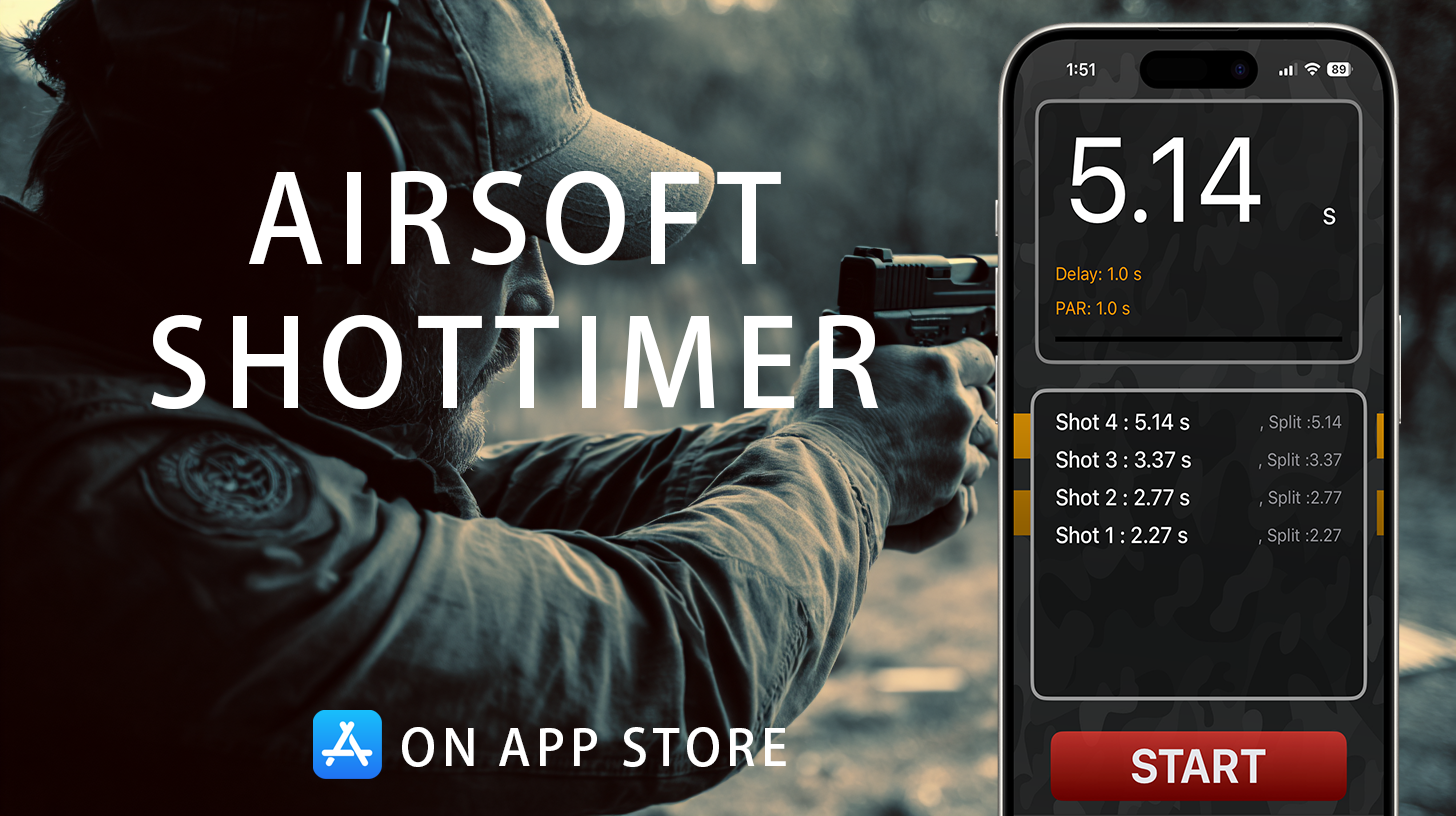
⏱️ You don’t need a $130 hardware timer to start. Every drill below comes down to one number — the time from the start beep to your hit. The free Airsoft Shot Timer App turns the phone already in your pocket into a par-time and draw timer: set a par, hit start, and it records your draw, splits, and reload times exactly the way the club timer will on match day. It’s tuned to pick up airsoft and dry-fire reports too, so you can run these same IDPA drills at home between matches without burning a single live round. Most beginners only meet a real CED7000 when they show up to their first match — by then the app has already built the habit.
1. Concealed Draw Training
IDPA draws are more challenging than IPSC because you must first clear your cover garment.
Training Method:
- Wear your cover garment (jacket or vest)
- Stand naturally with hands relaxed
- On timer signal, clear garment, draw, and fire
- Record time from signal to first hit
Target Times (7 meters, A-zone hit):
- Beginner: 2.5-3.5 seconds
- Intermediate: 2.0-2.5 seconds
- Advanced: 1.5-2.0 seconds
- Expert: < 1.5 seconds
💡 Further Reading: Complete Guide to Fast Pistol Draw Techniques
2. Tactical Reload Training
IDPA requires reloads behind cover, and you cannot drop magazines (3-second penalty each).
Training Focus:
- Complete reload behind cover
- Place old magazine in pocket or pouch, don’t drop it
- Keep eyes on threat area, don’t look down
Target Times:
- Beginner: 3.0-4.0 seconds
- Intermediate: 2.0-3.0 seconds
- Advanced: < 2.0 seconds
💡 Further Reading: Complete Guide to Fast Magazine Reloads
3. Cover Shooting Training
Proper use of cover is a core IDPA skill.
Rule Reminders:
- Body exposure over 50% results in penalty
- Not using available cover results in penalty
Training Focus:
- Practice shooting from both left and right sides of cover
- Practice switching between high and low positions
- Minimize body exposure
Common Beginner Mistakes and How to Avoid Them
1. Neglecting Concealed Draw Practice
Many beginners only practice with open holsters and discover at matches that concealed draws are completely different.
Suggestion: Practice with your match equipment from the start, including cover garment.
2. Poor Magazine Management
IDPA magazine penalties are severe (3 seconds each drop), but many people aren’t used to retaining magazines.
Suggestions:
- Build the habit of retaining magazines from the start
- Prepare magazine dump pockets or pouches
- Don’t try tactical reloads for the first time at a match
3. Unfamiliar with Cover Rules
IDPA has strict rules about cover use, and violations result in heavy penalties. A single Failure to Use Cover (FTDR) penalty adds 20 seconds to your stage time — that’s enough to drop you from first to last.
Suggestions:
- Read our IDPA scoring and penalty rules to understand cover, scoring, and penalty systems
- Watch IDPA match videos to learn cover use
- Simulate cover scenarios during practice
4. Using Non-Legal Equipment
Some holsters or modifications aren’t IDPA-legal, and discovering this at a match is embarrassing.
Suggestions:
- Confirm IDPA legality before purchasing equipment
- Check the approved equipment list on the IDPA website
- When uncertain, ask match organizers
Frequently Asked Questions
Should beginners start with IDPA or IPSC?
If your main goal is learning practical defensive skills, IDPA is the better starting point. Its rules simulate real defensive scenarios — drawing from concealment, using cover, retaining magazines — and equipment requirements mirror daily carry. If you’re chasing pure speed and shooting competition, IPSC offers fewer restrictions and more aggressive gameplay. Many shooters eventually do both because the skills are complementary. Check our IDPA vs USPSA Complete Comparison Guide for a detailed breakdown.
Can I use my everyday carry pistol for IDPA?
In most cases, absolutely — that’s the whole point of the sport. Glock 19, M&P Compact, P365XL, and other common EDC pistols are all IDPA-legal. Just make sure your caliber is at least 9mm, the pistol doesn’t have prohibited modifications (like external magwells in SSP), and your holster meets concealment requirements.
What’s the cheapest way to start IDPA?
You can get to your first match for around $640-860 total with new gear, or down to $500-600 if you buy used. The biggest expense is the pistol itself — a Canik TP9SFx ($450) or Glock 19 ($550) are excellent budget options new, or a used Glock 19 ($375-425), used CZ 75D PCR ($400), or new Taurus G3 ($300-380) cut another $100-200 off. Add a basic IWB holster ($40-60), a sturdy belt ($30-50), two magazine pouches ($30-50), a fishing vest as your cover garment ($30-50), and eye and ear protection ($60-100). Most clubs charge $20-30 per match entry fee. Don’t buy expensive competition gear before your first match — you might discover you prefer a different division.
What’s the cheapest IDPA-legal pistol I can buy?
The Taurus G3 at $300-380 new is the rock-bottom price floor for an IDPA-legal pistol that will actually run. It’s a full-size striker-fired 9mm with 17+1 capacity, fits SSP division, and post-2020 production has solved the reliability questions that plagued earlier Taurus models. Below that price point you’re looking at sub-$300 used budget pistols (Hi-Point, used Smith & Wesson SD9), which technically run IDPA matches but won’t survive serious training round counts. If you can stretch to $400-450, a used CZ 75D PCR or new Canik METE SFx is dramatically better gun for ~$50-100 more.
Should I buy a used IDPA pistol?
Yes — buying used is the smartest budget move in IDPA, especially for Glocks, CZs, and M&Ps. A 3-year-old Glock 19 that retails new for $550 typically sells used at $375-425, and Glocks are essentially indestructible at the round counts a club-level IDPA shooter will ever put through them. Same logic applies to used CZ 75D PCRs ($400) and used SIG P320s (post-voluntary upgrade serials only). Inspect the locking block, recoil spring, and breech face for wear, and ask the seller for a round count if known — anything under 10,000 rounds is essentially new. Avoid heavily-modified used competition pistols unless you know exactly what was changed; ESP-modified guns may not be SSP-legal.
How do IDPA holster requirements differ from IPSC?
The biggest difference is that IDPA requires concealment holsters that hide under a cover garment. IPSC Production division allows obvious race holsters. The 2026 IDPA rules now permit AIWB (appendix carry) holsters, which gives you more flexibility. Your holster must have a stay-open mouth, fully cover the trigger guard, and maintain neutral or muzzle-rear cant.
How many magazines do I need for IDPA?
We recommend at least four magazines — one in the gun and two to three on your belt. Since IDPA penalizes dropped magazines by 3 seconds each, you need enough to complete entire stages without dropping any. Carry one extra beyond what you think you’ll need, because tactical reloads (retaining the old mag) are slower than speed reloads, and you don’t want to run dry mid-stage.
Should I choose SSP or CCP division?
If you own a full-size pistol like a Glock 17, Glock 34, or P320 Full, choose SSP — it’s the most popular division and your gun fits perfectly. If your main pistol is compact like a Glock 19 or P365XL, CCP is designed for exactly those guns. The simplest rule: pick the division that matches the gun you already carry daily. That way, every competition repetition doubles as real-world practice.
Can I use the same gun in IDPA and USPSA?
Yes, most IDPA-legal pistols are also legal in USPSA Production or Carry Optics. A Glock 34 or SIG P320 works in both SSP (IDPA) and Production (USPSA). The main difference is that USPSA doesn’t require concealment, so you’d use a different holster setup. Many competitive shooters maintain one pistol and two holster rigs — one concealment setup for IDPA and one competition setup for USPSA.
What do I need for my first IDPA match?
Bring your legal pistol, holster, belt, at least two magazine pouches, a cover garment, eye protection, and ear protection. Pack 150-200 rounds of ammunition (always bring more than you think you’ll need). Your first match goal should be finishing safely, not winning. Arrive early, introduce yourself as a new shooter, and ask to be squadded with experienced shooters who can walk you through the stages.
Will I embarrass myself at my first IDPA match?
No — and here’s why that fear is universal but unfounded. Every single person at the range started as a nervous beginner. IDPA culture is genuinely welcoming to new shooters, and most clubs designate experienced members to help first-timers through stages. You’ll probably fumble a reload, forget to use cover on one stage, and wonder why the buzzer startled you even though you were expecting it. Everyone does. The only way to actually embarrass yourself is by violating safety rules, and if you pay attention during the safety briefing, that won’t happen.
Do I need to practice before my first IDPA match?
Some basic familiarity with your pistol is important — you should be comfortable loading, unloading, and firing it safely. But you absolutely do not need to be a good shot to attend your first match. Drawing from concealment, using cover, and tactical reloads are all skills you’ll develop through match experience, not living-room rehearsal. If you want to prepare, spend one range session practicing your draw from your concealment holster and reloading without dropping the magazine. That alone puts you ahead of most first-timers.
Do I need an expensive shot timer to practice for IDPA?
No. A dedicated hardware timer like the CED7000 or a PACT runs $100-130, but for home and dry-fire practice the free Airsoft Shot Timer App does the same core job — start beep, par time, and time-to-shot recording — using your phone’s microphone. Set a par of 2.5 seconds for your concealed draw, work down from there, and track your splits week over week so you can see real progress instead of guessing. Most beginners only need a hardware timer once they’re shooting matches regularly; the app covers everything up to that point for free.
Can I practice IDPA draws at home without a real gun?
Yes — and it’s one of the highest-return habits a new IDPA shooter can build. Dry-fire with a verified-empty pistol, or use an airsoft/Action Air replica, to drill the concealed draw, the cover-garment clear, and tactical reloads as many times as you want at zero ammo cost. Pair it with the Airsoft Shot Timer App so every rep has a number attached: the app is tuned to register both dry-fire clicks and low-decibel airsoft reports, turning a corner of your living room into a draw-practice range. Ten focused minutes a day for two weeks will visibly shrink your first-hit time before you ever load a live round.
Where can I find IDPA matches near me?
The IDPA website (idpa.com) maintains a global match calendar searchable by state or country. Most local shooting clubs host monthly IDPA matches, often on weekends. Facebook groups like “IDPA Shooters” and local gun forum communities are also great for finding nearby matches and connecting with other shooters.
What NOT to Bring to Your First IDPA Match
Most beginner guides tell you what to bring. Just as important is what to leave at home, because showing up with the wrong gear gets you bounced from a stage, embarrassed in front of your squad, or stuck running back to your car between every stage.
Don’t Bring a Race Holster
The kydex speed holster you saw on a USPSA highlight reel is explicitly illegal in IDPA. Race holsters expose the trigger guard, sit too far from the body, and aren’t designed for concealment. Even if you “borrow” one from a USPSA buddy, the Safety Officer will pull you off the stage before you load a single round. Buy a concealment-grade kydex IWB or OWB holster designed for IDPA — Black Scorpion, Blade-Tech Signature, and Comp-Tac International are all under $100 and IDPA-legal.
Don’t Bring an External Magwell (in SSP)
External magwells are flat-out illegal in SSP, the most popular beginner division. Even if your friend’s competition Glock has one bolted on, remove it before showing up to an SSP match. ESP allows them, but if you’re starting in SSP (which most beginners should), keep your pistol stock.
Don’t Bring a 50-Round Range Box
You will not have time to dig through a tackle box of accessories between stages. Bring two magazines on your belt + two backups in your pocket, total ammo (150-200 rounds) in one box, eye/ear pro on your belt, and water. Everything else stays in your car. Veterans run lean, and you should too.
Don’t Bring an Untested Pistol
The morning of your first match is not the time to debut a brand-new pistol you’ve never fired. Put at least 200 rounds through any pistol before you take it to a match — break-in failures, magazine issues, and sight regulation problems all surface in the first 100-200 rounds. A stage-stopping malfunction on a brand-new gun is the most preventable embarrassment in IDPA.
Don’t Bring .380 ACP for BUG Division
As of the 2026 IDPA Rulebook Version 2, .380 ACP is no longer legal in BUG division. If you have a .380 pocket pistol you were planning to use, it stays home until you upgrade to 9mm. This is one of the most-missed 2026 rule changes among returning shooters.
Don’t Bring Stiffened Cover Garments
Sewing wire, plastic stays, or weighted hems into your fishing vest to keep it open is illegal. Match Directors will absolutely check, especially at sanctioned matches. A standard, off-the-shelf fishing vest or unbuttoned jacket is all you need — leave the modifications to magicians.
Don’t Bring Your Ego
The single most important rule of your first match: finish every stage safely with zero penalties. Don’t try to outrun the experienced shooters. Don’t attempt that risky reload behind cover that you saw on Instagram. You’re there to learn the flow, get stamped as a familiar face, and build the foundation for a year of improvement. Speed comes later.
What to Expect at Your First IDPA Match
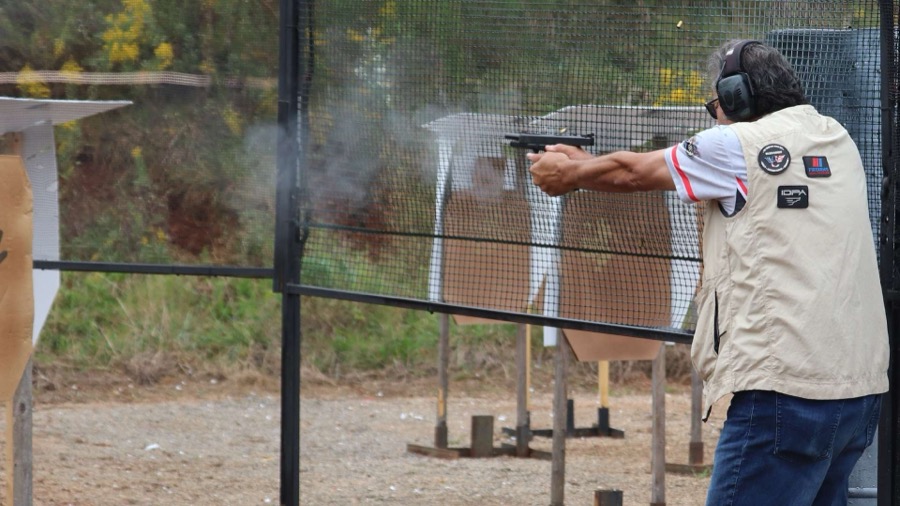
Your palms will be sweaty, your heart will be pounding before the buzzer goes off, and you’ll probably forget half of what the safety officer just told you. That’s completely normal — every Master-class shooter you see at the range started exactly where you are right now.
A typical IDPA match runs about three to four hours and consists of six to eight stages, each presenting a different defensive scenario. You’ll arrive early for check-in, where you’ll pay the match fee (usually $20–30), sign a waiver, and get assigned to a squad of five to eight shooters who rotate through stages together. Before the match starts, there’s a mandatory safety briefing covering the four universal gun safety rules, range commands, and what to do if something goes wrong. Pay close attention — asking questions here is expected and respected.
At each stage, the Safety Officer walks your squad through the scenario: where you start, what position your hands need to be in, which targets to engage, and where the boundaries of cover are. You’ll get to walk through the stage and plan your approach before anyone shoots. This is where you watch the experienced shooters and pay attention to their movement patterns and reload strategies. When it’s your turn, the SO will give you the commands — “Load and make ready,” “Shooter ready,” “Stand by” — followed by the buzzer. Then you run the stage, and it’s over before you know it.
Here’s what most first-timers don’t expect: nobody cares about your score. Seriously. The shooting community is one of the most welcoming you’ll find in any sport. Tell people you’re new, and veterans will go out of their way to help you with stage strategy, gear adjustments, and rule clarifications. Your only goal at your first match should be finishing every stage safely with zero safety violations. Speed and accuracy will come naturally as you attend more matches. Bring about 150–200 rounds of ammunition (always pack more than the stage count suggests), a bottle of water, sunscreen, and a snack. You’ll be standing and walking more than you think.
How to Pick Your First IDPA Division
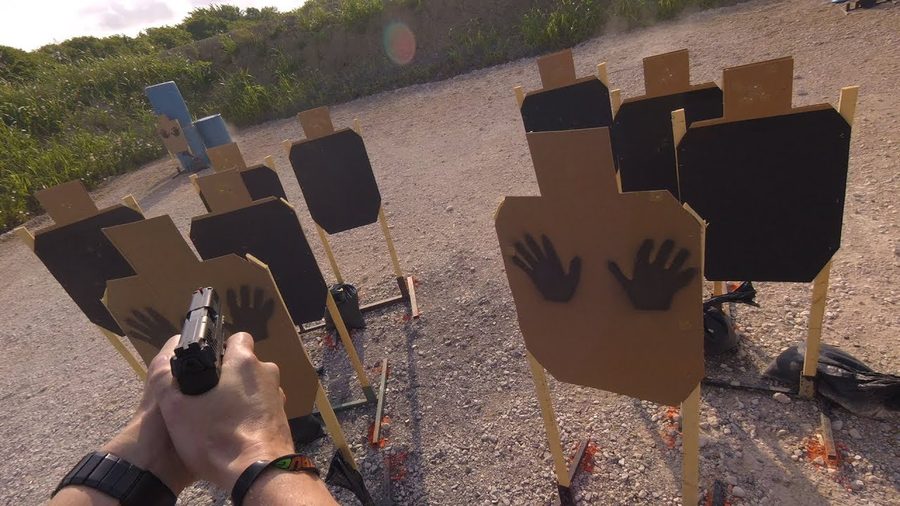
If you’re still stuck on which division to enter, here’s the simplest decision process. Look at the gun you already own — or the one you plan to carry every day — and let that guide you. If it’s a full-size striker-fired pistol like a Glock 17 or 34, SIG P320 Full, or M&P 2.0 5", you belong in SSP. That’s where most beginners start, and it’s the largest division at almost every match, which means more competition and more people to learn from.
If your gun is compact — a Glock 19, P365XL, or M&P Compact — CCP is your natural home. The division was literally built around guns of this size, and competing with your actual carry pistol means every drill you run at a match is training that transfers directly to your daily life. There’s a meaningful difference between practicing your draw with a competition rig and practicing it with the holster and cover garment you actually wear to the grocery store.
For shooters who already own a .45 ACP 1911, CDP is waiting for you. Don’t go out and buy a new gun just to fit into SSP when you already have a perfectly good 1911 sitting in the safe. And if you’ve recently mounted a red dot on your carry gun, Carry Optics lets you compete with your optic-equipped setup under rules designed for that configuration.
The wrong approach is buying a gun specifically for IDPA competition before you’ve attended a single match. Go to your first match with whatever you have, experience the sport firsthand, and then make an informed decision about whether you want to switch divisions or invest in a different platform.
Conclusion: From Daily Carry to the Competition Stage
IDPA’s appeal lies in connecting everyday carry and competitive shooting. You don’t need competition-specific gear—the gun and holster you carry every day can take you to the competition stage.
When choosing a beginner pistol, remember this principle: The best IDPA beginner pistol is the one you already own or plan to carry daily. Glock 19, M&P, P320—these are all excellent choices because every movement you practice at matches directly applies to real defensive scenarios.
Whatever your budget — $300 for a Taurus G3, $400 for a used CZ PCR, $550 for a Glock 19, or $1,500 for a P320 Legion competition build — there’s an IDPA-legal pistol waiting for you. The shooters at every club match span the same range. Nobody at your first match cares whether your pistol cost $300 or $3,000; they care whether you ran a safe stage.
Don’t wait until your equipment is perfect to start. Bring your EDC pistol, put on a jacket, and go to your first IDPA match!
IDPA’s core philosophy: “The fastest shooter doesn’t win—the most accurate and safest shooter wins.”
Related Articles
IDPA & Competitive Shooting
- IDPA scoring, penalties and match procedures
- IDPA Divisions Complete Guide — All 8 Divisions Explained
- IDPA Defensive Shooting Complete Training Guide
- IDPA vs USPSA Complete Comparison Guide
- Practical Shooting Complete Beginner Guide
- USPSA Practical Shooting Beginner Guide
Other Competitive Shooting Sports
- IPSC Practical Shooting Complete Training Guide
- IPSC Beginner Pistol Selection Guide
- IPSC Production Optics Getting Started Guide
- Steel Challenge Speed Shooting Beginner Guide
- PCSL Practical Competition Shooting League Beginner Guide
Shooting Techniques
- Complete Guide to Fast Pistol Draw Techniques
- Complete Guide to Fast Magazine Reloads
- how to grip a pistol: 60/40 pressure split and thumbs forward
Pistol & Equipment Guides
- SIG P320 Complete Guide
- Smith & Wesson M&P Complete Guide
- Glock 17 Training Guide
- Glock 19 vs Glock 17 Complete Comparison
- Glock Gen 6 Complete Guide
- Home Defense Pistol Guide
- Competition Holster Selection Guide
- Shooting Protection Gear Guide
Use AirsoftShotTimer to track your IDPA training progress!
Put a Shot Timer in Your Pocket
Airsoft Shot Timer is a free shot timer app tuned for airsoft and Action Air — it picks up BB gun shots, tracks your split times, and saves you the cost of a $150+ hardware timer for IPSC/IDPA practice.

- IDPA
- IDPA Beginner
- Best IDPA Pistol
- IDPA Divisions
- IDPA Shooting
- Best Pistol for IDPA
- IDPA Pistol
- IDPA SSP
- IDPA CCP
- IDPA ESP
- IDPA CDP
- IDPA Carry Optics
- Defensive Shooting
- Concealed Carry
- IDPA Rules
- IDPA Match
- IDPA Equipment
- Glock 19
- Glock 34
- SIG P320
- SIG P365
- M&P 2.0
- CZ PCR
- CZ 75D
- Canik METE
- Taurus G3
- Budget IDPA Pistol
- Cheap IDPA Gun
- Used IDPA Pistol
- IDPA Holster
- IDPA 2026 Rules
- IDPA National Championship
- Best Gun for IDPA
- IDPA Starter Pistol
- IDPA Competition Gun
- First IDPA Match
- IDPA Getting Started
- IDPA First Match Tips
- Best IDPA Guns
- Best IDPA Pistol Budget
- IDPA Airsoft
- IDPA Dry Fire
- IDPA Shot Timer
- IDPA Draw Practice
- Shot Timer App