IDPA Divisions Explained 2026: All 8 Rules, Quick Picker
IDPA Divisions Explained in 60 Seconds (BLUF)
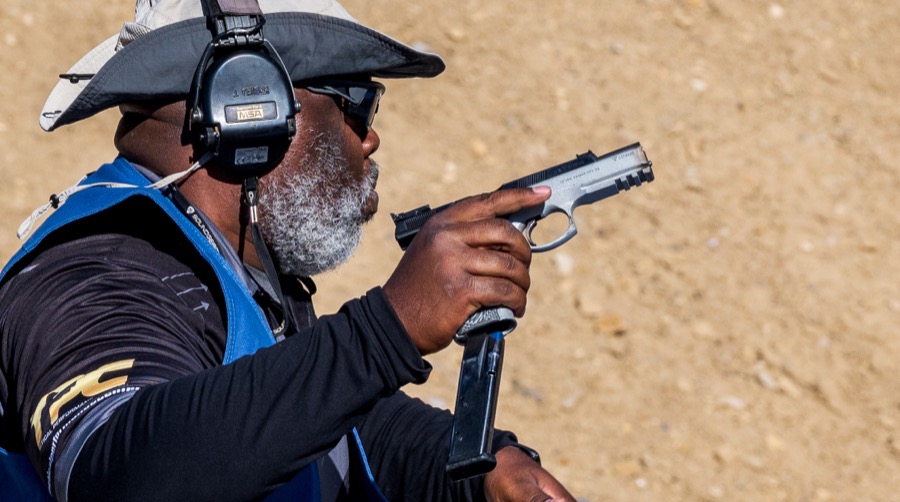
Short answer: IDPA has 8 divisions, and the right one depends on the gun already in your safe. Full-size 9mm like a Glock 17 or M&P 2.0 → SSP. Same gun with a red dot → CO. Compact carry like a Glock 19 or P365XL → CCP. CZ Shadow 2, 1911 in 9mm, or heavily modified Glock → ESP. 1911 in .45 → CDP. Revolver → REV. Pocket 9mm like a SIG P365 → BUG (now 8+1, .380 is out as of 2026). 9mm carbine with a 10"+ barrel → PCC. If you’re new and own one 9mm pistol, default to SSP, CO, or CCP — lowest cost, biggest beginner pool, easiest to learn in.
Three rule changes you need to know before reading further: all SIG P320 variants have been banned from IDPA since July 2025, BUG capacity jumped from 6+1 to 8+1 with .380 ACP fully removed in 2026, and non-functional manual safeties (1911 thumb safety especially) now lead to disqualification.
Quick Picker: Which IDPA Division Fits My Gun?
| You own… | Pick this division | Why |
|---|---|---|
| Glock 17 / 34, M&P 2.0, HK VP9 (full-size 9mm, iron sights) | SSP | Largest field, easiest start |
| Same gun + slide-mounted red dot | CO | Most popular division now |
| Glock 19, P365XL, Hellcat Pro (compact concealed carry) | CCP | Built for daily carry |
| CZ Shadow 2, 1911 in 9mm, heavily modified Glock | ESP | More mod freedom than SSP |
| 1911 in .45 ACP | CDP | The classic .45 division |
| S&W 686, Ruger GP100 (revolver) | REV | Wheelgun-only arena |
| SIG P365, Hellcat, Shield Plus (micro 9mm) | BUG | New 8+1 cap, .380 out |
| 9mm carbine ≥10″ barrel | PCC | Long-gun stages |
| SIG P320 (any variant) | None — banned | Since July 2025 |
The rest of this guide breaks down each division’s exact rules — caliber, capacity, weight, and the modification limits that decide whether your current pistol is legal.
What Are IDPA Divisions and Why Do They Matter?
IDPA divides competitors into eight divisions — SSP, ESP, CDP, CCP, CO, REV, BUG, and PCC — each one built around a different type of handgun commonly carried in the real world. Picking the right division means you compete with the gun you already own, spend less on equipment, and get matched against shooters running similar setups.
I watched a guy show up to his first IDPA match with a bone-stock Glock 19, sign up for SSP, and wonder why his 10-round magazines kept running dry while everyone else was loading 15. He didn’t know CCP existed — a division literally built for the compact pistol he already carried. He still had a great time, but he spent the entire match doing extra reloads he didn’t need to do.
That story repeats itself at local matches everywhere. The eight division codes on the registration form look like alphabet soup to a newcomer, and picking the wrong one doesn’t disqualify you — but picking the right one saves you money and frustration from day one.
The logic behind IDPA’s division structure is simple. SSP represents the full-size service pistol you might keep at home, CCP is the compact gun on your hip every day, and CDP is the classic .45 ACP 1911. This is fundamentally different from USPSA’s approach of dividing by modification level — IDPA cares more about “what type of gun are you carrying” than “how much have you modified it.”
This guide breaks down all eight IDPA divisions with their rules, recommended pistols, and the 2026 rule changes you need to know (BUG capacity jumped to 8+1, and .380 ACP is gone).
💡 Further Reading: Already know your division and want to train for it? See IDPA Training at Home: 6 Shot-Timer Drills. For a comparison between IDPA and USPSA, check out the IDPA vs USPSA Complete Comparison Guide.
SSP: The Classic Starter Division
Stock Service Pistol is one of IDPA’s oldest and most popular divisions. Its premise is simple: a near-stock full-size striker-fired or DA/SA pistol, minimum caliber 9mm, magazine capacity capped at 15 rounds, and maximum weight of 43 ounces.
SSP has strict modification limits. You can swap sights, change grip panels, and do internal trigger work, but external magwells, compensators, or anything that adds weight is off the table. The point of these restrictions is to keep everyone on a roughly level playing field — matches are decided by skill, not equipment.
The Glock 34 dominates SSP with about 16% of all competitors using one. Its 5.3-inch sight radius combined with Glock’s legendary reliability makes it the default answer. The S&W M&P 2.0 is another favorite, with its grip angle and trigger feel winning over many shooters. If you prefer the solid heft of a metal frame, the CZ P-09 and Beretta 92 series are also legal choices in SSP.
One important note: as of July 2025, all SIG P320 variants have been banned from IDPA competition. This decision stemmed from numerous reports of uncommanded discharges, and it affected many shooters who had been using the P320 X-Five Legion. If you own a P320, you’ll need to consider alternative options.
CO: The Most Popular Division Right Now
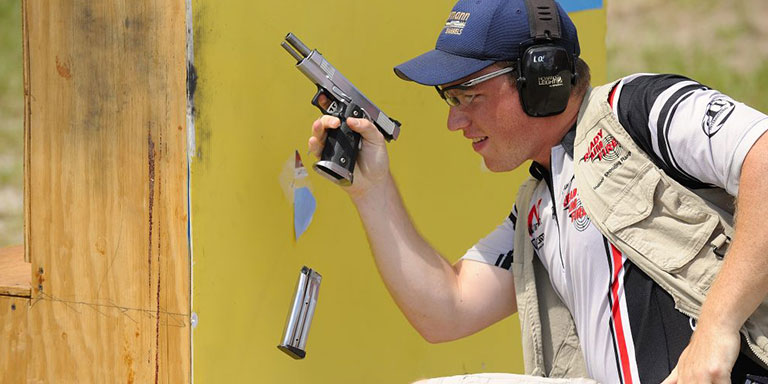
Carry Optics has grown rapidly in recent years and has overtaken SSP as IDPA’s most popular division. The reason is intuitive — more and more people are mounting red dots on their carry guns, and the CO division reflects that trend.
CO rules are essentially the same as ESP but with slide-mounted optics allowed and a maximum weight of 45 ounces. This means you can compete with a Glock 19 MOS wearing a Holosun 507C or Trijicon RMR — the same pistol you carry daily.
For shooters already comfortable with red dot sights, CO is the most natural choice. Red dots make aiming faster and more intuitive, with a clear advantage on stages requiring rapid transitions between multiple targets. If you’re still deciding whether to mount a red dot on your pistol, check out our Pistol Red Dot Sight Complete Guide for selection and zeroing details.
What Is Compact Carry Pistol (CCP)? IDPA’s Everyday Carry Division
Compact Carry Pistol (CCP) is the IDPA division designed for compact semi-automatic pistols used in daily concealed carry. If you carry a Glock 19, SIG P365XL, or a similar-sized pistol on your hip every day, CCP is the division built exactly for that gun.
The eligibility rules are precise. A CCP pistol must fit inside a 7¾ × 5⅜ × 1⅜ inch test box, have a barrel length of 4⅜ inches or less, weigh no more than 38 ounces unloaded with the heaviest magazine inserted, and be chambered in 9mm or larger. Magazine capacity is capped at 10+1 rounds. These dimensions describe the Glock 19 almost exactly, which is why the Glock 19 has become the de facto CCP pistol and the most common gun you’ll see at the line.
Other popular CCP choices include the Glock 19X, Glock 45, Glock 48, SIG P365XL, S&W M&P 2.0 Compact, and Springfield Hellcat Pro. The SIG P365 (standard) can also compete in CCP, though its 10-round capacity sits right at the limit.
IDPA CCP Box Size and Equipment Rules (2026)
The number people search for most is the box. The IDPA CCP box size is 7¾ × 5⅜ × 1⅜ inches — noticeably smaller than the standard IDPA box used by SSP, ESP and CDP, because CCP is meant to describe a gun you genuinely conceal. Your pistol has to drop into that box with the heaviest magazine you intend to shoot seated in the well, muzzle down, without being forced. If a magazine baseplate or a grip extension makes it hang up, that magazine is what fails you, not the gun.
Alongside the box there are four more hard numbers worth memorising before you fill in an entry form: barrel length 4⅜ inches or less, unloaded weight with the heaviest magazine 38.00 ounces or less, minimum caliber 9mm, and magazine capacity 10+1. That last one is the rule that actually changes how you shoot. Coming from SSP with 15-round magazines, a CCP stage with more than eight targets suddenly has a mandatory reload in it, and a fumbled mag change costs you far more than it used to.
Two equipment bans catch people out every season. Compensators and ported barrels are not legal in CCP, which locks out the entire 2026 wave of compensated carry pistols — the SIG P365 X-Macro Comp, Canik METE MC9 Prime and Shadow Systems CR920XP are all fine guns and none of them can shoot this division. Most of those shooters end up in Carry Optics instead. And since July 2025, every SIG P320 variant is banned across all of IDPA, compact P320-derived models included. The P365 family is a separate design and is unaffected.
If you are shopping rather than rule-checking — which compact actually to buy, and how a compact fares if you take it into IPSC Production instead — that is a different question, and we cover it in the compact competition pistol buyer’s guide.
The appeal of CCP is straightforward — you compete with the gun you actually carry every day. The concealed draw, tactical reloads, and cover movement you practice in competition translate directly to real defensive scenarios. Many shooters who take daily carry seriously choose CCP because it offers the highest real-world training value of any IDPA division.
CCP vs SSP: Which Division Is Right for Your Carry Gun?
If you own a compact pistol like a Glock 19 and you’re deciding between CCP and SSP, the answer comes down to one question: do you want to compete with it as a carry gun or as a range gun?
CCP is the realistic carry division. Its 10+1 round limit mirrors what most people actually chamber in their concealed carry pistol, and the size restrictions ensure you’re running a genuinely compact gun. SSP allows up to 15+1 rounds and a heavier 43-ounce weight limit — the SSP competitor pool is dominated by full-size pistols like the Glock 34 that most people wouldn’t carry concealed day-to-day.
Practically, a Glock 19 can shoot either division. In SSP, it runs the full 15-round magazine. In CCP, it’s capped at 10+1. Most new shooters who carry a compact pistol daily choose CCP because it reflects their real setup and gives the most applicable defensive training. Competitive shooters who want higher round counts and don’t care about carry realism tend to stay in SSP with a Glock 34 or similar.
ESP: Enhanced Service Pistol — When You Need More Mods or a 1911/2011
Enhanced Service Pistol (ESP) opens up more modification options than SSP. You can add external magwells, do aggressive grip texturing, and the division accepts single-action pistols like the 1911 and 2011. Everything legal in SSP is also legal in ESP, so if your modifications exceed SSP limits, ESP is your home. Magazine capacity is 10+1 rounds, minimum caliber is 9mm, and the maximum weight is 43 ounces.
Many shooters who favor the CZ Shadow 2, the SIG P226 X-Five, or a heavily modified Glock 34 land in ESP because their guns simply won’t pass SSP’s stricter modification rules. The 1911-pattern crowd (in 9mm) also calls ESP home — and the 2026 rulebook update means a 1911 with a non-functional thumb safety now leads to disqualification, so check that before you shoot. ESP’s competitor pool is smaller than SSP, but you’ll find many of the most experienced shooters here, especially those running custom triggers and aftermarket magwells.
CDP: Custom Defensive Pistol — The .45 ACP Division
Custom Defensive Pistol (CDP) belongs to the .45 ACP. This division requires .45 caliber, caps magazine capacity at 8 rounds, and sets a 43-ounce weight limit. The 1911 is the star here — a Government-size 1911 with a magwell, upgraded sights, and trigger work is CDP’s standard setup. Glock 21 and S&W M&P 45 also see use, but the platform is firmly 1911-dominated.
If you love the 1911 platform, CDP lets you compete within that classic framework with the kind of refined trigger pull and slide-to-frame fit you’d never get in 9mm guns. However, the higher cost of .45 ACP ammo (often 30-40% more per round than 9mm) and stronger recoil make CDP’s entry barrier steeper, especially for newer shooters. Match attendance is typically smaller than SSP/CCP/CO but very loyal — CDP regulars tend to stay in the division for years.
REV: Revolver Division — Wheelgun Territory
Revolver (REV) gives wheelgun enthusiasts their own arena. Barrel length is limited to 4 inches, capacity is 6 rounds (.38 caliber) or 5 rounds (.44/.45 caliber). The Smith & Wesson 686 and Ruger GP100 are the most common choices, with the S&W 625 in .45 ACP for shooters who prefer moon clips over speedloaders.
The biggest challenge with revolvers in IDPA is reload speed — using speedloaders to reload six rounds under time pressure takes serious practice and rewards economy of motion in a way that magazine-fed reloads simply don’t. Stages are configured to require frequent reloads, so REV shooters often practice the reload sequence more than the draw or shooting itself. If you grew up shooting double-action revolvers and want to test that skill against the clock, REV is a small but rewarding division.
BUG: Back Up Gun — Now an 8+1 Micro-Compact 9mm Division
Back Up Gun (BUG) is designed for pocket pistols and micro-compact handguns. As of the 2026 rulebook, semi-auto BUG capacity has increased to 8+1 rounds (up from 6+1), and .380 ACP has been removed from eligibility — BUG now requires 9mm minimum, just like most other divisions. Revolvers remain at 5 rounds. Engagement distances are shorter than other divisions, typically within 7 yards.
The capacity bump makes micro-compact 9mm pistols like the SIG P365, Springfield Hellcat, and S&W Shield Plus natural fits for BUG, since these guns ship with 10-13 round flush magazines that are easy to download to 8+1. The .380 removal means your Ruger LCP, S&W Bodyguard .380, or Walther PPK is no longer eligible — owners of those pistols need to swap to a micro 9mm if they want to keep competing. BUG remains a niche division, but it has the most direct overlap with everyday pocket carry of any IDPA division.
PCC: Pistol Caliber Carbine — IDPA’s Newest Long-Gun Division
Pistol Caliber Carbine (PCC) is IDPA’s newest and most specialized division. It lets shooters run 9mm carbines like the CZ Scorpion, KRISS Vector, Ruger PC Carbine, or a Glock-magazine-compatible PCC build (such as the Foxtrot Mike or KE Arms KP-9).
IDPA PCC Rules at a Glance
PCC carbines must be semi-automatic and have a minimum barrel length of 10 inches. Maximum round count loaded into a magazine is 30 rounds — there’s no per-division capacity rule like SSP or CCP, just the 30-round cap. Minimum caliber is 9mm. The carbine must operate with one trigger pull per round (no full-auto or burst variants).
PCC also has its own stage adaptations to account for the longer platform — for example, you start with the carbine in a “low ready” or table-start position rather than holstered, and stages typically don’t require concealment garments since you’re not drawing. PCC has a dedicated PCC Classifier with its own benchmark times, so your classification ranks among other PCC shooters rather than against pistol divisions.
Is PCC Popular in IDPA?
Honestly, not yet. PCC has grown fast in USPSA (where long-range stages suit the carbine format), but IDPA’s close-range, cover-heavy stages don’t always play to the PCC’s strengths, and most local clubs run only a small PCC squad. If your primary interest is carbine competition, USPSA’s PCC division will give you more matches and a deeper competitor pool. That said, if you already own a 9mm carbine and your local IDPA club supports PCC, it’s a fun way to diversify your training and develop transitions, reloads, and movement skills with a long gun. Just expect smaller fields and fewer classifier benchmarks than in SSP or CO.
Which Division Should You Choose? A Beginner’s Guide
Choosing a division doesn’t need to be complicated. The simplest approach is to ask yourself one question: what gun do you already own?
If you have a full-size 9mm — like a Glock 17 or 34, M&P 2.0, or HK VP9 — SSP is your starting point. If that gun has a red dot mounted, sign up for CO. If you carry a compact like a Glock 19, CCP is the natural fit. Own a 1911 in .45 ACP? CDP is waiting for you.
| Division | Min. Caliber | Mag Capacity | Max Weight | Popular Pistols | Entry Difficulty |
|---|---|---|---|---|---|
| SSP | 9mm | 15+1 | 43 oz | Glock 34, M&P 2.0 | Low |
| CO | 9mm | 10+1 | 45 oz | Glock 19 MOS + RDS | Low |
| CCP | 9mm | 10+1 | 38 oz | Glock 19, P365XL | Low |
| ESP | 9mm | 10+1 | 43 oz | CZ Shadow 2, 1911 | Medium |
| CDP | .45 ACP | 8+1 | 43 oz | 1911, Glock 21 | Med-High |
| REV | .38/.44/.45 | 5-6 rds | — | S&W 686, GP100 | High |
| BUG | 9mm | 8+1 | — | SIG P365, Hellcat | Medium |
| PCC | 9mm | Per rules | — | 9mm Carbine | Medium |
For beginners, SSP, CO, or CCP are the most recommended starting divisions. These three have the most accessible starter equipment, the lowest ammo costs (all run 9mm), and the largest competitor pools — meaning you’ll find more people at your level to learn from and compete against.
Don’t buy a new gun just for competition. The spirit of IDPA is to train and compete with what you already carry. After a few matches, once you’re sure you enjoy the sport, then consider whether to optimize your equipment for a specific division.
IDPA Classification System Overview
IDPA’s classification system matches you against shooters of similar skill, so you don’t have to worry about getting crushed by Master-class shooters in your first match. Classifications range from bottom to top: Novice (NV), Marksman (MM), Sharpshooter (SS), Expert (EX), Master (MA), and the highest tier, Distinguished Master (DM).
When you first join IDPA, you’re Unclassified (UN) in all divisions. After completing your first classifier stage or performing well enough in a sanctioned match, the system assigns you a classification based on your results. Classifications are independent per division — you might be a Sharpshooter in SSP but a Marksman in CO.
The DM classification is unique in that it can’t be achieved through classifier stages alone. You must win the division championship at a Tier 5 event (Nationals or World Championship) or finish within 3% of the champion’s score to earn it.
💡 Training Tip: Use a Shot Timer to record your times on standard drills, then compare them against IDPA classifier benchmarks to understand where you stand and what to work on. For more classic drill setups, check out the how to pick a pistol drill.
Frequently Asked Questions About IDPA Divisions
What is the most popular IDPA division right now?
Carry Optics (CO) has surpassed Stock Service Pistol (SSP) as the most popular division in recent years. The shift happened because more everyday carriers are mounting red dots on their pistols, and CO lets them compete with that same setup. SSP remains a close second, especially among shooters who prefer iron sights.
Can I switch divisions between matches?
Yes, absolutely. You can shoot a different division at every match if you want — just make sure your equipment meets the rules for whichever division you register for. Many experienced shooters compete in multiple divisions to keep things interesting. Your classification is tracked independently per division, so switching won’t affect your ranking in another division.
What gun do I need for my first IDPA match?
Any reliable 9mm semi-automatic pistol will work for SSP, CO, or CCP — the three most beginner-friendly divisions. A Glock 17 or 19, S&W M&P, or similar striker-fired pistol from a major manufacturer is all you need. You’ll also need a sturdy belt-mounted holster (no SERPA or shoulder holsters), at least three magazines, and a cover garment like an untucked shirt or light jacket.
What’s the difference between IDPA and USPSA divisions?
IDPA divisions are organized by gun type and carry purpose — SSP for full-size service pistols, CCP for compact carry guns, CDP for .45 ACP. USPSA divisions are based more on modification level and equipment — Production, Limited, Open, etc. IDPA also requires concealment gear and has stricter modification limits, making it closer to real-world defensive shooting. For a full breakdown, read our IDPA vs USPSA Complete Comparison Guide.
Is the SIG P320 still banned from IDPA?
Yes. As of July 2025, all SIG P320 variants are prohibited from IDPA competition due to documented uncommanded discharge incidents. This ban applies to all divisions and all P320 models, including the popular X-Five Legion. Shooters who previously used a P320 will need to select an alternative firearm.
How long does it take to get classified in IDPA?
You can get classified after a single match. Once you shoot a classifier stage — a standardized course of fire designed to measure your skill level — IDPA assigns you a classification from Novice to Master. Most new shooters start as Novice or Marksman. Your classification updates as you shoot more classifiers, and it’s tracked separately for each division.
What changed in the 2026 IDPA rulebook?
The biggest change is to the BUG division: capacity increased from 6+1 to 8+1, and .380 ACP was removed entirely. This means micro-compact 9mm pistols like the SIG P365 and Springfield Hellcat are now the standard BUG guns. Other changes include: firearms with non-functional manual safeties now result in disqualification, the steel calibration power factor was corrected to 95, and the Match Performance Promotion threshold now requires beating 10 competitors. All changes took effect January 15, 2026.
What does SSP stand for in IDPA?
SSP stands for Stock Service Pistol. It’s IDPA’s oldest and one of its most beginner-friendly divisions, designed around a near-stock full-size 9mm service pistol. Think Glock 17/34, S&W M&P 2.0, CZ P-09, or HK VP9. Magazine capacity caps at 15+1, weight at 43 oz, and only limited modifications are allowed (sights, grip panels, internal trigger work — no external magwells or compensators). If someone asks “what’s the easiest IDPA division to start in?”, SSP is almost always the answer.
What does CCP mean in IDPA?
CCP stands for Compact Carry Pistol — the division built around compact concealed carry pistols. A CCP-legal pistol must fit a 7¾ × 5⅜ × 1⅜ inch test box, have a barrel ≤ 4⅜ inches, weigh under 38 oz unloaded (with heaviest magazine), be 9mm or larger, and cap at 10+1 rounds. The Glock 19 is the unofficial mascot of CCP. CCP is the closest IDPA division to actual everyday carry, which is why many concealed carriers prefer it over SSP.
What is the size of the IDPA CCP box?
The IDPA CCP test box measures 7¾ × 5⅜ × 1⅜ inches — smaller than the standard box used for SSP, ESP and CDP. Your pistol has to fit inside it with the heaviest magazine you plan to shoot seated in the magazine well, and it has to go in without being forced. In practice the magazine is what fails, not the frame: extended baseplates and grip extensions are the usual culprits. Test the exact magazine you intend to compete with, not the flush one that came in the box.
What guns are legal in IDPA CCP?
Any 9mm-or-larger semi-auto that clears the box, keeps its barrel at 4⅜ inches or under, stays below 38 oz unloaded with the heaviest magazine, and is loaded to no more than 10+1. The Glock 19 is the archetype — CCP’s dimensions describe it almost exactly — and the Glock 19X, 45 and 48, SIG P365XL, S&W M&P 2.0 Compact and Springfield Hellcat Pro all qualify. Two categories do not: anything with a compensator or ported barrel is out of CCP entirely, and every SIG P320 variant has been banned across all of IDPA since July 2025.
Is PCC popular in IDPA?
Not really — at least not compared to USPSA. PCC (Pistol Caliber Carbine) is IDPA’s newest division, but most local clubs see small PCC fields, and classifier benchmarks are thinner than for SSP, CO, or CCP. USPSA’s PCC division has grown much faster because USPSA stages often favor the carbine format. If you already own a 9mm carbine, PCC in IDPA is still a fun way to train with a long gun on defensive-style stages — just don’t expect huge squads.
What is the IDPA PCC barrel length requirement?
The minimum barrel length for an IDPA PCC carbine is 10 inches. The firearm must also be semi-automatic and operate with one trigger pull per round. There is no maximum barrel length, but most competitors run 10-16 inch barrels for handling reasons in IDPA’s tight-cover stages. Maximum loaded round count per magazine is 30 rounds, regardless of magazine well capacity.
Is a PCC considered an AR or a rifle in IDPA?
In IDPA’s PCC division, the carbine must be a rifle (or an SBR if registered as such with the ATF) — not a “pistol” version of a pistol-caliber firearm. Many PCCs share AR-15 ergonomics and lower receiver design (e.g., the Glock-mag-compatible AR-9 platform), but the firearm’s federal classification matters: a PCC pistol with a stabilizing brace generally isn’t accepted as a rifle for IDPA PCC unless it’s registered as an SBR. Check with your local IDPA match director if you’re unsure — rules on brace-equipped pistols have changed multiple times.
What are the IDPA Carry Optics rules?
Carry Optics (CO) is essentially ESP plus a slide-mounted red dot, with a maximum weight of 45 ounces and 10+1 magazine capacity. The optic must be slide-mounted (not frame-mounted) and the slide must remain functional under recoil. Iron sights are allowed (and recommended as backup) but not required. Common CO setups include a Glock 17/19 MOS with a Holosun 507C or Trijicon RMR, or an M&P 2.0 Optics Ready with an SRO. CO has overtaken SSP as IDPA’s most popular division because of how naturally it reflects modern concealed carry trends.
What is the easiest IDPA division for beginners?
SSP, CO, and CCP — in that rough order for most beginners. All three use 9mm (cheapest ammo), have the largest competitor pools, and accept bone-stock factory pistols most new shooters already own. SSP is the historical default. CO is fastest-growing and natural if you already run a red dot. CCP is the best fit if you carry concealed daily. Divisions like CDP (.45 ACP cost and recoil), REV (speedloader skill curve), and BUG/PCC (niche equipment) are harder to start in.
Can I shoot IDPA with a .380 pistol?
Not anymore. As of the 2026 rulebook, .380 ACP has been removed from BUG division eligibility. All IDPA divisions now require 9mm minimum (except CDP which requires .45 ACP and REV which allows .38 Special). If your only pistol is a .380, you’ll need to upgrade to a 9mm to compete.
What’s the cheapest way to get into IDPA?
A used Glock 17 or M&P 2.0 ($350-450), a Blade-Tech or Comp-Tac OWB holster ($40-60), three factory magazines ($25 each), and a concealment garment you already own. Total investment is around $500-600. Sign up for SSP, buy a box of 9mm practice ammo, and you’re ready for your first match. Most clubs charge $20-30 per match fee.
2026 Rule Changes That Affect Your Division
The 2026 IDPA rulebook (Version 2, effective January 15, 2026) introduced several changes that every competitor should know about. Whether you’re a seasoned shooter or just getting started, these updates might affect which division you choose and what equipment you bring.
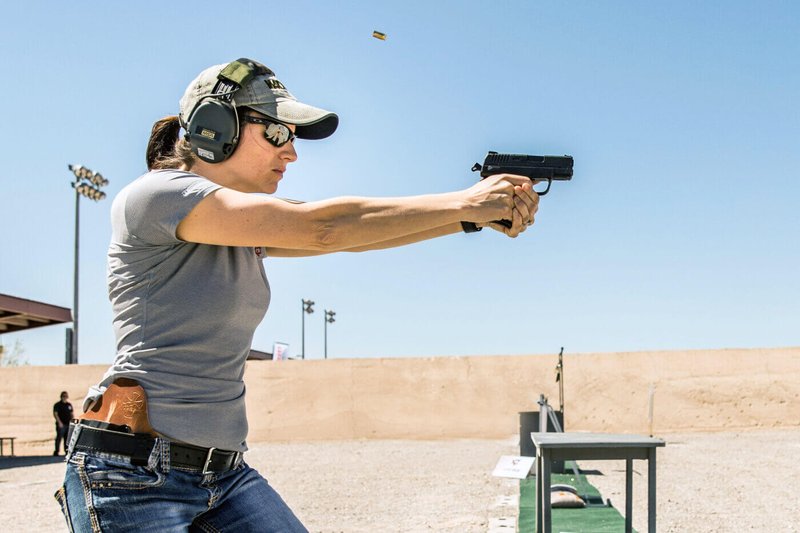
The most impactful change hit the BUG division. Semi-auto capacity jumped from 6+1 to 8+1 rounds, bringing it closer to the real-world capacity of modern micro-compact pistols. At the same time, .380 ACP was dropped from eligibility entirely. This two-part change essentially redefined BUG from a “pocket pistol” division to a “micro-compact 9mm” division. If you were running a Ruger LCP in .380, you’ll need to switch to something like a SIG P365 or Springfield Hellcat to stay legal.
On the safety side, the 2026 rulebook made it explicit that firearms with non-functional manual safeties now result in disqualification. This primarily affects shooters running 1911-pattern pistols in ESP or CDP — make sure your thumb safety is mechanically sound before you show up to a match. The steel calibration power factor was also corrected to 95, which shouldn’t affect most 9mm shooters but is worth noting if you’re loading light.
Match administration saw a few tweaks as well. The Match Performance Promotion (bump) threshold was revised to require beating 10 competitors, and awards at Tier Two matches now run through 5th place. All divisions must be recognized at Tier Two competitions, which means smaller clubs can no longer skip divisions they don’t typically see.
For most shooters in SSP, CO, and CCP, the 2026 changes are minor. But if you’re a BUG shooter, a 1911 competitor, or a match director, it’s worth downloading the full 2026 rulebook from IDPA.com and reading through the updates.
Conclusion
IDPA’s eight divisions may look complicated at first glance, but the core logic is simple — find the division that matches your gun, then get out there and shoot. Don’t spend too much time researching which division is “the best” because each one has its own appeal and challenges. SSP tests your raw technique with standard equipment, CCP trains real daily carry skills, CDP lets you experience the classic 1911, and CO is the modern arena for red dot shooting.
Your first IDPA match doesn’t need a perfect equipment setup. Bring the gun you have, a compliant concealment holster, three magazines, throw on a jacket to cover your gear, and go enjoy the experience. The IDPA community is welcoming to new shooters, and you’ll learn things at a match that you can never learn practicing alone at home.
Once you’ve picked your division, start tracking your draw and reload times with a Shot Timer so you can measure your progress between matches. And if you’re still deciding which gun to bring, our IDPA Beginner Pistol Guide has specific recommendations for every division and budget.
Related Articles
- IDPA Training at Home: 6 Shot-Timer Drills - Timed draw, cover and reload drills for airsoft or dry fire
- IDPA Beginner Pistol Complete Guide - Detailed pistol recommendations per division
- IDPA vs USPSA Complete Comparison Guide - Full breakdown of both shooting sports
- Practical Shooting Complete Beginner’s Guide - Overview of all practical shooting sports
- Pistol Red Dot Sight Complete Guide - Red dot selection and training for CO division
- Pistol Draw Technique Complete Guide - IDPA concealed draw technique
- Shot Timer App Complete Guide - Track training progress with a timer
- how to pick a pistol drill - Classic drills to improve your classifier scores
- Home Defense Pistol Guide - Defensive pistol selection for real-world carry
Put a Shot Timer in Your Pocket
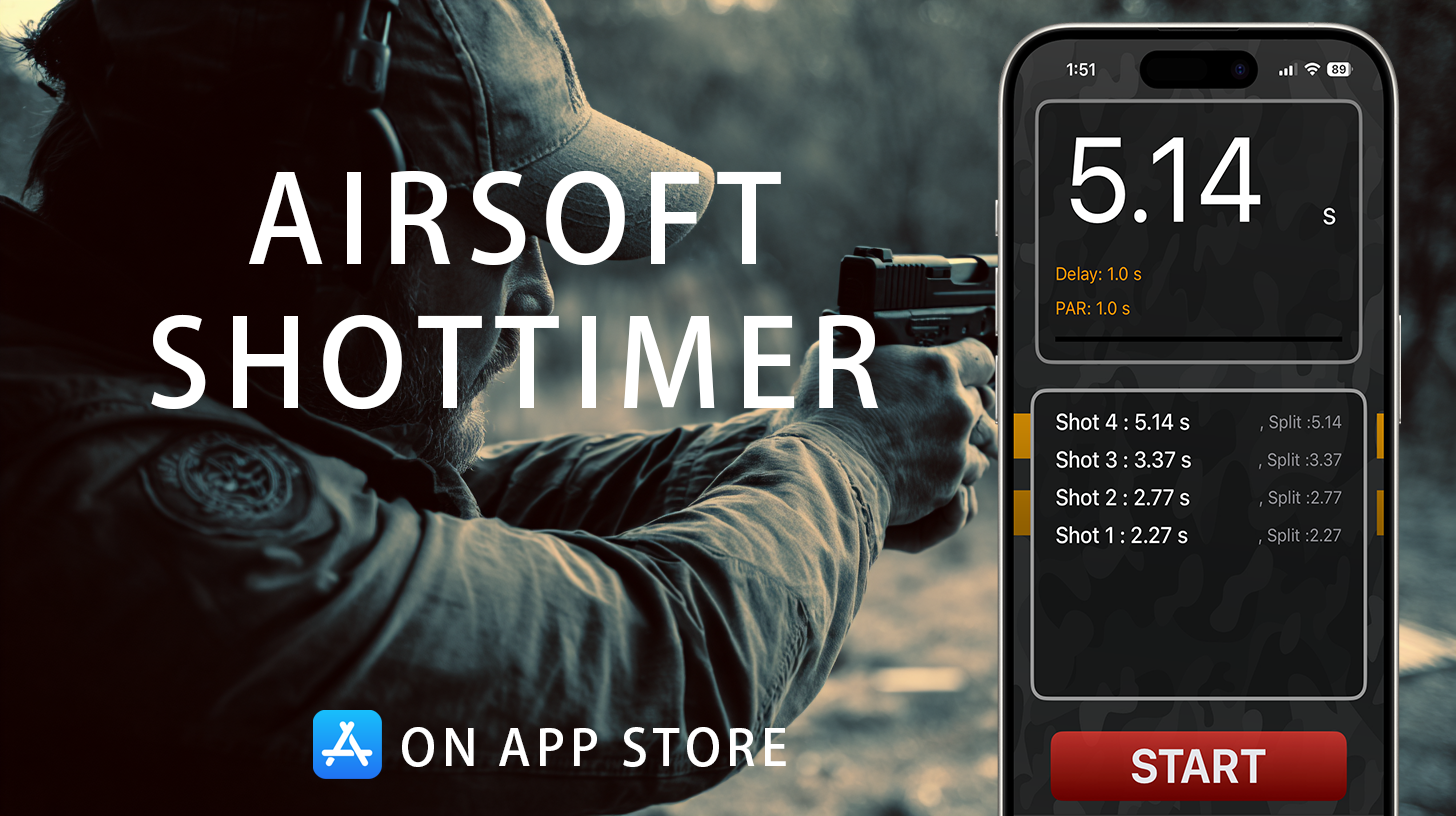
Airsoft Shot Timer is a free shot timer app tuned for airsoft and Action Air — it picks up BB gun shots, tracks your split times, and saves you the cost of a $150+ hardware timer for IPSC/IDPA practice.

- IDPA
- IDPA Divisions
- Idpa Divisions Explained
- Idpa Divisions List
- Idpa Divisions 2025
- Idpa Divisions 2026
- Idpa Classification Chart
- Idpa Age Categories
- IDPA Rules 2026
- SSP
- ESP
- CDP
- CCP
- CO
- REV
- BUG
- PCC
- IDPA SSP
- IDPA ESP
- IDPA CCP
- IDPA PCC
- Idpa Cdp Division
- Idpa Gun Divisions
- Idpa Classifications
- Defensive Shooting
- Competitive Shooting
- Best IDPA Pistol
- IDPA Classification
- IDPA Rules
- IDPA Beginner
- IDPA 2026 Rules
- IDPA Rule Changes
- IDPA BUG Division
- Idpa Pcc Rules
- Idpa Pcc Barrel Length
- Idpa Esp Rules
- Idpa Ccp Rules
- Idpa Carry Optics Rules
- Idpa Ccp Box Size
- Idpa Ccp Box Dimensions
- Idpa Ccp Guns
- Ccp Idpa
- Idpa Ccp Barrel Length
- Idpa Ccp Capacity
- Idpa Box Size
- Idpa Compact Box