IDPA Training at Home 2026: 6 Shot-Timer Drills for Draw, Cover & Reloads (Airsoft or Dry Fire)
What is IDPA?
IDPA (International Defensive Pistol Association) is a shooting sport emphasizing realistic defensive scenarios. Unlike IPSC, IDPA focuses more on practical application, requiring shooters to use concealed carry equipment and shoot in scenarios simulating everyday threats.
IDPA Core Philosophy
- Defense First: Stage designs derived from real defensive situations
- Concealed Carry: Must use equipment suitable for daily carry
- Cover Usage: Mandatory proper cover utilization
- Tactical Thinking: Focus on decision-making and threat assessment
Why This Changes How You Practise
Coming from IPSC or USPSA, the instinct is to train for raw speed. IDPA punishes that instinct in three specific places, and those three are what the drills below are built around: you draw from under a concealment garment rather than from an open race rig, you reload behind cover instead of on the move, and you stay tucked in behind the barricade instead of leaning out for a faster sight picture. Everything else — grip, trigger, transitions — carries over unchanged from whatever you already shoot.
So the training question isn’t “what are the rules,” it’s “which three habits do I have to rebuild.” That’s what this article is for. If you want the rulebook side — how the scoring maths works, what earns a procedural, what got rewritten for 2026 — that lives in its own guide, linked below.
Before You Train: Know Your Division Capacity
There’s one rulebook detail that changes how you practise, and it’s worth settling before you run a single drill: your division’s magazine capacity. IDPA stages normally start loaded to division capacity, so the number of rounds you get between reloads is fixed by the division you shoot — and that number decides where the reloads fall in every drill below. Training an 8-round CDP rhythm when you actually shoot 15-round SSP means you’ll rehearse reloads that never happen on match day.
So do this once, then forget about it: look up your division, write its capacity on a card, and load your practice magazines to that number from now on. Everything else in this article — the draw, cover work, reloads, one-handed strings — is the same regardless of which box your pistol falls into.
📖 Rules and divisions live in their own guides, not here. For all 8 divisions with the 2026 capacities, the quick “which division is my gun in?” picker and the CCP-vs-SSP question, read IDPA Divisions Explained 2026. For scoring, Tactical Priority, penalty tiers and the 2026 rulebook changes (the P320 ban, BUG going 8+1, .380 out), read the IDPA scoring and penalty rules. To pick a first gun, see Best IDPA Pistol for Beginners 2026; for how classification works, the IDPA 5x5 Classifier Guide.
This article is the training half: what to do with that pistol between now and your next match.
IDPA Training with AirsoftShotTimer
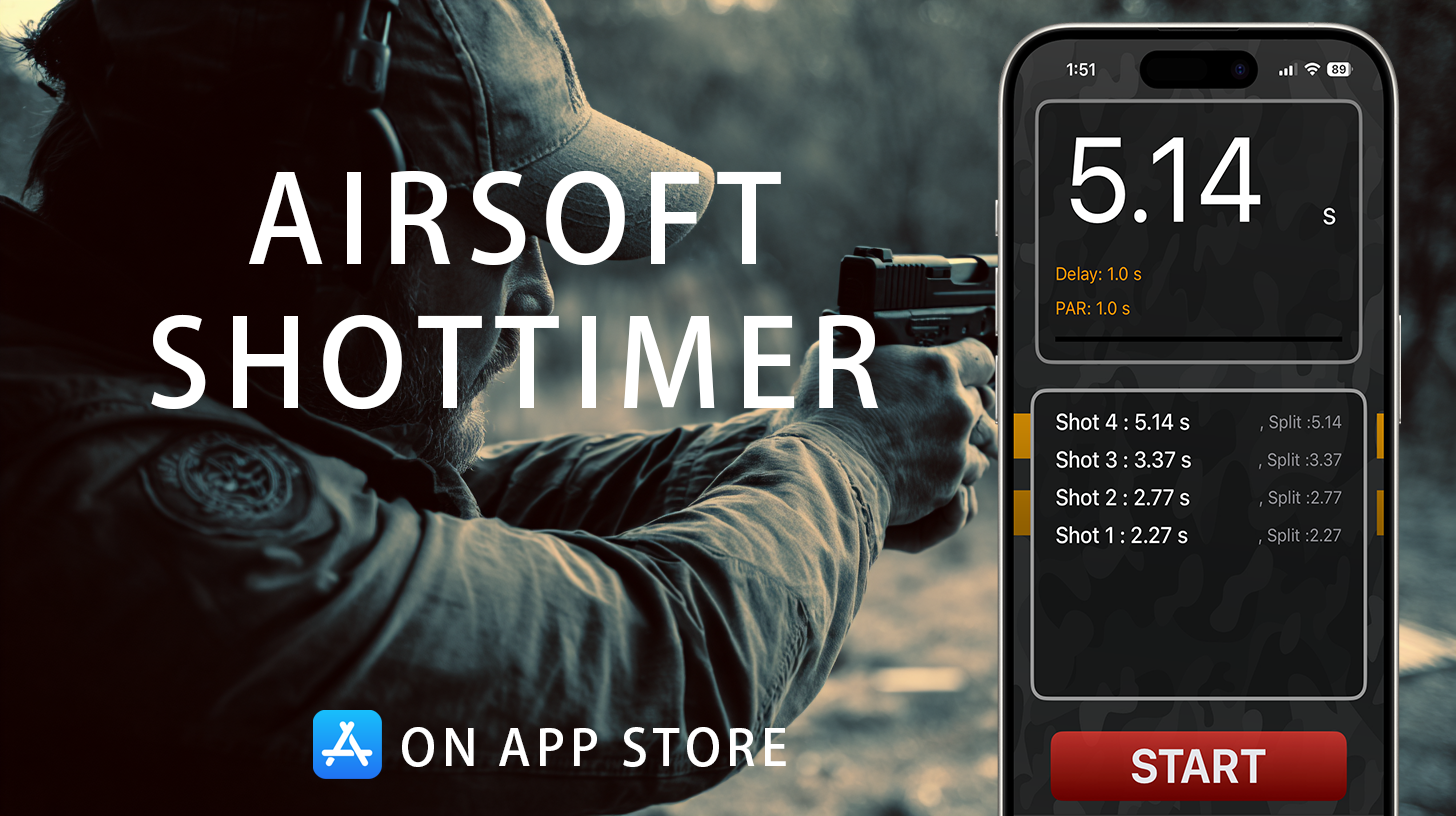
🎯 Grab a timer first (it’s free): an IDPA score is literally “time + penalties,” so every drill below is meaningless unless you time it. You don’t need to drop $150+ on a CED7000 or PACT hardware timer to start — a phone running the Airsoft Shot Timer App gives you a random start beep, PAR times, and per-shot splits. Its mic pickup is tuned for the low report of airsoft (GBB/AEG) and dry fire, which means your living-room dry fire, your range live fire, and your airsoft reps all feed the same data through one app. Every drill here runs the same way: beep, go, record the time.
No range? You can still train IDPA — and should. The concealed draw, cover work, and tactical reloads that IDPA rewards are 80% movement patterns, and most of that improvement comes from dry fire and airsoft reps. A Hi-Capa or Glock GBB pistol plus a cover garment lets you rehearse these safely at home. That’s exactly what people searching “IDPA airsoft” are after: groove the movements and drop your times with airsoft or dry fire first, then confirm on a live-fire range — you’ll save a small fortune in ammo.
1. Concealed Carry Draw Training
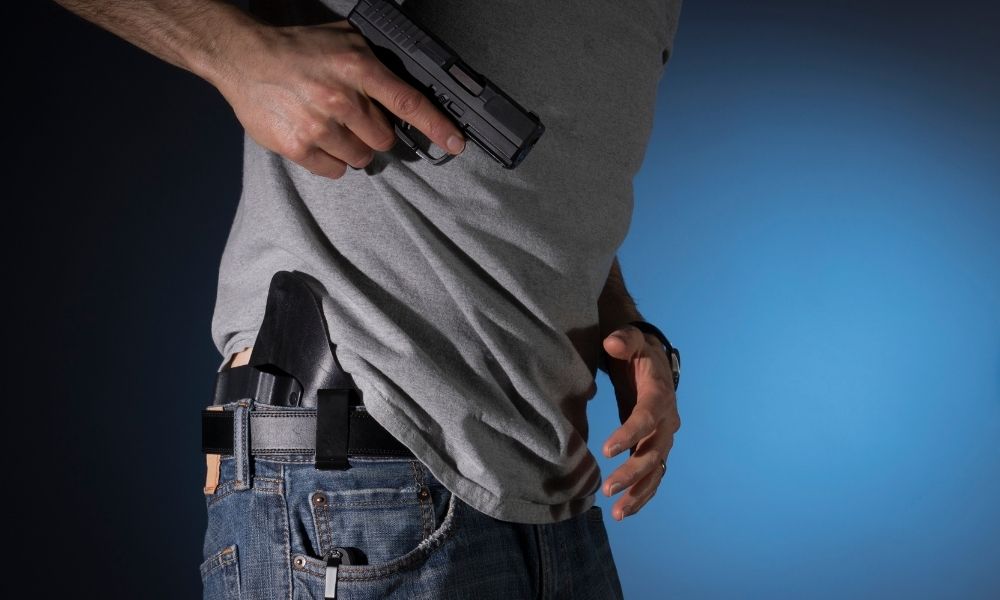
IDPA requires drawing from concealed carry status, more challenging than open holsters.
Training Steps:
- Wear clothing covering holster (jacket, shirt)
- Adopt natural stance (hands naturally relaxed)
- Upon signal, move clothing aside and draw
- Fire 2 shots at target
Target Times (Airsoft):
- Beginner: 2.5-3.5 seconds
- Intermediate: 2.0-2.5 seconds
- Advanced: 1.5-2.0 seconds
- Expert: < 1.5 seconds
Using AirsoftShotTimer:
- Random delay start
- Record concealed draw time
- Compare with open holster
- Practice smooth clothing movement
2. Cover Shooting Training
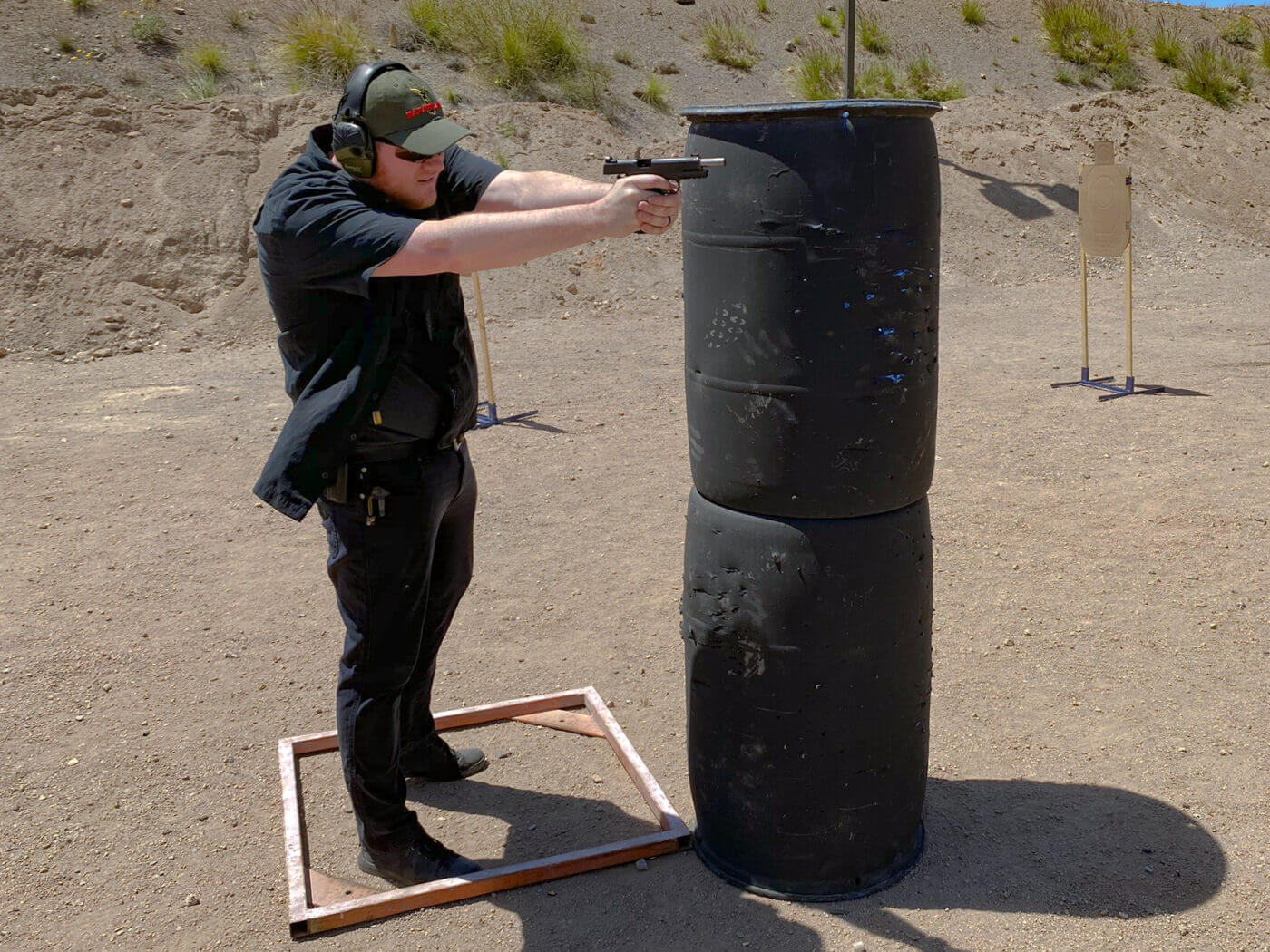
IDPA’s most core skill: proper cover usage.
Cover Rules:
- Body exposure < 50%: No penalty
- Body exposure > 50%: Time penalty
- No cover use: Severe penalty
Training Scenario:
- Stand behind cover (wall corner, doorframe)
- Upon signal, expose and shoot
- Immediately return to cover after shooting
- Ensure minimal body exposure
Key Techniques:
- Angled Exposure: 45-degree side angle for minimal exposure
- High/Low Switch: Flexible use of high and low stances
- Eyes Lead: Vision confirms target first
- Gun Follows Eyes: Muzzle follows vision
Using AirsoftShotTimer:
- Set PAR time (e.g., 3 seconds)
- Must complete cover exposure and shooting within time
- Train quick decision-making and execution
- Record and analyze movement fluidity
3. Tactical Reload Training
IDPA requires magazine changes behind cover.
Training Focus:
- Shoot until magazine nearly empty (1-2 rounds remaining)
- Retreat behind cover
- Change magazine and chamber round
- Expose and shoot again
Key Techniques:
- Retain Magazine: Cannot discard (3-second penalty)
- Pocket Management: Place in pocket or magazine pouch
- Smooth Movement: Reload motion must be proficient
- Don’t Look Down: Eyes remain observing threats
Training Process:
- Use AirsoftShotTimer to record time
- Expose from cover and fire 5 rounds
- Retreat to cover and change magazine
- Expose and fire 5 more rounds
- Analyze overall completion time
4. Movement to Cover Training
IDPA emphasizes safe movement to cover positions.
Training Scenario:
- Starting position has no cover
- Cover 5-10 meters ahead
- Upon signal, quickly move to cover
- Shoot target upon reaching cover
Key Points:
- Low Posture Movement: Lower body center of gravity
- Muzzle Safety: Maintain safe direction
- Visual Awareness: Observe threat direction
- Immediate Engagement: Shoot immediately upon reaching cover
Using AirsoftShotTimer:
- Record movement plus shooting total time
- Analyze balance between movement speed and shooting accuracy
- Find optimal movement routes
5. Multiple Threat Assessment Training
IDPA scenarios often have “shoot” and “no-shoot” targets.
Training Objectives:
- Quickly identify threats vs. non-threats
- Correctly decide shooting priority
- Avoid shooting innocent targets
Training Setup:
- Set up 3-5 targets
- 1-2 are “non-threats” (hostages, bystanders)
- Must only shoot threat targets
- Shooting non-threat targets incurs severe penalty
Key Points:
- Confirm Target: Must verify before shooting
- Threat Priority: Shoot nearest or most dangerous target first
- Control Shooting: Avoid excessive shooting
6. One-Handed Shooting Training
IDPA may require one-handed shooting (simulating injury or supporting others).
Strong Hand Shooting:
- Use dominant hand to shoot
- Other hand can support others or open doors
- Maintain shooting stability
Weak Hand Shooting:
- Use non-dominant hand to shoot
- Simulates strong hand injury scenario
- Higher challenge
Training Method:
- Use AirsoftShotTimer to record time
- Strong hand single-hand shoot 5 rounds
- Weak hand single-hand shoot 5 rounds
- Compare hand differences
- Strengthen weak hand training
Advanced IDPA Tactical Techniques
Slicing the Pie
Gradually expose from cover, progressively clearing blind spots.
Technique Steps:
- Stand at cover edge
- Side-step in small increments
- Gradually expand vision
- Shoot immediately upon finding target
- Return to cover after shooting
Training Focus:
- Small steps (5-10 cm)
- Keep muzzle pointed at observation area
- Keep upper body stable
Low Posture Shooting
Shooting from behind low cover, reducing risk of being hit.
Key Points:
- Single-knee or double-knee kneeling position
- Maintain balance and stability
- Control muzzle height
- Quick rise to transition
Doorway Clearing
Simulates clearing action before entering a room.
Standard Process:
- Stand beside door frame
- Quickly peek to verify
- Shoot immediately upon finding threat
- Enter after clearing
IDPA Training Plan Recommendations
Beginners (0-6 months)
Train 2-3 times per week, 90 minutes each
- Concealed draw training: 30 reps
- Cover shooting: 50 rounds
- Tactical reloads: 20 reps
- Movement training: 10 sets
- Memorize safety rules
Intermediate Shooters (6-18 months)
Train 3-4 times per week, 120 minutes each
- Comprehensive scenario training: 100 rounds
- Threat assessment practice: 20 sets
- One-handed shooting: 50 rounds
- Slicing the pie training: 30 minutes
- Simulated competition practice
Advanced Shooters (18+ months)
Train 4-5 times per week, 120-150 minutes each
- Complex scenario simulation
- Stress test training
- Weakness-specific strengthening
- Participate in official competitions
- Analyze competition videos
Build the Safe Habits Into the Reps, Not the Match
The habits that keep you in a match are motor patterns, which means they belong in your practice sessions rather than in something you read the night before. Two are worth deliberately baking into every rep above.
The first is muzzle awareness while moving. Set up the cheapest drill there is: pick a spot on your living-room wall, hold an unloaded pistol or airsoft gun on it, and walk left, right, forward and back while keeping the muzzle on that spot. Do it for two minutes at the start of each session. Once staying pointed downrange while your feet move is automatic, the reload-while-stepping-to-your-support-side problem — the single most common way competitors end their day early — stops being something you have to think about.
The second is the reholster. Bring the pistol straight back to the holster mouth, rotate it down and in, and look at the holster while you do it. Never lead with the muzzle and fish for the opening, which is how people sweep their own leg. There are no style points for a no-look reholster, so slow it down in practice until the path is grooved.
📖 The rulebook side of all this lives elsewhere. What actually earns a DQ, what you may and may not do in the safe area, the range commands you’ll hear, the 3-second procedural for a dropped magazine and cover exposure limits — those are match-day rules, not training methods, and they’re covered properly in the IDPA scoring and penalty rules. Read that once before your first match; come back here for what to practise afterwards.
Equipment Selection Recommendations
Beginner Equipment
- Pistol: Glock 19, M&P 9, CZ P-09
- Recommended reading: Glock 17 Training Guide - Complete training techniques for Glock series
- Holster: Concealed IWB holster
- Magazine Pouches: Concealable magazine pouches
- Covering Clothing: Jacket, shirt, vest
Advanced Equipment
- Pistol: Competition-grade modifications (compliant with division rules)
- Holster: Quick-draw concealed holster
- Magazine Pouches: Magnetic magazine pouches
- Timer: AirsoftShotTimer APP
Train in the Gear You’ll Actually Compete In
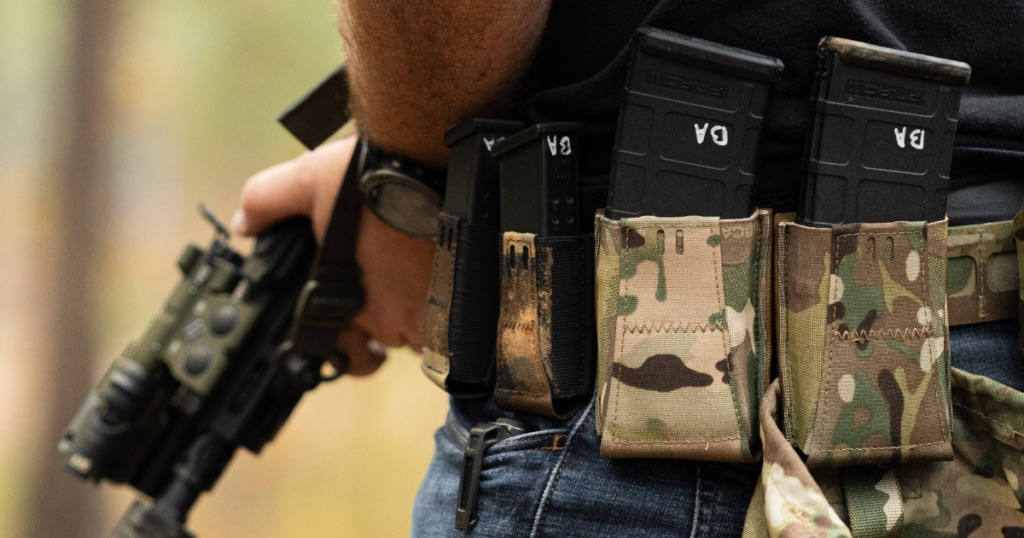
Here’s a mistake almost everyone makes in their first month: practising the draw from a bare belt holster with a t-shirt on, then showing up to a match wearing a cover garment over a concealment rig and wondering why the draw suddenly takes a full second longer. The garment is the drill. If your practice setup doesn’t include it, you’re rehearsing a skill you’ll never use.
So set your practice belt up exactly the way you’ll run it on match day — concealment holster worn close to the body, two or three concealable pouches, the same jacket or vest — and leave it that way. Whether that rig is division-legal is a rules question, and the IDPA scoring and penalty rules covers the equipment appendix in detail; if you’re still choosing pouches and working out where they sit on the belt, the Competition Magazine Pouch Guide goes deeper. What matters for training is that the rig never changes between reps.
One habit worth building from day one: never let a magazine hit the ground. Retaining a partially loaded mag in a pocket or pouch is part of the tactical reload above, and it’s much easier to learn as a habit now than to un-learn under a timer at your first match. When you review a timed reload, don’t only look at the split — watch whether the mag went into a pocket or onto the floor. A clean 2.4-second reload beats a sloppy 1.9-second one every single time.
Frequently Asked Questions
How do I train for IDPA if I don’t have a range nearby?
Run the drills dry, or with an airsoft pistol, in the largest room you have. The concealed draw needs about a metre of space and no target at all — just a safe backstop and a consistent aiming point. Cover work needs a doorframe or the corner of a wall to stand in for a barricade. Realistically, four or five 15-minute sessions a week of dry or airsoft reps will move your times more than one monthly range trip, because the limiting factor early on is the movement pattern, not the marksmanship. Save live fire for confirming what you’ve already grooved.
What is a good draw time for IDPA?
From concealment, a first hit on a chest-sized target at 7 yards in under 2.0 seconds is a solid club-level benchmark, and 1.5 seconds puts you in genuinely competitive territory. Newcomers usually start somewhere between 2.5 and 3.5 seconds, and most of that comes off in the first month simply by fixing the garment clear. The only way to know where you actually are is to time it — set a PAR time on the Airsoft Shot Timer App at 0.2 seconds below your current average and work against it.
What do IDPA stages look like?
Most club stages are 6 to 18 rounds, shot from one or two positions with at least one piece of cover, and often start from an unusual position — seated, hands raised, gun in a bag. You’ll get a written stage briefing and a walkthrough before you shoot. That’s why the drills here focus on transitions and reloads around cover rather than pure standing accuracy: the stage design rewards the shooter who moves cleanly between positions, not the one with the tightest group.
Can you train IDPA with airsoft or dry fire?
Absolutely, and it’s strongly recommended. IDPA’s core skills — the concealed draw, cover work, and tactical reloads — are movement sequences you can rehearse safely at home with a GBB/AEG airsoft pistol and a cover garment, or with plain dry fire. Pair it with the Airsoft Shot Timer App to log every rep, groove the movement and drop your times, then confirm on a live-fire range — you’ll save a lot on ammo. That’s the honest answer for anyone searching “IDPA airsoft.”
I already shoot IPSC — what do I actually have to retrain for IDPA?
Three things, and only three. Your draw has to start from under a concealment garment, which adds a support-hand sweep you’ve never needed. Your reloads have to happen behind cover rather than while moving, so the rhythm you’ve built of reloading on the run has to be unlearned for this sport. And you have to stay behind the barricade instead of leaning out for the better angle. Grip, trigger, transitions and target acquisition all transfer directly, so budget your practice time on those three habits and leave the rest alone. For a full side-by-side of the two sports, see the IDPA vs USPSA Comparison Guide; for the IPSC training path itself, the IPSC Training Guide.
Any recommended live-fire or airsoft warm-up drill?
A popular one is the “Six-for-Two” descending reload: load three mags with 6, 4, and 2 rounds, and set three targets near-to-far (roughly 7/10/17 yards). On the beep, draw and fire 6 at the near target, reload and fire 4 at the middle, reload and fire 2 at the far target. Fewer rounds each string forces you to keep reloads smooth under pressure — great for IDPA rhythm. Level it up with a barrier: same targets, fire 2 rounds each from the left of cover, reload, move to the right of cover and fire 2 each. Time the whole run with a shot timer and watch your splits.
What gear does a first-time IDPA shooter need?
A division-legal pistol (beginners: SSP with a Glock 19, M&P 9, or CZ P-09), a concealment IWB or belt holster, two to three concealable mag pouches, a loose cover garment (jacket or fishing vest), plus eye and ear protection. For a timer, a phone shot timer app is all you need during practice — no reason to buy hardware yet.
Conclusion
IDPA is not just a shooting sport, but a complete defensive training system. Through IDPA training, you will learn proper reactions in real threat situations, cover usage, threat assessment, and other important skills.
Use AirsoftShotTimer to record every training session, analyze your reaction time, cover usage efficiency, reload speed and other data, and continuously improve your tactical capabilities.
Remember: IDPA’s core is “protecting yourself,” not “fast shooting.”
Begin your IDPA defensive training and make every training session more realistic, safer, and more tactically meaningful!
May you never need to use these skills, but when needed, you’ll be ready!
Put a Shot Timer in Your Pocket
Airsoft Shot Timer is a free shot timer app tuned for airsoft and Action Air — it picks up BB gun shots, tracks your split times, and saves you the cost of a $150+ hardware timer for IPSC/IDPA practice.

- IDPA
- IDPA Training
- IDPA 2026
- IDPA Drills
- IDPA Dry Fire
- IDPA Airsoft
- Concealed Draw
- Tactical Reload
- Defensive Shooting
- Tactical Training
- Concealed Carry
- Shot Timer