FBI Pistol Qualification Course (2019, 50 Rounds): Stages, Par Times & the String That Actually Fails You
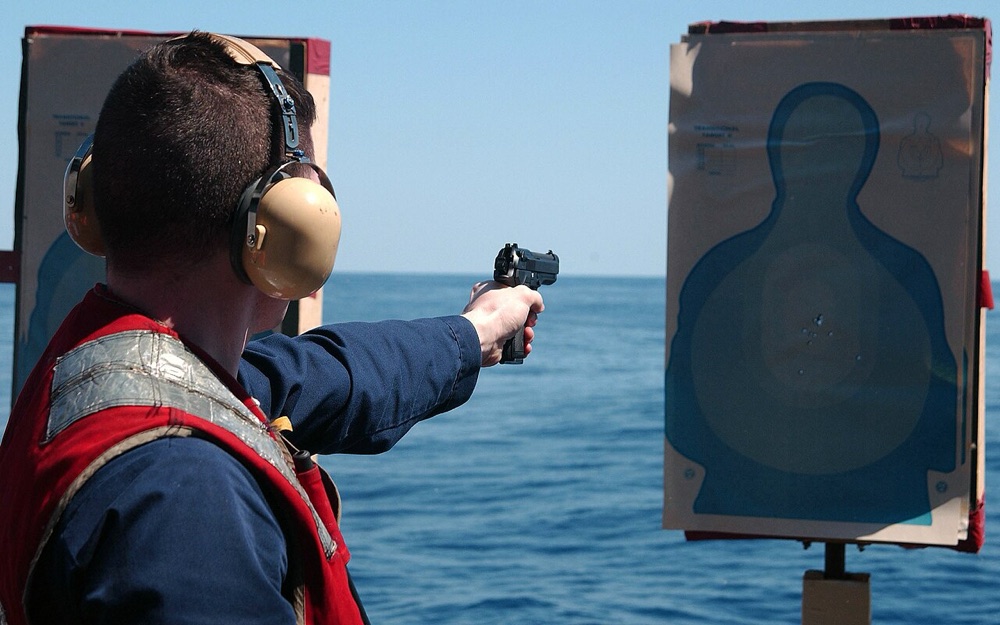
The FBI Pistol Qualification in 60 seconds (BLUF)
- The course of fire: The current version (revised January 2019) is 50 rounds in 10 timed strings at 3, 5, 7, 15 and 25 yards, on a QIT-99 “bottle” target. The par times add up to 63 seconds.
- Scoring: Every hit inside the bottle is 2 points, 100 possible. Agents pass at 80, FBI instructors at 90. On the FBI range, shots fired after the par time don’t count.
- How many misses you get: 80 points means 40 hits, so you can lose 10 rounds (misses plus late shots combined). At the instructor standard, only 5.
- Where people actually fail: Not the 25-yard line, which gives you 20 seconds for 8 rounds. The tight strings are the 5-yard ones from low ready (3 rounds in 2 seconds, 6 in 4) and, for slower shooters, every string that starts with a draw.
- Train it anywhere: Every string is a par-time problem, so a free shot timer app with a par buzzer turns it into a dry-fire or airsoft session at home.
Most people meet the FBI qualification the same way: somebody at the range says “you should be able to pass the FBI qual,” and it sounds like a serious test. Then you read the course of fire, see 25 yards and a kneeling position, and assume that’s the hard part. It isn’t. The 25-yard string is one of the most generous on the sheet. The strings that actually take points away from people happen at five and seven yards, in two to four seconds, and they are decided before the first shot by how fast you get the gun out and onto the target.
That’s good news, because those are exactly the skills you can train at home with a timer. This guide gives you the full current course of fire, then does something most write-ups don’t: it breaks every string into a draw, first shot and splits, so you can see which ones you are likely to fail before you spend a box of ammunition finding out.
What Is the FBI Pistol Qualification?
The FBI pistol qualification is the handgun standard that FBI agents shoot to stay qualified to carry. It’s built as a minimum competency test, not a match: a mix of close, fast shooting, one-handed strings, a reload, and a longer-distance string with a position change, all from concealment. Because it’s public, simple to set up, and needs only one target, it has become one of the most common self-tests for concealed carriers, and several training organizations use it as an instructor entry requirement.
You will find two very different versions floating around, and this is where a lot of confusion comes from. The older course was 60 rounds over 15 stages. In January 2019 the Bureau revised it to the current 50-round, 10-string course described below. Many range handouts, PDFs and blog posts still describe the old 60-round version, or mix the two (you’ll see “60 rounds, 48 hits to pass,” which is the old version’s math, next to the new version’s stages). If someone quotes you a round count, ask which version they mean.
The target is the QIT-99, a silhouette with a bottle-shaped scoring area and no scoring rings inside it. Anything inside the bottle is a hit, anything outside is a miss, and there is no extra credit for the center. That last point matters more than it sounds: the target rewards getting acceptable hits fast, not perfect hits slowly.
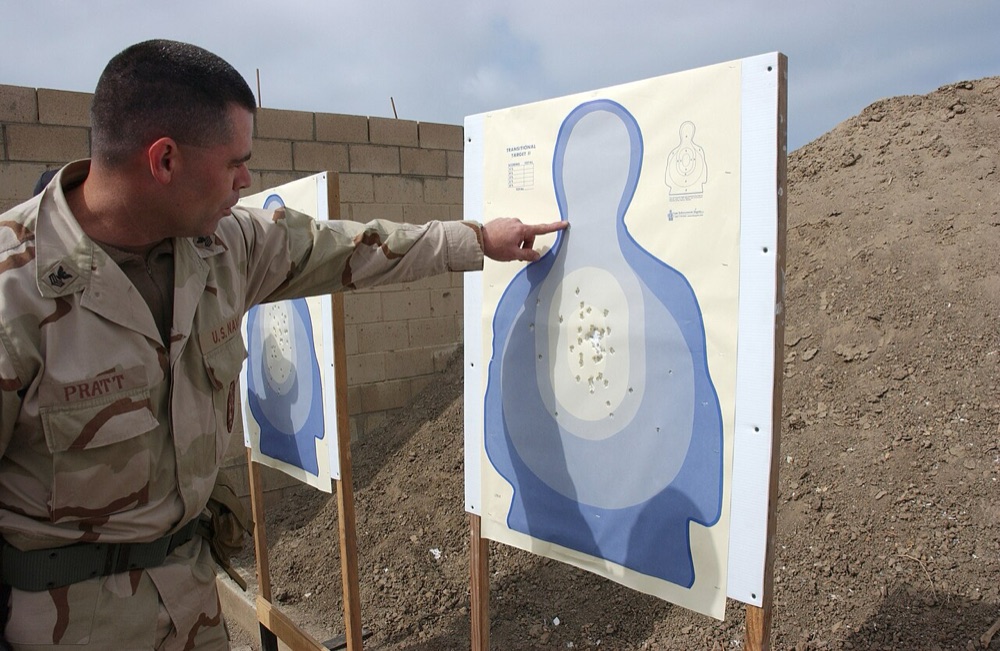
The Full Course of Fire (2019 Version)
All strings start either from the holster (concealed, in the FBI’s version) or from a low ready, with the muzzle pointed at roughly 45 degrees toward the ground in front of the target and the finger off the trigger. Here is the complete sequence, with the round counts you need to load for each string.
At 3 yards, string 1: draw and fire 3 rounds strong hand only, switch hands, and fire 3 rounds support hand only, all in 6 seconds.
At 5 yards, string 2: draw and fire 3 rounds in 3 seconds. String 3: from low ready, fire 3 rounds in 2 seconds. String 4: from low ready, fire 6 rounds in 4 seconds.
At 7 yards, string 5: draw and fire 5 rounds in 5 seconds. String 6: from low ready, fire 4 rounds, perform an empty-gun reload, and fire 4 more, all in 8 seconds. String 7: from low ready, fire 5 rounds in 4 seconds.
At 15 yards, string 8: draw and fire 3 rounds in 6 seconds. String 9: from low ready, fire 3 rounds in 5 seconds.
At 25 yards, string 10: draw and fire 4 rounds standing, drop to kneeling, and fire 4 more, all in 20 seconds.
That’s 6 + 3 + 3 + 6 + 5 + 8 + 5 + 3 + 3 + 8 = 50 rounds and 6 + 3 + 2 + 4 + 5 + 8 + 4 + 6 + 5 + 20 = 63 seconds of par time. If you’re loading magazines in advance, string 6 is the one to watch: the first magazine needs exactly four rounds so the gun actually runs empty and you’re doing a real slide-lock reload, not a speed reload with rounds still in the gun.
The Scoring Math: How Many Misses Can You Afford?
Each hit in the bottle is worth 2 points, so 50 rounds gives you 100. Agents need 80, which is 40 hits. FBI firearms instructors need 90, which is 45 hits. Put the other way round, an agent can lose 10 rounds anywhere in the course and still pass, and an instructor can lose 5.
The part people miss is what “lose” includes. On the Bureau’s own range the targets turn away when the par time ends, so a shot fired after time simply never hits paper. When you shoot it on a static range with a timer, the honest equivalent is to count any shot fired after the par as a miss. That makes a late shot and a miss exactly the same price: 2 points.
This changes how you should think about pace. Say string 4 (6 rounds in 4 seconds) is your weak spot. If you push hard and throw two rounds out of the bottle, you’ve lost 4 points. If you shoot at a pace you can control and your sixth shot breaks at 4.15 seconds, you’ve lost 2. Neither is great, but the second one is the better trade. The scoring rewards accepting a slightly late last shot over rushing every shot, and knowing that ahead of time keeps you from panicking on the strings you know are tight.
Some organizations shoot a stricter version. A Girl & A Gun, for example, uses the FBI course for its instructor and leader qualification, requires 90, and treats any shot after par as a disqualification of the whole attempt rather than a lost point. If you’re shooting it for a specific program, read that program’s sheet; the course of fire is the same but the penalty for being late is not.
The Split-Time Budget: Which String Will Fail You?
Par times on a qualification sheet look generous when you read them as “seconds per string.” Six rounds in four seconds sounds like plenty. The trick is that every string has a fixed cost at the start, the draw or the first shot from low ready, and only what’s left over is available for your splits. Once you subtract that, the picture changes completely.
The table below does that subtraction for two shooters. The steady shooter has a 1.5-second concealed draw to the first hit at close range (2.0 at 15 yards, 2.5 at 25), gets a first shot from low ready in 0.8 seconds (1.2 at 15 yards), reloads in 2.0 seconds, switches hands in 1.5 seconds and gets to kneeling in 2.0. The newer shooter is half a second slower on each of those: a 2.0-second draw (2.5 and 3.0 at the longer distances), 1.0 from low ready (1.5 at 15 yards), a 3.0-second reload, 2.0 to switch hands and 2.5 to kneel. The last two columns show the average split each shooter can afford and still beat par. The formula for every row is the same: par minus fixed costs, divided by the number of splits.
| String | Distance | Start | Rounds | Par (s) | Steady shooter: split needed | Newer shooter: split needed |
|---|---|---|---|---|---|---|
| 1 | 3 yd | Draw, SHO → switch → WHO | 6 | 6 | 0.75 | 0.50 |
| 2 | 5 yd | Draw | 3 | 3 | 0.75 | 0.50 |
| 3 | 5 yd | Low ready | 3 | 2 | 0.60 | 0.50 |
| 4 | 5 yd | Low ready | 6 | 4 | 0.64 | 0.60 |
| 5 | 7 yd | Draw | 5 | 5 | 0.88 | 0.75 |
| 6 | 7 yd | Low ready, reload | 8 | 8 | 0.87 | 0.67 |
| 7 | 7 yd | Low ready | 5 | 4 | 0.80 | 0.75 |
| 8 | 15 yd | Draw | 3 | 6 | 2.00 | 1.75 |
| 9 | 15 yd | Low ready | 3 | 5 | 1.90 | 1.75 |
| 10 | 25 yd | Draw, standing → kneeling | 8 | 20 | 2.58 | 2.42 |
Two things jump out. First, for the steady shooter, the tight strings are 3 and 4, both at five yards from low ready, where the split budget drops to about six tenths. For the newer shooter, the tightest strings are 1, 2 and 3, and two of those start with a draw. That’s the real pattern: as your draw gets slower, the draw strings collapse first, because a slow draw eats a bigger share of a short par.
Second, the long strings are nowhere close. At 15 yards you can take almost two seconds between shots, and at 25 yards more than two and a half. If you’ve been spending your qualification practice at the 25-yard line, you’ve been practicing the easiest part of the test.
You can turn string 2 into a quick self-check. Three rounds in three seconds from the holster means your draw time plus two splits has to stay under 3.00. If your close-range splits are about 0.5, your concealed draw to first hit must be 2.0 seconds or faster. If they’re 0.35, you can afford 2.3. Shoot five cold draws from concealment on a timer, take your average, and you know whether string 2 is a risk before you ever shoot the full course.
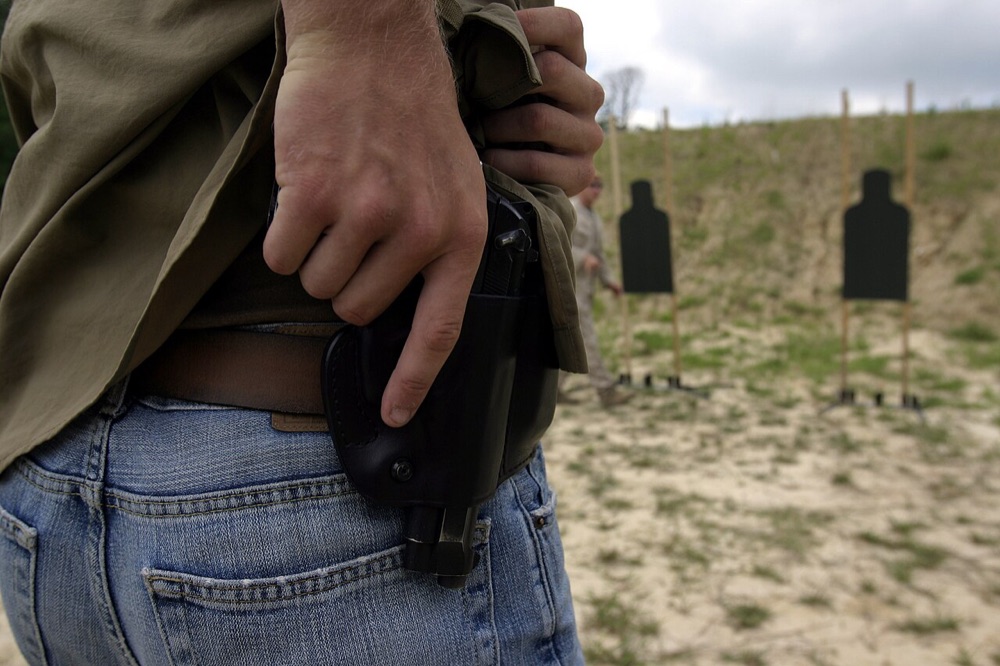
What a Clean Run Looks Like
It helps to see real numbers. In a published run, concealed-carry instructor Will Workman (Workman Protection Training) shot 100 out of 100 and called out several of his times as he went: 5.27 on the 6-second one-handed string (with a fumble clearing his shirt), 1.05 on 3 rounds from low ready against a 2-second par, 5.53 on the 8-second reload string, 2.15 on 5 rounds from low ready against 4 seconds, 2.69 on the 15-yard low-ready string against 5, and 15.40 on the 25-yard string against 20.
Look at where his margin is smallest. On the one-handed string, a single shirt fumble used up most of a 6-second par: he finished with only 0.73 seconds to spare, the thinnest margin he called out. On the 25-yard string he had 4.6 seconds left over. That matches the budget table. Concealment and the draw are where the clock bites; distance mostly costs you accuracy, and the par times give you time to buy accuracy back.
Workman also described the qualification as a beginner-level standard, and that’s fair for a shooter who already practices from a holster. The point of the budget table is that “beginner-level” hides a very specific requirement: a clean, consistent draw from concealment in about two seconds or less. If you don’t have that yet, the course is not easy at all, and you now know exactly why.
How to Train for It With a Shot Timer
Because every string has a par time, a shot timer is the single most useful piece of equipment for this course, more useful than a second box of ammunition. The approach that works is to split the course into the skills it’s actually testing and train each one against a par, then shoot the full course occasionally as a test.
Start with the draw. Five cold draws to one shot at five yards, from your actual carry position and cover garment, give you your real draw time. If you’re above two seconds, that is the first project, and our pistol draw guide breaks the draw into stages you can time separately. Then work the low-ready first shot: from a 45-degree ready, on the beep, one shot. Most people are surprised how slow this is the first time, because they lift the gun, then aim, then press, instead of letting the press happen as the sights arrive.
Next, the five-yard strings. Strings 3 and 4 are essentially a short Bill Drill from low ready, and the same work that improves your Bill Drill splits improves them. Set your par at the qualification time and shoot until you can beat it with every round in the bottle, then lower the par by a tenth. For string 6, practice the empty-gun reload with exactly four rounds in the first magazine; the reload itself is the fixed cost, and getting it under 2.5 seconds makes the string comfortable.
Finally, the one-handed string. Strong-hand-only and support-hand-only shooting is the skill most carriers practice least, and string 1 makes you do both plus a hand switch in six seconds. Give it its own short block in every session, even just a few rounds of each hand, because there’s no other place in the course where you can make up for a weak support hand.
A useful timer trick for the longer strings: the Airsoft Shot Timer app (iOS and Android) lets you set more than one par beep on the same run, plus a random start delay. For string 6, set par beeps at 4.0 and 8.0 seconds, so the first one tells you whether you reached the reload on schedule. For string 10, set one at 10 seconds as a checkpoint for “I should be kneeling by now” and the final one at 20. You stop guessing which half of the string cost you the time.
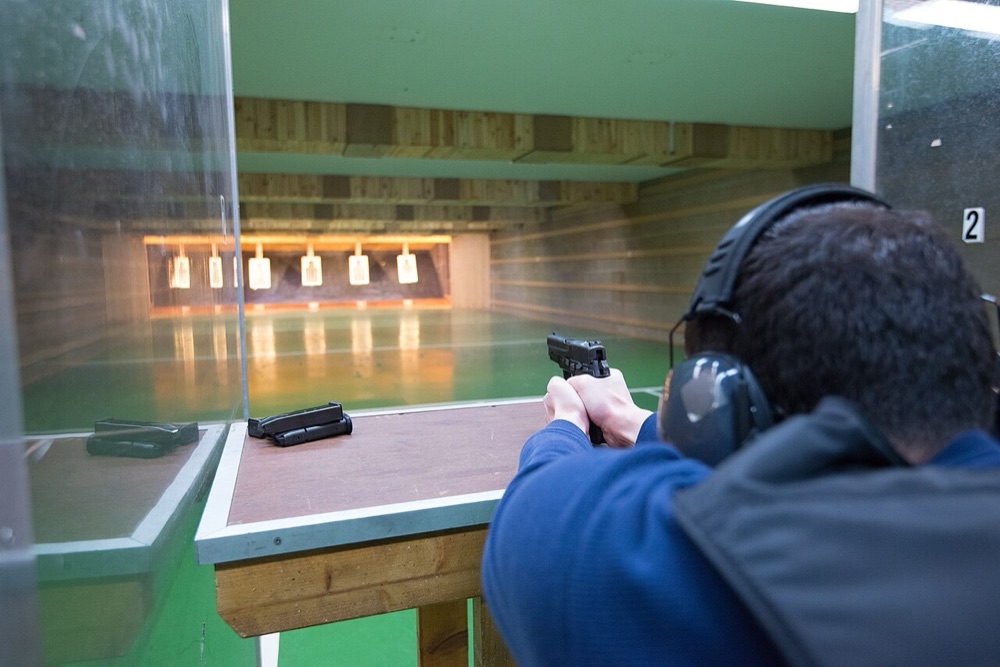
Practicing With Dry Fire or an Airsoft Pistol
You can’t shoot the full qualification in dry fire, but you can train almost every part of it. The draw, the low-ready first shot, the hand switch, the reload and the move to kneeling are all movement and visual skills, and they’re the parts the budget table says decide the test. A dry-fire session that runs strings 1, 2, 3 and 6 against their par times, with a timer that can hear your trigger press or a simple par beep, covers the riskiest part of the course in fifteen minutes. Our dry fire training guide has the safety setup and routine.
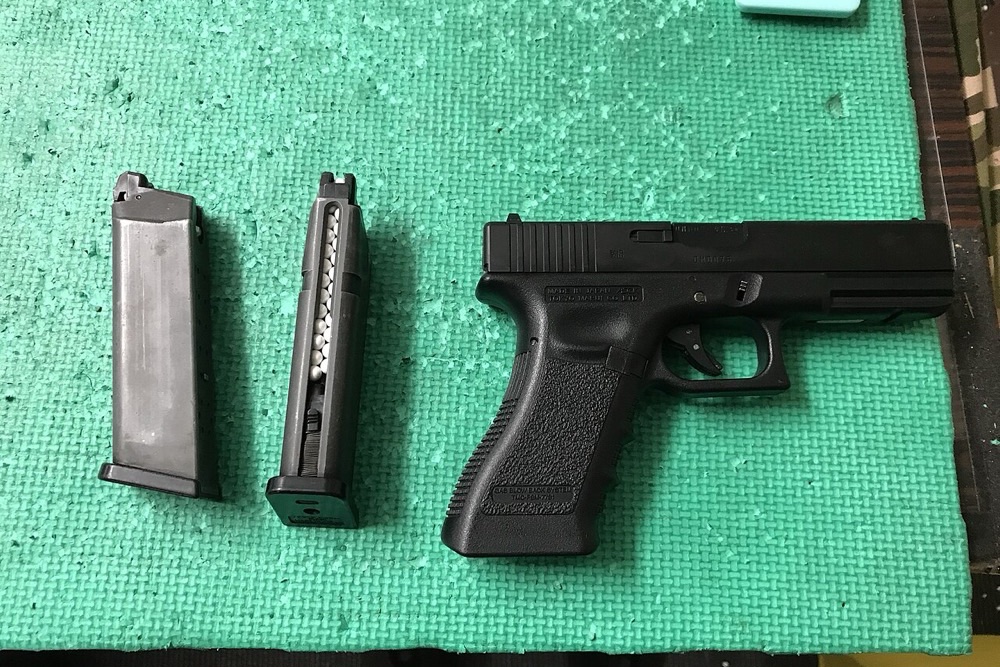
An airsoft gas blowback pistol gets you closer, because you get real splits, real reloads and real hits on paper. A GBB in the same platform as your carry gun is ideal, and the Tokyo Marui Glock GBB guide covers the common options. Load your magazines by string exactly as you would for the real course (6, 3, 3, 6, 5, 4 and 4, 5, 3, 3, 8) so the reload on string 6 happens at slide lock. Two things are different from live fire. Recoil is much lighter, so your splits will be faster than they will be with a real pistol; treat airsoft splits as a lower bound and keep a few tenths of margin. And gas pressure drops as the magazine cools during fast strings, which is a reason to warm magazines and keep them out of the wind in winter.
Distance is the other adjustment. Most GBB pistols are accurate enough for a torso target out to 15 yards, but 25 yards is beyond what many of them group reliably, especially outdoors. The fix is to scale the target instead of the distance: the target should shrink in the same proportion as the distance. Shooting the 25-yard string at 15 yards means using a target at 15 ÷ 25 = 60% of full size; at 10 yards it’s 40%. Keep the par time the same and you’re testing the same visual problem, just at a range your pistol can actually hit. If you’re curious whether your airsoft training will carry over to live fire, our guide to airsoft and firearms training crossover covers which skills transfer and which don’t.
Common Mistakes That Cost Points
The most common one is practicing the wrong strings. People spend their time at 25 yards because it feels like the hard part, then drop points at five yards where the par is two seconds. Use the budget table to decide where your practice goes, and measure your draw before anything else.
The second is not practicing from concealment. A draw from an open-carry holster on a range belt can easily be half a second faster than the same draw from under a shirt or jacket. The FBI course is designed to be shot from concealment, and the first string, with its six-second par and a hand switch, is where a fumble with your cover garment hurts most. If you carry concealed, practice with the garment you actually wear.
The third is rushing the late shots. Once you know a late shot costs the same as a miss, the pressure to beat the beep on every string goes away. Shoot the tight strings at a pace where every round lands in the bottle, even if the last one breaks a hair late, and let the generous strings carry your score.
The fourth is loading the wrong number of rounds. If the first magazine on string 6 has more than four rounds, you’ll either finish the string without a slide-lock reload, which defeats the purpose, or you’ll be counting shots under time pressure. Pre-load by string and label the magazines if it helps.
Frequently Asked Questions
How many rounds is the FBI pistol qualification?
The current version, revised in January 2019, is 50 rounds in 10 strings, fired from 3, 5, 7, 15 and 25 yards. The older version was 60 rounds over 15 stages, and many handouts online still describe it, which is why you’ll see both numbers quoted.
What is a passing score on the FBI qualification?
Each hit inside the bottle on the QIT-99 target is worth 2 points, for 100 possible. FBI agents must score at least 80, which means 40 hits out of 50. FBI firearms instructors must score at least 90, or 45 hits. Some civilian organizations that use the course, such as A Girl & A Gun, also require 90.
What happens if you shoot after the par time?
On the FBI’s range the targets turn away when time is up, so shots fired late don’t count. When you shoot it on a static range, the equivalent is to score every shot fired after the par as a miss, which costs 2 points per shot. Some programs are stricter and disqualify the whole attempt if any shot is late.
Is the FBI pistol qualification hard?
For a shooter who already practices drawing from a holster, it’s a moderate test, and experienced shooters often call it beginner level. The difficulty is concentrated in a few close-range strings: drawing and firing 3 rounds in 3 seconds and firing 3 rounds in 2 seconds from low ready. If your concealed draw takes more than about 2 seconds, those strings become hard very quickly.
What target is used for the FBI qualification?
The FBI uses the QIT-99 target, a silhouette with a bottle-shaped scoring area and no scoring rings inside it. Any hit inside the bottle counts as 2 points and anything outside is a miss, so the target rewards fast acceptable hits rather than perfect center hits.
Can you practice the FBI qualification with an airsoft pistol?
Yes. A gas blowback airsoft pistol lets you practice the draws, splits, reload and position change against the real par times. Expect your splits to be faster than with a real pistol because of the lighter recoil, and scale the target down if your pistol can’t group at 25 yards; a target at 60% size shot at 15 yards matches the 25-yard visual problem.
The Takeaway
The FBI qualification isn’t hard because of the 25-yard line. It’s hard, when it is hard, because a slow draw and a slow first shot from low ready leave you with almost no time for splits on the five-yard strings. Measure your concealed draw, check it against the three-rounds-in-three-seconds string, and train the strings the budget table says are tight. Then shoot the whole course every few weeks as a test, count late shots as misses, and see whether you’re inside the 10 rounds you’re allowed to lose. A free shot timer app with a par buzzer is all the equipment you need to start tonight in dry fire.
For more timed standards to pair with this one, our pistol drill selector suggests drills by skill gap and round count, and the Bill Drill time standards cover the six-round speed test behind strings 3 and 4.
Image credits: cover — U.S. Navy photo by Andrea Decanini; qualification target — U.S. Navy photo by Pat Migliaccio; holster draw — U.S. Marine Corps photo; indoor range — U.S. Army photo by Pierre-Etienne Courtejoie; all public domain, via Wikimedia Commons, resized. Airsoft Glock — Ominae, “TM Glock 17 with magazines”, CC BY-SA 4.0, via Wikimedia Commons, cropped and resized.


Put a Shot Timer in Your Pocket
Airsoft Shot Timer is a free shot timer app tuned for airsoft and Action Air — it picks up BB gun shots, tracks your split times, and saves you the cost of a $150+ hardware timer for IPSC/IDPA practice.

- FBI Pistol Qualification
- FBI Handgun Qualification
- FBI Qualification Course
- FBI Qual
- QIT-99
- Pistol Qualification
- Pistol Drills
- Shooting Drills
- Shot Timer
- Par Time
- Split Times
- Concealed Carry
- Draw Speed
- Dry Fire
- Airsoft
- GBB Pistol