Below you will find pages that utilize the taxonomy term “Pistol Drills”
Posts
read more
Casino Drill: 21 Rounds in 21 Seconds, Par Times & Reload Math
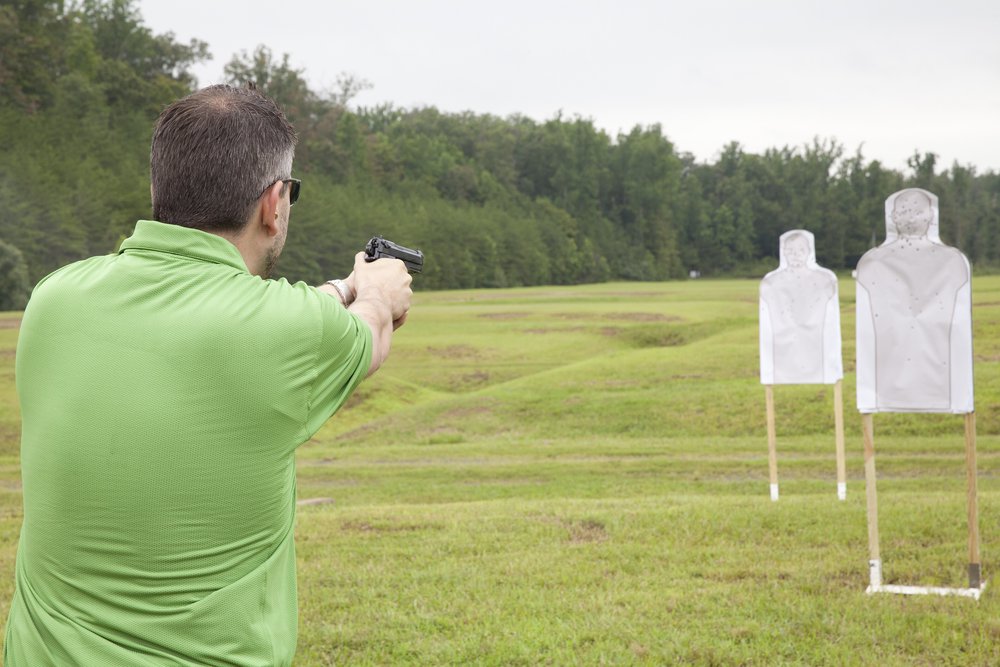
The Casino Drill in 60 seconds (BLUF)
- The course of fire: A target with six numbered shapes at five yards. Start holstered with three magazines of seven rounds. On the beep, draw and shoot shape 1 once, shape 2 twice, shape 3 three times, and so on up to shape 6 six times — 21 rounds, two forced reloads, 21 seconds.
- Scoring: Total time plus one second for every miss and for every shot out of sequence. Clean and under 21.00 is a pass.
- Where the reloads land (7-7-7): after the first shot on shape 4 (three still owed) and after the fourth shot on shape 5 (one still owed). Remembering what you still owe is the whole drill.
- Realistic times: 21 seconds clean is a real accomplishment for most shooters; around 15 is strong; the best runs reported are in the 10-11 second range (a 10.33 clean run was posted at the 2019 Rangemaster instructor reunion).
- The counterintuitive part: one miss costs a full second. Making all 13 same-shape splits 0.07 seconds faster buys back less than that. Accuracy is the cheapest time on this drill.
- Train it anywhere: It runs well on an airsoft gas pistol with the magazines downloaded to seven BBs. A free Airsoft Shot Timer app gives you the random start, a 21-second par buzzer, and every split so you can find your two reload gaps.
The Casino Drill is one of those drills people love to fail. It looks easy on paper: five yards, big shapes, 21 seconds. Then you start counting, the slide locks back in the middle of shape four, and somewhere between the reload and the next press you forget whether you owed that shape two more rounds or three. Shooters who can run a clean Bill Drill on demand regularly throw this one away, and not because they can’t shoot.
Posts
read more
FBI Pistol Qualification Course (2019, 50 Rounds): Stages, Par Times & the String That Actually Fails You
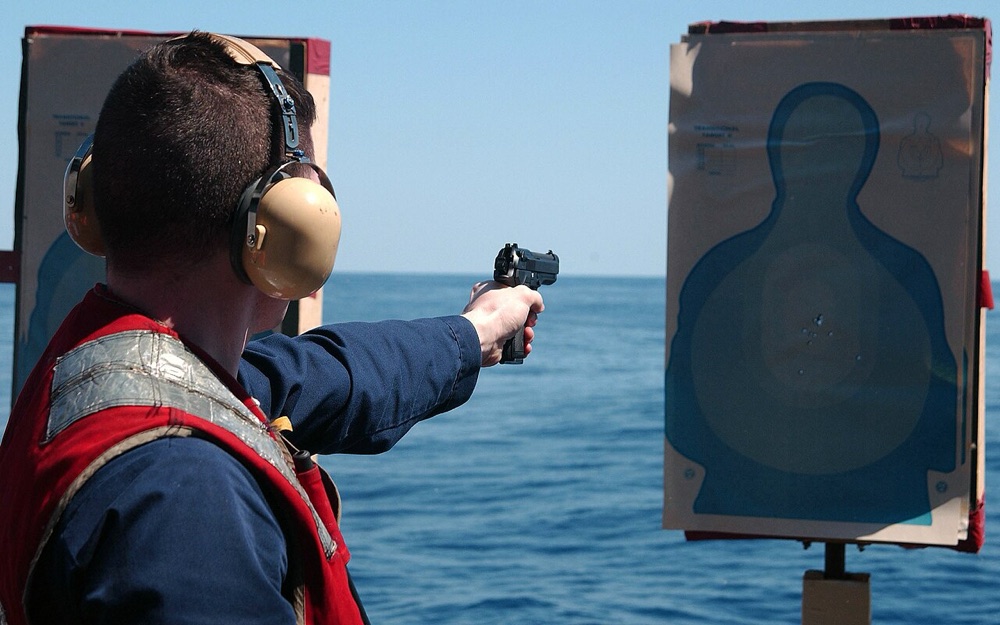
The FBI Pistol Qualification in 60 seconds (BLUF)
- The course of fire: The current version (revised January 2019) is 50 rounds in 10 timed strings at 3, 5, 7, 15 and 25 yards, on a QIT-99 “bottle” target. The par times add up to 63 seconds.
- Scoring: Every hit inside the bottle is 2 points, 100 possible. Agents pass at 80, FBI instructors at 90. On the FBI range, shots fired after the par time don’t count.
- How many misses you get: 80 points means 40 hits, so you can lose 10 rounds (misses plus late shots combined). At the instructor standard, only 5.
- Where people actually fail: Not the 25-yard line, which gives you 20 seconds for 8 rounds. The tight strings are the 5-yard ones from low ready (3 rounds in 2 seconds, 6 in 4) and, for slower shooters, every string that starts with a draw.
- Train it anywhere: Every string is a par-time problem, so a free shot timer app with a par buzzer turns it into a dry-fire or airsoft session at home.
Most people meet the FBI qualification the same way: somebody at the range says “you should be able to pass the FBI qual,” and it sounds like a serious test. Then you read the course of fire, see 25 yards and a kneeling position, and assume that’s the hard part. It isn’t. The 25-yard string is one of the most generous on the sheet. The strings that actually take points away from people happen at five and seven yards, in two to four seconds, and they are decided before the first shot by how fast you get the gun out and onto the target.
Posts
read more
Blake Drill Guide: Setup, Par Times by Level & How to Fix Slow Transitions
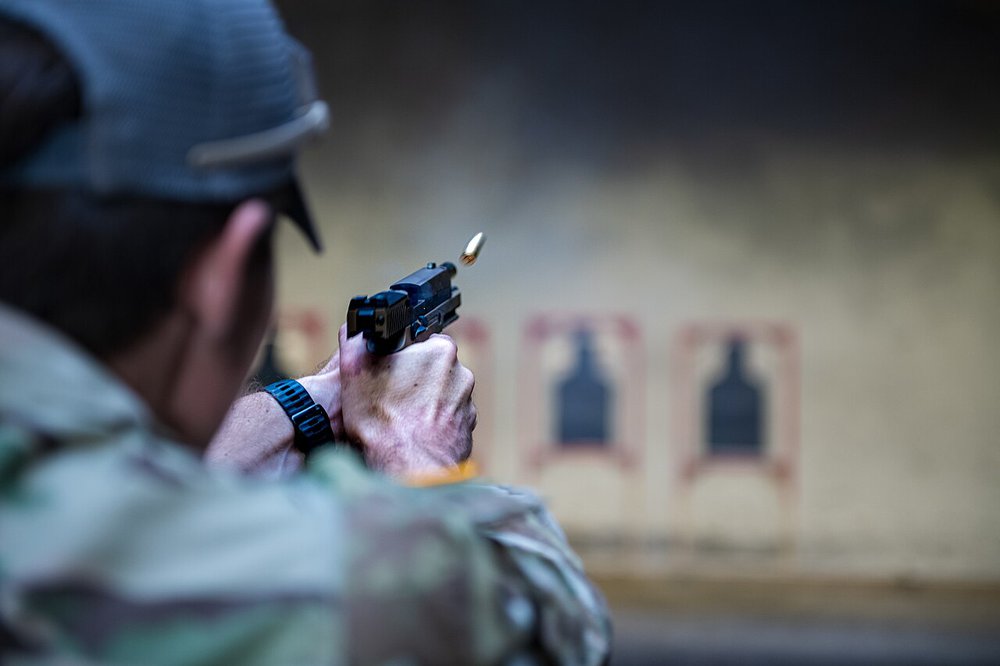
The Blake Drill in 60 seconds (BLUF)
- The course of fire: Three targets side by side, one yard apart, at seven yards. On the beep, draw and fire two rounds on each target — six rounds total. Left-to-right or right-to-left, your choice.
- The goal: 2.0 seconds with all hits in the A-zone. That is the same number as the Bill Drill, which is the whole point: the only thing that changed is that you now have to move the gun twice.
- What it really measures: Six shots means one draw, three same-target splits, and two transitions. The two transitions are the only part that is different from a Bill Drill.
- The test nobody tells you about: Shoot a Bill Drill and a Blake Drill back to back. Blake time minus Bill time, divided by two, is how much slower each transition is than a normal split. That one subtraction tells you whether to train transitions or something else.
- Realistic par times: Around 4 seconds for a new shooter, 3 seconds for a solid club shooter, 2.5 for a strong competitor, 2.0 for the people the drill was named after.
- Train it anywhere: It dry-fires and runs on an airsoft pistol unusually well, because a transition is mostly an eye skill, not a recoil skill. A free Airsoft Shot Timer app gives you the beep, the par buzzer, and every split.
Almost every shooter who has spent a season with a timer can tell you their Bill Drill time. Ask the same people for their Blake Drill time and you usually get a pause, then something like “I don’t really shoot that one.” That gap is the reason this drill exists. You can get very fast at putting six rounds into one box and still lose a surprising amount of time on a match stage, because real stages almost never give you one box. They give you three targets in an array, and the clock keeps running while your gun travels between them.
Posts
read more
The F.A.S.T. Drill: Par Times, Scoring & the Coin Only 26 Shooters Have Won (2026)
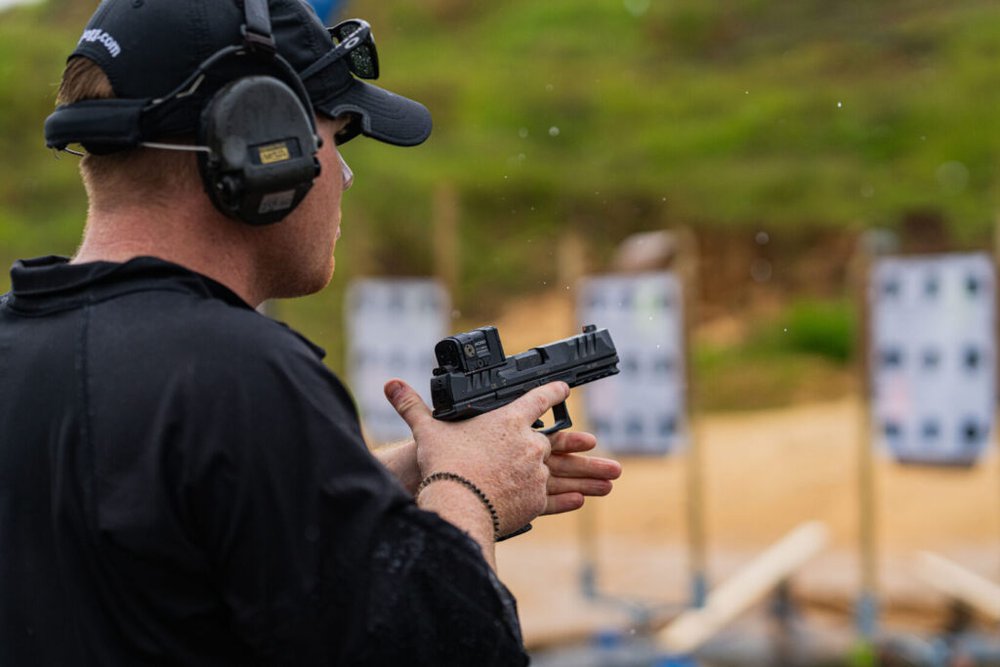
The F.A.S.T. Drill in 60 seconds (BLUF)
- What it is: Six rounds at 7 yards on one target — a 3×5 inch card in the head and an 8-inch circle in the body. Draw with exactly two rounds in the gun, fire two at the card, reload from slide lock, fire four at the circle.
- Why it hurts: The hardest shots come first and cold, then the gun runs dry on purpose. A slide-lock reload tears your grip apart, and you have to rebuild it while the clock runs.
- Ratings: 10+ seconds Novice · under 10 Intermediate · under 7 Advanced · under 5 Expert.
- Penalties are the whole game: every miss on the 3×5 card adds 2.00 seconds; every miss on the 8-inch circle adds 1.00 second. A 4.84-second run with two dropped body shots scores 7.34 — a Novice-to-Advanced fall from one bad grip.
- The coin: A clean sub-5.00 run, done in front of an authorized instructor, twice. Since 2007 exactly 26 people have earned one. There is also a “half pin” for a clean sub-7.00.
- Train it anywhere: Load two BBs in a GBB airsoft pistol and the slide locks back for real. With a free shot timer app you get the same draw, the same reload, and the same honest number — without burning 600 rounds finding out.
Most shooting drills flatter you. You pick the distance, you pick the pace, and you stop when the group looks good. The F.A.S.T. does the opposite: it hands you a small target, an empty gun, and a stopwatch, and then it tells everyone in earshot exactly where you actually are. Ernest Langdon — the man Todd Green authorized to carry on as arbiter of the F.A.S.T. Coin — puts it bluntly in his own classes: “It is a test specifically. It’s not something you practice.”
Posts
read more
Dot Torture Drill: Free Target, Course of Fire & How to Shoot It Clean
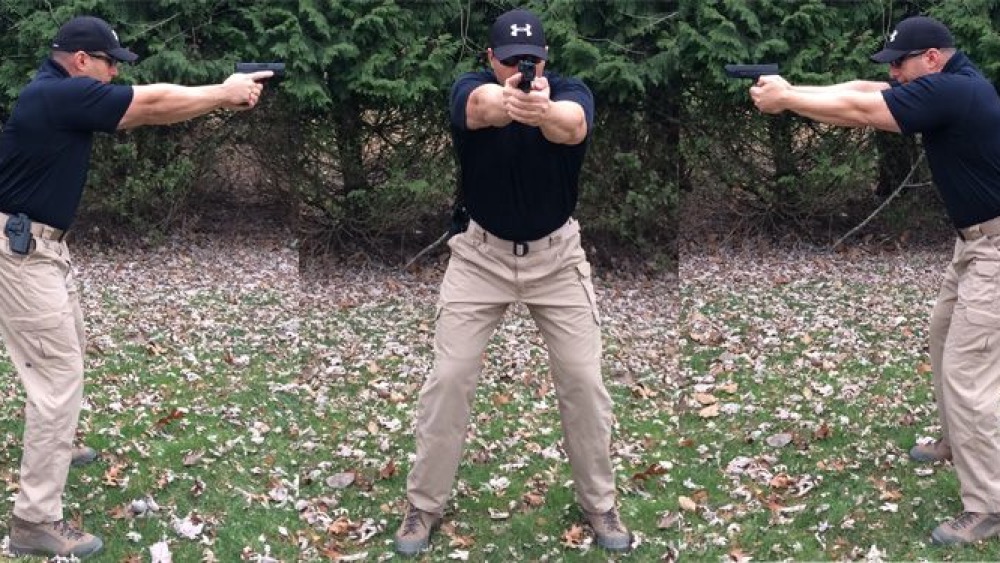
Dot Torture in 60 seconds (BLUF)
- What it is: A 50-round pistol drill shot at ten 2-inch circles printed on one sheet of paper, from 3 yards. Draws, transitions, strong hand, weak hand, and reloads are all built in.
- The catch: There is no time limit — and that’s exactly why it hurts. Nothing to blame. Every miss is pure trigger control.
- Passing score: 50 out of 50. One dropped shot means you run it again. Don’t move back to 4 yards until you can shoot it clean at 3 consistently.
- The target is free: Print the official 8.5×11" target from pistol-training.com on any home printer. No gear to buy.
- Train it anywhere: 3 yards is a hallway. Two-inch dots and an airsoft pistol or dry-fire reps at home build the exact same skill — and once you’re clean, a free shot timer app adds the pressure back in.
Three yards. Circles the size of a golf ball’s shadow. No timer, no pressure, all the time in the world. On paper, Dot Torture sounds like the easiest drill in shooting — right up until the first time you run it and watch round 37 land a quarter inch outside dot number eight, and the whole sheet is suddenly worthless. That’s the moment every shooter meets the real drill: it’s not a marksmanship test, it’s an honesty test.
Posts
read more
El Presidente Shooting Drill: How to Run It, What's a Good Time & USPSA 99-11 Scoring (2026)
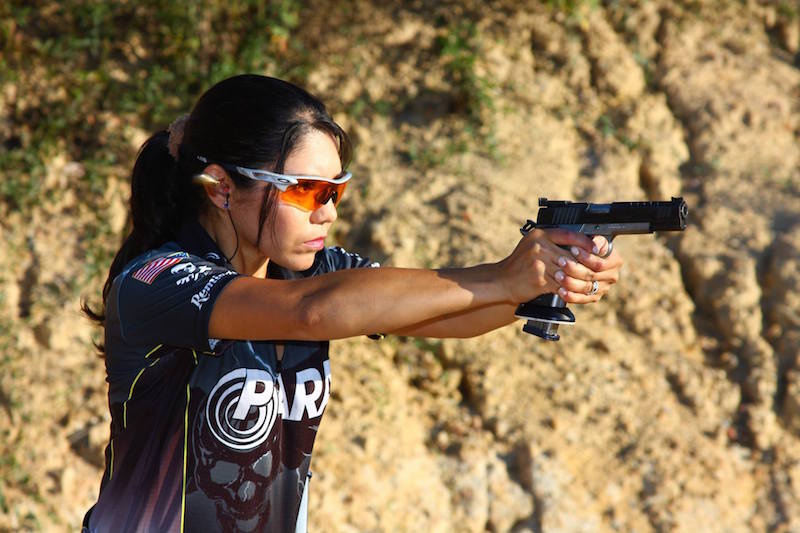
The El Presidente in 60 seconds (BLUF)
- What it is: Face uprange at 10 yards, turn on the beep, draw, fire two rounds on each of three targets, reload, and fire two more on each — 12 rounds total against the clock.
- Who made it: Jeff Cooper, who built it in the 1970s to gauge pistol proficiency for a presidential security detail in Latin America and published it in American Handgunner in 1979 — hence “El Presidente,” or “El Prez” for short. Full history below.
- It’s still a live classifier: El Prez is USPSA classifier CM 99-11 — a 12-round, 60-point, Virginia Count course. Shoot it at a match and it moves your classification.
- What’s a good time? The classic benchmark is a clean run in 10 seconds (all 12 in the A-zone). But USPSA scores it on hit factor, and for a clean run the conversion is dead simple: 60 ÷ your hit factor = your time. A 10 hit factor is 6.0 seconds with all twelve in the A-zone — roughly Grandmaster pace in the optics divisions.
- Why it’s the decathlon of drills: One run tests your turn, draw, target transitions, splits, a full reload, and recoil control — no single skill can hide. The common mistakes each leave a signature on the timer or the target, so you can diagnose your own run.
- Train it anywhere: The turn, draw, transitions and reload are all pattern skills. Run par-time reps with an airsoft pistol or dry fire on a free Airsoft Shot Timer app between range trips.
Ask a room full of shooters to name one pistol drill and more of them will say “El Presidente” than anything else. It’s been on range programs for fifty years, it shows up in USPSA classifiers, and it’s the first thing a lot of instructors reach for when they want to see whether a new student can actually run a gun rather than just shoot groups off a bench. If the Bill Drill is the honest test of your grip, the El Prez is the honest test of everything else.
Posts
read more
Pistol Drills: Which One to Shoot Today (by Skill Gap, Round Count & Par Time)
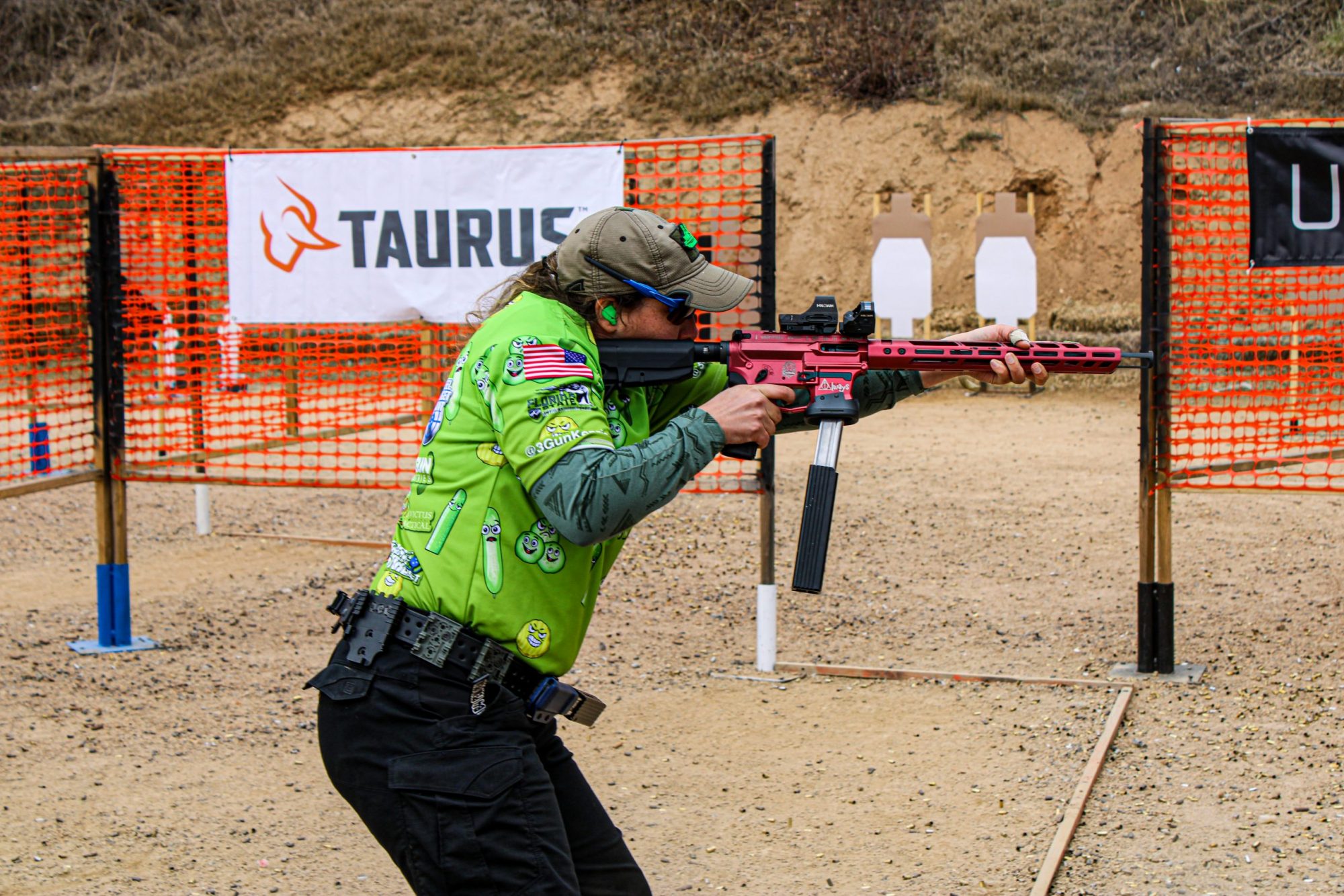
You already know the drills. That is not the problem.
The problem is standing at the bay with a box of ammo and forty-five minutes, trying to decide what to actually shoot. Most of us default to whatever we ran last time, burn through the box, and drive home with no idea whether anything improved. The drill was never the bottleneck — the choice was.