Casino Drill: 21 Rounds in 21 Seconds, Par Times & Reload Math
The Casino Drill in 60 seconds (BLUF)
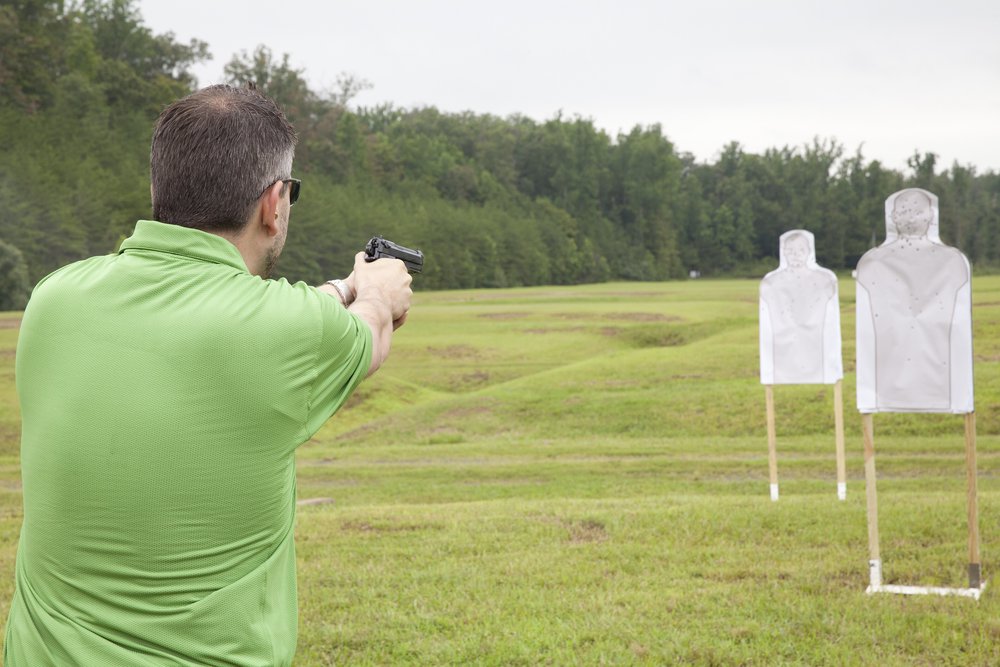
- The course of fire: A target with six numbered shapes at five yards. Start holstered with three magazines of seven rounds. On the beep, draw and shoot shape 1 once, shape 2 twice, shape 3 three times, and so on up to shape 6 six times — 21 rounds, two forced reloads, 21 seconds.
- Scoring: Total time plus one second for every miss and for every shot out of sequence. Clean and under 21.00 is a pass.
- Where the reloads land (7-7-7): after the first shot on shape 4 (three still owed) and after the fourth shot on shape 5 (one still owed). Remembering what you still owe is the whole drill.
- Realistic times: 21 seconds clean is a real accomplishment for most shooters; around 15 is strong; the best runs reported are in the 10-11 second range (a 10.33 clean run was posted at the 2019 Rangemaster instructor reunion).
- The counterintuitive part: one miss costs a full second. Making all 13 same-shape splits 0.07 seconds faster buys back less than that. Accuracy is the cheapest time on this drill.
- Train it anywhere: It runs well on an airsoft gas pistol with the magazines downloaded to seven BBs. A free Airsoft Shot Timer app gives you the random start, a 21-second par buzzer, and every split so you can find your two reload gaps.
The Casino Drill is one of those drills people love to fail. It looks easy on paper: five yards, big shapes, 21 seconds. Then you start counting, the slide locks back in the middle of shape four, and somewhere between the reload and the next press you forget whether you owed that shape two more rounds or three. Shooters who can run a clean Bill Drill on demand regularly throw this one away, and not because they can’t shoot.
That’s exactly what it was designed to do. Tom Givens of Rangemaster built it as a 21-round drill that makes you think while you run the gun: present from the holster, fire strings on several targets, handle two empty-gun reloads, and keep track of where you are the entire time. As he told one class, a 50-round box spent on two runs of this drill does you more good than 200 rounds of “banging pairs into a silhouette.”
What Is the Casino Drill?
The Casino Drill is a single-string pistol drill: draw and fire 21 rounds on six numbered shapes in order — one round on shape 1, two on shape 2, up to six on shape 6 — at five yards, inside 21 seconds, reloading twice along the way. The count matches the sum 1 + 2 + 3 + 4 + 5 + 6 = 21, and the usual explanation for the name is blackjack: 21 rounds, 21 seconds, a casino number.
The rules are short. Load three magazines with exactly seven rounds each, one in the gun and two on the belt, and holster the way you normally carry. Shapes must be shot in numerical order. When the gun runs dry you reload and finish the shape you were on before moving to the next one. Givens put it plainly to his students: if you put one round in number four and the gun locks open, you reload and put three more in it before you move on. You should end with an empty gun and the correct number of hits on every shape.
Scoring is time plus penalties. Each hit outside a shape adds one second, and so does each round fired out of sequence or any other procedural error. Some people treat it as strictly pass/fail — clean and under 21 seconds, or not — and some local USPSA clubs have even run it as a hit-factor stage. Either way, the number that matters for your own training is your clean time.
The Casino Drill Target
The standard target is the “Discretionary Command” target, sold by Action Target as the DT-2A and its sibling versions. It carries six shapes, each roughly the size of an 8-inch A-zone: two circles, two squares and two triangles, colored in pairs (two red, two blue, two yellow) and numbered 1 through 6. In the basic drill only the numbers matter. The shapes and colors exist for the variations, where an instructor calls “blue triangle” or “the two circles” instead of numbers.
The alternate versions of the target put the numbers in different positions. That isn’t cosmetic. Once you have shot the same layout a few dozen times you stop reading the numbers and run a memorized path, which quietly removes the thinking the drill was built to test.
If you don’t have the commercial target, you can draw one. Six shapes about eight inches across on a large sheet of cardboard, numbered in a scrambled order (not left to right, top to bottom) gets you most of the value. Make two or three layouts and rotate them.
Where the Reloads Land: The Counting Math
With the standard 7-7-7 load, your two reloads are not random at all. The shapes take 1, 3, 6, 10, 15 and 21 rounds cumulatively, so:
- Magazine 1 (rounds 1-7): shape 1 (1), shape 2 (2), shape 3 (3), then the first round on shape 4. Gun empty. You owe shape 4 three more.
- Magazine 2 (rounds 8-14): three more on shape 4, then four rounds on shape 5. Gun empty. You owe shape 5 one more.
- Magazine 3 (rounds 15-21): one on shape 5, six on shape 6.
The memorized version is “one, reload, three — four, reload, one.” Experienced shooters learn this pattern, and that’s when the drill can be gamed for very fast times. One competitor-blogger, writing after the drill was run as a stage at a KR Training summer USPSA match, noted how many competent competitors got tripped up the first time, and how quickly the pattern becomes a pre-loaded motor program afterward.
The fix is to change the magazine loads. Lucky Gunner’s crew ran it with 6, 7 and 8 rounds handed over in random order, still 21 total. The arithmetic of where the reloads land changes completely depending on the order, and it’s worth knowing:
Load 6-7-8 and the first reload falls exactly at the end of shape 3, a clean break; the second comes after the third round on shape 5, with two still owed. 6-8-7 also gives a clean first break, then leaves one owed on shape 5. 7-8-6 and 8-7-6 put the second reload exactly at the end of shape 5, another clean break, but the first one lands mid-shape (three owed on shape 4 for 7-8-6, two owed for 8-7-6). The two nastiest orders are 7-6-8 (three owed on 4, then two owed on 5) and 8-6-7 (two owed on 4, then one owed on 5), because both reloads interrupt a shape.
So of the six orders, four give you one “free” reload at a shape boundary and two give you none. When a partner hands you magazines blind, you don’t know which kind of run you are in until the gun locks open — which is precisely the point.
Casino Drill Par Times: A Budget for Every Level
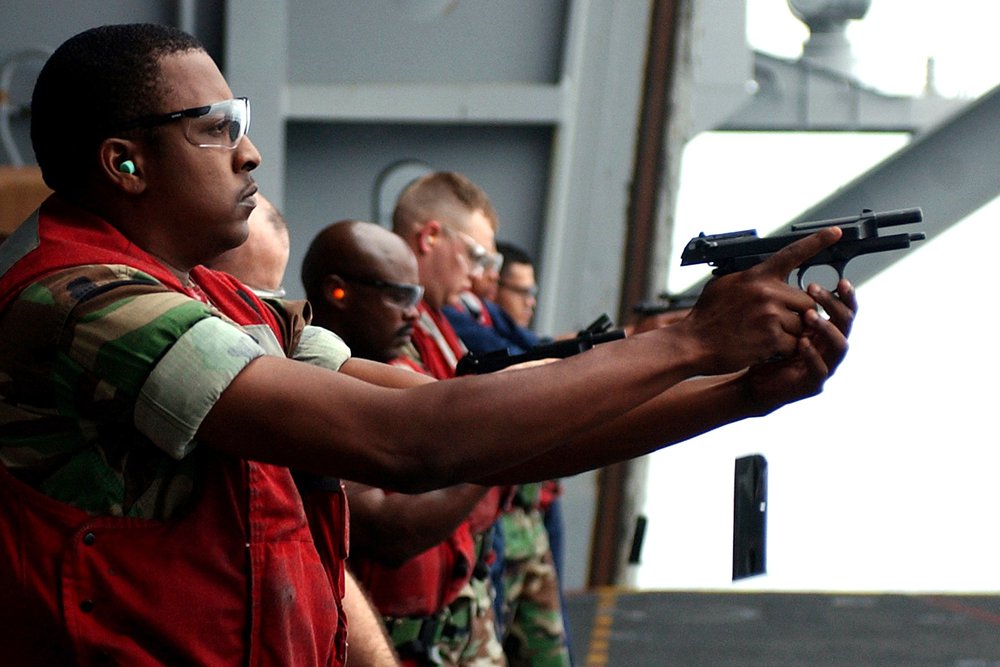
A clean 21 seconds is the classic standard, around 15 seconds is a strong run, and the top end is about 10 to 11 seconds. To see where that time actually goes, break the 21 shots into their parts. Shot one is the draw (beep to first shot). The other 20 gaps are 13 same-shape splits, 5 transitions between shapes, and 2 reload intervals (from the last shot before the gun runs dry to the first shot after). Every row below adds up exactly:
| Level | Draw | Split (×13) | Transition (×5) | Reload (×2) | Total | Reloads’ share |
|---|---|---|---|---|---|---|
| Just passing | 2.50 | 0.60 | 0.90 | 3.10 | 21.00 | 30% |
| Solid | 2.00 | 0.50 | 0.75 | 2.80 | 17.85 | 31% |
| Strong | 1.60 | 0.45 | 0.60 | 2.30 | 15.05 | 31% |
| Advanced | 1.30 | 0.35 | 0.45 | 1.90 | 11.90 | 32% |
| Record pace | 1.10 | 0.28 | 0.38 | 1.85 | 10.34 | 36% |
Two things jump out. First, the two reloads eat roughly a third of your time at every level. People treat the Casino as a counting drill and practice their splits, but the single biggest block of time is the two trips to the belt. If you can only work on one skill for this drill, make it the slide-lock reload, and our magazine reload guide breaks that down.
Second, the real-world runs fit the table. In Lucky Gunner’s filmed attempt, Chris Baker deliberately slowed down to guarantee every hit and came in at 20.98, clean, just under par. John Johnson ran the randomized 6-7-8 version clean in 14.86. And the third shooter, an instructor running her carry Glock 19, shot a raw 19.12, faster than Baker, but took four misses for a final 23.12. The misses started on the first shot after a reload and continued on the last six rounds, the two places this drill most often collects penalties.
Why One Miss Costs More Than Every Split
Here is the math that should change how you shoot this drill. A miss is one full second. To earn that second back from your splits alone, all 13 same-shape splits would have to get 0.077 seconds faster. Going from 0.45 to 0.38 on every split is months of practice for most shooters, and one thrown shot erases it.
The shapes make that trade worse than it sounds. At five yards an 8-inch shape is generous, but a triangle is not: its point is narrow, and a shot that would be a comfortable A-zone hit on a silhouette can easily cut the line on a triangle. And the drill has two places where people rush. The first shot after a reload is fired by someone who just lost time at the belt and wants it back, and the last six shots on shape 6 come at the end when you can feel the clock. Those two moments are where you should deliberately confirm a sight picture.
Out-of-sequence shots cost the same second. That’s the other half of the drill: the reload pulls your attention to your hands, and when your eyes come back up the brain grabs the most recent number it was holding. If you were “on 4” before the reload, it’s easy to fire your remaining rounds and drift to 5 one shot early, or to forget the one round still owed on 5 and start on 6. The cure is to say the debt to yourself as the gun locks open — “three on four” — and only then reload.
How to Run It on a Shot Timer
Set the timer to a random start delay and a par of 21.0 seconds. If your timer supports more than one par beep, add a checkpoint around where your first reload should finish so you can hear whether you’re on schedule. The Airsoft Shot Timer app does both: a random delay before the start beep, and multiple par beeps per run.
After the run, the shot list does the diagnosis for you. You should see 21 shots. The draw is the first number. The two biggest gaps after that are your reloads, and they should sit at shot 8 and shot 15 with a 7-7-7 load. Everything else is a split or a transition. Look at each reload interval, look at the split right after each reload (that’s the rushed shot people miss), and compare your average split with your best split. If the average is far from the best, you are hesitating somewhere, usually at the shape after a reload while you recount.
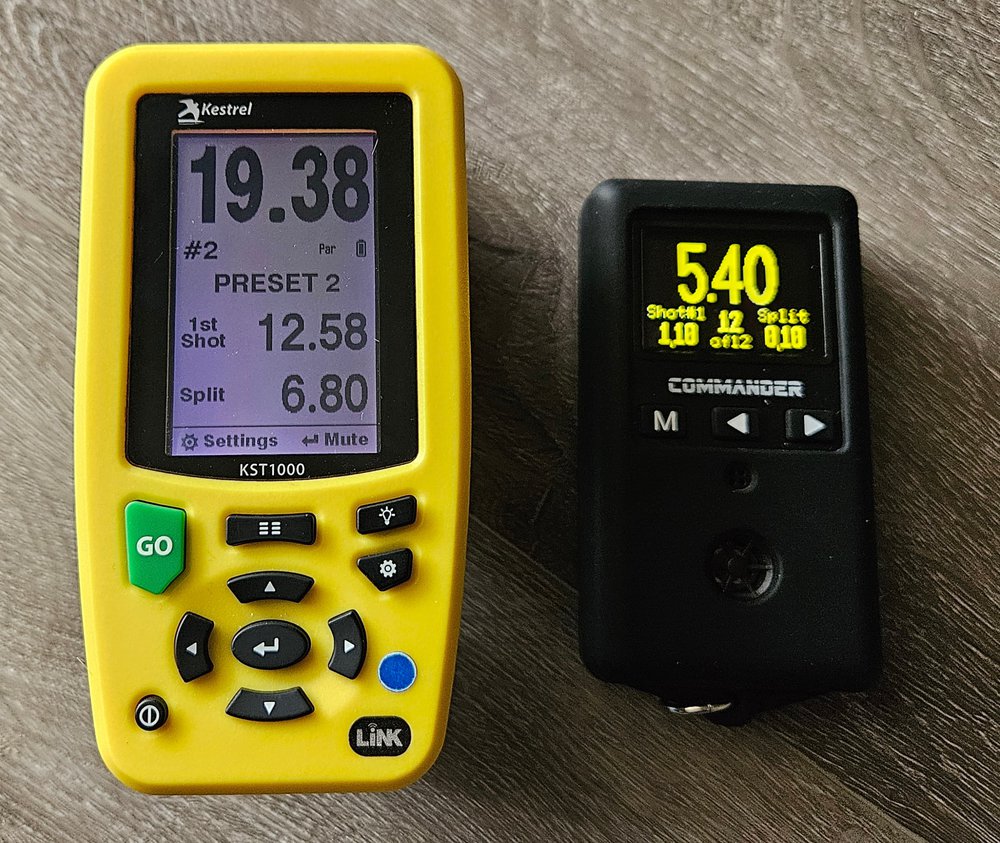
Don’t have a timer at the range? A free online par timer can give you the start beep and the 21-second buzzer from a phone browser. It won’t record your splits, but it is enough for pass/fail.
Variations That Keep It Hard
The drill’s value drops as you memorize it, so rotate variations once you can pass clean:
- Random magazine loads: 6-7-8 in an order you don’t see, or let a partner load any split as long as the total is 21.
- Different target layouts: rotate the alternate target versions or your own drawings so the path changes.
- Color and shape calls: an instructor names “red, then squares, then the yellow triangle” instead of numbers, which is the target’s original purpose.
- Mini Casino: a shorter version credited to Slytac, at three yards, shooting shapes 2 through 6 (20 rounds) starting with six in the gun and two seven-round spares, still 21 seconds.
- The 50-round session: Givens’ own suggestion is two Casino runs (42 rounds) plus four rounds strong-hand only and four weak-hand only on one shape. That covers most of what you need to be able to do with a pistol in a single box of ammo.
Interestingly, with the Mini Casino’s 6-7-7 load the reloads still land “one on 4, owe three” and “four on 5, owe one” — same debt pattern, different shapes counted.
Airsoft and Dry Fire Versions
The Casino Drill transfers to an airsoft gas blowback pistol better than most drills, because the hard part is in your head, not in recoil. Shoot it at the same five yards on a cardboard target with six 8-inch shapes. A GBB pistol at that distance will hold the shapes if you do your part, and the slide locks back on an empty magazine just like the real thing on most models.
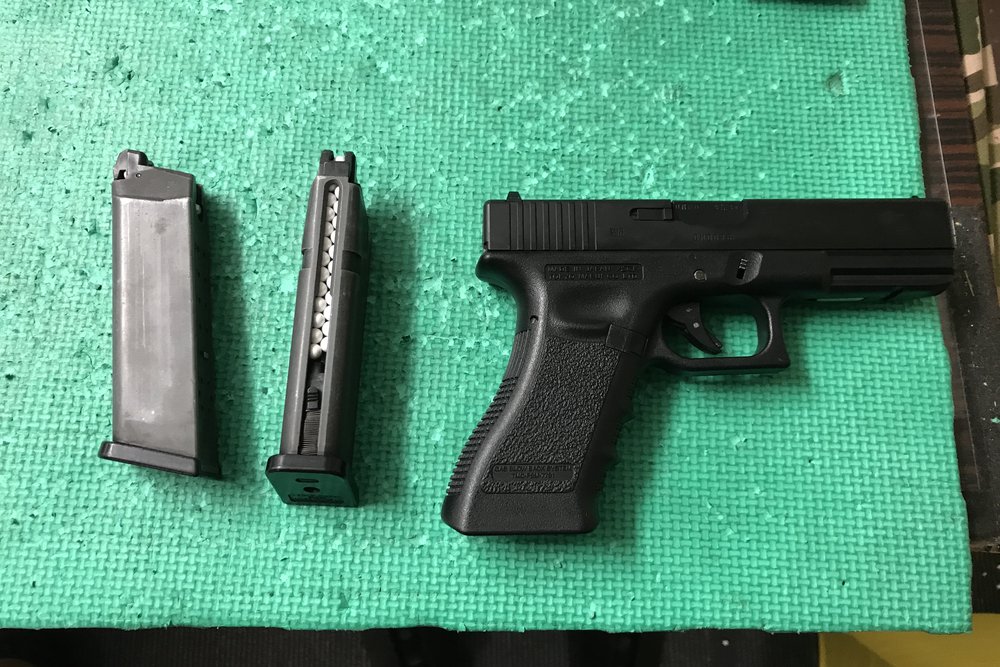
The one change you must make is downloading the magazines to seven BBs. A typical gas pistol magazine holds well over 20, which would let you shoot the whole drill without reloading and turn it into a counting exercise only. Load seven, seven and seven, or six, seven and eight for the random version. Short loads also help the gas: a magazine that only has to cycle seven rounds stays warmer and more consistent than one emptied in a 21-round string. Our Hi-CAPA guide covers gas and magazine care if your pistol starts to slow down late in a run.
In dry fire, you can rehearse the part that matters most. Put up the six shapes, start from the holster, and press once per round while you count out loud, with your magazines loaded to the same “empty” points with dummy rounds or empty mags. When you reach the round where the gun would lock open, perform the reload, say what you owe, and continue. You won’t get split times, but you will build the habit of naming the debt before you reload, and that habit is what wins this drill. Our dry fire training guide has a timer routine to fit it into.
Common Mistakes on the Casino Drill
Most failed runs come from the same handful of errors. The first is rushing the first shot after a reload to make up for time lost at the belt; the table shows a reload interval already costs about five times a split, and missing that shot costs another full second on top. The second is speeding up on shape 6 because the end is in sight and the clock feels close; slow the five splits on shape 6 by a tenth each and you lose half a second, while one miss loses a whole second.
The third is memorizing instead of counting. If your time drops suddenly after a few weeks on the same target, the drill might have become a sequence you run on autopilot. Change the layout or the magazine loads and see if the time holds. The fourth is treating it as a speed drill from the first day. Givens’ framing for students was simple: the goal is to finish before the second whistle, but if you aren’t done when it blows, keep going and finish every round correctly. Accuracy and the correct count come first; the 21 seconds will come.
For context with the other drills you may be shooting, the Bill Drill tests six fast splits on one target and the Blake Drill adds transitions. The Casino adds reloads and arithmetic on top of both, which is why it sits near the end of the progression in our pistol drills guide.
Frequently Asked Questions
What is the Casino Drill?
The Casino Drill is a pistol drill created by Tom Givens of Rangemaster. From the holster at five yards, you shoot six numbered shapes in order with the matching number of rounds — one on shape 1 up to six on shape 6 — for 21 rounds total, using three magazines of seven rounds so you have to reload twice. The par time is 21 seconds, with one second added for each miss or out-of-sequence shot.
What is a good Casino Drill time?
A clean run under 21 seconds is the standard pass and is genuinely difficult for new and intermediate shooters. Around 15 seconds clean is a strong time, around 12 is advanced, and the best reported runs are about 10 to 11 seconds, including a 10.33 clean run at the 2019 Rangemaster instructor reunion. Always compare clean times; a fast run with misses is slower once penalties are added.
When do you reload in the Casino Drill?
With three magazines of seven rounds, the first reload comes after the first round on shape 4, so you still owe it three rounds. The second comes after the fourth round on shape 5, so you still owe it one. If you load six, seven and eight rounds in a random order instead, the reloads move, and sometimes land at a shape boundary.
What target do you use for the Casino Drill?
The standard target is the Discretionary Command target sold by Action Target (DT-2A and its variants), with six shapes about the size of an 8-inch A-zone: two circles, two squares and two triangles in red, blue and yellow pairs, numbered 1 to 6. You can also draw your own with six 8-inch shapes numbered in a scrambled order.
Can you do the Casino Drill with an airsoft pistol?
Yes. Run it at five yards with a gas blowback pistol and load each magazine with only seven BBs (or six, seven and eight) so you still have to reload twice. The counting and reload pressure transfer almost completely, and a shot timer app will pick up the shots so you can review your splits and reload times.
The Takeaway
The Casino Drill packs a draw, five transitions, thirteen splits, two empty-gun reloads and a running count into 21 rounds, and it punishes the one thing most practice never trains: thinking while you shoot. Start by running it clean with no regard for time, learn to say what you owe as the gun locks open, then let the clock come down. When the 7-7-7 version gets comfortable, hand your magazines to a friend. Track every run on a free shot timer app and watch the two biggest gaps in your split list, because that’s where a third of your time is hiding.
Image credits: cover — Lance Cpl. Thomas DeMelo, U.S. Marine Corps; slide-lock reload — Christopher D. Blachly, U.S. Navy; both public domain, via Wikimedia Commons, resized. Shot timers — Ekuleshov73, “Modern shot timers”, CC BY-SA 4.0, via Wikimedia Commons, resized. Airsoft pistol — Ominae, “TM Glock 17 with magazines”, CC BY-SA 4.0, via Wikimedia Commons, cropped and resized. The photos show general pistol training, not a Casino Drill run.


Put a Shot Timer in Your Pocket
Airsoft Shot Timer is a free shot timer app tuned for airsoft and Action Air — it picks up BB gun shots, tracks your split times, and saves you the cost of a $150+ hardware timer for IPSC/IDPA practice.


- Casino Drill
- Casino Drill Target
- Casino Drill Par Time
- Tom Givens
- Rangemaster
- Mini Casino Drill
- Pistol Drills
- Shooting Drills
- Reload Drill
- Cognitive Load
- Shot Timer
- Split Times
- Par Time
- Defensive Shooting
- Airsoft
- GBB Pistol
- Dry Fire