USPSA, IPSC & IDPA Holster Rules 2026: Legal Height, Position + Best Race Holsters
🎯 Holster Rules & Best Picks: The 60-Second Answer
The two USPSA rules that decide whether your rig is legal: the heel of the butt of the handgun must be at or above the top of your belt — in the current 2026-09 rulebook that is rule 5.2.11, not 5.2.7.2, and it applies to every division — and the gun can sit no further from the belt than 2-1/8 inches in Production, Single-Stack and Carry Optics, or 3-3/8 inches in Open, Limited, Limited-10, Revolver and Limited Optics (rule 5.2.5), measured from the outer surface of the belt to the closest point of the grip. Thigh straps are legal in USPSA — that prohibition was removed on 29 February 2024, though thigh holsters still fail the height rule. IDPA is stricter: the butt must sit clearly above the top of the belt (8.5.1.12), an OWB holster may not stick out more than 3 inches (7.62 cm) from your body measured at the top of the belt, cant is limited to vertical or muzzle-rear by no more than 15 degrees (8.5.1.6), and magnets may not be used as magazine carriers (8.6.1.3). Cross-draw, shoulder, small-of-the-back and pocket holsters are banned outright (8.5.2). IPSC is not simply “USPSA abroad”: the height rule matches word for word (5.2.7.2, Appendix E3b), but the distance limit is 50 mm in every division — tighter than any USPSA division — tie-down rigs are still prohibited (5.2.7.1), the muzzle may not point more than 1 metre from your feet (5.2.7.3), and the January 2026 edition added a seventh division, Optics. Three things most club advice still gets wrong in 2026: the USPSA height rule has been renumbered to 5.2.11, thigh straps are no longer banned, and IPSC has no “trigger guard behind the hip bone” rule — what it has is the Appendix E2 forward line, which binds Standard, Classic, Production, Production Optics and Optics but not Open or Revolver. Full numbers, division by division, are in the holster rules section below.
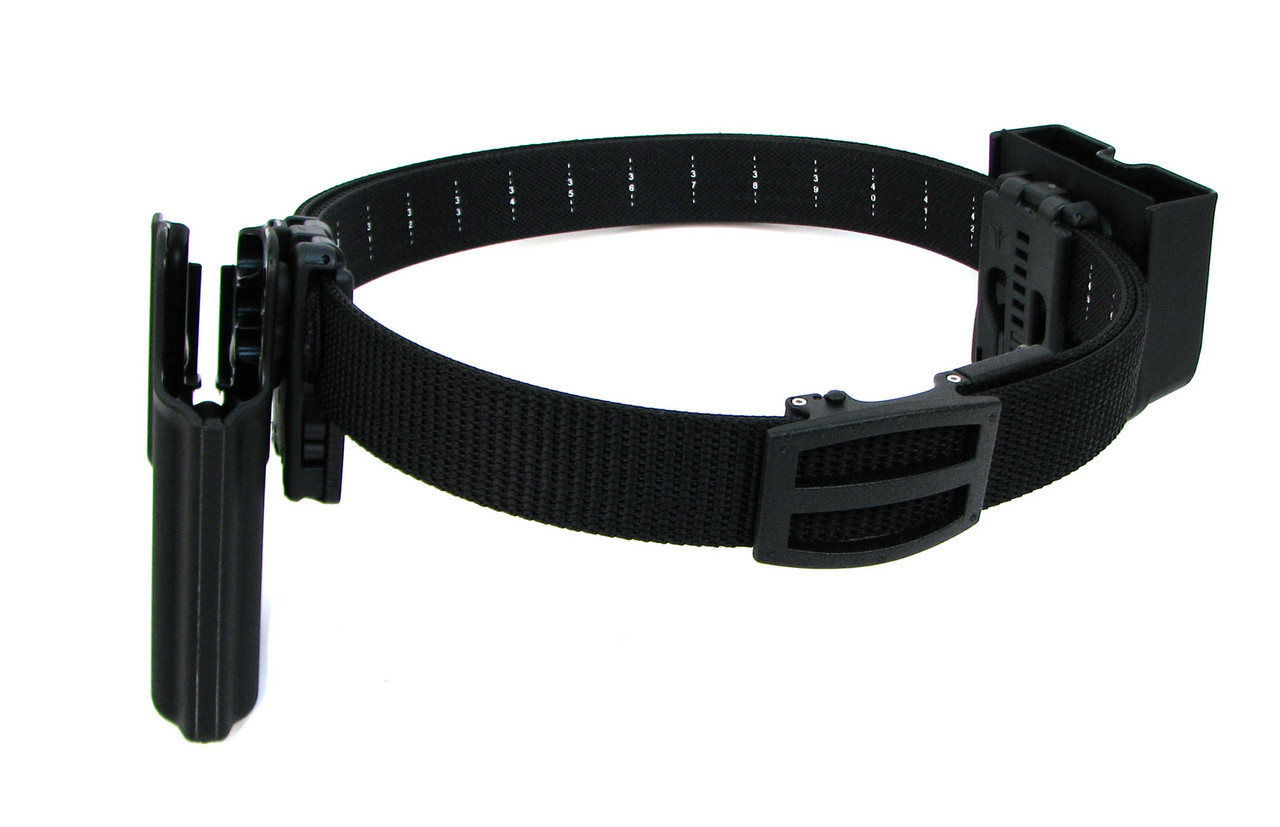
For USPSA/IPSC Open and Limited, a locking race holster like the DAA Alpha-X ($225) or Ghost The One EVO ($220) is the fastest choice. For Production / Production Optics / Carry Optics, run a no-drop Kydex rig — the Blade-Tech DOH ($100) or Comp-Tac International ($90) win on value. For IDPA, you need a concealable, all-day-wearable holster, so the DAA MAX IDPA or Dara Action Sport (~$80) keep you legal. Whatever you buy, the belt matters as much as the holster: a rigid competition belt keeps every piece of gear indexed shot after shot.
The single rule that trips people up: race holsters are legal in USPSA Open, Limited, Limited-10, Revolver and Limited Optics, banned in IDPA, and prohibited in Production, Single-Stack and Carry Optics — so buy for the division you actually shoot, not the one that looks fastest on YouTube.
Quick Picks by Use Case (2026)
- Fastest draw (Open / Limited): DAA Alpha-X or Ghost The One EVO
- Best value all-rounder (Production / PO / Carry Optics): Blade-Tech DOH or Comp-Tac International
- Best IDPA-legal holster: DAA MAX IDPA, Dara Action Sport, or Black Scorpion
- One rig for both IPSC and IDPA: DAA MAX IDPA + Wilderness belt
- Beginner on a budget ($100–130): Dara or Black Scorpion holster + Wilderness Instructor Belt
🎯 Before you spend $200 chasing speed: a faster holster only buys you about 0.2–0.5 seconds of draw time — and you literally cannot feel that improvement without measuring it. USPSA Grandmaster Mark Smith’s benchmark is a sub-1-second draw on the range and never slower than 1.75 seconds from concealment; for most shooters, once you can draw-and-fire on a 10-yard target with 80–90% consistency in about 1.25 seconds, your gear isn’t the bottleneck anymore — your technique is. Set that time as a par beep on the free Airsoft Shot Timer app, dry-fire your draw against it, and you’ll know whether a $225 holster is actually making you faster. It picks up airsoft and dry-fire hammer strikes too, so you can log reps at home tonight.
Why Is the Holster a Critical Piece of Competition Gear?
In competitive shooting, the holster is the first interface connecting you to your handgun. A good competition holster isn’t just a container for your pistol—it determines your draw speed, draw angle, and the starting point of your entire shooting sequence.
Picture this: you’re standing at the start position in an IPSC match. The moment the buzzer sounds, everything begins with the holster. If the retention is too tight, you’ll waste precious fractions of a second; if the holster position is off, your draw stroke will be compromised; if the holster doesn’t meet competition rules, you could be disqualified outright.
Based on experience, a competition holster can affect draw time by 0.2-0.5 seconds. In top-level competition, this difference is enough to determine the winner.
This Guide Will Cover
- The exact USPSA and IDPA holster rules, with rule numbers and measurements
- Detailed comparison of major competition holster brands
- Holster recommendations for different divisions
- Complete introduction to competition belt systems
- Budget planning and recommended setups for beginners
💡 Further Reading: Learn complete draw stroke training methods in our Pistol Draw Technique Complete Guide
USPSA, IPSC and IDPA Holster Rules: The Actual Numbers
Almost every “is this legal?” argument at a match comes down to two measurements: how high the gun sits relative to your belt, and how far it sits away from your belt. Everything else — material, retention, brand — is comparatively relaxed. So before you spend anything, learn those two numbers for the sport you actually shoot.
The rulebook editions used throughout this section are the USPSA Competition Rules 2026-09 (effective 1 September 2026), the IPSC Handgun Competition Rules, January 2026 Edition, and the IDPA Rulebook Ver. 2026.2 (amended 10 January 2026). That matters more than it sounds, because two of the three changed something about holsters recently enough that most of the advice you will find elsewhere is quoting a book that no longer exists.
What Actually Changed: Three Corrections to Advice You Will Still Read Everywhere
Start here, because these three things invalidate a large share of the holster guidance currently sitting on the first page of Google — and, until this revision, parts of this guide too.
The first is a renumbering. The famous USPSA requirement that the heel of the butt sit at or above the top of the belt is now Rule 5.2.11. It is not 5.2.7.2. In the current book, 5.2.7.2 is a completely different rule: a holster may not let the muzzle point farther than 3 feet from your feet while you stand relaxed. If a club handout, a shop’s buying guide or a forum answer cites 5.2.7.2 for the height rule, you are reading something written against an older edition, and you should double-check everything else in it.
The second is bigger, because it reverses a flat prohibition. Thigh straps and tie-down straps are legal in USPSA. NROI removed the rule prohibiting them effective 29 February 2024, and the official write-up is unambiguous: competitors can now use a holster with a thigh strap or tie-down without penalty. What has not changed is that a thigh holster — a rig that actually rides on your leg — is still out, because it cannot satisfy the height-to-belt and distance-from-belt rules. The strap is fine. The position is not.
The third is quiet but it will change your ruler reading. The datum for the distance measurement moved to the outer surface of the belt. USPSA used to measure from the inner belt; IPSC’s January 2024 edition measured from the competitor’s torso. Both now start at the outside of the belt. NROI’s reasoning was purely practical — the inner-belt measurement varied too much with body shape, so the outside of the belt is a more consistent place to put the overlay. If you measured your rig a couple of years ago and came in borderline, measure again; you may have more room than you think.
USPSA Holster Height (Rule 5.2.11): The Heel Must Not Be Below the Belt
This is the rule that catches the most people, and it applies to every USPSA handgun division without exception: when the handgun is holstered, the heel of the butt must not be below the top of the belt. In plain English — look down at your rig, and the bottom rear corner of your grip should not be hanging below your belt line. If it is, your holster is illegal, no matter which division you shoot. The only carve-out is Rule 5.2.8, for full-time law enforcement officers with arrest powers and military personnel on current active-duty orders using duty holsters, and even then only at Level I matches with the Range Master’s approval.
The reason so many shooters get caught out is that this feels backwards. A holster that rides lower feels faster, because your hand travels less to reach a full firing grip, and plenty of duty, drop-leg and “tactical” rigs are built exactly that way. USPSA doesn’t care how it feels. Discover the problem after you have shot a stage and Rule 5.2.10 gives you a zero for that course of fire — not retroactive to earlier stages, but a wasted stage all the same.
Every division appendix points back at this same rule in its own line item 12, “Restriction on position of holster and other equipment: Yes, see 5.2.11.” That is worth knowing because it means there is no division where you can trade height for something else. It is the one number with no exceptions anywhere in the book.
USPSA Distance From the Belt (5.2.5): 2-1/8", 3-3/8", and Where to Put the Ruler
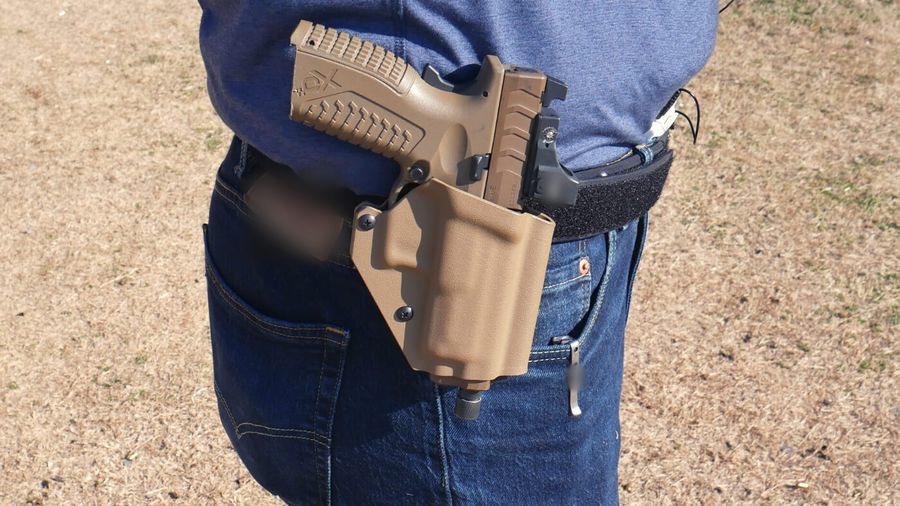
The second number is how far the gun can sit away from the belt, and unlike the height rule this one changes by division. Production, Single-Stack and Carry Optics are capped at 2-1/8 inches — the width of the official USPSA overlay. Open, Limited, Limited-10, Revolver and Limited Optics get 3-3/8 inches, the overlay’s length. PCC is its own case: there is no handgun, so the 2-1/8 inch limit applies to magazines only, and there is no restriction on where on the belt they sit.
That division split is worth reading twice, because the intuitive grouping is wrong. Limited Optics is a 3-3/8 inch division, not a 2-1/8 inch one, and it is listed in the rulebook with “Holster restrictions: No.” Carry Optics and Limited Optics sound like siblings and are treated completely differently — if you shoot both, the Carry Optics rig will always be legal in Limited Optics, but a Limited Optics rig very often will not be legal in Carry Optics.
How the measurement is taken changed too, and it is more specific than most people realise. Rule 5.2.5 says it is taken perpendicular to the top of the belt at the point of attachment to the belt, and from the outer surface of the belt to the closest point of the grip of the handgun and/or any reloading device. Two details hide in that sentence. You measure to the grip, not to the outside of the holster shell — so a bulky outer shroud does not count against you. And you measure from the outside of the belt, which on a stiff double-layer competition belt is a few millimetres further out than where people used to start. Rule 5.2.5.1 adds that the measurement must be taken with the equipment as worn, so measuring the holster on a table proves nothing.
There’s a practical consequence people miss when they buy secondhand: race holsters are usually sold with a hanger and drop attached, and the combination of drop plus offset is what puts a rig over the line. If you shoot Carry Optics with a rig built for Open, you often just need to remove the offset spacer rather than replace the holster.
A few dispensations exist. Rules 5.2.8 and 5.2.9 cover duty and significantly disabled competitors, and Rule 5.2.3.1 lets lady competitors wear the belt, holster and allied equipment at hip level — with a limit that is usually left out when this rule gets quoted: the top of the belt must not sit below the furthest lateral point of the top of the femur. In every case, the Range Master has the final say at that match. If you’re borderline, ask before the first stage, not after.
Thigh Straps Are Legal in USPSA Now — Thigh Holsters Still Are Not
This one deserves its own heading because the old answer is still being repeated everywhere, including by shops selling holsters. Many drop-offset rigs ship with a thigh strap in the box, and for years the standard advice was to leave it in the bag. That advice expired on 29 February 2024, when the USPSA Board’s rule changes took effect and the prohibition on thigh strap and tie-down holsters came out of the Competition rules. NROI published the explanation the following month: a lot of holsters sold in ordinary sporting-goods stores come with a strap and do not work well without it, the straps had never been prohibited in Steel Challenge or Multigun anyway, and the “tactical look” objection was not supported by anything measurable.
The current prohibited list in Rule 5.2.7 is short and it does not mention straps at all. It bans wearing more than one holster, shoulder holsters, a holster that lets the muzzle point farther than 3 feet from your feet while standing relaxed, and any holster that does not completely prevent access to the trigger while the gun is holstered.
So strap it down if your holster came that way. What you still cannot do is move the gun onto your thigh: the rig has to keep the heel of the butt above the belt under 5.2.11 and stay inside your division’s distance limit under 5.2.5, and a genuine thigh holster fails both. The strap is a stability device, not a licence to drop the gun another four inches.
USPSA Carry Optics (Appendix D7): The Slide-Coverage Rule Nobody Reads
Height and distance are the two rules everyone quotes, but Carry Optics has a third one written into its division appendix, and it is the one that quietly disqualifies a lot of cheap Kydex. Appendix D7 item 20 says the holster must be suitable for everyday use and that a “race gun” type holster is prohibited outright — then it adds a specific construction limit: the holster may not be manufactured or cut lower than, and must cover the slide up to, 1/2 inch below the ejection port. That is a real measurement on a real piece of plastic, not a judgement call, and a lot of minimalist competition shells sold online are cut lower than that.
It helps to know what the rulebook actually means by “race gun holster”, because the glossary defines it rather than leaving it to taste: a device which secures the handgun lacking an outer shroud, envelope or covering, relying on tension on the trigger guard and sometimes a barrel stud to retain the firearm. That is why the skeletonised competition shells fail and why an ordinary-looking Kydex OWB passes, even when the Kydex one is faster.
There is one carve-out worth knowing. Belt-slide “Yaqui” style holsters are exempt from the coverage requirement, which is why you occasionally see a very open-looking rig pass inspection while a newer skeletonised shell gets rejected. Drop-offset holsters are also allowed in Carry Optics, provided the heel of the butt still sits above the belt under 5.2.11 and the whole assembly stays inside the 2-1/8 inch measurement.
Production and Single-Stack carry the same holster restrictions, with Production adding a revolver-specific line that revolver holsters may open no lower than halfway down the cylinder. Limited, Limited-10, Revolver and Limited Optics have “Holster restrictions: No” — the everyday-use and slide-coverage language simply does not apply to them. That is the single most common mistake in guides that treat the optics divisions as one group.
The same appendix quietly regulates your magazine pouches too: each magazine has to be contained individually in its own pouch or attached individually to a magnet, with pockets the only exemption. Twin-magazine “double” pouches that hold two magazines in one shared cavity are the classic failure here, and shooters normally discover it on the clock at their first major. Worth pairing with Rule 5.2.4.1, which says that when the Written Stage Briefing does not require retention devices at all, you may use whatever you like on your person — multiple magazines in one pouch, or on a magnet. Magazines in the mouth are a stage zero, always.
Appendix Carry Is Now Legal in USPSA — The “Behind the Hip” Rule Is Gone
This is the single most out-of-date piece of advice still circulating in club forums and old YouTube videos, so it is worth stating plainly: USPSA removed the “behind the point of the hip” positioning requirement for Production, Single-Stack and Carry Optics. Every division appendix now answers the position question with a single cross-reference to 5.2.11 — the height rule — and nothing else. You may place the holster anywhere on the belt that you like, including appendix position and inside the waistband, as long as the two measurements still comply. Rule 5.2.6 confirms it from the other direction: providing the division does not restrict the type or physical location of the holster, IWB and concealment holsters are legal, as long as the gun can be safely drawn and replaced.
Most competitors have not moved, because a strong-side hip draw is still where the fastest times live and the muscle memory is already built. But the change matters if you are coming from concealed carry, or if you have a short torso and a hip holster forces an awkward reach. If you do experiment, treat the position change as a measurable variable rather than a feeling — set a par time on the free Airsoft Shot Timer app, shoot twenty draws from each position, and compare the median rather than the fastest rep.
One thing you cannot do is keep changing your mind mid-match. Rule 5.2.5.3 says the position of holsters and allied equipment on the belt must not be moved or changed during a match unless the Written Stage Briefing says so or an RO requires it, any permanently attached retaining strap has to be closed before the “Standby” command, and removing holsters or allied equipment from the belt during the match is a zero for the stages in which it happened. Pick a position on the practice range, not between stage three and stage four.
Steel Challenge and Multigun: Same Governing Body, Different Answers
Even after the thigh-strap change, the sports diverge in ways that catch people out. Steel Challenge does not allow drawing from concealment, which surprises USPSA shooters going the other way, and Multigun has its own equipment schedule entirely. What the 2024 change did was remove one of the last places where the same piece of kit was legal at one match and illegal at the next under the same organisation’s banner — straps had never been restricted in Steel Challenge or Multigun, and now they are not restricted in USPSA handgun either.
The penalty structure is also worth knowing before you agonise over a borderline rig at your first match. Get the distance rule wrong and have it discovered after you have shot, and Rule 5.2.10 gives you a zero for that course of fire — not a match disqualification, not retroactive to stages already completed. The downside of being wrong is one bad stage, and the fix is usually a spacer.
IDPA Holster Rules (8.5.1, Rulebook 2026.2): Concealment Changes Everything
IDPA is built around gear you could plausibly carry all day, and the rules read that way. A legal holster must be suitable for all-day concealed carry or be a duty-style rig, and you have to wear it on every stage regardless of start position (8.5.1.1), secured on an IDPA legal belt (8.5.1.4). It must sit on the strong-side hip: for a right-handed shooter that means inside the waistband between 12 and 4 o’clock, or outside the waistband between 2 and 4 o’clock (8.5.1.2), with 2 o’clock defined as no further forward than your hip bone (8.5.1.3). Left-handed shooters mirror it — 8 to 12 IWB, 8 to 10 OWB. Appendix carry is explicitly defined as IWB between 12 and 2 o’clock for right-handers (8.5.1.14), so it is legal, but only inside the waistband.
For OWB holsters the two numbers to remember are 3 inches and 15 degrees: the holster may not protrude more than 3 inches (7.62 cm) from your body, measured from the body at the top of the belt to the outside of the holster, and cant is limited to neutral (vertical) or muzzle-rear by no more than 15 degrees (8.5.1.6). Muzzle-forward cant is out entirely. And just like USPSA, the butt of the firearm must sit clearly above the top of the belt (8.5.1.12). Note that IDPA is the one sport of the three that measures to the outside of the holster rather than to the grip — so the same rig can pass a USPSA overlay and fail an IDPA tape measure.
The construction rules matter when you’re shopping online. The holster has to completely cover the trigger guard and prevent activation of the trigger while holstered (8.5.1.5), hold the gun with enough tension that you could go about a normal day without losing it (8.5.1.7), be made of normal-thickness common holster materials that encase the gun on at least three sides, and stay open after the draw so you can reholster one-handed — no collapsible holsters (8.5.1.8). Retention devices may be permanently removed or permanently disabled, but you can’t just tape one open for a match (8.5.1.10). Your holster also has to stay on the same side of your body for the entire match (8.5.1.9). Helpfully, 8.5.1.11 says outright that holsters may be modified to meet IDPA rules, which is the rule to point at when someone tells you a thumb break has to stay because it came from the factory.
Four carry styles are simply not permitted in IDPA (8.5.2): cross-draw, shoulder holsters, small-of-the-back, and pocket carry. Don’t try to argue these at a match — they’re a named list, not a judgement call.
One more thing that surprises people: IDPA regulates your belt too. It can be no wider than 1-3/4 inches or thicker than 5/16 inch, and it must pass through all but two of your pant loops (8.4). That single rule is what makes most dual-layer competition belts illegal for IDPA, and it’s why the “one rig for both sports” answer usually starts with the belt, not the holster.
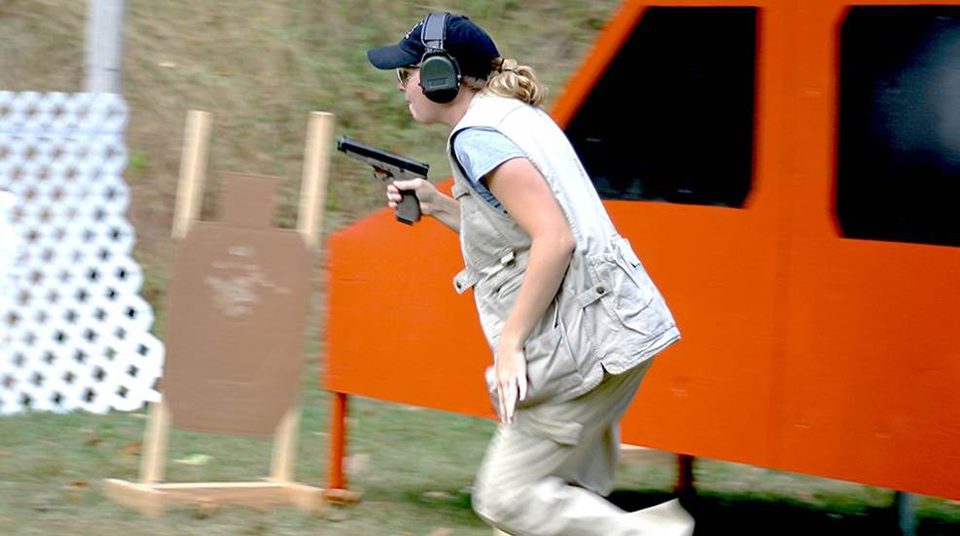
The Magazine Pouch Rule That Splits USPSA and IDPA: Magnets
This is the detail that quietly breaks a dual-sport rig, and almost nobody mentions it when comparing the two sports. USPSA Appendix D7 explicitly contemplates magnets — each magazine individually attached to a magnet is a legal way to carry them in Carry Optics — and Rule 5.2.4.1 goes further when the stage briefing does not mandate retention devices. IDPA goes the opposite way: Rule 8.6.1.3 states that magnets worn on belts or in concealment garments may not substitute traditional carriers. On top of that, 8.6.2.1 requires magazine carriers suitable for concealed carry and all-day wear, 8.6.2.2 requires them on an IDPA legal belt, and 8.6.2.3 requires them to be positioned so the magazine is completely concealed.
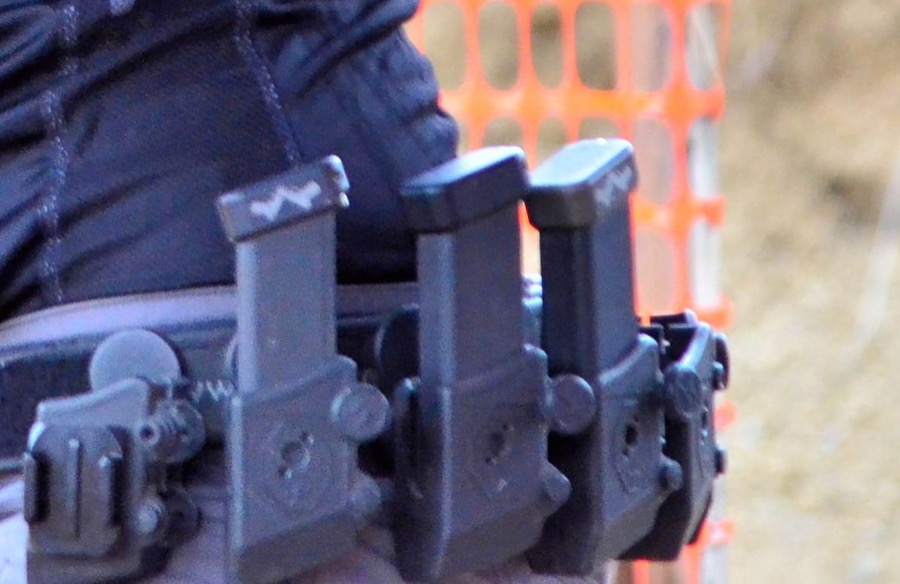
So the magnet bar that makes your Carry Optics reloads smooth is not a partial problem in IDPA, it is simply not a carrier. If you shoot both sports off one belt, plan on swapping the ammunition carriers, not just the holster — and remember that under IDPA 8.6.1.1 you can always fall back on pockets, provided the spare magazines are concealed at the start signal.
IPSC Holster Rules (January 2026 Edition): 50 mm, One Metre, and a Seventh Division
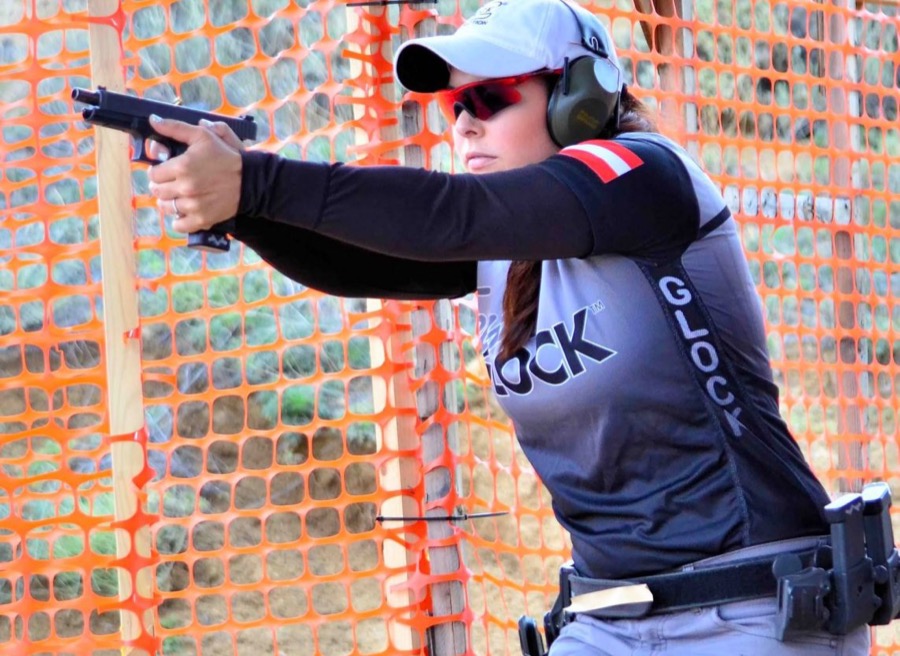
Most English-language holster articles treat “USPSA” and “IPSC” as the same thing. They are not, and if you shoot outside the United States that assumption will eventually cost you a stage. USPSA is IPSC’s United States region, but it publishes its own rulebook, so the numbering runs in parallel while the numbers themselves diverge. The core position rule is the one place they agree almost word for word: IPSC rule 5.2.7.2 prohibits a holster that lets the heel of the butt of the handgun sit below the top of the belt (illustrated in Appendix E3b), with the same narrow exception under 5.2.8 for law enforcement and military duty holsters. If your rig passes the height check in one sport, it passes it in the other.
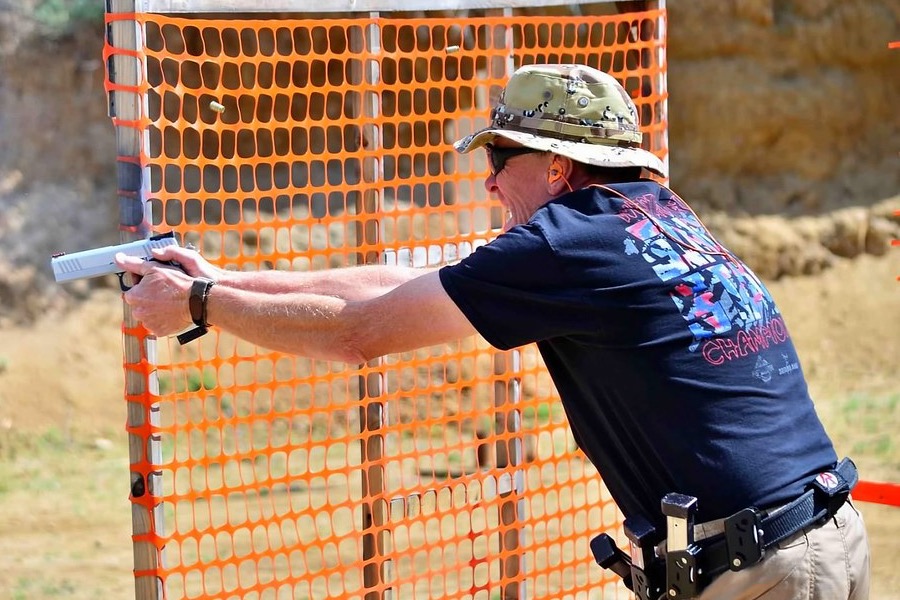
The distance rule is where people get burned, because IPSC publishes one number and it is tighter than anything in USPSA. Every IPSC handgun division — Open, Standard, Classic, Production, Production Optics, Revolver and the new Optics Division — caps the handgun and allied equipment at 50 mm from the belt. Fifty millimetres is about 1.97 inches, so even the strictest USPSA divisions at 2-1/8 inches (54 mm) give you a few millimetres more room than IPSC does, and an Open rig built to the American 3-3/8 inch allowance is nowhere close. The measurement method in Rule 5.2.5 also reads differently: IPSC measures from the outer surface of the belt to the centre of the longest dimension of the handgun grip, while USPSA measures to the closest point of the grip. Same-looking rule, two different readings off the same rig, and the IPSC one is less forgiving for a wide grip.
Worth flagging if you own an older copy of the rulebook: the January 2024 edition measured from “the competitor’s torso” and the January 2026 edition changed that to “the outer surface of the competitor’s belt”. That is the same direction USPSA moved in, and it is another reason to check the cover date before you trust a printed rulebook you’ve had in the range bag for a couple of seasons.
IPSC’s prohibited-holster list is also longer than USPSA’s. Rule 5.2.7 bans more than one holster, and then 5.2.7.1 through 5.2.7.4 rule out shoulder holsters and “tie-down” rigs, visible or otherwise — so the thigh strap that USPSA legalised in 2024 is still prohibited internationally — a heel below the belt, a holster that lets the muzzle point farther than 1 metre from your feet while standing relaxed, and any holster that fails to completely prevent access to the trigger or that requires you to use your trigger finger to unlock or release the gun on the draw. That last clause is easy to skim past and it is a genuine shopping constraint: index-finger release retention systems are out, thumb-operated ones are fine.
Where IPSC is genuinely different again is the belt itself. The belt carrying the holster and all allied equipment must be worn at waist level, and it must be either permanently sewn at the waist or secured with a minimum of three belt loops (5.2.3) — a specific number USPSA now matches, and one that quietly rules out wearing a competition belt over a pair of shorts with two loops at the back. If you wear a second belt at waist level, the holster and all allied equipment go on the lower belt. Female competitors in all divisions are permitted to wear the belt carrying the holster and allied equipment at hip level (5.2.3.1). USPSA has an equivalent allowance in its own 5.2.3.1, with the added limit that the top of the belt must not be below the furthest lateral point of the top of the femur, so this is one of the places the two books have converged rather than diverged.
Two more IPSC rules with no USPSA sibling worth knowing. Rule 5.2.4.2 says the position of the holster and allied equipment must not be moved or changed from stage to stage, and Rule 5.2.1.2 requires a handgun carried in a holster between stages to have an empty magazine well with the hammer or striker decocked — the first offence is a warning, and it escalates from there. That second one is the answer to the question people actually mean when they ask whether an empty holster is legal at an IPSC match: the holster is fine, the loaded gun in it is not.
The “Hip Bone” Line in IPSC Is Appendix E2 — and It Does Not Apply to Every Division
If you have read that IPSC Production requires the trigger guard to sit behind your hip bone, that is a garbled version of a real rule, and the garbled version is worth correcting because it sends people shopping for the wrong thing. There is no strong-side or hip-bone wording anywhere in section 5.2 of the IPSC handgun rules. What exists is Rule 5.2.10: in some divisions, neither the handgun, nor any of its attachments, nor the holster, nor any allied equipment may extend forward of the line illustrated in Appendix E2 at the start signal, and non-compliant items must be adjusted on the spot or Rule 6.2.5.1 applies.
The division appendices say exactly who this binds, and it is not everyone. Standard, Classic, Production, Production Optics and the new Optics Division all have “Rule 5.2.10 / Appendix E2 applies: Yes.” Open and Revolver have “No.” So the forward-line restriction is a middle-division rule, not a Production quirk, and an Open shooter is free to hang equipment as far forward as the 50 mm distance rule allows.
The Optics Division is itself the newest thing in the book — a seventh handgun division that did not exist in the January 2024 edition — and it comes with a holster-relevant footnote most division tables omit. Special condition 15 of Appendix D6 says that for Optics Division, Appendix E2 will consider the slide, not the optical sight, as the foremost limit behind the hip bone. In other words, the optic overhanging the front of your slide does not count against the forward line. If you are building an Optics rig and measuring nervously, measure the slide.
The practical summary, if you shoot on both sides of the Atlantic: build to the strictest combination — heel above the belt, inside 50 mm, no tie-down strap, trigger guard fully covered, nothing forward of the E2 line, and no trigger-finger release. A rig built that way is legal everywhere except IDPA, where the belt rule and the magnet rule will get you anyway.
Quick Reference: USPSA vs IPSC vs IDPA
| Rule | USPSA (2026-09) | IPSC (Jan 2026) | IDPA (2026.2) |
|---|---|---|---|
| Butt height | At or above top of belt, all divisions (5.2.11) | Same — heel below belt prohibited (5.2.7.2, Appendix E3b) | Clearly above top of belt (8.5.1.12) |
| Distance limit | 2-1/8" Production/Single-Stack/Carry Optics; 3-3/8" Open/Limited/L10/Revolver/Limited Optics; PCC 2-1/8" magazines only (5.2.5) | 50 mm, every division (5.2.5 + Appendix D) | Max 3" protrusion, OWB (8.5.1.6) |
| Measured from → to | Outer surface of belt → closest point of grip, perpendicular at the attachment point (5.2.5) | Outer surface of belt → centre of the longest dimension of grip (5.2.5) | Body at top of belt → outside of the holster (8.5.1.6) |
| Belt | Waist level = level of the original belt loops; fixed or min. 3 belt loops (5.2.3) | Waist level; sewn or min. 3 belt loops; on the lower belt if two are worn (5.2.3) | Max 1-3/4" wide × 5/16" thick, through all but two pant loops (8.4) |
| Position on belt | Anywhere — every appendix answers “see 5.2.11”; IWB and concealment holsters explicitly legal (5.2.6) | Nothing forward of the Appendix E2 line in Standard/Classic/Production/PO/Optics; not Open or Revolver (5.2.10) | IWB 12–4 or OWB 2–4 o’clock, right-handed (8.5.1.2) |
| Muzzle direction | No farther than 3 feet from the feet, standing relaxed (5.2.7.2) | No farther than 1 metre from the feet, standing relaxed (5.2.7.3) | Neutral or muzzle-rear cant, max 15° (8.5.1.6) |
| Thigh strap / tie-down | Legal since 29 Feb 2024; thigh holsters still fail 5.2.11 and 5.2.5 | Prohibited — tie-down rigs, visible or otherwise (5.2.7.1) | Not permitted |
| Race holsters | Prohibited in Production/Single-Stack/Carry Optics; no holster restriction in Limited/L10/Revolver/Limited Optics | Restricted in Production; varies by region | Banned |
| Slide coverage | Production/SS/CO: no lower than 1/2" below the ejection port; Yaqui exempt (App. D4/D5/D7) | Trigger guard must be covered; no trigger-finger release (5.2.7.4) | Covers trigger guard, three sides, stays open (8.5.1.5 / 8.5.1.8) |
| Magazine carriers | Each magazine individually contained or on its own magnet (App. D7); free choice if the WSB waives retention devices (5.2.4.1) | Purpose-made retention devices; rear pockets approved (5.2.4) | No magnets (8.6.1.3); carriers completely concealed (8.6.2.3) |
| Concealment | Not required | Not required | Required on every stage (8.5.1.1) |
How to Check Your Own Rig in 60 Seconds
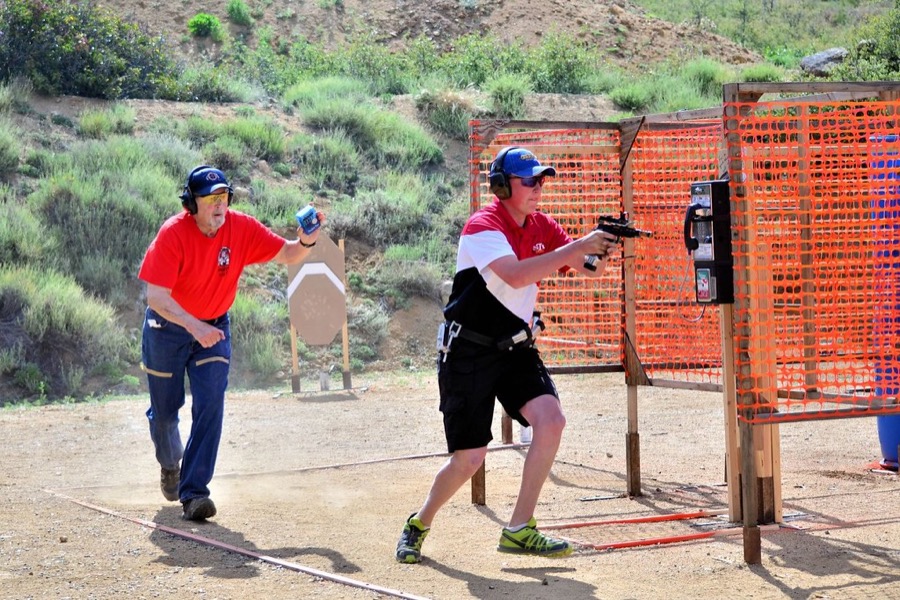
You don’t need an official overlay to sanity-check a rig at home, but you do need to measure the way the rulebook measures, and that is where most home checks go wrong. Put the belt on with the unloaded gun holstered, stand naturally, and check three things in order.
First, look at the bottom rear corner of the grip. If any part of it dips below the top edge of the belt, you’re illegal in both USPSA and IPSC and nothing else matters. Fix that before you measure anything.
Second, measure the distance — and measure it from the outer surface of the belt to the grip, not to the outside of the holster. Hold the ruler perpendicular to the top of the belt at the point where the holster attaches. For USPSA, go to the closest point of the grip: under 2-1/8 inches keeps you legal in Production, Carry Optics and Single-Stack, and under 3-3/8 inches covers Open, Limited, Limited-10, Revolver and Limited Optics. For IPSC, go to the centre of the grip’s longest dimension and you need under 50 mm in every division. IDPA is the odd one out and the only place the old habit is correct: there you measure from the body at the top of the belt to the outside of the holster, with a 3 inch limit.
Third, look at the muzzle. Standing relaxed, it should point within 3 feet of your feet for USPSA and within 1 metre for IPSC; for IDPA it should be vertical or angled slightly rearward, never forward. Then glance at the strap situation — a thigh strap is fine in USPSA, and still not fine in IPSC.
If a legality fix forces you to move the holster higher or tighter to the body, that changes your draw stroke, and the change is usually smaller than it feels. This is the moment to actually measure rather than guess: set a par time on the free Airsoft Shot Timer app, run ten dry-fire draws from the old position and ten from the new one, and compare the spread rather than your best single rep. Most shooters find a legal rig costs them a few hundredths, not the half-second they feared — and knowing that number stops you from quietly avoiding matches because you think your gear is holding you back.
Competition Holster Types Explained
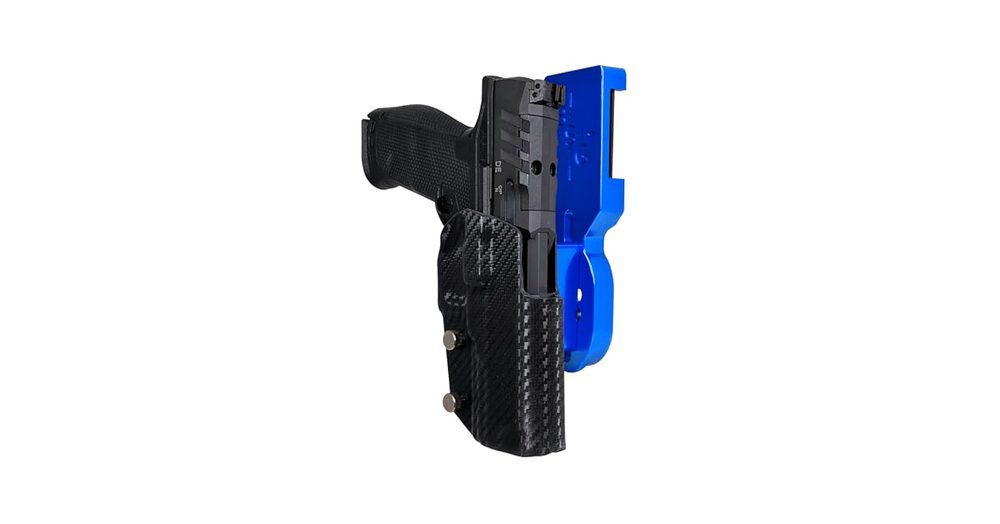
Race Holster (Pure Competition Holster)
Race Holsters are designed purely for speed, typically featuring:
Characteristics:
- Ultra-low friction or magnetic retention
- Significant drop and offset design, positioning the grip closer to the hand’s natural position
- Highly adjustable (angle, height, distance)
- Not suitable for daily carry or concealment
Applicable Competitions:
- IPSC/USPSA Open Division
- IPSC/USPSA Limited Division
- 3-Gun Competition
Representative Products:
- Double-Alpha Academy (DAA) Alpha-X
- DAA Race Master
- Ghost Holsters The One EVO
- CR Speed WSM II
Competition Holster (Dual-Purpose)
Between pure competition and daily carry, meeting more division rules:
Characteristics:
- Kydex or high-strength plastic material
- Adjustable retention
- No or limited drop/offset
- May comply with IDPA rules
Applicable Competitions:
- IPSC/USPSA Production
- IPSC/USPSA Production Optics
- IDPA all divisions
Representative Products:
- Safariland 6354DO ALS
- Blade-Tech DOH Competition
- Comp-Tac International
- DAA MAX IDPA Holster
Concealment Holster
Designed specifically for IDPA and daily defensive use:
Characteristics:
- IWB (inside waistband) or slim OWB
- Low-profile appearance, easy to conceal
- Suitable for all-day carry
- Moderate retention
Applicable Competitions:
- IDPA all divisions
- USPSA Carry Optics (some venues)
Representative Products:
- Dara Holsters Action Sport
- Black Scorpion Gear IDPA Holster
- Blade-Tech Klipt
- CrossBreed SuperTuck
Detailed Comparison of Major Competition Holster Brands
Double-Alpha Academy (DAA)
Brand Background: Israeli brand founded by IPSC World Champion Saul Kirsch, focusing on competitive shooting equipment.
DAA Alpha-X ($224.90 USD)
This is DAA’s flagship Race Holster, an upgrade from the Race Master.
Pros:
- Adjustable rail height system
- New ball joint locking mechanism
- Detachable belt hanger
- Compatible with Race Master insert blocks
- Interchangeable colored logo inlays
Cons:
- Higher price
- Only suitable for Open/Limited divisions
For: IPSC/USPSA Open, Limited
DAA Race Master ($199 USD)
The classic Race Holster that has been a top choice for Limited and Open shooters for years.
Pros:
- Proven design
- Extensive accessory support
- Relatively reasonable price
- Highly adjustable
Cons:
- Partially superseded by Alpha-X
- Some features lag behind Alpha-X
DAA MAX IDPA Holster
Closed-body competition holster designed specifically for IDPA.
Pros:
- Fully IDPA compliant
- Legal for all USPSA divisions
- Adjustable retention
- Enclosed design protects the pistol
Cons:
- Slower than Race Holsters
- Higher price than typical IDPA holsters
Ghost Holsters
Brand Background: Italian brand known for innovative designs, very popular in European IPSC circles.
Ghost The One EVO
Ghost’s flagship Race Holster.
Pros:
- Quick release system, extremely fast draw
- Lightweight design
- Durable materials
- Highly adjustable
Cons:
- Accessories harder to find in North America
- High price
For: IPSC/USPSA Open, Limited
CR Speed
Brand Background: Swedish brand known for precision engineering.
CR Speed WSM II
Pros:
- Speed-oriented design
- Adjustable retention
- Robust and durable
Cons:
- Fewer accessories available
- Some models are thicker, compatibility issues with certain belts
Safariland
Brand Background: Major American law enforcement equipment manufacturer with a strong competition product line.
Safariland ELS System
Safariland’s Equipment Locking System (ELS) is a unique modular system.
Pros:
- Extremely high modularity
- Quick equipment configuration changes
- Highly compatible with other Safariland accessories
- Ideal for shooters needing multiple configurations
Cons:
- Overall system price is higher
- Belt is wider (1.75" vs standard 1.5")
- Compatibility issues with other brand accessories
Safariland 6354DO ALS
Competition holster with ALS (Automatic Locking System).
Pros:
- Automatic locking, high security
- Intuitive release
- Red dot optic compatible version available
- Usable for USPSA, IDPA, 3-Gun
Cons:
- Slower than pure Race Holsters
- Requires practice with ALS release
Blade-Tech
Brand Background: American brand known for high-quality Kydex holsters.
Blade-Tech DOH Competition
Drop and Offset Holster suitable for Production/PO divisions.
Pros:
- Precision Kydex molding
- Adjustable retention
- Reasonable price
- Suitable for multiple divisions
Cons:
- Check drop restrictions for Production division
- Not as fast as Race Holsters
Comp-Tac
Comp-Tac International
Pros:
- Extremely modular
- Multiple mounting options
- Suitable for USPSA and IDPA
- Reliable quality
Cons:
- Generic appearance
- Accessories sold separately
Competition Holster Comparison Table
| Brand/Model | Price (USD) | Type | IPSC Open | IPSC Production | IDPA | Features |
|---|---|---|---|---|---|---|
| DAA Alpha-X | $225 | Race | ✅ | ❌ | ❌ | Flagship Race Holster |
| DAA Race Master | $199 | Race | ✅ | ❌ | ❌ | Classic choice |
| DAA MAX IDPA | $150 | Competition | ✅ | ✅ | ✅ | IDPA specific |
| Ghost The One EVO | $220 | Race | ✅ | ❌ | ❌ | European favorite |
| CR Speed WSM II | $180 | Race | ✅ | ❌ | ❌ | Swedish precision |
| Safariland 6354DO | $180 | Competition | ✅ | ✅ | ⚠️ | ALS auto-lock |
| Blade-Tech DOH | $100 | Competition | ✅ | ✅ | ⚠️ | High value |
| Comp-Tac International | $90 | Competition | ✅ | ✅ | ⚠️ | Modular |
| Dara Action Sport | $80 | Concealment | ✅ | ✅ | ✅ | IDPA legal |
| Black Scorpion IDPA | $60 | Concealment | ❌ | ⚠️ | ✅ | Entry-level IDPA |
⚠️ indicates need to verify specific configuration meets rules
The Belt Under the Holster: What You Need to Know Here
A race holster bolted to a soft everyday belt is a race holster that moves, and a holster that moves cannot be drawn from consistently. So there are two belt facts worth carrying out of a holster article, and one decision that belongs elsewhere.
The first fact is rigidity. A competition belt is an inner/outer two-layer system — the inner belt threads through your pant loops and the outer belt attaches to it with hook-and-loop over its whole circumference — and that is what keeps the holster in the same place shot after shot. Width matters because it has to match your holster hanger: most competition gear is cut for 1.5 inches, Safariland’s ELS system runs 1.75, and mixing those gives you a hanger that either rattles or will not thread at all.
The second fact is that IDPA will not let you use one. IDPA requires the belt to pass through the belt loops of your trousers, which rules out the two-layer competition rigs almost universally, so an IDPA shooter needs a single rigid gun belt instead — and that is the most common reason a new shooter turns up with gear that is legal in USPSA and illegal in IDPA.
Beyond that — which brand, how to size it, how to lay out holster, magazine pouches and timer on it, and what the whole rig costs at each budget tier — is a belt question, not a holster question. Our competition belt setup guide covers brand-by-brand compatibility, sizing, and the pouch layout order that keeps your reload reach consistent.
Belt position rules — how high the belt may sit, the 50 mm measurement that IPSC takes from the belt’s outer surface, and the hip-level allowance for women — are holster rules and stay in the rules section above.
Holster Recommendations by Division
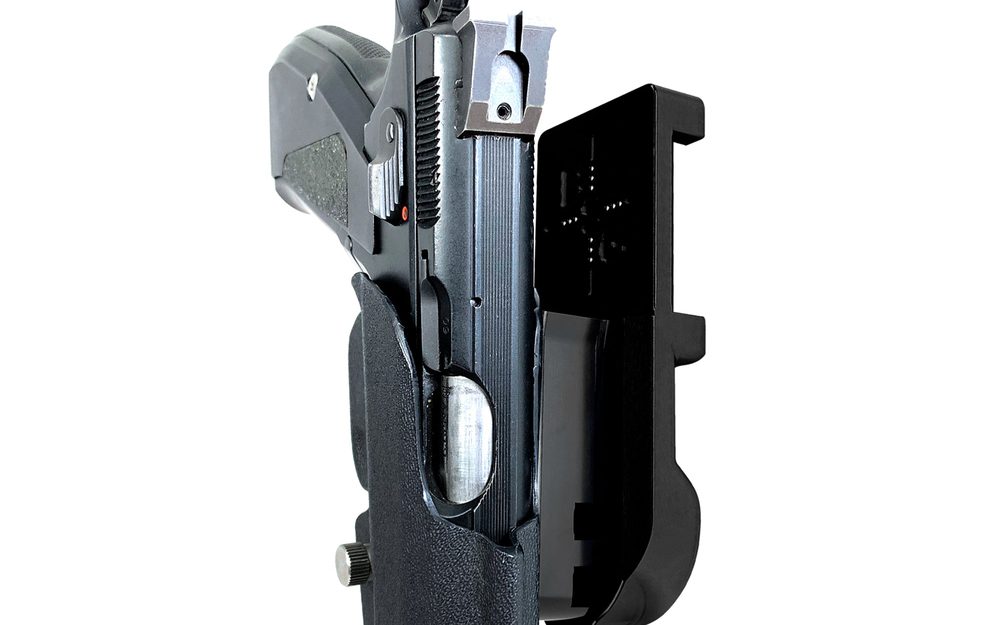
IPSC/USPSA Open Division
Recommended Setup:
- Holster: DAA Alpha-X or Ghost The One EVO
- Belt: DAA or CR Speed dual-layer competition belt
- Budget: $300-400 (holster + belt)
Key Points:
- Speed priority
- Ensure compatibility with your handgun
- Consider red dot optic versions
IPSC/USPSA Limited Division
Recommended Setup:
- Holster: DAA Race Master or CR Speed WSM II
- Belt: DAA or CR Speed dual-layer competition belt
- Budget: $250-350
IPSC/USPSA Production / Production Optics
Recommended Setup:
- Holster: Blade-Tech DOH or Comp-Tac International
- Belt: DAA or CR Speed dual-layer competition belt
- Budget: $150-250
Note: Production, Carry Optics, Single Stack and PCC cap the gun at 2-1/8 inches from the belt (rule 5.2.5), so a drop-and-offset rig built for Open will not pass. Removing the offset spacer is usually enough.
IDPA All Divisions
Recommended Setup:
- Holster: DAA MAX IDPA or Dara Action Sport or Black Scorpion IDPA
- Belt: Wilderness Instructor Belt or Kore Essentials
- Budget: $100-200
Notes:
- Holster must be concealable
- Belt must thread through pant loops
- Consider appendix carry — legal in IDPA as IWB between 12 and 2 o’clock for right-handed shooters (8.5.1.14)
Competing in Both IPSC and IDPA
If you want one setup for both competitions:
Recommended Setup:
- Holster: DAA MAX IDPA (meets both rules)
- Belt: Wilderness Belt (IDPA compliant, usable for IPSC)
- Budget: $150-200
Trade-off: This setup won’t be the fastest in IPSC, but can be legally used in both competitions.
Beginner Budget Planning
Budget Setup ($100-150 USD)
Suitable for newcomers just starting competitive shooting.
| Item | Recommendation | Price |
|---|---|---|
| Holster | Dara Action Sport or Black Scorpion | $60-80 |
| Belt | Wilderness Instructor Belt | $40-50 |
| Total | $100-130 |
Suitable For: IDPA, IPSC Production (verify rules)
Mid-Range Setup ($200-300 USD)
Suitable for shooters seriously committed to competitive shooting.
| Item | Recommendation | Price |
|---|---|---|
| Holster | Blade-Tech DOH or DAA MAX IDPA | $100-150 |
| Belt | CR Speed or DAA competition belt | $80-120 |
| Total | $180-270 |
Suitable For: IPSC Production/PO, IDPA
Advanced Setup ($350+ USD)
Suitable for competitive shooters pursuing peak performance.
| Item | Recommendation | Price |
|---|---|---|
| Holster | DAA Alpha-X or Ghost The One EVO | $200-225 |
| Belt | DAA or Safariland ELS competition belt | $100-150 |
| Total | $300-375 |
Suitable For: IPSC Open/Limited
Holster Maintenance and Usage Tips
Daily Maintenance
-
Cleaning
- Regularly wipe inside and outside of holster with dry cloth
- Avoid cleaners that may soften plastic
- Check and remove dust and debris
-
Check Screws
- Regularly inspect all adjustment screws
- Use Loctite to prevent loosening
- Always check before matches
-
Retention Adjustment
- Find the retention level that works for you
- Too tight affects draw speed
- Too loose may cause pistol to fall out
Training Tips
-
Dry Fire Practice
- Spend 10-15 minutes daily practicing draws
- Use Shot Timer to track progress
- Focus on building muscle memory
-
Segmented Training
- First practice grip (without drawing)
- Then practice slow draws
- Finally add timing
-
Common Mistakes to Avoid
- Don’t “fish” during draw (hooking trigger guard with fingers)
- Ensure deep web grip
- Keep index finger straight until on target
💡 Further Reading: Want to dive deeper into draw training? See our Pistol Draw Technique Complete Guide
Frequently Asked Questions (FAQ)
Q1: What holster should beginners buy first?
A: We recommend starting with a Blade-Tech DOH or Dara Action Sport. These holsters are reasonably priced and meet most division rules, allowing you to avoid over-investing before determining your focus.
Q2: How much difference does a Race Holster make?
A: In draw speed, a Race Holster can be 0.2-0.5 seconds faster than a regular holster. However, for beginners, this difference is less important than fundamental technique. Upgrading after your technique stabilizes makes more sense.
Q3: Can I use the same holster for both IPSC and IDPA?
A: Yes, but you need to choose a holster that meets both rules. The DAA MAX IDPA or Dara Action Sport are good choices. However, this means you can’t use the speed advantage of a Race Holster in IPSC.
Q4: Is the belt really that important?
A: Very important — but what it buys you is consistency, not speed. A rigid competition belt keeps the holster and magazine pouches in the same place so every draw and reload repeats; a soft belt lets the gear shift, and muscle memory never forms against a moving target. For brand choice, sizing and where each item goes on the belt, see the competition belt setup guide.
Q5: What’s the difference between Kydex and plastic holsters?
A: Kydex is a high-strength thermoplastic material that can be precisely molded to fit a pistol’s exterior. Regular plastic holsters (like Race Holsters) use injection molding, suitable for designs requiring special functions. Both have advantages; choice depends on use case.
Q6: How should I adjust the holster angle?
A: This depends on personal preference and body type. We generally recommend starting from a neutral position, then fine-tuning to the most natural draw angle. Use a Shot Timer to test different angles and find the fastest configuration.
Q7: How do I confirm my holster meets competition rules?
A: Check the two measurements first — butt height relative to the belt, and distance from the belt — using the 60-second ruler check above. Then read the equipment section of the current rulebook for your sport (USPSA section 5.2, IDPA section 8.5), check the manufacturer’s listing for a division-specific claim like “IDPA legal,” and confirm with the Range Master or Safety Officer before your first stage. Asking early costs nothing; asking after you’ve shot a stage can cost you the stage.
Q8: What’s different about red dot optic versions of holsters?
A: Red dot optic versions have enlarged openings or cutouts to accommodate the red dot mounted on the slide. If your pistol has a red dot, make sure to choose a compatible holster model.
Q9: What is a good competition draw time?
A: For context, USPSA Grandmaster Mark Smith aims for a draw of around one second on the flat range and refuses to be slower than 1.75 seconds from full concealment, even in poor conditions. For the rest of us, being able to draw and fire an accurate hit on a 10-yard target with 80–90% consistency in about 1.25 seconds is a strong, realistic benchmark — past that point, technique and stage strategy matter more than shaving hundredths off the draw. The catch is that “consistency” is invisible without a timer: two draws that feel identical can be 0.3 seconds apart. Set a par time on a shot timer and you’ll immediately see which draws are repeatable and which just felt fast.
Q10: Do I need a shot timer to practice drawing from a competition holster?
A: Yes — it’s the single most useful (and cheapest) tool for holster work. A holster only saves you 0.2–0.5 seconds, but you can’t confirm you’re getting that time back without measuring it. You don’t need a $150 hardware timer, either: the free Airsoft Shot Timer app generates a random start beep and records your split, and it’s sensitive enough to pick up airsoft blowback and dry-fire hammer strikes. That means you can run draw reps at home with no live ammo — set a par time, draw to the beep, and chase consistency. See our dry fire training guide for a full at-home draw routine.
Q11: How high should a holster sit in USPSA?
A: The heel of the butt of the handgun must not be below the top of your belt when holstered. In the current rulebook (edition 2026-09) that is Rule 5.2.11, not 5.2.7.2 — the rule was renumbered, and every division appendix now answers the position question with “see 5.2.11”. It applies to every division including Open. Any part of the grip hanging below the belt line makes the rig illegal, which is why drop-leg and low-ride duty rigs almost always fail and why so many new competitors show up with gear they can’t use.
Q12: Are thigh straps allowed in USPSA?
A: Yes, as of 29 February 2024. The USPSA Board removed the rule prohibiting thigh strap and tie-down holsters from the Competition rules, and NROI’s own write-up says competitors can now use them without penalty. The prohibited-holster list in Rule 5.2.7 no longer mentions straps at all. What is still out is a thigh holster — a rig that rides on your leg — because it cannot satisfy the height rule (5.2.11) or your division’s distance limit (5.2.5). Strap a belt-mounted holster down all you like; just don’t move the gun onto your thigh. Note that IPSC has not followed: tie-down rigs remain prohibited internationally under IPSC 5.2.7.1.
Q13: How far from the belt can my holster be in USPSA?
A: It depends on the division. Production, Single-Stack and Carry Optics are limited to 2-1/8 inches; Open, Limited, Limited-10, Revolver and Limited Optics get 3-3/8 inches; PCC’s 2-1/8 inch limit applies to magazines only (rule 5.2.5). Measure perpendicular to the top of the belt at the attachment point, from the outer surface of the belt to the closest point of the grip — not to the outside of the holster shell, and not from your body. That’s why an offset race rig that’s fine in Open gets flagged in Carry Optics, and why moving down a division often just means removing the offset spacer instead of buying a new holster.
Q14: What holsters are banned in IDPA?
A: Cross-draw, shoulder holsters, small-of-the-back carry and pocket carry are all explicitly not permitted (rule 8.5.2). Beyond that named list, any holster that doesn’t cover the trigger guard, collapses after the draw, protrudes more than 3 inches from the body, or cants muzzle-forward will also fail inspection. Appendix carry is legal, defined as inside the waistband between 12 and 2 o’clock for a right-handed shooter (8.5.1.14).
Q15: What happens if my holster is illegal at a match?
A: If a range officer spots it before the start signal, you’ll simply be told to adjust your gear before you shoot — no penalty. If it’s discovered after you’ve already run a stage, Rule 5.2.10 gives you a zero for that course of fire, and 5.2.5.2 confirms it isn’t applied retroactively to stages you already shot. In practice the outcome is almost always “fix it and keep shooting,” so it’s worth asking a Range Master at sign-in rather than hoping nobody notices.
Q16: What holsters are allowed in USPSA?
A: Any holster that keeps the heel of the butt at or above the top of your belt (5.2.11), holds the gun within the distance limit for your division (2-1/8 inches in Production, Single-Stack and Carry Optics; 3-3/8 inches in Open, Limited, Limited-10, Revolver and Limited Optics), completely prevents access to the trigger, retains the gun while you move, and doesn’t let the muzzle point more than 3 feet from your feet. Rule 5.2.6 adds that IWB and concealment holsters are explicitly legal where the division doesn’t restrict holster type. Production, Single-Stack and Carry Optics add one more layer: no “race gun” type holsters, and the shell may not be cut lower than 1/2 inch below the ejection port. Shoulder holsters are the one flat ban (5.2.7.1). Everything else — Kydex or leather, brand, adjustable cant, thigh strap — is open.
Q17: Are race holsters allowed in Carry Optics?
A: No. Appendix D7 requires a holster “suitable for everyday use” and prohibits “race gun” type holsters explicitly, which rules out the locking speed rigs that are standard in Open. A drop-offset holster is still allowed in Carry Optics as long as the heel of the butt stays above the belt (5.2.11) and the whole assembly stays inside 2-1/8 inches — so if you’re moving down from Open, removing the offset spacer is usually cheaper than buying a new holster.
Q18: Is appendix carry legal in USPSA?
A: Yes. USPSA removed the “behind the point of the hip” positioning requirement for Production, Single Stack and Carry Optics, so you may position the holster anywhere on your belt, appendix and inside the waistband included, provided the heel of the butt stays at or above the top of the belt and the gun stays within 2-1/8 inches of it. Note that this is a USPSA-specific change: IPSC Production and Production Optics still require the trigger guard to sit behind the hip bone.
Q19: What are the holster rules for IPSC Production division?
A: On top of the usual heel-above-belt requirement (IPSC 5.2.7.2, illustrated in Appendix E3b), Production and Production Optics are capped at 50 mm from the outer surface of the belt to the centre of the grip’s longest dimension, and both divisions are marked “Rule 5.2.10 / Appendix E2 applies: Yes” — nothing may extend forward of the Appendix E2 line at the start signal. That forward line, not a “trigger guard behind the hip bone” wording, is the real positioning rule; there is no strong-side or hip-bone requirement anywhere in section 5.2 of the IPSC handgun rules. Race-type holsters are restricted in Production while Open and Standard allow them, and regional rulings vary more here than anywhere else in the rulebook.
Q20: Can I use a drop-leg holster in Steel Challenge?
A: Yes — and since 29 February 2024 you can use the strap in USPSA handgun competition too, so this argument is finally over. Straps were never restricted in Steel Challenge or Multigun in the first place. What still doesn’t transfer is a genuine drop-leg holster, which fails the height and distance rules in all three, and Steel Challenge has a restriction going the other way: drawing from concealment is not allowed there, so an IDPA setup doesn’t move across cleanly either.
Q21: Can women wear the belt lower in IPSC?
A: Yes. IPSC requires the belt carrying the holster and allied equipment to be worn at waist level, but female competitors in all divisions are expressly permitted to wear it at hip level instead. If a second belt is worn at waist level, the holster and all allied equipment must go on the lower belt. USPSA has an equivalent provision under 5.2.3.1.
Q22: Which rulebook editions do these numbers come from?
A: USPSA Competition Rules edition 2026-09, effective 1 September 2026; IPSC Handgun Competition Rules January 2026 Edition; IDPA Rulebook Ver. 2026.2, amended 10 January 2026. It’s worth checking the cover date on whatever you’re reading, because two of the three changed holster rules recently enough that most guides online are quoting a superseded book — including the rule number for the USPSA height requirement and the legality of thigh straps.
Q23: Does the Carry Optics slide-coverage rule apply to Limited Optics?
A: No, and this trips up a lot of people because the division names look like a pair. Limited Optics is listed with “Holster restrictions: No” and a 3-3/8 inch distance limit, while Carry Optics has the full everyday-use language, the race-gun prohibition, the 1/2 inch slide-coverage line and a 2-1/8 inch limit. A Carry Optics-legal rig will always be fine in Limited Optics; a Limited Optics rig frequently won’t pass in Carry Optics. Production and Single-Stack share the Carry Optics holster restrictions.
Q24: How far from the belt can my holster be in IPSC?
A: 50 mm, in every division — Open, Standard, Classic, Production, Production Optics, Revolver and the new Optics Division all carry the same number. That’s about 1.97 inches, so IPSC is tighter than even the strictest USPSA divisions at 2-1/8 inches (54 mm). The measurement runs from the outer surface of the belt to the centre of the longest dimension of the grip, which is a different reading from USPSA’s “closest point of the grip” off the same rig. The January 2026 edition also moved the starting point: the January 2024 edition measured from the competitor’s torso.
Q25: Can I use a magnet for magazines in IDPA?
A: No. IDPA Rule 8.6.1.3 states that magnets worn on belts or in concealment garments may not substitute for traditional carriers, and 8.6.2.3 requires carriers to be positioned so the magazine is completely concealed. This is the opposite of USPSA, where Appendix D7 explicitly allows each magazine to be attached individually to a magnet in Carry Optics. If you run one belt for both sports, budget for swapping the ammunition carriers, not just the holster — or fall back on pockets, which IDPA allows under 8.6.1.1 provided the spares are concealed at the start signal.
Q26: What counts as a “race gun holster”?
A: The USPSA glossary defines it rather than leaving it to taste: a device which secures the handgun lacking an outer shroud, envelope or covering, relying on tension on the trigger guard and sometimes a barrel stud to retain the firearm. That’s why skeletonised competition shells fail in Production, Single-Stack and Carry Optics while an ordinary Kydex OWB passes — even when the Kydex one is the faster of the two. It’s a construction test, not a speed test.
Summary
Choosing a competition holster is a decision that requires considering multiple factors. Here are the key points:
- Understand the rules first: Confirm the competition type and division you want to enter
- Start with basics: Beginners don’t need the most expensive gear; technique matters more than equipment
- Choose the right belt: Holster and belt are a system that need to work together
- Practice consistently: Even the best holster requires extensive practice to be effective
- Upgrade gradually: Upgrade equipment as your technique improves
Regardless of which holster you choose, the most important thing is investing time in practice. Use the Shot Timer App to track your draw times, set goals, and continuously improve.
Related Article Recommendations
- Pistol Draw Technique Complete Guide
- IPSC Beginner Pistol Selection Guide
- IDPA Beginner Pistol Selection Guide
- IPSC Practical Shooting Complete Training Guide
- IDPA Defensive Shooting Complete Training Guide
- Best Competition Magazine Pouches Guide
- Dry Fire Training at Home Complete Guide
- Shot Timer App Complete Guide
Sources. Rule text in this guide is quoted from the primary rulebooks: USPSA Competition Rules edition 2026-09 (rules.uspsa.org), IPSC Handgun Competition Rules January 2026 Edition (ipsc.org), and the IDPA Rulebook Ver. 2026.2 (idpa.com). The thigh-strap change is documented in NROI’s “Quadriceps Retention Devices (Thigh Straps)”.
Photo credits. Four match photographs in this article are by Flickr user zinkpics and are used under CC BY-SA 2.0.
Put a Shot Timer in Your Pocket
Airsoft Shot Timer is a free shot timer app tuned for airsoft and Action Air — it picks up BB gun shots, tracks your split times, and saves you the cost of a $150+ hardware timer for IPSC/IDPA practice.

- USPSA Holster Rules
- USPSA Holster Rules 2026
- USPSA Rule 5.2.11
- USPSA Holster Height
- USPSA Holster Height Rules
- IDPA Holster Rules
- IPSC Holster Rules
- Competition Holster Rules
- USPSA Holster Placement
- Are Thigh Straps Allowed in USPSA
- USPSA Thigh Strap Legal
- Tie-Down Rig IPSC
- Best Competition Holster
- Best Competition Holster 2026
- Competition Holster
- Best USPSA Holster
- Best IPSC Holster
- Best IDPA Holster
- Race Holster
- Race Gun Holster Definition
- Race Holster 2026
- Carry Optics Holster
- USPSA Carry Optics Holster
- IDPA Legal Holster
- Holster
- IPSC
- USPSA
- IDPA
- Safariland
- Double Alpha
- DAA Alpha-X
- Ghost the One EVO
- CR Speed WSM II
- Draw Speed
- Shot Timer Draw
- Free Shot Timer App
- Shooting Gear
- IPSC Holster Rules 2026
- IPSC 50mm Rule
- IPSC Optics Division
- IPSC Appendix E2
- IPSC Production Holster Rules
- USPSA Appendix D7
- USPSA Carry Optics Holster Rules
- Limited Optics Holster Rules
- Appendix Carry USPSA
- USPSA Holster Position Rules
- Steel Challenge Holster Rules
- IPSC Belt Rules
- Women IPSC Belt Hip Level
- IDPA Magazine Carrier Rules
- IDPA Magnet Rule
- USPSA 2026-09 Rulebook