What Is Speedsoft? The 2026 Beginner Guide (Is It Right for You?)
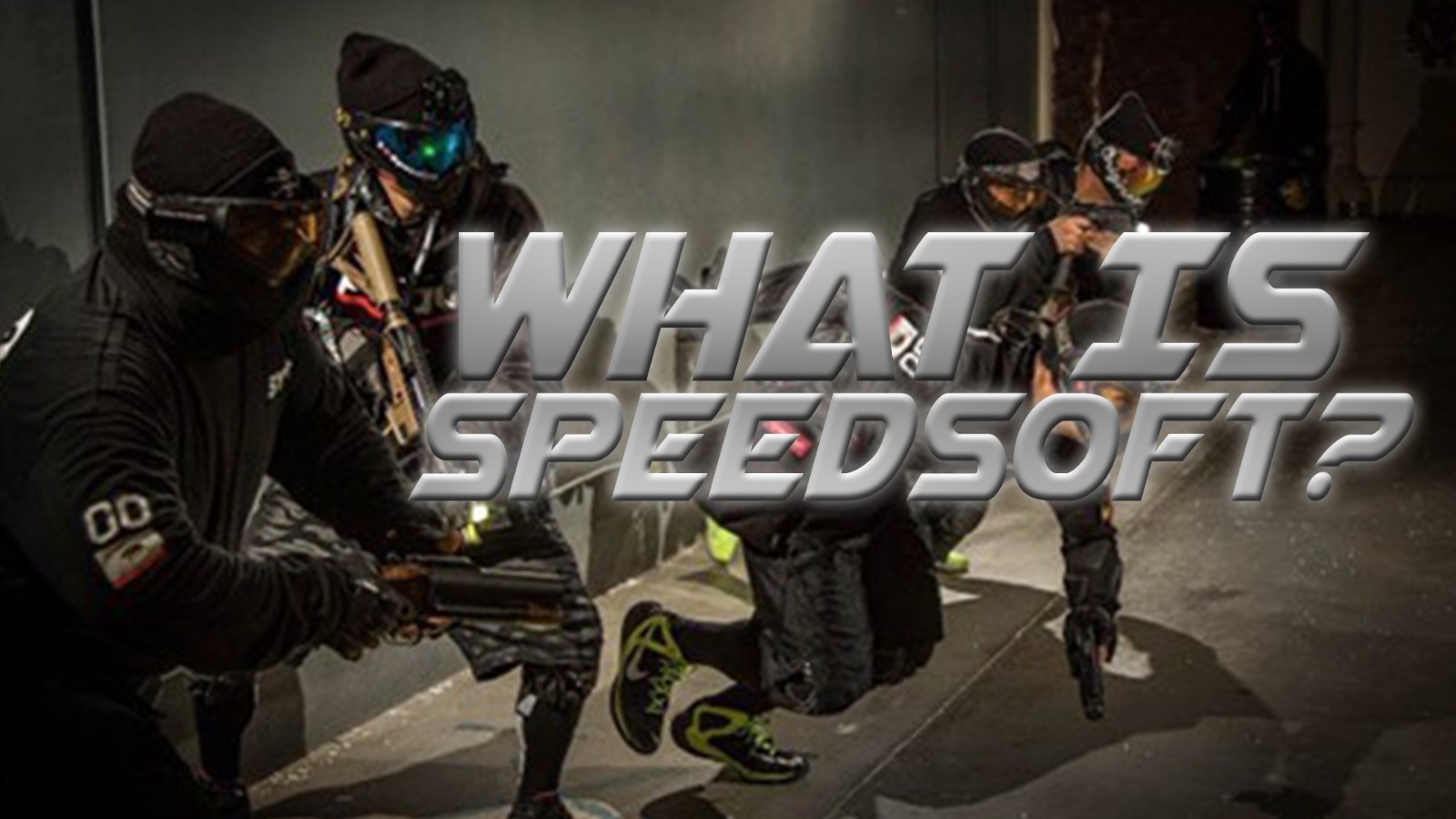
🎯 Speedsoft in 60 seconds: Speedsoft is airsoft stripped down to one thing — speed. Rounds last 4-5 minutes, guns run semi-auto only, and you win by moving and shooting faster than the other team. To start: grab a full-face paintball mask, knee pads, and any semi-capable AEG or gas pistol, then find a local SpeedQB or Speedsoft night. The part almost every beginner skips? Actually measuring their speed. “Feeling fast” and being fast are different things — and the only way to know the difference is to put a clock on it. Time your draw-to-first-shot and your reloads with a free shot timer app, and you’ll improve faster than the guy who just buys a more expensive gun. The format itself is unusually consistent wherever you play it: a 350 FPS chrono limit, semi-auto only with rapid trigger pulls (“feathering”) allowed, mid-cap magazines, rounds of two to four minutes with about a minute between them, and a field roughly 80 by 40 feet for 3v3 or 100 by 50 for 5v5. Full breakdown below.
When Airsoft Becomes a Speed Sport
Have you ever felt that regular airsoft games are just too slow? Your teammates are still hesitating in the hallway while you’re ready to slide into cover and take out three opponents in two seconds flat. If that sounds like you, you might be a natural Speedsoft player.
Speedsoft is the fastest, most aggressive playstyle in airsoft. It doesn’t care about how realistic your military loadout looks or whether you’re clearing rooms like a special forces operator. Speedsoft cares about one thing only: speed. Move the fastest, shoot the fastest, win the fastest.
If MilSim is like a carefully planned military operation, then Speedsoft is a hybrid between paintball and airsoft — keeping the realistic gun handling of airsoft while injecting the competitive speed and explosive energy of paintball. And SpeedQB, the largest competitive Speedsoft league, has taken this playstyle to the level of an organized sport.
What Is Speedsoft? More Than Just Running Fast
Many people hear “Speedsoft” and assume it’s just “airsoft but you run faster.” That understanding only scratches the surface. Speedsoft is a complete gameplay philosophy and equipment ecosystem that differs fundamentally from traditional airsoft at almost every level.
In traditional MilSim-style airsoft, players pursue realism — wearing military-style gear, using highly realistic replica guns, and following tactics that approximate real military operations. A single MilSim game can last hours, with a slow but immersive pace. In the Speedsoft world, a round typically lasts just four to five minutes. Players wear hoodies, athletic shorts, and knee pads, looking more like paintball competitors than military enthusiasts. The only criteria for equipment choices: does it make me faster?
The rise of Speedsoft is deeply connected to paintball. Many early Speedsoft players came from paintball backgrounds, bringing the rapid movement, sliding, and team coordination from competitive paintball into the airsoft world. This is why you see so many paintball elements on the Speedsoft field — Dye i4/i5 masks, lightweight chest rigs, and athletic-style clothing.
If you imagine airsoft playstyles as a spectrum, MilSim sits at one end emphasizing realism and immersion, while Speedsoft occupies the opposite end with its focus on speed and competition. Regular pickup games fall somewhere in between. You don’t have to pick a side entirely, but understanding this spectrum helps you find the playstyle that fits you best.
Speedsoft vs Regular Airsoft: Four Honest Differences
Most guides will happily tell you Speedsoft is exciting and leave it there. That’s not very useful when you’re deciding whether to spend a weekend and a few hundred dollars on it. Here are the four differences that actually determine whether you’ll love it or bounce off it — including the ones the highlight reels leave out.
You will be shooting almost constantly. In a regular skirmish you can go a long stretch without pulling the trigger at all — patrolling, holding an angle, waiting for something to happen. Speedsoft inverts that completely. Holding a lane means putting rounds down it, continuously, so the opponent can’t move through cheaply. If the parts of airsoft you enjoy most are the quiet, patient ones, this is the difference most likely to put you off, and it’s worth being honest with yourself about it before you buy a jersey.
The equipment ladder is real, and it’s steep. At the competitive end, custom HPA (high pressure air) builds make up the large majority of what serious players run — one commonly cited figure among competitive players is around 80%. HPA gives near-instant trigger response and shot-to-shot consistency that a stock AEG simply can’t match, and against players running it, you are at a genuine disadvantage. That doesn’t mean you need HPA to start — you absolutely don’t — but you should walk in knowing that the gap between a rental-grade AEG and a tuned competition build is much wider here than it is in a casual skirmish, where a stock gun is perfectly competitive.
It’s a sprint, not a marathon — and you’ll feel it. Speedsoft is genuinely physically demanding. You’re moving, ducking, sliding, and sprinting in short violent bursts, then doing it again ninety seconds later. Cardio-wise this is closer to interval training than to a day of woodland airsoft, and players who haven’t done anything athletic in a while tend to be surprised by how quickly they gas out in their first session.
It’s a team game, not a highlight reel. This one surprises people the most. The clips make Speedsoft look like individual heroics, but competitive rounds are won by roles, lane assignments, and short, disciplined callouts. A fast player who freelances and breaks the plan is worth less to a team than a slower player who holds exactly the angle they were asked to hold. If you prefer playing solo and at your own pace, competitive Speedsoft will frustrate you.
Here’s the part worth sitting with, though: of those four, only one — fitness — has an obvious path to improvement, and only one — equipment — costs real money. The other two are habits. And the fastest way to build the habits is to stop guessing at how fast you actually are. “I felt quick out there” is not data. A draw that takes 1.9 seconds and a draw that takes 1.3 seconds feel almost identical in the moment, and only one of them wins a break. Putting a shot timer on your draw and reloads is the cheapest upgrade available to a new Speedsoft player, and it’s the one almost nobody makes.
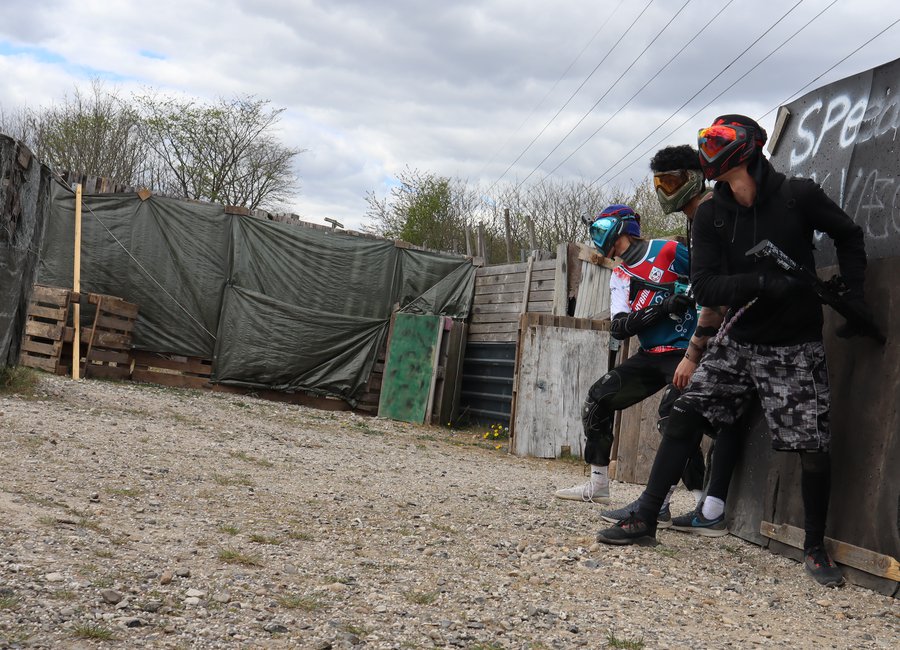
Where Speedsoft Becomes a Sport: SpeedQB in One Minute
Speedsoft as a playstyle exists at any field that lets you play it. Speedsoft as a sport mostly means SpeedQB. Founded in 2016 and now the largest competitive Speedsoft league in the world, SpeedQB is what turned a loose, improvised scene into something with standardized fields, divisions, and a rulebook — which is why almost every Speedsoft video you’ve watched was probably filmed at one of their events.
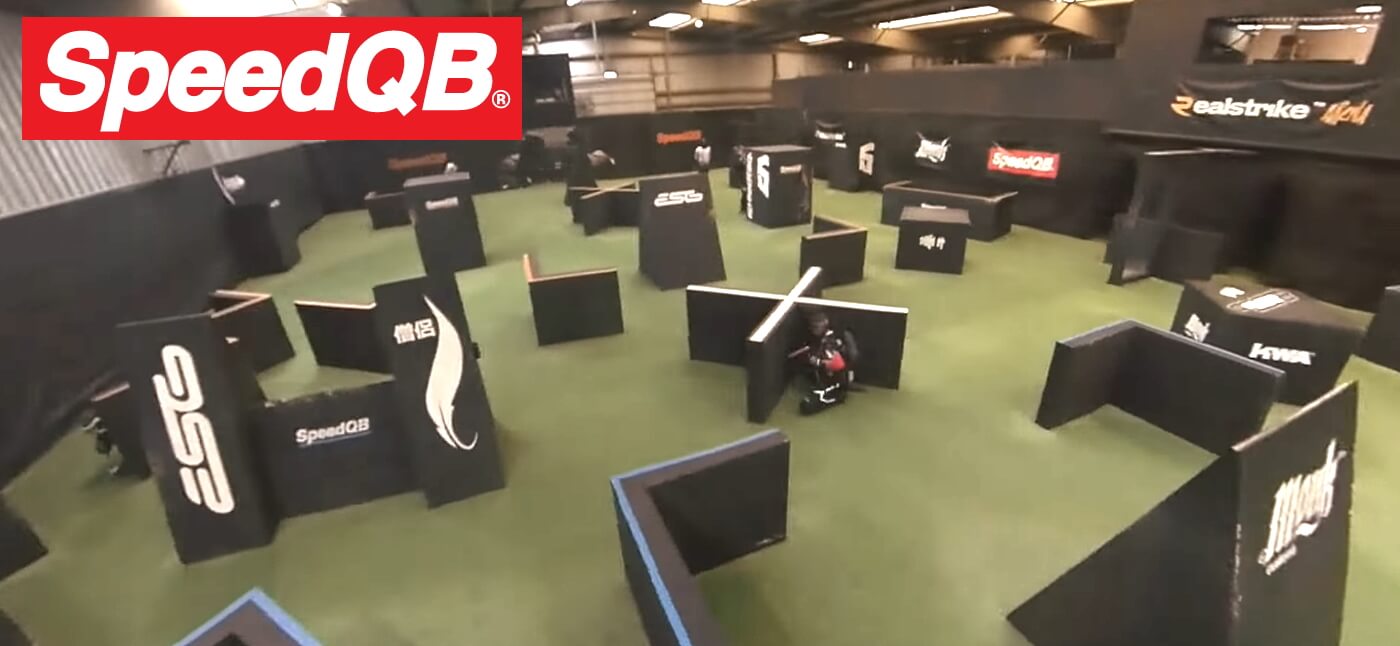
For a beginner, only one SpeedQB rule really shapes how you should train: semi-auto only, one shot per trigger pull. That single restriction is the reason Speedsoft technique looks the way it does. You cannot hold a lane by dumping full auto into it, so trigger finger speed and accurate single shots become the skills that decide rounds — and those are exactly the things you can measure and improve at home, long before you enter a tournament.
Everything else — the field dimensions and flag scoring, Open vs Limited class, the 2026 rulebook changes to between-round magazine swaps, and what a competitive loadout actually costs — is tournament-entry territory rather than beginner territory. When you’re ready for that step, our complete guide to SpeedQB rules, divisions and tournament format covers all of it properly. SpeedQB isn’t the only league either; the Competitive Speedsoft League (CSL) and various regional circuits run their own formats, and plenty of ordinary airsoft fields host Speedsoft nights with no rulebook at all. Any of those is a perfectly good first exposure.
The Rules Every Speedsoft Format Shares (And What They Do to Your Gun)
Leagues come and go and every venue writes its own house rules, but if you strip the rulebooks back to the parts that actually change what you buy and how you train, the same short list turns up almost everywhere — SpeedQB, the Competitive Speedsoft League (CSL), and the informal Speedsoft nights your local field runs on a Thursday. Knowing them before you spend money saves you from the single most common beginner mistake, which is buying a setup that can’t legally take the field.
The first is the velocity ceiling. Speedsoft is played at genuinely short range, so the limit sits low and it is enforced with a chronograph before you play, not on the honour system. Three hundred and fifty feet per second is the number you will see quoted almost universally. Here is the part that trips people up, though, and that nobody seems to write down: 350 FPS means two different things depending on which BB weight it was measured with. SpeedQB caps you at 350 FPS on a 0.20g BB, which works out to about 1.1 joules. CSL publishes its limit as 350 FPS on a 0.25g BB, which is roughly 1.4 joules — the same headline number, about twenty-five percent more energy, and around 390 FPS if you re-measured that gun on 0.20g BBs. So a gun tuned exactly to the SpeedQB ceiling passes a CSL chrono comfortably, while a gun built to the CSL number will fail a SpeedQB chrono outright. Before you tune anything, find out which weight your venue chronos with. It is a five-second question that saves a wasted drive.
The second is semi-auto only, one shot per trigger pull — and this is the rule that quietly defines the entire sport. You cannot hold a lane by dumping full auto into it, so a lane gets held by how fast you can put accurate single shots down it. What most beginners don’t realise is that “feathering” — rapid successive trigger pulls, as fast as your finger will physically go — is explicitly permitted under CSL’s format, and is the normal way experienced players lay down suppression. That turns the semi-auto rule into something surprisingly measurable. Your ceiling is not your gun’s rate of fire; it’s your split time, the gap between one shot and the next. A player running 0.18-second splits puts down nearly twice the volume of a player at 0.32, using the identical gun and identical rules, and the difference is entirely trigger mechanics you can drill at home against a clock. That is why the shot timer section further down isn’t a tangent — it’s the direct training answer to the format’s headline restriction.
Third, magazine capacity is capped by design. Mid-caps only is the standard on the rifle side; drum magazines are prohibited outright, and hi-caps with their rattling spring-wound reservoirs are generally out too. This is not an arbitrary restriction. It exists to make reloads a real part of the game rather than something you do twice an afternoon, which is why reload speed carries so much more weight in Speedsoft than in an ordinary skirmish. Pistol players get a little more latitude — standard and extended gas magazines are usually fine, and adapter magazines are typically capped at one.
The remaining rules are about pace and safety, and they explain why the game feels the way it does. A round runs two minutes in a 3v3 format and three in 5v5, with roughly sixty seconds between games, so an afternoon gives you dozens of complete engagements rather than a handful. Fields are small and standardised — CSL specifies 80 by 40 feet for 3v3 and 100 by 50 for 5v5 — which is why nearly every shot you take is inside twenty metres and why a scope is dead weight. Chin straps are mandatory, because masks come off when people slide. And in CSL’s 3v3 format at least one player on the field has to be running a pistol, which is a big part of why the Hi-CAPA and AAP-01 scene is as developed as it is.
None of that is beginner homework you need to memorise. It’s context: it tells you why your first purchase should be a mask and knee pads rather than a faster gun, and why the single most transferable thing you can train before your first event is how quickly you can put a second accurate shot on target. For the tournament-entry layer — SpeedQB’s Open and Limited classes, the current season’s rulebook changes, and what a competitive loadout really costs — our complete guide to SpeedQB rules, divisions and tournament format is the place to go next.
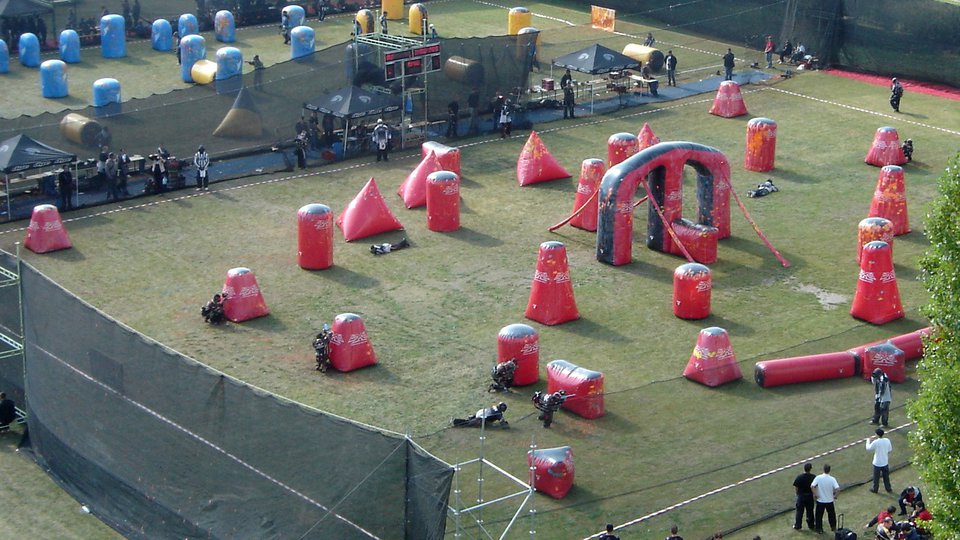
Gear Selection: Lightweight, Efficient, Built for Speed
Speedsoft gear philosophy is completely different from traditional airsoft. On a MilSim field, you might strap on over twenty pounds of plate carriers and full tactical gear. On a Speedsoft field, every extra gram is your enemy.
Let’s start with guns. The most common weapons on the Speedsoft field fall into three categories: modified AEGs, GBB pistols (especially Hi-CAPAs), and HPA systems.
AEGs (Automatic Electric Guns) are where most Speedsoft players start, particularly short-barreled models. The Tokyo Marui MP5K High Cycle is a classic — its lightweight design paired with high rate of fire was practically designed for run-and-gun play. Other popular choices include the G&G ARP9, Tokyo Marui MP7, and various M4 CQB short-barrel variants. AEGs offer high consistency, low maintenance costs, and temperature independence — your GBB might struggle in winter, but your AEG keeps running.
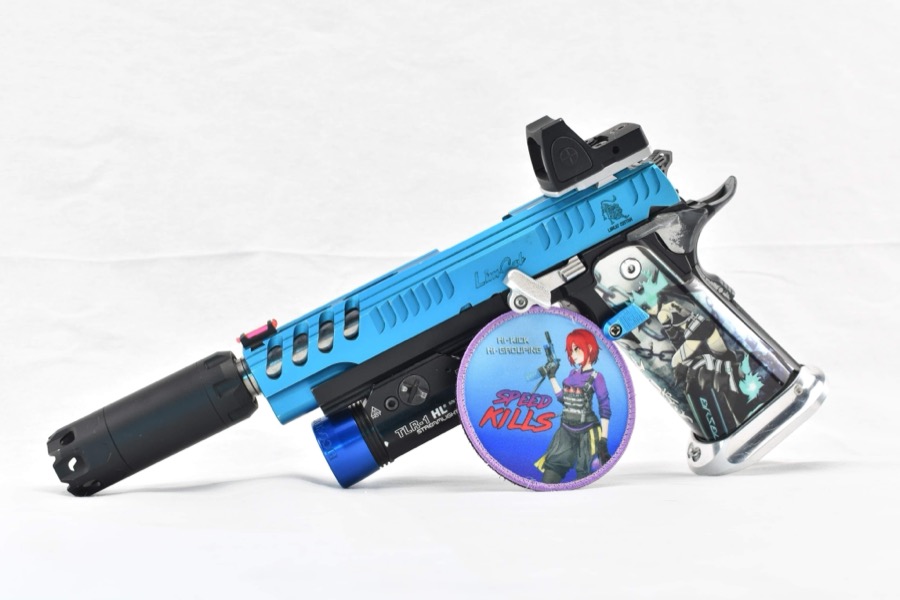
Hi-CAPA pistols hold near-mythical status in the Speedsoft community. A fully modified Hi-CAPA can achieve faster fire rates than most AEGs (depending on your trigger finger speed), while maintaining extreme lightweight maneuverability. The Tokyo Marui Hi-CAPA 5.1 Gold Match serves as the foundation for modifications — you can progressively upgrade with short-stroke kits, lightweight aluminum slides, and custom trigger groups to build a competition machine. Be warned, however: a fully modified competitive Hi-CAPA can easily exceed $500, not counting the time you spend tuning it.
The Action Army AAP-01 has become the new darling of the Speedsoft scene. Its biggest selling point is the affordable price point (typically $80-120), combined with a rapidly growing aftermarket parts ecosystem. The AAP-01 can switch between pistol and SMG modes, and with a folding stock and extended barrel, it becomes a compact CQB weapon. For players on a budget who want to experience GBB-style Speedsoft, the AAP-01 currently offers the best value.
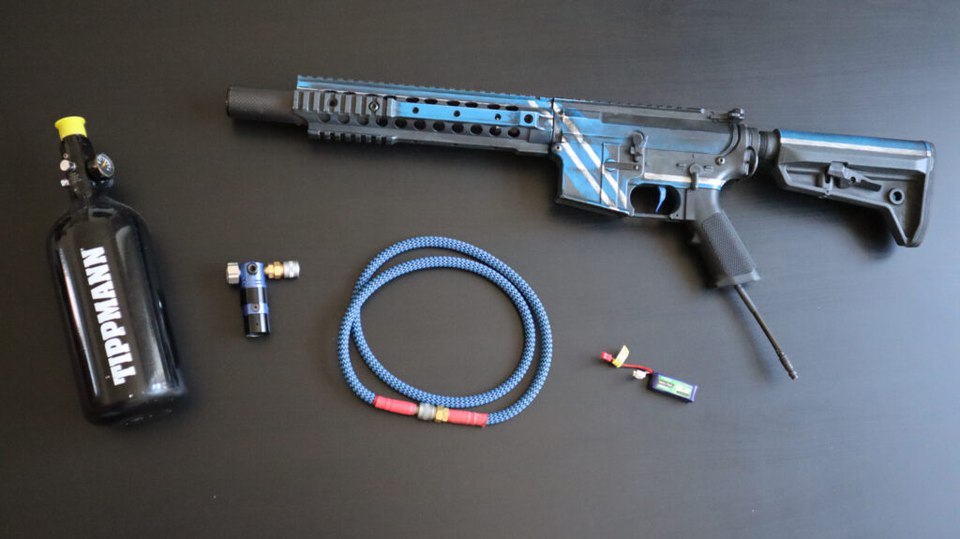
HPA (High Pressure Air) systems sit at the top of the Speedsoft equipment pyramid. HPA works by using an external high-pressure air tank to propel BBs, replacing the AEG’s battery motor or GBB’s gas. HPA’s advantage is extremely consistent shot performance — every shot’s velocity and trajectory is virtually identical, unaffected by temperature or remaining gas. You can precisely control FPS through a regulator, ensuring you never exceed the field’s limits. The downsides are needing to carry an air tank and line, plus the higher overall investment ($300-500 starting point, not including the base gun).
For protective gear, the most iconic Speedsoft equipment is the paintball mask. Dye i4 and i5 masks are the most common on SpeedQB fields, providing full-face protection with excellent field of vision while allowing better breathing and communication than traditional goggle-plus-mesh-mask combinations. Push Unite masks are also popular choices. Most official SpeedQB competitions require full-face protection, making a quality paintball mask a necessary investment.
Knee pads are another critical piece of gear. The sliding, kneeling shots, and rapid crouching in Speedsoft demand knee protection — without knee pads, your knees won’t survive more than a few sessions. Gloves are equally important — the pain of taking a close-range BB hit to the fingers is something you won’t forget after experiencing it once.
For clothing, forget your camouflage. Standard Speedsoft attire includes hoodies or athletic tops, athletic shorts or pants, and team jerseys for organized competitions. The priorities are breathability, unrestricted movement, and being something you don’t mind getting dirty or worn.
Load-bearing equipment follows the lightweight principle. A minimalist chest rig or magazine belt for extra magazines, plus a dump pouch for empties, covers the essentials. Don’t carry anything you won’t use — in Speedsoft, every piece of gear on your body should serve a clear purpose.
Three Gear Truths the Beginner Lists Leave Out
Every Speedsoft gear list will tell you to buy a mask, knee pads and a lightweight top. Almost none of them explain what those items are actually doing, and the explanations change what you buy.
Start with knee pads, because they are the piece most often bought as an afterthought. Beginners buy them expecting protection when they drop into a kneeling shot. Experienced players buy them as skates. Thick skate-style pads slide well on hard surfaces, and once you learn to trust them, your knees genuinely become a second pair of feet — you drop and skate laterally across concrete between barriers instead of running upright and getting tagged in transit. Competitive players have been known to rebuild their entire movement game around a single pad choice, and once you’ve watched someone do it you can’t unsee it. The practical takeaway for your first purchase: prioritise thickness and a hard, smooth sliding shell over a slim tactical profile. A thin, grippy tactical knee pad will protect your knee and then stop you dead the first time you try to slide on it.
The second is that weight and sweat are the same problem. Speedsoft gear philosophy is usually explained as “carry less so you move faster,” which is true but undersells it. Heavy cotton and combat trousers absorb sweat, and a serious player can end a set carrying four to five extra pounds on the legs alone in water they are wearing rather than drinking — add a soaked hoodie on top of that and the difference is closer to carrying a small child around a 40-foot field. The visible effect isn’t that you move slower on any single push; it’s that you gas out several sets earlier in a tournament than the guy in a thin jersey. This is why competitive players wear paintball-style jerseys that look faintly ridiculous at a woodland game: they are not a costume, they are a stamina decision. Cheap lightweight joggers from an outlet store do the same job as a $90 pair for a beginner, so long as they are light and don’t hold water.
The third is that arm protection and mag pouch orientation are speed decisions, not comfort ones. Sliding and diving onto concrete is how elbows get broken — repeat elbow fractures are a well-known reason experienced players quit diving head first and switch to the knee-skate movement described above — so proper padded arm sleeves belong on the essentials list rather than the nice-to-have one. Mag pouches are subtler. Competitive players commonly run kydex pistol mag inserts mounted upside down, so the magazine is pulled downward and forward straight into the gun instead of being lifted up and rotated. It shaves a fraction of a second off every reload and lowers the pouch’s profile so it doesn’t catch when you go to the floor. Soft kangaroo pouches work perfectly well and cost a fraction as much — they just can’t be mounted inverted, which is exactly the sort of trade-off worth knowing about before you buy rather than after.
And the honest counterweight to all of it, from players who compete: for your first few events, use whatever you already own and just go play. Past the beginner stage, skill beats the other guy’s parts bill far more often than the marketing suggests.
Core Techniques: More Than Just Running Fast
Speedsoft might look like a bunch of people running around shooting randomly, but high-level Speedsoft actually requires very precise technique and team coordination.
Movement ability is the most fundamental and important Speedsoft skill. You need to quickly transition between cover positions while maintaining a low profile, then be ready to shoot the instant you arrive. Sliding is one of Speedsoft’s signature moves — it allows you to quickly lower your profile while maintaining high-speed movement into cover. Start practicing slides with knee pads on soft surfaces using single-knee slides, then gradually progress to faster slides on harder surfaces once the motion becomes natural.
Snap shooting is another core technique. Behind cover, you need to minimize the time between exposing yourself, aiming, firing, and returning to cover. The key to this movement is “pre-aiming” — knowing exactly where your muzzle needs to point before you expose yourself, so you can fire immediately upon appearing. High-level Speedsoft players execute this in fractions of a second, giving opponents almost no time to react.
Magazine change speed is crucial in Speedsoft. Since SpeedQB requires semi-automatic fire, your magazine consumption rate depends on your trigger finger speed. Gas pistol magazines typically hold only 20-30 rounds, and AEG mid-caps hold 60-120, so fast magazine changes need to become muscle memory. Break the reload into distinct steps and practice each repetition: press the magazine release, let the empty magazine drop into your dump pouch or free-fall, grab the fresh magazine, insert and seat it, continue shooting. Your target should be completing the entire process in under two seconds.
Team communication is especially important in SpeedQB competitions. Standard SpeedQB matches are five versus five on a small field with close engagement distances. You need to quickly communicate enemy positions, your intended movements, and flag status. In the noisy competition environment, short and forceful callouts work far better than lengthy descriptions — “two left,” “I’m pushing middle,” “flag at right barrier” is all you need.
Game sense is what separates beginners from veterans. In Speedsoft’s high-speed environment, it’s easy to tunnel vision on the opponent directly in front of you while losing track of the overall situation. Strong Speedsoft players can simultaneously track multiple enemy positions, monitor flag status, and adjust strategy in real-time based on the evolving situation. There’s no shortcut for developing this ability — it comes only through extensive game experience.
Using a Shot Timer to Train Your Speedsoft Skills
The shot timer might be the most underrated tool in Speedsoft training. In traditional shooting sports, shot timers are standard equipment for measuring draw speed, split times, and target transition times. In Speedsoft, these same concepts apply directly to your training.
Start with draw and first shot timing. If you run a pistol-based Speedsoft setup, the time from holster draw to first hit on target is a critical metric. Use the shot timer’s buzzer as your start signal and practice your draw-to-first-shot sequence. Beginners might need over 2 seconds, but with consistent practice, you should aim to get under 1.5 seconds, with top players achieving sub-second times.
Next is trigger finger speed training. Since SpeedQB requires semi-automatic fire, your trigger finger speed directly determines your fire output. Use the shot timer to measure how many shots you can fire in one second while maintaining reasonable accuracy. Generally, maintaining 4-6 semi-auto shots per second with most rounds hitting the target represents solid performance.
Reload timing is another important drill. Set a PAR time (preset cutoff time) on the shot timer and try to complete a full magazine change before the PAR time expires. Start with 3 seconds, then progressively compress to 2 seconds, then 1.5 seconds. This time-pressure training is more effective than simple repetition because it simulates competition stress.
Multi-target transition drills are especially relevant for Speedsoft. On the field, you frequently need to quickly switch between opponents in different directions. Set up two to three targets and use the shot timer to record both total time from first target to last target, and the split times between each transition. Split times clearly reveal whether your transitions are fast enough and whether your accuracy degrades under pressure.
Finally, dry fire practice. You can do significant effective training without any BBs. Set up simulated targets at home (paper squares taped to the wall work fine) and use the shot timer to practice draw, aim, trigger control, and reload sequences. Fifteen minutes of daily dry fire practice, sustained for a month, will produce noticeable improvement in your on-field reaction speed.
💡 Recommended Tool: Airsoft Shot Timer App offers millisecond-precision timing, PAR time mode, and split time recording — an ideal companion for Speedsoft home training.
Getting Started: Your First Speedsoft Event
If you’re ready to try Speedsoft, here’s some practical advice for getting started.
The lowest-barrier approach is to bring your existing airsoft gear to a Speedsoft night or open practice session. Many airsoft fields schedule regular Speedsoft sessions weekly or monthly, and these events typically have a relaxed atmosphere where experienced players are happy to help newcomers. You don’t need top-tier gear from day one — a functional AEG or GBB pistol plus full-face protection will get you on the field.
For your first time, observing is more valuable than playing. Watch how experienced players move, notice their body positioning, observe how smooth their reloads are, and study how teams coordinate. Speedsoft has many nuances that words struggle to convey — watching in person is the fastest way to learn.
For equipment investment, a phased approach works best. Phase one: ensure you have proper full-face protection (paintball mask or goggles plus face mesh) and knee pads — these are baseline safety and comfort requirements. Phase two: invest in your primary weapon based on your preferred platform — a quality short-barrel AEG runs about $150-300, while an AAP-01 with basic modifications costs roughly $150-250. Phase three: consider HPA systems or fully custom Hi-CAPAs only after you’re sure this is the playstyle for you.
Finding your local Speedsoft community matters. Facebook groups, Discord servers, and regional airsoft forums are great starting points. The Speedsoft community tends to skew younger and more energetic, and because it’s a relatively new discipline, newcomers are generally welcomed warmly.
If you’re in Asia, the Speedsoft scene is growing rapidly. Taiwan, Hong Kong, Japan, and South Korea all have increasing numbers of venues offering Speedsoft nights, with some fields building dedicated Speedsoft arenas. Combined with Asia’s already mature IPSC Action Air scene, you can enjoy two completely different styles of competitive airsoft.
Frequently Asked Questions
What’s the biggest difference between Speedsoft and regular airsoft?
The biggest difference is game pace and philosophy. Regular airsoft (especially MilSim) emphasizes realism and tactics, with games lasting hours. Speedsoft emphasizes speed and competition, with rounds lasting just minutes. Equipment styles are completely different too — Speedsoft players wear athletic clothing rather than military gear.
How much does it cost to start playing Speedsoft?
If you already have basic airsoft gear, adding a full-face paintball mask ($60-150) and knee pads ($20-40) gets you started. Building from scratch, an entry-level setup costs roughly $300-500, including a starter AEG or AAP-01, full-face protection, knee pads, and basic magazine carrying gear.
What is speedsofting?
“Speedsofting” is just the verb form — playing airsoft in the Speedsoft style. You’ll see it used two ways: loosely, to describe anyone playing fast and aggressively at a normal skirmish, and specifically, to describe playing the competitive format on a small barrier field with semi-auto guns and paintball-style kit. Some players use it slightly disparagingly for someone sprinting around a woodland game in a bright jersey, which is worth knowing before you use the word at an unfamiliar field.
How does Speedsoft work?
A round places two small teams (commonly five a side) on a compact field of low barriers, with an objective — usually a flag at centre — that forces both teams forward immediately. Guns are semi-auto only, so nobody can simply suppress the field on full auto. Rounds finish in roughly four to five minutes, then you reset and play another one. That short loop is the whole appeal: you get dozens of meaningful engagements in an afternoon rather than a handful.
What gun restrictions apply in competitive Speedsoft?
Across essentially every league the headline restriction is the same — semi-automatic only, one shot per trigger pull — plus an FPS ceiling (commonly around 350 FPS) enforced at chrono. Beyond that, restrictions are division-specific, most notably whether HPA is permitted. Because those details change from season to season and league to league, check them against a current source rather than an old video; our SpeedQB rules and divisions guide breaks down the current format, and your local venue will publish its own chrono limits.
What FPS is allowed in Speedsoft?
Effectively every Speedsoft format runs a 350 FPS chrono limit, checked with a chronograph before you play rather than trusted on the honour system. The catch is the BB weight it’s measured with: SpeedQB caps 350 FPS on a 0.20g BB (about 1.1 joules), while CSL publishes 350 FPS on a 0.25g BB (about 1.4 joules, or roughly 390 FPS if you re-measured the same gun on 0.20g). Same headline number, meaningfully different ceilings. Ask your venue which weight it chronos with before you tune anything, and if you play more than one circuit, build to the lower of the two.
Is semi-auto really enforced, and what is “feathering”?
Yes — semi-auto only, one shot per trigger pull, is the defining rule of the format and it’s enforced. Feathering is the term for pulling that trigger in extremely rapid succession, and it is explicitly allowed under CSL’s format; it’s simply how experienced players lay down suppressing fire without a full-auto switch. Practically, that means your rate of fire is capped by your trigger finger rather than your gun, which is unusually good news for a beginner: split time is a skill you can train at home with a timer, and it costs nothing.
Can I use a hi-cap or drum magazine in Speedsoft?
No. Mid-cap magazines are the standard for rifles and drums are prohibited outright, with hi-caps generally excluded too. The restriction is deliberate — it forces reloads to be a real, frequent part of a round rather than something that happens twice an afternoon, which is why reload speed matters so much more here than in an ordinary skirmish. Pistol players usually get more freedom with standard and extended gas magazines, with adapter magazines typically limited to one.
How big is a Speedsoft field?
Small and deliberately standardised. CSL specifies 80 by 40 feet for its 3v3 format and 100 by 50 feet for 5v5, and other circuits sit in the same range. That’s why practically every engagement happens inside twenty metres, why optics and long barrels give you nothing, and why a round can be over in two or three minutes.
What is a speedsofter?
A “speedsofter” is simply a player who plays this way — someone whose kit and habits are built around speed rather than realism. The word is mostly neutral inside the competitive scene, where it just describes what you do. At a woodland or MilSim field it can carry a mild edge, used for someone sprinting around a slow scenario game in a bright jersey. Worth knowing which room you’re in before you use it about somebody else.
Is Speedsoft still airsoft, or is it a separate sport?
Both, depending on where you draw the line. The guns, the BBs, the honour-system hit calling and the safety rules are all standard airsoft. What changes is everything built on top: the round length, the semi-auto restriction, the magazine caps, the field size and the fact that you’re playing a scored competition rather than a scenario. Most people find the honest description is that Speedsoft is a competitive format within airsoft, in roughly the way that a criterium is still cycling.
Can I play Speedsoft style at regular airsoft fields?
Yes, but be mindful of field rules and other players’ preferences. Some fields welcome fast, aggressive play while others discourage it. Confirm field rules first, and during pickup games maintain respect for other players — not everyone appreciates being rushed and shot at close range by high-speed players. Dedicated Speedsoft nights are a better option.
Is Speedsoft physically demanding?
Considerably more than regular pickup games. Speedsoft requires short bursts of high intensity — sprinting, sliding, rapid crouching and standing. You don’t need marathon-level endurance, but basic cardiovascular fitness and leg strength will make you more effective on the field. Incorporating some High-Intensity Interval Training (HIIT) into your routine will help improve your explosiveness and recovery speed.
How do I train Speedsoft speed at home without a field?
This is where most players leave easy gains on the table. You don’t need a field — or even BBs — to build the mechanics that win rounds. Set up a paper target on a wall, grab your gas pistol or AEG, and dry-fire drill your draw, snap shots, and reloads against a clock. The key word is clock: run a free shot timer app so every rep has a number attached. Fifteen minutes a night on draw-to-first-shot and reloads for a few weeks will do more for your on-field speed than any gear upgrade. See our dry fire training guide for a full at-home routine.
How fast should my Speedsoft reload be?
For semi-auto Speedsoft, a clean magazine change under 2 seconds is a solid working standard, and strong players push toward 1.5 seconds or faster. The proven way to get there is PAR-time training: set your shot timer’s PAR (cutoff) to 2.5 seconds and drill reloads until you consistently beat the buzzer, then drop it to 2.0, then 1.5. A classic transferable drill is the “666” (six rounds, reload, six more) — it forces a reload under pressure instead of a relaxed one. Chasing a number on a timer builds reloads that hold up in a real round far better than casual repetition ever will.
Image Credits
- Speedball bunker field photo by Petr Kadlec, CC BY-SA 3.0, via Wikimedia Commons — cropped to landscape and resized; the cropped version is shared under the same licence.
- Speedsofters in starting position by Kimse84, CC BY-SA 4.0, via Wikimedia Commons — cropped and resized; the cropped version is shared under the same licence.
- HPA setup photo by Kimse84, CC BY-SA 4.0, via Wikimedia Commons — resized, not otherwise altered.


Conclusion
Speedsoft is changing how many people think about airsoft. It proves that airsoft isn’t just about wearing military gear and fighting in the woods — it can also be a genuine speed sport. Whether you’re a veteran tired of slow-paced MilSim or a newcomer attracted by SpeedQB videos, Speedsoft offers a unique, high-adrenaline gaming experience.
The best way to get started is to simply go try it. Find a nearby Speedsoft event, bring your existing gear, wear clothes you don’t mind getting dirty, and jump in to feel the rhythm. You might discover this is the playstyle you’ve been looking for all along.
Related Articles:
- SpeedQB Rules, Divisions & Tournament Guide - Ready to compete? Full 2026 rulebook, Open vs Limited, and loadout costs
- Airsoft Beginner’s Complete Guide - If you’re completely new to airsoft, start here
- Airsoft CQB Close Quarters Battle Guide - Deep dive into indoor tactics and room clearing
- Airsoft Gear Complete Buying Guide - Full comparison of AEGs, GBBs, and all gear
- IPSC Action Air Competition Guide - Another competitive airsoft option
- Shot Timer App Complete Guide - Quantify your training progress with a shot timer
- Airsoft Field Selection Guide - Find the right field for Speedsoft
Put a Shot Timer in Your Pocket
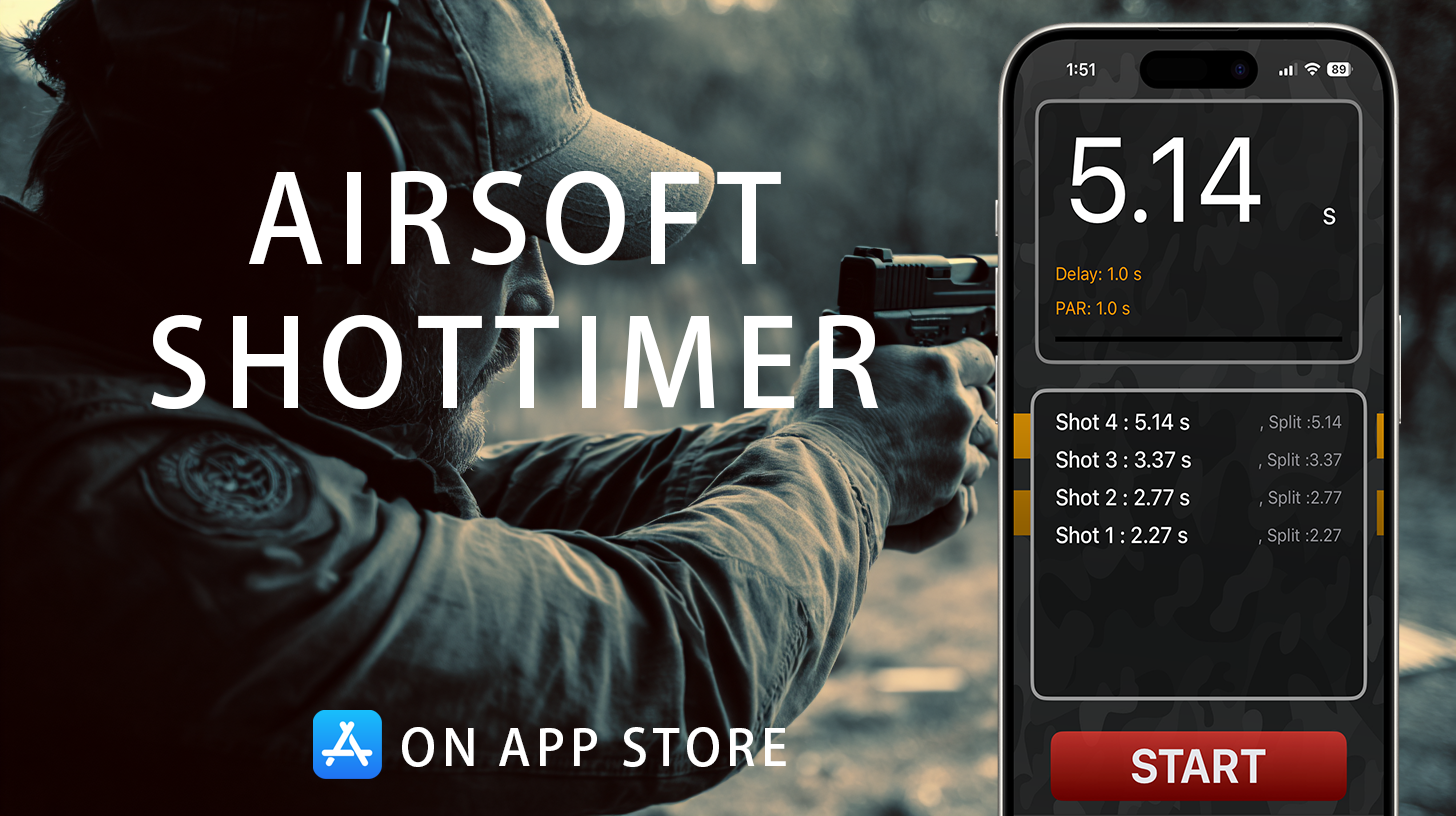
Airsoft Shot Timer is a free shot timer app tuned for airsoft and Action Air — it picks up BB gun shots, tracks your split times, and saves you the cost of a $150+ hardware timer for IPSC/IDPA practice.

- Speedsoft
- What Is Speedsoft
- Speedsoft vs Airsoft
- Speedsofting
- Speedsofter
- Speedsoft Rules
- Speedsoft FPS
- Speedsoft Field
- Speedsoft Player
- Speedsoft Loadout
- Speedsoft Gear
- Speedsoft Guns
- Speedsoft Jersey
- Semi Auto Only
- Feathering
- Mid-Cap Magazines
- Chrono Limit
- CSL Airsoft
- Competitive Speedsoft League
- SpeedQB
- Airsoft
- Hi-CAPA
- HPA
- AAP-01
- Competitive Airsoft
- CQB
- Shot Timer
- Speed Shooting
- Fast Reload
- Draw Speed
- Speedsoft 2026
- Speedsoft for Beginners