Below you will find pages that utilize the taxonomy term “Jeff Cooper”
Posts
read more
Mozambique Drill: Par Times, Scoring & the Exact Third-Shot Window
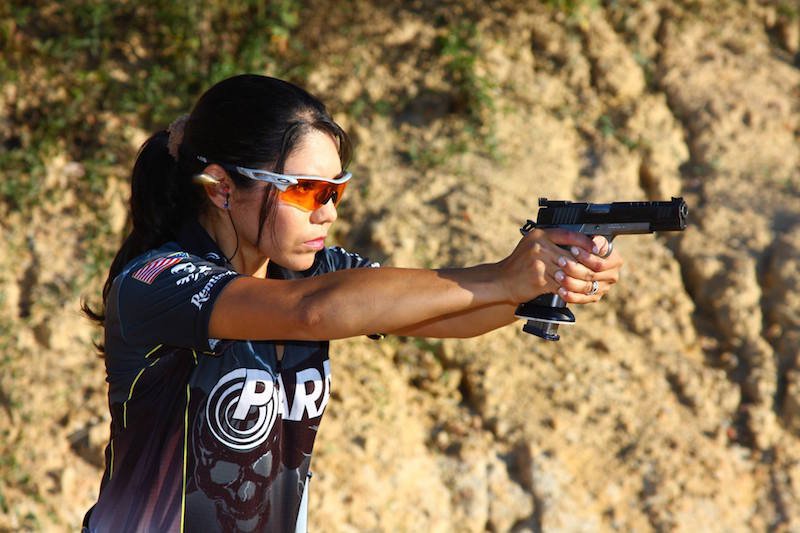
The Mozambique Drill in 60 seconds (BLUF)
- What it is: Draw and fire two rounds to the body, then one precise shot to the head, on a single target at seven yards. Also called the Failure Drill or Failure to Stop.
- Why it exists: It trains the moment your first response doesn’t work — two fast hits, no reaction, and now you need one slow, exact shot under pressure.
- What’s a good time? The classic par is 5 seconds from the holster at seven yards. Around 3 seconds you’re genuinely quick; world-class shooters have run it under one second up close.
- The hard part: The gear change. Your brain has to shift from “fast and loose” torso shots to a “small and exact” head shot mid-string — most people either rush the third shot and miss, or stall for half a second.
- Where exactly does shot three go? Not “the head” — the window between the eyebrows and the upper lip. Everywhere else on the skull is angled bone that can deflect a bullet.
- Three things almost nobody tells you: the 1974 shot that started it all landed in the neck, not the head; the LAPD renamed it the Failure Drill in 1980 over the name’s racial overtones; and most US police departments no longer teach the head shot at all.
- Train it anywhere: The 2+1 rhythm is a pattern skill. An airsoft pistol or a dry-fire rep against a par time on a free Airsoft Shot Timer app builds the same draw, cadence and transition without a single live round.
If you’ve seen John Wick clear a room — two quick shots to the chest, one to the head, next target — you’ve watched a Hollywood-polished Mozambique Drill. Keanu Reeves trained the pattern for the films, and Tom Cruise made an alley version of it famous in Collateral years earlier. But the drill wasn’t invented for the movies. It came out of a gunfight at an airport in 1974 — or at least out of a story about one, which turns out to be a distinction worth making — and it survives in competition warm-ups and training courses today because it tests something almost no other drill does: what you do when your first answer fails.
Posts
read more
El Presidente Shooting Drill: How to Run It, What's a Good Time & USPSA 99-11 Scoring (2026)
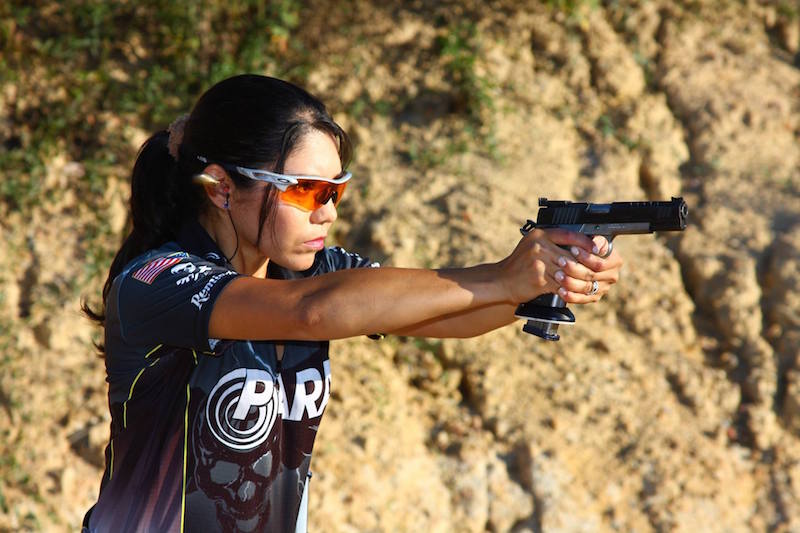
The El Presidente in 60 seconds (BLUF)
- What it is: Face uprange at 10 yards, turn on the beep, draw, fire two rounds on each of three targets, reload, and fire two more on each — 12 rounds total against the clock.
- Who made it: Jeff Cooper, who built it in the 1970s to gauge pistol proficiency for a presidential security detail in Latin America and published it in American Handgunner in 1979 — hence “El Presidente,” or “El Prez” for short. Full history below.
- It’s still a live classifier: El Prez is USPSA classifier CM 99-11 — a 12-round, 60-point, Virginia Count course. Shoot it at a match and it moves your classification.
- What’s a good time? The classic benchmark is a clean run in 10 seconds (all 12 in the A-zone). But USPSA scores it on hit factor, and for a clean run the conversion is dead simple: 60 ÷ your hit factor = your time. A 10 hit factor is 6.0 seconds with all twelve in the A-zone — roughly Grandmaster pace in the optics divisions.
- Why it’s the decathlon of drills: One run tests your turn, draw, target transitions, splits, a full reload, and recoil control — no single skill can hide. The common mistakes each leave a signature on the timer or the target, so you can diagnose your own run.
- Train it anywhere: The turn, draw, transitions and reload are all pattern skills. Run par-time reps with an airsoft pistol or dry fire on a free Airsoft Shot Timer app between range trips.
Ask a room full of shooters to name one pistol drill and more of them will say “El Presidente” than anything else. It’s been on range programs for fifty years, it shows up in USPSA classifiers, and it’s the first thing a lot of instructors reach for when they want to see whether a new student can actually run a gun rather than just shoot groups off a bench. If the Bill Drill is the honest test of your grip, the El Prez is the honest test of everything else.
Posts
read more
Weaver vs Isosceles Stance: Which Pistol Shooting Stance Wins in 2026 (and Why)
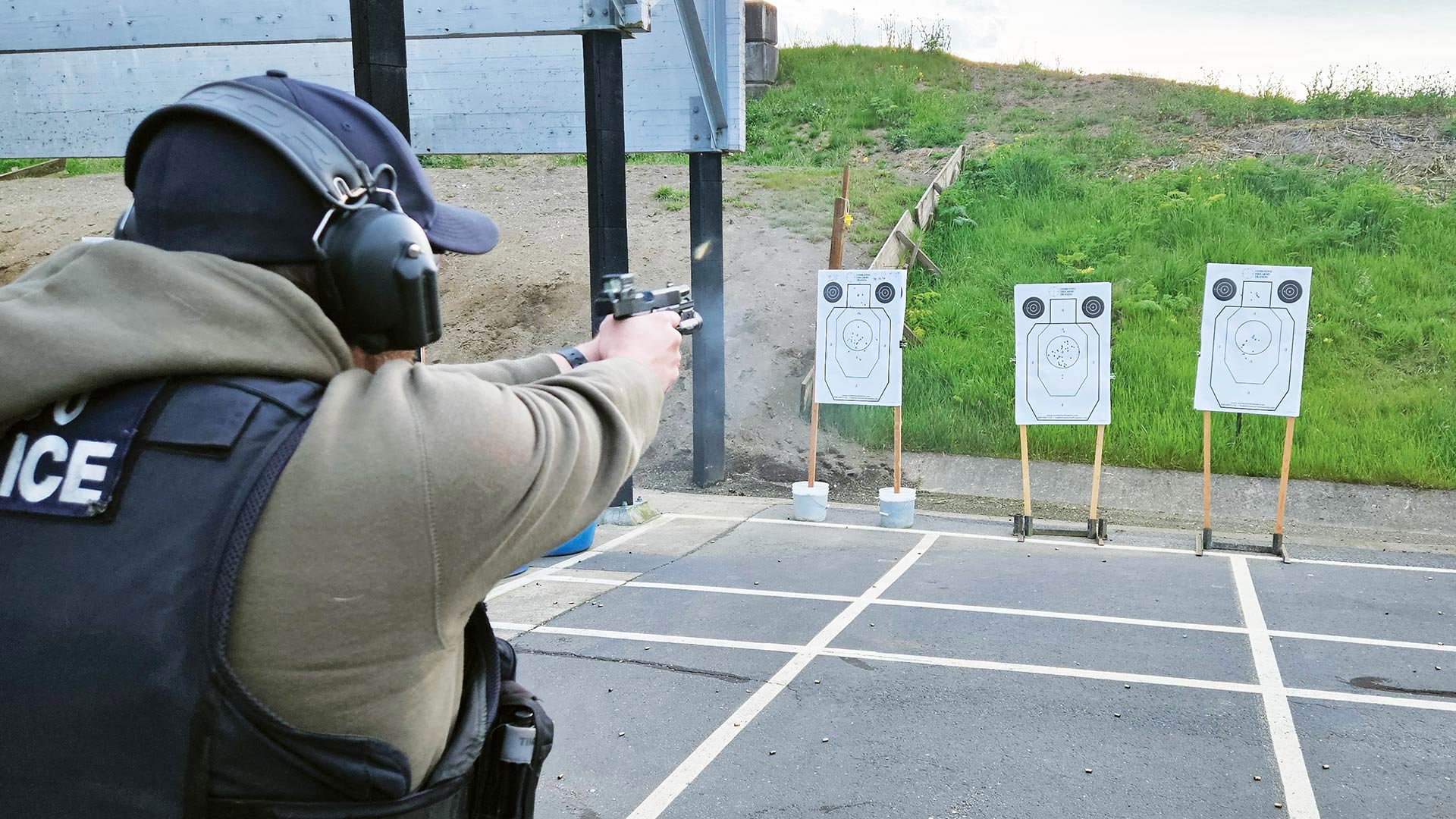
Weaver vs Isosceles in 60 Seconds
If you only read one paragraph, read this one. The Weaver stance is bladed, with the gun-side foot back, both elbows bent and a push-pull tension between the hands. The Isosceles stance is squared to the target with both arms pushed out so they form a triangle with your chest. The Chapman (or modified Weaver) keeps the bladed feet but locks the gun arm straight like a rifle stock. The Modern Isosceles keeps the squared chest, staggers the feet slightly, drops the shoulders in front of the hips and softens the elbows. That last one is what you will see on nearly every IPSC, USPSA and Steel Challenge winner today, and it is what we recommend you build first.