Free USPSA & IPSC Power Factor Calculator — Major/Minor + Chrono Check
Type in your bullet weight and your chrono readings. The power factor appears as you type, worked out the way the match will score it. That matters more than it sounds. Most power factor calculators multiply and divide and stop there. The rulebook then does two more things that decide whether you pass: it throws away the decimals, and if you fall short it re-shoots under rules that differ between USPSA and IPSC. This one does both, and it also tells you how much margin you’re carrying into a cold morning.
Power factor gets checked once, at chrono. Every stage after that is decided by time. The free Airsoft Shot Timer app uses your phone's mic to record every split and your last shot — live fire or BB guns.

The 30-second version
- Power factor = bullet weight (grains) × average velocity (fps) ÷ 1000.
- The decimals are dropped, not rounded. Both rulebooks spell it out: 124.9999 is not 125.
- Minor is 125 everywhere. Major is 165 in USPSA. In IPSC it’s 160 in Open and 170 in Standard, Classic and Revolver. Production, Carry Optics and similar divisions are Minor only.
- At chrono you hand over 8 rounds. One bullet is weighed and three are fired. If you fail, USPSA adds one shot at a time and IPSC fires three more at once. Either way, the fastest three count.
- Leave real headroom. A match chronograph is “in tolerance” if it reads within ±4% (USPSA) or ±5% (IPSC) of its first-day check. A load that only just passes at home can fail at the match.
How power factor is calculated
Power factor is a measure of momentum: how heavy the bullet is times how fast it’s going. Multiply the bullet weight in grains by the average velocity in feet per second, then divide by 1000. A 124-grain 9mm bullet averaging 1,050 fps is 124 × 1,050 ÷ 1000 = 130.2. Under the rules, that’s a power factor of 130.
The step most people miss is the one that turns 130.2 into 130. USPSA Appendix C2, item 36, says the final result “will ignore all decimal places”, and IPSC rule 5.6.3.5 uses the same words and the same example: 124.9999 is not 125. In practice that means the velocity you need is a little higher than a quick bit of mental maths suggests. With that 124-grain bullet, an average of exactly 1,008 fps gives 124.99. That scores 124, which is sub-minor. You need an average of 1,008.1 fps or more to score 125. The calculator shows both numbers, the raw result and the truncated one, so you can see how close the line is.
The bullet weight comes from the match’s scale, not the box. One bullet is pulled from your sample and weighed, and the scale and chronograph readings are used “at face value”, whatever number of decimals the device shows. If you load your own, weigh a few of your bullets on your own scale. That’s the number to type in.
Minimum velocity chart by bullet weight
This is the table you can’t get from a single calculation. It shows the lowest average velocity that still scores each floor once the decimals are dropped. Each number is the floor × 1000 ÷ bullet weight, rounded up to the next tenth.
| Bullet weight | Minor 125 | Major 160 (IPSC Open) | Major 165 (USPSA) | Major 170 (IPSC Std/Classic/Rev) |
|---|---|---|---|---|
| 115 gr | 1,087.0 fps | 1,391.4 fps | 1,434.8 fps | 1,478.3 fps |
| 124 gr | 1,008.1 | 1,290.4 | 1,330.7 | 1,371.0 |
| 135 gr | 926.0 | 1,185.2 | 1,222.3 | 1,259.3 |
| 147 gr | 850.4 | 1,088.5 | 1,122.5 | 1,156.5 |
| 165 gr | 757.6 | 969.7 | 1,000.0 | 1,030.4 |
| 180 gr | 694.5 | 888.9 | 916.7 | 944.5 |
| 200 gr | 625.0 | 800.0 | 825.0 | 850.0 |
| 230 gr | 543.5 | 695.7 | 717.4 | 739.2 |
Two things in the table catch people out. First, the 9mm Major columns are only relevant in a few places. In USPSA, Major in 9mm is only possible in Open and Revolver, where Major has no minimum caliber. In IPSC it’s Open, with a bullet of at least 120 grains, and Revolver. Second, heavier bullets give you more margin per fps. At 124 grains, one point of power factor equals about 8.1 fps of velocity. At 180 grains it’s about 5.6 fps. That’s one reason Minor shooters drift toward 147-grain loads and Major .40 shooters toward 180s. A slow chronograph reading costs them less power factor.
Power factor floors by division (USPSA 2026-09 and IPSC 2026)
The calculator’s division menu is built from the current rulebooks: USPSA’s 2026-09 edition and IPSC’s January 2026 Handgun rules. Every division in both has a Minor floor of 125. What changes is whether Major exists at all, what it takes, and what you give up for it.
In USPSA, Major is 165 in Open, Limited, Limited-10, Single Stack and Revolver. Limited, Limited-10 and Single Stack need a .40-caliber bullet or larger for Major, and Limited also accepts 10mm and .357 SIG. Open allows Major in any caliber from 9mm up, but sets a minimum bullet weight of 112 grains for Major. That’s the only bullet weight minimum in the USPSA rules, so there is no 115-grain rule for Production or Carry Optics. Production, Carry Optics, PCC and, in the 2026-09 rules, Limited Optics are Minor only. In Production and Carry Optics, entering the division counts as declaring Minor, even if your ammo would make Major. PCC also has a 1,600 fps velocity cap.
In IPSC, the Major numbers differ. Open is 160, and it requires a bullet of at least 120 grains. Ammo that makes Major with a lighter bullet is treated as unsafe and taken out of the match. Standard and Classic are 170 with a 10mm (.40) minimum for Major. .357 SIG still counts in those two until the end of 2029. Revolver is 170 in any caliber, but a revolver that holds seven or more rounds can’t score Major. Production, Production Optics and the new Optics division, added in the January 2026 rules, are Minor only.
Major isn’t free in the capacity divisions. In USPSA Single Stack and IPSC Classic, a Major magazine holds 8 rounds against 10 in Minor. In USPSA Revolver, you can fire 6 shots between reloads in Major against 8 in Minor. The calculator’s note under the division menu reminds you of these trade-offs as you switch.
What happens at the chrono station
At most local matches nobody checks your ammunition. At a Level II or bigger match, expect a chrono stage. The procedure is laid out in USPSA Appendix C2 and IPSC rule 5.6.3, and knowing it changes how you prepare.
You hand over 8 rounds from the ammunition you’re actually shooting. The chrono officer runs everything through your own gun, because barrel length and chamber change velocity. One round is pulled apart and the bullet weighed. Three are fired over the chronograph, and the average of those three goes into the formula. If the truncated result meets your declared power factor, you’re done.
If it doesn’t, this is where the two rulebooks differ, and why the calculator has a USPSA/IPSC switch. USPSA fires one more round at a time. After each shot it recalculates using the three fastest velocities so far, and it stops the moment you pass, up to six shots in total. IPSC fires three more rounds at once and uses the fastest three of the six. Still short after six? You have one round left, and you choose what happens to it. Either it’s pulled and weighed, and the heavier of the two bullet weights is used, or it’s fired as a seventh shot and the fastest three of seven count. Put four to six readings into the calculator and it plays out your rulebook’s sequence and shows which shot got you over the line, or that none did.
The consequences are written down too. Declared Major but only made Minor? Your entire match is rescored as Minor, including the stages you’ve already shot. Didn’t make Minor? You can keep shooting, but not for score or match recognition. And if your ammunition is retested and gives a different result, USPSA applies the lower power factor to every stage.
How much headroom does your load need?
Here’s the number nobody puts in a calculator. The rules say how a match chronograph is checked. USPSA fires the same calibration ammo through it every day, and the chronograph is “within tolerance” if the daily average stays within ±4% of the first day’s. In IPSC it’s ±5%. A chronograph that reads 3% slow is still a legal chronograph. On top of that come your own variables: a cold morning, a new lot of powder or primers, different brass, a gun that isn’t the one you tested in.
So treat 4–5% as the margin you’re carrying in, not as a safety bonus. In power factor terms, 4% over 125 is 130. 4% over 165 is about 172. For IPSC’s ±5%, it’s about 131.5 for Minor, 168 for Open Major and 178.5 for Standard and Classic. A common Minor load of a 147-grain bullet at 870 fps calculates to 127.89. That’s only about 20 fps of headroom, or 2.3%. It will pass at home and fail on a chronograph reading 3% low. The calculator turns your margin into fps so you can see this. And once you’ve entered four or more readings, it shows what your slowest three would score. If your extreme spread is wide, that’s the result you might see on a different day.
The fix is boring but it works. Chronograph your actual match ammunition, through your actual match gun, ideally in similar weather, a few weeks before the match. Change anything in a handload, even just the primer brand, and test again.
Action Air, airsoft and IDPA
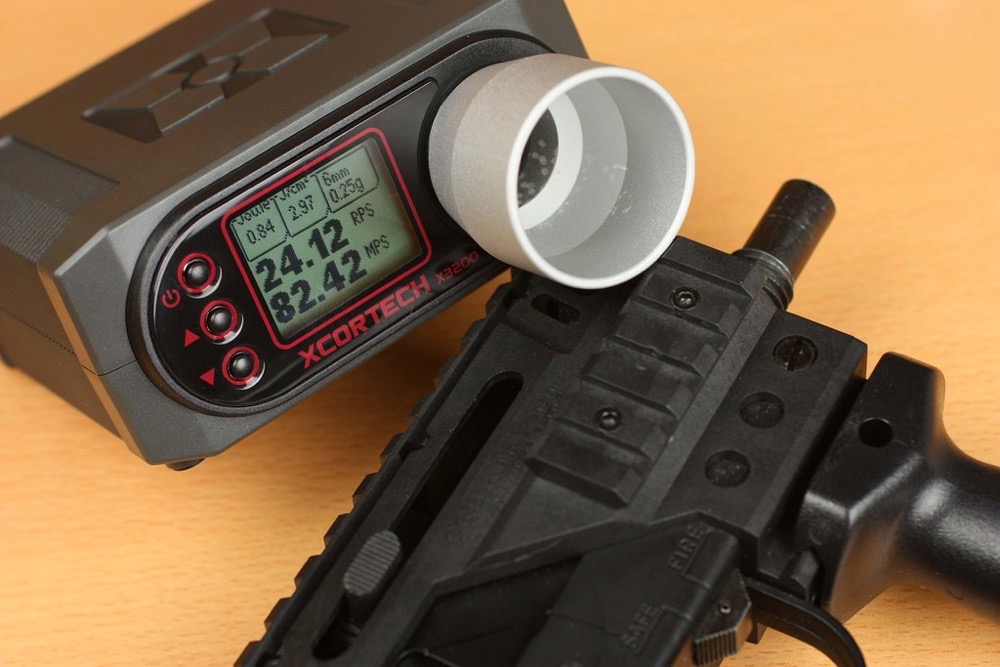
If you shoot IPSC Action Air, the airsoft discipline, there’s no Major or Minor. Every division scores A 5, C 3, D 1, so the hit factor calculator on Minor is the right setting. “Power factor” in the Action Air rules (5.6.1) is an energy cap instead: projectiles can’t exceed two joules, or the lower limit set by local law. The rules don’t give an fps figure or a BB weight for it, so convert it yourself for the BB weight you use. Our airsoft chronograph guide has the FPS-to-joules maths and a three-BB-weight self-check.
IDPA uses the same formula and also drops the decimals, but the floors and the test are different. It’s 125 for SSP, ESP and CO, 165 for CDP, 105 for Stock Revolver, CCP and BUG, 155 for Enhanced Revolver and 135 for PCC. IDPA also passes you if two of the three test rounds make the floor. The calculator follows USPSA and IPSC procedure. For IDPA’s division details, see our IDPA rules guide.
Where the timer comes in
Power factor gets settled once, at a folding table behind the berm. Everything after that is points divided by time. A Major shooter’s C-zone hits are worth 4 points instead of 3, and that only matters if their times stay competitive. The free Airsoft Shot Timer app listens through your phone’s microphone and records your first shot, every split and your last shot, with live fire or quiet airsoft pistols. Then put the numbers into the hit factor calculator to see what Major or Minor would actually change on your stage, or set a par time in the online par timer. For what the app does beyond a beep, see the shot timer app guide. If your first match is coming up, the USPSA beginner guide walks through the day.
FAQ
How do you calculate power factor?
Multiply the bullet weight in grains by the average velocity in feet per second, then divide by 1000. Then drop the decimals. Example: a 124-grain bullet at an average of 1,050 fps is 130.2, which scores as 130. At a match, the average comes from three shots through your own gun, and the bullet weight from one of your bullets on the match scale.
Is 9mm major or minor?
Almost always Minor. In USPSA, 9mm can only score Major in Open and Revolver, the divisions with no minimum caliber for Major. Open also needs a bullet of at least 112 grains. In IPSC, 9mm Major is possible in Open with a bullet of at least 120 grains and a power factor of 160, and in Revolver at 170.
What is the minimum power factor for USPSA?
125 for Minor in every division and 165 for Major, in the divisions that allow Major: Open, Limited, Limited-10, Single Stack and Revolver. Production, Carry Optics, PCC and Limited Optics are Minor only in the 2026-09 rules.
Does power factor round up?
No. USPSA Appendix C2 item 36 and IPSC rule 5.6.3.5 both say the result ignores all decimal places. 124.9999 is 124, not 125. Make sure your load’s average clears the line with room to spare.
What happens if I don’t make power factor at chrono?
First, more rounds are fired. USPSA adds one at a time and IPSC adds three, with the fastest three counting. If you’re still short, the last round can be weighed or fired as a seventh shot. If you still fail Major, your whole match is rescored as Minor. If you fail Minor, you can keep shooting but not for score.
Sources: USPSA Competition Rules, 2026-09 edition (rules.uspsa.org): 5.6.1, Appendix B1, Appendix C2 items 17–18 and 29–42, Appendix D1–D9. IPSC Handgun Competition Rules, January 2026 Edition: 5.6.2.3, 5.6.3.1–5.6.3.9, Appendix D. IPSC Action Air Handgun Competition Rules, January 2026 Edition: 5.6.1, Appendix B. IDPA Rulebook Ver. 2026.2: 8.3.4–8.3.5. Chrono walkthrough informed by IPSC Guru’s “How To: IPSC Chrono Essentials” video.
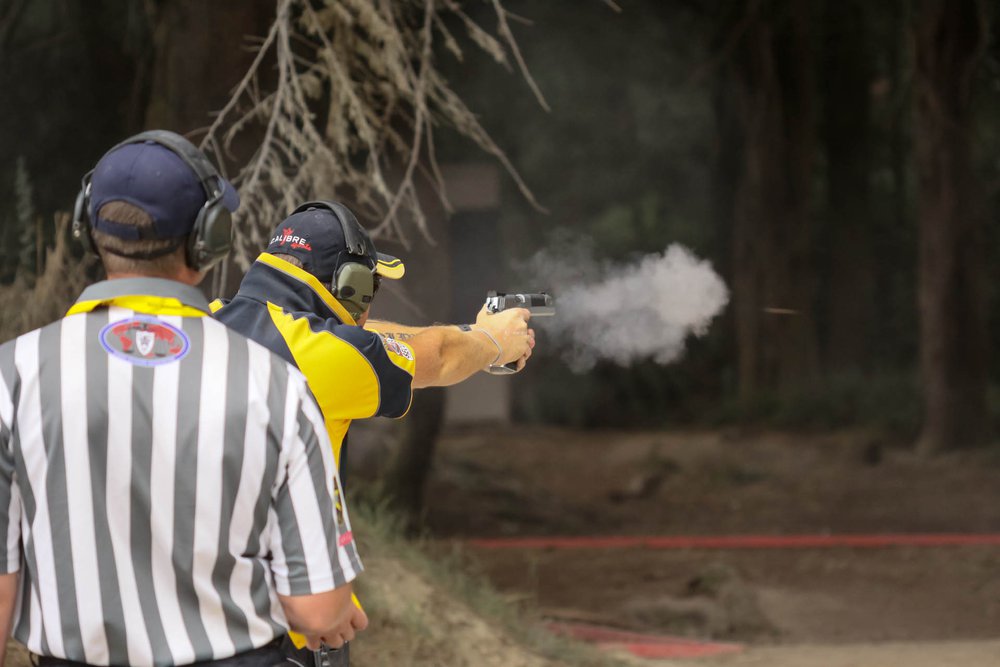
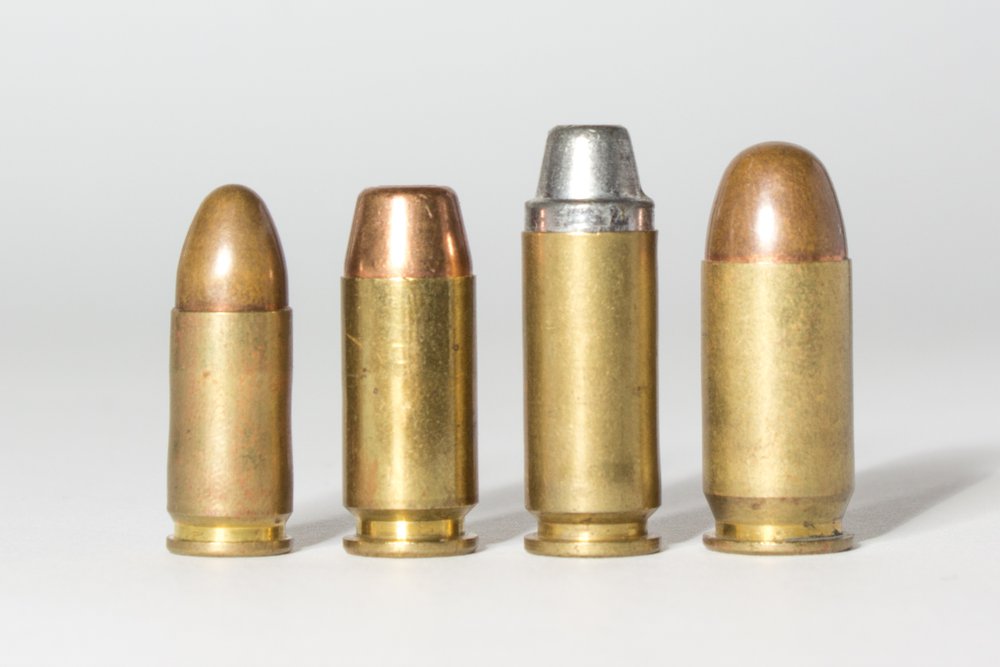
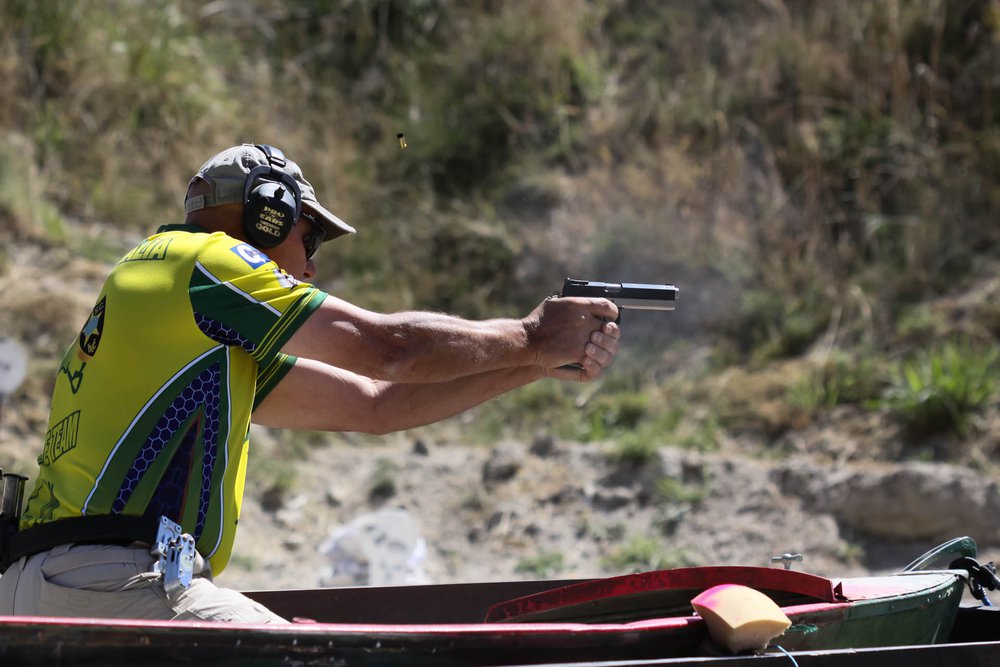
Image credits: cover — A. Taverner, “Smoke from gun powder at the 2013 IPSC Australasian Handgun Championship”, CC BY 2.0, via Wikimedia Commons / Flickr, resized. Cartridges — Grasyl, “Pistol calibre cartridges comparison - 9x19mm Para, .40 S&W, 10mm Auto and .45 ACP”, CC BY-SA 4.0, via Wikimedia Commons, resized. Stage photo — A. Taverner, “Standard division competitor at the 2013 IPSC Australasian Handgun Championship”, CC BY 2.0, via Wikimedia Commons / Flickr, resized. Airsoft chronograph — Laineema, CC BY 2.0, via Flickr (1, 2), resized.


Put a Shot Timer in Your Pocket
Airsoft Shot Timer is a free shot timer app tuned for airsoft and Action Air — it picks up BB gun shots, tracks your split times, and saves you the cost of a $150+ hardware timer for IPSC/IDPA practice.
- Power Factor Calculator
- USPSA Power Factor Calculator
- IPSC Power Factor Calculator
- USPSA Power Factor
- Major Power Factor
- Minor Power Factor
- How to Calculate Power Factor
- Power Factor Chart
- Chronograph
- Chrono Procedure
- 9mm Major
- USPSA Divisions
- IPSC Divisions
- Hit Factor
- Shot Timer
- Practical Shooting