5 Fundamentals of Pistol Shooting 2026: How Stance, Grip, Sight Alignment, Trigger Control & Follow-Through Actually Work Together
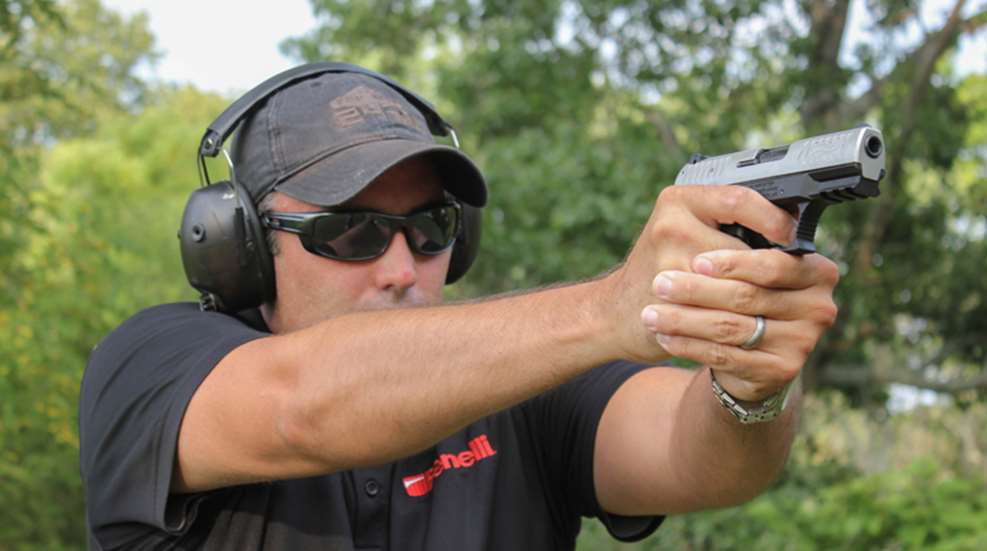
60-Second Quick Picks: Which Fundamental Is Actually Your Problem?
If you’ve already shot a few hundred rounds and your groups still drift, the issue is almost never “I need to practice more.” It’s that one specific fundamental is the weak link. Use this as a 30-second self-diagnosis before reading the long version below.
- Shots stringing low-left (right-handed shooter): Trigger control. You’re milking the grip while pressing — jump straight to the Trigger Control section.
- Groups open up as you speed up: Grip. Your support hand isn’t doing enough recoil management — see Grip.
- First shot hits, second shot drifts high: Follow-through. You’re peeking at the target between shots — read Follow-Through.
- Can’t see the front sight crisp under pressure: Sight alignment + vision. See Sight Alignment.
- You feel exhausted after 15 rounds: Stance. Your body is fighting itself — see Stance.
- Want a structured 30-day drill plan: Skip to Shot Timer Drills.
Jump links: What are the 5? · Diagnostic chart · Drills · Common mistakes · FAQ
The Drill That Exposes Everything
A few months ago I watched a friend run a Bill Drill at our local USPSA range. Bill Drill — draw and fire six rounds at one target seven yards away, as fast as possible. His first round was a clean A-zone hit. His sixth round was nine inches above the target, in the dirt of the next bay.
He turned around, expecting me to say something about trigger jerk. I didn’t. I asked him to do it again with the same grip pressure on shot six as on shot one. The whole string landed in the A-zone.
That’s what the five fundamentals really are. Not a list of things to remember — a chain where one failure breaks the rest. His trigger control was fine. His sight picture was fine. What collapsed was the support-hand grip pressure between shot two and shot three, which let the muzzle creep up between every subsequent shot. One weak link, six bad outcomes.
This guide isn’t another rewrite of the NRA fundamentals poster. It’s a working framework for diagnosing your own shots, training each fundamental with a shot timer, and connecting the five into the single integrated motion that competitive shooters actually use. Whether you’re training for IPSC, IDPA, USPSA, or building real-pistol skill through airsoft crossover, the framework is the same. Only the equipment changes.
What Are the 5 Fundamentals, Actually?
Ask ten instructors what the five fundamentals of pistol shooting are and you’ll get ten slightly different lists. The NRA teaches Aiming, Breath Control, Hold Control, Trigger Control, and Follow-Through. Military marksmanship doctrine often adds bone support and natural respiratory pause. Competitive shooting coaches frequently substitute “Grip” for “Hold Control” because handgun shooting is fundamentally a grip-driven activity, not a postural one.
For practical pistol shooting — the kind that matters in IPSC, IDPA, defensive training, and even competitive airsoft — the framework that actually works is Stance, Grip, Sight Alignment, Trigger Control, and Follow-Through. This is the one we’ll work with, because it maps cleanly to what your body does in sequence each time you make a shot, and because each component has a clear failure mode you can train out.
The order matters. Stance feeds grip; grip feeds sight alignment; sight alignment enables trigger control; trigger control creates the conditions for follow-through. Skip a step or weaken one, and the chain collapses downstream. Most shooters spend years polishing a single link — usually trigger control — without realizing that the link before it was already broken. The fundamentals work as a system or they don’t work at all.
Fundamental 1: Stance — The Platform Everything Else Stands On
Your stance is the structural foundation. It’s also the fundamental most casual shooters skip, because by the time they realize stance matters, they’ve already shot a few thousand rounds with whatever feels natural — which is rarely what works.
The modern fighting stance — sometimes called the modern isosceles — places your feet roughly shoulder-width apart, with your strong-side foot slightly behind your support-side foot. Your knees are slightly bent. Your weight is forward, balanced over the balls of your feet, with your shoulders rolled slightly forward of your hips. The position should feel like you’re about to push someone in front of you — not standing at attention.
This forward-leaning, athletic stance does three things. It pre-loads your skeleton to absorb recoil, so the gun returns to the same point of aim after each shot. It keeps you mobile, which matters enormously in IPSC and IDPA where you’ll be moving between shooting positions. And it prevents the slow backward rocking that destroys precision after the fifth or sixth round.
If you want the full breakdown of Isosceles vs. Weaver vs. Modern Fighting Stance, including the historical context and which stance suits which discipline, read our pistol shooting stance guide. For the fundamentals chain, what matters is this: a good stance lets your upper body relax, which lets your grip do its job, which lets your sights stay aligned. Skip stance and everything downstream gets harder.
Fundamental 2: Grip — The Foundation Most Shooters Cheat On
If stance is the chassis, grip is the suspension. It’s the single component that determines whether your sights return after recoil or drift, whether your splits stay consistent under speed, and whether shot six lands where shot one did.
A correct two-handed grip starts with the strong hand high on the backstrap, web of the hand pressed firmly into the beavertail, fingers wrapping the grip with the trigger finger isolated and indexed along the slide. The support hand wraps around the strong hand from the side, with the support thumb pointing forward and the support fingers overlapping the strong-hand fingers. Both thumbs point forward, parallel to the slide. This is the modern thumbs-forward grip used by virtually every competitive shooter.
What matters most is the pressure distribution. Roughly 70% of your gripping force should come from the support hand, 30% from the strong hand. Most untrained shooters reverse this ratio, which is why their first shot is usually clean and every subsequent shot drifts upward — the strong hand is too tight to allow precise trigger control, and the support hand is too loose to control recoil.
Grip is also what makes airsoft training translate to real pistols. The same muscle memory of clamping down with the support hand and isolating the trigger finger transfers directly. If you’ve ever wondered why some airsoft players become surprisingly competent live-fire shooters, this is the answer. Our grip pressure and the four thumb positions has the full breakdown, including drills for support-hand isolation. For the fundamentals chain, just remember: weak support hand, broken chain.
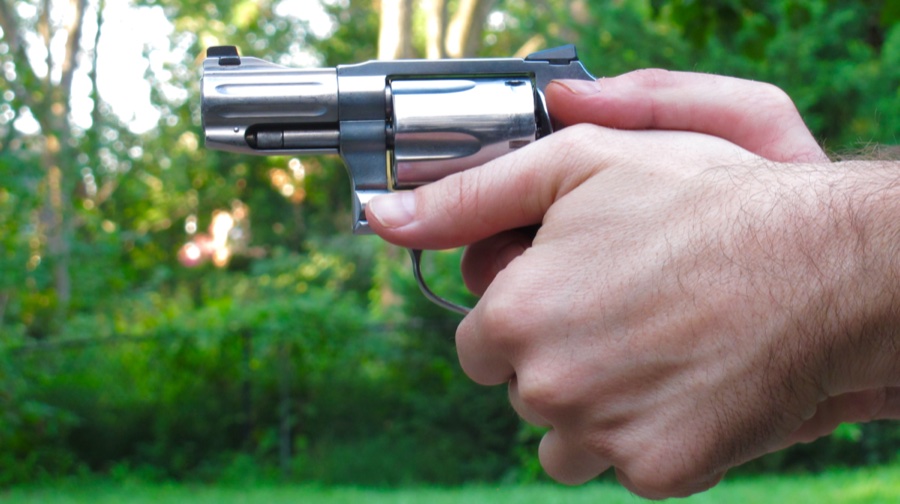
Fundamental 3: Sight Alignment & Sight Picture — The One Airsoft Can’t Teach You
Sight alignment and sight picture are two separate concepts that beginners conflate. Sight alignment is the geometric relationship between your front and rear sights — front sight centered in the rear notch, top of the front sight level with the top of the rear sight, equal light gaps on either side. Sight picture is the relationship between that aligned sight system and the target.
The order of priority is non-negotiable: front sight first, target second, rear sight third. Your eye can only focus on one plane at a time. Beginners look at the target because that’s where they want the bullet to go. Trained shooters look at the front sight because that’s the only sight your eye can verify in motion. Your target will appear slightly blurry. Your front sight will be crystal clear. That’s correct.
This is the one fundamental airsoft can’t fully simulate. The recoil signature is different, the sights on most airsoft pistols don’t perfectly replicate the live-fire equivalent, and you can’t develop the visual discipline of returning to a precise front-sight focus under recoil if there is no recoil. You can train the geometry, the trigger pull, the grip, and even follow-through in airsoft — but live-fire sight discipline has to be built on a real pistol or with very serious dry-fire work using a laser system.
For competitive shooters running pistol red dots, this fundamental simplifies dramatically: focus on the dot, ignore everything else. Red dots eliminate the focal-plane problem entirely and are part of why USPSA Carry Optics has grown faster than any other division. If you’re considering the transition, our pistol red dot guide walks through what changes and what doesn’t. For everything else, see our how to aim a pistol for the full breakdown of sight alignment, sight picture, and target focus.
Fundamental 4: Trigger Control — The One Everyone Blames (Correctly)
Trigger control is the fundamental that gets blamed for every missed shot, and it’s blamed correctly more often than not. The reason is geometric: a pistol’s barrel is short, the trigger lever is long, and any lateral force applied to the trigger gets multiplied at the muzzle by the time the bullet exits.
The mechanical objective of trigger control is simple. Apply pressure to the trigger directly rearward, in a straight line parallel to the bore axis, increasing pressure smoothly until the shot breaks unexpectedly. Your eye should stay focused on the front sight throughout. The break should surprise you slightly — not because you don’t know when it will happen, but because you didn’t try to time it.
The most common failure mode is “milking” — squeezing the entire hand instead of just the trigger finger. This is what produces the classic low-left grouping for right-handed shooters (low-right for lefties). The fix is to isolate the trigger finger from the gripping hand. Some instructors teach this as “make a fist, then move only the trigger finger.” Most failures here are downstream of grip problems — the strong hand is too tight, so the trigger finger can’t move independently.
There’s a related concept called trigger reset that becomes important for speed shooting. After the shot breaks, release the trigger forward only as far as the audible click of the reset, then prepare for the next press. Most beginners release the trigger all the way forward, which means every subsequent shot starts from the beginning of the trigger pull instead of from the reset point. Mastering reset is one of the biggest jumps in splits that competitive shooters make, and it’s all dry-fire trainable. Our trigger control guide covers reset drills in detail.
Fundamental 5: Follow-Through — The Fundamental Airsoft Players Skip
Follow-through is what you do after the shot breaks. Not after the shot lands — after it breaks. The difference matters because the bullet takes a small but real amount of time to exit the barrel, and any movement during that window influences where it goes.
A proper follow-through has four components. Maintain your grip pressure exactly as it was at the moment of trigger break. Keep your eye on the front sight, watching the sight lift in recoil and settle back. Reset the trigger to the reset point without releasing further. And mentally call the shot — was the front sight on the target when the gun went off?
That last part is the secret of accurate shooters. Calling your shot means knowing where the bullet went before you look at the target, based on where the front sight was when the trigger broke. If you can call your shot, you have follow-through. If you can’t, you’re peeking at the target during the shot, which means you’re either yanking your eyes off the sight before the bullet exits or you’re closing them entirely without realizing it.
Follow-through is what makes the second shot accurate. Without it, the gun’s recoil takes you somewhere you didn’t intend to go, and your second shot starts from an unknown position. With it, the gun returns to exactly where it was, and your second shot is just the first shot repeated.
This is also the fundamental that crosses most directly into competitive shooting. The reason elite USPSA Production shooters can post sub-0.20-second splits is not that they’re pulling the trigger faster — most people can finger-tap a desk at 0.10 seconds. It’s that their follow-through is so consistent that the front sight returns to the same place every time, so the next press is just confirmation. Our which pistol drill to shoot and practical shooting guide have specific follow-through drills for both static and movement contexts.
How to Diagnose Your Worst Shot Using the 5 Fundamentals
When a shot misses badly, your instinct is usually wrong about why. The fundamentals framework gives you a structured way to figure out which link in the chain actually broke. Read your group on the target and work backward through the chain.
For right-handed shooters, shots landing low-left are almost always trigger control — the shooter is squeezing the entire grip while pressing the trigger, pushing the muzzle down and to the left. The fix is to dry-fire with intent on a small target until the trigger break stops moving the gun. For lefties, this same error puts shots low-right.
Shots that fly high typically come from anticipation — flinching forward in anticipation of recoil before the shot actually breaks. This often gets misdiagnosed as a grip problem, but the real fix is dummy round drills where you don’t know which round is live and which is fake. Watching yourself flinch on a dummy round is the most humbling and useful drill in pistol shooting.
Shots that scatter wildly without a pattern suggest a grip pressure problem. Inconsistent grip pressure between rounds means the gun returns to different positions each time. The fix is conscious grip pressure — same pressure on every shot, verified through dry-fire repetition.
Shots that walk progressively in one direction across a string — getting higher and higher, for instance — are almost always a follow-through failure. You’re losing grip pressure or letting your eyes leave the sight earlier with each shot. The fix is slow, deliberate strings where you consciously reset the grip and visual focus between each shot before pressing again.
If you wear glasses or have any vision issues, sight alignment problems can look like trigger problems. Before assuming you’ve got a fundamental failure, get an eye exam. A surprising number of shooting problems are solved by an updated prescription.
The 5 Shot Timer Drills That Turn Fundamentals Into Hits
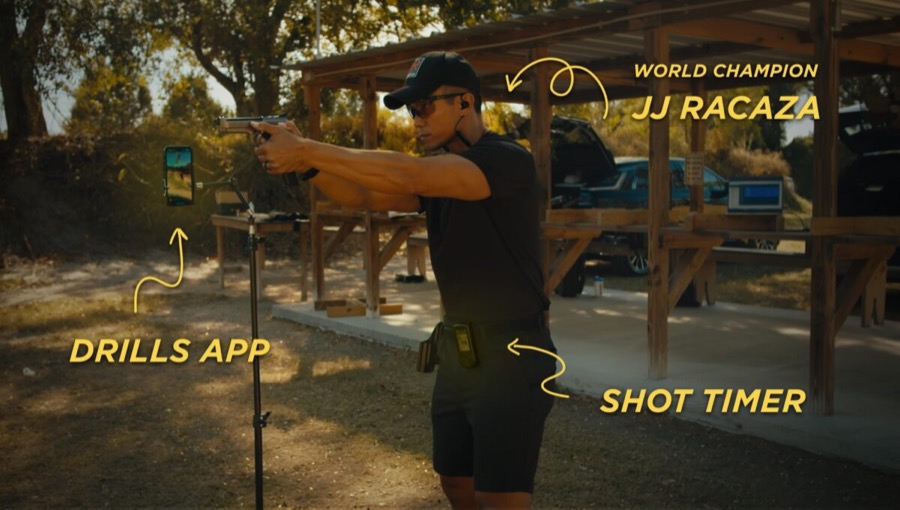
Theory only becomes skill when you train it under measurable pressure. A shot timer turns each fundamental into a quantifiable training input. Here are five drills — one for each fundamental — that you can run with the AirsoftShotTimer app on a live range, an airsoft setup, or even dry-fire at home.
Stance: The Movement Bill Drill. Standard Bill Drill is six rounds on one target at seven yards. The movement variant has you take one large step laterally during the draw, then deliver six shots from the new position. The timer measures total time and splits. If your splits open up dramatically after the step, your stance recovery is the weak link. Target: total time under 4.0 seconds, splits under 0.30 seconds.
Grip: The Group Maintenance Drill. Shoot five rounds slow-fire on a 3-inch dot at seven yards for a baseline group. Then shoot the same five rounds with a 0.30-second par time set on the timer. If your group opens up by more than 50% under time pressure, grip pressure is collapsing under speed. Train by progressively shortening par times while requiring all hits to stay inside the dot.
Sight Alignment: The Far Target Confirmation Drill. Set a target at 25 yards. Draw and fire one round on the timer. Call your shot before walking down to look. If you can correctly call hit vs. miss on 8 of 10 attempts, your sight discipline is solid. If you can’t call your shot, you’re not focusing on the front sight at the moment of break.
Trigger Control: The Surprise Break Drill. Load a magazine with random mix of live and dummy rounds — for live fire, snap caps mixed in; for dry fire, just track your trigger movement. Press the trigger expecting a shot every time. When the dummy comes, you’ll see your flinch on video or by observing the muzzle. Goal: zero detectable muzzle movement on dummy rounds.
Follow-Through: The Doubles Drill. Two shots on one target, timer running, focus on the second shot landing in the same hole as the first. Splits should be under 0.25 seconds for serious competitors, but the more important metric is the spread between the two hits. Pros routinely double-tap into one ragged hole. If your second shot is two inches off the first, follow-through is your weakest link.
For app users, our shot timer app guide walks through configuring par times, capturing splits, and reviewing string history. The best shot timer guide covers hardware alternatives if you compete and need PACT-class precision.
Common Mistakes Experienced Shooters Still Make
Most fundamentals failures aren’t ignorance — they’re drift. You knew the fundamentals once, but under speed and stress, they degrade in predictable ways. These are the five mistakes that even experienced shooters fall back into, and the ones to watch for as your skill grows.
The first is over-rotating the support hand. Modern thumbs-forward grip rotates the support wrist downward to apply forward pressure, but it’s easy to rotate too far and start losing trigger finger isolation. Watch this in mirror dry-fire — if your support thumb is angled steeply down, you’ve gone too far.
The second is collapsing stance over a long string. By round 20, most shooters are leaning slightly back to compensate for accumulated fatigue. This rotates your hips backward, which softens your grip, which destroys your splits. The fix is to consciously check your forward lean every fifth shot.
The third is target focus replacing front sight focus when the heart rate climbs. This happens to nearly everyone in competition. The fix is training under physiological stress — burpees before a drill, walking briskly to the line, anything that elevates your heart rate before the buzzer. Then you train front-sight focus despite the elevated state.
The fourth is treating reset as something to do consciously instead of letting it happen during follow-through. Conscious reset adds time to every shot. Trained reset is automatic — the finger comes back to the reset point as part of returning the gun to sight picture, not as a separate motion.
The fifth is letting airsoft habits creep into live fire — specifically, allowing a looser grip because airsoft has less recoil. The opposite is correct. Use airsoft as an opportunity to over-train grip and trigger discipline, then bring that discipline to live fire. The crossover article on airsoft to firearms training explains how to do this without building bad habits.
Frequently Asked Questions
What are the 5 fundamentals of pistol shooting?
Stance, grip, sight alignment, trigger control, and follow-through. Some instructors list aiming, breath control, hold control, trigger control, and follow-through (the NRA framework), but for practical pistol shooting the first list is more useful because it directly maps to your physical actions in sequence and is what competitive shooters actually train.
Which fundamental is most important?
They work as a chain. Each one enables the next. If forced to pick, most competition shooters say grip — because grip determines whether the gun returns after every shot, which is what makes everything else possible. But a great grip with a collapsing stance still produces poor groups. Train them in order: stance, then grip, then sight, then trigger, then follow-through.
Can I learn the fundamentals through dry fire?
Yes — about 80% of fundamentals work is dry-fire trainable. Stance, grip, sight alignment, and trigger control all develop through dry-fire with a clear target on a wall. Follow-through partially trains in dry-fire but needs live or laser-simulated recoil to fully develop. The dry fire training guide breaks down a structured weekly program.
Will airsoft help me train the fundamentals?
For stance, grip, and trigger control, yes — airsoft is excellent because the trigger and grip work transfer directly. For sight alignment under live recoil and full follow-through, you still need live fire or laser dry fire. Treat airsoft as 70% effective for fundamentals work and budget your live fire for what airsoft can’t teach.
How long does it take to master the 5 fundamentals?
A motivated student with weekly range time and daily dry fire reaches solid intermediate competence in 6-12 months. Mastery — meaning the fundamentals stay intact under match stress — takes 2-3 years of consistent training. Competitive shooters never stop refining; the fundamentals are still the focus of training at Grand Master level. Anyone who tells you the fundamentals are “beginner stuff” is selling you something.
Do I need a shot timer to train the fundamentals?
For static accuracy work, no. For applied competitive shooting, yes — because the fundamentals only matter under time pressure, and a shot timer is the only way to know whether they’re surviving the speed. The AirsoftShotTimer app provides par time, split capture, and drill templates that work for both airsoft and live fire training.
How do I know which fundamental is my weakest link?
Use the diagnostic chart in this guide based on your group pattern, then verify with a single isolated drill. If groups string low-left, run a slow-fire trigger drill. If they drift high after the first shot, run a follow-through doubles drill. The right drill should immediately improve the relevant error. If it doesn’t, the diagnosis was wrong — look at the previous link in the chain.
Related Articles
Foundational Technique Deep Dives
- Pistol Shooting Stance Guide — Isosceles, Weaver, and Modern Fighting Stance compared
- how to grip a pistol — grip pressure and thumb position — Two-handed grip, support hand isolation, and the 70/30 pressure rule
- how to aim a pistol and find your dominant eye — Sight alignment, sight picture, and target focus discipline
- Trigger Control Guide — Surprise break, reset, and the low-left fix
- Breathing Control Guide — Natural respiratory pause and oxygenation under stress
Training and Drill Resources
- Shot Timer App Guide — Configure par times, capture splits, run drill templates
- Best Shot Timer Guide — PACT, CED, and competition hardware comparison
- which pistol drill to shoot — Bill Drill, El Presidente, dot torture, and more
- Dry Fire Training Guide — Structured at-home program for fundamentals
- Shooting Training Plan Guide — 12-week structured progression
Competition Application
- Practical Shooting Guide — How fundamentals translate to USPSA, IPSC, IDPA
- IPSC Training Guide — Stage-specific fundamentals work
- IDPA Training Guide — Defensive-context fundamentals
- Airsoft to Firearms Training Crossover Guide — How airsoft fundamentals transfer to live fire
The fundamentals aren’t a beginner’s checklist you graduate from. They’re the working framework that every shot you ever make depends on, from your first range visit to your last match at 65. Master them as a chain, train them with a timer, and the difference between you and the people on the podium becomes a matter of repetition — not talent.
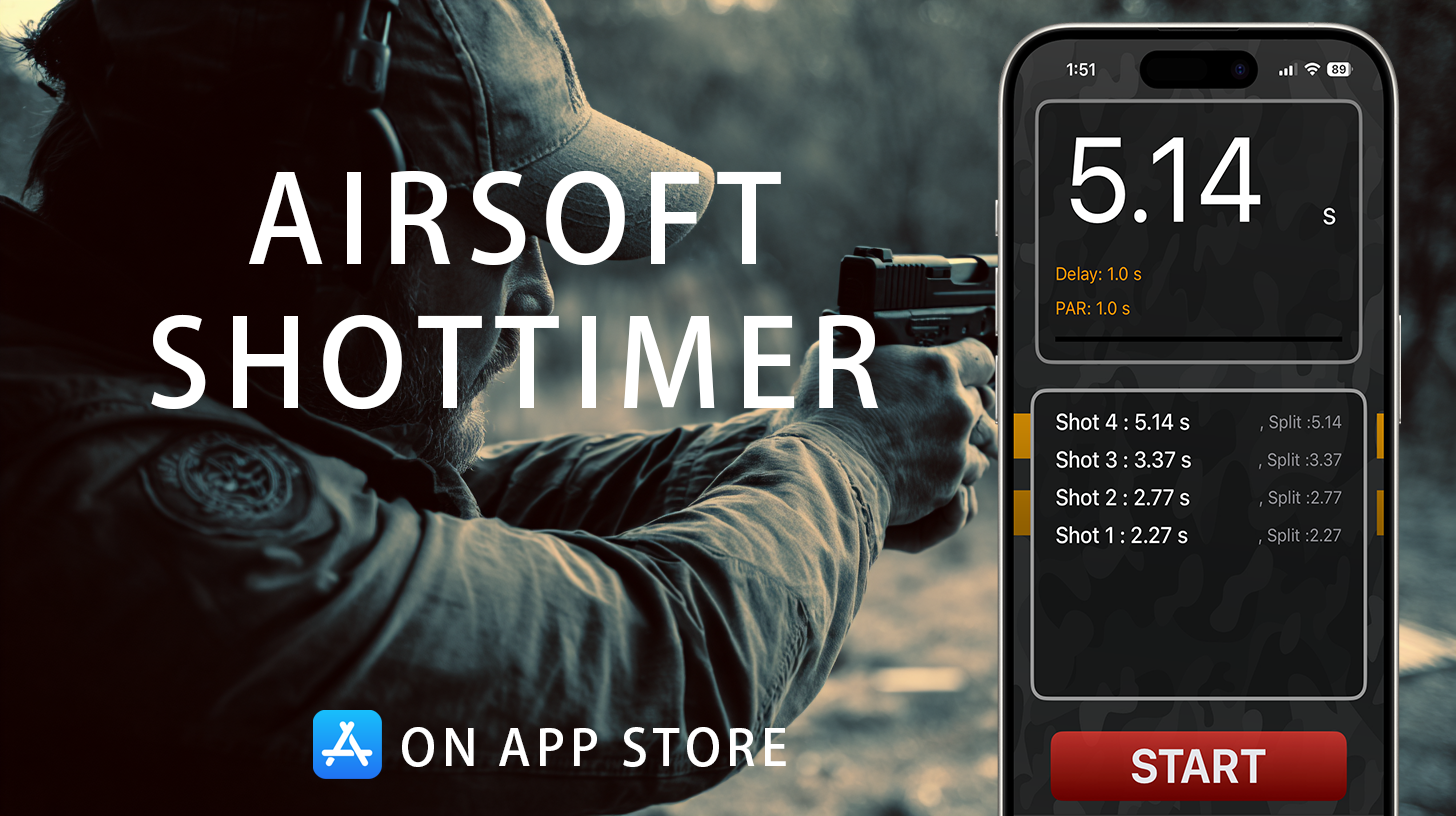
Put a Shot Timer in Your Pocket
Airsoft Shot Timer is a free shot timer app tuned for airsoft and Action Air — it picks up BB gun shots, tracks your split times, and saves you the cost of a $150+ hardware timer for IPSC/IDPA practice.

- Pistol Shooting Fundamentals
- 5 Fundamentals of Pistol Shooting
- Pistol Marksmanship 2026
- Shooting Basics
- Sight Alignment
- Trigger Control
- Follow-Through
- Shooting Stance
- Pistol Grip
- Handgun Training
- IPSC Training
- IDPA Training
- Practical Shooting
- Dry Fire Practice
- Shot Timer Drills
- NRA Fundamentals
- Front Sight Focus
- Trigger Press
- Recoil Management
- Beginner Pistol Training
- Diagnostic Shooting
- Airsoft Training Crossover
- Shooting Errors
- Marksmanship Fundamentals
- Competitive Shooting Basics