Airsoft Joule Creep & FPS Limits 2026: The 3-Weight Chrono Test (+ Full Joule Chart)
The 60-second version (BLUF)
- A chrono measures speed. Fields care about energy. Those are not the same number, and the gap between them is where almost every chrono argument comes from.
- The formula is simple: energy in joules = ½ × BB mass in kilograms × velocity in metres per second, squared. A 0.20g BB at 100 m/s (328 fps) is exactly 1.00 joule. Everything else on this page falls out of that one line.
- The single most useful anchor: 400 fps with a 0.20g BB = 1.49 J. 350 fps = 1.14 J. 300 fps = 0.84 J.
- Joule creep is real, but it is not universal. In one documented test an HPA rifle went from 1.45 J on 0.20g to 1.89 J on 0.40g without a single setting being touched. In another, a correctly-volumed AEG went the other way — 1.56 J on 0.20g down to 1.39 J on 0.48g.
- Which one your gun does depends on air volume, not on brand or price. The only way to know is to chrono your own gun on the weight you actually play with.
- You can test it yourself in five minutes, with arithmetic instead of opinion. Chrono on 0.20g, then on 0.30g. If energy were conserved, the 0.30g reading would be your 0.20g figure × 0.8165. Divide what you actually measured by that expected number, square it, and you have your creep index. Above about 1.10 you creep; the volume-matched rifle below came out at 0.97.
- “Is 400 fps allowed?” Almost everywhere outdoors, yes — on a 0.20g BB, which is 1.49 J. Indoor CQB is usually 350 fps / 1.14 J. The UK caps you at 1.13 J by site policy long before the statutory 1.3 J, and Japan at 0.98 J by law. The answer always depends on the weight it was measured with.
- Chrono with your game ammo, not with 0.20s you’ll never use. Passing on 0.20g and playing on 0.32g is how a legal gun becomes a hot gun.
- Measure, don’t guess. It’s the same habit that makes a shot timer worth carrying: the number on the screen beats the feeling in your hands, every time.
There’s a very particular flavour of embarrassment that only exists in airsoft. You’ve driven an hour to a new field, you’re in the safe zone, your rifle is on the chrono stand, and the marshal reads the display and says the thing nobody wants to hear: “Yeah, that’s hot, mate.”
And the part that stings isn’t being turned away. It’s that the same rifle, with the same spring, on the same BBs, passed at your home site three weeks ago. Nothing changed. You didn’t touch it. So either one of the two chronos is lying, or — far more likely — you’ve just run into the fact that “FPS” and “power” are two different things, and you’ve been quietly measuring the wrong one this whole time.
This guide fixes that permanently. Not with a calculator widget you have to keep coming back to, but with the actual maths, one complete conversion chart you can screenshot, and the two chrono experiments that show why the popular explanation of joule creep is only half-right.
What a Chronograph Actually Measures
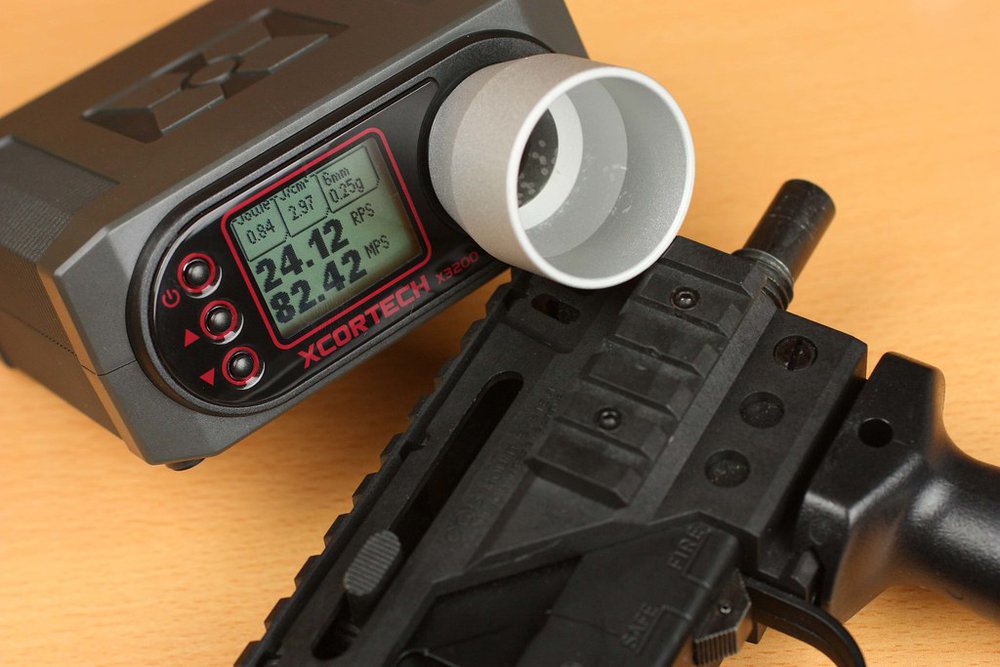
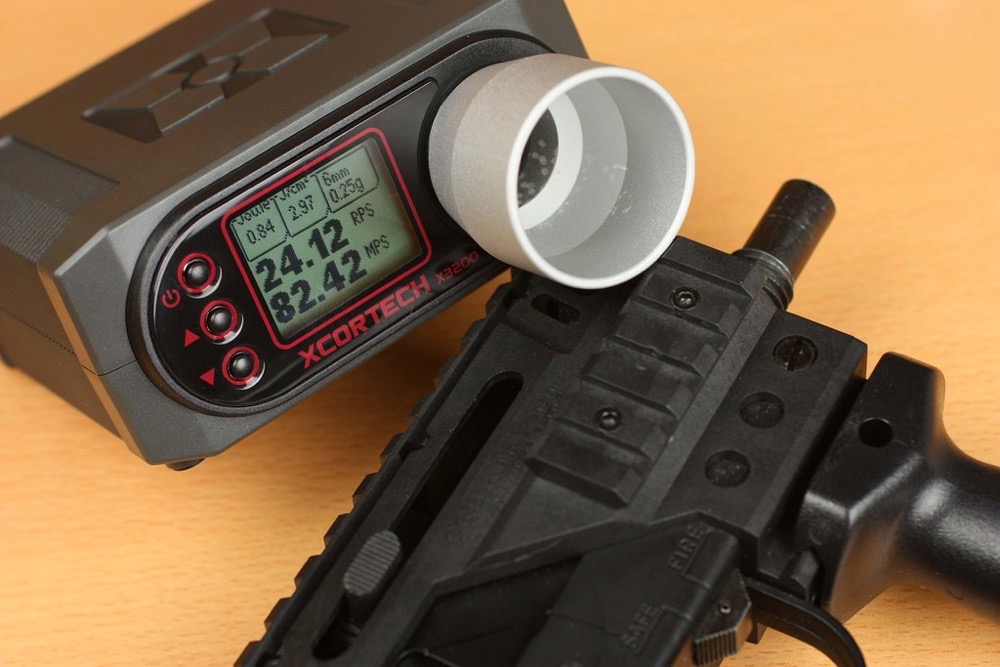
A chronograph is a very simple machine pretending to be a complicated one. Inside the tube are two optical sensors a known distance apart. The BB breaks the first beam, then the second, and the unit measures the time between those two events. Distance divided by time gives you velocity. That’s the entire trick.
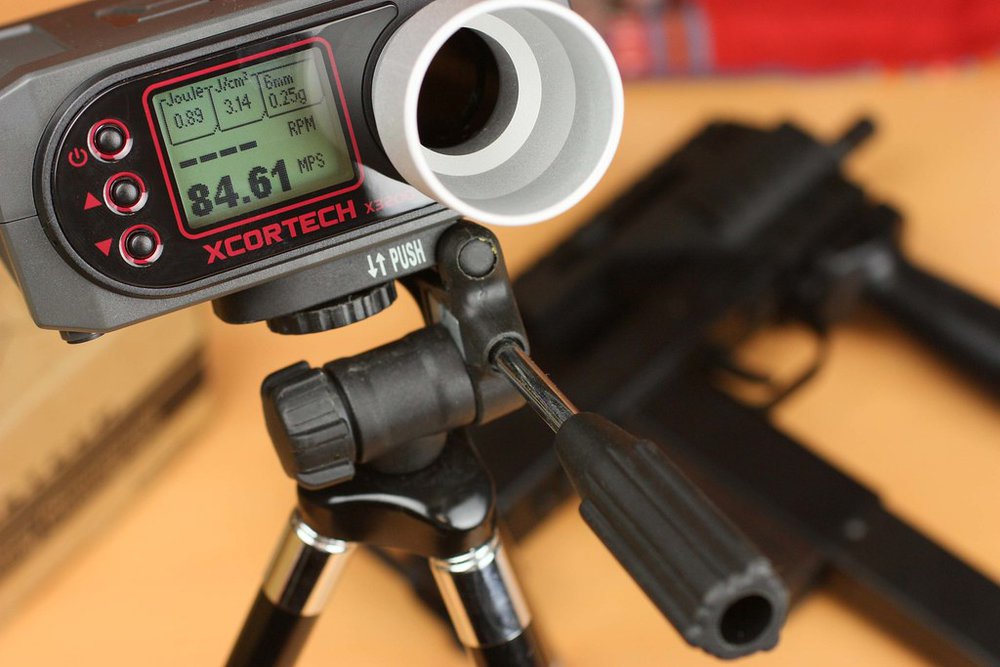
Notice what’s missing from that description: the chrono has no idea how heavy your BB is. It cannot know. It only saw a shadow pass two sensors. So when a chronograph displays joules — and most modern ones do — it is not measuring energy at all. It’s taking the BB weight you typed into the menu and doing arithmetic. Feed it the wrong weight and it will confidently display a wrong energy figure without the slightest complaint.
This is the single most common source of chrono confusion, and it has nothing to do with the hardware being cheap or inaccurate. A £40 Xcortech and a shop’s £200 unit will agree on velocity to within a percent or two. They’ll disagree wildly on joules if one of them has been left on 0.20g from the last person who used it.
The other thing worth internalising early: velocity is the number that varies, and energy is the number that matters. Muzzle velocity changes every time you change ammunition. Muzzle energy is what determines how hard the hit lands on the person twenty metres away, and it’s the reason more and more fields have quietly stopped asking “what’s your FPS?” and started asking “what’s your joule?”
The Only Chart You Actually Need
Here is the whole conversion, computed from the physics rather than copied from someone else’s blog. Read down the left for the velocity your chrono displays, across for the BB weight actually in your magazine, and the cell is your real muzzle energy in joules.
| FPS (0.20g eq.) | 0.20g | 0.25g | 0.28g | 0.30g | 0.32g | 0.36g | 0.40g | 0.43g | 0.48g |
|---|---|---|---|---|---|---|---|---|---|
| 280 | 0.73 | 0.91 | 1.02 | 1.09 | 1.17 | 1.31 | 1.46 | 1.57 | 1.75 |
| 300 | 0.84 | 1.05 | 1.17 | 1.25 | 1.34 | 1.51 | 1.67 | 1.80 | 2.01 |
| 320 | 0.95 | 1.19 | 1.33 | 1.43 | 1.52 | 1.71 | 1.90 | 2.05 | 2.28 |
| 330 | 1.01 | 1.26 | 1.42 | 1.52 | 1.62 | 1.82 | 2.02 | 2.18 | 2.43 |
| 350 | 1.14 | 1.42 | 1.59 | 1.71 | 1.82 | 2.05 | 2.28 | 2.45 | 2.73 |
| 370 | 1.27 | 1.59 | 1.78 | 1.91 | 2.03 | 2.29 | 2.54 | 2.73 | 3.05 |
| 380 | 1.34 | 1.68 | 1.88 | 2.01 | 2.15 | 2.41 | 2.68 | 2.88 | 3.22 |
| 400 | 1.49 | 1.86 | 2.08 | 2.23 | 2.38 | 2.68 | 2.97 | 3.20 | 3.57 |
| 420 | 1.64 | 2.05 | 2.29 | 2.46 | 2.62 | 2.95 | 3.28 | 3.52 | 3.93 |
| 450 | 1.88 | 2.35 | 2.63 | 2.82 | 3.01 | 3.39 | 3.76 | 4.04 | 4.52 |
| 500 | 2.32 | 2.90 | 3.25 | 3.48 | 3.72 | 4.18 | 4.65 | 4.99 | 5.57 |
One important caveat about how to read that grid, and it’s the caveat that trips people up. The left column is the velocity you’d see with that specific weight in the barrel. It is not a joule-creep prediction. If you chrono at 400 fps on 0.20g and then load 0.32g, your rifle will not still be doing 400 fps — it will slow down, and where it lands is the subject of the next two sections. What the grid gives you is the honest energy figure for any velocity-and-weight pair you can actually observe on a display.
The arithmetic behind every cell is worth knowing, because it means you never need this page again once you’ve got it. Convert feet per second to metres per second by multiplying by 0.3048. Convert BB grams to kilograms by dividing by 1000. Then energy equals half the mass times the velocity squared. A 0.20g BB at 400 fps: 400 × 0.3048 gives 121.9 m/s; 0.20 grams is 0.0002 kg; half of 0.0002 is 0.0001; times 121.9 squared (14,864) gives 1.49 joules. That’s it. You can do it on a phone in fifteen seconds, and now you can check any field’s posted chart against reality.
A couple of anchors are worth memorising outright because they come up constantly. 328 fps on a 0.20g BB is exactly 1.00 joule — 100 metres per second, which is why so many European sites express limits in round joule numbers. 350 fps is 1.14 J, the traditional UK site ceiling. 400 fps is 1.49 J, the classic American outdoor limit. 500 fps is 2.32 J, which is roughly where sniper-class rules and long minimum engagement distances start.
Reading It Backwards: When the Field Speaks Joules and Your Chrono Speaks FPS
The reverse conversion comes up more often than the forward one, because a lot of sites post a joule limit while the chrono at the door reads in feet per second. The maths runs the same way, just rearranged: velocity in metres per second equals the square root of twice the energy divided by the mass in kilograms.
In practice you rarely need to do it, because there are only about six numbers anyone ever uses. A 1.00 J limit is 328 fps on 0.20g. 1.13 J — the figure that shows up in UK site rules constantly — is 349 fps, which is why everyone rounds it to “350”. 1.30 J is 374 fps. 1.50 J is 402 fps, so the fields that say “400 fps or 1.5 joules, whichever you prefer” are being genuinely consistent rather than sloppy. 2.00 J is 464 fps, and 2.32 J is 500 fps.
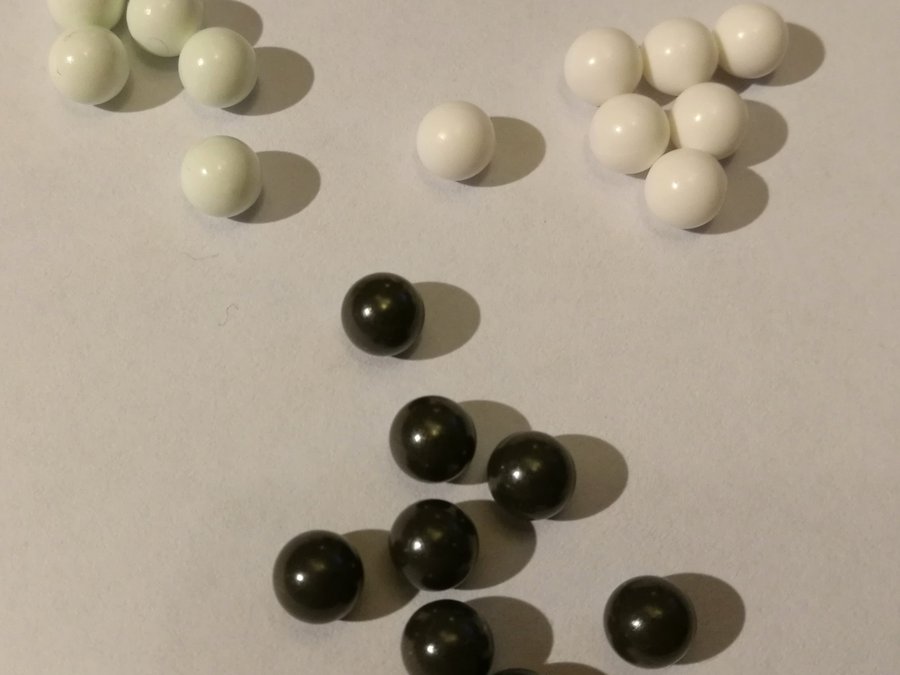
There’s a second backwards conversion that’s arguably more useful day to day: what velocity should a heavier BB show for the same energy? Take your 0.20g reading and multiply by the square root of 0.20 divided by the new weight. A gun that produces 400 fps of 0.20g energy should, if nothing weird is happening inside it, show about 358 fps on 0.25g, 327 on 0.30g, 316 on 0.32g, and 283 on 0.40g. From a 350 fps baseline, expect roughly 313, 286, 277 and 247 respectively.
Write those down before you go to the chrono station, because they are your cheat sheet for the single most useful diagnostic in this whole article. If your gun shows lower velocity than the equivalent number, you’re losing energy on heavies. If it shows higher, congratulations — you’ve got joule creep, and you need to read the next section before you play.
Joule Creep: What It Is, and the Test That Proves It
The standard explanation you’ll see repeated on every forum goes like this: a heavier BB accelerates more slowly, so it spends longer in the inner barrel, so the air behind it gets to push for longer, so it comes out carrying more energy than the light BB did. That explanation is correct as far as it goes, and it misses the condition that actually determines whether it happens to your gun.
The condition is air volume relative to barrel volume. If your cylinder or your HPA engine dumps more air than the inner barrel can use, a light BB leaves the muzzle while air is still being delivered, and that surplus is simply wasted out of the barrel. Put a heavier BB in front of it and the surplus finally has something to work against. Nothing has been upgraded, nothing has been adjusted — the gun was always producing that much energy, and the light BB was just too quick to collect it.
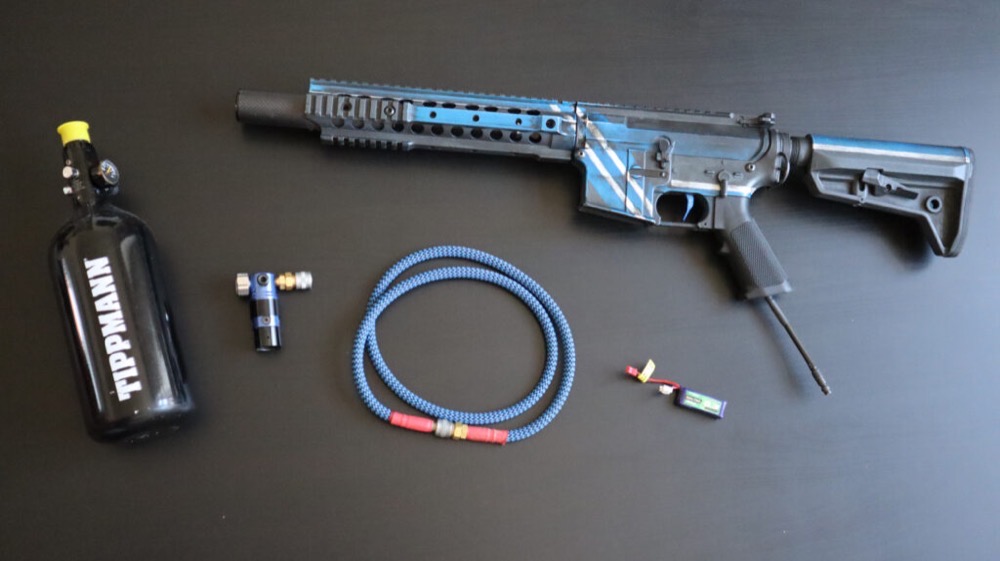
How big can the gap get? One of the cleanest demonstrations available is a documented test on a G&G 416 running a PolarStar JACK at 80 PSI, with the regulator and dwell verified unchanged before and after. On 0.20g BBs it chronoed 390–397 fps, working out to about 1.45 joules — comfortably inside a 1.5 J field limit and comfortably inside a 400 fps limit, whichever way that site chose to write its rules. The same rifle, same magazine, same session, on 0.30g BBs read 1.67 to 1.72 J. On 0.40g it read 1.87 to 1.90 J.
That’s a 30% energy increase from an entirely legal chrono reading, achieved by changing nothing but the ammunition. Expressed the way a field would see it, a rifle that passed at “395 fps with a 0.20” was actually delivering the equivalent of roughly 450 fps once the player switched to their game ammo.
The same tester ran an informal impact comparison afterwards, shooting stacked aluminium cans at point-blank with both weights. The 0.20g round punched through the first can and left a dent in the second. The 0.40g round went through the first, entered the second, and very nearly came out the far side. It’s a crude test and it isn’t science, but it makes the point that a chrono display can’t: the person you’re shooting at doesn’t feel your velocity, they feel your energy.
The most instructive detail in that whole write-up is an aside about a friend’s HPA AK that read 395 fps on 0.20g and still read 395 fps on 0.30g. Velocity that refuses to drop when the projectile gets 50% heavier is not a lucky tune. It’s the signature of a system with enormous surplus air, and the arithmetic is unforgiving: 395 fps on 0.30g is 2.17 J, so that gun went from a perfectly respectable 1.45 J to well over two joules without anybody touching it. He wasn’t cheating on purpose. He simply never had a reason to look.
And Why Your Gun Might Do Exactly the Opposite
Here’s the part almost nobody writes about, and it’s the reason you should test rather than assume. Joule creep is a property of over-volumed setups. A correctly matched one behaves in the opposite direction, and you can watch it happen.
In a second documented test — a Double Bell SCAR-H AEG, locked to semi, with a Prometheus air-seal chamber and a 6.02mm tightbore, hop untouched between strings — the numbers came out like this. On 0.20g: 408, 410 and 413 fps, reading 1.55, 1.56 and 1.58 joules. On 0.40g: 284.9, 284.9 and 286.5 fps, reading 1.50, 1.50 and 1.52 J. On 0.48g: three consecutive readings of 249–250 fps, 1.39 J every time.
That’s not creep. That’s a steady 10% loss of measured muzzle energy as the BB gets heavier — the exact inverse of the effect the forums treat as universal. The tester was visibly puzzled by his own results, and his instinct was the right one: energy isn’t perfectly conserved on the way down the barrel, and a heavier BB pays more of it to friction, to the hop rubber, and to simply getting moving in the first place.
So which is your gun? There is no way to know from the spec sheet. A short-barrelled CQB AEG on a full-size cylinder is a classic creeper. A well-volume-matched rifle like the one above is not. HPA is the easiest platform in airsoft to accidentally build creep into, because dwell and pressure are adjustable independently of everything else — but a gas blowback pistol on a warm day and an over-volumed springer can both do it too.
The answer is the same in every case, and it’s not complicated: put your gun on a chrono with the ammunition you actually play with, and read the number. That is the entire point of owning the instrument. Guessing at your energy from a 0.20g reading and a forum rule of thumb is exactly as sensible as guessing at your draw time by counting in your head — which is why the same people who own a chrono usually end up owning a shot timer as well. Both tools exist because the human sense of “that felt about right” is reliably, measurably wrong.
Do You Creep? The Three-Weight Test, and the One Number It Gives You
Everything above is description. This is the part you can actually act on, and it needs nothing but your chrono, three BB weights and a phone calculator.
Start from the fact that energy is what gets conserved, not speed. If a gun delivered exactly the same joules regardless of what you fed it, then swapping to a heavier BB would drop the velocity by a completely predictable amount — the square root of the weight ratio. Going from 0.20g to 0.30g, that multiplier is the square root of 0.20 ÷ 0.30, which is 0.8165. Going from 0.20g to 0.40g it’s 0.7071, and to 0.48g it’s 0.6455. That’s the whole basis of the test: those multipliers tell you what a gun with no surplus air should read.
So chrono a five-shot string on 0.20g and write down the average. Multiply it by 0.8165 to get your expected 0.30g velocity. Then actually chrono a five-shot string on 0.30g and compare. Divide the measured velocity by the expected velocity, square the result, and that single number — call it your creep index — is the factor by which your real game-ammo energy differs from what the 0.20g reading suggested.
Run the two documented sessions from the sections above through it and the contrast is stark. The over-volumed G&G 416 on a PolarStar JACK averaged 393.5 fps on 0.20g, so its expected 0.30g velocity was 321 fps. Its measured 0.30g energy of roughly 1.70 J corresponds to about 349 fps. That’s an index of 1.18 — eighteen percent more energy than the light BB admitted to, and by 0.40g the same rifle was running an index of 1.31. The friend’s HPA AK is the extreme case: it read 395 fps on 0.20g and still 395 fps on 0.30g, when it should have dropped to 322. Index 1.50 exactly, which takes a gun that chronoed at a respectable 1.45 J and reveals it as a 2.17 J rifle the moment anyone loads game ammo into it.
Now the volume-matched Double Bell SCAR-H. It averaged 410.3 fps on 0.20g, so it should have read 290 fps on 0.40g. It read 285.4 — slightly slower than theory, for an index of 0.97. On 0.48g the index came out at 0.89. That gun has no surplus air to donate, so the heavier BB simply pays more energy to friction and to the hop rubber on the way out, and you lose about a tenth of your muzzle energy for the privilege of a better flight path.
Read your own index against those three results and the interpretation is fairly blunt. Anything from roughly 0.88 to 1.00 is a healthy, correctly-volumed gun, and the small loss is normal. Between 1.00 and 1.10 you’re in the noise — shoot longer strings before you conclude anything, because a two-shot sample can easily fake that much. From 1.10 to 1.25 you have genuine creep and your 0.20g number is lying to you by a margin that matters at a chrono stand. Above 1.25 you are not running the gun you think you are: multiply your passing 0.20g energy by the index and compare it to the limit again, because that is the figure your BBs are actually arriving with.
What you do about a high index depends on how much you care about the answer. The honest fix is to stop producing the surplus — a shorter piston stroke or a smaller cylinder on an AEG, a correctly-sized nozzle, or lower dwell and pressure on an HPA engine, so the air you release is the air the inner barrel can use. The other legitimate fix is to go the other way and lengthen the inner barrel, which gives the surplus somewhere to do useful work instead of exhausting out of the muzzle. And the fix that requires no screwdriver at all: build and chrono the gun on the ammunition you actually skirmish with, accept the lower 0.20g reading that results, and never have this conversation with a marshal again.
There’s a reason this test feels familiar if you’ve done any structured shooting practice. It’s the same move as putting a timer on a drill instead of trusting that a draw “felt fast” — you replace an argument with a measurement, and the argument stops. If you want the shooting-side equivalent, our shot timer app guide covers the same logic applied to time instead of energy.
How to Chrono Properly Before Somebody Else Does It For You
The chrono itself is easy. Doing it in a way that produces a number you can trust takes about five extra minutes, and it’s the difference between finding out at home and finding out in front of a queue.
Start by setting the BB weight in the unit’s menu to whatever is genuinely in your magazine, then double-check it, because this is where most bad readings come from. Shoot the weight you’ll play with — if you skirmish on 0.32g, chronoing on 0.20g tells you nothing useful about the gun you’re actually bringing. If your site chronos on 0.20g by policy, do both, and know both numbers before you arrive.
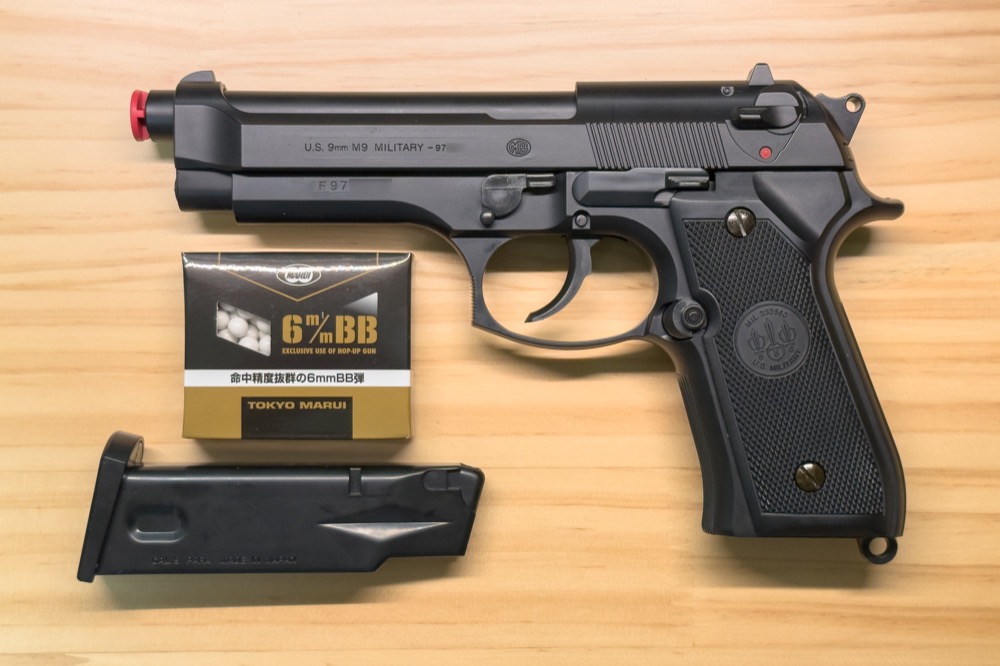
Take a proper string rather than a single shot. Five rounds minimum, and look at the spread as much as the average, because consistency is its own diagnostic. A gas gun will climb as the magazine warms and fall as it cools down, so chrono a GBB somewhere near the temperature you’ll be playing at rather than straight out of a warm car. An AEG on a nearly-flat battery will read low and then read high once you’ve charged it, which is a genuinely common way to fail a chrono you’d passed at home.
Fire straight down the centre of the tube from a consistent distance, and give the sensors decent light — most optical chronos hate direct low sun and hate deep shade, and both will throw out phantom readings. Discard anything obviously absurd rather than averaging it in. And take the first shot from a fully wound magazine with the hop set the way you play, because a hop that’s cranked up for heavy BBs and left there while you chrono lights will skew everything.
Finally, leave yourself margin. Fields set limits at a hard ceiling, not a target, and their chrono is not the same unit as yours. If the limit is 350 fps, build to 330–340 and stop. Turning up at exactly 349 on your own display is asking a slightly differently-calibrated machine to end your day. The players who never get turned away are the ones who deliberately leave themselves a 3–5% buffer, and honestly, nobody has ever lost a game because their rifle was doing 335 instead of 349.
What the Limits Actually Are Around the World
Limits vary enormously, and the variation isn’t random — it tracks whether a country regulates airsoft by law or leaves it to the sites.
In the United States there’s no federal energy limit at all, so everything is site policy, and site policy is usually written in feet per second measured on a 0.20g BB. Indoor CQB is typically 350 fps (1.14 J) and often has no minimum engagement distance because everything is close anyway. Outdoor fields commonly run 400 fps (1.49 J) with a short MED of around 10–20 feet. Semi-only DMR classes tend to sit at 450–500 fps (1.88–2.32 J) with a 50–100 foot MED, and bolt-action sniper allowances go higher still with the longest MEDs of the lot. Because these are velocity limits on a 0.20g reading, the US is precisely where joule creep does the most damage — it’s the measurement method the creeping gun sails straight through.
The United Kingdom works the other way round: energy is the unit, and it’s set in law rather than by the site. The statutory ceilings that matter come from section 125 of the Policing and Crime Act 2017, which defines an airsoft gun as one not exceeding 1.3 J where a single trigger pull can release more than one BB, and 2.5 J in any other case, and in practice sites sit well under those — 1.13 J (350 fps) for AEGs is close to universal, with DMR and sniper allowances up to roughly 1.88–2.5 J carrying mandatory minimum engagement distances of 20 to 30 metres. Much of continental Europe follows the same joule-based logic with its own thresholds, which is exactly why a British or German player will quote you energy while an American quotes you velocity, and why they so often talk past each other.
Japan has the tightest limit anywhere and it’s the reason Tokyo Marui guns feel the way they do: 0.98 J is the legal maximum, which is about 325 fps on a 0.20g BB. Every domestically-sold Japanese replica is built to live under that number, which is worth remembering when you read a review complaining that a Tokyo Marui gas blowback is “underpowered” — it isn’t undertuned, it’s obeying a law.
Taiwan is a case worth spelling out because the numbers get badly garbled online. The legal threshold isn’t a velocity or a plain joule figure at all — it’s energy per unit area. Under the Ministry of the Interior’s lethality standard, a projectile is deemed to have wounding capability at 20 joules per square centimetre. A 6mm BB has a cross-sectional area of π × 0.3², which is 0.283 cm², so that threshold works out to about 5.65 joules of total muzzle energy — the equivalent of roughly 780 fps on a 0.20g BB. Separately, the low-power game-gun labelling standard sits at 2 J, and ordinary field play is conducted comfortably under that. The practical upshot is that skirmish-legal airsoft in Taiwan lives at well under half the energy of the legal lethality line, and the guns that get people prosecuted are heavily modified units, not stock skirmish rifles.
Whatever country you’re in, the rule that survives every border is the same: know your energy on your game ammo, and read your host site’s rules rather than assuming they match the last one. If you’re heading somewhere new, our airsoft field guide covers what else to check before you drive out there.
Frequently Asked Questions
How many joules is 400 fps in airsoft?
With a 0.20g BB, 400 fps is 1.49 joules. But that figure only holds for a 0.20g BB — the same 400 fps with a 0.25g is 1.86 J, with a 0.32g it’s 2.38 J, and with a 0.40g it’s 2.97 J. Whenever someone quotes an FPS number without a BB weight attached, the number is incomplete.
How many fps is 1 joule of airsoft?
Exactly 328 fps with a 0.20g BB, which is 100 metres per second. That clean round conversion is why so many European and Asian rule sets are written in joules rather than feet per second.
Do heavier BBs increase joules?
Sometimes — that’s joule creep, and it happens when your gun delivers more air than the inner barrel can use, so the surplus finally gets to push a heavier, slower BB. But it isn’t automatic. A well-volume-matched AEG typically shows slightly lower energy on heavies; one documented test dropped from 1.56 J on 0.20g to 1.39 J on 0.48g. The only way to know which your gun does is to chrono it on both weights.
What BB weight should I chrono with?
The one you’re actually going to play with. Chronoing on 0.20g and then skirmishing on 0.32g is the single most common way a legal gun becomes a hot gun. If your site’s policy is to test on 0.20g, that’s fine — but know your energy on your game weight too, and know it before you arrive.
Why does my gun pass at one field and fail at another?
Usually one of four things: the two sites measure in different units (velocity versus energy), the chrono was set to a different BB weight, you’re chronoing on a different weight than last time, or temperature has moved a gas gun. Calibration differences between units are real but usually small — a few percent — which is exactly why you should build in a few percent of margin.
Is 400 fps allowed in airsoft?
On most American outdoor fields, yes, measured on a 0.20g BB, often with a short minimum engagement distance. Indoor CQB sites usually cap at around 350. In the UK and much of Europe 400 fps (1.49 J) is above the standard AEG limit and would put you in semi-only DMR territory with a 20–30 metre MED. In Japan it’s illegal outright.
Do I need to own a chronograph?
If you tune your own guns, change springs, or run gas or HPA, it pays for itself the first time it stops you being turned away. Entry-level units are genuinely inexpensive now, and even the cheap ones agree closely on velocity. If you only ever run one stock gun on one weight of BB, borrowing the field’s chrono once and writing the number down is enough.
Does a longer inner barrel increase FPS?
Up to a point, and only while there’s still air available to push. Lengthening a barrel beyond what your cylinder volume can fill stops adding velocity and starts adding vacuum drag, which costs you speed. The much more interesting effect is the opposite one: a barrel that’s short relative to the cylinder is precisely the recipe for joule creep.
What’s the difference between muzzle velocity and muzzle energy?
Velocity is how fast the BB is travelling and is what a chronograph physically measures. Energy is how much work that BB can do when it arrives, and it depends on both velocity and mass. Two guns can show identical velocity and hit with very different force, which is the entire reason fields are moving to joule-based limits.
Can I use a chronograph for dry fire or training?
A chrono answers “how hard”, not “how fast can I do it”, so it won’t help you there. Timing and pacing belong to a different instrument — a shot timer measures your draw, your splits and your par times, and a free shot timer app covers that side of training without buying a second device. Chrono for safety and consistency; timer for performance.
What is joule creep in airsoft?
Joule creep is when a gun produces more total muzzle energy with a heavier BB than it does with a light one, even though the velocity on the display goes down. It happens when the gun releases more air than the inner barrel can use: a light BB leaves the muzzle while air is still being delivered and the surplus is wasted, whereas a heavier BB stays in the barrel long enough to collect it. The gun was always capable of that energy — the light BB was simply too quick to pick it up.
Is joule creep a myth?
No, but the forum version of it is overstated. Creep is a property of over-volumed setups, not of airsoft in general, and plenty of correctly-matched guns lose energy as the BB gets heavier rather than gaining it. The Double Bell AEG measured above dropped about 11% in muzzle energy going from 0.20g to 0.48g. That’s why the three-weight test matters: creep is real, it just isn’t universal, and the only way to know which camp your gun is in is to measure it.
How do I know if my gun has joule creep?
Chrono a five-shot string on 0.20g, multiply that average velocity by 0.8165 to get the velocity a non-creeping gun would read on 0.30g, then chrono a five-shot string on 0.30g for real. Divide measured by expected, square it, and you have your creep index. Under 1.00 means no creep, 1.10 and up means genuine creep, and anything past 1.25 means your 0.20g reading is badly understating what you’re actually shooting.
Is 500 fps allowed in airsoft?
Only in specific classes, and almost never for a rifle you can fire on automatic. In the US, 450–500 fps on a 0.20g BB (1.88–2.32 J) is typically a semi-only DMR or bolt-action sniper allowance carrying a minimum engagement distance of 50–100 feet, and you’ll normally need to be marshalled into that class rather than just turning up with it. In the UK and most of Europe the energy-based limits make 500 fps on 0.20g illegal for anything other than a single-shot platform, and in Japan it’s far above the 0.98 J legal ceiling. If a field quotes you 500 fps with no mention of MED or firing mode, ask again.
How many joules does it take to break skin?
There isn’t one clean threshold, because it depends on BB weight, range, clothing and where you’re hit — which is exactly why fields regulate energy and minimum engagement distances rather than publishing an injury number. What’s worth knowing is that skirmish-legal energies can absolutely break skin at point-blank range with a heavy BB, and that eyes and teeth are vulnerable far below any field limit at all. That’s the real reason eye protection is non-negotiable and MEDs exist, and it’s also why a gun that creeps from 1.45 J to 2.17 J on game ammo is a safety problem and not just a rules problem.
Image Credits
- Cover, chronograph display and chronograph-with-GBB photos by Laineema, CC BY 2.0, via Flickr (1, 2) — resized, not otherwise altered.
- HPA setup photo by Kimse84, CC BY-SA 4.0, via Wikimedia Commons — resized; the resized version is shared under the same licence.
- BB weight comparison photo by David Lauritz, CC BY-SA 4.0, via Wikimedia Commons — cropped to landscape; the cropped version is shared under the same licence.
- Airsoft pistol with magazine and BBs by Nekotaka, CC0, via Wikimedia Commons — resized.


The best thing about a chronograph is what it does to arguments. Airsoft is full of confident claims about how hard a gun hits, and nearly all of them dissolve the moment somebody produces a number. Get your own reading on your own ammunition, write it down on a piece of tape inside your gun bag, and you never have to have that conversation again.
Then apply the same habit to the rest of your game. If you play speed formats where the whole result is a stopwatch reading, our speedsoft beginner guide and SpeedQB guide cover that world, and the Airsoft Shot Timer app gives you the same kind of honest feedback on your draw and your splits that a chrono gives you on your muzzle. If you’re still building the rest of your kit, start with the complete airsoft gear guide and the airsoft beginner guide.
Put a Shot Timer in Your Pocket
Airsoft Shot Timer is a free shot timer app tuned for airsoft and Action Air — it picks up BB gun shots, tracks your split times, and saves you the cost of a $150+ hardware timer for IPSC/IDPA practice.

- Joule Creep
- Joule Creep Test
- Joule Creep Chart
- Airsoft FPS Limits
- Is 400 FPS Allowed
- Airsoft Chronograph
- FPS to Joules
- Airsoft FPS Chart
- Airsoft BB Weight
- BB Weight Chart
- Muzzle Energy
- Muzzle Velocity
- Volume Matching
- HPA Joule Creep
- Airsoft Safety
- Chrono
- Airsoft Field Rules
- Minimum Engagement Distance
- MED
- AEG
- HPA
- GBB
- Airsoft Sniper
- DMR
- Airsoft Tech
- Airsoft Beginner