Airsoft Rules: Hit Calling, MED & the Bang Rule Explained
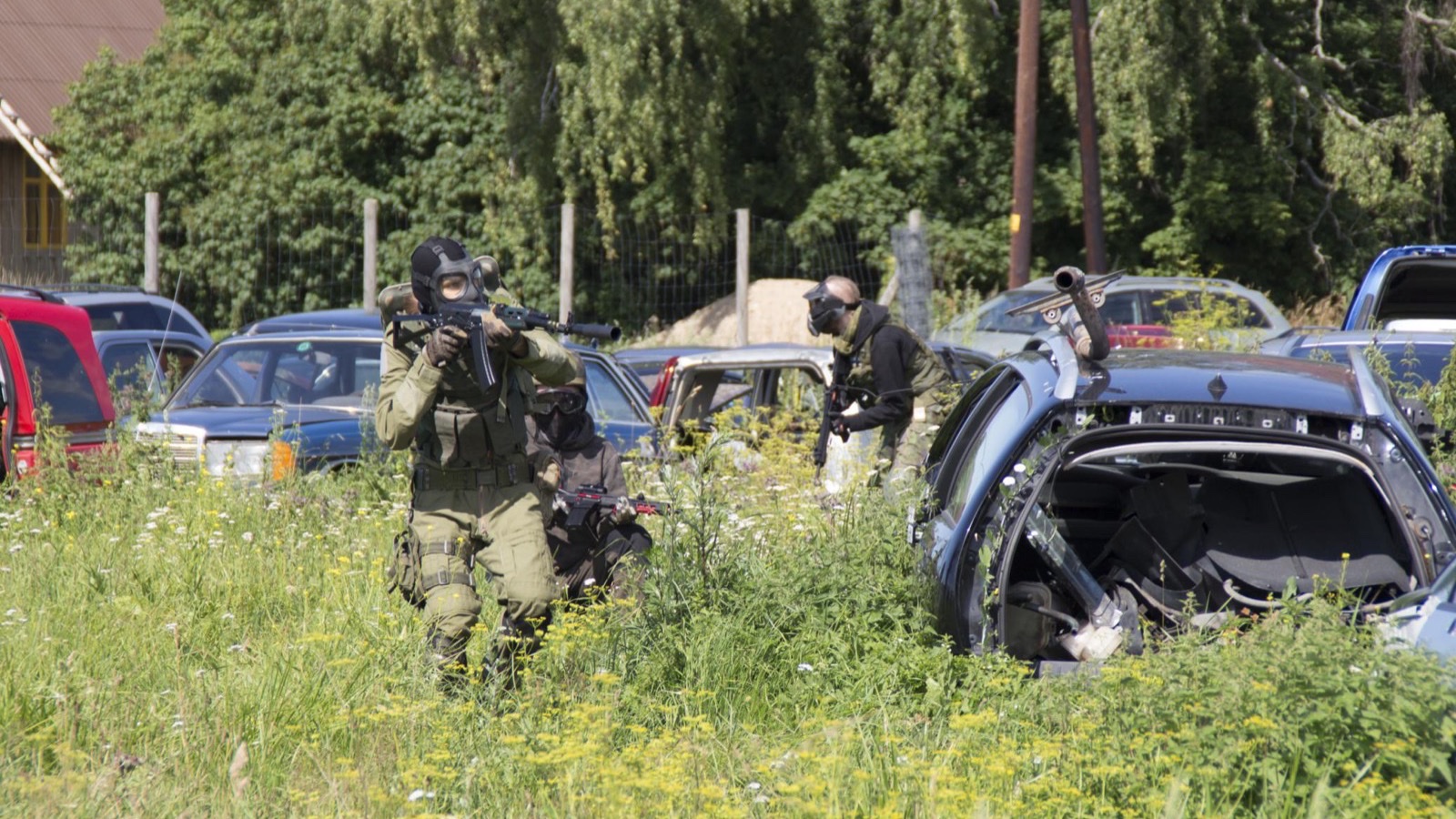
The short answer (BLUF)
- Airsoft runs on the honour system. There’s no paint and no sensor, so the core rule at every field is the same: when a BB hits you or your gear, you shout “HIT”, raise a hand or a dead rag, and walk off to respawn without talking.
- Fields disagree on three things, so ask at the briefing: whether gun hits count, whether friendly fire counts, and whether ricochets count.
- Power limits are set per gun class. Typical US outdoor rifles run 400–420 fps on a 0.20g BB (1.49–1.64 J), UK sites 350 fps (1.14 J), indoor CQB about 350–365 fps and semi-auto only.
- Stronger guns get a minimum engagement distance (MED): around 50 ft for DMRs and 75–100 ft for snipers in the US, 15–30 m in the UK. Inside MED you switch to a sidearm or use the field’s bang or surrender rule — if it has one. Plenty of fields don’t.
- The universal no-gos: blind firing, overshooting, taking your eye protection off on the field, and a loaded or dry-firing gun in the safe zone.
The first argument I ever saw at an airsoft field wasn’t about tactics. It was two grown adults standing in the open, one insisting he’d hit the other “at least three times”, the other insisting he’d felt nothing. Both were probably telling the truth. A 0.25g BB at 40 metres can land on a padded plate carrier like a raindrop, and nobody had told either of them whether a hit on gear counted.
That’s the real reason airsoft rules matter. The safety rules keep people from getting hurt; the game rules keep the day from collapsing into arguments. Most of them are the same everywhere, a few vary wildly from field to field, and the numbers — FPS limits and engagement distances — make much more sense once you see where they come from. This guide walks through all of it with figures taken from real field rule pages in the US, UK and Taiwan, so you know what to expect before the first whistle.
The Rules Every Field Shares
Every field you visit will enforce four things: sealed eye protection on the field at all times, a gun check (chrono) before you play, honest hit calling, and a safe zone where guns are unloaded. Everything else is local flavour.
Eye protection is the one rule with no exceptions. US fields such as Ballahack Airsoft, GoAirheads and Coyote Force specify full-seal goggles rated to ANSI Z87.1 (Ballahack asks for the Z87+ impact grade), UK sites commonly ask for EN166 grade B, and mesh goggles are banned almost everywhere because BB fragments can pass through them. Lower-face protection is often mandatory for younger players: Finmere in the UK requires full-face protection for anyone under 16, and Ballahack scales the required coverage by age. Minimum ages typically start at 10 (Ballahack, GoAirheads) or 12 (Power Ops, Finmere).
The safe zone has its own small rulebook. Before you walk in, the magazine comes out, you fire the gun clear into the field or a barrel, and a barrel cover goes on the muzzle. Some UK sites, including Finmere and Ironsight, go further and ban dry-firing in the safe zone entirely, because you can’t tell an empty gun from a loaded one by sound. On the field, shouting “BLIND MAN” stops the game immediately — that’s the call for a lost mask or an injury, and Ballahack and Amped both write it into their rules.
If this is your first visit, our airsoft field guide walks through check-in, rentals and the chrono queue. This guide is about what happens after the whistle.
Calling Your Hits
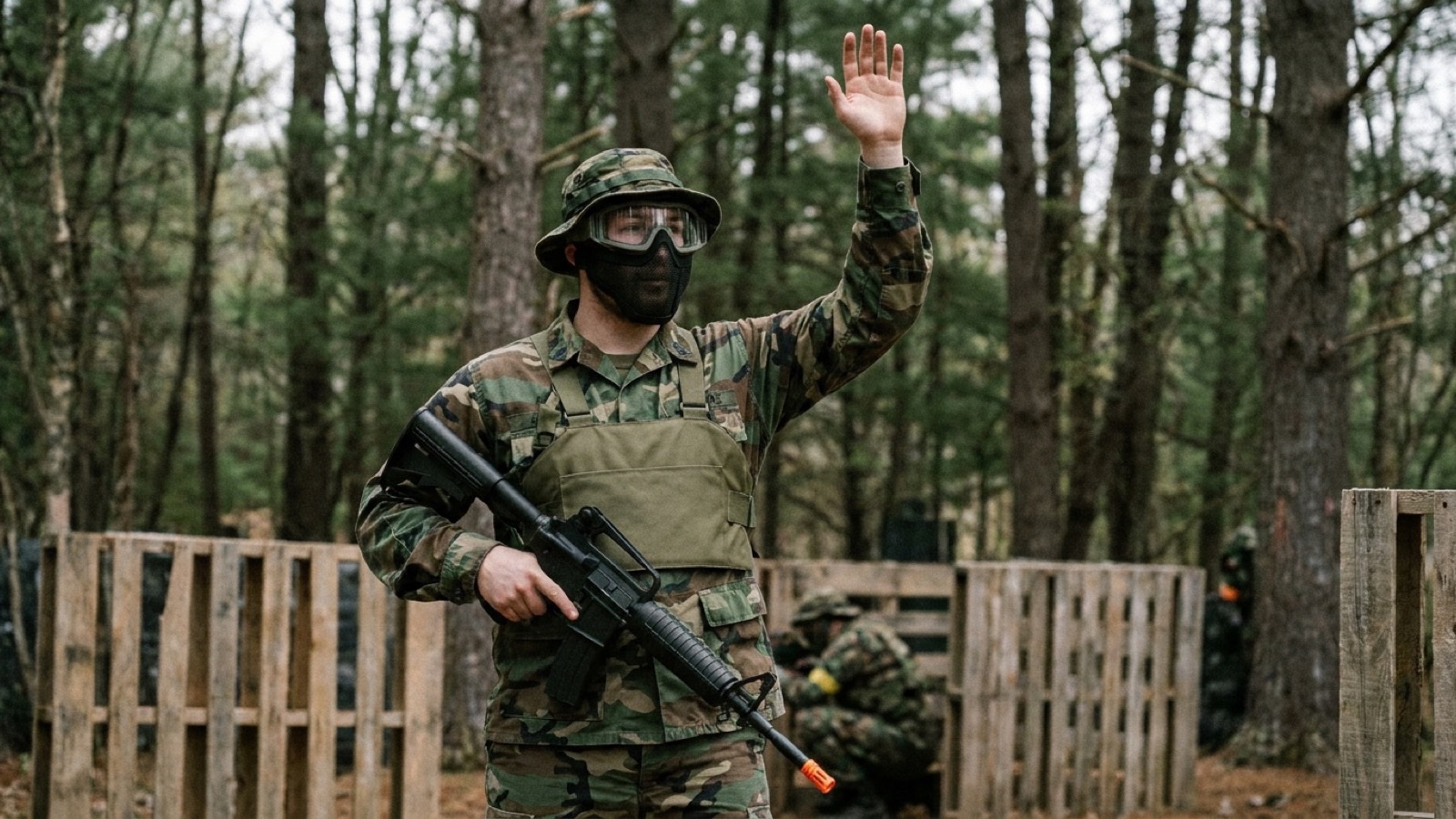
A hit is any BB that strikes you or anything you’re wearing; you call it immediately by shouting “HIT”, raising your hand or a dead rag, and walking straight to respawn without talking. That sentence covers 90% of situations, and the USAirsoft channel puts the stakes bluntly in its beginner video: most problems in airsoft start because of hit calling.
The mechanics are worth getting exactly right because they’re what other players see. Shout loudly enough that the person who shot you hears it — they’ll keep firing if they don’t, and that’s how overshooting disputes start. Get a hand in the air straight away. Many fields want a dead rag, a brightly coloured cloth you pull out and hold up or drape over your head; Ballahack requires every player to carry two, at least 12 by 12 inches, and bans wearing a red bandana while you’re alive, so a red cloth always means dead. Once you’re dead, you don’t talk, you don’t point out enemy positions, and you walk all the way back to respawn without stopping. If you’re stuck in the middle of a firefight, Ballahack’s rules let you call “dead man walking” to move out of the line of fire.
The Three Hit Rules Fields Disagree On
This is where your first day can go wrong, because three situations are handled differently from one field to the next.
Gun hits. Most US fields — Ballahack, GoAirheads, Power Ops, Amped — don’t count a BB that hits only your gun. The Swedish MilSim event Berget does the opposite and counts a hit on the weapon you’re holding. Friendly fire. Ballahack says a hit from a teammate doesn’t count; GoAirheads says it does; Coyote Force counts it only if it was deliberate. Ricochets. Generally they don’t count, but UK sites such as Finmere and Ironsight tell you that if you’re not sure, call it.
The practical rule is simple: if the briefing doesn’t cover these three, ask. And when you genuinely can’t tell whether that tap was a BB or a branch, take the hit. You lose two minutes walking to respawn. Arguing costs you the whole day, and the reputation follows you to the next game.
Why You Sometimes Don’t Feel It
Don’t assume the other player is cheating. Light BBs lose speed quickly over distance, gear absorbs a lot, and adrenaline masks the rest. The player who “took three hits” in my opening story was wearing a padded carrier and a thick jacket at 40 metres; he may honestly not have felt a thing. If someone isn’t calling hits, tell a marshal rather than shooting them again, which brings us to the next rule.
FPS Limits and Minimum Engagement Distance
Fields cap muzzle energy per gun class, and the stronger classes come with a minimum engagement distance: you can’t shoot anyone closer than that with that gun. Rifles generally have no MED, DMRs usually sit around 50 ft, and snipers 75–100 ft.
Fields express the caps differently, so it helps to see several side by side. Here’s what the rule pages of real fields say, converted to a 0.20g BB where needed:
| Gun class | Typical cap (0.20g BB) | Typical MED | Examples from field rules |
|---|---|---|---|
| Indoor CQB | 350–365 fps (1.14–1.23 J), semi-auto only | None | Amped (indoor) 1.23 J; Berget CQB 357 fps |
| Rifle / AEG | US 400–420 fps (1.49–1.64 J); UK 350 fps (1.14 J) | None (full-auto banned inside 20–50 ft at some fields) | Ballahack 420 fps; Coyote 1.5 J; HQ Airsoft and Finmere 350 fps |
| DMR (semi-auto only) | 450–475 fps (1.88–2.09 J), some up to 2.5 J | 50 ft in the US, 15–30 m in the UK | Ballahack 2.09 J / 50 ft; Coyote 1.8 J / 50 ft; Ironsight 420 fps / 15 m |
| Bolt-action sniper | 500–550 fps (2.32–2.81 J), some higher | 75–100 ft in the US, 30 m in the UK | Ballahack 2.81 J / 75 ft; Coyote 2.5 J / 100 ft; HQ Airsoft 500 fps / 30 m |
Two details on those numbers catch people out. First, not every field chronos with a 0.20g BB: GoAirheads tests with 0.32g, Power Ops with 0.25g, and Ballahack tests bolt-action and HPA guns with a 0.40g BB to defeat joule creep. Second, full-auto is often more restricted than velocity. Ballahack bans full-auto inside 50 ft and GoAirheads inside 20 ft, Ironsight bans it outright, and Power Ops limits players under 14 to semi-auto. If you want to know exactly what your gun will read on the field’s machine, our airsoft chronograph and joule creep guide has the full conversion chart and a three-weight test.
Why MED Is 50 to 100 Feet
The MED numbers look arbitrary until you work out the physics. A BB slows down fast. Using a simple drag estimate (smooth 6 mm sphere, no hop-up, drag coefficient 0.35–0.47 — real BBs vary, so treat it as a ballpark), a 2.32 J sniper shot on a 0.36g BB is carrying only about 0.6–0.9 J by 30 metres. A 1.88 J DMR shot on a 0.30g BB is down to about 0.85–1.05 J by 15 metres.
Now compare that with an ordinary 350 fps rifle at point-blank range: 1.14 J. In other words, MED distances are set roughly where the high-power BB has slowed to what a standard rifle would hit you with up close. That’s why the rule is about distance rather than about aiming at the legs, and why snipers at almost every field are told to carry a sidearm. Power Ops makes it explicit: 3.5 J sniper rifles, 100 ft MED, sidearm required.
The Bang Rule and the Surrender Rule
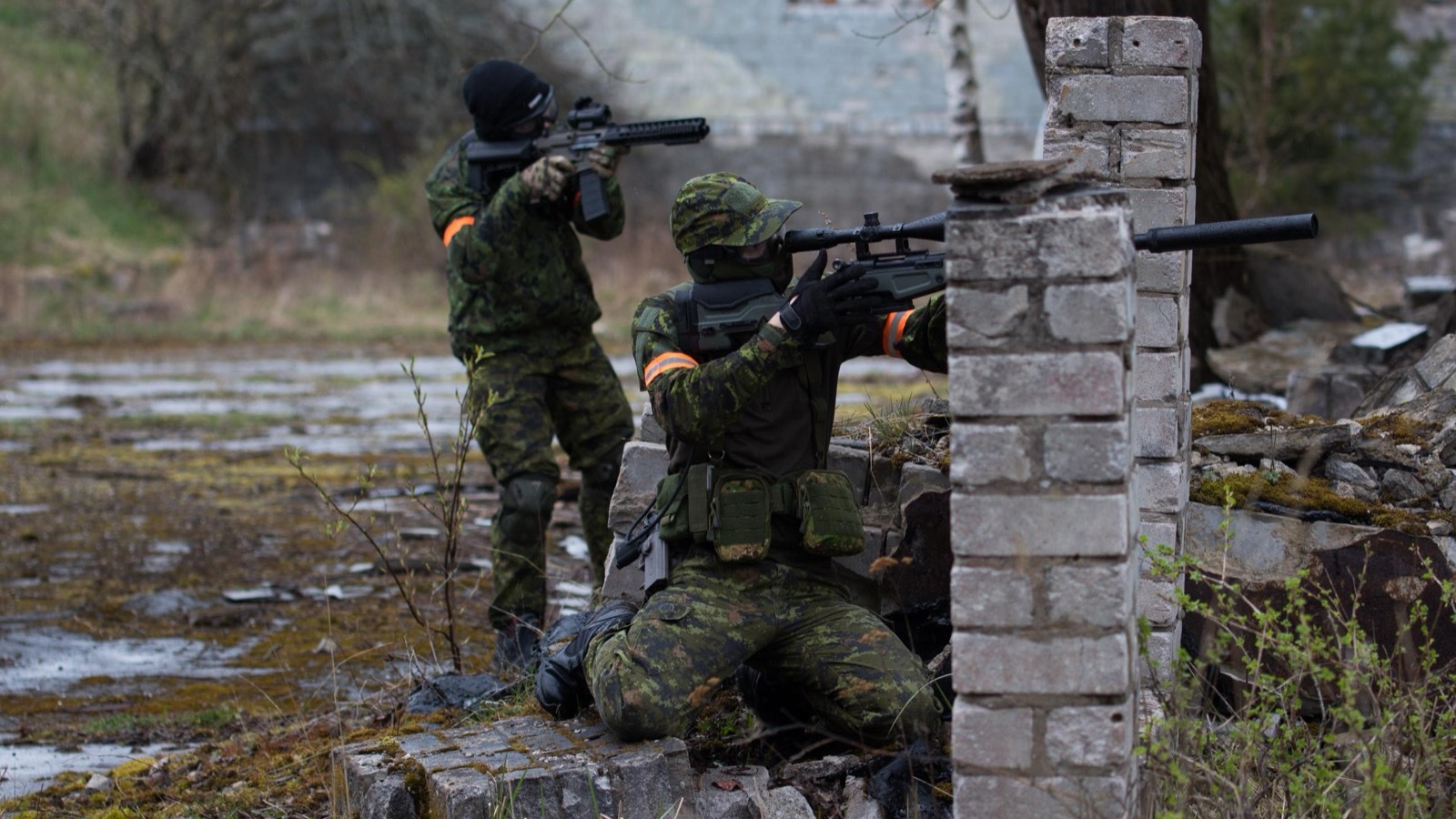
The bang rule lets you eliminate someone at very close range by calling “bang” instead of shooting; the surrender rule lets you offer them the chance to surrender. Whether either exists depends entirely on the field — and many don’t use them at all.
The split is sharper than most beginners expect. GoAirheads lets you approach from behind and call “Bang!”, shooting only if the player doesn’t respond. Coyote Force encourages bang and surrender calls but doesn’t require them, and doesn’t allow them with sniper rifles or 40mm launchers. On the other side, Ironsight in the UK states plainly that it does not operate a bang rule, offering surrender or a knife kill instead, and Power Ops puts it in capital letters: there are no surrender rules, surrender is optional. A 2013 ruleset from a Taiwanese team goes further still, banning verbal kills at close range entirely and allowing only a touch at arm’s length.
Where a field allows it, the etiquette is generous rather than legalistic: call it clearly, give the player a beat to react, and if they spin around and shoot you, that’s on them for breaking the field’s rules, not on you for waiting. Where a field doesn’t allow it, the close-range answer is a gentle tap on gear or the shoulder. Amped’s rule is a good template: within arm’s reach, tap the player and say “you’re dead”; beyond arm’s reach, one shot to gear, not a burst to the face.
Shooting Conduct: Blind Fire, Overshooting and Headshots
Three behaviours get players warned or removed at nearly every field: blind firing, overshooting, and deliberately aiming at faces at close range.
Blind firing means shooting without seeing your target — holding the gun around a corner or over a wall. Ballahack, GoAirheads, Power Ops and Ironsight all ban it, and Ironsight counts hip-firing in the same category. The reason is safety rather than fairness: you can’t check MED, you can’t see who’s there, and you can’t stop when they call the hit. Ballahack adds that you can only shoot through an opening big enough to fit your head (GoAirheads says two fists).
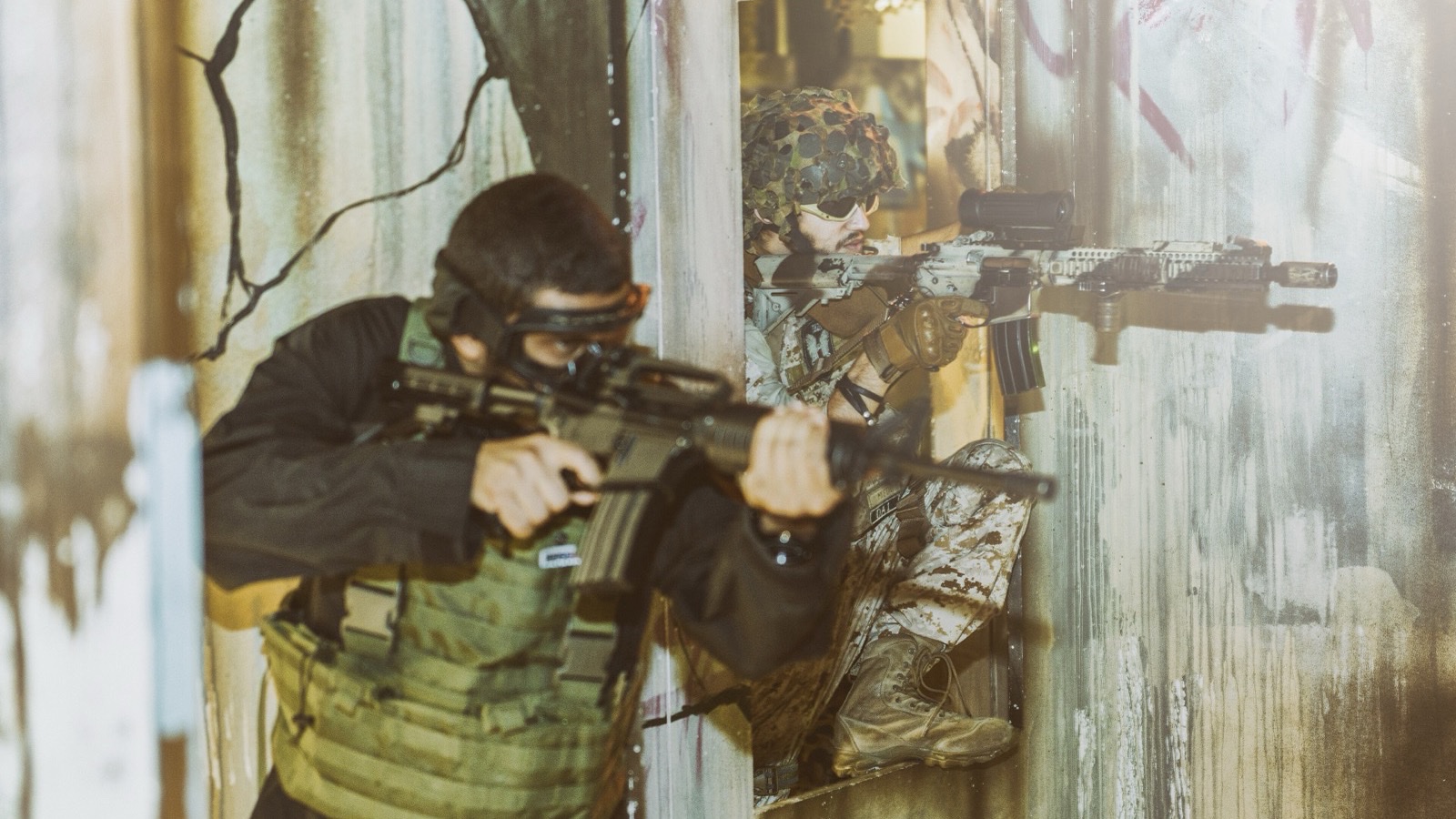
Overshooting is continuing to fire after the hit is called, and it’s the most common close-range complaint. Short controlled bursts, or single shots in CQB, solve most of it. Headshots are a grey area in rulebooks — Ballahack asks players to aim centre mass where possible, Ironsight says to avoid head shots — but the spirit is the same: nobody is impressed by a BB to an unprotected ear at three metres.
Medic, Respawn and Game Modes
Most walk-on games use a respawn point, and some add a medic rule that lets a hit player be revived where they fall. The common medic versions differ mostly in timing.
At Ballahack, a medic touches a hit teammate and the revive takes 60 seconds, during which neither can shoot or move. Coyote Force uses a 60-second bleed-out timer: if a medic hasn’t wrapped a field-issued tourniquet around one of your limbs by then (never the head or neck), you walk back to respawn, and melee kills can’t be revived. Berget, a large MilSim event, is far slower: hit players lie down for up to 10 minutes waiting for a medic, the bandage takes at least two minutes to apply, and knife kills are final.
Game modes are where those rules plug in. DarkFire Airsoft’s published list is typical of an American walk-on field. Team Deathmatch runs 20–30 minutes with unlimited respawns, and Capture the Flag 40–60 minutes, also with unlimited respawns. Domination puts 3–5 control points on the map for an hour, and King of the Hill can run 60–90 minutes. Search and Destroy (a bomb-planting mode) has no respawns and lasts 45–60 minutes, and Protect the President, a VIP escort, takes 15–25. A medic mode gives each player three lives over 45–60 minutes. Shorter, more intense formats use no respawns; long ones use unlimited respawns or medics so nobody spends half the game sitting out.
Airsoft Rules in Taiwan and Other Countries
Power limits come from law in some countries and from field policy in others, so the same gun can be legal on one field and over the limit on the next. The US has no federal airsoft energy limit, so every number above is field policy. The UK sets ceilings in law and sites sit under them.
Taiwan has two layers. Legally, the Ministry of the Interior’s lethality standard treats a projectile as capable of injury at 20 joules per square centimetre, which for a 6 mm BB works out to about 5.65 J — far above any field. The practical ceiling is lower: the national sports administration’s guidance on low-power game guns says guns above 2 J (up to 3 J) must not be used in public recreational activities, players need to be 14 for guns under 1 J and 16 above it, and outdoor sites need a 10-metre safety buffer. Field rules sit inside that. The6 field in Douliu, for example, caps everything at 2 J, requires a pistol of 1.2 J or less inside 10 metres, and runs everything except machine guns on semi-auto. Taiwanese players also often quote velocity in metres per second: 120 m/s on a 0.20g BB is 1.44 J, close to a US outdoor rifle limit.
Japan, at 0.98 J by law, is the strictest of all, which is why Tokyo Marui guns chrono so low. Wherever you play, the field’s own rule page is the one that applies.
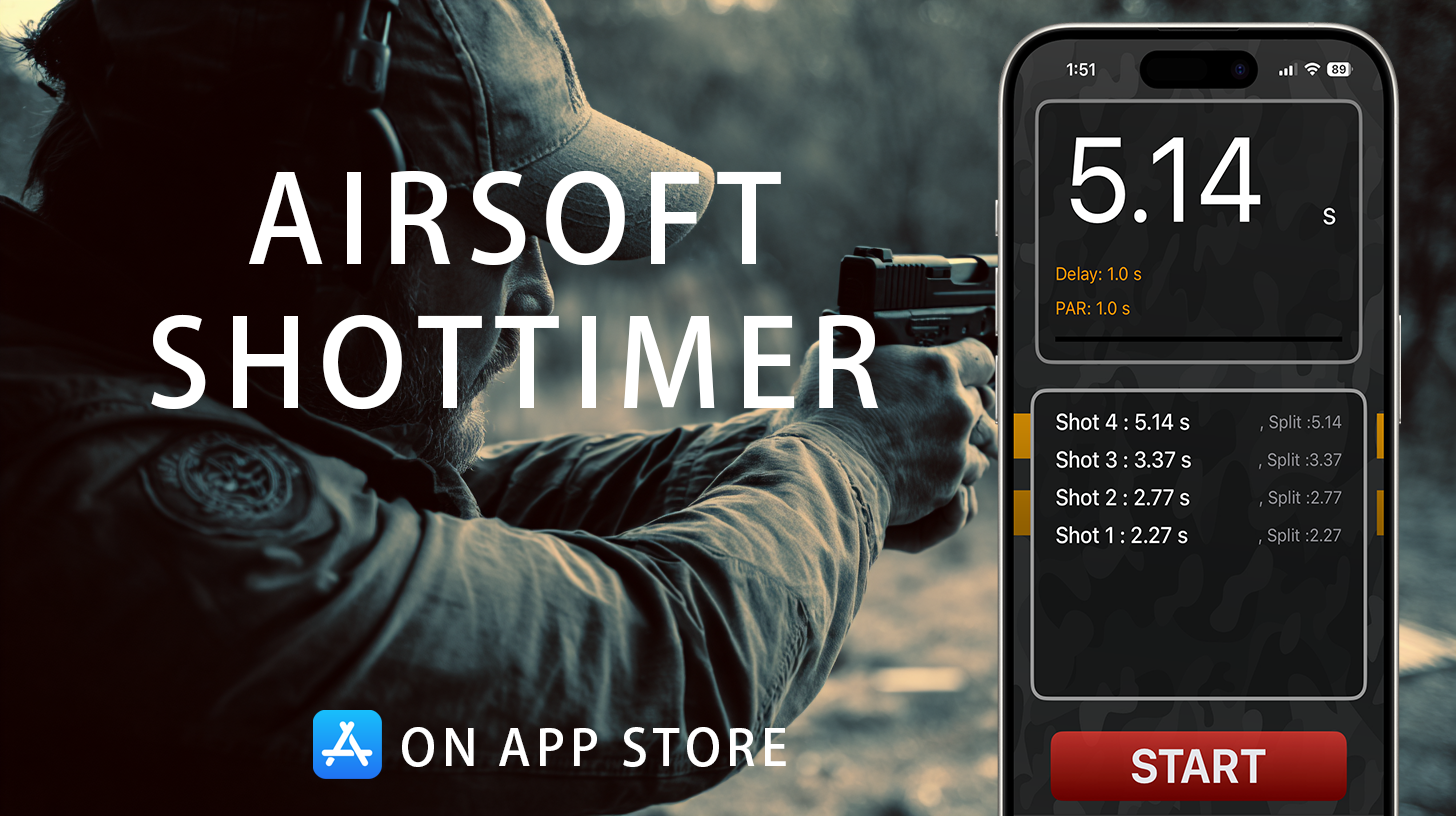
Practise the Close-Range Decision With a Shot Timer
Most MED and bang-rule mistakes happen because players haven’t practised the half-second decision of what to do when someone is suddenly too close. You can rehearse that at home with a gas pistol, a target and a shot timer.
Set the Airsoft Shot Timer App to a random start delay, so you can’t anticipate the beep, and a par time. Start holding your primary at the ready. On the beep, either let the rifle hang on its sling and draw your sidearm for one shot on a close target, or — for snipers — simply practise the transition. A par of 2.5 seconds is a reasonable starting point; bring it down as the motion becomes automatic. The goal isn’t speed for its own sake. It’s making the switch so ingrained that you never think about firing a 2.8 J rifle at someone four metres away.
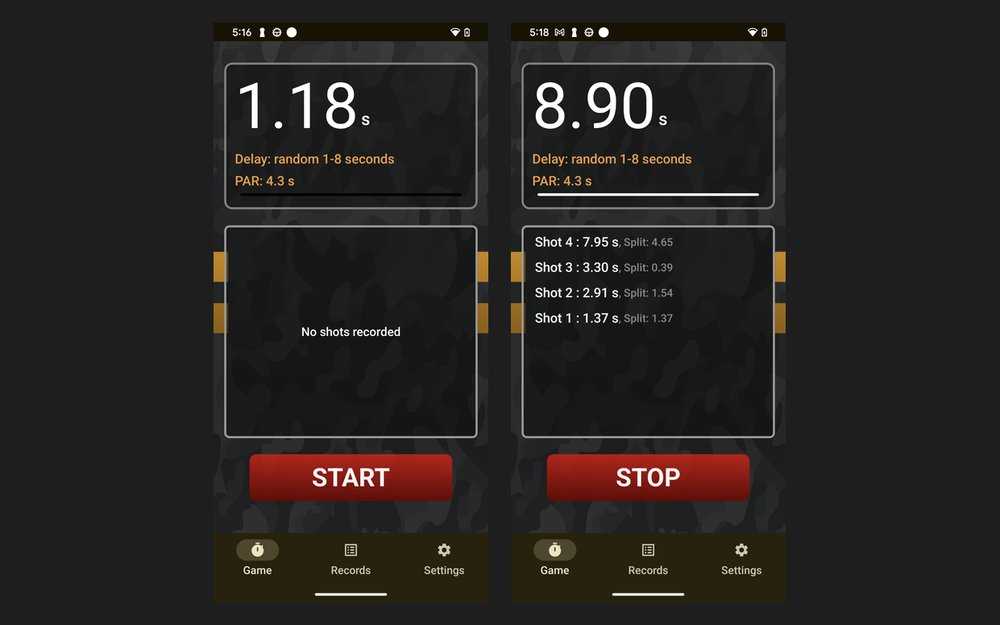
If you play CQB, the same drill with two targets builds transitions; our airsoft CQB tactics guide has more indoor drills, and dry fire training covers practising the draw without a single BB.
Frequently Asked Questions
What are the basic rules of airsoft?
Wear sealed eye protection whenever you’re on the field, get your gun chronographed before playing, call every hit honestly by shouting “hit” and raising your hand, keep guns unloaded with a barrel cover in the safe zone, and don’t blind fire or overshoot. Everything else — FPS limits, MED, bang rules, game modes — is set by the individual field.
What is the bang rule in airsoft?
It lets you eliminate a player at close range by calling “bang” instead of shooting them. It’s field-specific: some fields encourage it, some make it optional, and others such as Ironsight in the UK don’t use it at all and offer a surrender option or a knife kill instead. Ask at the safety briefing.
What is MED in airsoft?
Minimum engagement distance: the closest you’re allowed to shoot someone with a given gun. It applies to the higher-power classes, typically around 50 ft (about 15 m) for DMRs and 75–100 ft (23–30 m) for bolt-action snipers in the US, and 15–30 m at UK sites. Inside it, you switch to a sidearm.
Do gun hits count in airsoft?
At most US fields, no — a BB that hits only your gun doesn’t eliminate you. Some events, such as Berget in Sweden, count hits on the weapon you’re holding. Friendly fire and ricochets also vary, so confirm all three at the briefing.
What FPS is allowed in airsoft?
There’s no single number. Typical US outdoor fields allow 400–420 fps on a 0.20g BB for rifles, UK sites 350 fps, and indoor CQB fields around 350–365 fps with semi-auto only. DMRs and snipers can go higher with a minimum engagement distance.
Can you shoot someone in the head in airsoft?
Head hits count as hits, but deliberately aiming at faces, especially up close, is discouraged or banned at many fields. Aim centre mass, wear lower-face protection, and use single shots at close range.
The Bottom Line
Airsoft only works because everyone agrees to call their own hits, and every other rule exists to keep that agreement intact: power limits and MED so a hit never really hurts, safe-zone rules so nobody gets shot by accident, and bang or surrender rules so close-range encounters don’t turn into point-blank bursts. Learn the shared rules once, ask about the three local ones — gun hits, friendly fire, ricochets — and check the field’s rule page for its power classes before you drive out.
Then practise the moment the rules are hardest to follow: someone suddenly too close, and half a second to choose. Download the free Airsoft Shot Timer App and run the random-delay transition drill above before your next game.
Related Articles
- Airsoft Field Guide — Field types, costs, check-in and finding a field near you
- Airsoft Chronograph & Joule Creep Guide — FPS-to-joule chart and the three-weight chrono test
- Complete Airsoft Beginner Guide — Gear, guns and your first game
- Airsoft Mask Guide — Choosing eye and face protection that passes field rules
- Airsoft Sniper Rifle Guide — Building a sniper setup around MED and a sidearm
- Airsoft CQB Tactics Guide — Indoor movement and drills
Sources: field rule pages of Ballahack Airsoft (Virginia), Power Ops Airsoft (Georgia), GoAirheads (Colorado), Coyote Force (Indiana), Amped Airsoft Arena (Pittsburgh), DarkFire Airsoft (Michigan), HQ Airsoft, Airsoft Finmere and Ironsight Airsoft (UK), Berget rules 2026 (Sweden); Taiwan: Ministry of the Interior lethality standard for firearms and ammunition and the sports administration’s guidance on game guns of 2 J or less; USAirsoft, “5 Tips and Rules For Airsoft Beginners” on YouTube. Joule figures calculated with E = ½mv²; the drag estimate assumes a smooth sphere without hop-up and is an approximation.
Image credits: cover — Airsoft Tapa by Baradaairsoft, CC BY-SA 4.0; sniper — Airsoft Humala by Baradaairsoft, CC BY-SA 4.0; CQB — Airsoft players by Tasleeh, CC BY-SA 4.0; hit call — AI-generated illustration (Gemini). Photos cropped to 16:9.


Put a Shot Timer in Your Pocket
Airsoft Shot Timer is a free shot timer app tuned for airsoft and Action Air — it picks up BB gun shots, tracks your split times, and saves you the cost of a $150+ hardware timer for IPSC/IDPA practice.