Best Airsoft Sniper Rifle 2026: VSR-10, SRS A2 & TAC-41P Ranked
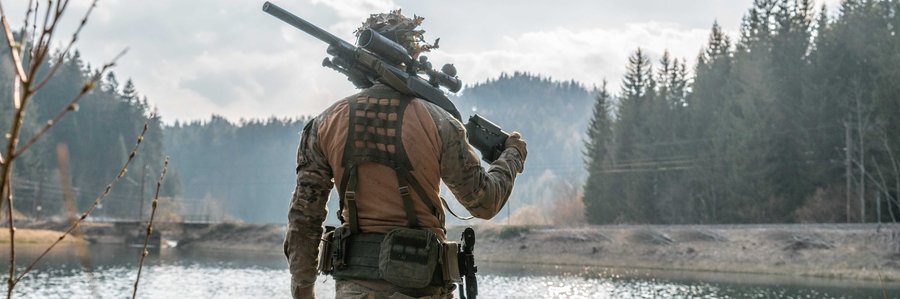
60-Second BLUF: Is an Airsoft Sniper Rifle Still Worth Buying in 2026?
Short answer: yes — if you understand what you’re signing up for. In 2026 the airsoft sniper market is in the best shape it’s ever been. The Tokyo Marui VSR-10 ($330-380) is still the most upgrade-friendly bolt-action platform, the Silverback TAC-41P ($760-900) has matured into the best out-of-box performer under $1,000, and the Silverback SRS A2 ($1,100-1,400) remains the gold standard for serious snipers who want a bullpup. Novritsch’s SSG10 A3 ($600-700) has finally fixed most of the proprietary-parts pain points that plagued the older SSG24.
What you’re signing up for is a different sport inside airsoft. You’ll fire 30-60 BBs in a 3-hour game instead of 1,500. You’ll spend more time crawling and observing than shooting. Most fields enforce a 10-15 meter Minimum Engagement Distance (MED) that makes your $1,000 rifle useless inside a building — so a reliable Tokyo Marui Hi-CAPA or Glock sidearm is non-negotiable. And the difference between a good sniper and a great one isn’t the rifle; it’s whether you’ve measured your target-acquisition time with a shot timer and trained to cut it in half.
The rest of this guide breaks down which of the 5 top rifles fits your budget and playstyle, what to upgrade first (hint: Hop-Up before barrel before spring), and 4 timed drills that turn a $400 VSR-10 into a precision system.
30-Second Quick Picks: Which Sniper Rifle Should You Buy?
Different play styles want different rifles. Jump straight to the section that matches you.
- First sniper rifle, under $400 → Tokyo Marui VSR-10 G-Spec — most upgrade parts, friendliest learning curve, runs 270-310 FPS stock.
- Open-the-box performance, no upgrades → Novritsch SSG10 A3 (or older SSG24 if budget is tight) — tactical aesthetic, sealed performance from day one.
- Best out-of-box accuracy under $1,000 → Silverback TAC-41P — largest cylinder volume in its class, shot-to-shot consistency that crushes a stock VSR-10.
- Bullpup for tight woodland / mixed terrain → Silverback SRS A2 — full-length barrel performance in M4-carbine overall length.
- Lowest entry budget under $200 → JG BAR-10 / CYMA CM701 / WELL MB03 VSR clone — same upgrade ecosystem, half the price, accept softer build tolerances.
- A Kar98k, M40A6 or L96 because you want that rifle → replica and milsim bolt-actions — externals-first platforms, bought for the event and the look.
- Long-range DMR feel without the bolt → see our Tokyo Marui MP7A1 guide for a different role; sniper rifles are not DMRs.
If you came here from a Google search for “vsr10 airsoft sniper”, “tokyo marui vsr-10 review” or “best airsoft sniper rifle 2026” — the Top 5 Comparison and 2026 Sniper Scene Update sections are where you’ll find the buying decision.
Why the Sniper Is the Most Fascinating Role in Airsoft
In every airsoft game, there are one or two players you never see the entire match, yet your teammates keep getting picked off by precise single shots. Only when the game ends do you spot them — someone draped in camouflage netting in a corner, clutching a bolt-action sniper rifle with a satisfied grin. That’s the allure of being an airsoft sniper — dominating the battlefield not through firepower, but through patience, observation, and one-shot precision.
The sniper’s path isn’t as romantic as it looks, though. You need to be willing to lie motionless on damp ground, endure bug bites, and wait for that perfect shooting opportunity. Your weapon — a bolt-action rifle — requires manual cycling after every shot, and against full-auto AEGs, you only get one chance. Hit your mark and you’re a hero; miss and you’ve just revealed your position.
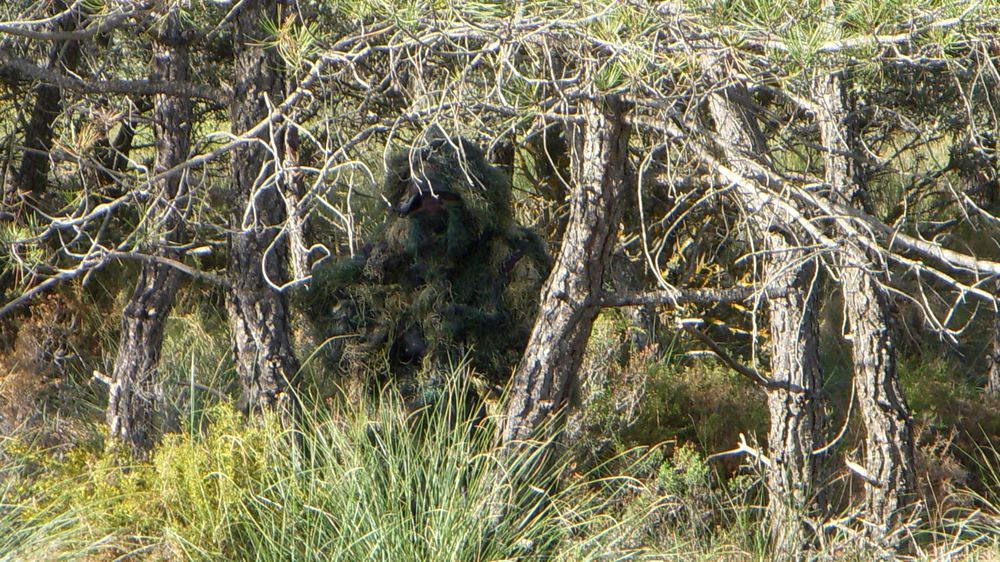
This guide walks you through the best airsoft sniper rifles on the market today, starting with the legendary Tokyo Marui VSR-10, then covering upgrades, loadout recommendations, and field-proven sniping tactics. Whether you’re a newcomer curious about sniping or a veteran looking to push your setup to competition level, you’ll find what you need here.
Tokyo Marui VSR-10: The Gold Standard of Airsoft Sniper Rifles
Ask any experienced airsoft sniper which rifle to buy, and eight out of ten will tell you the same thing: the VSR-10. (For a version-by-version breakdown of Pro Sniper, G-Spec, Real Shock and VSR-ONE, plus the full upgrade roadmap, see our Tokyo Marui VSR-10 complete guide.) When Tokyo Marui released this bolt-action sniper in the early 2000s, they probably didn’t anticipate it becoming the standard platform for the entire airsoft sniper market. Over two decades later, the VSR-10 remains the most widely used, best-supported, and most beginner-friendly choice available.
The first time you cycle the VSR-10’s bolt, you’ll be impressed by how smooth it is. The pull is fluid with no scratchiness, and it doesn’t require excessive force — an important quality in a bolt-action rifle since you’re cycling it after every shot, and a stiff, gritty bolt will leave your arm sore after an afternoon of play. Tokyo Marui’s manufacturing precision turns this action into something genuinely enjoyable, and some owners say the bolt feel alone is worth the price of admission.
The VSR-10 comes in several main variants. The Pro Sniper is the standard full-length version with a traditional stock and full-length barrel, measuring approximately 1,135mm overall at 2,090g — ready to use out of the box. The G-Spec is the more popular short-barrel variant equipped with a functional suppressor, making it significantly quieter during firing — and for a sniper, stealth is survival. The G-Spec with suppressor measures about 950mm, making it better suited for moving through dense woodland and brush. There’s also the Real Shock version that provides additional feedback during bolt cycling, simulating the feel of a real rifle.
Out of the box, the VSR-10 shoots approximately 270-310 FPS with 0.20g BBs. With 0.28g heavy BBs and proper Hop-Up adjustment, effective range sits around 50-60 meters. These numbers are respectable for a stock gun, but the VSR-10’s true value lies not in its factory performance but in its virtually unlimited upgrade potential — which we’ll explore in detail later.
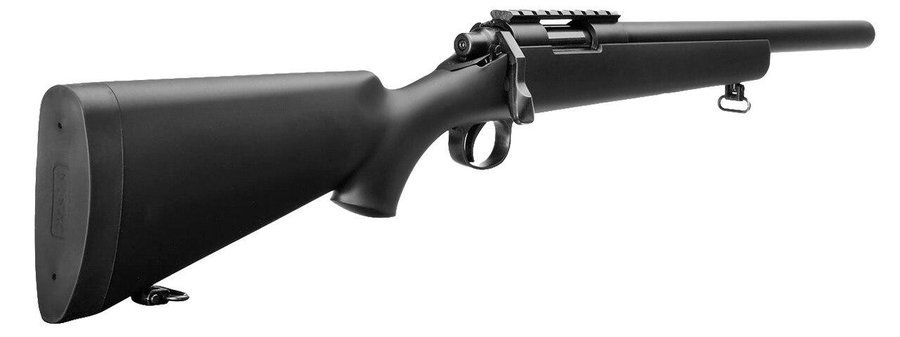
Top 5 Airsoft Sniper Rifles Compared: Which One Is Right for You?
The sniper rifle market has grown considerably in recent years, with each platform offering distinct characteristics suited to different player types. Rather than a cold spec sheet, let me break these down from a practical perspective.
The Tokyo Marui VSR-10 is the AK-47 of sniper rifles — reliable, with parts available everywhere, and easy to fix when something breaks. Its greatest advantage is the upgrade ecosystem: dozens of brands including Action Army, Maple Leaf, and Laylax produce parts for the VSR-10 platform, from Hop-Up buckings to precision barrels, trigger groups to pistons. Every single component has multiple upgrade options. The downside is that stock performance is mediocre — you almost certainly need to invest in upgrades to be competitive on the field. But flip that around, and it means you can build it exactly to your specifications and budget, one step at a time.
The Novritsch SSG24 takes a different approach — it’s designed to perform straight out of the box. Created by the well-known airsoft sniper YouTuber Novritsch, it ships with an upgraded Hop-Up, precision barrel, and air-sealed piston, delivering solid field performance from day one. For players who don’t want to spend time researching upgrades, the SSG24 eliminates a lot of hassle. The trade-off is clear, however: proprietary parts limit future upgrade options, and the price tag is considerably higher than a stock VSR-10. Its sibling SSG10 line (A1, A2, A3) offers different budget and configuration options, with the SSG10 A3 featuring a tactical aesthetic popular among Speedsoft-style players.
The Silverback SRS A2 is the rifle that has genuinely challenged VSR-10 dominance in recent years. This bullpup design houses the receiver and piston inside the stock, maintaining a long barrel (and corresponding range) while dramatically shortening overall length compared to conventional rifles. The SRS has one of the largest cylinder volumes in its class, meaning each shot pushes a more consistent, stable column of air — directly translating to shot-to-shot consistency. Its licensed Desert Tech appearance is also unmistakably distinctive. The downside is weight — extended carry can be tiring.
The Silverback TAC-41P is the SRS’s younger sibling, using a traditional rifle layout while inheriting the SRS’s core technology. It shares the massive cylinder volume and exceptional shot consistency, but at a lower price point than the SRS. The TAC-41P rapidly gained popularity in 2024-2025 and has been listed as the best out-of-box sniper rifle by several review sites. If you want Silverback quality but prefer a conventional layout, the TAC-41P is the perfect compromise.
Finally, the various VSR-10-compatible clones deserve mention — the JG BAR-10, CYMA 701, Well MB03, and others. These rifles cost half to a third of a genuine Tokyo Marui, and most parts are compatible with VSR-10 upgrades. For budget-conscious players who plan to invest in upgrades anyway, buying an affordable clone and spending the savings on upgrade parts is a genuinely smart strategy. Just note that clone build quality typically falls short of the original, and some aftermarket parts may require additional fitting.
The Budget Tier: What a $100-$200 VSR Clone Actually Gets You
Almost every “best airsoft sniper rifle” list — including the one above — starts at $330 and climbs. That is not where most people actually start. Walk the chrono line at any weekend game and a large share of the bolt-action rifles you see are VSR-10 clones costing under $200 — and skipping that tier just sends beginners off to a forum thread instead of answering the question they came with.
Three platforms make up basically the whole budget tier, and they are all VSR-10 clones:
JG BAR-10 (street price roughly US$130-170) is the one veterans keep recommending when someone asks for a cheap upgrade base. The receiver and cylinder tolerances are the closest to a real Tokyo Marui of any clone, which matters enormously later — it means Action Army and Maple Leaf parts drop in with minimal fitting instead of requiring a file and an afternoon.
CYMA CM701 / CM701B (roughly US$140-180 depending on package) is the most widely stocked. It ships with a BAR-10-pattern Hop-Up, a Picatinny rail already on the receiver, and usually a bipod and scope in the box. Build quality sits a step below the JG, but the parts compatibility is the same, and if your dealer has one in stock this week and the BAR-10 is on backorder for two months, buy the CYMA.
WELL MB03 / MB4411 (roughly US$90-130, often bundled with a scope and bipod) is the cheapest way to own a bolt-action at all. This is the rifle that gets someone into the role for under $150 all-in. It is also the one most likely to need work before it is genuinely competitive.
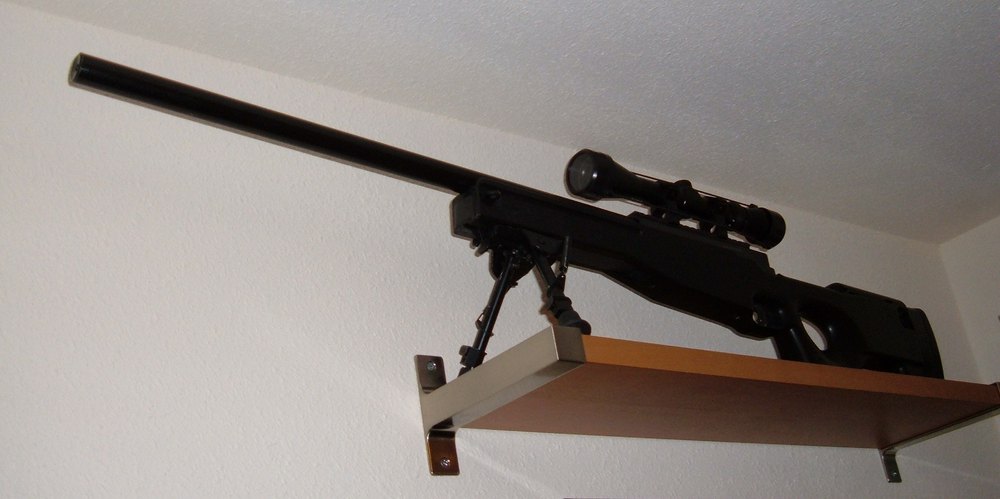
What you are actually giving up
The honest answer is not the part people expect. You are not giving up the upgrade path — that is the entire point of a clone, and every VSR-10 Hop-Up chamber, 6.01mm barrel, piston, spring and Action Army Zero Trigger fits. What you give up is:
- The stock Hop-Up bucking and barrel. On a clone these are genuinely bad, not just “average.” Out of the box you should expect 40-45 meters of usable range, not the 50-60 a stock Tokyo Marui G-Spec gives you.
- Cylinder air seal. Clone O-rings and cylinder head seals leak more, which shows up as shot-to-shot velocity spread — the exact thing that makes a rifle inconsistent past 40 meters.
- Trigger box durability. Clone trigger sears are softer. They survive the stock spring fine, but push past roughly an M150 spring and the sear will eventually round off and slam-fire. If you plan to spring up, budget for a Zero Trigger from the start rather than as an upgrade.
- The included scope. Treat the bundled optic as packaging. It is not a usable sight at 50 meters, and nobody keeps it.
The money math (and where it breaks)
The strategy experienced players actually recommend is this: buy the cheapest clone with good tolerances, then spend the savings on the two parts that matter. A JG BAR-10 plus a Maple Leaf MLC-S2 Hop-Up chamber and a 6.01mm precision barrel lands around US$250-300 all-in, and it will out-shoot a stock Tokyo Marui VSR-10 G-Spec that cost you US$330-380 on its own.
Where that math breaks is if you are honest with yourself and know you will never open the rifle up. A clone you never upgrade is worse in every measurable way than a Tokyo Marui you never upgrade, and the $150 you saved bought you a rifle you will stop enjoying by your fourth game. Buy a clone if you are certain you will upgrade it. Buy the Tokyo Marui if you are not.
One thing the budget tier does not change: the skill gap. A $130 BAR-10 and a $1,200 SRS A2 have exactly the same target-acquisition time, because that number lives in the shooter, not the rifle. Timing that with the AirsoftShotTimer App costs nothing and will improve your hit rate more in one month than a $200 barrel will.
Milsim & Replica Bolt-Actions: Kar98k, M40A6 and the Rifles You Buy for the Look
There is a whole second category of airsoft bolt-action that never appears on performance lists, because it is not competing on performance. These are replicas — rifles bought because of what they are, not what they group.
ARES Kar98k is the flagship of this category. Real wood furniture, properly finished metalwork, and on the shell-ejecting variants a brass case that flies out of the action every time you work the bolt. It runs around 380-420 FPS with 0.20g BBs from an 11-round magazine — respectable, and comfortably inside every field limit without a single modification. At WW2 and historical milsim events, this rifle is the point of the day. Expect to pay several hundred US dollars; the S&T Matrix Kar98k covers the same look for meaningfully less if the exact metal finish is not the reason you are buying.
ARES M40A6 sits at roughly US$600 and replicates the modern USMC rifle on a modular chassis. It is the most “serious” of the replica platforms — the chassis is genuinely adjustable, the externals are excellent, and it shoots well enough that you are not handicapped for carrying it.
WELL / Snow Wolf L96 and AWP clones occupy the sub-US$200 end. These are the rifles that people recognize from video games, and that recognition is most of why they sell. Internally they are simpler than a VSR clone and the aftermarket support is much thinner.
The honest trade-off
Replica platforms are externals-first. What you get is the silhouette, the wood, the bolt throw and the fact that everyone on the field wants to look at it. What you do not get is the VSR-10 ecosystem — Hop-Up chambers, buckings and barrels for a Kar98k are a handful of options rather than a hundred, and a problem that takes ten minutes to diagnose on a VSR can take a week of forum searching on an L96 clone.
So the buying rule is simple. If your reason for wanting a bolt-action is “I want to hit people at 70 meters,” go back to the Top 5 comparison — a VSR-10 or TAC-41P is the answer. If your reason is “I want to shoulder a Kar98k at a WW2 event and hear the case hit the ground,” buy the replica and enjoy it, because no amount of group-size data addresses what you actually wanted.
2026 Airsoft Sniper Scene Update: What’s New in the Bolt-Action Market
The bolt-action market doesn’t move at the same pace as GBB pistols or AEGs, but 2025-2026 brought several developments worth flagging if you’re shopping right now rather than building from a 2023 listicle.
Novritsch SSG10 A3 has matured into the SSG24’s real successor. The SSG10 line launched a few years ago and went through some growing pains with magazine reliability and trigger feel, but the A3 revision shipped in late 2024 / early 2025 has fixed most of the early complaints. Hop-Up consistency is significantly better, the new trigger is genuinely close to an Action Army Zero Trigger in feel, and the M-LOK rail makes scope and bipod mounting straightforward. At roughly US$600-700 it now lands between a stock VSR-10 and a TAC-41P, and for players who absolutely refuse to tinker, it’s the easiest “buy it and go play” sniper rifle on the market.
Silverback TAC-41P is the rifle most veterans now recommend over the SSG24. When the TAC-41P launched it was treated as the SRS’s budget alternative, but by 2026 it’s become the default recommendation for anyone with a US$800-900 budget who doesn’t specifically want a bullpup. The shot-to-shot velocity spread on a stock TAC-41P is genuinely impressive — many users report under 5 FPS variation across a magazine without any upgrades — and the AICS-compatible magazines feed reliably enough that you can stop carrying spare mags as a safety net.
Maple Leaf MLC-S2 has changed the upgrade conversation. The Maple Leaf MLC-S2 Hop-Up chamber and accompanying buckings, refined through 2024-2025, give a stock VSR-10 a level of accuracy that used to require a Pro-Win Hop-Up and a precision barrel combined. If you’re upgrading a VSR-10 in 2026, the most cost-effective path is now: Maple Leaf MLC-S2 chamber + Maple Leaf Autobot or 70-degree bucking, then a 6.01mm precision barrel, before you even think about piston or spring upgrades. This single change saves new builders roughly US$80-120 versus the older Action Army + Maple Leaf combo.
FPS limits are tightening at many fields. Several major US and European fields have moved their bolt-action sniper rifle limit from 500 FPS down to 450 or even 425 FPS (with 0.20g BBs) over the last 18 months, citing safety concerns and the realization that 450 FPS with a 0.36g BB hits roughly the same energy as 500 FPS with 0.30g. Before you over-spring a rifle to 550 FPS hoping for more range, check your local field’s 2026 rule book — you may simply not be allowed to play with it. The smarter 2026 build targets 430-450 FPS with 0.36g BBs and uses Hop-Up tuning rather than raw spring power to chase the 70-80 meter effective range bracket.
Taiwan / Hong Kong availability has improved significantly. Five years ago, getting a Silverback SRS in Taiwan meant waiting two months for international shipping. As of 2026, retailers like 杰丹田 (JDT), 翔準 (AOG), and 磐石 stock the SRS A2, TAC-41P, and the newer SSG10 A3 at street prices roughly NT$28,000 (SRS A2), NT$22,000 (TAC-41P), and NT$18,000 (SSG10 A3). Tokyo Marui VSR-10 G-Spec is consistently available at NT$11,000-13,000, and clone options (JG BAR-10, CYMA CM701) sit at NT$4,500-6,500.
Sniper Rifle Upgrade Path: From Beginner to Expert
After buying a sniper rifle, most people quickly realize that stock performance falls short of true “precision sniping.” The good news is that airsoft sniper upgrades aren’t as intimidating as they sound, and the improvement from each upgrade step is immediately noticeable.
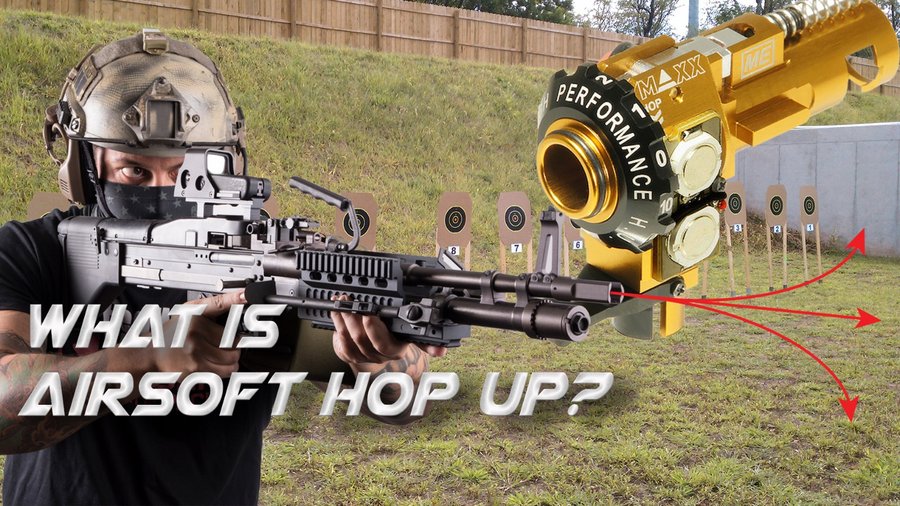
The first and most important step is upgrading the Hop-Up system. The Hop-Up is the core accuracy component in any airsoft gun — it applies backspin to the BB through a small rubber nub, creating a Magnus effect similar to a golf ball that dramatically extends effective range and flight stability. Stock Hop-Up buckings are typically average quality, and swapping in a quality bucking and Hop-Up chamber offers the best performance-per-dollar improvement. The Action Army VSR-10 Hop-Up chamber paired with a Maple Leaf 70-degree bucking is the most classic and widely recommended combination. This upgrade costs roughly $40-60 but can deliver more noticeable accuracy gains than spending three times as much on other components.
The second step is replacing the inner barrel. Stock barrels typically have a 6.08mm bore diameter; switching to a 6.01mm or 6.03mm precision barrel reduces BB wobble inside the tube, improving directional consistency at the muzzle. Maple Leaf, PDI, and EDGI are all well-regarded barrel brands. When installing a new inner barrel, don’t forget to add barrel spacers between the inner and outer barrel to prevent movement — many VSR-10 builders make their own spacers by wrapping painter’s tape around the inner barrel at intervals, which is simple and effective.
The third step, if you want to increase FPS and range, involves upgrading the piston and spring. A stiffer spring increases muzzle velocity, but mind your field’s FPS limits — most sites cap sniper rifles at 450-500 FPS with 0.20g BBs, and exceeding that means you can’t play. When upgrading the piston, air seal quality is the most important factor; a good piston paired with proper cylinder sealing keeps shot-to-shot velocity variation to a minimum. Action Army’s piston and cylinder kits are popular choices.
The VSR-10 platform has a common issue known as the “right curve” — BBs start curving right after 30-40 meters of flight. This is typically caused by uneven pressure from the Hop-Up bucking. The fix is adding a small shim to the Hop-Up assembly to ensure the pressure arm applies even force across the bucking and BB. It’s a near-zero-cost adjustment with dramatic results.
Finally, the trigger group is worth upgrading. The stock trigger has a long pull and isn’t particularly crisp, which is less than ideal for precision shooting. Action Army’s Zero Trigger is the most renowned trigger upgrade for the VSR-10 platform, reducing trigger travel to virtually nothing with a crisp, clean break. Combined with quality optics, it lets you fire at the optimal moment without introducing wobble from trigger travel.
Sniper Loadout: It’s About More Than Just the Rifle
A capable airsoft sniper needs more than just a good rifle — your complete loadout determines how long you survive on the field and how effective you can be.
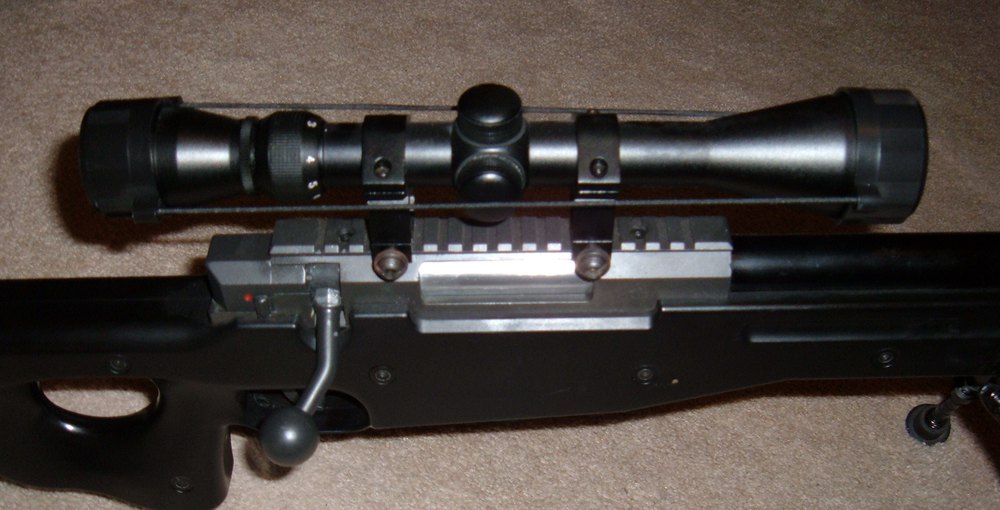
Optics are a sniper’s most important accessory, but you don’t need to chase maximum magnification. A common beginner mistake is mounting a 9x or even 12x scope, only to find the field of view too narrow at airsoft engagement distances, making it harder to spot targets. A 3-9x variable magnification scope is the most practical choice — use 3-4x to scan the environment, then dial up when you spot a target for precise aiming. Lens quality matters more than magnification — a clear, chromatic-aberration-free 4x scope outperforms a blurry 9x scope every time in actual gameplay.
Sidearm selection is equally critical. Sniper rifles are essentially unusable at close range (under 10 meters) — not just because bolt cycling is too slow, but because most fields enforce a Minimum Engagement Distance (MED) that prohibits sniper rifles from direct hits at close range. You need a compact pistol as a backup weapon for quick transition when enemies appear nearby. Tokyo Marui Hi-CAPA or Glock series GBB pistols are the most popular choices, paired with a drop-leg holster for rapid draws. For more on pistol options, check out our Tokyo Marui Hi-CAPA Complete Guide.
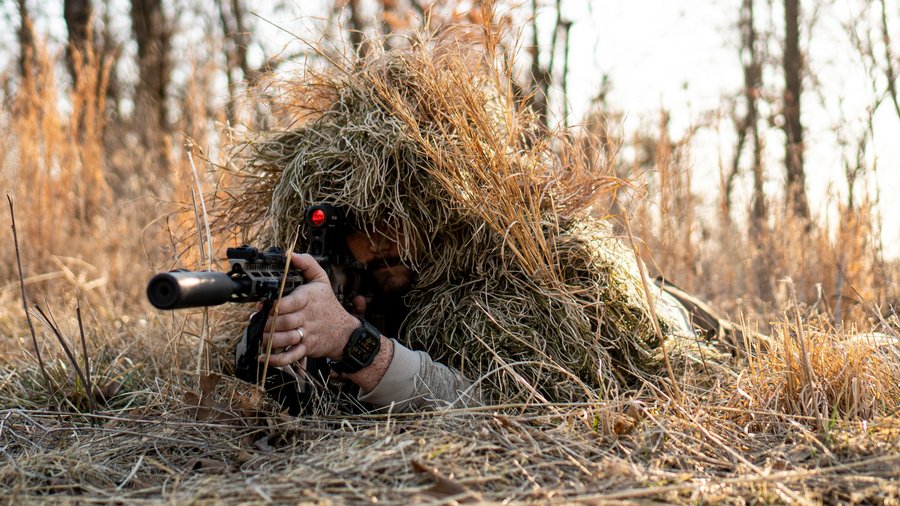
Camouflage is a sniper’s lifeline. Good concealment doesn’t require an expensive ghillie suit — sometimes a tactical jacket in the right color scheme plus some DIY camo strips is enough. The key is breaking up your human silhouette — our eyes are naturally wired to identify human shapes, so your job is to look like anything but a person. Head and shoulder camouflage is most critical since these are the easiest features to identify. In woodland environments, burlap strips and artificial foliage on your hat and shoulders create effective 3D concealment.
Carrying equipment also needs consideration. Unlike riflemen who need lots of ammunition, snipers prioritize mobility and concealment. A lightweight chest rig beats a full tactical vest for sniping — pack a few spare magazines, a water bottle, and a bag of BBs, and you’re set. Many snipers run just a small waist pouch, keeping everything minimal to ensure rapid relocation when needed. For more loadout ideas, check out our Airsoft Loadout Complete Guide.
Sniper Tactics: Patience Matters More Than Marksmanship
With a precision rifle and full loadout in hand, what truly determines your field performance is tactical awareness. Many people assume sniping means finding an elevated spot and camping, but effective snipers constantly think, move, and adapt.
Position selection is the most critical skill. A good sniping position requires several attributes: clear sightlines covering key engagement areas or lanes, concealed backdrop so you’re not silhouetted against the sky, and a safe withdrawal route for when your position is compromised. Beginners often gravitate toward the highest point on the map, but these spots are also the first places enemies check. Unassuming low bushes or the flanks of cover structures often prove more effective.
“One position, one to two shots” is the sniper’s golden rule. After firing from a position — even if you hit your target — you should prepare to relocate. The opposing team will use your shot trajectory to estimate your general location, and staying put means encirclement is just a matter of time. After one or two shots, use natural cover to move low to another pre-scouted position and wait for fresh opportunities.
Listening beats looking. In woodland environments, you’ll almost always hear enemies before seeing them — footsteps crunching fallen leaves, gear rattling, teammates calling out. These sounds signal approaching threats. Learning to judge direction and distance from sound lets you prepare before enemies come into view.
Wind drift and range estimation are advanced skills. Airsoft BBs are very light and easily affected by wind, especially in open terrain. Learn to read wind indicators around you — which way leaves are blowing, how grass is bending — then apply corresponding corrections when aiming. Range estimation requires experience — at your regular field, memorize landmarks (that tree is roughly 40 meters, that bunker is about 60 meters) so you can quickly estimate target distance and adjust your point of aim during gameplay.
Operating with a partner multiplies a sniper’s effectiveness dramatically. If possible, find a spotter to work with you. The spotter continuously monitors the surroundings, marks enemy positions, traces your shots to help correct your aim, and can use a rifle or SMG to protect you at close range. In real military sniper operations, the spotter’s role is arguably more important than the shooter’s. In airsoft, a good partner lets you focus purely on shooting without constantly worrying about your flanks.
Using a Shot Timer to Sharpen Sniper Training
You might think snipers don’t need a shot timer — after all, sniping is about precision, not speed. But a shot timer actually adds real value to sniper training, just applied differently.
Timing your “target acquisition to first shot” reaction helps build faster target identification skills. Set up a practice scenario: place several targets at different distances, start the timer, then begin searching, aiming, and firing. Record the time from timer beep to first shot, along with hit rate. As practice sessions accumulate, you’ll find yourself locating targets and completing your sight picture faster while maintaining accuracy.
Another useful drill is timing your relocation speed. Start the timer, move from one shooting position to the next pre-set location, and complete a shot. This drill simulates the real-game cycle of “shoot, move, shoot again,” helping you find the balance between speed and stealth.
Sidearm transition drills also work great with a shot timer. Time the process from sniper position to pistol engagement — dropping the rifle to first pistol shot. This could save your life in an emergency. Our Shot Timer App is perfect for recording this type of training data.
🎯 Training Tip: Record your data after each practice session — reaction times, hit rates, relocation times. Tracking these numbers long-term lets you objectively measure your progress rather than relying on feel.
Frequently Asked Questions
Is an airsoft sniper rifle worth buying in 2026?
For the right player, absolutely — but it’s the wrong first airsoft gun for most people. You’ll fire maybe 30-60 shots in a 3-hour game versus 1,500 for an AEG rifleman, so the role demands patience. The 2026 market has matured to the point where a US$700 SSG10 A3 or a US$330 Tokyo Marui VSR-10 G-Spec both deliver real precision-shooting fun out of the box. If you’ve already played 5-10 games as a rifleman and find yourself constantly wanting to flank, observe, and pick single targets at distance, the sniper role probably fits you. If you mainly enjoy the close-quarters chaos of CQB, skip the sniper rifle and put the money into a better AEG or GBB Hi-CAPA.
What’s the realistic effective range of an airsoft sniper rifle?
A stock Tokyo Marui VSR-10 G-Spec with 0.28g BBs and tuned Hop-Up will reliably hit man-sized targets at 50-60 meters. A properly upgraded VSR-10 (Maple Leaf MLC-S2 chamber + 6.01mm precision barrel + Action Army Zero Trigger) running 450 FPS with 0.36g BBs pushes that bracket to 70-80 meters. A stock Silverback TAC-41P sits at 60-70 meters out of the box. Beyond 80 meters, every airsoft sniper rifle is essentially shooting probabilistic groups — wind drift and BB weight inconsistency dominate, not the rifle’s mechanical capability. Anyone advertising 100+ meter effective range is either using ideal-condition cherry-picked data or measuring “lands somewhere in a torso silhouette” rather than “hits a 30cm circle reliably.”
Tokyo Marui VSR-10 vs Novritsch SSG24 — which should I buy?
For 2026, the more useful question is “VSR-10 vs SSG10 A3” since the SSG10 A3 has effectively replaced the older SSG24. Choose the VSR-10 if you enjoy tinkering and want maximum upgrade flexibility (cheapest entry, deepest aftermarket ecosystem, fully VSR-10-compatible parts). Choose the SSG10 A3 if you want plug-and-play performance, prefer a tactical aesthetic over a traditional rifle look, and are willing to pay roughly US$300 more to skip the upgrade learning curve. The actual shooting performance ceiling of a fully upgraded VSR-10 is higher than a stock SSG10 A3, but a stock SSG10 A3 beats a stock VSR-10 by a wide margin.
Why does my airsoft sniper rifle curve right at long range?
The VSR-10 platform’s classic “right curve” usually shows up around 30-40 meters and gets worse beyond that. It’s almost always caused by uneven pressure from the Hop-Up bucking — the pressure arm isn’t pressing the bucking evenly across the BB. Fix it by removing the Hop-Up assembly, inspecting the bucking for wear or off-center mounting, and adding a small shim (a folded piece of business card works) on the side opposite the curve direction. If the curve persists, the bucking itself is worn — swap to a fresh Maple Leaf Autobot or 70-degree bucking. This is a near-zero-cost adjustment that often delivers more accuracy improvement than buying a new precision barrel.
What FPS should I run on my airsoft sniper rifle in 2026?
Always check your specific field’s 2026 rule book — limits have tightened. Most US and European fields now cap bolt-action sniper rifles at 450-500 FPS with 0.20g BBs, with some major fields dropping to 425 FPS. The current best practice is to target 430-450 FPS with 0.36g BBs (joule energy roughly 2.0-2.3J — see the FPS-to-joules conversion chart to check any weight yourself — which lands within most field limits while giving you the heavy-BB ballistic stability for the 70-80m effective range bracket). Pushing past 500 FPS for “more range” rarely helps in airsoft and frequently makes you uninsurable at events. Spend the upgrade money on a good Hop-Up chamber, a 6.01mm barrel, and a Zero Trigger before touching the spring.
Do I need a Shot Timer for sniper training?
You don’t need one to enjoy sniping, but it’s the single fastest way to objectively improve. Snipers obsess over precision but rarely measure their target-acquisition speed — the time from “I see the target” to “first round on the way.” Most new snipers take 4-7 seconds. Trained snipers can do it in under 2 seconds without losing accuracy. The AirsoftShotTimer App lets you set par times for target-search, position-relocation, and rifle-to-sidearm transitions so you can train these as separate skills and measure improvement week over week. Without timed data, you’re guessing whether you’re actually getting better.
Can I use a sniper rifle in CQB?
Almost never effectively, and most fields explicitly prohibit it. Bolt-action cycling time alone makes you a target inside buildings, and field Minimum Engagement Distance (MED) rules — typically 10-15 meters for sniper rifles — mean you’re not allowed to engage targets at the ranges CQB actually happens. The standard approach is to carry a compact GBB sidearm (Hi-CAPA, Glock, or Tokyo Marui MP7A1) and switch to it whenever you enter a structure or pass the indoor MED line. Practicing the rifle-to-pistol transition with a shot timer is one of the highest-value drills a sniper can train. See our Airsoft CQB Tactics Guide for more on indoor engagement.
What’s the best airsoft sniper rifle for beginners in 2026?
For a first bolt-action, the Tokyo Marui VSR-10 G-Spec (US$330-380 / NT$11,000-13,000) is still the smartest beginner buy in 2026 — it runs a safe 270-310 FPS stock, has the largest aftermarket parts ecosystem of any platform, and every upgrade you’ll ever want is VSR-10-compatible and cheap. If you genuinely never want to open the rifle up, the Novritsch SSG10 A3 (US$600-700) gives you tuned out-of-the-box performance for roughly US$300 more. Avoid the sub-US$100 clone snipers as your first “serious” rifle — they can be fun budget entry points, but the Hop-Up and trigger inconsistency will teach you bad habits about what an airsoft sniper rifle is actually capable of. Whichever you pick, the fastest way to actually get better is to measure your target-acquisition time with the AirsoftShotTimer App and train to cut it down week over week.
What airsoft sniper rifle shoots the farthest?
Reliable hits, not “the BB lands somewhere out there”: a fully upgraded VSR-10 platform or a Silverback SRS A2 / TAC-41P running 0.36-0.43g BBs through a well-tuned Hop-Up will hold a man-sized target at 70-80 meters, and that is the practical ceiling for 6mm airsoft. The rifle is rarely the limiting factor past 60 meters — Hop-Up consistency and BB weight and quality are. Two rifles with identical FPS can differ by 20 meters of usable range purely because one has a properly shimmed bucking and round, heavy BBs. Before you buy a longer barrel chasing distance, fix the Hop-Up and switch to 0.36g or heavier ammunition; it is cheaper and it works better.
Is there a 1000 FPS airsoft sniper rifle?
No — and you would not be allowed to use one if there were. A 0.20g BB at 1,000 FPS carries roughly 9.3 joules, about four times the 2.3J / 500 FPS ceiling that most fields and the UK legal limit set for single-shot bolt-action rifles. Listings advertising 1,000 FPS are almost always air rifles rather than 6mm airsoft, or are quoting a figure the gun does not produce. Real-world numbers: stock bolt-actions run 270-420 FPS, upgraded competition builds land at 450-500 FPS on 0.20g, and past that you are simply outside what any insured field will chrono. If you want to check what any FPS-and-BB-weight combination is actually worth in joules, our airsoft chronograph and FPS-to-joules guide has the full conversion chart.
What’s the best airsoft sniper rifle under $200?
The JG BAR-10 (roughly US$130-170) if you can find one in stock, because its tolerances are the closest to a real Tokyo Marui and every VSR-10 upgrade part drops straight in. The CYMA CM701 is the more available alternative at a similar price and usually arrives with a rail, bipod and scope. The WELL MB03 gets you under US$130 if that is the hard ceiling. All three are covered in detail in the budget tier section above — and the key caveat is worth repeating: a clone is the right buy only if you intend to upgrade it.
Can I use a Kar98k or other replica rifle as a real sniper rifle?
You can play with one, and at WW2 or historical milsim events it is the correct rifle. An ARES Kar98k at 380-420 FPS is inside every field limit and will take people out at 40-50 meters without complaint. What it will not do is compete with a tuned VSR-10 or a TAC-41P at 70 meters, and the aftermarket to close that gap barely exists. Choose a replica because you want that specific rifle at that specific event — not because you expect it to out-shoot a purpose-built platform. See the replica bolt-actions section above for the full trade-off.
What’s the best out-of-the-box airsoft sniper rifle (no upgrades)?
If you want to skip the upgrade learning curve entirely, the Silverback TAC-41P (US$800-900) is the strongest stock performer under US$1,000 in 2026 — many owners report under 5 FPS velocity spread across a magazine with zero tuning, thanks to its large cylinder volume and AICS-compatible magazines. On a smaller budget, the Novritsch SSG10 A3 (US$600-700) is the easiest “buy it and play” option. A stock TAC-41P will out-shoot a stock VSR-10 by a wide margin, but remember that a fully upgraded VSR-10 eventually beats a stock TAC-41P — so your real choice is whether you’d rather pay upfront for performance or tinker your way there over time.
Image Credits
- Budget airsoft bolt-action sniper rifle (AW/L96 type) photo by BrokenSphere, CC BY-SA 3.0, via Wikimedia Commons — cropped and resized, not otherwise altered.
- Airsoft bolt-action scope and bolt handle photo by BrokenSphere, CC BY-SA 3.0, via Wikimedia Commons — cropped and resized, not otherwise altered.
- Airsoft player in a ghillie suit photo by Jquereda, CC BY-SA 3.0, via Wikimedia Commons — cropped and resized, not otherwise altered.


Conclusion
The airsoft sniper is one of the most challenging yet rewarding roles in the sport. From choosing the right rifle to upgrading step by step, assembling your loadout, and honing your tactics, every aspect demands time and dedication. But when you land that precise hit on an unsuspecting target from 60 meters out for the first time, the satisfaction makes it all worthwhile.
If you’re on the fence about diving in, my advice is to start with a VSR-10 or one of its clones — you don’t need to buy everything at once. Experience the joy of bolt-action sniping first, and if you find yourself hooked on the patience and one-shot-kill thrill, gradually invest in upgrades and gear. Remember, great snipers are made through experience and patience, not built through equipment alone.
Related Articles
Sniper Sidearms & Backup Weapons
- Tokyo Marui Hi-CAPA Complete Guide - The most popular sniper sidearm and why
- Tokyo Marui MP7A1 GBB Complete Guide - Compact PDW for the indoor MED line
- SIG P320 Review 2026 - Modular sidearm for the modern sniper loadout
Sniper Gear & Loadout
- Airsoft Loadout Complete Guide - Lightweight sniper loadout examples and chest rig setups
- Airsoft Plate Carrier vs Chest Rig - What snipers actually need vs riflemen
- Airsoft Helmet Guide 2026 - Low-profile helmet picks for snipers
- Airsoft Tactical Headset Guide - Comms options for spotter-sniper teams
Sniper Tactics & Training
- Airsoft CQB Tactics Complete Guide - When MED forces you into close quarters
- Airsoft Team Tactics Complete Guide - Spotter-sniper coordination
- Shooting Safety Rules Guide - MED, muzzle awareness, and indoor rules
Shot Timer Training for Snipers
- Shot Timer App Complete Guide - Set up sniper-specific drill modes
- Best Shot Timer Guide 2026 - Choosing the right shot timer hardware vs app
- Pistol Shooting Fundamentals 2026 - Sidearm fundamentals every sniper needs
Put a Shot Timer in Your Pocket
Airsoft Shot Timer is a free shot timer app tuned for airsoft and Action Air — it picks up BB gun shots, tracks your split times, and saves you the cost of a $150+ hardware timer for IPSC/IDPA practice.

- Airsoft Sniper 2026
- Best Airsoft Sniper Rifle 2026
- Airsoft Sniper
- VSR-10
- VSR-10 Review
- VSR-10 vs SSG24
- VSR-10 vs SRS
- Tokyo Marui VSR-10
- Tokyo Marui Sniper
- Tokyo Marui
- Sniper Rifle
- Bolt Action Airsoft
- Bolt Action
- Best Airsoft Sniper
- SSG24
- SSG24 Review
- SSG10 A3
- Novritsch SSG10
- Silverback SRS
- Silverback SRS A2
- Silverback TAC-41P
- TAC-41P Review
- Airsoft Sniper Upgrade
- Action Army Zero Trigger
- Maple Leaf 70 Bucking
- Airsoft Sniper Rifle
- Airsoft Sniper Loadout
- Shot Timer Sniper Drill
- Shot Timer
- Airsoft MED Rules
- Best Airsoft Sniper Rifle
- Best Airsoft Sniper Rifle for Beginners
- Best Out of the Box Airsoft Sniper
- Airsoft Sniper for Beginners
- Best Budget Airsoft Sniper
- Best Airsoft Sniper Rifle Under 200
- Cheap Airsoft Sniper Rifle
- JG BAR-10
- CYMA CM701
- WELL MB03
- VSR-10 Clone
- Budget Airsoft Sniper
- ARES Kar98k
- Airsoft Kar98k
- ARES M40A6
- L96 Airsoft
- Milsim Sniper Rifle
- Replica Bolt Action Airsoft
- 1000 FPS Airsoft Sniper
- Highest FPS Airsoft Sniper
- Airsoft Sniper FPS Limit
- What Airsoft Sniper Shoots the Farthest
- Top Airsoft Sniper Rifles