How to Stop Flinching When Shooting: Anticipating Recoil Fixes
The short answer (BLUF)
- A flinch only costs you hits if it happens before the shot breaks. A 9mm bullet leaves a 4-inch barrel in well under a millisecond, and even your fastest startle reflex takes 30 to 50 ms. Anything you do after the bang can’t move that bullet. The miss comes from pushing the gun down in anticipation of the bang.
- Small movements, big misses. With a Glock 17’s 165 mm sight radius, dipping the front sight just 1 mm sends the shot about 4 cm low at 7 yards and 14 cm low at 25 yards. That’s half the height of a USPSA A-zone.
- Diagnose before you fix. Run a ball-and-dummy drill: a friend loads your magazine with a random snap cap (or hands you a GBB with or without gas). If the muzzle dives on the dead round, you’re anticipating.
- Fix it with reps that don’t go bang: dry fire, ball-and-dummy, doubled hearing protection, a smaller-caliber or airsoft stepping stone, and a surprise break. Expect weeks, not a single range day.
- Use a shot timer to find your threshold. Shoot groups at slower and faster par times. The pace where the group suddenly drops low is where your flinch lives, and that’s the speed to practice at.
Every shooter knows the moment. You press the trigger on what you expect to be a live round, the gun goes click instead of bang, and the front sight dives toward the bottom of the target as if someone pushed it. That’s a flinch caught on camera, and it’s humbling because you had no idea you were doing it.
The good news is that a flinch is a habit, not a personality trait. It has a clear mechanism, it shows up in a predictable spot on the target, and it goes away with the right kind of practice. This guide explains exactly which part of the flinch hurts you (only one part does), how much a tiny movement costs at real distances, how to prove you have it, and how to train it out with live fire, dry fire or an airsoft GBB.
Why You Flinch When Shooting
You flinch because your brain knows a loud, violent event is coming and tries to get ahead of it. The startle response to sudden loud noise is wired in from birth, and a gunshot is the loudest thing most people ever experience at arm’s length. Over time, your hands learn to “brace” for that blast a fraction of a second before it happens.
That brace usually looks like one of three things: a forward push of the wrists, a sudden squeeze of the whole hand as the trigger finger presses (often called milking), or a shoulder-and-head tuck with closed eyes. 3-Gun national champion Joe Farewell makes a useful distinction here. Anticipating the recoil is fine; good shooters expect the gun to move and drive it back onto the target. Anticipating the shot is the problem: moving the gun before it fires.
Noise matters more than most new shooters realize. Indoor ranges trap concussion, the person in the next lane may be running a compensated gun or a short-barreled rifle, and a single set of foam plugs that isn’t seated properly lets a lot through. Many “recoil” flinches are really noise flinches, which is why one of the cheapest fixes is simply better hearing protection.
What Actually Moves the Shot: Before vs. After the Break
Only movement before the trigger breaks can push a shot off target. The bullet is already gone by the time any reaction to the shot can happen, so blinking or tensing at the bang is harmless. What ruins the shot is the push that starts while you’re still pressing.
Here’s the timing. A 9mm bullet that exits a 4-inch barrel at around 360 m/s spends roughly 0.6 ms in the barrel. Add the firing-pin strike and primer ignition and you’re still in the low single-digit milliseconds from sear release to muzzle exit. The fastest human response to a sudden loud sound, the startle eye-blink, takes about 30 to 50 ms, and a deliberate hand reaction takes longer still. So your body cannot react to the shot fast enough to spoil it. If your hits are low, your hands moved first.
That leads to a simple test you can do with a phone. Film yourself from the side at 240 fps slow motion, where each frame is about 4 ms. Step through the footage around the shot. If the front sight starts dipping a frame or more before the slide starts moving, you’re anticipating the shot. If the sight stays still until the slide moves and then the gun rises and returns, that’s normal recoil and normal recovery. No amount of blinking or wincing after that point needs fixing.
How Far a Small Flinch Moves Your Hit
A front-sight dip of one millimetre is enough to drop a shot out of the A-zone at 25 yards. Because the sights magnify every angle by the distance to the target, a movement too small to feel turns into centimetres on paper.
We calculated the shift using a Glock 17’s sight radius of 165 mm. This counts only the tilt of the gun. A real flinch also shoves the whole pistol down a little, so treat these figures as minimums.
| Front-sight dip | 5 m | 7 yd (6.4 m) | 10 m | 15 yd (13.7 m) | 25 yd (22.9 m) |
|---|---|---|---|---|---|
| 0.5 mm (0.17°) | 1.5 cm | 1.9 cm | 3.0 cm | 4.2 cm | 6.9 cm |
| 1 mm (0.35°) | 3.0 cm | 3.9 cm | 6.1 cm | 8.3 cm | 13.9 cm |
| 2 mm (0.69°) | 6.1 cm | 7.8 cm | 12.1 cm | 16.6 cm | 27.8 cm |
Put those numbers next to a target and the problem becomes obvious. The USPSA body A-zone is 15 × 28 cm, so from a centre hold you have about 14 cm before you fall out the bottom. A 1 mm dip at 25 yards uses all of it. The IPSC Action Air A-zone is smaller, 10 × 21.5 cm, which gives you only about 10.75 cm of room below centre. A 2 mm dip at 10 metres, a normal Action Air distance, already costs you the A. That’s why flinches feel invisible at 3 yards and suddenly appear when the targets move back.
Direction tells you something too. For a right-handed shooter, a push combined with a squeeze of the whole hand usually lands low and left. Low-left isn’t always a flinch, though; it can also come from finger placement or grip. If your groups string in one direction, compare them against the full target diagnosis chart in our pistol aiming guide before you decide it’s anticipation.
The Ball-and-Dummy Test (Live Fire or GBB)
The ball-and-dummy drill is the most reliable way to confirm a flinch because it catches you when you expect a bang that never comes. A partner loads your gun out of your sight, either with a live round or a dummy round, and you press the trigger the same way every time.
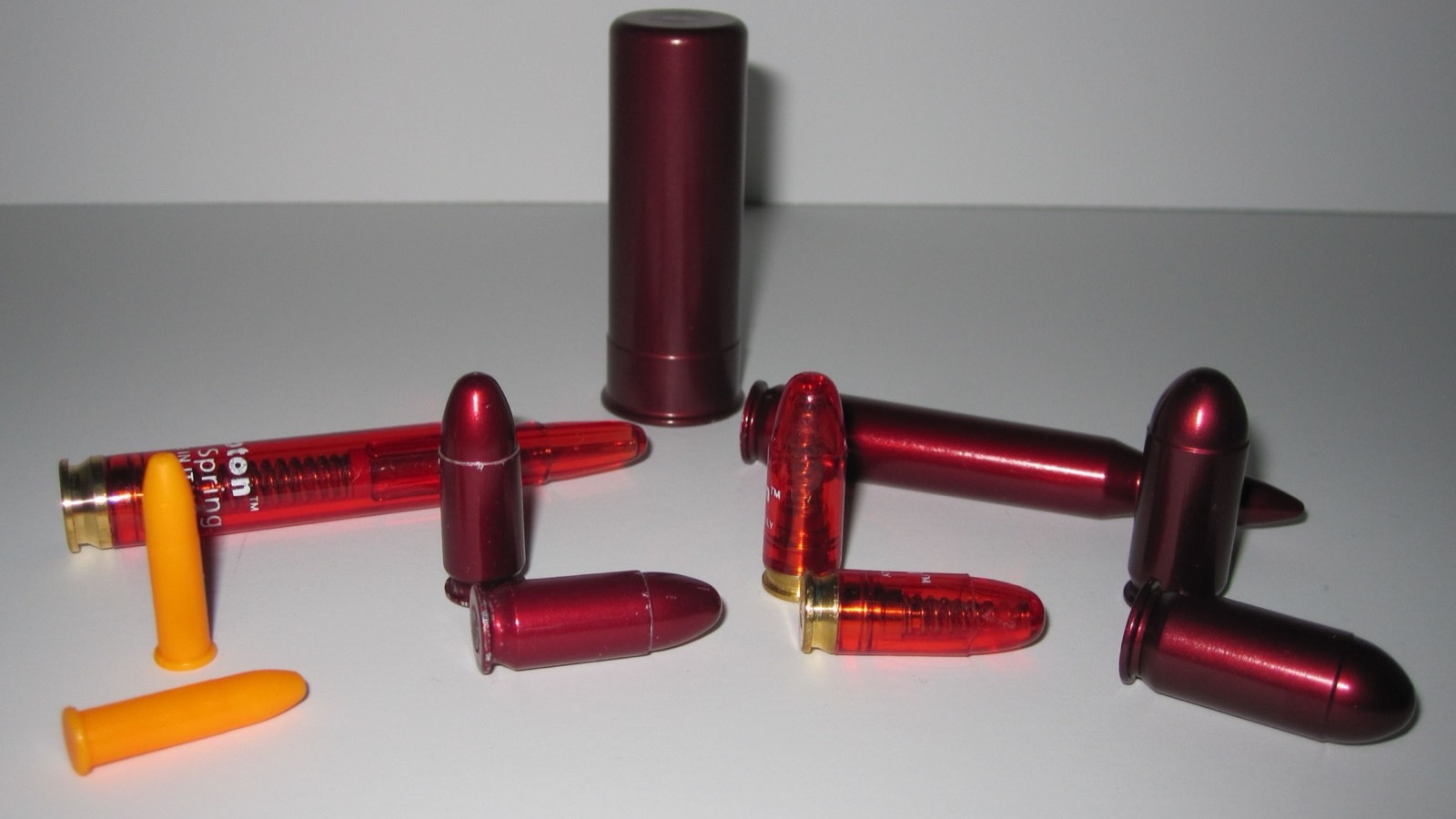
With a real pistol, use inert snap caps that are clearly coloured so nobody mistakes them for ammunition. Your partner loads one or two into a magazine at random, hands you the gun, and watches the front of the slide. When you hit the snap cap, the gun goes click and stays still if your press was clean. If it dives, you’ve seen the flinch. Some instructors run it the other way: a student who has been dry firing all session is handed a gun that, unknown to them, now has one live round. If the hit lands where the dry shots were aimed, the problem is gone.
You can’t mix dummy rounds into an airsoft magazine, but a gas blowback pistol gives you a version of the same surprise. Your partner hands you the gun with either a gassed magazine or one that has BBs but no gas. On the empty one, the hammer drops and nothing happens: no BB, no blowback. Do this on a safe airsoft target, keep eye protection on, and watch for the same telltale dive.
Six Ways to Stop Flinching
The fixes that work all have one thing in common: they give you lots of trigger presses where nothing bad happens, so the brain stops bracing. No single trick removes a flinch overnight, and retired Navy SEAL instructor Chris Sajnog warns that a habit built over years needs weeks of patient reps to replace.
1. Dry fire every day, briefly. Ten minutes of slow presses at home, watching the front sight stay perfectly still through the break, is the foundation. Balance a coin or empty case on the slide behind the front sight; if it falls, the gun moved. Our dry fire training guide has a full routine.
2. Mix ball-and-dummy into every range trip. Don’t treat it as a one-time test. Shoot a few magazines with a random snap cap in each, and finish on clean presses.
3. Double up on hearing protection. Foam plugs plus muffs cut the blast noticeably. This one change fixes a surprising number of flinches, especially at indoor ranges.
4. Step down the blast, then step back up. A .22 conversion or a .22 pistol lets you shoot a lot of rounds with almost no recoil or noise. Airsoft does the same thing for much less money, which we’ll come back to below.
5. Let the break surprise you. Press the trigger smoothly and keep pressing until the gun fires, rather than trying to make it fire now. The moment you decide “now,” your hands brace. The press itself is covered in detail in our trigger control guide.
6. Relax and breathe normally. Holding your breath and clenching for each shot adds tension, and tension is what the brace is made of. Sajnog explicitly dropped the old “hold your breath” advice for this reason. Our breathing control guide covers simple ways to stay loose between shots.
You’ll also see advice to grip “harder” or “softer.” Grip pressure matters, but it’s a separate problem. If the gun stays still on the snap cap and your hits are still scattered, look at your grip rather than your flinch.
Can Airsoft Help You Stop Flinching?
Yes, as a stepping stone, because a GBB lets you practise a clean press thousands of times without the blast that teaches the flinch in the first place. A gas blowback pistol has a real trigger, a moving slide and a reset, but the report is a pop instead of a bang and the recoil is a small fraction of a 9mm.
There’s a useful detail in how most modern GBBs work. In Tokyo Marui’s floating-valve design and the many guns that copy it, gas pushes the BB first and only switches to driving the slide once the BB has left the barrel. Just like a real pistol, the “recoil” arrives after the shot. So the same rule applies: if your BBs still string low with a GBB that barely kicks, you’re not afraid of recoil. You’ve built a pre-push into your trigger press, and that’s exactly what you need to practise away.
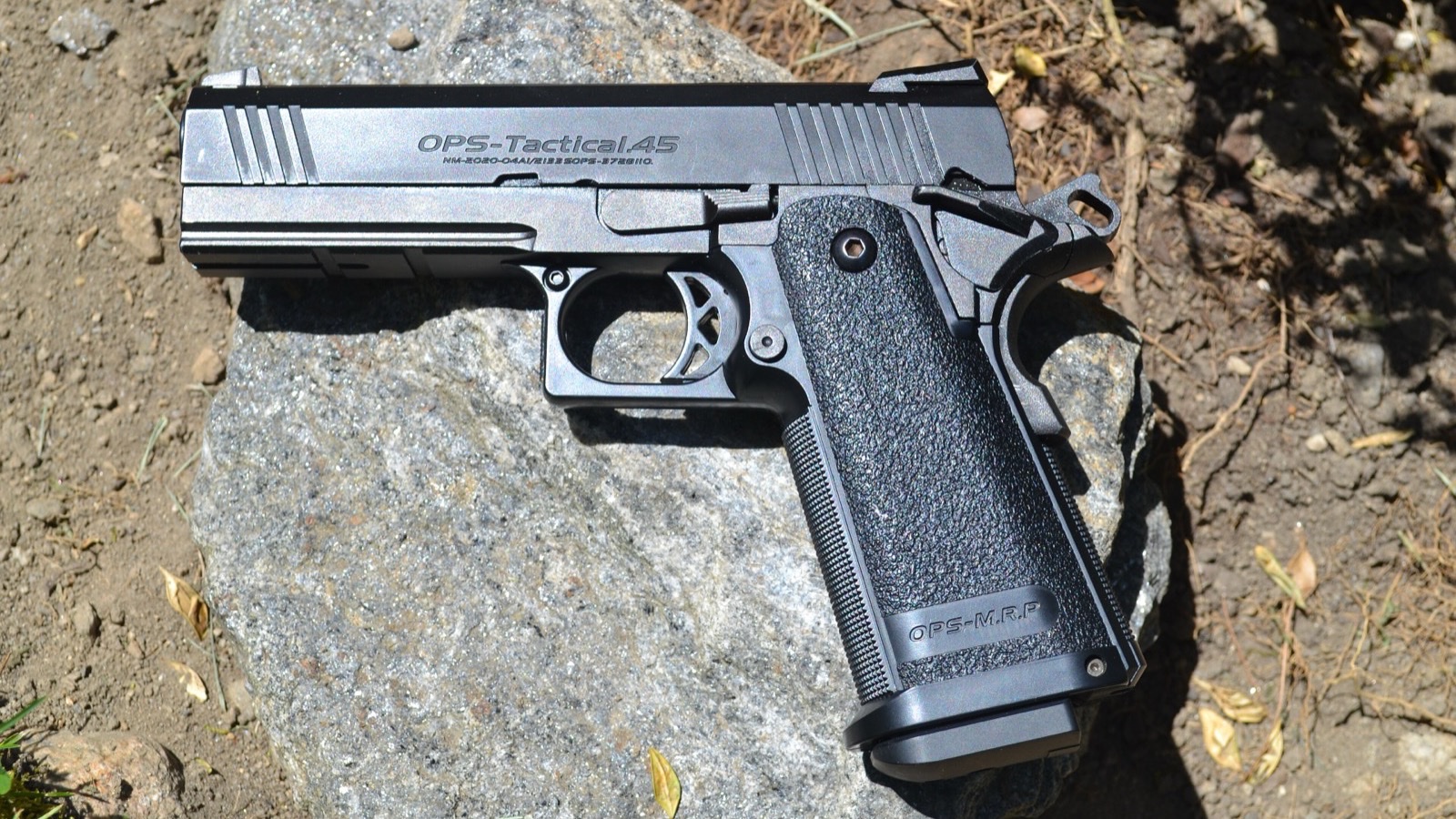
The catch is that airsoft can’t teach you to handle real recoil and noise. Our airsoft vs. real gun training guide explains which habits transfer and which don’t. Use the GBB to make the clean press automatic, then go back to live fire with doubled ear protection and a snap cap in every magazine.
Find Your Flinch Threshold With a Shot Timer
Most flinches are speed-dependent: you can shoot a clean group slowly, then the push comes back as soon as you try to go fast. A shot timer lets you find the exact pace where that happens, and the Airsoft Shot Timer App can do it with your phone at the range or on an airsoft target at home.
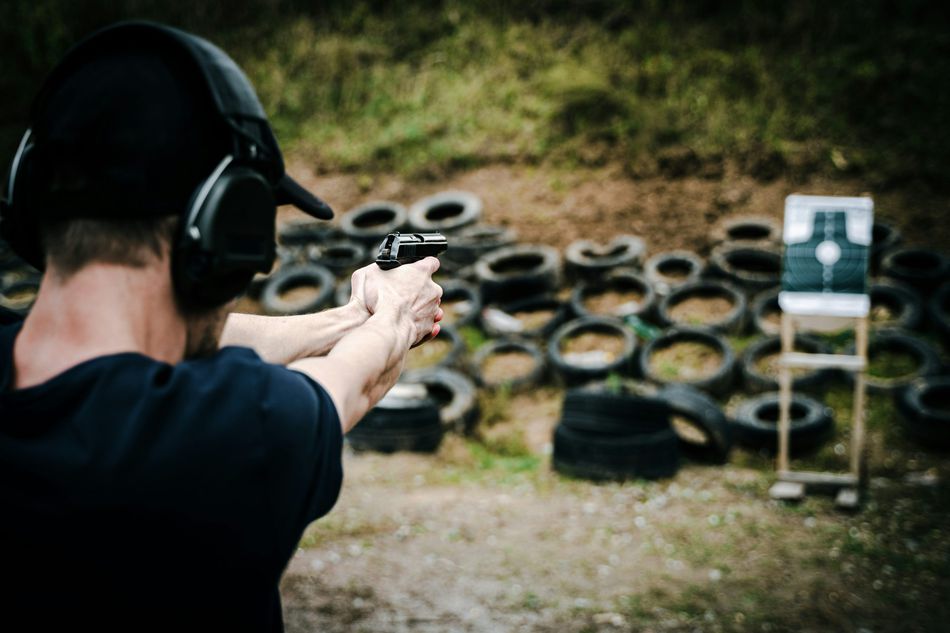
Set up one target at 7 yards (or 5 metres for airsoft). Shoot five-shot groups at three paces, one shot per beep. Start with a relaxed rhythm of about two seconds a shot, then one and a half, then one. The App lets you set more than one par time, so you can program a beep at each interval. Keep the random start delay on so you aren’t also bracing for the start signal. Photograph each group.
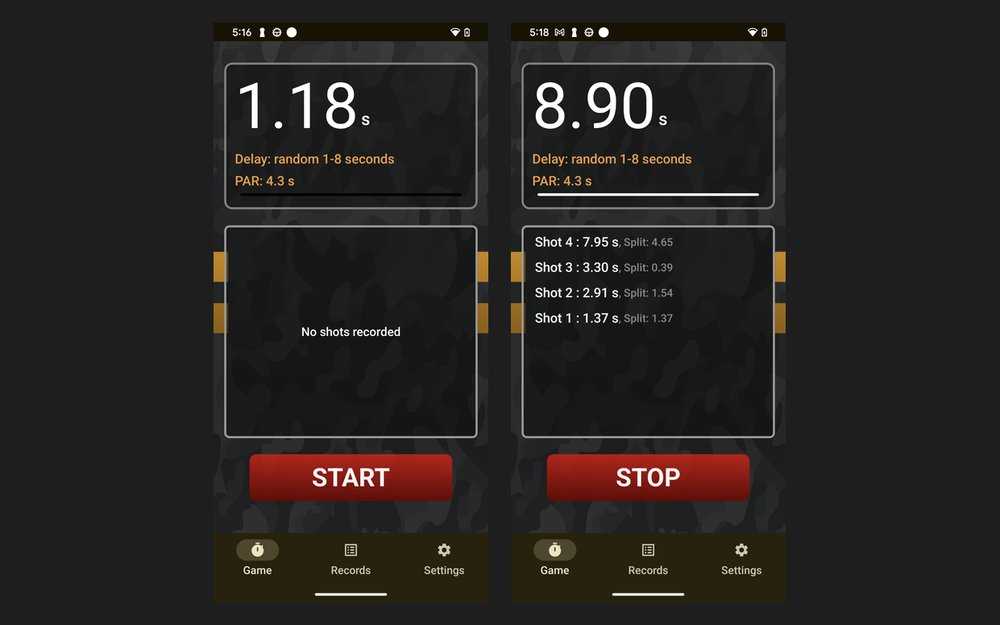
When you compare the photos, you’ll usually see the groups stay centred at the slow paces and then suddenly drop low at one particular speed. That pace is your flinch threshold. Do most of your practice just below it, with clean presses, and nudge the pace down only when the group stays centred for a whole session. Over a few weeks the threshold moves faster, and you have the numbers to prove it.
Frequently Asked Questions
Why do I flinch even though I know the gun is empty?
Because the flinch is a trained habit tied to the trigger press, not a conscious decision. Your hands have learned “press equals bang” and brace automatically. That’s why dry fire with your attention on a still front sight works: it teaches the hands a new pattern where the press doesn’t come with a brace.
Is it bad to blink when you shoot?
Not on its own. The bullet has left the barrel before your eyes can close, so blinking at the shot doesn’t move the hit. It does stop you from calling the shot and seeing the sights lift, though, so with practice and good hearing protection most shooters learn to keep their eyes open through the break.
Why am I shooting low left?
For a right-handed shooter, low left is the classic sign of anticipating the shot combined with squeezing the whole hand as you press. It can also come from too much or too little finger on the trigger, so confirm with a ball-and-dummy drill and check the target diagnosis chart in our pistol aiming guide.
How long does it take to stop flinching?
Most shooters see a clear improvement in two to four weeks of daily dry fire plus ball-and-dummy work at the range. A flinch that has been there for years can take longer. Expect it to creep back when you shoot a louder gun or try to go faster, and treat that as a sign to slow down, not as failure.
Does a heavier gun help with flinching?
A heavier or lower-recoiling gun makes each shot less punishing, which helps you build confidence, and a steel-framed pistol or a compensated gun can be easier to shoot well. It doesn’t remove the habit, though. If you brace for the shot, you’ll brace with any gun, so pair the gentler setup with the drills above.
The Bottom Line
A flinch only hurts the shots you push before the break, and a push of a millimetre is all it takes at distance. Prove it with ball-and-dummy, quiet the blast with better hearing protection, rebuild a clean press with dry fire or a GBB, then use paced par times to find the speed where your flinch comes back and practise just below it.
Download the free Airsoft Shot Timer App, set three par times and run the five-shot threshold test this week. The group that drops will show you exactly where to start.
Sources: the distinction between anticipating the shot and anticipating the recoil from Joe Farewell, “2 Types of Recoil Anticipation,” Tactical Hyve on YouTube; patience, breathing and dry-fire advice from Chris Sajnog, “How Can I Stop Flinching or Anticipating?” on YouTube; target zone sizes from our USPSA and IPSC target dimensions guide. Barrel-time and impact-shift figures calculated by us from a 360 m/s muzzle velocity, a 4-inch barrel and a 165 mm Glock 17 sight radius.
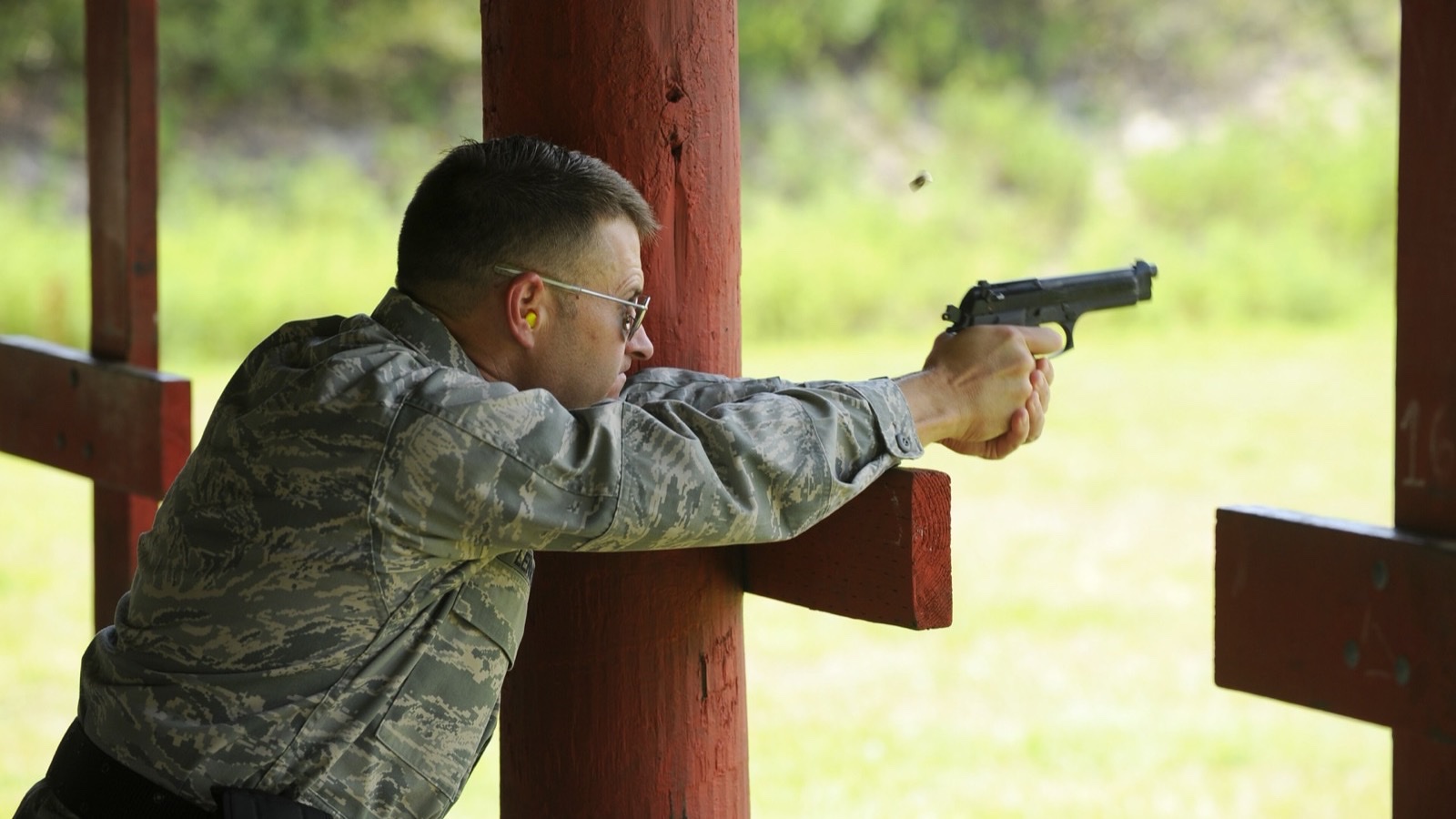
Image credits: cover — Col. Gregory Lengyel shooting M9 by SrA Jason Epley, U.S. Air Force, public domain; snap caps — Snap caps by WDavis1911, CC BY-SA 3.0; GBB pistol — Tokyo Marui Hi-Capa 4.3 by Dwt110, CC BY 3.0; range and App screens — Airsoft Shot Timer. Images cropped to 16:9.


Put a Shot Timer in Your Pocket
Airsoft Shot Timer is a free shot timer app tuned for airsoft and Action Air — it picks up BB gun shots, tracks your split times, and saves you the cost of a $150+ hardware timer for IPSC/IDPA practice.