Tueller Drill & the 21-Foot Rule: What the Timer Data Says
The Tueller Drill in 60 seconds (BLUF)
- What it is: A reaction-time drill. An attacker starts 21 feet (7 yards) away; you start with the gun holstered. If you can’t draw and get hits before they reach you, the distance was too short.
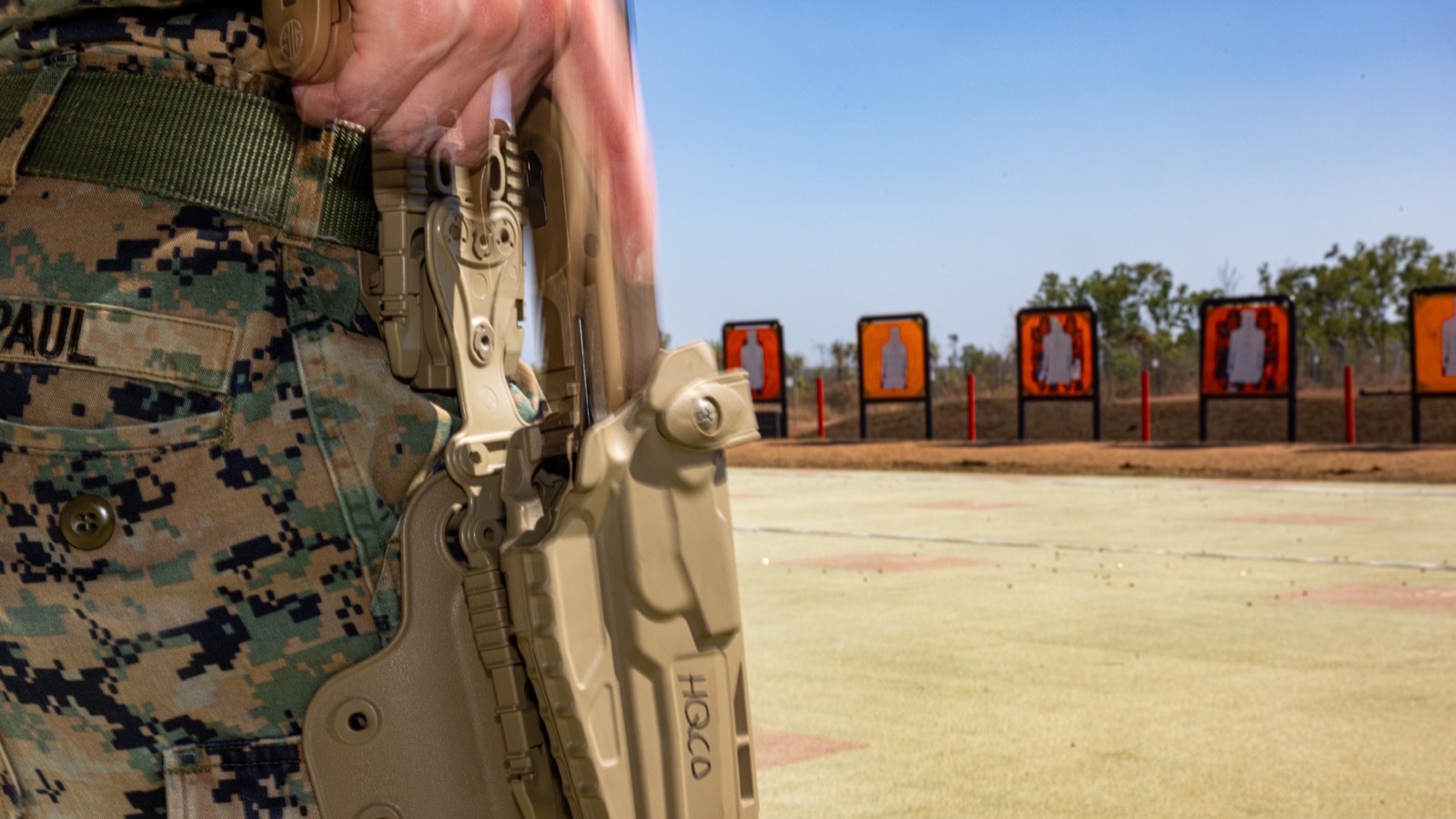
- The original numbers: Dennis Tueller’s 1983 article said an average healthy adult covers 7 yards in about 1.5 seconds, and that drawing and putting two center hits on a target at 7 yards in about 1.5 seconds was an acceptable standard for a trained shooter. Same number on both sides — that’s why 21 feet became famous.
- What later testing found: A 2020 study timed 76 runners at an average of 1.50 s for 21 feet (range 1.24–1.83) and 152 officers at an average of 1.80 s from signal to shot. On average, the runner wins.
- The rule of thumb nobody prints: Near the end of those 21 feet the runner is moving about 20 feet per second, so every extra tenth of a second on your draw costs roughly two feet.
- What it is not: It is not a legal rule and not a license to shoot anyone inside 21 feet. Tueller himself said “21-foot rule” was never his phrase.
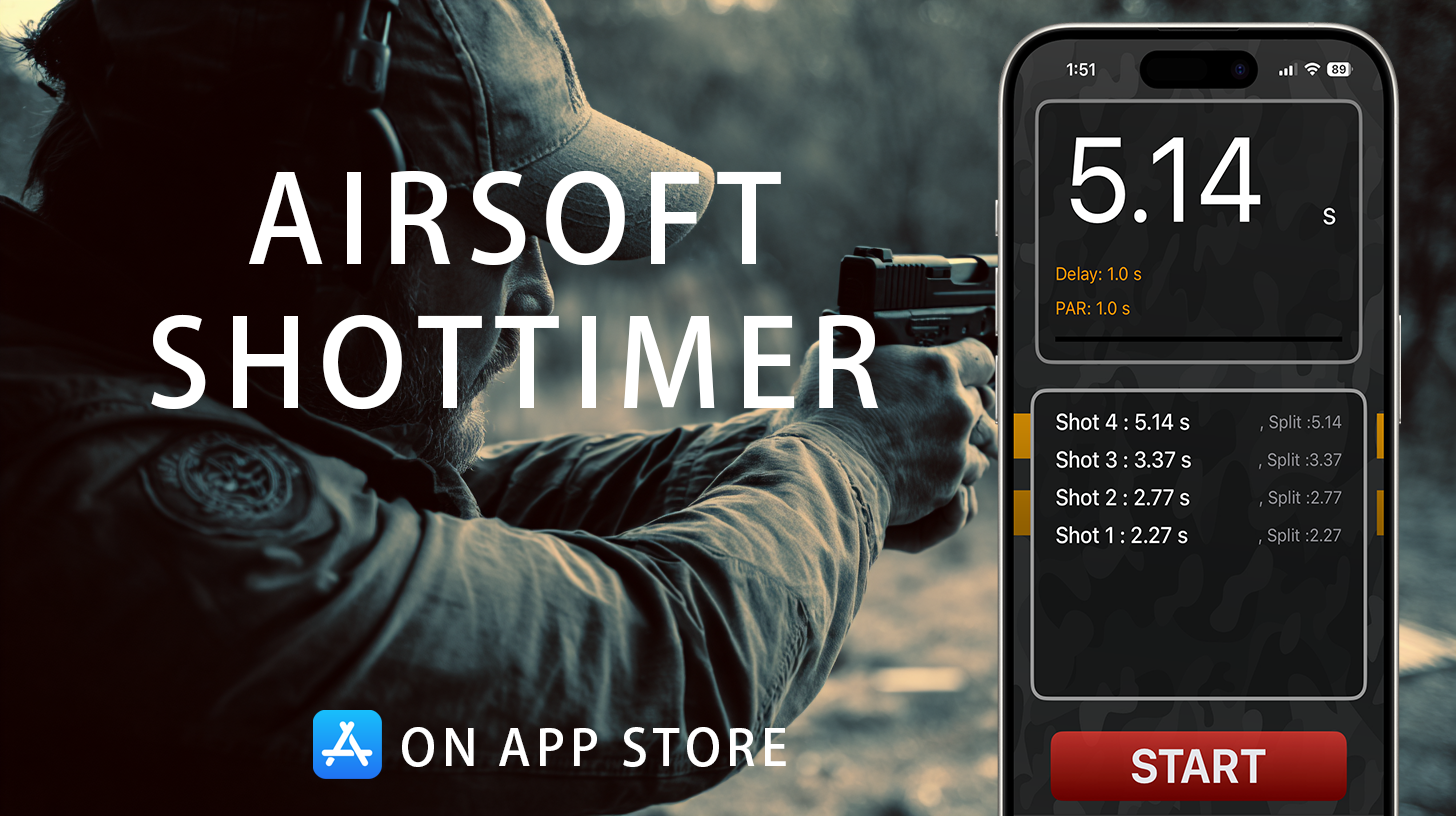
- How to train it: Solo: 7 yards, par 1.5 s, two hits, random start delay. A free shot timer app gives you the beep and the par buzzer, and it works for live fire, dry fire, and airsoft.
The Tueller Drill is the most famous number in defensive pistol training, and probably the most misquoted. People say “21 feet” as if it were a law of physics, or a legal line, or a guarantee. It’s none of those. It’s a measurement of two things racing each other: how fast a person can sprint from a standing start, and how fast you can get a pistol out of a holster and onto a target. Change either one and the distance changes with it.
That makes it a perfect shot timer drill. The attacker’s side of the race has been measured several times by now. Your side of the race is a number you can put on a timer this week. Once you have it, you can stop asking “is 21 feet true?” and start asking the better question: how much distance does my draw actually need?
What Is the Tueller Drill?
The Tueller Drill is a test of whether a shooter can draw and fire accurately before an attacker standing 21 feet away can close the gap. It comes from Salt Lake City police firearms instructor Dennis Tueller, who described it in an article called “How Close Is Too Close?” in the March 1983 issue of S.W.A.T. Magazine. At the time he was assigned to the Salt Lake City Police Academy and also taught part time at Gunsite.
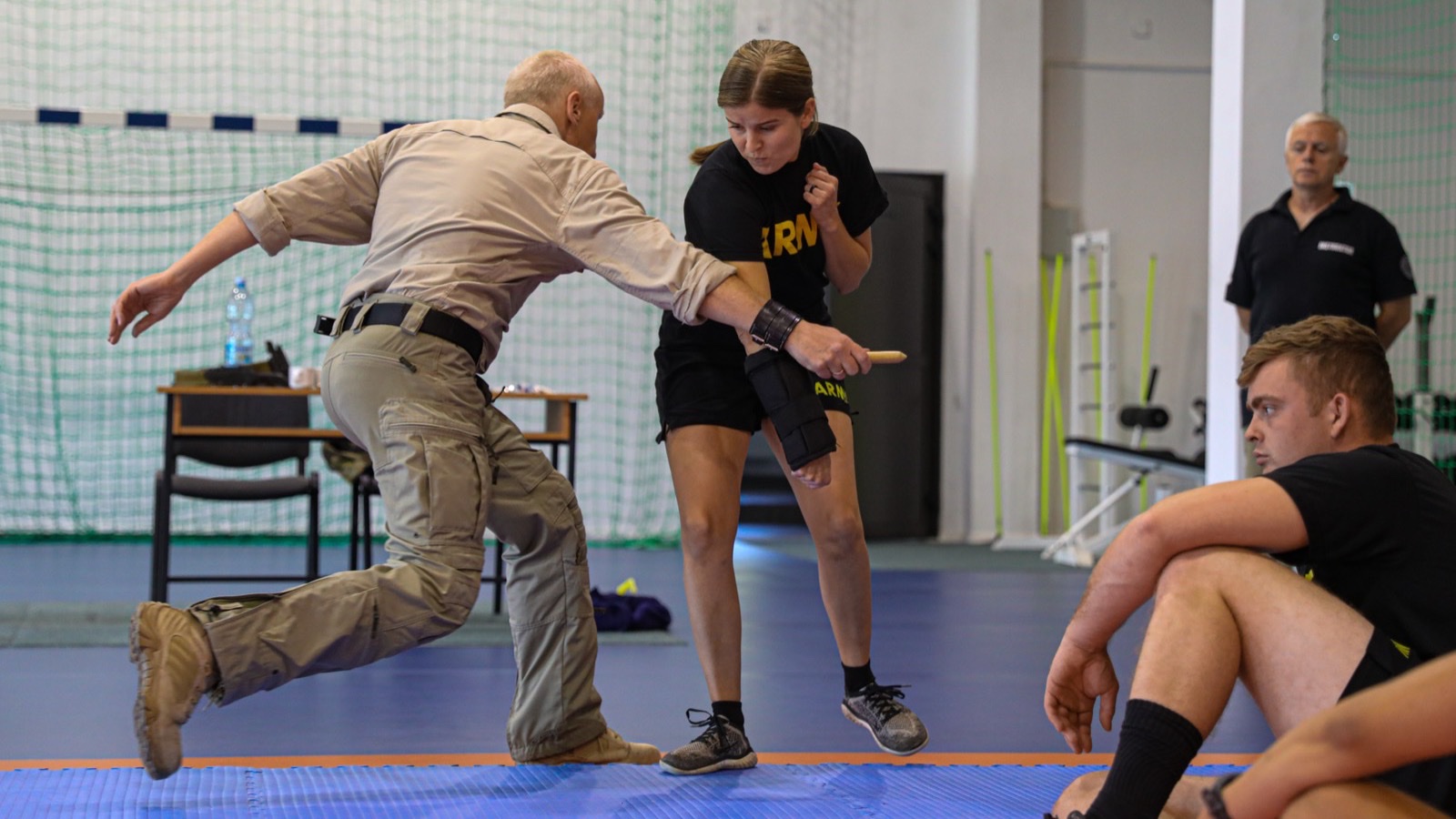
The idea came out of a simple experiment. Tueller put students 21 feet apart, one acting as the attacker, and timed how long the run took. His trainees were young and old, men and women, and the answer kept landing around one and a half seconds. He then compared that with what a trained officer needed to draw from a duty holster and shoot. The two numbers were about the same, which meant that at 21 feet, a sudden attack was a coin flip at best.
His advice in the original article is worth reading because it’s more practical than the legend. Seven yards, he wrote, is a distance where an attacker with a knife or club is a deadly threat, not a distant one. He told officers to take a big step back while drawing, which “puts another three to four feet” between you and the attacker, and to use cover, spot trouble early, and give verbal commands. He never presented 21 feet as a magic boundary. In a later interview with the Armed Citizens’ Legal Defense Network he said plainly: “The term ‘21-foot Rule’ was not one I used.”
Is the 21-Foot Rule True? What the Testing Shows
Mostly yes on the runner’s side, and mostly optimistic on the shooter’s side. Two sources are worth knowing by name.
The first is the Force Science Institute, which ran its own version of the test in 2005. Their average officer, drawing from a Level II retention holster on a signal, needed about 1.5 seconds to fire one unaimed round, with a quarter second more for a second shot and about another tenth to get a flash sight picture. The fastest officer was 1.31 seconds, the slowest 2.25, and a Level III holster pushed the average to 1.7. On the other side of the race, an average subject armed with a knife covered 21 feet from a standing start in 1.5 to 1.7 seconds; the fastest did it in 1.27 and the slowest in 2.5. Force Science also pointed out that at 10 feet the attacker is less than half a second away.
The second is a peer-reviewed study by Sandel, Martaindale and Blair, published in Police Practice and Research in 2020 under the title “A scientific examination of the 21-foot rule.” They used laser timing gates on 76 runners: 1.50 seconds on average for 21 feet, with a range of 1.24 to 1.83 and very little spread. Then they timed 152 officers drawing and firing. Without stress the average was 1.80 seconds (median 1.73, range 1.03 to 3.4), and 14% missed the silhouette entirely. Under stress — the officers were being shocked by a training knife — the draw got faster at 1.43 seconds on average, but 12% couldn’t finish the draw at all and only 76% of shots hit. Their conclusion was that the two people would need to be about 32 feet apart for 95% of officers to fire in time.
So the original 1.5 seconds holds up well for the runner. For the shooter, 1.5 seconds turns out to be a good trained standard, not an average. Most people who carry a gun are slower than that, especially from concealment. For a full breakdown of draw times by carry position, see our guide to average pistol draw time.
Your Draw Time Decides Your Distance
Here is the part the SERPs usually skip. Because the runner accelerates from a standstill, distance doesn’t grow in a straight line with time. The first second is slow, and then the attacker is moving fast. If you model a sprinter’s acceleration and fit it to the measured averages (an average runner covering 21 feet in 1.50 seconds, a fast one in 1.24), you can turn any draw time into the distance the attacker covers while you draw.
| Your time from signal to first hit | Average runner covers | Fast runner covers |
|---|---|---|
| 1.00 s | 11 ft (3.4 m) | 15 ft (4.7 m) |
| 1.25 s | 16 ft (4.9 m) | 21 ft (6.5 m) |
| 1.50 s | 21 ft (6.4 m) | 27 ft (8.4 m) |
| 1.80 s | 27 ft (8.3 m) | 35 ft (10.7 m) |
| 2.00 s | 32 ft (9.7 m) | 40 ft (12.3 m) |
| 2.50 s | 43 ft (13.0 m) | 53 ft (16.2 m) |
Estimates from a standard sprint acceleration model fitted to the 2020 study’s 1.50 s average and 1.24 s fastest runs. Treat the numbers as a guide, not a measurement of any one person.
Read the table from your own number, not from the famous one. The 1.80-second line is the 2020 study’s unstressed officer average, and it needs 27 feet against an average runner. A 2.0-second draw lands at 32 feet, which is the same distance the study arrived at for 95% of officers. That agreement is a good sign that the model is in the right range.
The more useful lesson is the slope. By the time an average runner reaches the end of 21 feet, they’re moving at roughly 6.3 meters per second, or about 20 feet per second. So each tenth of a second you shave off your draw is worth about two feet of distance, and every tenth you add costs two feet. That’s also why Tueller’s “big step back” mattered: three or four feet is the same as being 0.15 to 0.2 seconds faster.
And remember the table is generous to you. In the drill, both people start on the same beep. In real life the attacker chooses the moment and you have to notice it first, and a quarter second of perception and decision is a realistic cost. Add it to your time before you read the table.
How to Run the Tueller Drill With a Shot Timer (Solo)
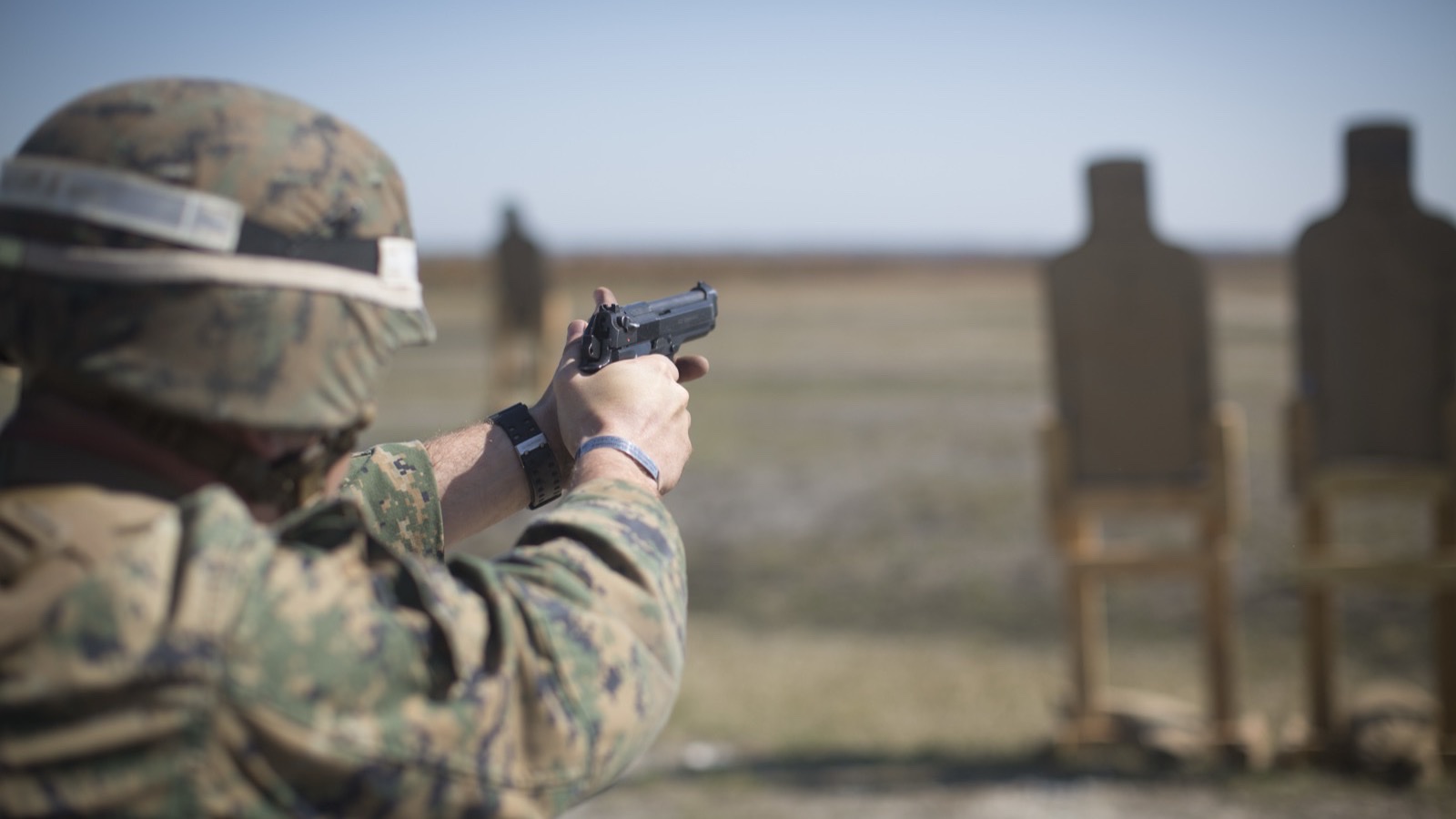
The solo version is a 7-yard draw-and-shoot drill on a par time, and you can run it this week. Set one silhouette or IPSC target at 7 yards (21 feet). Start in your normal carry setup, hands relaxed at your sides or in a natural position. On the beep, draw and fire two rounds into the center of the torso. If the second hit lands before the par buzzer and both are inside the A-zone or the 8-inch center circle, the run passes.
Use a random start delay. If the beep always comes three seconds after you press start, you’ll learn to anticipate it, and the drill stops measuring reaction. The Airsoft Shot Timer app has a random delay setting and a par time buzzer, and it records the time of your first and second shot so you can see whether you’re losing time on the draw or on the follow-up.
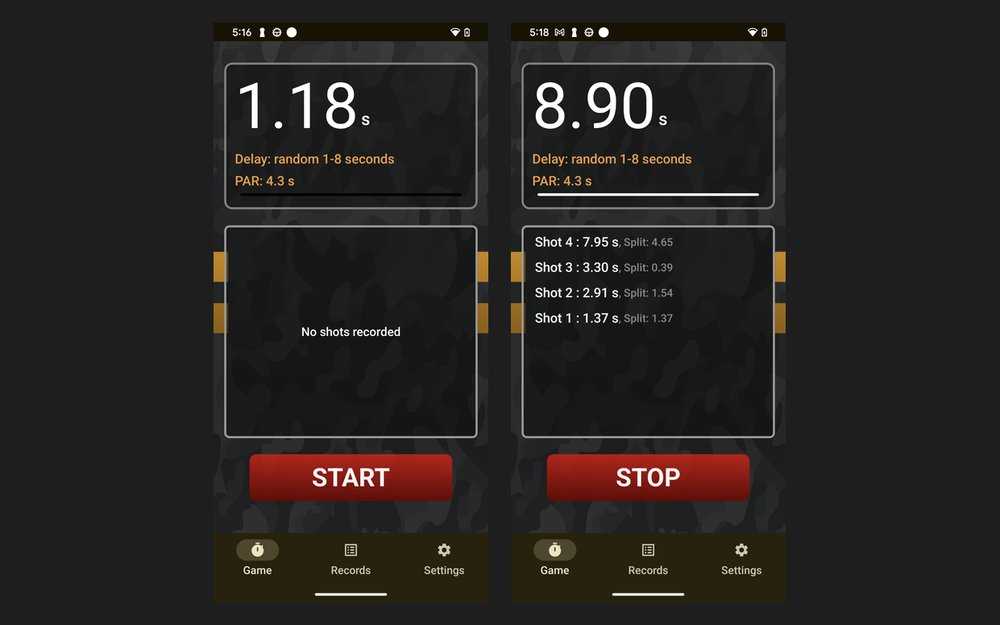
Work down a ladder rather than starting at 1.5 seconds. Begin at a 2.0-second par and stay there until you can pass ten runs in a row with clean hits. Then go to 1.8 (the average officer in the 2020 study), then 1.5 (Tueller’s standard), and if you get there from concealment, 1.25 is the line where you’d beat even the fast runner at 21 feet. Log the misses, not just the times. The 2020 study is a good reminder that a fast draw with a miss counts as zero.
Then add the step. Tueller’s advice was to move while you draw, and the 2020 study tested it with 137 participants: standing still, the shooter got touched 33% of the time; moving forward at 45 degrees, 25.6%; moving straight back, 7.7%; moving laterally, only 5.3%. Run the same par time with a hard step off the line to your strong side or support side before the shot. It’ll cost you some time at first. Once the step and the draw happen together, it costs almost nothing, and it changes the geometry far more than any tenth of a second can.
Partner Versions: Back-to-Back and Force on Force
The partner version shows you the distance instead of telling you about it. The classic setup is back-to-back: the shooter faces the target at 7 yards, and the runner stands behind the shooter, facing the opposite direction. On the beep, the runner sprints away from the shooter and the shooter draws and fires. A third person marks where the runner is at the moment of the first hit. Put cones every three feet along the runner’s lane and you’ll get a clean read without a tape measure. Nobody ever runs toward a gun, which is why this version works on a live-fire range.
Expect it to be humbling. Most people watch the runner stop well past 21 feet on their first few tries and realize the race was never close. That moment is the drill’s real value: it turns a number from an article into a distance you’ve seen with your own eyes.
Airsoft opens up a second version that’s normally reserved for police training: actual force on force, with a runner charging the shooter holding a rubber training knife and the shooter engaging with a gas blowback pistol. Police instructors have used airsoft for exactly this for years. The safety rules matter more than the drill. Everyone wears full-face protection rated for airsoft, gloves, and covered skin at the throat and groin, a dedicated safety officer checks that no real weapons are present, and the shooter uses a low-power pistol, because the whole drill happens inside any field’s minimum engagement distance. Our airsoft rules guide explains why fields set MED where they do and what that means for close-range shots.
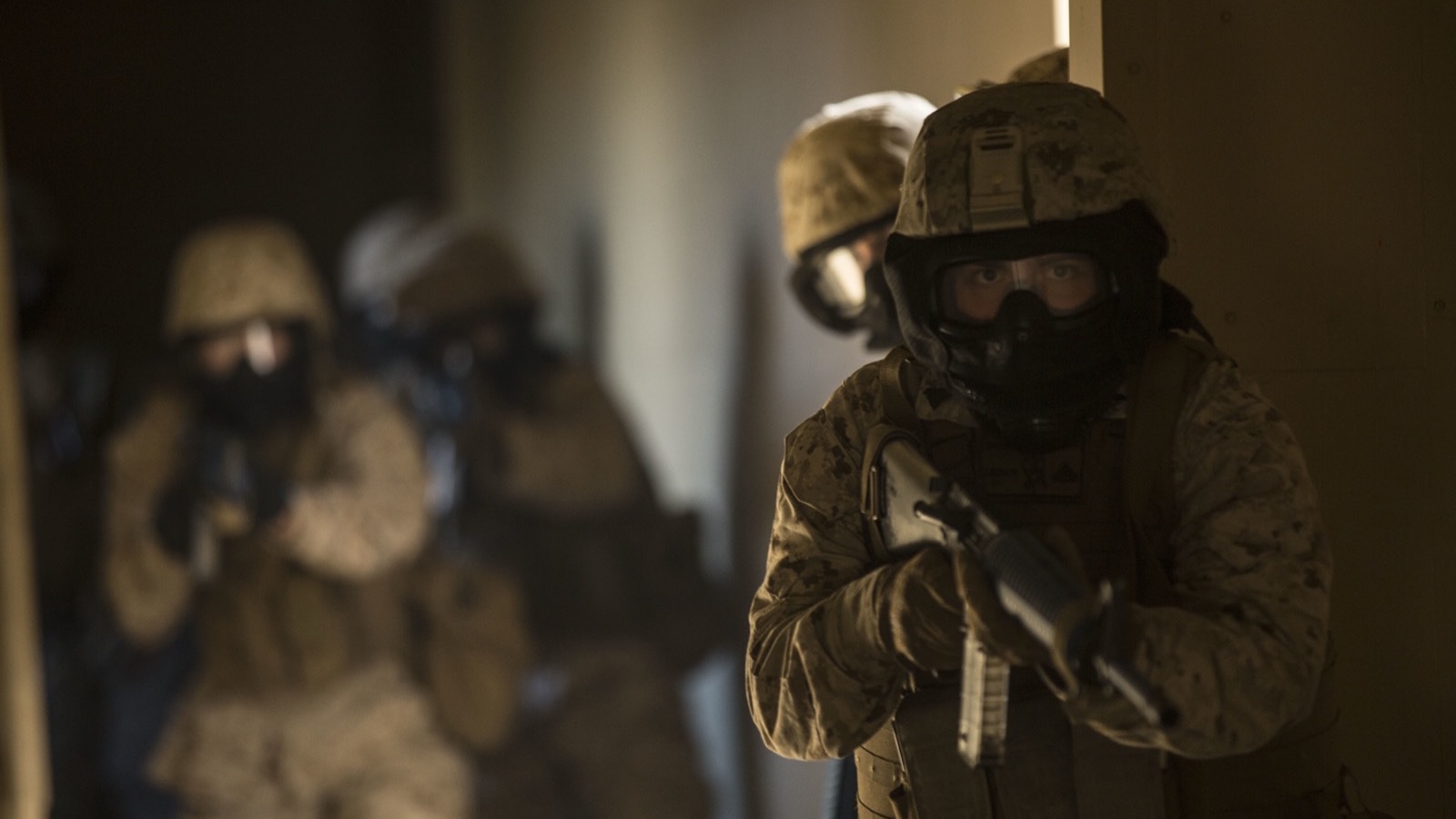
The force-on-force version also teaches the lesson most people miss. Even when you “win” the draw, a determined attacker who’s already moving often still arrives. That’s why trainers like ITS Tactical run it with the shooter moving off the X and keeping the drill going for at least 15 seconds, so you don’t learn to fire twice and stand still.
What the 21-Foot Rule Doesn’t Mean
The 21-foot rule is a teaching tool about reaction time, not a legal standard. Force Science made the point as early as 2005: a person with a knife inside 21 feet is a potential threat; it takes an action, like a charge, to make them an actual one. The opposite mistake also happens. In Buchanan v. City of San Jose (9th Circuit, 2019), the court found an officer’s use of force reasonable against a knife-armed man roughly 55 feet away and wrote that it doesn’t follow from the rule “that armed suspects never pose a threat beyond 21 feet.”
For shooters, the practical reading is simple. Treat 21 feet as a reminder of how little time you have, not a line on the ground. If your timer says 2.0 seconds, your gap is closer to 32 feet. If you carry concealed under a jacket, it’s longer still. This isn’t legal advice, and use-of-force law varies by jurisdiction; the drill can only tell you about time and distance.
Frequently Asked Questions
What is the Tueller Drill?
The Tueller Drill is a reaction-time exercise created by Salt Lake City police instructor Dennis Tueller and published in 1983. An attacker starts 21 feet away and charges; the defender starts with a holstered pistol and tries to draw and get hits before the attacker arrives. It shows that a sudden attack from 21 feet can close in about the time it takes a trained shooter to draw and fire.
Can the average person run 21 feet in 1.5 seconds?
Yes. A 2020 study using laser timing gates measured 76 runners at an average of 1.50 seconds for 21 feet, with the fastest at 1.24 and the slowest at 1.83 seconds. Force Science’s 2005 testing found 1.5 to 1.7 seconds on average for a subject holding a knife.
Is the 21-foot rule true?
The runner’s time holds up well, but the shooter’s time was optimistic. Tueller’s 1.5 seconds was a standard for a trained shooter, while measured officer averages were about 1.8 seconds without stress. Using those numbers, researchers estimated about 32 feet would be needed for 95% of officers to fire in time.
What is the 21-foot rule in law enforcement?
It’s a training guideline about the reactionary gap: an attacker with a knife or club at 21 feet or closer can reach an officer before the officer can draw and fire. Some agencies wrote it into training or policy, but courts have said it doesn’t define when force is or isn’t justified.
How do you practice the Tueller Drill alone?
Set a target at 7 yards, start holstered, and use a shot timer with a random start delay and a par time. Draw and fire two center hits before the par. Start at 2.0 seconds, work down to 1.8 and then 1.5, and add a lateral step off the line once the draw is consistent. It works in dry fire and with an airsoft pistol as well as with live fire.
The Takeaway
The Tueller Drill isn’t really about 21 feet. It’s about the trade between your draw time and the distance you need, and that trade is about two feet for every tenth of a second. Put your own draw on a timer, find your line in the table, and train the step off the line until it’s automatic. A free shot timer app is all you need to start, and our Bill Drill guide and draw time standards are the natural next steps once your first shot is fast.
Image credits: cover — U.S. Marine Corps photo by Cpl. Juan Torres; training knife — U.S. Army photo by Staff Sgt. Jennifer Reynolds; pistol range — Cpl. Andrew Kuppers, U.S. Marine Corps; force on force — U.S. Marine Corps photo by Pfc. Larisa Chavez. U.S. government photos are public domain, via Wikimedia Commons, resized and cropped to 16:9. App screen from our own shot timer app guide.


Sources: Dennis Tueller, “How Close Is Too Close?”, S.W.A.T. Magazine, March 1983; Force Science Institute, “Is the 21-foot rule still valid when dealing with an edged weapon?” parts 1–2 (2005); Sandel, Martaindale & Blair, “A scientific examination of the 21-foot rule,” Police Practice and Research (2020); Buchanan v. City of San Jose, 9th Cir. (2019).
Put a Shot Timer in Your Pocket
Airsoft Shot Timer is a free shot timer app tuned for airsoft and Action Air — it picks up BB gun shots, tracks your split times, and saves you the cost of a $150+ hardware timer for IPSC/IDPA practice.