Tokyo Marui MP7A1 Review 2026: GBB or AEG? All 5 Airsoft MP7s Compared
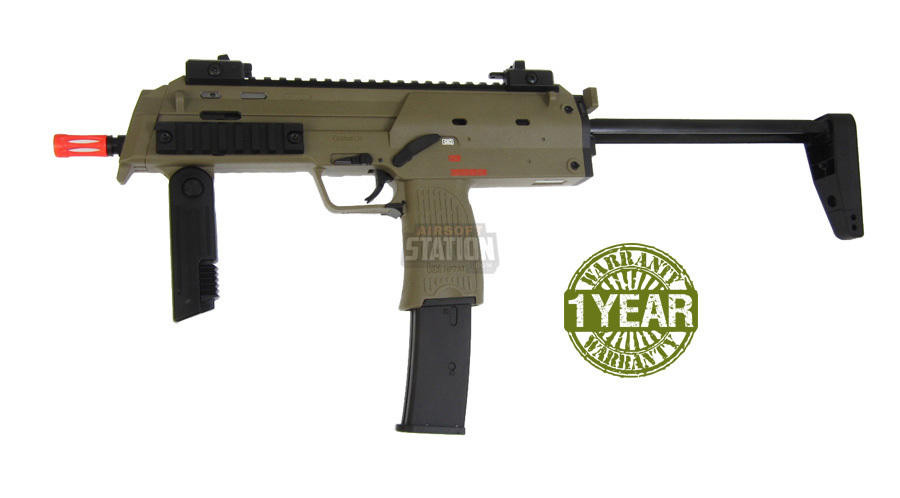
60-Second BLUF: Is the Tokyo Marui MP7A1 Still Worth Buying in 2026?
Short answer: yes — if your primary playstyle is indoor CQB and you value shooting feel over external authenticity. Even after more than a decade on the market, the TM MP7A1 GBB remains the benchmark airsoft MP7 for hop-up accuracy, gas efficiency in 15-25°C weather, and that signature “small gun, surprisingly hard kick” blowback feel. Street price in 2026 sits around US$340-400 / NT$11,000-13,500 (TW market), which puts it roughly US$60-100 above the KWA MP7 but US$80-150 below the licensed VFC MP7A1 Gen 2.
Skip it if: you mostly play 40m+ outdoor woodland (KWA’s higher FPS or a full-size rifle makes more sense), you need 1:1 H&K-trademarked external authenticity (only VFC Gen 2 delivers that), or you live somewhere with consistent sub-10°C winters (any GBB struggles).
Buy it if: you spend 70%+ of your trigger time in indoor CQB or speedsoft, you’ve ever felt your M4 catch on a doorframe during a breach, or you want a GBB long gun that’s actually usable in a Tier-1-style aggressive room-clearing flow.
Jump straight to → GBB or AEG? · All Five Licensed MP7s · What Caliber Is the Real MP7 · TM vs KWA vs VFC Gen 2 · Shot Timer Drills · Taiwan & APAC Procurement Notes · FAQ
30-Second Quick Picks: Best MP7 by Use Case
If you don’t want to read all 2,500 words, here is the cheat sheet for picking the right MP7 for the way you actually play in 2026:
- Best Overall CQB Performer → Tokyo Marui MP7A1 GBB (US$340-400). The most accurate hop-up, hardest kick per gram, and best gas efficiency of the three brands. Default recommendation for 90% of indoor players.
- Best Budget High-FPS Outdoor Build → KWA MP7A1 (US$240-290). Pushes ~400 FPS on green gas out of the box, magazines are cheaper, but hop-up is less refined and external scale is still undersized.
- Best Collector/Mil-Sim Looks → VFC MP7A1 Gen 2 (US$420-550). Only 1:1 true-scale option with full HK trademarks; Gen 2 fixed many of the original VFC reliability gremlins but trigger feel still trails the TM.
- Best MP7 If You Don’t Want Gas → Tokyo Marui MP7A1 Electric Compact (~US$180-250 used/imported). Yes, Marui makes an MP7A1 AEG as well as the GBB, and almost nobody reviews it. See the GBB or AEG breakdown below before you buy either.
- Best for Outdoor Skirmish → Skip the MP7 entirely. A standard M4 or HK416 platform will outrange and outshoot any airsoft MP7 in a 40m+ field.
- Best for First-Time GBB SMG Buyer → Tokyo Marui MP7A1, paired with at least 3 spare mags and one warm-pocket-storage strategy.
Gas or Electric? Tokyo Marui Sells Two Different MP7A1s
Here’s the thing almost every MP7 review quietly skips, and it’s the reason a lot of first-time buyers end up with the wrong gun: when you search “Tokyo Marui MP7A1,” you are actually looking at two completely separate products that share a name and nothing else. There’s the gas blowback everyone talks about, and there’s the MP7A1 Electric Compact Machine Gun — an AEG that Marui has been quietly selling since February 2006, at roughly half the price, and which barely anyone on YouTube bothers to cover.
The numbers tell you immediately who each one is for. The electric version is 380mm collapsed and 590mm with the stock out — identical external dimensions to the GBB — but it weighs 1,480g with the battery installed versus the GBB’s 2,200g, feeds from a 50-round magazine instead of 40, and chronos around 75.5 m/s (roughly 248 FPS on 0.20g, about 0.57 joules) with a cyclic rate near 700 rounds per minute. Japanese retail is ¥28,800 before tax for the full set, which lands somewhere around US$180-250 depending on where you import from. The GBB, by comparison, sits at US$340-400 and hits 330-350 FPS on green gas.
So which one do you actually want? The honest answer depends less on budget than on what you’re chasing. If what draws you to the MP7 is the feel — the sharp little kick, the bolt cycling in your hand, the way a GBB forces you to manage gas and mags like a real weapon system — buy the gas gun and never look back. The AEG has no blowback at all; it’s a non-recoiling electric gun in an MP7 shell, and no amount of upgrading changes that. But if you play indoor CQB in a cold climate, if your site caps you under 300 FPS anyway, or if you simply want an MP7-shaped gun that works every single game day without warming magazines in your armpit between rounds, the electric compact is a genuinely sensible buy that nobody recommends because it isn’t exciting to film.
The AEG’s real weakness is its power source. It runs a 7.2V micro battery that lives above the inner barrel, behind the front cap — you have to pull the cap off to swap it — and that tiny pack is why the semi-auto trigger response feels sluggish compared to a proper full-size AEG. Owners routinely describe it as “half a beat behind your finger.” Accuracy, on the other hand, is Marui accuracy: roughly 3cm groups at 9 meters indoors is a realistic expectation with a decent optic, which is more than enough to win a corridor fight. The selector is also easy to misread, and more than one player has walked into a room intending to tap two and dumped eight instead.
One more thing worth knowing before you go hunting for one: Marui’s MP7 AEG is the only airsoft MP7 that accepts a direct HPA engine drop-in — the PolarStar JACK fits it without custom work. That’s why used prices haven’t collapsed the way you’d expect for a twenty-year-old electric gun. It’s also the only MP7 in the family that offers a short, low-profile PDW magazine alongside the extended stick; every gas MP7 on the market gives you the full-size magazine and nothing else. If you’ve ever tried to go prone or sit in a vehicle with an MP7, you’ll understand why that matters.
Why the MP7 Is the Ultimate CQB Weapon
If you’ve ever spent a full day at an indoor CQB field, you’ve probably noticed something: the players who consistently outmaneuver everyone in tight corridors aren’t usually carrying full-size rifles. More often than not, they’re running a compact SMG — and the MP7 is one of the most popular choices in that category.
The Tokyo Marui MP7A1 GBB is one of the most iconic MP7 replicas on the airsoft market. It’s not just a good-looking model gun — the punchy blowback kick, compact form factor, and Tokyo Marui’s legendary hop-up accuracy make it a genuinely tactically advantageous weapon in CQB environments. Many players who pick up an MP7 for the first time find it hard to go back to anything else.
This guide covers everything from real-steel history to the airsoft version’s specs, handling feel, upgrade options, and how to maximize the MP7’s potential in actual gameplay — plus a 2026 honest re-evaluation of whether it still earns its slot in your gun locker.
What Caliber Is the MP7A1? 4.6×30mm Explained
A surprising number of new airsoft buyers Google “what caliber is the MP7” before pulling the trigger on a replica, so let’s settle this clearly: the real HK MP7A1 fires the 4.6×30mm cartridge — a small-caliber, high-velocity round developed specifically for this gun.
Heckler & Koch engineered the 4.6×30mm to defeat CRISAT-standard body armor (titanium plate + 20 layers of Kevlar) at 200 meters, which is something the 9×19mm Parabellum used in most SMGs simply cannot do. The bullet weighs about 2 grams, leaves the barrel at roughly 720 m/s from a standard MP7A1, and produces around 525 joules of muzzle energy. For comparison, a 9mm pistol round delivers around 500 joules but has terrible armor penetration; the 4.6×30mm is essentially a miniature rifle round.
Why does this matter for airsoft? Two reasons. First, it explains why every airsoft MP7 magazine is so narrow — they’re modeled on the real 20/30/40-round 4.6×30mm magazines, which are slimmer than 9mm SMG magazines. Second, the 4.6×30mm’s high velocity is why the real MP7 has such a short, “snappy” recoil pulse — and that’s the recoil character the Tokyo Marui blowback engine is trying to replicate. When people say the TM MP7A1 “kicks above its weight,” what they’re really feeling is Marui’s attempt to mimic the original gun’s high-pressure, short-stroke gas system.
The only competing PDW cartridge worth mentioning is the FN 5.7×28mm used in the FN P90 — slightly larger but very similar in concept and battlefield role.
The Real HK MP7: Built for Special Forces
To understand why the MP7 is so popular in the airsoft world, we need to look at its real-steel origins. Heckler & Koch began developing the MP7 in the late 1990s in response to a NATO requirement published in 1989 — they needed a submachine gun-type weapon capable of defeating Kevlar body armor.
The first prototype appeared in 1999, entering production in 2001 as the MP7. In 2003, it was redesigned and designated the MP7A1, featuring a reshaped pistol grip, a more compact stock, and standard-issue side-mounted Picatinny rails. The MP7A1 fires the purpose-built 4.6x30mm cartridge — a small-caliber, high-velocity round that can penetrate CRISAT-standard titanium and Kevlar composite armor at 200 meters.
What truly cemented the MP7’s legendary status was its adoption by elite special operations units worldwide. Reports suggest that DEVGRU (SEAL Team Six) operators carried MP7s during the 2011 raid that killed Osama bin Laden. Beyond U.S. special operations, the British SAS, French GIGN, and Austrian EKO Cobra have all added the MP7 to their arsenals. This “chosen by special forces” aura naturally made the MP7 a dream weapon for airsoft players everywhere.
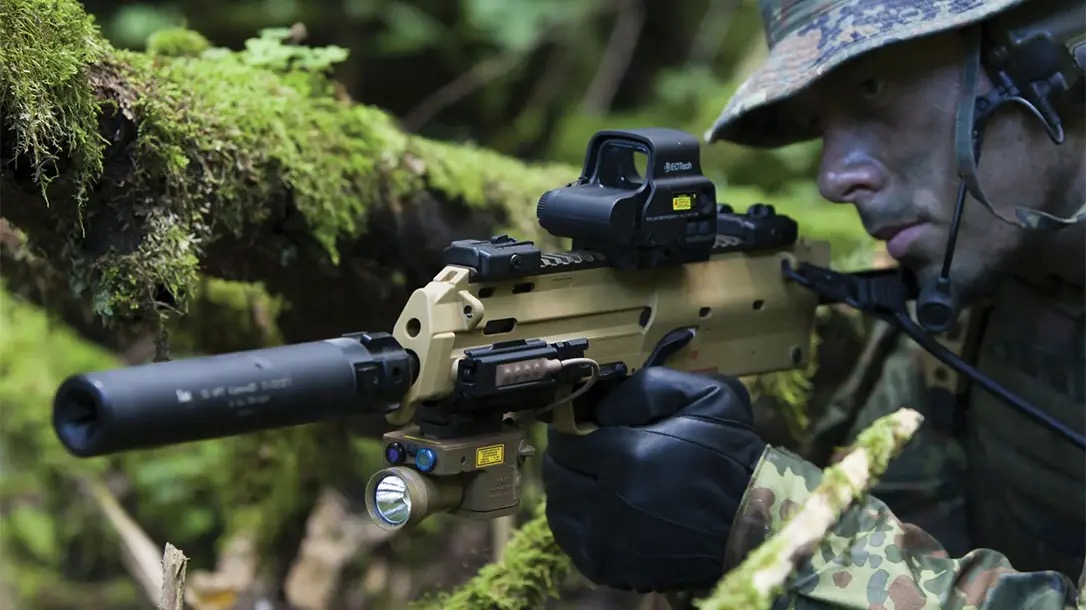
The real MP7 weighs just 1.5 kg empty, measures only 340mm with the stock folded, and extends to 540mm when deployed. It uses a short-stroke piston gas system and fires at up to 950 rounds per minute. These characteristics — lightweight, compact, and packing serious firepower — represent the ideal CQB combination, and Tokyo Marui faithfully captured these qualities in their airsoft version.
Tokyo Marui MP7A1 GBB: Unboxing Experience
Picking up the Tokyo Marui MP7A1 for the first time is a memorable experience. At 2,220 grams, it’s slightly heavier than the real thing, but the weight is evenly distributed — it never feels front-heavy or awkward. The ABS plastic receiver has a surprisingly premium feel, with a matte finish that looks far more refined than you’d expect from polymer construction.
Inside the box you’ll find the gun itself, a 40-round magazine, a cleaning rod, a protective cap, BB rounds, and a suppressor thread adapter. That adapter is a thoughtful inclusion — the MP7A1’s muzzle doesn’t use standard threads, so you need it to mount tracers or suppressors.
Rack the charging handle and the feedback is solid and satisfying. Tokyo Marui designed a brand-new blowback engine for the MP7A1 featuring a 16mm piston that replicates the real gun’s short-stroke piston action. Pull the trigger and the bolt carrier slams backward with surprising violence before snapping forward again. The recoil sensation in your hands is much stronger than the gun’s compact size would suggest. Most people’s first reaction after firing the TM MP7A1 is something like: “How does something this small kick this hard?”
The telescoping stock operates silky smooth — extending it takes just one hand. Fully collapsed, the entire gun is short enough to fit in a large drop-leg holster; fully extended, it provides solid shoulder support for aimed fire. The folding front grip is equally practical — deployed, it naturally positions your support hand closer to the muzzle for better recoil management.
| Spec | Detail |
|---|---|
| Length | 381mm (stock folded) / 586mm (extended) |
| Weight | ~2,220g (with empty magazine) |
| Magazine Capacity | 40 + 1 rounds |
| Muzzle Velocity | 330-350 FPS (0.2g BB / Green Gas) |
| Power System | Gas Blowback (GBB) |
| Fire Modes | Semi-Auto / Full-Auto |
| Hop-Up | Adjustable |
| Construction | ABS receiver / metal internals |
| 2026 Street Price | US$340-400 / NT$11,000-13,500 |
Three Brands, Three Personalities: Which MP7 Is Right for You?
Three major manufacturers produce airsoft MP7s: Tokyo Marui, KWA, and VFC (Umarex licensed). Each has a distinctly different character suited to different types of players, and the 2026 landscape has shifted slightly with the release of the VFC MP7A1 Gen 2.
The Tokyo Marui MP7A1 delivers the best overall shooting experience of the three. It has the strongest blowback kick per gram, the most accurate hop-up system, and the best gas efficiency — maintaining reliable performance even in cooler temperatures down to about 12°C. Its biggest drawback is scale: the TM version isn’t a 1:1 replica and runs about 90% the size of the real gun. It also lacks official H&K trademarks since it’s not licensed. If you prioritize performance, neither issue matters much; but if external authenticity is important to you, it might feel incomplete.
The KWA MP7 takes the high-FPS route, pushing around 400 FPS on green gas — making it more viable for outdoor fields. Priced around US$240-290 in 2026, it’s the most affordable of the three. However, the KWA version is also undersized (similar 90% scale), and its hop-up system doesn’t offer the same tuning flexibility. Magazine quality is also a step behind TM. It’s a solid choice for budget-conscious players who primarily play outdoors at fields with 400 FPS limits.
The VFC MP7A1 Gen 2 (Umarex licensed) is the 2026 sleeper. The original Gen 1 VFC had a reputation for fragile internals and inconsistent gas seals, but Gen 2 (released late 2024) addressed most of those issues — better nozzle materials, redesigned hammer assembly, and improved bucking. It’s still the only true 1:1 scale option with full H&K trademarks, but the trigger feel and shot-to-shot consistency still trail the TM. Just be aware that magazines are completely incompatible across all three brands, so verify accessory compatibility before purchasing.
For most CQB players, I’d still recommend the Tokyo Marui in 2026. Indoor fields typically enforce FPS limits below 350, so raw power isn’t the priority — accuracy, gas efficiency, and blowback feel matter far more in determining real-world performance. The TM’s hop-up system delivers remarkably consistent trajectories at the 20-30 meter engagement distances typical of indoor play, which translates to a genuine tactical advantage in corridor gunfights.
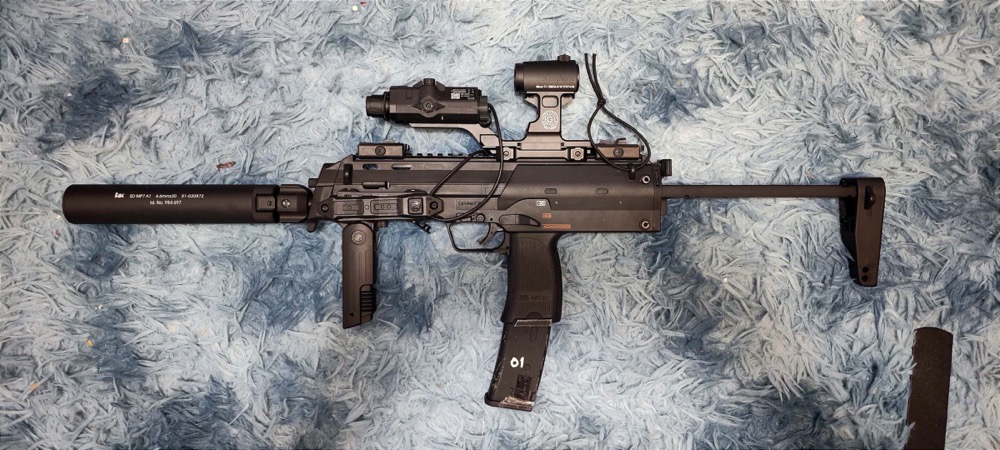
All Five Licensed Airsoft MP7s in 2026 — and the Traps Nobody Warns You About
Zoom out from Marui for a second, because the licensed MP7 family is bigger than most buying guides admit. Counting properly, there are five: the Tokyo Marui GBB, the Tokyo Marui electric compact, the KWA gas blowback, the VFC/Umarex MP7A1 Gen 2 GBB, and the VFC MP7A1 AEG. (The WE SMG-8 gets lumped in constantly, but it’s an unlicensed MP7-alike, not an MP7.) Two of the five are electric, and both of them are almost invisible in English-language reviews — which is exactly why the mistakes below keep happening.
The KWA gas gun has a quirk that catches everyone: it has no last-round bolt hold-open, and its bolt release works upward rather than down. If you’ve come from an AR platform your thumb will reach for the wrong direction every time for the first few games. It also vents a noticeable jet of gas out of the charging handle slot straight up toward your face, which is a non-issue with full-seal goggles and a genuinely unpleasant surprise with mesh or shooting glasses. Worth knowing before you take one to a chrono station in shirt sleeves.
The VFC Gen 2 GBB is the biggest of the bunch — noticeably longer and thicker in the hand than the Marui or KWA, closer to real scale, and it feels like a small submachine gun rather than an oversized pistol. It’s also the only one of the three gas guns with a genuinely adjustable stock: four positions instead of the single in-or-out arrangement that both the TM and the KWA give you. The Marui uses the thinnest polymer of the three, which is part of why it’s the lightest and part of why it doesn’t feel as substantial.
The VFC MP7A1 AEG is where people lose real money. It uses a proprietary gearbox, so the aftermarket that exists for every other AEG on earth simply doesn’t apply here. Exactly one company builds an HPA conversion for it, they won’t sell the kit or install one in your gun, and the only way to get it is to buy a complete pre-converted rifle at around US$1,400. If HPA is your endgame, buy the Marui AEG instead and drop a JACK in it. The VFC AEG also has an empty-magazine detection system that refuses to fire on an empty mag — a nice feature that has generated an impressive number of “my brand new gun is broken” support tickets from people who were dry-firing it on the sofa.
And the trap that spans the whole category: no MP7 magazines are cross-compatible. Not TM GBB to KWA, not VFC to TM, and specifically not TM AEG magazines to VFC AEG magazines even though both are electric MP7s of similar vintage. Magazines are the single biggest ongoing cost of owning any MP7, so decide which brand you’re marrying before you buy your third mag, not after. While you’re at it, if you own the VFC AEG, leave the orange tip alone unless you’ve watched someone do it — the outer barrel assembly is easy to wreck by twisting the wrong part.
2026 MP7A1 Scene Update: What’s New and What’s Changed
A few things worth flagging if you’ve been out of the airsoft loop for a couple of years and are coming back to look at the MP7 again:
The VFC Gen 2 release in late 2024 finally closed the durability gap that made Gen 1 frustrating to own — magazines now hold gas reliably past 1,000 rounds and the nozzle redesign cut the catastrophic-failure rate dramatically. This is the first time in over a decade that a non-Tokyo Marui MP7 became genuinely viable as a daily driver. If you’ve been waiting for a licensed MP7, this is the one to look at.
Tokyo Marui has not refreshed the MP7A1 platform, but they did quietly improve the OEM hop-up bucking somewhere in the 2023-2024 production runs — newer units (serial numbers starting with later batch codes) have a slightly stiffer rubber that performs better with 0.28g and 0.30g BBs. If you’re buying used, ask for a 2024+ build.
Green gas pricing globally is up about 20-30% from 2022 levels, which makes gas efficiency a real wallet issue. The TM MP7A1’s class-leading efficiency (roughly 60-70 shots per fill versus 40-50 for KWA) is more relevant now than it used to be.
Maple Leaf has expanded its MP7-specific bucking lineup in 2025-2026 with versions tailored for 0.30g and heavier BBs, which is the cheapest meaningful accuracy upgrade you can do — about US$15-25 versus US$120+ for a precision inner barrel.
The “Tier-1 SOF” aesthetic is back in vogue in speedsoft and milsim circles in 2026, and the MP7 sits squarely in that look. Combined with the VFC Gen 2 closing the realism gap, MP7 sales are up across most APAC and EU retailers.
Upgrade Paths
🎯 The cheapest MP7A1 upgrade is free. Before you drop US$120 on a precision inner barrel or US$25 on a Maple Leaf bucking, the biggest gain most players leave on the table isn’t a part — it’s measured practice. The MP7’s light weight already makes it easy to hit fast presentation times, but “that draw felt fast” only becomes real progress once you put a number on it. The Airsoft Shot Timer App runs on the phone already in your pocket, tuned to pick up the quiet crack of a GBB instead of a live round — so it actually registers your MP7 where a hardware timer built for live fire often won’t. It’s free, it works at the field or in your living room, and it’s the fastest way to find out whether your latest upgrade is really making you faster.
The Tokyo Marui MP7A1’s aftermarket ecosystem isn’t as massive as the Hi-CAPA’s, but all the core upgrade components are readily available. Upgrades generally fall into two categories: internal performance and external accessories.
For internal upgrades, swapping the inner barrel makes the most noticeable difference. The stock barrel is already decent, but installing a Nine Ball or PDI 6.01mm/6.03mm precision barrel significantly improves shot-to-shot consistency, especially beyond 25 meters. Pair it with a Maple Leaf hop-up bucking (the 2025+ heavy-BB versions are the current sweet spot) for even better BB spin stability. If you want more kick, WIITECH offers CNC-machined loading nozzles that increase gas flow and blowback efficiency.
External accessories offer even more variety. The MP7A1’s full-length top Picatinny rail is perfect for mounting compact red dot sights. T1/T2-style micro red dots are the most popular pairing — lightweight and well-balanced without disrupting the gun’s handling. The short side rails accommodate tactical flashlights and laser units; in dimly-lit CQB venues, a flashlight is practically essential equipment.
Suppressors are another common addition. Using the included thread adapter, you can mount any 14mm CCW suppressor. A longer suppressor lets you hide an extended precision inner barrel inside, and it reduces mechanical noise somewhat (though the gas venting sound remains). Note that adding a suppressor shifts the center of gravity forward, which may require some adjustment during fast CQB transitions.
Prioritize upgrades in this order: precision inner barrel and hop-up bucking for accuracy first, then a red dot sight for faster target acquisition, and finally suppressors and cosmetic parts. Investing in components that directly improve your battlefield performance is always the smartest approach.
CQB Tactics with the MP7A1
The MP7A1 feels like it was purpose-built for CQB environments. Its compact profile prevents the gun from catching on walls and doorframes as you move through tight spaces, and its light weight lets you hold it at the ready for extended periods without fatigue. These seem like minor advantages on paper, but over a full day of games, they compound into something significant.
Room entry is one of the scenarios where the MP7 truly shines. Picture yourself stacked up beside a doorway, preparing to breach. With a full-length M4, you need extra clearance to swing through the door, and your barrel poking past the frame telegraphs your position. The MP7 is short enough that you can practically slide through while hugging the doorframe, with your muzzle already covering the room’s far corners. That one or two second advantage is often the difference between getting the kill and getting eliminated in CQB.
Full-auto mode is tempting indoors, but the smarter approach is using semi-auto as your default. The MP7A1’s semi-auto accuracy at close range is excellent — two or three rounds will handle most targets. Reserve full-auto for suppressive fire situations, like covering a teammate’s movement across an exposed corridor. If you spray full-auto all game, you’ll burn through those 40 rounds faster than you’d expect, and the cooling effect from rapid gas expansion will cause noticeable FPS drop toward the end of each magazine.
Magazine management deserves special attention with the MP7. A 40-round magazine empties in roughly 3-4 seconds on full-auto, and even semi-auto won’t last through many engagements. Carry at least 3-4 spare magazines as a baseline. GBB magazines are inherently heavy — filled with gas and BBs, a full loadout adds real weight. Invest in a quality magazine pouch or chest rig that allows fast, smooth reloads; this matters more than carrying a backup sidearm.
💡 Further Reading: For more CQB techniques, check out the Airsoft CQB Tactics Complete Guide.
Building Your MP7A1 CQB Loadout
When building a complete CQB loadout around the MP7A1, the philosophy is simple: stay light, stay fast. Skip the heavy plate carriers — a lightweight chest rig with just enough magazine pouches is all you need.
Face protection is your most important investment for CQB. Close-range engagements mean hits hurt significantly more than outdoors. A quality full-face mask like the Dye i4 or i5 is the go-to choice for many CQB players, offering wide visibility and excellent anti-fog performance. Gloves are also highly recommended — taking a point-blank hit to bare fingers is not a pleasant experience.
Footwear matters more than most players realize. Indoor field floors are typically smooth and sometimes slippery. A pair of indoor court shoes with good traction will serve you far better than heavy combat boots. You need the ability to sprint, stop short, and change direction quickly — not ankle support for trudging through mud.
If you’re serious about CQB, a tactical flashlight is nearly essential. Many indoor venues deliberately dim the lighting for atmosphere, and your red dot sight is useless if you can’t actually see your target. A 200-400 lumen compact light mounted on the MP7’s side rail not only illuminates opponents hiding in dark corners — the sudden burst of light itself has a brief blinding effect that gives you a decisive advantage.
💡 Further Reading: For complete loadout guidance, see the Airsoft Loadout Complete Guide.
Shot Timer Training Drills
Owning a great gun is just the starting point — the MP7 won’t make you faster on its own. Systematic improvement requires data, and the cheapest way to get it is a shot timer. The Airsoft Shot Timer App is free, runs on your phone, and is tuned for the low-decibel report of airsoft GBBs — the exact frequency band most hardware timers built for live fire struggle to detect on a quiet indoor MP7. It records every draw, split, and reload so you can see, in tenths of a second, whether last week’s practice actually paid off. Set a par time, run the four drills below, and let the numbers tell you exactly where you’re losing time.
The first drill is the snap presentation. Start with the MP7 in a low-ready position (muzzle angled down 45 degrees), then raise, aim, and fire on the Shot Timer’s beep. Beginners typically take 1.5-2 seconds; the goal is consistent sub-1-second presentations. The MP7’s light weight gives it a clear advantage here — you’ll find it significantly easier to hit fast presentation times compared to a full-size M4.
The second drill focuses on reload speed. Use the Shot Timer to measure the full sequence: empty magazine, release, insert fresh magazine, rack the charging handle, and fire. The MP7A1’s magazine release button takes practice to operate smoothly — it’s not as intuitive as an M4’s. Target a complete reload in under 3 seconds.
The third drill is transition shooting. Set up two targets approximately 90 degrees apart and practice snapping between them. The MP7’s short profile generates almost zero rotational inertia during transitions, meaning you should be noticeably faster than with a longer gun. Use the Shot Timer to record split times between targets and track your improvement over time. Aim for sub-0.6s transitions at 5-7 meters.
A fourth drill specific to GBB SMGs is the mag-swap-and-suppress drill: fire 5 rounds, drop the empty mag, insert fresh, then fire 5 more — all on the clock. This trains the muscle memory you actually need in CQB, where every second of empty-gun time can get you tagged.
These drills don’t require a field — practicing manipulation drills at home with empty magazines is highly effective. Combined with techniques from the Dry Fire Training Guide, you can dramatically improve your weapon handling without spending a single BB or gram of gas.
Taiwan & APAC Procurement Notes (2026)
If you’re buying the TM MP7A1 in Taiwan or the broader APAC region in 2026, a few things have changed worth knowing about. Jedan Tian (杰丹田) in Taipei consistently runs the MP7A1 around NT$11,000-12,500 for the base unit, and they typically have at least one in-stock unit thanks to their direct TM distributor relationship. Hsiang Chun (翔準) in Taichung and Pan Shih (磐石) in Kaohsiung also stock the MP7A1, often with bundled accessory deals that bring the effective price down by NT$1,000-1,500. Expect spare magazines to run NT$1,400-1,800 each — buy at least three with the gun.
For Hong Kong players, WGC Shop and RedWolf continue to be the regional reference price (HK$2,800-3,200 base), and their inventory is more reliable than most Taiwanese stores for export. Singapore players generally have to import via Hong Kong or Japan due to local restrictions.
Japan-direct purchasing (via TM’s domestic distribution) saves about 15-20% versus APAC retail but requires either a forwarding service or in-person pickup; factor in shipping insurance for the GBB internals.
One Taiwan-specific note: indoor CQB venues like Kaohsiung Park Indoor Field (高雄公園 CQB 場) and Taichung Fengyuan Multi-Story Field (台中豐原立體場) typically cap energy at 1.0J (~328 FPS with 0.2g), which is comfortably below the TM MP7A1’s stock 330-350 FPS — no detuning needed for most fields. Verify with the field operator before your first game.
Common Issues and Maintenance Tips
Daily maintenance on the MP7A1 GBB is straightforward, but a few areas deserve attention. After each session, run a cleaning rod through the inner barrel to clear residue, then apply silicone oil to moving parts to keep everything lubricated. O-rings are the most wear-prone components in any GBB — if you notice magazine gas leaks, replacing the O-ring set usually solves the problem.
Cold weather is the natural enemy of all GBB guns. When temperatures drop below 15°C (59°F), green gas vaporization efficiency drops noticeably, causing reduced FPS, weak blowback, or complete failure to cycle. In winter, keeping spare magazines in your jacket’s inside pockets — warmed by body heat — is a practical trick. If your area experiences harsh winters, you might consider running higher-pressure gas, though be mindful of the stress it places on stock internals.
While full-auto fire is undeniably fun, sustained use accelerates wear on internal components, particularly the loading nozzle and hammer assembly. If CQB gameplay is your focus, training yourself to default to semi-auto will not only conserve ammo and gas but also significantly extend your gun’s service life.
💡 Further Reading: For more firearm maintenance tips, check out the Pistol Cleaning & Maintenance Guide.
Frequently Asked Questions
What caliber is the MP7A1?
The real Heckler & Koch MP7A1 fires the 4.6×30mm cartridge — a small-caliber, high-velocity round designed to defeat CRISAT body armor at 200 meters. The airsoft Tokyo Marui MP7A1 GBB fires standard 6mm plastic BBs (most commonly 0.20g, 0.25g, or 0.28g) at 330-350 FPS using green gas.
Is the Tokyo Marui MP7A1 still worth buying in 2026?
Yes, for indoor CQB players. Despite being on the market for over a decade, it remains the benchmark airsoft MP7 for hop-up accuracy, gas efficiency, and blowback feel. If you mostly play outdoor woodland or need licensed H&K trademarks, look at KWA (cheaper, higher FPS) or VFC Gen 2 (1:1 scale + trademarks) instead.
Tokyo Marui MP7A1 vs KWA MP7 — which is better?
The TM MP7A1 wins on accuracy, blowback feel, gas efficiency, and overall build quality but costs US$80-150 more. The KWA wins on raw FPS (~400 vs 330-350) and price (US$240-290 vs US$340-400). For indoor CQB players the TM is the clear winner; for outdoor-only budget builds the KWA is defensible.
Tokyo Marui MP7A1 vs VFC MP7A1 Gen 2 — which is better?
The VFC Gen 2 wins on external authenticity — it’s 1:1 scale with full HK trademarks. The TM MP7A1 wins on shooting performance — better hop-up, harder blowback feel per gram, and lower lifetime maintenance. Pick VFC Gen 2 if your priority is collector-grade looks or milsim authenticity; pick TM if you want the best shooter.
How many BBs per magazine does the TM MP7A1 hold?
40 + 1 rounds. The 40-round capacity is standard for the magazine; the +1 refers to the BB already chambered in the hop-up unit. Full-auto bursts will empty a mag in roughly 3-4 seconds, so plan to carry at least 3-4 spare magazines for a full game day.
Is the MP7A1 GBB legal in Taiwan?
The Tokyo Marui MP7A1 GBB at stock 330-350 FPS is well within Taiwan’s 1.0J (~328 FPS with 0.2g BB) energy limit for most indoor fields. Outdoor field limits vary (typically 1.2-1.4J for woodland). Always check with the specific field operator. Local TW retailers like Jedan Tian, Hsiang Chun, and Pan Shih stock the gun legally.
What’s the best red dot for the Tokyo Marui MP7A1?
A T1/T2-style micro red dot is the most popular pairing — lightweight, low-profile, and well-suited to the MP7’s compact envelope. Aimpoint T2, Holosun 403/503, or budget clones in the US$60-200 range all work well. Avoid full-size reflex sights — they ruin the MP7’s handling balance.
Does Tokyo Marui make an MP7 AEG, or only the gas blowback?
Both. Alongside the gas blowback everyone reviews, Marui has sold the MP7A1 Electric Compact Machine Gun since February 2006 — same 380/590mm external dimensions, 1,480g with battery, a 50-round magazine (a 190-round version is also available), around 248 FPS on 0.20g BBs, and a cyclic rate near 700 rpm. Japanese MSRP is ¥28,800 before tax for the full set. It has no blowback at all, which is why gas fans dismiss it, but it’s the cheaper and far more weather-proof way into the MP7 shape.
Tokyo Marui MP7A1 GBB vs AEG — which should I buy?
Buy the GBB if the recoil impulse is the whole reason you want an MP7, if you play in 15-25°C weather, and if you’re happy managing gas and cold magazines as part of the hobby. Buy the AEG if you play indoor CQB under a sub-300 FPS cap, if your winters are cold enough to kill gas performance, if you want a low-profile PDW magazine (the gas guns don’t offer one), or if HPA is your endgame — the Marui AEG is the only MP7 that takes a PolarStar JACK as a direct drop-in. Budget is the tiebreaker, not the deciding factor: roughly US$180-250 for the electric versus US$340-400 for the gas gun.
Are airsoft MP7 magazines interchangeable between brands?
No — and this is the most expensive mistake in the category. Tokyo Marui, KWA and VFC magazines are all mutually incompatible, and the TM AEG and VFC AEG don’t share magazines either despite both being electric MP7s. Since magazines are the biggest ongoing cost of owning an MP7, pick your brand before you buy spares, not after.
What’s the difference between the MP7A1 and the MP7A2?
Almost everything is the same gun; the visible change is up front. The A1 carries H&K’s fold-down vertical foregrip, while the A2 deletes it in favour of a flat handguard with a bottom rail, so you fit whatever grip you actually like — plus a slightly revised rail layout and more colour options. Nothing about the 4.6×30mm cartridge, the operating system or the ergonomics behind the trigger changes. In airsoft terms the distinction rarely matters, because nearly every licensed replica is built on the A1 pattern; the closest thing to an A2 look on the market is KWA’s flat-bottom “Navy” variant.
How do I measure my MP7A1 draw and reload speed?
The simplest way is a shot timer — it listens for your shots and reports the exact time from the start beep to each hit. You don’t need expensive hardware: the free Airsoft Shot Timer App is calibrated for the quieter report of airsoft GBBs, so it picks up the MP7’s snappy-but-soft blowback where a competition hardware timer built for live fire often won’t register a shot at all. Run the snap-presentation, reload, and transition drills above, log your average and best times each session, and within a few weeks you’ll have hard numbers showing whether your training — or your latest barrel and bucking upgrade — is actually working.
Final Verdict: The Perfect CQB Companion
The Tokyo Marui MP7A1 GBB isn’t a do-everything gun. Its FPS is modest, its range is limited, and it’ll get outgunned by M4s and snipers on large outdoor fields. But in its element — close quarters battle — very few airsoft guns can match its combination of maneuverability and controllability.
If you’re tired of getting your long gun caught on every doorframe and corner in CQB, or you want a weapon that’s ready to fight the instant you bring it up, the MP7A1 deserves serious consideration. From real-world special forces to airsoft fields around the globe, the MP7 has proven one thing: in the world of CQB, small and agile will always beat big and cumbersome.
Related Articles
CQB Tactics & Training
- Airsoft CQB Tactics Complete Guide — Master room clearing, movement, slicing the pie
- Airsoft Tactics 2026: Outdoor vs CQB — Full tactical playbook for both environments
- Shot Timer App Guide — Quantify your training progress
Companion Gear & Loadout
- Airsoft Loadout Complete Guide — Build the right setup for your playstyle
- Airsoft Plate Carrier Guide: How to Pick, Size & Set One Up — When to wear armor (and when to skip it)
- Airsoft Helmet Guide — FAST vs MICH for CQB
- Airsoft Tactical Headset Guide — Team communication for CQB
Comparable Airsoft Platforms
- Tokyo Marui Hi-CAPA Complete Guide — Top-tier CQB pistol platform
- Airsoft Sniper Rifle Guide — The polar opposite playstyle
Maintenance & Skills
- Pistol Reload Techniques — Advanced manipulation skills
- Pistol Cleaning & Maintenance Guide — Keep your GBB running for years
- Dry Fire Training Guide — Train without burning gas
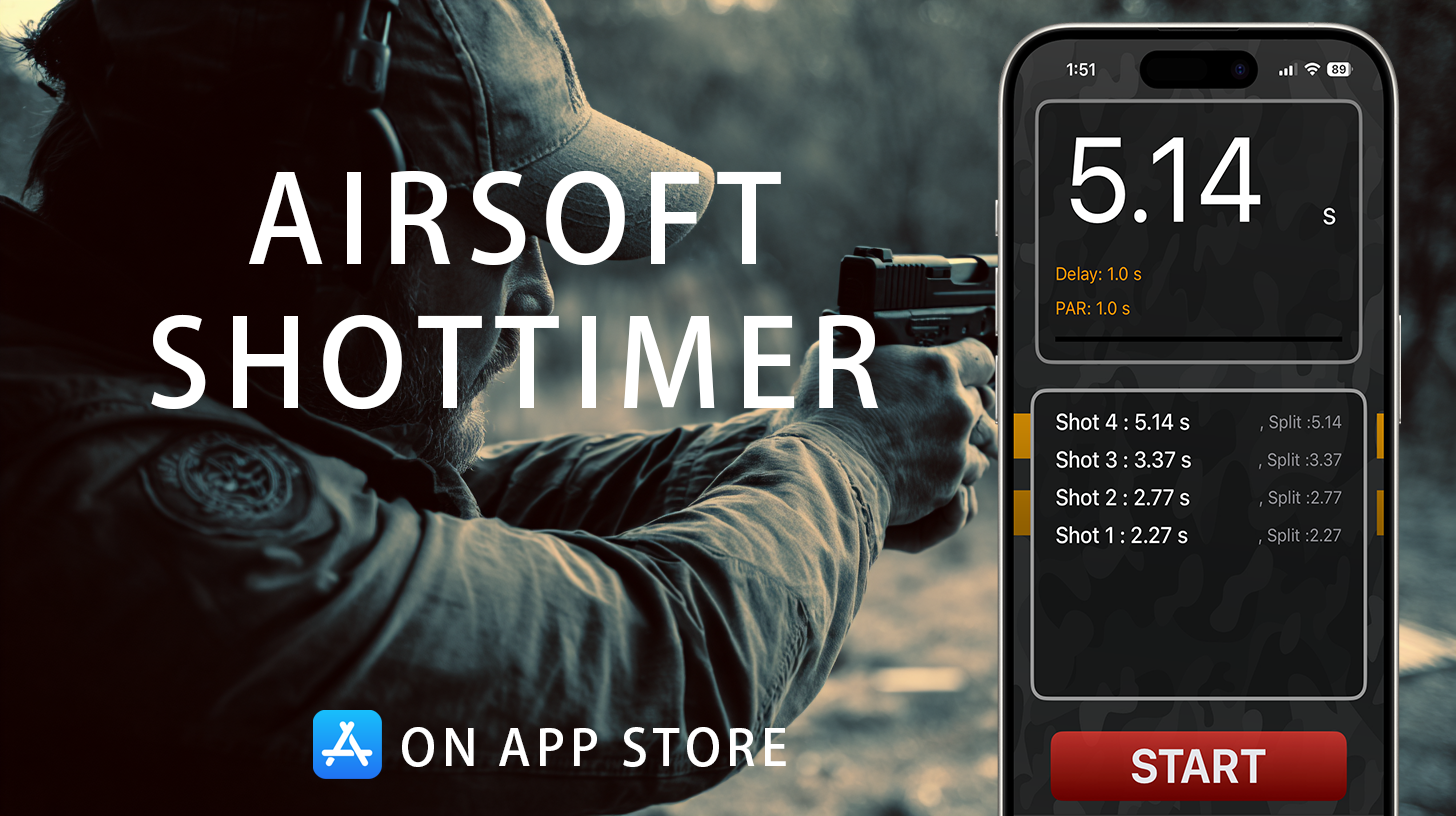
Put a Shot Timer in Your Pocket
Airsoft Shot Timer is a free shot timer app tuned for airsoft and Action Air — it picks up BB gun shots, tracks your split times, and saves you the cost of a $150+ hardware timer for IPSC/IDPA practice.

- Tokyo Marui
- MP7A1
- MP7
- TM MP7A1
- GBB
- GBBR
- SMG
- Airsoft SMG
- PDW
- HK MP7
- MP7A1 Caliber
- MP7 4.6x30mm
- CQB
- Speedsoft
- Airsoft
- Shot Timer
- 2026 Airsoft Review
- KWA MP7
- VFC MP7A1 Gen 2
- Umarex MP7
- Airsoft Best SMG 2026
- Tokyo Marui Review 2026
- MP7A1 vs MP5
- PDW Airsoft
- Indoor Airsoft
- Airsoft Gear Review
- Free Shot Timer App
- Airsoft Draw Speed
- Dry Fire Training
- Tokyo Marui MP7 AEG
- MP7A1 AEG
- MP7 Electric
- TM MP7A1 AEG
- Airsoft MP7 Comparison
- MP7A1 vs MP7A2
- VFC MP7A1 AEG
- MP7 HPA
- GBB vs AEG
- Best Airsoft MP7 2026