SpeedQB Complete Guide 2026: Rules, Equipment & How to Win Your First Tournament
60-Second SpeedQB Quick Picks (2026)
If you’re already sure you want to jump in, here’s where most players actually start. Skim this and jump to the section you need:
- Best Starter Tournament Loadout (~$300): G&G ARP9 AEG + Condor Battle Belt + Valken MI-7 mesh-lower mask + 11.1V LiPo. Survives an entire weekend, no HPA tank refills.
- Best Sub-$500 Hi-CAPA Setup: Tokyo Marui Hi-CAPA 5.1 + Nine Ball short-stroke kit + Dye i4 mask. The default “I’m serious about SpeedQB” pistol primary.
- Best HPA Crossover (~$1,200): Wolverine MTW Billet + Polarstar regulator + Ninja 13/3000 tank + Dye i5. What every Open Class podium finisher seems to be running in 2026.
- Best Budget GBB Entry (~$200): Action Army AAP-01 + carbine kit + battery belt + JT Spectra Flex. Lightest possible primary that still feels like a real gun in your hand.
- Best Limited Class AEG: Tokyo Marui MP5K HC. Bombproof high-cycle gearbox, no compressed-air infrastructure required, legal in every Limited bracket.
- Best Mask If You Wear Glasses: Dye i5 with prescription insert. The visibility advantage matters more than people admit when the round is over in 4 minutes.
Jump links: Rules & format · Open vs Limited · Equipment breakdown · Find a tournament · Training drills · FAQ
When 4 Minutes Decide Everything
Most airsoft games measure in hours. SpeedQB measures in seconds.
Imagine standing with your back against a wall, hand on a flag base, heart rate already 160 bpm before the round even starts. The buzzer sounds. Four teammates explode out beside you. Within the first eight seconds you’ve slid into your primary lane, taken a snap shot at a bunker, and reset to your secondary angle. Two minutes and thirty-eight seconds later, the round is over and someone is already changing batteries for the next one.
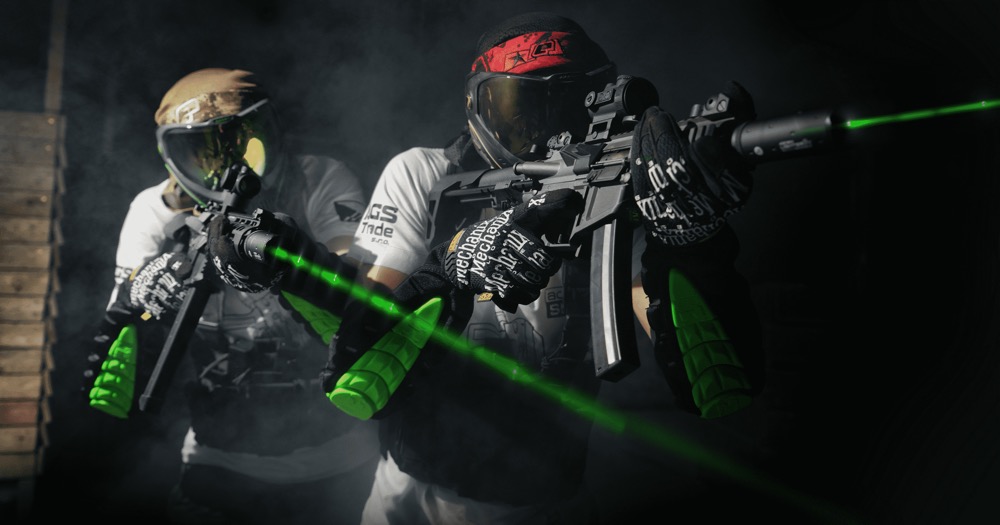
This is SpeedQB — currently the most structured, most competitive format in airsoft, and the one that comes closest to feeling like an actual sport. If your home field plays casual woodland or MilSim and you’ve been wondering why your Hi-CAPA reload times suddenly matter to you, the honest answer is probably that you’re a SpeedQB player who hasn’t found their tournament yet.
This guide is written for that player. It covers the 2026 rules in plain English, breaks down what gear you actually need (not what Instagram says you need), and shows you how to use a shot timer to shave seconds off your break time — because in SpeedQB, the team that reaches their first cover faster usually wins.
What Is SpeedQB? More Than “Fast Airsoft”
SpeedQB is a competitive airsoft format founded in 2016 in the United States, designed to bring the structure and pace of paintball speedball into the airsoft world. The name itself is a portmanteau: “Speed” + “QB” (Quarters Battle, borrowed from CQB), reflecting both the speed-paintball influence and the close-quarters battle environment.
There’s a common confusion worth clearing up early: SpeedQB is not the same thing as speedsoft. Speedsoft is the broader playstyle — fast, aggressive, lightly-geared airsoft. SpeedQB is the specific competitive league with codified rules, sanctioned tournaments, official field dimensions, and division classifications. Think of it like the difference between “running” and “the IAAF marathon.” Every SpeedQB player plays speedsoft, but not every speedsoft player plays SpeedQB.
What makes SpeedQB distinctive among competitive airsoft formats is its commitment to true sport structure. Matches are run by trained officiators (referees), scoring is point-based and objective, players advance through ranked brackets, and the SpeedQB Pro Series circuit produces actual sponsored athletes. Compared to the loosely organized “speedsoft night” most fields host once a week, SpeedQB feels closer to organized paintball than to pickup airsoft.
The league has grown steadily. As of 2026, SpeedQB-sanctioned events run year-round across the United States, with strong international scenes in Canada, the UK, the Philippines, and several European countries. The Pro Series Championship draws teams from a dozen countries and is increasingly being streamed on Twitch and YouTube — making it the most spectator-friendly airsoft format that currently exists.
SpeedQB Rules & Format: The 2026 Version Explained
The full 2026 SpeedQB rulebook is available from SpeedQB.com, but here’s the practical version — everything a new player needs to walk onto the field and not embarrass themselves.
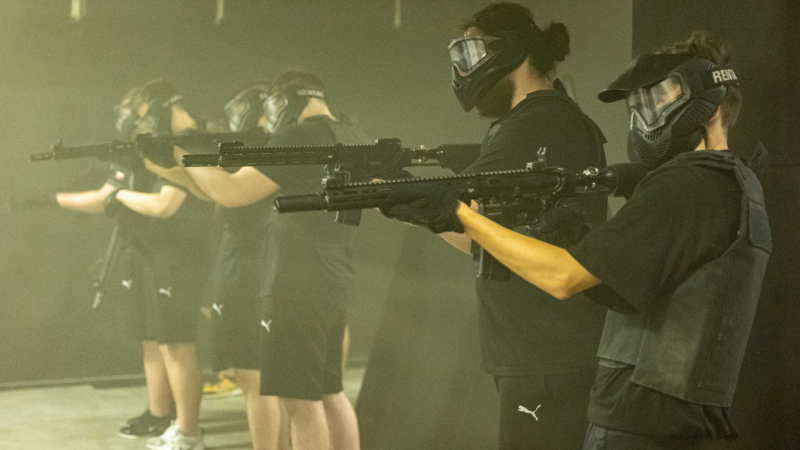
A standard SpeedQB match is 5 versus 5, played as best-of-7 rounds. Each round is capped at a maximum of 4 minutes but typically resolves much faster — top brackets often see rounds end in under 90 seconds. Both teams spawn at opposite ends of a rectangular field roughly 100 feet long by 50 feet wide, with both hands touching their team’s flag base at the start. When the officiator’s buzzer sounds, the round begins.
Scoring works on a points system rather than pure elimination. A team earns 25 points for grabbing the centerfield flag, 50 points for hanging that flag at the opponent’s flag base (which ends the round immediately), and 5 points per opponent eliminated. The round can also end if one team eliminates all opposing players. Whichever team has more total points across all rounds wins the match.
There are a handful of equipment and behavior rules that catch every new player off guard. Maximum velocity is 350 FPS with 0.20g BBs, or 1.1 joules — whichever produces the lower energy (chronograph is mandatory before every match). All weapons must fire in semi-automatic mode only — one BB per trigger pull. Full auto and burst are completely forbidden in every division. Players must call their own hits honestly, but the officiator has final authority and can pull a player from the round at any time. A single BB hit to any part of the body, weapon, or gear counts as a hit. Gun hits count.
The semi-auto rule is the one that surprises most newcomers. You can’t just dump a magazine. Every BB requires a deliberate trigger press, which is why “trigger speed” — the maximum number of trigger pulls you can execute per second while maintaining accuracy — becomes one of the most trained-for skills in the format. Pro players regularly hit 12-15 trigger pulls per second on Hi-CAPAs with short-stroke kits, and the difference between 8 trigger pulls per second and 12 is often the difference between dominating a duel and getting eliminated.
Open Class vs Limited Class: Which Should You Pick?
SpeedQB runs two primary division structures, and choosing the right one for your first tournament matters more than what gun you bring.
Open Class is the unrestricted competitive bracket. You can use any platform — HPA-converted rifles, full-custom Hi-CAPAs, ultra-modified AEGs, anything that passes the chronograph. This is where most podium finishers run high-end HPA setups like the Wolverine MTW, Polarstar Jack, or Tippmann TMC-modified platforms, because HPA provides absolutely consistent FPS regardless of temperature, magazine state, or rate of fire. The downside: gear investment escalates quickly. A competitive Open Class loadout commonly sits between $1,000 and $2,000.
Limited Class restricts the equipment field to keep entry costs reasonable. Only battery-powered systems are allowed (AEGs, AEPs, electric M4 platforms) — no HPA, no green gas. This division was specifically designed to make competitive SpeedQB approachable for players who don’t want to invest in compressed air infrastructure. A competitive Limited Class loadout can be built for $300-500, which is exactly the price range most weekend warriors are comfortable spending.
Here’s the honest advice nobody gives new SpeedQB players: start in Limited Class regardless of your budget. Not because the gear is cheaper, but because the skill ceiling is more achievable. In Open Class, you’ll be competing against players who have spent two years tuning their HPA rigs and their muscle memory together. In Limited Class, equipment differences matter less and trigger discipline matters more. You’ll learn faster, lose less embarrassingly, and graduate to Open Class with actual fundamentals.
Beyond Open and Limited, several regional events run additional divisions — Women’s, Junior (under 18), and occasionally novice brackets for first-time tournament players. Check your specific event’s rule supplement before registering; SpeedQB allows event organizers some flexibility in adding division categories.
SpeedQB Equipment Breakdown: What Actually Matters
Walk into any SpeedQB event and you’ll see the same gear categories repeated across virtually every player. The format has converged on a fairly narrow equipment philosophy because the rules force certain choices. Here’s what matters and why.
Primary Weapon
For Open Class, the consensus 2026 platform is HPA. The Wolverine MTW Billet and Polarstar-equipped M4 platforms dominate the podiums. HPA systems deliver perfectly consistent FPS, very crisp single-shot trigger response, and the ability to dial in your performance precisely at the chronograph. The tradeoff is logistics — you’re now managing an air tank, regulators, and the occasional dead O-ring at 2am the night before a tournament.
For Limited Class, the Tokyo Marui MP5K High Cycle remains the gold standard after years of competition. Its compact form factor lets you transition between bunkers faster than longer platforms, the high-cycle gearbox handles trigger spam without skipping, and it’s reliable enough to run an entire weekend on one battery charge. Other strong choices include the G&G ARP9, Tokyo Marui MP7, and CYMA Platinum M4 CQB variants.
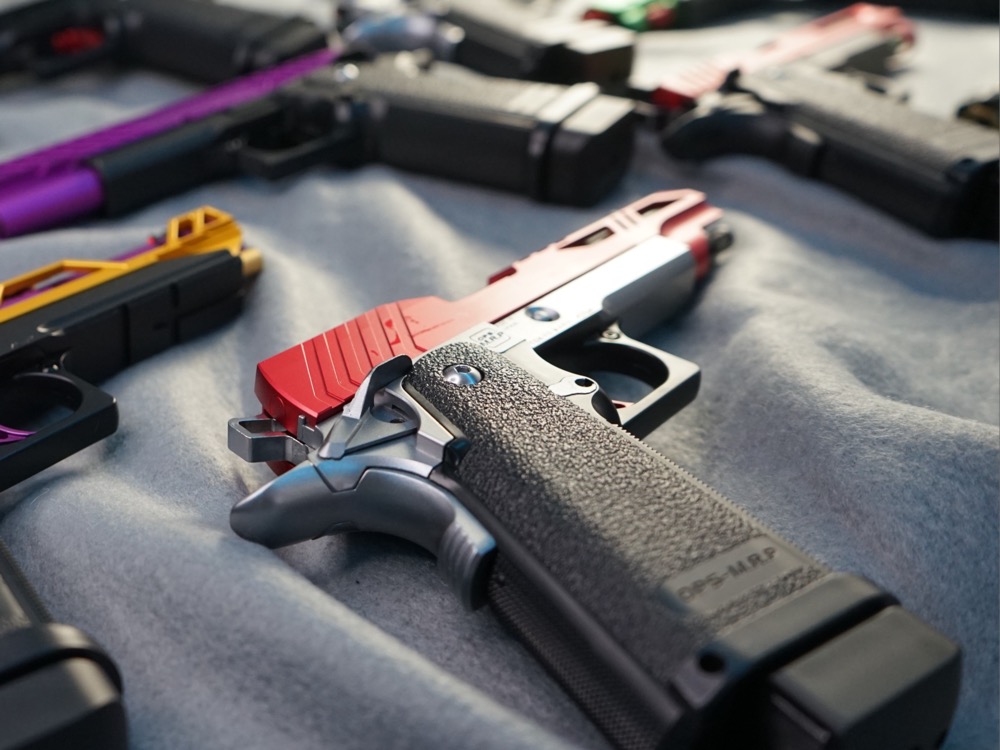
Hi-CAPA pistols deserve their own paragraph because they occupy a strange niche in SpeedQB. A fully built competition Hi-CAPA — Tokyo Marui base with Nine Ball short-stroke, lightweight aluminum slide, tuned recoil spring — can rival or exceed AEG trigger speed in the hands of a skilled player. They’re light, lethal in close-quarters duels, and they look incredible. They’re also temperamental in cold weather and require constant maintenance. Most SpeedQB players run a Hi-CAPA as a secondary or as a primary on small fields where mobility matters more than range. If you want the full breakdown, see our Tokyo Marui Hi-CAPA Review.
Mask & Eye Protection
This is non-negotiable: get a paintball-style anti-fog goggle, not a standard airsoft mesh mask. The Dye i4 and i5 are the de facto standard across SpeedQB because their visibility, peripheral vision, and anti-fog performance are simply better than anything purpose-built for airsoft. When a round resolves in 90 seconds, you can’t afford to be wiping condensation off lenses. If you wear prescription glasses, the i5 takes a prescription insert that fits most prescriptions up to about -6.00 diopter.
Lower face protection is required for full sealed protection. Most players use a soft mesh lower attached to the mask — the JT Spectra Flex 8 system is widely used. Avoid hard plastic lower masks; they bounce BBs back into your throat at very short ranges.
Belt Rig
The SpeedQB belt has converged on a specific recipe over the last few years. A 2-inch competition battle belt (Condor Gen 2 is the budget choice; Esstac and Blue Force Gear at the higher end), with 3-4 magazine pouches positioned forward of the hip for fast access, an HPA tank holder behind the dominant hip (Open Class only), and an optional dump pouch on the support side. Holsters belong on the belt itself, not on a thigh rig — thigh rigs are too heavy and too slow.
For magazine pouch selection, the same brands that dominate competitive shooting work here too. See our Competition Magazine Pouch Guide for DAA, Ghost, and CR Speed options.
Footwear
Underrated category. SpeedQB is played on artificial turf about 60% of the time and indoor concrete the other 40%. Turf shoes, not running shoes and not combat boots. Soccer turf shoes (Adidas Copa, Nike Phantom) are popular because they grip well on artificial surfaces and let you cut hard without sliding. For indoor concrete, basketball or volleyball court shoes work better than turf.
Clothing
Light, breathable, athletic. Most players wear long-sleeve compression shirts or hoodies (welt protection without bulk), athletic shorts or thin tactical pants, knee pads with sliding panels (G-Form is popular), and a hat. Forget plate carriers, chest rigs, or camouflage — they slow you down without providing any rule-based benefit.
Finding Your First SpeedQB Tournament
The SpeedQB.com events calendar is the authoritative source for sanctioned tournaments, but it’s not the only path in. Most regions have a layered ecosystem of events:
Local SpeedQB nights are the easiest entry point. Many fields run dedicated SpeedQB practice or open-play nights weekly or biweekly, often on weeknight evenings. These usually run 7pm-10pm, cost $15-25, and use full SpeedQB rules with rotating pickup teams. The skill level is mixed — beginners welcome — and you can play four to six matches in an evening with no commitment.
Regional one-day tournaments typically run on Saturdays or Sundays, draw 8-16 teams, and use modified SpeedQB rules (often single-day brackets rather than the full Pro Series double-elimination format). Entry fees usually $40-80 per team. This is the sweet spot for first-time competitive players — enough structure to feel like a real tournament, low enough stakes that losing badly isn’t catastrophic.
SpeedQB Pro Series events are the major league. Multi-day, multi-bracket, sponsored teams, full ESPN-style production. Entry fees can run $200+ per team. Don’t enter your first Pro Series event as a brand-new team — go spectate one first, watch what the top brackets actually look like, and use it as a target to train toward.
When you do enter your first event, two pieces of practical advice that experienced players will tell you: register early (popular brackets fill up weeks in advance) and show up two hours before your first match (chronograph, check-in, equipment inspection, and team coordination all take longer than you expect).
Training for SpeedQB: Shot Timer Drills That Actually Work
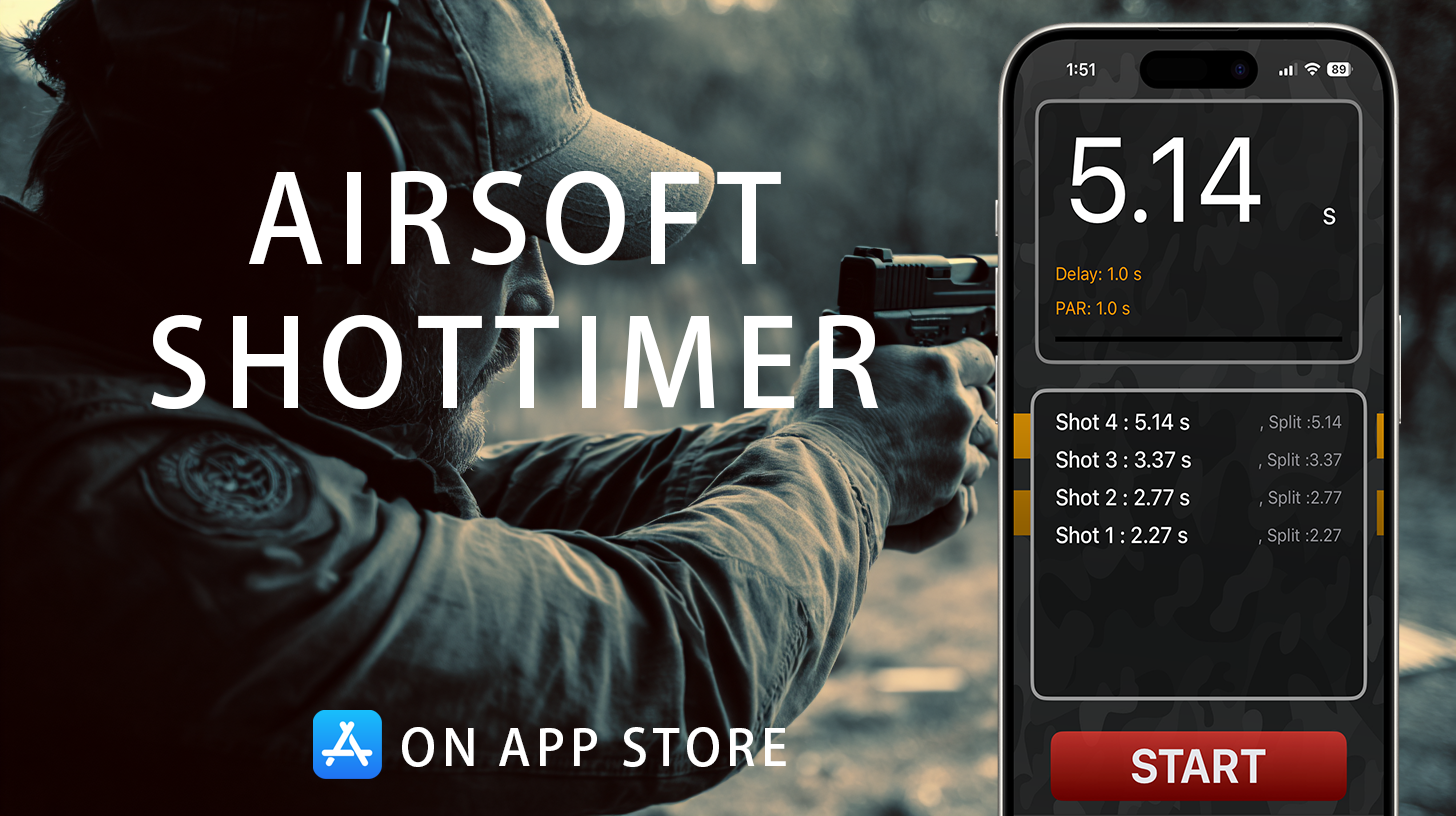
Here’s where most players plateau. They buy the right gear, they learn the rules, they play league nights every week — and their match results stop improving. The fix is structured training, and a shot timer is the single most useful piece of training equipment you can own. Our Airsoft Shot Timer App was specifically designed for this kind of training because traditional shot timers don’t reliably register airsoft hits.
Three drills that transfer directly to SpeedQB performance:
The Break Drill. Start hand-on-flag, face the wall behind your spawn. On the timer’s beep, turn, sprint 15 feet forward to a marked bunker position, take a single accurate shot at a 6-inch target, and stop the timer. Sub-2-second times put you in the top quartile of any tournament bracket. Most new players run this drill at 3.5-4 seconds initially. Eight weeks of practice will typically pull it under 2.5 seconds.
Trigger Speed Drill. Stationary, on the beep, fire as many semi-auto shots as possible at a 12-inch target at 7 yards in a 3-second window. Count hits, not shots. The goal isn’t maximum trigger speed — it’s maximum accurate trigger speed. Most players can spam 12-15 shots in 3 seconds but only hit the target with 6-8 of them. Pros hit 10-12 of 12-15.
The Push-and-Reset Drill. Two bunker positions 8 feet apart. On the beep, fire two accurate shots from position A, sprint to position B, fire two more accurate shots, stop the timer. This simulates the most common SpeedQB tactical sequence — engage from cover, push to next cover, re-engage. Target times under 4 seconds.
The shot timer matters because it converts vague feelings (“that felt fast”) into objective data (“3.2 seconds, 0.4 second improvement over last week”). SpeedQB is a measurable sport. You should be measuring.
For broader competitive shooting fundamentals that carry over directly to SpeedQB, see Practical Shooting Guide and Dry Fire Training Guide.
Common Mistakes New SpeedQB Players Make
After watching enough first-time tournament players, the same five mistakes keep repeating:
The first is bringing the wrong gun. New players show up with a full-length M4 with a 14-inch outer barrel and discover that bunker-to-bunker movement in a 100-foot field is brutal with a long platform. Bring a short barrel. If you only own a long gun, borrow something shorter for your first event.
The second is overloading the belt. Eight magazines, two HPA tanks, two pistols, a dump pouch, an admin pouch. You’ll bring three magazines per round at maximum. Strip the belt down to fighting weight before your first match.
The third is calling hits dishonestly. SpeedQB tournaments have officiators who watch closely and players who watch each other even more closely. Reputation matters. The community is small enough that getting flagged as a “no-call” player will follow you across multiple tournaments. Call your hits.
The fourth is panicking on the break. New players sprint hard, plant themselves at the first bunker they see, and get pinned there for the entire round. Plan your route before the buzzer sounds. Know which lane you’re taking and which secondary position you’ll move to after your initial engagement.
The fifth is skipping warm-up. SpeedQB rounds are athletic. Sprinting, sliding, snap-shooting, repeated short bursts of maximum effort. If you haven’t warmed up properly, you will pull a hamstring on the second match of the day and be useless for the rest of the tournament.
SpeedQB FAQ (2026)
What is the FPS limit in SpeedQB?
The 2026 SpeedQB rulebook limits all weapons to a maximum of 350 FPS measured with 0.20g BBs, or 1.1 joules of muzzle energy — whichever produces the lower energy value. Chronograph testing is mandatory before every match. If your weapon chronos hot, you must either reduce velocity (heavier BBs, lower gas pressure, or weaker spring) or you cannot play. Tournament-grade chronographs are accurate to within ±5 FPS, so build your setup with a margin of safety — aim for 330-340 FPS with 0.20g to leave room for environmental variation.
What’s the difference between SpeedQB and Speedsoft?
Speedsoft is a general airsoft playstyle — fast-paced, aggressive, lightly-geared. SpeedQB is the specific competitive league with sanctioned tournaments, codified rules, official field dimensions, and ranked divisions. Every SpeedQB player plays speedsoft, but most speedsoft players never enter a SpeedQB-sanctioned event. Think of speedsoft as “the genre” and SpeedQB as “the major league.”
Do I need HPA to play SpeedQB?
No. HPA is dominant in Open Class because it provides perfectly consistent FPS regardless of conditions, but Limited Class explicitly forbids HPA and restricts you to battery-powered AEGs. A Limited Class AEG setup like a Tokyo Marui MP5K HC or G&G ARP9 will compete fairly in Limited brackets and costs a fraction of an HPA conversion. Start in Limited, learn the format, then decide whether HPA is worth the investment.
How long does a SpeedQB match last?
A full match is best-of-7 rounds, with each round capped at 4 minutes but typically resolving in 60-180 seconds. Including chronograph, setup, scoring, and short rest periods between rounds, plan for a complete match to take 30-45 minutes. A full tournament day for one team usually involves 4-8 matches across pool play and brackets, totaling 4-6 hours of playing time spread across an 8-10 hour day.
Can I play SpeedQB with a Hi-CAPA pistol only?
Technically yes, and a few players do — Hi-CAPAs are legal in every SpeedQB division. Practically, you’re at a disadvantage. Pistols have shorter effective range (~50-60 feet at SpeedQB FPS limits versus 70-80 feet for rifle platforms), less stable hold for snap shots, and gas-powered Hi-CAPAs can struggle in cold weather. Most “pistol primary” SpeedQB players run a Hi-CAPA on small indoor fields where range matters less and speed matters more.
How much does it cost to start playing SpeedQB?
A complete Limited Class starter loadout — gun, mask, belt, magazines, BBs, knee pads — can be assembled for $300-400 if you shop carefully. Add tournament entry fees ($40-80 per event) and travel costs and a player’s first season often runs $600-1,000 total. Open Class starts higher because of HPA infrastructure costs — a fresh HPA conversion plus tank, regulator, and line typically adds $600-900 on top of your existing rifle.
Where can I find SpeedQB tournaments near me?
Start at SpeedQB.com’s official events calendar for sanctioned events. Beyond that, search Facebook groups for “[your region] speedsoft” or “[your region] SpeedQB” — most local scenes coordinate through Facebook and Discord. Many airsoft fields list their weekly SpeedQB nights on their own websites and Instagram accounts. The SpeedQB subreddit (r/Speedsoft) maintains regional flair tags that can help you find local communities.
Is SpeedQB safe?
Yes, when played by the rules with proper protection. The 350 FPS / 1.1 joule velocity limit is significantly lower than many recreational airsoft fields (which often allow 400+ FPS), specifically to keep player welts manageable across multi-round tournament play. Mandatory eye protection (paintball-rated goggles) and lower face protection eliminate the most serious injury risks. The most common injuries are hamstring pulls from inadequate warm-ups and bruised shins from sliding into bunkers — not BB-related.
Ready to Compete?
SpeedQB is currently the closest thing airsoft has to an organized sport. The rules are codified, the gear ecosystem is mature, the player base is growing every year, and — most importantly — performance is measurable. You either ran the break in 1.8 seconds or you didn’t. You either hit 10-of-12 trigger spam shots or you hit 6-of-12.
That measurability is exactly why structured training with a shot timer separates the players who plateau from the players who keep improving. Most casual airsoft never gives you objective feedback. SpeedQB does.
If you’re ready to start training seriously, download the AirsoftShotTimer App for the drills described above — including pre-built SpeedQB Break and Trigger Speed drill templates. And when you walk onto your first tournament field, remember: it’s 4 minutes per round. The team that gets to first cover faster usually wins.
Related Articles
- What Is Speedsoft? Beginner Guide — What the playstyle actually is, how it differs from regular airsoft, and whether it suits you
- Tokyo Marui Hi-CAPA Review — The competition pistol that dominates SpeedQB secondaries
- Competition Magazine Pouch Guide — Belt setup that carries over directly from IPSC to SpeedQB
- Practical Shooting Guide — Fundamentals that transfer to any competitive shooting format
- Dry Fire Training Guide — Off-field training that improves trigger speed
- Shot Timer App Guide — How a shot timer transforms training across every competitive format
Put a Shot Timer in Your Pocket
Airsoft Shot Timer is a free shot timer app tuned for airsoft and Action Air — it picks up BB gun shots, tracks your split times, and saves you the cost of a $150+ hardware timer for IPSC/IDPA practice.

- SpeedQB
- SpeedQB Rules
- SpeedQB 2026
- SpeedQB Open Class
- SpeedQB Limited Class
- Speedsoft
- Competitive Airsoft
- Airsoft Tournament
- HPA Airsoft
- Hi-CAPA Speedsoft
- AAP-01
- Action Army AAP-01
- Dye I5 Mask
- Airsoft Belt Rig
- Airsoft Battle Belt
- CQB
- Shot Timer
- Airsoft Training
- Speed Shooting
- Trigger Speed
- SpeedQB Loadout
- SpeedQB Belt Setup
- How to Play SpeedQB
- SpeedQB Format