Compact Carry Pistol IPSC 2026: There's No CCP Division — Here's What to Buy Instead
Quick Answer: IPSC Has No CCP — IDPA Does
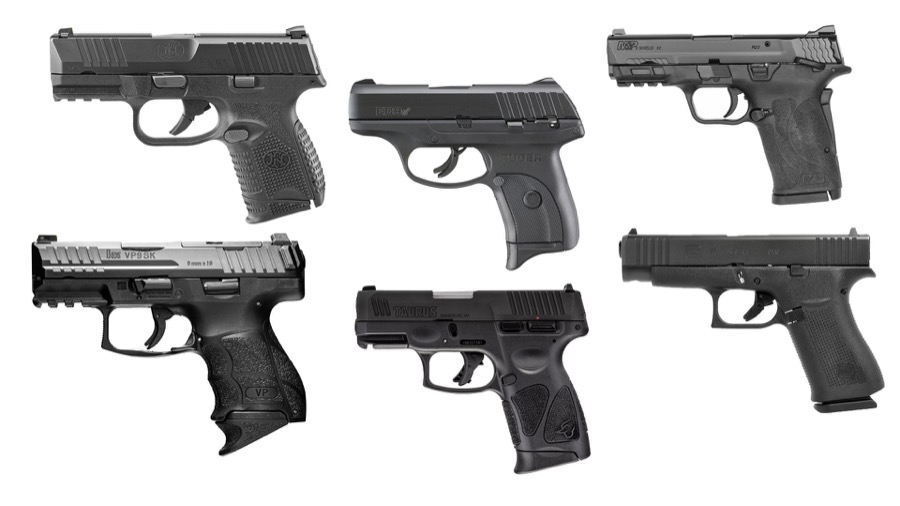
Read this first. If you searched for “compact carry pistol IPSC division,” you’ve stumbled into one of the most common naming mix-ups in practical shooting. IPSC does not have a CCP (Compact Carry Pistol) division. That label belongs exclusively to IDPA (International Defensive Pistol Association), which created CCP in March 2023 specifically for everyday carry-sized handguns. In IPSC, you shoot a compact pistol inside the existing Production, Production Optics, or Standard divisions — there’s no compact-only category.
If your real question is “I have a Glock 19, where do I shoot it?”, the answer is IDPA CCP for a beginner-friendly compact-only field, or IPSC Production with the understanding that you’re giving up some sight radius and capacity to the Glock 34 crowd. Both are completely valid. This guide covers the rules of each, the top 5 compact pistols for 2026, and the rising trend of compensated carry pistols (P365 X-Macro Comp, Canik MC9 Prime, Shadow Systems CR920XP) that are quietly redefining what “carry gun” means.
💡 Further Reading: For a deeper dive into all eight IDPA divisions, see our IDPA Divisions Explained 2026 Guide. New to IDPA? Start with the IDPA Beginner Pistol Guide. For Glock 19 vs Glock 17 sizing, our Glock 19 vs 17 Comparison covers the practical differences.
Why This Confusion Exists
The mix-up isn’t your fault. Search any shooting forum and you’ll find people asking “what’s the IPSC compact carry pistol division?” — partly because IPSC and IDPA share the same target language, the same shot-timer culture, and a heavy overlap of competitors. People shoot both, and they accidentally swap the vocabulary.
There’s also an honest reason for the confusion. IDPA’s CCP division is so closely modeled on the Glock 19 that the box dimensions (7 3/4″ × 5 3/8″ × 1 3/8″), the 4 3/8″ barrel limit, and the 10+1 capacity rule were essentially reverse-engineered from a real-world EDC pistol. Anything CCP-legal is, by design, “what you actually carry every day.” That’s a clean concept, and shooters intuitively expect IPSC to mirror it. But IPSC takes the opposite philosophy: divisions are defined by how the gun is built and modified, not by how the gun is carried. A compact and a full-size live in the same Production division because both are “factory-ish striker-fired 9mm” — IPSC doesn’t care if your grip is short.
So the practical takeaway is this: if you want a competition built around your concealed carry pistol, shoot IDPA CCP. If you want to take that same compact into IPSC, you’re welcome — you’ll just be in Production against guys running 5-inch slides.
What CCP Eligibility Means When You’re Shopping
CCP is IDPA’s youngest handgun division and the only one explicitly built around carry-sized pistols. The rules are tighter than SSP, and that tightness is the whole point — it forces the field into a format that mirrors how people actually carry concealed every day.
For gun-shopping purposes you only need the shape of it: a CCP pistol has to pass a compact test box, keep its barrel short, stay under a weight limit, and load to 10+1. In practice that means “a Glock 19 or something the same size,” which is why almost every gun on the shortlist below is CCP-legal by default. The exact box dimensions, barrel and weight limits, and the equipment bans that disqualify a gun are all written out in our IDPA divisions guide — check your specific pistol against that before you enter a match.
The one rule worth knowing while your credit card is out: compensators and ported barrels are not CCP-legal. That matters in 2026 because compensated carry pistols have exploded in popularity, and none of them can shoot this division — which is exactly the trade-off the shortlist below keeps running into.
Why bother shooting CCP instead of SSP if SSP gives you 15+1? Because the field is smaller, the equipment gap between competitors is narrower, and the skills transfer cleanly to actual concealed carry. Your reload practice, your draw from concealment, your one-handed work — every drill in CCP doubles as defensive training. SSP and ESP are competition-first; CCP is “competition built on top of carry.”
Using a Compact in IPSC Production: What You Give Up
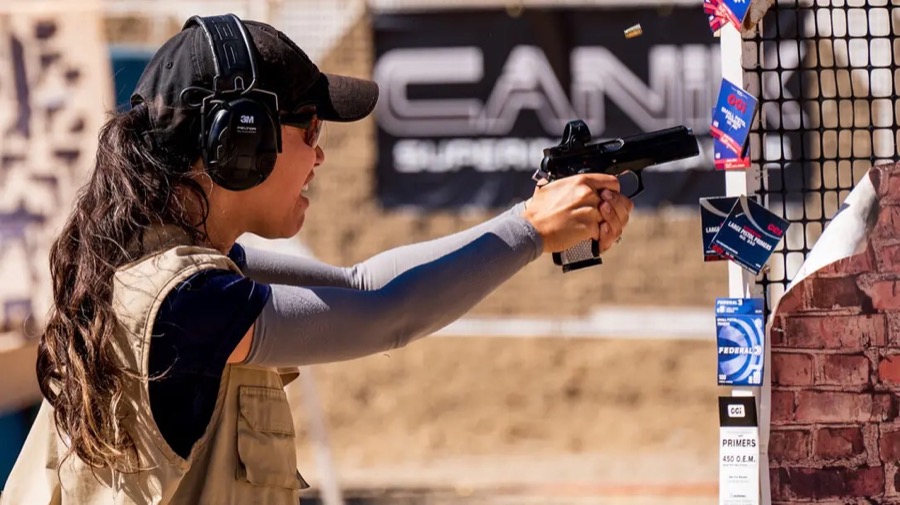
IPSC Production allows any factory striker-fired or DA/SA pistol with a barrel up to 5″ (127 mm), a 15-round magazine cap (under most regional rules), and minor modifications only. A Glock 19 is fully legal here. So is a P365 X-Macro. So is a Shadow Systems CR920. The question isn’t “can I?” — it’s “should I?”
The honest answer is: you give up about 1.5 inches of sight radius and somewhere between 0 and 4 rounds of capacity per magazine. The Glock 19’s 4.02″ barrel means your front sight sits closer to your rear sight than a Glock 34 shooter’s does, so your sight alignment errors translate to bigger group sizes at distance. On a 25-yard standards stage, that’s real. On a typical 7-yard hose-fest, it’s invisible. And the 15-round magazine in a Glock 19 puts you on equal capacity footing with the Glock 34 crowd — so it’s really only the sight radius that costs you.
Where it gets interesting is the Production Optics division (or USPSA Carry Optics). Once you slap a red dot on top, sight radius becomes irrelevant — the dot is the dot regardless of slide length. A Glock 19 MOS or a Shadow Systems CR920XP runs neck-and-neck with full-size optics guns inside 15 yards, and the lighter, faster transitions actually favor the compact on close-range, high-target-count stages. If you shoot optics, the compact-vs-full-size penalty in IPSC nearly disappears.
What does not disappear is recoil. A 24-ounce Glock 19 kicks more than a 26-ounce Shadow 2 with a steel frame. You’ll feel it on splits — your dots-per-second will be a bit lower, and the gun will track less predictably between shots. This is where 2026’s compensated carry pistols change the math, because a compensator on a 24-ounce gun closes most of that recoil gap.
💡 Further Reading: For a complete breakdown of IPSC Production rules and recommended setups, see our IPSC Beginner Pistol Guide and IPSC Production Optics Guide.
Top 5 Compact Pistols for IDPA CCP and IPSC Production (2026)
These are the five guns I’d put in front of a friend who walked into the gun store tomorrow. Each one is competition-tested, available at retail, and represents a different price/feature trade-off.
1. Glock 19 Gen 5 — The Default Answer
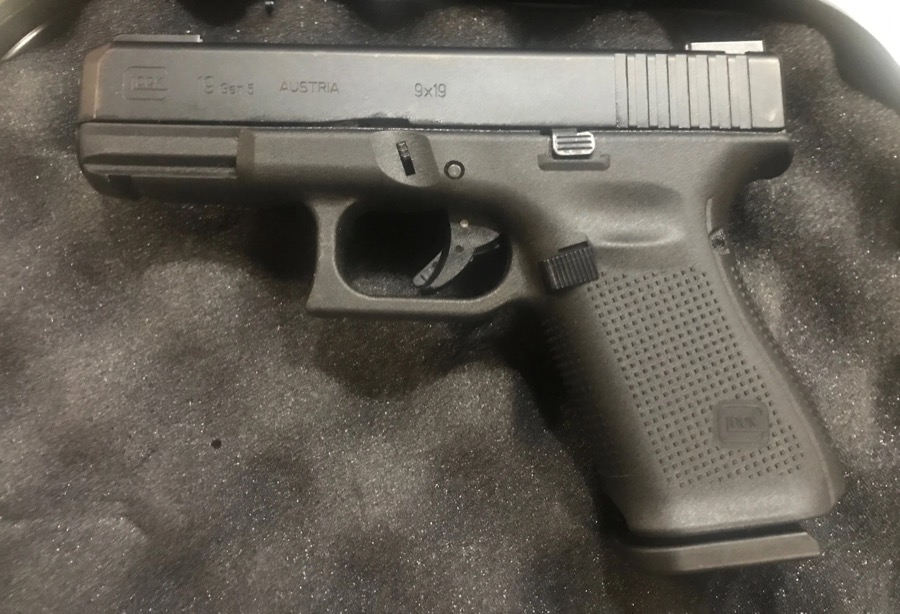
The Glock 19 is what CCP was literally designed around. Buy one, run it bone-stock, and you have a CCP-legal pistol that costs about $550 new and has the largest aftermarket support of any pistol on Earth. The Gen 5 added a flared magwell, ambidextrous slide stop, and the marksman barrel — small upgrades that genuinely help in competition.
In IPSC Production it’s still excellent. You’re giving up sight radius to the Glock 34 shooters, but every 9mm range bag in America has a Glock 19 in it, holsters are everywhere, and replacement parts are at your local gun store. A Glock 19 with three 15-round magazines, a Henry Holsters Spark IWB, and a sturdy gun belt gets you to your first IPSC Production match for under $700 total.
The trigger is the only weak point. The factory Glock trigger is fine, not great. A $25 connector swap and a polish job, or a $130 aftermarket trigger, fixes it permanently. Best for: shooters who want one gun that works for CCP, Production, daily carry, and home defense.
2. SIG P365 X-Macro Comp — The 2026 Wildcard
The P365 X-Macro Comp pairs a 3.1″ compensated barrel with a 17-round flush-fit magazine in a frame that’s only 1″ wide. On paper it’s the dream concealed carry gun. In IDPA CCP, the integral compensator is not allowed — so the standard X-Macro (non-comp, 3.7″ barrel, 17+1) is what you’d actually run. In IPSC Production, the comp is also banned (Production rules forbid compensators). The Comp version finds its home in IDPA Carry Optics or as a daily carry piece.
The non-comp X-Macro fits the CCP box, holds the right capacity, and shoots flatter than any other true micro-compact thanks to its grip length. Pew Pew Tactical’s review and 1,000-round tests on the platform have shown zero malfunctions. The trigger is on par with a tuned Glock and the slide cuts are factory optic-ready.
Where it falls short: the short barrel costs you about 50 fps of muzzle velocity, which makes 9mm Major (used in Open division — irrelevant here) impossible and even 125 power factor a tighter window. Stick with quality 124gr or 147gr loads. Best for: shooters who want the smallest possible CCP-legal gun and don’t mind the 17-round mag being slightly tall in the grip.
3. CZ 75D PCR / CZ P-09 — The Steel-Frame Bargain
The CZ 75D PCR is a compact aluminum-frame DA/SA that runs around $450 used and feels like a $1,000 gun in your hand. Low bore axis, hammer-fired, and one of the smoothest factory triggers in its price bracket. It fits the CCP box, holds 14+1 (you’ll download to 10+1 for CCP), and the steel slide on aluminum frame gives you a softer-shooting platform than any polymer compact.
The CZ P-09 is the polymer-frame, 19-round full-size sibling — too big for CCP, but a Production division monster. If you’re shopping CZ specifically and want CCP, the PCR is the answer. If you want the same trigger and ergonomics in a Production gun, the P-09 wins on capacity.
The downside of DA/SA is the long first trigger pull. New shooters often shoot a high first shot until they learn to manage the 10-pound DA stroke. After 200 rounds of dry-fire it becomes second nature. Best for: shooters who want a hammer-fired alternative to striker-fired Glocks, prefer steel-frame feel, and shop the used market.
4. Canik METE MC9 Prime / TTI Combat — Compensated and Affordable
Canik’s MC9 Prime is a 17+1 micro-compact with a factory compensator, a flat-face aluminum trigger, Night Fision tritium sights, and an optic cut — all at a $509-$570 street price. American Rifleman’s 2026 review called it the most “competition-ready” sub-compact on the market, and the grip texture is borrowed directly from the TTI Combat (Canik’s collab with Taran Tactical Innovations).
Like the SIG X-Macro Comp, the integral compensator means MC9 Prime is not CCP-legal and not Production-legal. Where it shines is IDPA Carry Optics with an RMSc-pattern red dot, or BUG division if you don’t mount an optic. For IPSC, look at Production Optics with the standard MC9 (non-Prime, no comp) or the TTI Combat at the higher tier.
Why mention it in a CCP guide? Because the question shooters increasingly ask in 2026 isn’t “what’s CCP-legal” but “what’s the best carry-sized competition gun, period.” If you’re willing to shoot Carry Optics instead of CCP, the comp options open up dramatically. Best for: budget-conscious shooters chasing the compensated-carry trend, willing to pivot from CCP to Carry Optics.
5. Shadow Systems CR920XP — The Premium Comp Option
The CR920XP is a compensated subcompact with a 3.41″ barrel, 15+1 capacity, and an unloaded weight around 19.5 ounces. Gun Digest’s review documented a top-30 IDPA Carry Optics finish against 2011 platforms, with zero malfunctions over the match. The compensator is reportedly one of the best tested at any price point and the gun tracks dots like a much heavier pistol.
At roughly $1,000 retail, it’s the priciest gun on this list. What you get is Glock-pattern parts compatibility (the trigger, magazines, and sights are all Glock-spec), Elite-level slide machining, and a tool-less compensator. For shooters who already run Glock and want a serious carry-optic competition gun, the CR920XP is the natural step up from a Glock 19 MOS.
CCP-legal? No — the comp disqualifies it from CCP. IPSC Production? No — same reason. Carry Optics in IDPA, Production Optics in IPSC are where it lives. Best for: experienced shooters who already run Glock, want a comped competition gun under 20 ounces, and have $1,000 to spend.
The 2026 Compensated Carry Pistol Trend
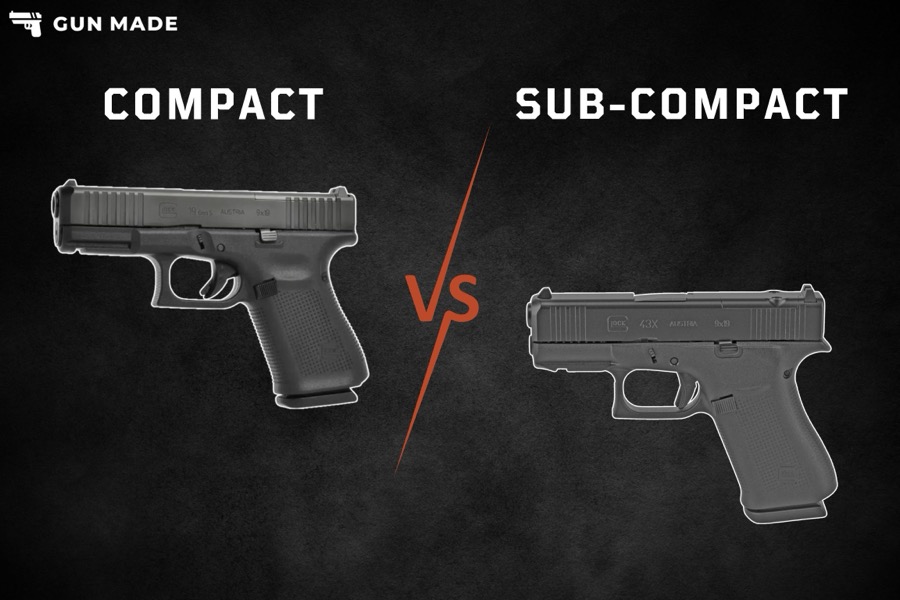
Five years ago, “comped carry gun” was a contradiction in terms. Compensators were big, ugly, and added 2 inches to the front of your gun — fine for an Open division race gun, terrible for an IWB holster. That’s changed. The P365 X-Macro Comp, Canik MC9 Prime, Shadow Systems CR920XP, Springfield Hellcat RDP, and the new Glock G19 Gen 5 MOS Comp (released late 2025) all build the compensator into the slide and barrel as one integrated unit. No length penalty, no holster compatibility issues.
What this means for the rules is awkward. CCP and Production both ban compensators, so the entire 2026 compensated-carry generation is locked out of those divisions. The result is a quiet migration of carry-focused shooters from CCP into Carry Optics (IDPA) and Production Optics (IPSC), where comps are allowed. Local match attendance reflects this — Carry Optics has been the fastest-growing IDPA division for three straight years.
If you’re buying a compact pistol in 2026 and you want maximum competition flexibility, here’s the honest decision tree. Want CCP eligibility? Buy non-compensated (Glock 19, P365 X-Macro non-comp, CZ PCR). Want to ride the comp wave and don’t care about CCP? Buy compensated and shoot Carry Optics (P365 X-Macro Comp, MC9 Prime, CR920XP). Don’t try to split the difference with a swappable compensator — IDPA’s stage-by-stage equipment check will catch you out.
Small-Hand Shooters: An Underserved Market
This deserves its own section because the Reddit r/CompetitionShooting threads are full of shooters — often women and shooters with smaller hands — who can’t comfortably grip a Glock 17 or Shadow 2. The full-size Production guns are designed for an “average male” hand circumference, and a 6-inch hand simply cannot wrap around a Beretta 92 trigger reach.
A compact frame solves this in three ways. The grip circumference is smaller, the trigger reach is shorter, and the lighter overall weight means less fatigue across a 6-stage match. The Glock 19 sits as the standard answer here — it’s literally the gun your trainer hands you when the full-size doesn’t fit. The CZ 75D PCR has the shortest trigger reach in the CZ lineup. The Canik METE MC9 Prime, despite being a micro-compact, has aggressive grip texture that small hands lock onto better than a smooth Glock frame.
Two specific trade-offs to know. A smaller grip means smaller magazine, which means more reloads — practice them. And a lighter gun means more felt recoil — which is exactly why compensated micro-compacts (P365 X-Macro Comp, MC9 Prime) are so popular with smaller-statured shooters. The comp turns a snappy-shooting 22-ounce gun into something that tracks like a 30-ounce gun.
Transitioning From IDPA CCP to IPSC Production
A natural progression for a lot of shooters: start in IDPA CCP because the rules are forgiving and the field is small, then graduate to IPSC Production once you want bigger matches and more rounds per stage. The two divisions have enough overlap that your CCP gear travels well, but a few things change.
Capacity is the first jolt. CCP caps you at 10+1; Production gives you 15. If you’ve trained on CCP reload timing, you’ll suddenly have stages where you don’t reload at all — which sounds nice but messes with your stage planning if you’re not ready for it. Practice your high-capacity stage breakdowns before your first Production match.
Cover is the second. IDPA enforces use of cover and gives you procedural penalties for not slicing the pie correctly; IPSC has no cover rule. You can run flat-out into the open. A lifelong IDPA shooter switching to IPSC will instinctively bend behind cover that doesn’t exist on the IPSC stage, and lose 0.5 to 1.5 seconds per position. Watch a few IPSC matches on YouTube before your first one — the movement style is genuinely different.
The third change is concealment. IDPA requires a cover garment; IPSC doesn’t. Your IDPA holster might be IWB or appendix; in IPSC, almost everyone runs an OWB competition holster. You don’t have to switch — most IPSC clubs will let you shoot from concealment if you want — but you’ll be slower. Expect to add 0.3 to 0.8 seconds to your draw if you’re sticking with IWB.
💡 Further Reading: For the full picture on how the two sports compare, see our IDPA vs USPSA Complete Comparison Guide and IDPA scoring and penalty rules.
Training Drills for Compact Pistols
Three drills cover 80% of what you need before your first compact-pistol match. Work them in this order, time them with a shot timer, and track your progress weekly.
Bill Drill from concealment — six rounds on a 7-yard target, all in the A-zone, on the buzzer from a concealed draw. The compact-pistol benchmark is under 3.0 seconds; sub-2.5 puts you in expert territory. The reason this drill matters is that it forces you to call your sights through recoil on a smaller gun, which is the single biggest skill gap between full-size and compact shooters. If you’re missing the A-zone on rounds 5 and 6, your grip is breaking down — not your aim.
El Presidente from concealment — three targets at 10 yards, two rounds each, mandatory reload, two more rounds each. A 6.0-second compact-pistol El Pres on a clean run is an honest A-class benchmark. The 10+1 capacity on a CCP gun makes the reload mandatory (you only have 6 rounds in the gun if you want any reserve), so this drill is a CCP litmus test in a way it isn’t for a 15+1 SSP gun.
Mozambique on a compact frame — two body, one head at 7 yards, all from the holster. The transition from body shots to a precision head shot is where compact-pistol shooters lose time, because the shorter sight radius punishes any wobble during the transition. Sub-2.0 seconds on this drill, clean, is your goal.
💡 Further Reading: For more drill ideas with timing benchmarks, see our IDPA Defensive Shooting Training Guide and IPSC Practical Shooting Training Guide.
Frequently Asked Questions
Does IPSC have a CCP (Compact Carry Pistol) division?
No. IPSC has no CCP division. The CCP label belongs exclusively to IDPA, which created the Compact Carry Pistol division in March 2023. In IPSC, you shoot a compact pistol inside the existing Production, Production Optics, or Standard divisions — there’s no compact-only category. If you’ve seen forum posts mentioning “IPSC CCP,” that’s a vocabulary mix-up between the two sports.
How does a compact pistol perform in IPSC Production compared to a full-size?
You give up about 1.5 inches of sight radius and feel slightly more muzzle flip. On close-range stages (under 10 yards), the difference is invisible. On a 25-yard standards stage, the shorter sight radius costs you a measurable group size. Capacity-wise, a Glock 19’s 15-round magazine puts you on equal footing with a Glock 34 — Production caps everyone at 15 anyway. In Production Optics with a red dot, the compact-vs-full-size gap nearly disappears entirely.
Are compensated pistols legal in IDPA CCP?
No. CCP rules prohibit compensators and ported barrels. This means the SIG P365 X-Macro Comp, Canik METE MC9 Prime, Shadow Systems CR920XP, Springfield Hellcat RDP, and Glock 19 Gen 5 MOS Comp are all CCP-illegal. To shoot them in IDPA, run Carry Optics. In IPSC, they’re not Production-legal either; run Production Optics or Open. For the full CCP equipment rules — box size, barrel and weight limits, capacity — see the IDPA divisions guide.
Is the Glock 19 better than the Glock 17 for IPSC Production?
For Production specifically, the Glock 17 wins on sight radius and is most shooters’ default. But a Glock 19 is fully legal and competitive — many top-100 USPSA Production finishes have come from G19 shooters. If you only own one Glock and it’s a 19, don’t buy a 34 just for matches. Run what you have, learn the gun, and upgrade only when you’ve identified that sight radius is genuinely your bottleneck (it usually isn’t until you’re A-class and above).
What’s the cheapest CCP-legal pistol for a beginner?
A used CZ 75D PCR at $400-$450 is the value king. New, the Canik METE MC9 (non-Prime, non-comp version) at around $400 is hard to beat. The Taurus G3c at $300 is the absolute floor — it’s not as refined as the others, but it’s CCP-legal and shoots straight. Avoid anything under $250 new — at that price the trigger and reliability problems will cost you more in match frustration than you saved buying it.
Can I use my IDPA CCP gun for IPSC?
Yes, but expect to download more often if you’re using 10-round magazines (CCP cap) when 15 is allowed in Production. A bone-stock Glock 19 is fully legal in both IDPA CCP and IPSC Production. Your holster might need to change — IDPA allows IWB and concealed carry; IPSC clubs almost universally use OWB competition rigs. Check with your local IPSC range before showing up with an appendix holster.
What about the SIG P320 in CCP?
Banned. As of July 2025, all SIG P320 variants are banned across all IDPA divisions, including CCP. This is due to a series of uncommanded discharge reports. If you own a P320-derivative compact, you cannot use it in any IDPA match. The P365 family is unaffected and remains legal. The rest of the 2026 rule changes are covered in our IDPA divisions guide.
Final Verdict
If I had to recommend one gun for someone walking into a gun store today with “I want to shoot CCP and IPSC Production” as their brief, it would be the Glock 19 Gen 5. It’s CCP-legal, Production-legal, daily-carry-capable, has the largest holster ecosystem on Earth, and costs $550. Add a $130 trigger, three magazines, an IWB holster, and a shot timer, and you have a complete competition kit for under $900.
For shooters who want the modern compensated carry trend, the SIG P365 X-Macro Comp is the smallest viable option and the Shadow Systems CR920XP is the premium choice. Just understand that you’re trading CCP eligibility for the comp, and budgeting your division choice around Carry Optics (IDPA) or Production Optics (IPSC).
For a budget build, CZ 75D PCR used or Canik METE MC9 (non-Prime) are the two value picks. Both are CCP-legal, both shoot well above their price tag, and both will get you to a first-place finish at a local match if your skills justify it.
The bottom line on the IPSC-vs-IDPA-CCP question: shoot whichever sport has matches near you. If your local club only runs IPSC, use a compact in Production and stop worrying about division optimization. If your club runs IDPA, CCP gives you the cleanest carry-gun-meets-competition experience available. Both sports build the same fundamentals — speed, accuracy, gun handling — and the gun in your hand matters far less than the rounds you put through it.
💡 Further Reading: Ready to start training? Track your progress with the Airsoft Shot Timer App. For the broader practical shooting picture, see our Practical Shooting Complete Beginner Guide and IDPA Beginner Pistol Guide.
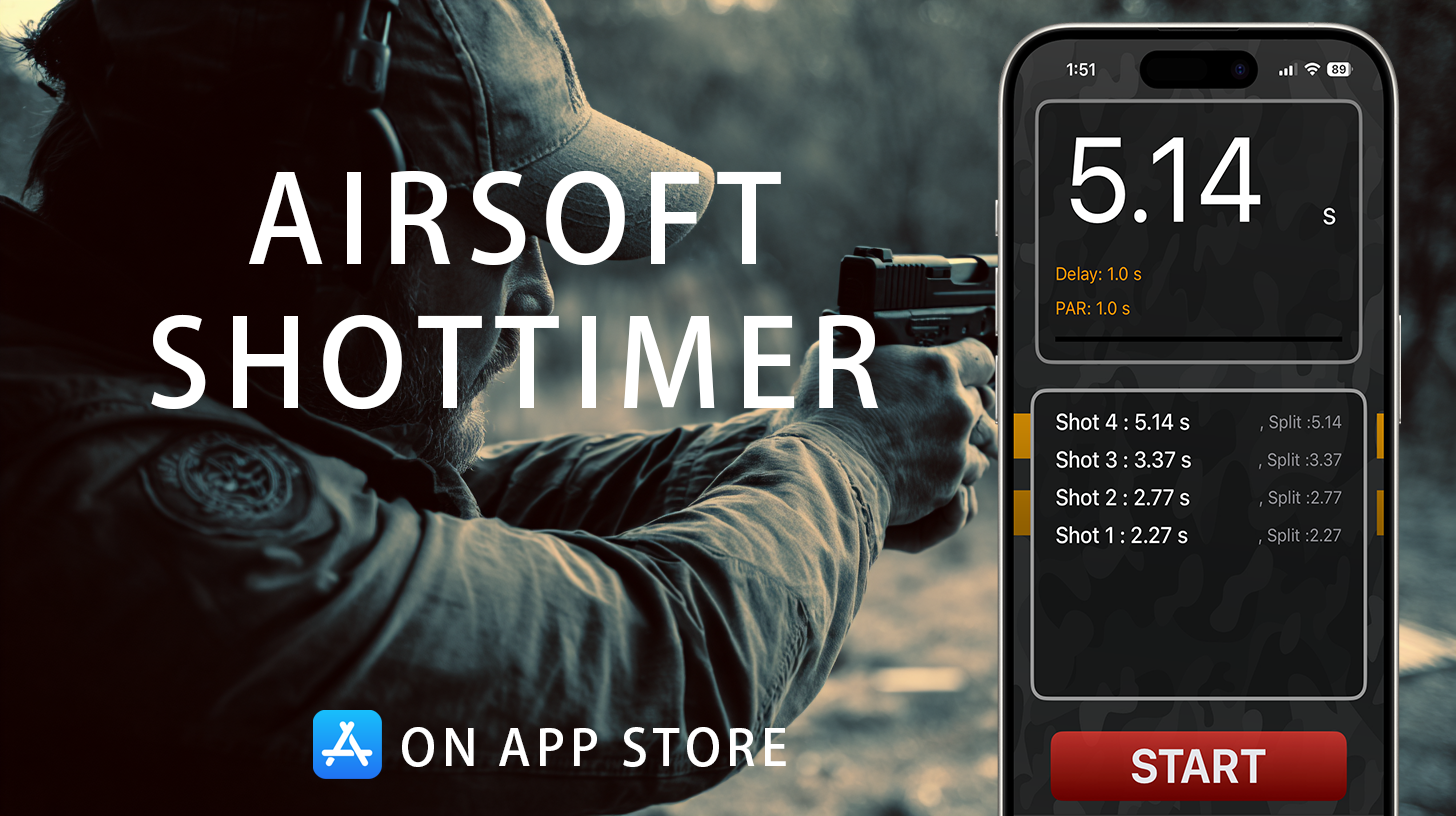
Put a Shot Timer in Your Pocket
Airsoft Shot Timer is a free shot timer app tuned for airsoft and Action Air — it picks up BB gun shots, tracks your split times, and saves you the cost of a $150+ hardware timer for IPSC/IDPA practice.

- Compact Carry Pistol
- Compact Carry Pistol IPSC
- Compact Carry Pistol IPSC Division
- IPSC
- IPSC Production
- Production Division
- Glock 19
- Glock 19 Gen 5
- SIG P365 X-Macro Comp
- SIG P365 XMacro Comp
- CZ 75D PCR
- CZ P-09
- Canik METE MC9 Prime
- TTI Combat
- Shadow Systems CR920XP
- Compensated Carry Pistol
- Compensated Carry Pistol 2026
- Comp Pistol IPSC
- Best Compact Pistol Competition
- Best Concealed Carry Pistol Competition
- Best Compact Pistol for IPSC
- Small Hands Pistol
- Compact Pistol Production Division
- Practical Shooting Compact Pistol