Tokyo Marui Glock 17/19 Gen 5 MOS GBB Complete Guide: The Most Realistic Training Pistol
Why Choose a Tokyo Marui Glock GBB?
Ask any real-steel shooter what they use for at-home training, and there’s a good chance the answer involves a Glock GBB airsoft pistol. The reasoning is straightforward: it looks, operates, and feels almost identical to the real thing, and you can safely practice draw strokes, magazine changes, and target transitions in your living room — no range trip needed, no ammo costs.
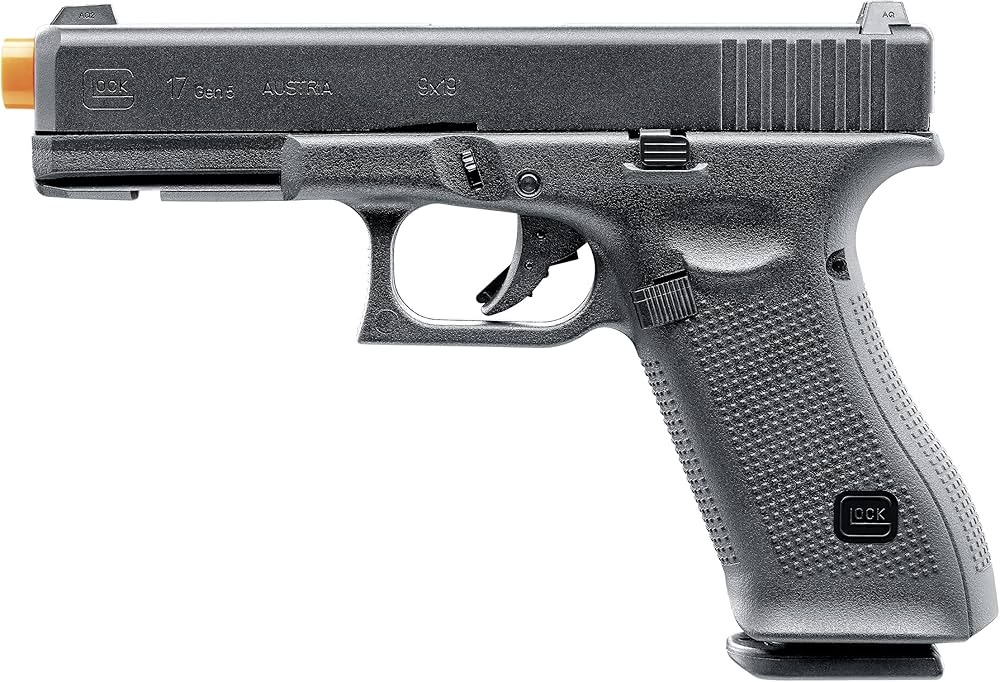
Tokyo Marui’s Glock 17 Gen 5 MOS, released in 2023, is one of the most realistic Glock GBB pistols available today. This isn’t just a lookalike toy — Tokyo Marui redesigned the blowback engine with roughly 20% more cylinder volume, delivering a noticeable kick with every shot. For shooters who are familiar with real Glock pistols, picking up this GBB feels remarkably natural.
The subsequently released Glock 19 Gen 5 MOS is the compact version, better suited for concealed-carry draw practice and CQB scenarios. Together, these two pistols cover virtually every training need a Glock user could have.
Real Glock Gen 5 vs Tokyo Marui GBB: How Close Is It?
For many buyers, the primary reason to own an airsoft GBB is to practice at home. So how close does the Tokyo Marui Gen 5 actually get to the real firearm?
The first thing you notice when you pick it up is that the size and weight are very similar. The G17 Gen 5 MOS weighs about 676g with an empty magazine, while the real Glock 17 Gen 5 comes in at roughly 625g unloaded — less than a 10% difference. The grip texture feels comparable too, and Tokyo Marui faithfully reproduced the Gen 5’s removal of finger grooves. Two sizes of backstraps (S and M) are included so you can adjust the grip to match your hand.
Operationally, the slide release, magazine release, and slide rack all travel and function like the real gun. The trigger is the most pleasant surprise: while the pull weight is slightly lighter than a real Glock, the staging, wall, break, and reset feel remarkably accurate. The trigger discipline and control habits you develop on this GBB transfer directly to the range.
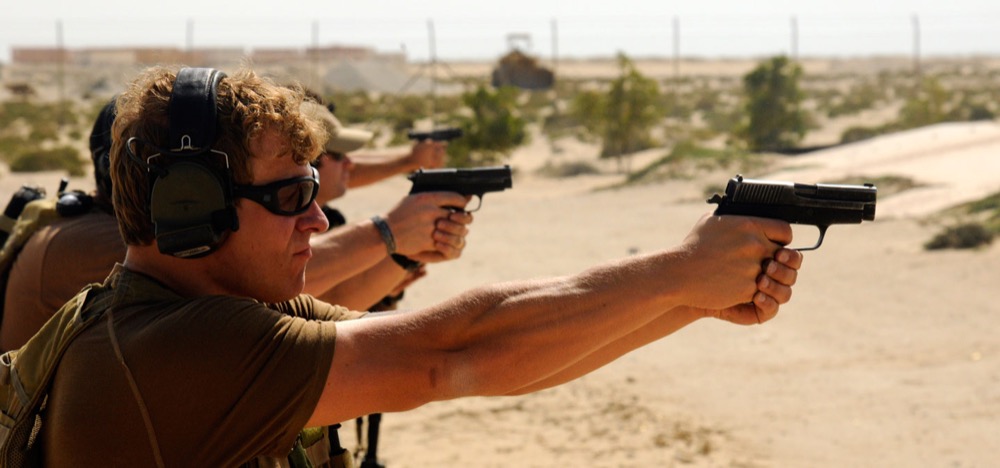
Of course, differences exist. The most obvious is recoil — GBB blowback force is roughly one-tenth of what 9mm produces, so recoil management isn’t something you can train here. Accuracy is also limited by the Hop-Up system and BB physics; beyond 15-20 meters, trajectory stability drops noticeably. But for draw-to-first-shot, reloads, target transitions, and other drills that don’t depend on precise trajectory, a GBB is an incredibly efficient training tool.
💡 Further Reading: Want to know more about real Glock generational differences? Check out the Glock Gen 6 Complete Guide and Glock 19 vs Glock 17 Complete Comparison.
Full Specifications
| Spec | Glock 17 Gen 5 MOS | Glock 19 Gen 5 MOS |
|---|---|---|
| Overall Length | 202mm | 185mm |
| Inner Barrel | 97mm | 87mm |
| Weight (w/ empty mag) | 676g | 623g |
| Magazine Capacity | 25 rounds | 22 rounds |
| Muzzle Velocity | ~270-300 FPS | ~260-290 FPS |
| Hop-Up | Adjustable | Adjustable |
| Power Source | Gas Blowback | Gas Blowback |
| Recommended Gas | HFC134a / Green Gas | HFC134a / Green Gas |
| Material | Carbon-reinforced resin slide + polymer frame | Carbon-reinforced resin slide + polymer frame |
Tokyo Marui chose carbon-reinforced resin over metal for the slide, and there’s engineering reasoning behind this decision. A lighter slide means less gas consumption per shot, more shots per fill, and a snappier blowback cycle. If you’ve used full-metal GBBs in cold weather, you know they often run out of gas mid-magazine — TM’s lightweight slide performs noticeably better in low temperatures.
Six Key Gen 5 Upgrades
Tokyo Marui’s Glock Gen 5 series faithfully reproduces every key improvement from the real Gen 5, and these details directly impact training realism.
The removal of finger grooves is one of Gen 5’s most popular changes. Earlier generations had three finger channels molded into the front of the grip, intended to help with finger placement but awkward for anyone whose hands didn’t match the spacing. Gen 5 switched to a smooth surface with swappable backstraps, accommodating a wider range of hand sizes. TM includes two backstrap sizes, and installation takes nothing more than a punch pin.
Ambidextrous slide stop means left-handed shooters no longer have to awkwardly reach across with their index finger. For competitive shooters, it also opens up more manipulation options — some shooters prefer using their support-hand thumb to release the slide, and the bilateral design makes that movement smoother.
Front slide serrations and chamfering are both visual and functional upgrades. The front serrations provide better grip when performing press checks, and the chamfered edges give the whole pistol a cleaner profile.
The flared magwell is fully replicated on the TM version. During fast reloads, the flared opening guides the magazine into the grip more reliably, reducing the chance of a fumbled insertion under pressure. This detail is particularly noticeable during timed training — your reload times become consistently shorter thanks to smoother magazine seating.
The MOS optic-ready slide is a major selling point for both models. A removable cover plate on the rear of the slide can be swapped for a mounting plate that accepts Tokyo Marui’s own Micro Pro Sight or other compatible red dot optics. Included spacers allow height adjustment for different optic brands.
The new blowback engine is the upgrade you can’t see but definitely feel. The roughly 20% increase in cylinder volume translates to stronger recoil impulse and more definitive shot feedback. Even in winter temperatures around 15°C, these pistols maintain reliable operation — a meaningful advantage for outdoor use in cooler climates.
G17 or G19: How to Choose
This is the question every prospective TM Glock buyer faces. The simple answer: if you own a real Glock and want matching training, buy the same model. But if you don’t have a real-steel counterpart or plan to buy just one, here’s how to think about it.
The G17 is full-sized, with a longer inner barrel that produces slightly higher muzzle velocity and marginally better effective range. Its 25-round magazine holds 3 more BBs than the G19 and has more internal gas volume, which translates to better cold-weather efficiency. On the field, the G17 works well as a primary sidearm, especially in Airsoft IPSC or IDPA competitions. If you also own a real Glock 17 or 34, the TM G17 fits directly into the same Kydex holsters for training.
The G19 is compact — 17mm shorter and 53g lighter than the G17. That difference doesn’t feel dramatic in hand, but it matters in concealed-carry scenarios. If you’re practicing IDPA-style concealed draws or need a more maneuverable sidearm in CQB, the G19 is the better pick. The shorter slide also cycles marginally faster, creating a subtly different feel during rapid fire.
For most people buying just one, the G17’s versatility makes it the safer choice. But if budget allows, owning both provides the most complete training experience.
Upgrade Guide: From Stock to Advanced
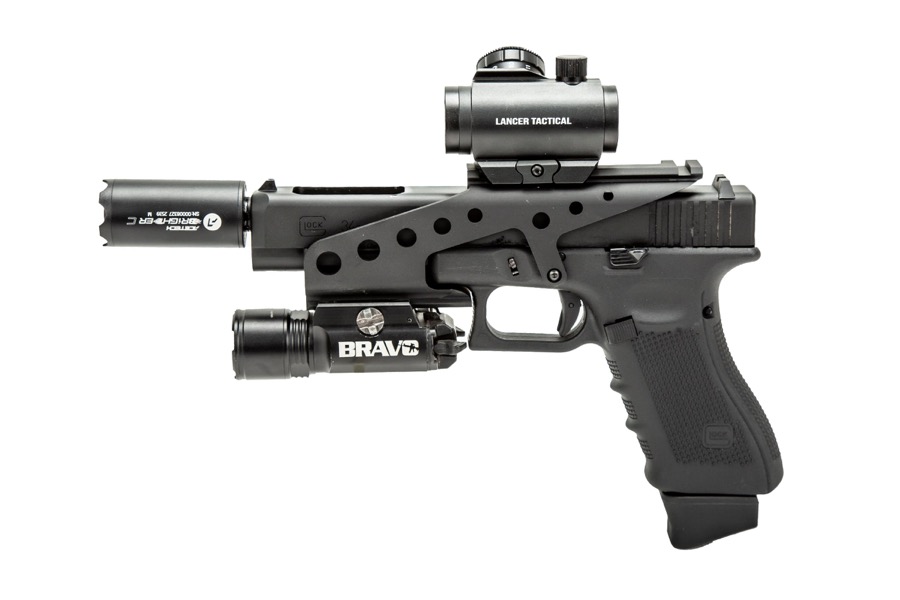
The aftermarket parts ecosystem for TM Glocks isn’t as vast as Hi-CAPA’s, but it’s still quite robust. Here are upgrades ranked by impact.
Accuracy Upgrades (Highest Priority)
Swapping to a tighter-bore inner barrel and upgraded Hop-Up bucking is the best first modification. Replacing the stock 6.08mm barrel with a 6.03mm or 6.01mm precision barrel, paired with a Maple Leaf or Flamingo Hop-Up bucking, noticeably improves trajectory stability and effective range. Use a 97mm barrel for the G17 and 87mm for the G19. This upgrade runs about $30-40.
Optics
Since these are MOS models, not mounting a red dot feels like a missed opportunity. Tokyo Marui’s own Micro Pro Sight is the simplest plug-and-play option. For a more realistic training experience, Guarder offers steel RMR-footprint mounting plates that accept Holosun or Trijicon-spec dots. Practicing red dot acquisition on your GBB builds muscle memory that transfers seamlessly to range day.
Slide and Externals
Guarder and Pro Arms both produce metal slide kits for the G17/G19 Gen 5. Metal slides add realistic weight and feel, plus greater durability. The trade-off is increased gas consumption — in cold weather, this can affect performance. If you primarily shoot indoors or in warm climates, the impact is minimal.
Trigger and Internals
CowCow Technology and Guarder offer upgraded trigger groups and internal components for TM Glocks. A lightweight trigger can provide a shorter pull and crisper break, but don’t go too light — if your goal is real-steel training, maintaining a trigger pull weight close to the real Glock is actually more valuable.
Comparison with Competitors
Several brands produce Glock GBBs, and understanding the differences helps you make the right choice.
The Umarex (VFC-made) Glock 17 Gen 5 is the biggest competitor. It carries official Glock licensing, meaning the trademarks and external details are 100% accurate. It ships with a full-metal slide, and the weight in hand feels closer to a real Glock. However, VFC’s gas efficiency falls short of TM’s, and the performance gap widens considerably in cold weather. Aftermarket support has improved in recent years but still trails TM.
WE-Tech’s Glock series is the budget option, typically half the price of TM. Full metal, decent appearance, but quality control is the main concern — you might receive an excellent unit or one that needs immediate attention. Over time, internal parts wear faster than TM equivalents.
If you want the best out-of-box reliability, optimal gas efficiency, and the most mature aftermarket ecosystem, Tokyo Marui remains the safest choice. If official Glock licensing and metal weight matter most to you, consider Umarex/VFC. On a tight budget, WE-Tech gets you started, but prepare for potential follow-up investment.
Training Methods with a Shot Timer
Having a good training tool is just the beginning — the key is knowing how to use it. Pair your GBB Glock with the Airsoft Shot Timer App to build a complete home training system.
Draw to First Shot
The most fundamental and important drill. Place your GBB in your real holster (most Kydex holsters accept TM Glocks directly), set the Shot Timer to random delay, and practice the full sequence from standstill through draw, aim, and fire.
| Level | G17 Target Time | G19 (Concealed) Target Time |
|---|---|---|
| Beginner | < 2.0 sec | < 2.5 sec |
| Intermediate | < 1.5 sec | < 2.0 sec |
| Advanced | < 1.0 sec | < 1.5 sec |
Concealed-carry draws run about 0.3-0.5 seconds slower than competition holster draws due to the garment clearance step. If you’re practicing IDPA-style concealed draws with the G19, this time difference is expected.
Reload Drills
Glock’s magazine release design makes reloads intuitive. Use the Shot Timer to record the time from last shot through reload to the next shot on target, tracking your improvement over time. GBB magazines are lighter than real-steel magazines, so your GBB times may be slightly faster than range times, but the motor patterns and muscle memory transfer completely.
Multi-Target Transitions
Set up 2-3 targets at home (sticky notes or small paper targets work fine) and practice snapping from one target to the next. The Shot Timer’s split-time feature records how long each transition takes, helping you identify which movements need work.
💡 More Drills: Check out the Complete Shooting Drills Guide and Complete Pistol Draw Guide.
Maintenance Essentials
GBB reliability depends on regular maintenance. Here’s what to know for your TM Glock.
After every session, apply a thin coat of silicone oil to the slide rails to keep the action smooth. Keep silicone oil away from the Hop-Up bucking — oil softens the rubber and degrades both Hop-Up effect and accuracy. Clean the inner barrel with a dry cloth or dedicated cleaning rod, and occasionally wipe with a small amount of isopropyl alcohol to remove residue.
Magazine maintenance is equally important. Lubricate the fill valve and output valve with silicone oil periodically, and check O-rings for cracking or deformation. When storing long-term, release all gas from the magazine — sustained pressure accelerates O-ring degradation. Clean dirty magazine base pads with water and mild detergent.
In cold weather, keep magazines in your pocket or near a hand warmer. GBB performance is directly linked to temperature; below 15°C, Green Gas pressure drops noticeably. In cooler climates, HFC134a paired with TM’s lightweight slide typically maintains function, while Green Gas with a metal slide may struggle.
Purchase Recommendations and Budget Planning
Basic Setup (~$180-220)
One Tokyo Marui Glock 17 or 19 Gen 5 MOS with the included two 25-round (G17) or 22-round (G19) magazines. This configuration is enough to start basic training and field use right away.
Training-Optimized Setup (~$280-350)
Add a Maple Leaf precision barrel and bucking combo, one extra spare magazine, and a basic red dot optic. This setup takes both accuracy and training versatility up a level.
Complete Training Setup ($400+)
Add a metal slide kit, full trigger upgrade group, and a quality red dot sight (like the TM Micro Pro Sight or a compatible RMR-spec optic). At this level, both realism and durability reach a high standard.
Conclusion: The Value of a Glock GBB as a Training Tool
The Tokyo Marui Glock 17/19 Gen 5 MOS is more than just a capable airsoft sidearm — it’s a bridge between the airsoft world and live-fire shooting.
It lets you run high-quality manipulation drills at home — draws, reloads, target transitions, red dot tracking — and every one of those skills transfers directly to a real Glock at the range. Compared to spending hundreds of rounds on basic mechanics at the range, refining your fundamentals at home with a GBB and then validating with live fire is both more cost-effective and more training-efficient.
In the airsoft world, a Glock GBB is the most versatile sidearm you can carry. It pairs with any primary weapon, whether you’re playing MilSim, Speedsoft, or casual team games. And if you own both a real Glock and a TM Glock GBB, your training system is complete.
💡 Related Articles:
- Airsoft & Firearms Cross-Training Guide — Maximize your GBB’s training value
- Tokyo Marui Hi-CAPA 5.1 Gold Match Complete Guide — Another competition-grade GBB pistol
- Glock 19 vs Glock 17 Complete Comparison — In-depth real-steel comparison
- Complete Pistol Red Dot Guide — Red dot selection for MOS systems
- Complete Dry Fire Training Guide — The perfect companion to GBB training