Best Airsoft Grenades 2026: Types, Top Picks & How They Work
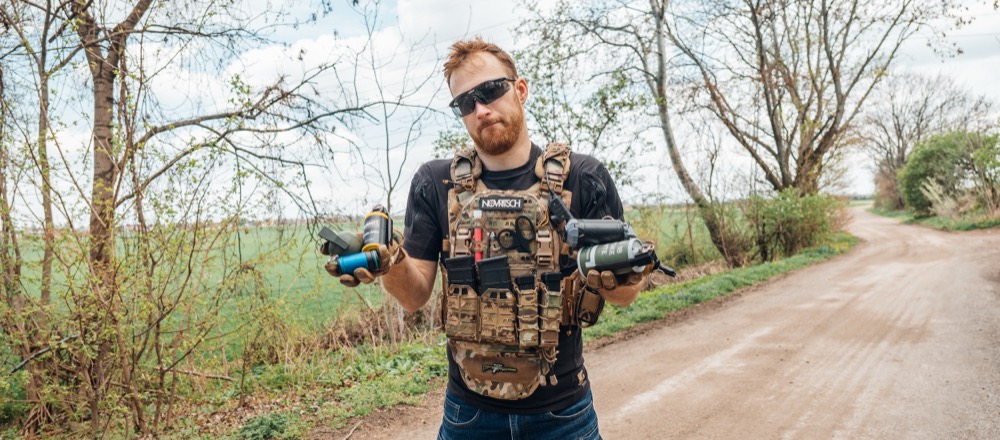
Quick Picks: Best Airsoft Grenade for Each Situation (60-Second Read)
Best beginner sound grenade: Thunder B ($15-20 metal core + $1-3 shells, 130 dB CO2). Loud enough to flip a CQB room, cheap enough that losing one in the grass doesn’t ruin your day.
Best smoke grenade: Enola Gaye Wire Pull ($8-12) for standard cover, EG18X ($15-20) when you need a full smoke wall. Outdoor-only — indoor venues ban them.
Best reusable BB grenade: ASG Storm 360 ($30-50, 160 BB, green gas refill, fully reusable). The long-term economics beat anything disposable.
Best high-realism flash grenade: TAGinn FBG-6 — pyrotechnic, used in mil/LE training. Outdoor only and pricier, but the bang and flash are in a different league.
Looking for 40mm instead? 40mm shells / MOSCARTs are a completely different animal from hand grenades — the shell stays in the launcher and blows out a shower of BBs. Nothing flies downrange and detonates.
Should you skip grenades entirely? Only if you exclusively play short outdoor skirmishes. Anyone playing indoor CQB, MilSim, or speedsoft will see grenades break stalemates that pure shooting can’t.
Jump to the Section You Need
- How Do Airsoft Grenades Work? Mechanism Breakdown
- The Four Types Compared
- 40mm Shells and Launchers (MOSCART)
- Indoor vs Outdoor Rules
- Decibel Chart and Hearing Safety
- Beginner Budget Plan
Why Grenades Change the Game
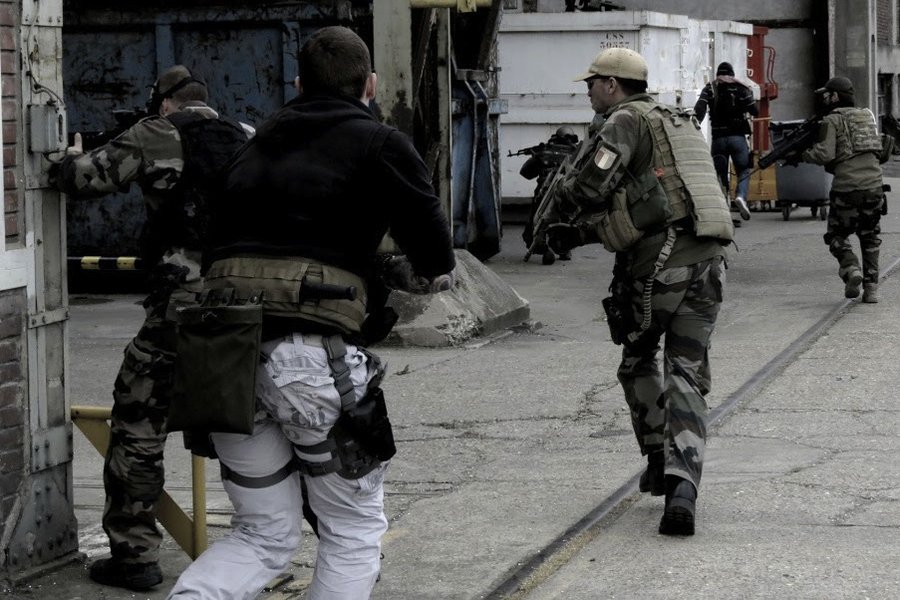
Picture this: you’re pinned down in a CQB arena, two or three opponents have locked down the room across the hallway, and anyone who peeks gets lit up immediately. Your whole squad is stuck in a stalemate, the game’s momentum completely frozen. Now imagine pulling a grenade from your belt, lobbing it through that doorway — a deafening bang or a wall of smoke — and suddenly the entire situation flips in your favor.
Grenades in airsoft aren’t just cool accessories. They’re legitimate tactical tools that can break stalemates, create movement opportunities, and clear rooms that would otherwise be impossible to take. Whether you’re using a smoke grenade to screen your squad’s advance, a sound grenade to shock defenders before a breach, or a BB grenade to eliminate everyone hiding in a closed room, grenades add an entirely new tactical dimension to the game.
The tricky part is that grenades come in wildly different types, from cheap single-use smoke canisters to reusable gas-powered BB grenades, and the price-to-performance ratio varies enormously. This guide walks you through every type, what they’re best at, and how to pick the right one for your play style.
How Do Airsoft Grenades Work? 3 Mechanism Types
Before comparing brands, it helps to understand the three core mechanisms that power every hand-thrown airsoft grenade on the market. The same “type” (e.g. a BB grenade) can use different mechanisms — and the mechanism determines reliability, cost-per-use, and whether you can use it indoors. (Launcher-fired 40mm shells work on a fourth principle entirely and get their own section below — if that’s what you’re actually asking about, skip ahead.)
| Mechanism | How It Works | Typical Sound (dB) | Reusable? | Common Examples |
|---|---|---|---|---|
| Pyrotechnic | Small explosive charge (similar to firecracker) ignites a blank round to create flash + bang, or scatters BBs | 140-160 dB | ❌ Single-use | TAGinn FBG-6, TAG M67 frag |
| Gas (CO2 / Green Gas) | Compressed gas builds pressure inside a sealed shell until it bursts — sound + BB spray come from rapid gas release | 125-135 dB | ✅ Metal core reusable, shells/BBs replaced | Thunder B (CO2), ASG Storm 360 (green gas) |
| Spring-loaded | Coiled spring stores mechanical energy. Pin release lets the spring snap a pressure plate or scatter BBs outward | 60-80 dB (low) | ✅ Fully reusable | Cyclone Impact, spring BB grenades |
Bottom line for picking a mechanism: pyrotechnic grenades are the loudest and most “realistic” but ban-listed at most US/EU indoor venues and require fire-safe storage. Gas grenades are the sweet spot — loud enough to disorient, safe for most CQB arenas, and the per-shot cost drops to $1-3 after the initial metal-core investment. Spring grenades are silent practice tools rather than tactical weapons.
Smoke grenades use a fourth mechanism — a slow-burning chemical pyrotechnic composition that releases colored smoke over 30-120 seconds. They share fire-safety concerns with bang-type pyrotechnic grenades and are almost universally banned indoors.
Three Ways a Grenade Gets Triggered
The mechanism table above tells you where the energy comes from. It doesn’t tell you what makes the thing go off, and that’s a separate question with its own three answers — which is why two grenades with identical internals can behave completely differently on the field.
Pull-pin with a timed fuse is the classic. You pull the ring, a fixed delay starts (typically 2-6 seconds depending on the model), and the grenade goes off wherever it happens to be sitting when the clock runs out. The Airsoft Innovations Tornado 2 and the pyrotechnic frag grenades work this way. The advantage is that you can bank the grenade off a wall, roll it under a barricade, or “cook” it for a second before throwing so it detonates in the air rather than after it lands and gets kicked back. The cost is that you own the timer — pull the pin and hesitate, and it goes off in your hand.
Impact fuses trade the timer for a pressure button, usually on the base of the shell. Nothing happens until the grenade lands hard enough to depress it. Throw it into a room and it triggers the moment it hits the floor, which makes the timing completely intuitive for beginners: whenever it arrives, that’s when it goes. The trade-off is that you lose the ability to bank shots and you can get a dud if it lands on carpet, foam matting, or a pile of soft cover — a real problem at indoor arenas that pad their floors.
Static triggers are the third and least common category. Some reusable gas grenades can be rigged with a tripwire or pressure kit and left as a trap covering a doorway or corridor, turning a thrown weapon into an area-denial device. Fields vary enormously on whether this is allowed, and the ones that permit it usually require the trap to be visible or flagged, so check the briefing rather than assuming.
What Actually Happens in the Six Seconds After the Pin Comes Out
Here’s the sequence that the spec sheets skip. The moment the pin leaves a gas grenade, a valve opens and green gas or CO2 starts flooding the sealed shell. Pressure climbs for a few seconds — this is the part you can sometimes hear as a faint hiss if the room is quiet — until the shell either bursts along a moulded seam or the internal pressure pops a retaining cap. That release is what produces the bang, and on a BB grenade it’s also what throws the pellets outward in a rough sphere. On a pyrotechnic grenade the same few seconds are a burning fuse instead, and the report comes from an actual charge rather than from a gas release.
Then comes the part that surprises most newcomers: whether anyone is actually eliminated depends on the field’s rules, not on the grenade. Some venues run a blast-radius convention where everyone inside a certain distance and in the same room is out regardless of whether a BB touched them. Others require an actual pellet to hit you, which means a sound grenade is pure psychology and eliminates nobody. The same Thunder B is a room-clearing weapon at one site and a noisemaker at the next, so the honest answer to “how do airsoft grenades work” is half mechanical and half regulatory. The field rules section below covers how to read a venue’s briefing for this.
As for whether it hurts: BB grenades sting at point-blank range and are close to harmless past ten feet or so, because the pellets are thrown outward by a low-pressure burst rather than down a barrel. The thing worth protecting is your hearing, not your skin — a 130 dB sound grenade going off two metres away in a concrete room is genuinely loud, and indoor CQB with sound grenades is one of the few airsoft situations where ear protection is a real consideration rather than a nicety.
The Four Types of Airsoft Grenades
Airsoft grenades fall into four main categories, each serving a fundamentally different purpose on the field. Understanding these differences means using the right grenade at the right moment.
Smoke Grenades — Visual Cover on Demand
Smoke grenades are probably the first type most players encounter. Pull the ignition mechanism and within seconds, thick colored or white smoke pours out, lasting anywhere from 30 seconds to 2 minutes. On large outdoor fields, a single smoke grenade creates enough visual cover for your squad to safely relocate from one position to another. In MilSim events, smoke grenades become essential tactical signals — red smoke marks enemy positions, green marks safe rally points, purple requests medical support.
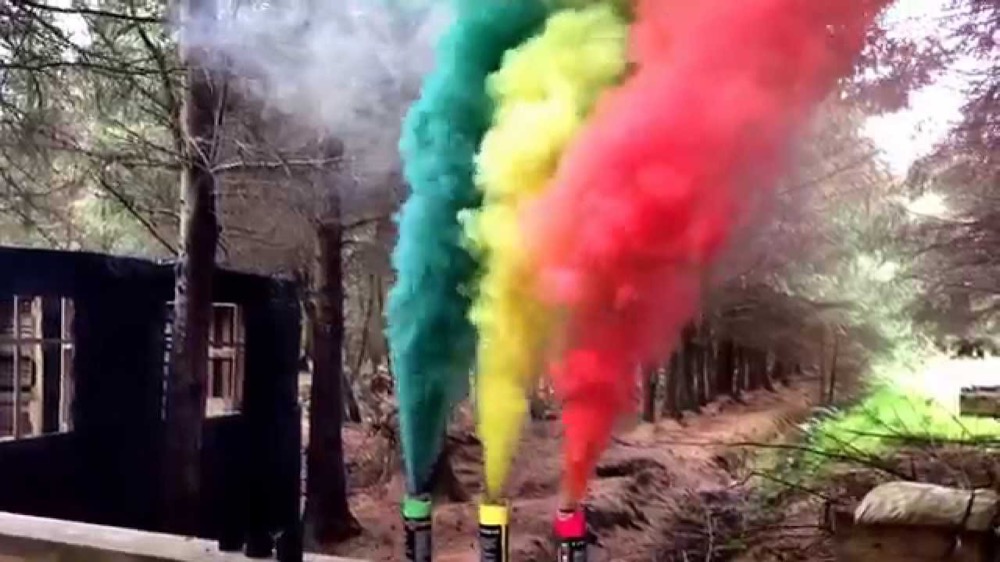
There are important restrictions to keep in mind. Nearly all indoor venues prohibit smoke grenades because the smoke can trigger fire alarms, reduce visibility to dangerous levels, and cause respiratory discomfort in poorly ventilated spaces. Smoke grenades are also single-use consumables — once spent, they’re trash. Over time, this adds up.
Enola Gaye dominates the smoke grenade market. Their Wire Pull series is dead simple to operate — pull the wire and it ignites, producing consistent smoke output. The EG18X is their large-format option with impressive smoke volume, ideal for outdoor fields. Pricing runs about $8-12 for standard Wire Pull grenades and $15-20 for the EG18X.
Sound Grenades — Psychological Warfare
Sound grenades exist for one purpose: to produce a massive bang that creates a moment of psychological shock and confusion. The most iconic is the Thunder B, which uses a 12g CO2 cartridge to generate roughly 130 decibels of explosive noise — about as loud as an actual gunshot. In an indoor CQB arena, that bang reverberating off concrete walls is enough to stun anyone nearby for a second or two, and those seconds are often all you need.
The Thunder B works through a clever mechanism. The core is a reusable metal body that holds the CO2 cartridge, covered by a disposable plastic shell. After pulling the safety pin, CO2 gradually expands until it bursts the plastic shell with a loud pop. The metal core runs about $15-20, and replacement shells cost $1-3 each, making it remarkably economical. The only real drawback is inconsistent detonation timing — sometimes it goes off in two seconds, sometimes five or six, which makes “cooking” the grenade unreliable.
BB Grenades — Actual Elimination Weapons
If smoke and sound grenades are support tools, BB grenades are offensive weapons that can directly eliminate opponents. When triggered, they spray BBs in all directions, simulating the fragmentation effect of a real grenade. Under most field rules, every player within the blast radius (typically 15-20 feet) is eliminated — only hard cover like walls or being in a different room provides protection.
The ASG Storm 360 is one of the most popular BB grenades on the market. Powered by green gas, it holds approximately 160 BBs and ejects them in a full 360-degree spread upon impact. You pull the pin, a button pops up on top, and when the grenade hits the ground and the button depresses, gas releases and BBs fly everywhere. The biggest advantage is that it’s fully reusable — refill the gas, reload the BBs, and it’s ready to go again. At roughly $30-50, the long-term cost is far lower than disposable alternatives.
Timed Frag Grenades — The “Pull, Cook, Throw” Option
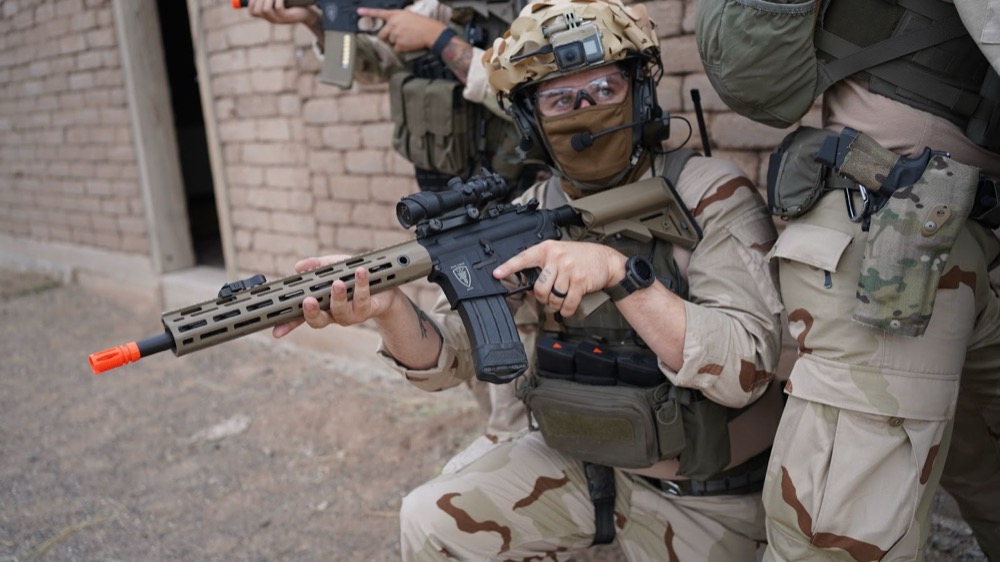
Not every BB grenade fires on impact. A whole category works on a timer instead — you pull the pin, a fuse counts down a few seconds, and then it detonates and showers BBs, exactly like the Hollywood “cook the grenade” moment. The undisputed king here is the Airsoft Innovations Tornado 2 (around $60-70), a reusable green-gas frag that sprays roughly 200 BBs in a 360-degree burst once its timer runs out. Because it goes off on a delay rather than on contact, you can bank it around corners, drop it down a stairwell, or roll it deep into a room without needing a hard landing to set it off.
The other name you’ll run into is the Dynatex “The Original” blank-firing timed grenade, a fixed 3-5 second delay design that’s been a UK and EU MilSim staple for years. Timed grenades demand a little more discipline than impact grenades — misjudge the count and it pops while still in your hand — but for players who want true grenade tactics like cooking, banking, and area denial, nothing else comes close. If you already time your draws and reloads, you’ll find a timed grenade rewards exactly the same sense of rhythm.
Flashbangs — Light and Sound Combined
Flashbangs combine bright light with loud noise, simulating the effect of real stun grenades. They’re most effective in dark indoor environments where the flash component adds to the disorientation. However, for safety reasons, airsoft flashbangs have limited light intensity, so the actual “blinding” effect is far less dramatic than the real thing. Most fields treat flashbangs the same as sound grenades, relying primarily on the noise for psychological impact.
TAG Innovation’s FBG-6 represents the professional end of this category. TAGinn products are known for their extreme realism — they’re used not just in recreational airsoft but also in law enforcement and military training programs. The price reflects this quality, but performance is top-tier.
40mm Grenade Shells and Launchers — The Other Half of the Category
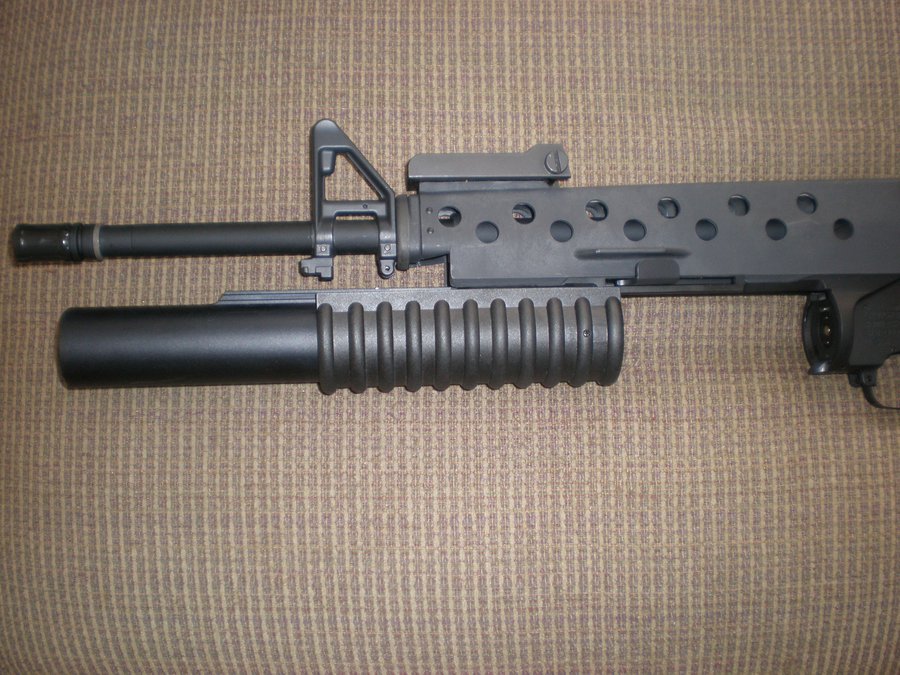
Everything above is a hand grenade: you hold it, you throw it, it does its job on the ground. But roughly half of what people mean when they ask “how do airsoft grenades work” is actually the other family — 40mm shells, also called MOSCARTs, fired from an under-barrel or standalone launcher. If you’ve ever wondered why two articles about airsoft grenades seem to be describing completely different objects, this is why.
The single most important thing to understand — and the detail that trips up almost every newcomer — is that the 40mm shell never leaves the launcher. There is no projectile arcing downrange and detonating on impact. The shell is a small reusable gas reservoir with a row of BB-holding tubes drilled into its face; you fill it with green gas or CO2 exactly the way you fill a GBB pistol magazine, load BBs into the tubes, and drop it into the launcher’s breech. Pulling the launcher’s trigger presses a button on the base of the shell, an internal valve dumps the entire gas charge at once, and the BBs are blown out of the front in a single shower. Then you pull the shell out, reset the valve by pressing it down with a tool until it clicks, and reload it. The shell is the expensive, reusable part; the launcher is really just a barrel, a breech, and a trigger to press that button.
What comes out depends entirely on the shell. A standard “shower” shell holds somewhere around 100-200 BBs and throws them in a cone that’s genuinely frightening at CQB distance but runs out of usefulness past roughly 50-60 feet — it’s a cloud, not a shot group, and BBs fired that way are not aerodynamic. Other shells swap the payload entirely: MilSim Labs and S-Thunder make shells designed to launch a single foam projectile, which is what you actually want if your event runs vehicle-disable or building-clearance rules where a foam round through a window eliminates everyone inside. Some shells hold .68 caliber paintballs. The one thing they share is that they’re loud — dumping a full gas charge in one go makes a bang on its own, which is half the psychological value.
The launchers themselves matter less than people expect. The M203 is the classic: trigger sits ahead of the magwell, the barrel slides forward to load, and rail-mounted versions bolt onto essentially anything with 20mm rail — though its fixed breech length means the longer shotgun-style shells simply won’t fit. The EGLM is the SCAR-pattern option, with the trigger tucked under the main trigger so you fire it with your middle finger and a breech that pivots sideways for easier loading of oversized shells; its mounting lugs can be fussy to align. The AG36 found on G36-pattern rifles flips out to the side at an angle, is fully ambidextrous, and handles extended shells best of the three — at the cost of shells occasionally sticking in the breech and needing a poke from the front. All three exist in standalone form if you’d rather not hang weight off your rifle.
And that weight is the honest catch. An under-barrel launcher makes a rifle noticeably front-heavy and longer, launchers run roughly $100-150, and the shells are the real budget problem at $30-50 each — cheaper $8-20 shells have started appearing, but a player running grenadier realistically needs several, and they are slow and fiddly to reload mid-game. For most players a $25 sound grenade delivers more tactical effect per dollar. Where a 40mm genuinely earns its place is a specific scenario: an indoor or urban field where rounding a corner and putting 120 BBs into a room with one trigger pull changes the outcome, or a MilSim with objective rules that foam rounds are built for. Buy one because your game format rewards it, not because it looks good on the rail — though it does look extremely good on the rail.
If you do run one, the reload is worth drilling. Swapping a spent 40mm shell under time pressure is slower than any magazine change you’ll ever do, and it’s exactly the kind of sequence a shot timer turns from a vague feeling into a number.
Choosing Grenades for Your Environment
Different game environments demand different grenade types. Using the wrong one doesn’t just waste money — it might violate field rules entirely.
In indoor CQB arenas, sound grenades and BB grenades are your best options. Tight spaces amplify the acoustic impact of a sound grenade dramatically, and a BB grenade’s 360-degree spray in a closed room leaves essentially nowhere to hide. The classic CQB tactic is to toss a sound grenade into a room, then rush in during the moment of confusion. Remember that smoke grenades are almost universally banned indoors.
Outdoor fields are where smoke grenades truly shine. When your squad needs to cross an open area with no cover, two or three smoke grenades can create a “smoke corridor” that lets you move while the enemy’s line of sight is blocked. Sound grenades lose much of their effectiveness outdoors because the noise dissipates quickly in open air.
MilSim events typically have the most comprehensive grenade rule systems. Major events like American Milsim specify exactly which grenade brands and models are approved, what the kill radius is, and what different smoke colors signify. If you’re planning to attend a MilSim event, always review the organizer’s rulebook beforehand.
Safety Rules
The fun grenades bring comes with safety responsibilities. Following these basic rules keeps everyone safe on the field.
Never throw a grenade directly at someone’s face or head. The correct technique is to throw toward the ground or floor of the target area and let the grenade bounce or roll into position. A 130-decibel sound grenade at close range can cause hearing discomfort, so maintaining reasonable throwing distance matters.
Don’t “cook” grenades. Some players want to hold the grenade until it’s about to detonate so opponents can’t react. But airsoft grenades don’t have the predictable timing of real ordnance — they might go off in your hand. Once activated, throw immediately. That’s the safest practice.
Always police your spent grenade debris. Plastic shell fragments and empty smoke canisters scattered across the field create tripping hazards and environmental waste. Many fields require players to clean up their grenade remnants, and it’s basic courtesy even when not required.
Tactical Applications
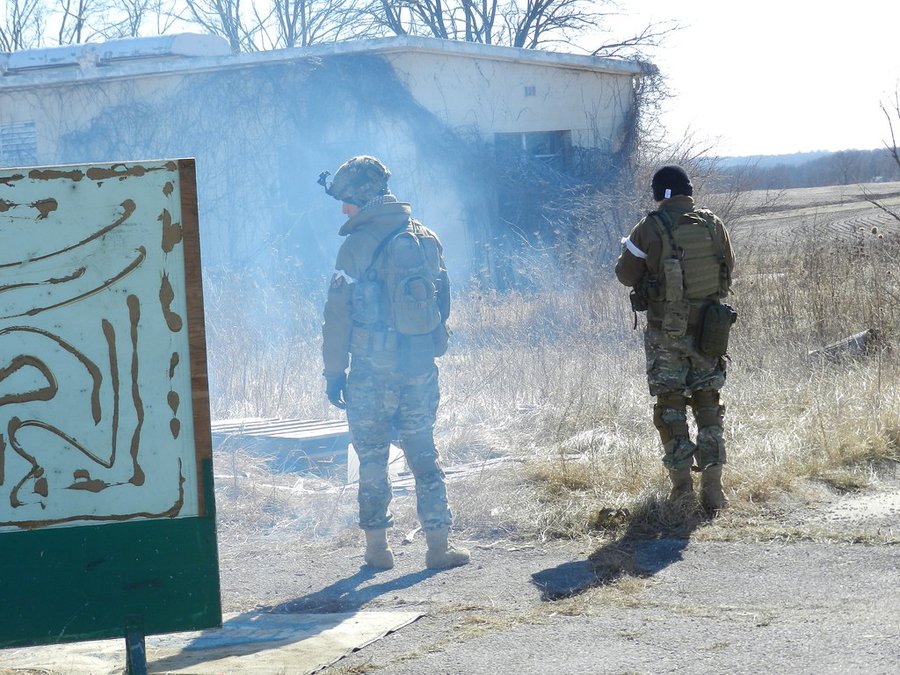
Knowing when and how to deploy a grenade multiplies its tactical value exponentially. Here are the most practical applications.
Smoke screening for movement is the classic smoke grenade play. When your squad is suppressed and can’t advance, throw smoke between your position and the enemy, wait for it to fully develop, then move. The key is to move through and past the smoke to new cover — if you stop inside the smoke cloud, the enemy can spray into it and still hit you. Once you’re on the other side with solid cover, you’ve gained a tactical advantage.
Room clearing is where sound and BB grenades truly excel. Position yourself beside the doorway, throw or roll the grenade into the room, and enter immediately after detonation. This is especially effective with team coordination — one person handles the grenade while teammates rush in within a second of the bang. For more detailed CQB techniques, check out our Airsoft CQB Close Quarters Battle Complete Guide.
Smoke-covered retreats are another critical skill. When your position is compromised and enemies are closing in, throw smoke between yourself and the threat, then use the visual cover to fall back to a safer position. This works especially well on outdoor fields where smoke has room to spread.
Training Grenade Throws with a Shot Timer
Grenade throwing looks simple, but smoothly executing the full sequence of “retrieve → pull pin → throw → return to fighting stance” under pressure requires practice. A shot timer — even the free Airsoft Shot Timer app running on your phone — helps you quantify and improve this process. You hit start, run the sequence, and get a hard number instead of guessing whether you’re getting faster. This matters even more with timed grenades, where your own throw speed and the grenade’s fuse have to line up.
Set a PAR time and practice the complete cycle: from the buzzer, reach for the grenade on your vest or belt, pull the safety pin, throw to the target area, then re-establish your grip on your primary weapon and return to a shooting stance. Initially this might take 5-6 seconds, but with practice you can bring it down to 3-4 seconds. The goal isn’t extreme speed but smooth, safe execution — especially the ability to quickly resume shooting readiness after the throw.
You can also practice “shoot-then-throw” combination drills during dry fire training. Engage a target with a few shots, then imagine discovering a room that needs clearing, switch to retrieving and throwing a grenade, and return to shooting. This multi-task transition training builds the composure and fluency you need in actual games.
Budget Recommendations for Beginners
If you’re buying your first airsoft grenade, start with a Thunder B sound grenade. The metal core plus a few disposable shells totals about $25-30, giving you a taste of the tactical possibilities grenades offer. Once you know you enjoy using grenades, consider investing in a reusable BB grenade like the ASG Storm 360.
For smoke grenades, base your decision on where you play. If you’re mainly at indoor fields, you won’t need them. If you enjoy outdoor fields or MilSim events, grab a few Enola Gaye Wire Pulls to test the waters — at roughly $10 each, it’s not a painful experiment.
Don’t bulk-buy consumables before you’ve tried them. Start small, figure out which type and brand you prefer, then stock up. Plenty of players have excitedly purchased a pile of smoke grenades only to discover their regular field doesn’t allow them.
Frequently Asked Questions
How do airsoft grenades work in simple terms?
Most airsoft grenades use one of three mechanisms: a small pyrotechnic charge (smoke and frag), pressurized CO2 or green gas that bursts a shell (Thunder B, ASG Storm 360), or a coiled spring released by a pin (silent practice grenades). The trigger is almost always a pull-pin or impact button. Once triggered, the device either produces sound, releases smoke, or sprays BBs depending on its design — the underlying job is to deliver an effect (noise, cover, or hits) within the 2-6 second window after the pin is pulled.
Do 40mm airsoft grenades explode on impact?
No — and this is the most common misunderstanding in airsoft. A 40mm airsoft shell never leaves the launcher at all. It’s a reusable gas cartridge that stays in the breech; pulling the trigger presses a button on its base, which dumps the stored green gas or CO2 and blows the BBs (or a foam projectile) out of the front. Nothing arcs downrange and detonates. Impact detonation only exists on the hand-grenade side of the category, where impact-fuse BB grenades like the ASG Storm 360 trigger when a pressure button hits the floor.
What’s the difference between a 40mm shell and a MOSCART?
Nothing meaningful — MOSCART is just the widely used name for a reusable, gas-powered, single-shot 40mm airsoft cartridge, and most retailers use the two terms interchangeably. What actually differs between shells is the payload and the hole pattern on the face: shower shells with many 6-8mm BB tubes, single-projectile shells for foam rounds, and .68 caliber shells built around paintballs.
What are the rules for grenades at airsoft fields?
Rules vary by venue, but three patterns are near-universal. First, an approved-products list — fields specify which brands and models are allowed rather than permitting grenades generically. Second, a blast radius convention: most fields call everyone within roughly 15-20 feet and in the same room eliminated, though some stricter fields require an actual BB to hit you before you’re out, so read the briefing rather than assuming. Third, pyrotechnics are treated as a separate class from gas grenades and are almost always banned indoors. MilSim events add their own layer, typically defining smoke-colour signalling and grenade-only objectives.
Are airsoft smoke grenades legal?
Smoke grenades are pyrotechnic devices, so they’re regulated as fireworks rather than as airsoft equipment. In the US they’re legal to own in most states but shipping usually carries a HAZMAT surcharge and some states restrict them outright; in the UK and EU they typically fall under F1/F2 fireworks categories. The practical answer is almost always determined by your field rather than by law — outdoor fields commonly allow them with a designated ignition area, indoor venues effectively never do because of fire alarms and ventilation.
How loud is an airsoft sound grenade in decibels?
A Thunder B sound grenade produces roughly 130 dB at the source — about as loud as a real handgun gunshot or a jet engine at 100 ft. Pyrotechnic grenades like the TAGinn FBG-6 push 140-160 dB. For comparison, prolonged exposure above 85 dB risks hearing damage, so wearing ear protection during indoor CQB with sound grenades is strongly recommended.
Can I use a sound grenade indoors?
It depends on the venue. Most indoor CQB arenas allow gas-powered sound grenades like the Thunder B because they’re flame-free, but ban pyrotechnic grenades (smoke, frag, flash) because of fire-alarm and ventilation issues. Always check the field’s rulebook — a few strict venues ban all loud noise generators regardless of mechanism.
Are airsoft grenades reusable?
Most gas and spring grenades are reusable — the Thunder B has a metal core ($15-20) plus disposable shells ($1-3 each), and the ASG Storm 360 fully refills with green gas and BBs. Pyrotechnic grenades (smoke, frag, flash) are always single-use. The reusable-vs-disposable choice is the biggest long-term cost factor.
Do airsoft grenades hurt?
BB grenades sting like normal airsoft hits at point-blank range, but the pellets disperse so quickly that beyond 10 feet they cause minimal pain. Sound grenades don’t cause physical injury but can damage hearing if detonated next to an unprotected ear. Pyrotechnic grenades are the only ones with real burn-risk concerns if mishandled.
What’s the best airsoft grenade for beginners?
Start with a Thunder B sound grenade. The $25-30 starter pack (metal core + 3-5 shells) lets you experiment with grenade tactics without committing to expensive consumables, and the CO2 mechanism is forgiving compared to gas-pressure BB grenades. Once you know you enjoy throwing grenades, the ASG Storm 360 ($30-50) is the natural upgrade for actual eliminations.
What is the best timed airsoft grenade?
The Airsoft Innovations Tornado 2 is the most widely recommended timed frag grenade — reusable, green-gas powered, and it sprays around 200 BBs after a short fuse delay instead of on impact. In the UK and EU, the Dynatex “The Original” blank-firing timed grenade (fixed 3-5 second delay) is the long-running favorite. Timed grenades let you genuinely “cook” and bank a grenade around corners, but they demand good timing discipline — throw promptly once the pin is pulled.
Are airsoft grenades legal?
Gas and spring airsoft grenades are legal in most countries because they don’t contain pyrotechnic charges. Pyrotechnic grenades (Enola Gaye smoke, TAGinn frag, flash) fall under fireworks/pyrotechnics regulations and may require permits or be restricted to licensed fields — check your local laws and the venue’s specific approval list before purchasing. US players should also note that an ATF open letter in late 2023 tightened how certain consumer-style flash/pyrotechnic devices are classified, so a field’s approved-product list may have changed since you last checked — always confirm before buying.
Sound grenade vs BB grenade — which should I buy first?
Buy a sound grenade first. Sound grenades are easier to use safely, work at most venues, and the psychological impact translates immediately into tactical advantage. BB grenades are more powerful but have steeper learning curves (gas management, BB cleanup, blast-radius rules) and only justify their cost once you’re playing weekly.
Are airsoft grenades worth the money?
For pure outdoor woodland play, probably not — most engagements happen at distances where a smoke grenade is the only useful option, and a $10 smoke per match adds up fast. For indoor CQB, speedsoft, and any kind of building clearance, grenades are arguably the best return on investment in airsoft outside of your primary gun. A $30 Thunder B kit pays for itself within 5-10 matches in flipped engagements you couldn’t have won otherwise.
Do you need a license to buy an airsoft grenade?
In the US, gas-powered airsoft grenades (Thunder B, ASG Storm 360) are unregulated and can be bought online by adults. Pyrotechnic grenades (Enola Gaye, TAGinn) often require either a HAZMAT shipping surcharge, a signature on delivery, or fall under fireworks rules depending on the state. In the EU and UK, pyrotechnic grenades typically require a F1/F2 fireworks licence; gas grenades are usually free. Always check both national law and your venue’s approval list before buying.
What’s the safest indoor airsoft grenade?
The ASG Storm 360 (spring-mode) and Cyclone Impact spring grenade are the safest indoor picks — no flame, modest sound, fully reusable. Thunder B and other CO2 sound grenades are loud (130 dB) but flame-free and approved at most indoor CQB arenas. Anything pyrotechnic — smoke, flash, frag — is essentially universally banned indoors due to fire-alarm risk and ventilation issues.
Image Credits
- Airsoft M203 grenade launcher photo by BrokenSphere, CC BY-SA 3.0, via Wikimedia Commons — resized, not otherwise altered.
- Airsoft CQB advance photo by Quentin James, CC BY-SA 3.0, via Wikimedia Commons — resized, not otherwise altered.
- Airsoft field smoke photo by MonkeysMumsie, CC BY-SA 2.0, via Flickr — resized, not otherwise altered.


Conclusion
Grenades are one of the most underrated pieces of airsoft equipment. They’re not essential like your primary weapon, but once you learn to deploy the right grenade type at the right moment, the entire game experience transforms. From creating movement corridors with smoke to breaking stalemates with sound grenades to clearing rooms with BB grenades — grenades evolve you from a player who only knows how to shoot into a tactical operator who leverages multiple tools.
Start with an affordable Thunder B, feel the rush of lobbing it into a room and hearing that satisfying bang, then rushing in. You’ll never want to play without grenades again.
Related Articles
Airsoft Series
- Airsoft Beginner Complete Guide
- Airsoft Gear Selection Complete Guide
- Airsoft CQB Close Quarters Battle Complete Guide
- Airsoft Field Selection Guide
- Speedsoft Competitive Airsoft Beginner Guide
Training
- Airsoft and Firearms Cross-Training Guide
- IPSC Action Air Competition Guide
- Shot Timer App Complete Guide
Use AirsoftShotTimer to track your training progress!
Put a Shot Timer in Your Pocket
Airsoft Shot Timer is a free shot timer app tuned for airsoft and Action Air — it picks up BB gun shots, tracks your split times, and saves you the cost of a $150+ hardware timer for IPSC/IDPA practice.

- Airsoft Grenade
- Best Airsoft Grenade 2026
- How Airsoft Grenades Work
- Airsoft Grenade Types
- Pyrotechnic Grenade
- Gas Grenade
- Spring Grenade
- Sound Grenade
- BB Grenade
- Airsoft Smoke Grenade
- Thunder B Review
- Enola Gaye
- Enola Gaye EG18X
- TAG Innovation
- TAGinn FBG-6
- ASG Storm 360
- Thunder B
- Sound Grenade Indoor
- Airsoft Grenade Decibels
- Airsoft Grenades 2026
- Airsoft Grenade Beginner
- Reusable Airsoft Grenade
- CQB Grenade
- MilSim
- Airsoft Gear
- Airsoft Grenade Indoor Rules
- BB Grenade Reusable
- Timed Airsoft Grenade
- Airsoft Innovations Tornado 2
- Dynatex Grenade
- Best Timed Airsoft Grenade
- 40mm Airsoft Grenade
- MOSCART
- Airsoft Grenade Launcher
- M203 Airsoft
- Airsoft Grenade Field Rules
- Do 40mm Grenades Explode on Impact