Airsoft Plate Carrier Setup Guide 2026: Pouch Layout, Fit & Sizing
Airsoft Plate Carrier in 60 Seconds (BLUF)
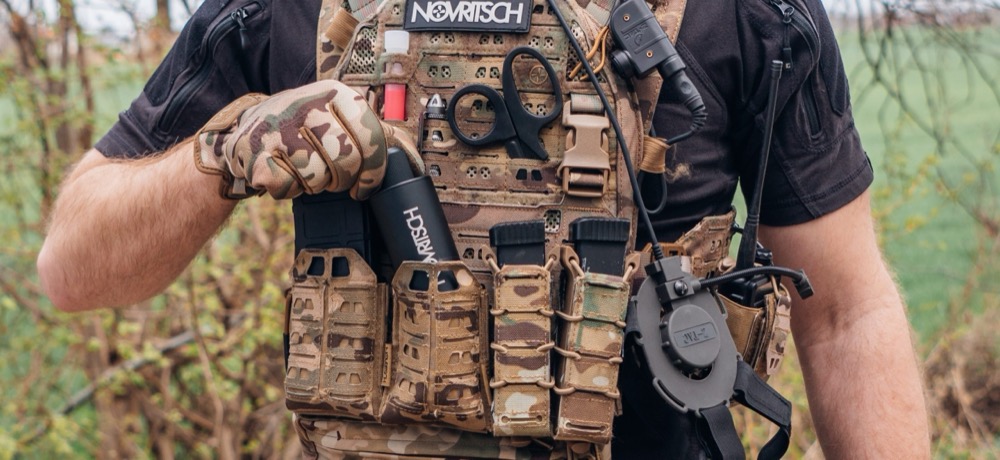
Short answer: for most airsoft players, a standard-cut plate carrier in the JPC or LV119 family, sized so the front plate bag runs from your jugular notch down to just above your navel, loaded with three or four rifle mag pouches, a dump pouch and nothing else, is the correct answer. Buy a size medium if you take 10x12" plates (that’s the default on almost every airsoft retailer), small for 8x10" if you have a smaller frame, large/XL for 11x14" if you’re tall or broad.
Three things that trip up nearly everybody on their first carrier: you almost certainly do not want real armour plates in it (they cost more than your gun, weigh 3-5 kg a pair, and stop nothing that a 1.5 J BB can do to you anyway — cut foam or even cardboard to the same dimensions and you get the shape without the injury risk); black is the worst colour you can pick as a beginner, because darkness is not black and you will not disappear into it; and the most expensive carrier on the field loses to a cheap one that fits, so spend your first budget on the right size rather than the right brand.
If you want the chest-rig side of this decision in depth — micro rigs, placards, rig-plus-belt setups — that lives in our dedicated airsoft chest rig guide. This page is about plate carriers.
Why Your Carrying System Matters More Than You Think
If you’ve played a few games of airsoft, you probably already know the pain of stuffing magazines into cargo pockets. They bounce around when you run, they’re impossible to grab in a hurry, and empty mags end up on the ground because you have nowhere to put them. You know you need something to organize your gear, but then you open a browser tab and get buried in terminology: Plate Carrier, Chest Rig, Tactical Vest, MOLLE, JPC, Micro Fight — it’s a lot to take in before you’ve even added anything to your cart.
This guide cuts through the noise and helps you figure out which carrying system actually makes sense for the way you play. I’m not going to tell you to “invest in the best” right away — the truth is, a lot of experienced players end up wearing less gear over time, not more, because they’ve learned that carrying fewer things means performing better on the field. The goal isn’t to spend the most money; it’s to pick the right system for your needs.
Do Airsoft Plate Carriers Actually Do Anything?
It’s worth answering this bluntly, because it’s the question everyone silently wonders and nobody wants to ask in a group chat: a plate carrier does nothing protective in airsoft. Nothing. A BB carrying one or two joules is stopped by a t-shirt at the sort of range where it matters, and the one place you genuinely need protection — your eyes — is the one place a carrier doesn’t cover. Some players will tell you it takes the sting out of a chest hit, and it does, marginally, in the specific square where the plate bag sits. That is not a reason to buy one.
What you’re actually buying is a platform. A carrier turns “where do I put four magazines, a radio, water and a dump pouch” into a solved problem, and it solves it in a way that keeps all of those things in the same place every single time you reach for them. That consistency is the entire performance argument: your reload is only fast if the magazine is where your hand expects it, and the field is a bad place to be hunting through cargo pockets. The second thing you’re buying is immersion, and there’s no shame in that — a large slice of MilSim and MilSim-adjacent airsoft exists precisely because kit that looks and works like the real thing is fun.
The costs are real too, and they’re the reason plenty of experienced players wear less gear every year rather than more. A loaded carrier is heat you can’t shed, weight on your shoulders for six hours, and bulk that makes doorways and vehicle extractions awkward. In CQB where games last four minutes and the engagement range is six feet, a carrier is usually a net negative — which is exactly why speedsoft players run a belt, a couple of mags in a pocket, and nothing else. If you mostly play fast indoor games, buy the belt first and come back to this page when you start attending longer outdoor events.
The honest summary: buy a carrier because you need to carry things and want to carry them in the same place every time, not because you think it will protect you. Build it light, test it, and let the games tell you what to add.
The Three Main Carrying Systems: Plate Carrier, Chest Rig, and Tactical Vest
In the airsoft world, you’ll encounter three main types of gear-carrying platforms. Each one exists for a good reason, and understanding how they differ is the first step toward making the right choice.
Plate Carrier
The plate carrier is what you see in every military movie and tactical Instagram post. Originally designed to hold ballistic armor plates, it features MOLLE webbing across the front and back panels for mounting pouches and accessories. In airsoft, we skip the real armor but keep the modular platform. Many players insert foam plates or dummy plates to maintain the vest’s shape and stability.
The first time you put on a plate carrier, it’s memorable. There’s a distinct weight across your shoulders, the cummerbund wraps around your torso, and you feel genuinely “kitted up.” For MilSim players, that feeling is part of the experience. But after three hours in the summer heat at an outdoor field, you’ll feel every gram of that weight. Even without armor plates, a plate carrier loaded with four magazine pouches, a radio pouch, and a hydration bladder easily exceeds two kilograms.
Where plate carriers truly shine is expandability. Front, back, and side panels all offer mounting space, so you can carry virtually everything you need on your body. For extended MilSim operations or any scenario that demands serious carrying capacity, a plate carrier is the only practical choice.
Chest Rig
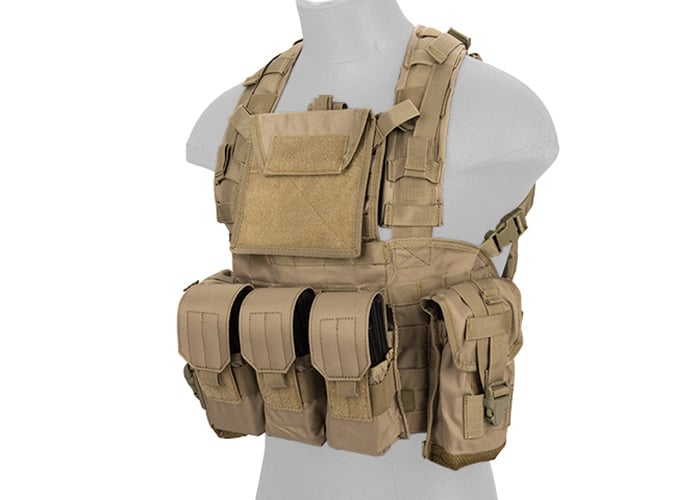
Chest rigs have been surging in popularity over the past few years, especially in warmer climates and among players who prioritize mobility. The concept is straightforward: a gear panel that hangs across your chest with your back completely open. This means dramatically better ventilation than a plate carrier and significantly less weight — often half or even a third of what a comparable plate carrier setup weighs.
The difference on the field is immediately noticeable. You run faster, transitions from standing to kneeling feel smoother, and fatigue sets in much later during long game days. For snipers, chest rigs offer a unique advantage: they can be worn over ghillie suits without distorting the camouflage profile the way a plate carrier would.
The trade-off is limited real estate. Most chest rigs hold three to four rifle magazines plus one or two small utility pouches, and that’s about it. Many players solve this by pairing a chest rig with a battle belt — rifle mags on the chest, pistol holster and utility pouches on the belt. This combination delivers an excellent balance of weight distribution and carrying capacity that works for a wide range of play styles.
Traditional Tactical Vest
Traditional tactical vests are the oldest carrying system design, featuring sewn-in magazine pouches and fixed pockets. Their biggest advantage is simplicity: buy it, put it on, and you’re ready to play. No need to purchase separate pouches or spend time threading MOLLE straps. For beginners who don’t want to think about gear configuration and just want to get on the field, a traditional vest is the fastest path.
The downside is obvious: since the pouches are permanently stitched in place, you can’t reconfigure them for different situations. If a pocket sits at an awkward angle for your reload, you’re stuck with it. Ventilation also tends to be poor — more fabric coverage than a chest rig but without the structural rigidity of a plate carrier. A traditional vest works as a budget starting point when you’re still figuring out your play style, but most players eventually upgrade to a plate carrier or chest rig once they know what they want.
The Four Types of Plate Carrier: Minimalist, Standard, Structural, Load-Bearing
Here’s the part almost nobody explains before you spend money. “Plate carrier” is not one product — it’s four fairly different designs that happen to share a name, and picking the wrong family is the single most expensive mistake in this hobby. Retail listings won’t tell you which one you’re looking at, so learn the four shapes and you’ll be able to read any product page in about ten seconds.
Minimalist (slick) carriers are as stripped down as the format gets. Think Ferro Concepts Slickster or the T-Rex Arms AC1: no MOLLE or PALS webbing anywhere, no back panel option, and a fully elastic cummerbund with the magazine pouches built straight into it. They’re the lightest carriers you can buy and the worst ones for carrying anything. Two or three mags and a compact radio is roughly the ceiling. If you want to add more, you have to buy a separate placard and hang it off the front. For CQB and short, fast game formats, that limitation is actually the feature.
Standard carriers are the mainstream choice and where most players should start. The Crye JPC (and the ocean of clones), and the Spiritus LV119 are the reference designs. They use a three-band cummerbund — skeletal or filled — and modern ones take both placards and MOLLE panels on the front plus a back panel for a hydration bladder or assault pack. Older JPC 1.0-pattern carriers need an adapter for the back panel, which is worth knowing before you buy a cheap one second-hand. Retention comes from elastic: on a JPC 2.0 the two halves of the cummerbund are joined by shock cord, which is just very stretchy paracord, so the carrier sits tight but still lets your ribs expand when you’re breathing hard after a sprint. That combination of snug fit and full reconfigurability is why standard carriers stay relevant across CQB, woodland and MilSim.
Structural carriers look almost identical to standard ones in photos, and feel completely different on your body. The difference is a rigid or semi-rigid cummerbund, usually stiffened with a thermoplastic laminate or an internal structured core — the Ferro Concepts FCPC V5 and the Crye SPC are the obvious examples. There’s a simple test you can do in a shop: lay the carrier flat on a table. A standard JPC will just go flat and stay flat, because nothing holds its shape. A structural carrier springs back into the curve it was adjusted to — and that curve is your torso. On the field this means the carrier essentially stops moving. No bounce when you run, no shifting when you drop from standing to kneeling, no readjusting between engagements. The cost is that sizing has to be right, because a rigid cummerbund will not forgive being one size off, and the whole thing is a little bulkier.
Load-bearing carriers are built around getting weight off your shoulders. The Crye AVS is the archetype (Shaw Concepts ARC V2 is the other one you’ll hear about), and it wears more like a backpack than a piece of body armour: a harness system spreads the load across your back and shoulders instead of hanging it all off two straps. It’s scalable, so the same carrier goes from a low-visibility two-mag setup to a full MilSim kit with a hydration bladder and an assault pack on the rear. If you do overnight MilSim, this is the family to look at. If you play three-hour weekend games, it’s more carrier than you need and you’ll feel the bulk in doorways.
How to Size an Airsoft Plate Carrier (Most People Get This Wrong)
A plate carrier is not clothing. It’s equipment with a job, and the job — even in a game where the incoming rounds are 6mm plastic — dictates the fit. Sizing a carrier is really sizing the plates it’s built around, and there are only three numbers you need.
Medium fits 10x12-inch plates and is the default you’ll find on Amazon, Evike, Airsoft GI and basically every airsoft retailer. If you’re an average-build adult and you buy without thinking about it, this is what arrives. Small fits 8x10-inch plates and is the right call for smaller frames and for a lot of women — it isn’t a “beginner” size, it’s a body size, and wearing a medium when you should be in a small is the reason so many players complain that carriers are uncomfortable. Large and XL take 11x14-inch plates and suit taller or broader players.
The fit check itself takes five seconds and doesn’t require a tape measure. The top edge of the front plate bag should sit at your jugular notch — the soft dip between your collarbones — and the bottom edge should stop above your navel. That’s it. Too high and the top of the carrier fouls the stock when you shoulder your rifle and digs into your throat when you go prone. Too low and it jams into your hips every time you crouch, and the whole thing pogos up and down when you run. If your carrier hangs below your belt line, it’s too big, no matter what the size label says.
One more thing worth checking before you order: colour. The advice from experienced players is blunt and worth repeating — do not buy black gear as a beginner. Black doesn’t blend into darkness; there is almost nothing in a natural environment that is genuinely black, so a black carrier reads as a hard silhouette both indoors and out. Look at the field you actually play at, pick a colour or camo pattern that matches that ground, and then check that the pattern is widely available in the pouches you’ll want later, so you’re not stuck hunting for a matching dump pouch six months from now. If you play MilSim, check the event rules first — some factions are colour-locked.
How to Set Up an Airsoft Plate Carrier: The Six-Step Build
Buying the carrier is the easy half. The reason so many players end up with something that looks right in photos and feels wrong on the field is that they hang pouches on it in the order they happened to buy them, instead of building it in the order that actually matters. The sequence below is the one experienced players and carrier manufacturers converge on, and it takes about twenty minutes on your living room floor.
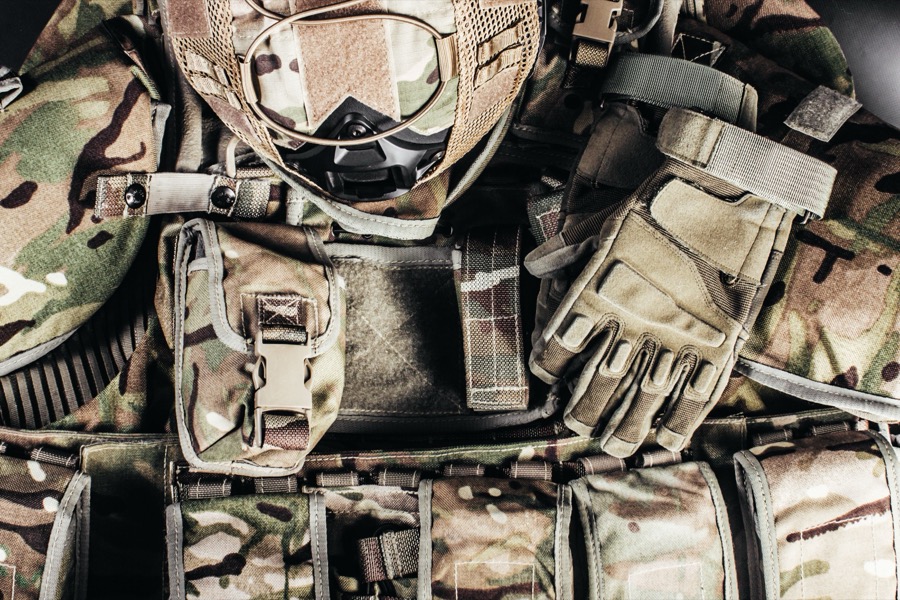
First, one piece of vocabulary that makes the rest of this much easier. Gear is traditionally organized into three lines. First line is what stays on your belt and body — sidearm, spare pistol mag, knife, tourniquet. Second line is the carrier itself, holding your fighting load of rifle magazines and medical kit. Third line is the pack that carries sustainment: water, food, spare BBs, a layer for when the sun drops. Almost every bad airsoft setup is a third-line item bolted onto a second-line platform. If you catch yourself mounting something you’ll need once in six hours, that’s a pack item, not a carrier item.
Step one — size the plate, not the shirt. If you’re cutting your own dummy plates rather than buying 10x12s off the shelf, you need a width and a height. Width comes from a nipple-to-nipple measurement. Height runs from the top of your sternum down to your navel, and then you subtract two to three inches from that figure. Sizing up “to be safe” costs you the ability to shoulder a rifle cleanly and creates pinch points when you bring your arms together; sizing down throws away the coverage the plate shape exists to provide. And no, your plate size has nothing to do with your t-shirt size — that assumption is the single most common sizing error there is.
Step two — set the ride height, then equalize the shoulders. Put the carrier on with the plates in and the front bag sitting at sternum height, then check that the rear bag sits at the same level. Once you load it, one plate bag is always heavier than the other, and an unequal pair of shoulder straps turns that imbalance into a permanent lean — the tighter side also ends up carrying most of the weight, which is exactly what makes a carrier feel heavier than it weighs. Pull the same amount of webbing through each shoulder adjuster. If your carrier always sags to the same side, it’s almost never the pouches; it’s a shoulder strap that’s an inch longer than its partner.
Step three — tension the cummerbund before you mount a single pouch. This is the step most people skip, and it dictates everything after it. Too loose and the whole load migrates onto your shoulders while the cummerbund swings like a pendulum the moment you sprint or jump. Too tight and you can’t breathe properly, and there’s no room left to layer a jacket when the temperature drops. The three common styles behave differently enough to matter. Elastic cummerbunds give the most adjustment and are the most comfortable, but you can’t hang pouches or side plates on them. Rigid hook-and-loop MOLLE cummerbunds let you make micro-adjustments and carry pouches. Tube-style cummerbunds have essentially no adjustment at all, but let you get the carrier on and off in seconds — which is exactly why CQB and MilSim players who are in and out of gear all day gravitate to them. If you want both, a tube adapter or expander wing gives you a tube front with hook-and-loop sizing behind it.
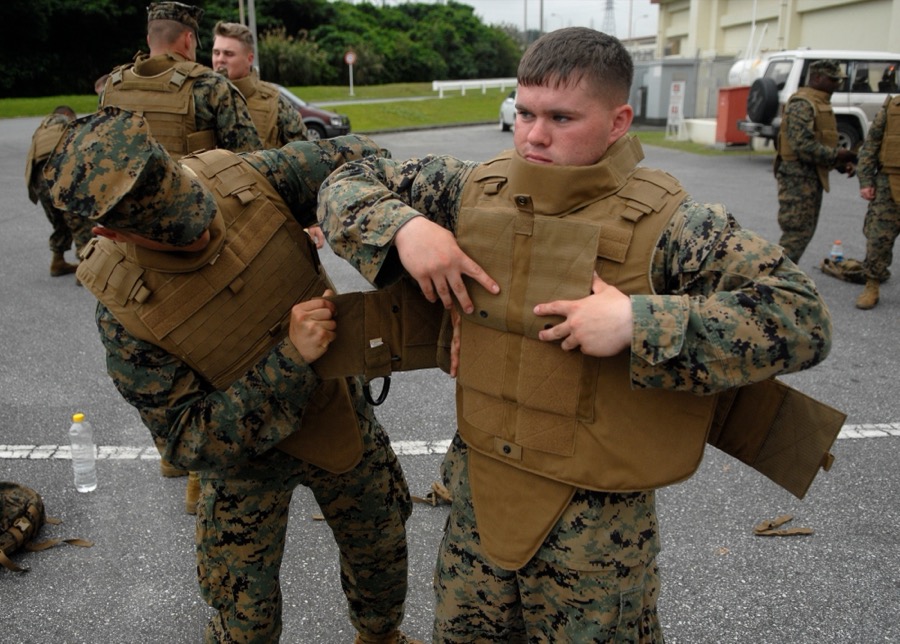
Step four — lay out the front panel, then the cummerbund, then the back. Three rifle mag pouches on the front placard, centred or pushed slightly toward your support side, is the layout that wins reload races, and keeping the lower centreline clear is what lets you actually get into prone without the carrier riding up into your chin. On the cummerbund, your support side carries the IFAK and tourniquet in a fixed position that never changes — that’s the one pouch whose location is genuinely non-negotiable, because on a bad day somebody else has to find it on you without asking. An admin pouch for phone and tools goes on the strong side, and the dump pouch rides at the rear hip where your support hand naturally sweeps past it. The back plate stays clear for hydration. One more rule that bites people: if you run a pistol, leave the strong-side cummerbund genuinely empty, because a bulging pouch there is precisely what stops you reaching the holster.
How many mag pouches is a question of role, not ambition. Three to four rifle mags is the right answer for almost all airsoft and for range work. The four-to-six-mag layouts you see in military-pattern photographs are carrying real ammunition weight across the front and cummerbund — weight you simply don’t have in a game where a mid-cap holds 120 BBs and a speed loader lives in your pocket. The rule that keeps setups honest is this: start minimalist, and add a pouch only after a specific game has proved you needed it and didn’t have it.
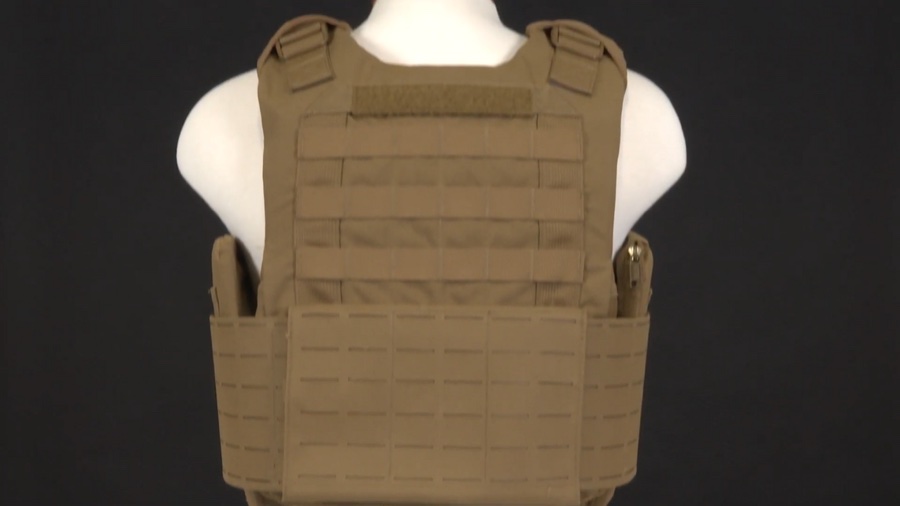
Step five — route your cables and tie down everything loose. A radio sits flat in a slim pouch under the cummerbund, with the PTT run up through the shoulder strap and clipped where your support hand finds it without looking. The clip on its own isn’t enough. A loop of shock cord as a backup means that when a doorframe grabs the cable, you lose a couple of seconds rather than a radio. Run the antenna up over the shoulder and around to the back of the carrier instead of leaving it standing proud where it catches on branches and doorways. Nothing in this step should be permanent — you want to be able to strip the whole comms setup off in a minute if you lend the carrier out or switch camo.
Step six — test it at home before the field sees it. Put the loaded carrier on and shoulder your replica, go prone, get back up, drop into a low crouch, run ten steps and then sit down. Anything that catches, digs in, or has to be hitched back into place is a layout problem, and it is far cheaper to discover on carpet than halfway through a push. This is also the one part of your setup you never have to argue about online: run five magazine changes on a shot timer, move the pouch an inch, run five more, and the better layout announces itself in tenths of a second instead of in opinions.
What Actually Goes Inside an Airsoft Plate Carrier?
This is the question that fills airsoft forums every week, and the honest answer is shorter than people expect: for airsoft, you want the shape, not the armour.
Real ballistic plates are a bad idea in a game. A pair of Level IV ceramic plates runs 3-5 kg, frequently costs more than your primary replica, and buys you exactly nothing against a projectile carrying under 2 joules. Worse, that mass is strapped to your chest while you sprint, crouch and go prone for six hours — the injury risk from a fall with steel plates on is a genuine thing, not a hypothetical. Unless you own the carrier for real-world purposes as well and are deliberately training under load, leave the armour out.
What players actually use is a dummy plate: cut foam, a moulded polymer trainer plate, or — as plenty of experienced players will happily admit — cardboard cut to the right dimensions. That sounds like a joke until you realise that the plate’s only remaining job in airsoft is geometry. It keeps the plate bag from collapsing, it holds the front panel flat so pouches sit where you put them, and it gives the cummerbund something rigid to pull against. A 10x12 rectangle of double-wall cardboard does all three for free. Foam or polymer trainers are worth the $15-25 because they survive rain and don’t fold when you land on them, but the principle is the same: match the plate dimension to the carrier size, and don’t overthink the material.
The one place weight is genuinely useful is deliberate conditioning. Some players run light weighted plates specifically to build up for MilSim endurance. That’s a training decision, not a gear decision, and it belongs to the off-season rather than to game day.
Everything else that goes “inside” is really about what hides under the cummerbund. A slim elastic radio pouch — the Ferro Wingman pattern is the popular one — sits flat against your side and then disappears under the cummerbund when you close it up, which keeps a bulky radio off your MOLLE real estate entirely. Route the PTT cable up through the shoulder strap loops before you tighten anything, so there’s no loose cable to snag on a doorframe or get grabbed by a branch.
Choosing Your System by Play Style
Now that you understand the three types, the real question is: which one fits you? The answer depends almost entirely on where and how you play.
CQB / Indoor: Mobility First
In indoor CQB fields, corridors are narrow, corners come fast, and engagement distances are measured in meters rather than dozens of meters. You need to be agile and quick. A lightweight chest rig or even just a battle belt is more than enough. CQB rounds are short and intense, so you don’t need to carry a ton of magazines — two or three rifle mags and a pistol mag will typically last an entire round.
Wearing a full plate carrier through tight hallways feels immediately clumsy. Your shoulders catch on doorframes when you pie corners, and going prone is awkward because of the bulk on your chest. If CQB is your primary play style, start with a chest rig and only consider a plate carrier if you genuinely need more carrying capacity.
MilSim / Outdoor: Carrying Capacity Wins
MilSim events run eight hours minimum, sometimes overnight. You need to carry far more than just magazines: water, food, spare batteries, a radio, maps, a first aid kit — the list grows quickly. Only a plate carrier offers enough mounting space for all of that. Choose one with good shoulder padding and a supportive cummerbund that distributes weight evenly across your torso. That’s the key to surviving long operations without your body breaking down.
Many MilSim players also mount a hydration bladder on the back of their plate carrier, running the drinking tube over the shoulder to the front. Being able to hydrate without returning to the safe zone is a genuine tactical advantage during extended gameplay.
Speedsoft: Ultra-Light or Nothing
Speedsoft is all about maximum speed, and every unnecessary gram slows you down. Most Speedsoft players run a slim battle belt with a pistol holster and one or two magazine pouches — some don’t even wear that, relying on pants pockets alone. A handful use ultra-minimalist micro chest rigs for an extra magazine or two, but you’ll never see a serious Speedsoft player in a plate carrier.
If you spot someone running a fully loaded plate carrier at a Speedsoft field, they probably came straight from a MilSim event and haven’t changed — or they’re the person who gets eliminated first every round.
Casual Weekend Games: Flexible Choices
If you don’t specialize in any particular play style and just hit the field with friends on weekends, either a mid-range plate carrier or a well-equipped chest rig will serve you well. The key is finding something that fits comfortably and matches your primary weapon’s magazine type. Don’t feel pressured to fill every inch of MOLLE space right away — many experienced players swear by the “less is more” approach. Start with minimal gear, play a few games, and add things only when you discover a genuine need.
Price Tiers: $30 Clone, Mid-Tier Repro, or the Real Thing?
Airsoft gear splits into three price tiers, and the useful way to choose between them is not “how much can I afford” but how often will this get used.
The Amazon and AliExpress tier is where the $30 JPC clone lives. If you play once a month or less, and what you need is somewhere to put four magazines and maybe a radio, this tier is genuinely fine. The stitching won’t be beautiful and the elastic will go soft eventually, but a carrier that only sees twelve game days a year will not reach that point for years. Buying a $250 carrier for this usage pattern is not a mistake because it’s expensive — it’s a mistake because you’ll never notice the difference.
The mid-tier repro bracket — Emerson Gear, IdoGear, Krydex, TMC and the rest — sits around $50-140 and is where most committed players land. You’re paying for real Cordura instead of vague “600D polyester”, cummerbunds that adjust properly, and hardware that doesn’t round off after a season. This is the right tier if you play local events regularly and you want a setup you’ll keep reconfiguring rather than replacing.
The real deal tier is the original design houses: Crye Precision, Ferro Concepts, Blue Force Gear, Spiritus Systems, Agilite. A carrier here starts around $200 and climbs fast. It makes sense if you’re playing most weekends, running MilSim events where the kit gets soaked and dragged through mud, or if the same carrier does double duty outside airsoft. It is worth being honest about the other reason people buy this tier — resale value and the fact that it’s simply nicer to own — but neither of those makes you harder to hit.
One pattern worth internalising before you spend anything: a well-fitted $50 carrier outperforms a badly-fitted $300 one every single time. Fit first, tier second.
Five Popular Airsoft Carrying Systems Worth Considering
The market is overwhelming, so here are five options across different price points and types that consistently earn good reviews in the airsoft community.
Condor MOPC (Modular Operator Plate Carrier)
Condor is the “everyday brand” of the airsoft gear world, and the MOPC is probably the most purchased first plate carrier among new players. Priced around $40-60, you get a functional plate carrier with adequate MOLLE space and acceptable build quality. It’s not the lightest, not the most comfortable, and the shoulder strap padding is a bit thin for extended wear. But it works, it’s affordable, and virtually every airsoft retailer stocks it. If your budget is tight and you want to try the plate carrier experience without a major financial commitment, the Condor MOPC is a solid starting point.
Emerson JPC (Jumpable Plate Carrier) Replica
Emerson’s JPC replica brings the Crye Precision JPC design to the budget market. The original JPC costs over $200; the Emerson version delivers nearly identical aesthetics and core functionality for $50-80. The JPC design philosophy emphasizes being lighter and more streamlined than traditional plate carriers — smaller plate bags, elastic cummerbund instead of thick MOLLE panels, and a closer fit to the body. Emerson’s quality control isn’t always consistent, and you might find occasional stitching imperfections, but for airsoft use it holds up perfectly fine. This is a great pick for players who want the plate carrier look without the weight penalty.
TMC Micro Fight Chest Rig Replica
This is a replica of the Spiritus Systems Micro Fight, one of the most popular chest rig designs on the market. The original Spiritus costs over $100; the TMC version runs about $30-50. The design is clever: a compact main panel holds three 5.56 rifle magazines with a zippered pouch on top for a phone or small items. The total weight is so light you almost forget you’re wearing it. It’s also designed to mount on the front of a plate carrier or function as a standalone chest rig with shoulder straps — that modularity lets you switch configurations depending on the occasion. For a lightweight, flexible, and budget-friendly chest rig, the TMC Micro Fight replica is currently the best value option available.
LBX Armatus II Plate Carrier
LBX is the sub-brand of LBT (London Bridge Trading), positioned as “better than replicas, cheaper than originals.” The Armatus II costs around $100-140 and the difference in materials and construction quality compared to Condor or Emerson is immediately apparent. The 500D Cordura fabric is durable without being excessively heavy, and the cummerbund offers a wide adjustment range to fit different body types. The standout feature is the shoulder strap design — contoured cuts with generous padding that makes extended wear noticeably more comfortable than competing products at similar price points. If your budget sits around $100 and you want a plate carrier that will last for years, the LBX Armatus II deserves serious consideration.
Spiritus Systems Micro Fight
If budget isn’t a constraint and you want the best quality available, the Spiritus Systems Micro Fight is the benchmark in the chest rig category. The base unit runs about $100-130, and a complete setup with shoulder straps and accessories totals $150-200. What justifies the price? First, materials — 500D Cordura fabric with Hypalon pull tabs delivers a fit, feel, and durability that replicas simply can’t match. Second, modularity — you can swap magazine inserts for different calibers (5.56, 7.62, SMG), pair it with different harness systems, or mount it directly on a plate carrier as a front panel. Many players start with a budget replica and eventually upgrade to the original because once you’ve handled both, the difference is unmistakable.
MOLLE System and Accessory Configuration
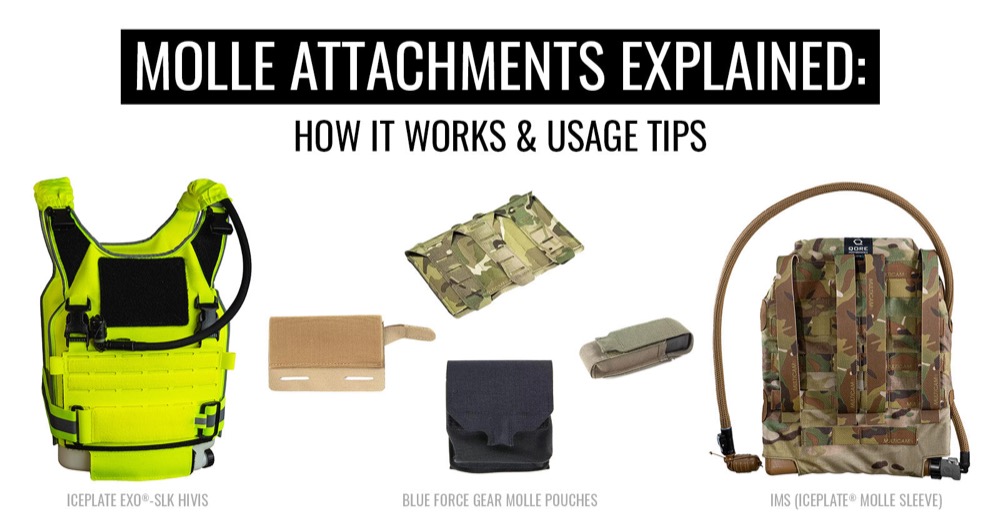
Regardless of which carrying system you choose, MOLLE (Modular Lightweight Load-carrying Equipment) is the foundation for mounting accessories. In simple terms, MOLLE consists of horizontal webbing strips sewn onto your vest’s surface, and you attach pouches by weaving straps through these rows.
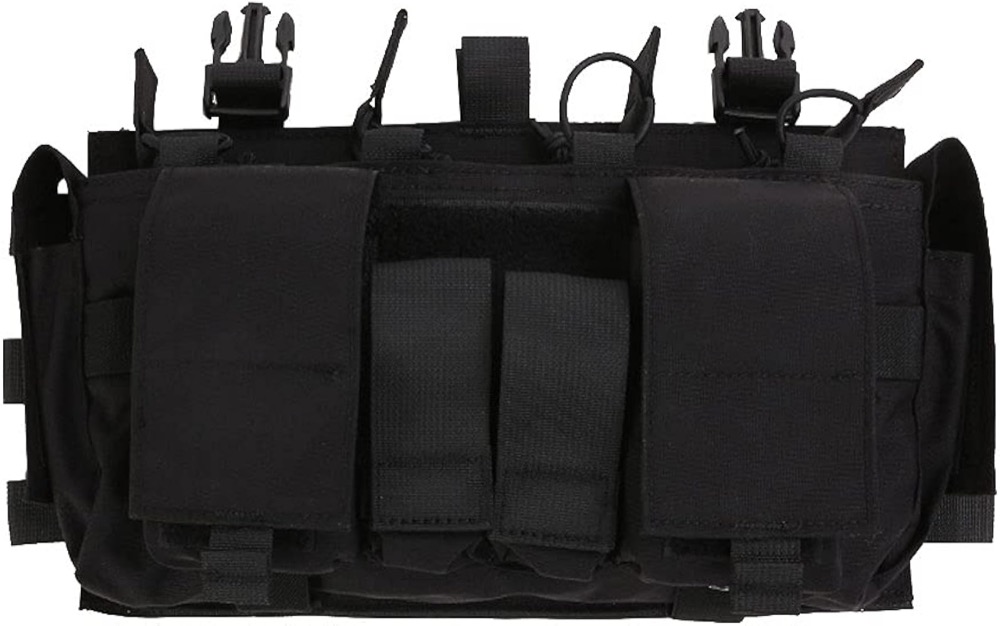
The first rule of accessory configuration is “identify what you need to carry, then buy the matching pouches.” A common beginner mistake is hanging something on every available MOLLE row, ending up with a vest full of rarely-used accessories that add weight and restrict movement.
For most airsoft players, the essentials are simpler than you’d think. Magazine pouches are non-negotiable — pick the right type for your primary weapon’s caliber, and three to four is usually enough. If you carry a sidearm, add one or two pistol magazine pouches. A dump pouch for discarded empty magazines is genuinely useful — many players overlook this accessory and end up fumbling empty mags back into pockets or dropping them on the ground during reloads.
For longer events, a hydration bladder or water bottle pouch is essential. Playing for an hour or two outdoors without water is genuinely dangerous, especially in hot weather. Mount the bladder on the back of your vest with the drinking tube routed over your shoulder to the front, so you can hydrate without leaving the game.
A radio pouch is only necessary if your team uses radio communication. If you’re a solo player visiting a field for pickup games, skip it for now.
Where to Put Things: Three Questions That Settle Every Argument
Pouch placement generates endless debate online, and almost all of it dissolves if you judge a setup against three questions instead of against photos. Can you stand normally without being uncomfortable? Can you reach every pouch you actually need in a hurry? Is the weight balanced, or is the front so loaded that you keep hitching the carrier back into place? A “no” to any of those means the layout is wrong, regardless of how correct it looked when you built it.
A concrete example of the reasoning: many players deliberately keep the strong-side front corner free of magazine pouches and put a grenade or general-purpose pouch there instead. The logic is that when you let the rifle hang on its sling, it swings across to your support side and pins tight against your body, which leaves the strong side clear — and grenades usually need two hands anyway. That’s not a rule, it’s a chain of reasoning from how the sling actually behaves, and that’s the level you want to be thinking at.
Two practical notes on the webbing itself. Weave a pouch strap through the vest row, back through the pouch row, and keep alternating, then tuck the tail back under itself at the bottom — and don’t pull anything tight until the last loop is through, or you’ll fight it the whole way. And if your carrier uses laser-cut MOLLE (flat slots cut straight into the laminate rather than sewn webbing), be warned: it’s the most secure attachment you can get and easily the most annoying to work with. The slots don’t stand proud, so you have to lift each one to find it, and taking a pouch off again is worse than putting it on. Build laser-cut kit once and leave it alone.
Finally, the least obvious tuning knob: your magazine choice changes your reload time as much as your pouch position does. Short metal STANAG-profile mags sit deep in a pouch and give your fingers almost nothing to grab, while taller polymer mags stand proud and come out clean. Plenty of players swap magazine brands purely for that reason. This is the one part of your setup you don’t have to guess about — run five reloads with each option against a shot timer in your living room and the answer shows up as tenths of a second on the screen instead of as an opinion in a forum thread.
Beginner Buying Tips and Common Mistakes
If you’re purchasing carrying gear for the first time, here are some hard-won lessons that can save you time and money.
The most common mistake is buying a plate carrier that’s too large. Many beginners assume “bigger is better,” and end up with a front plate bag that hangs below their navel and a back panel that covers their backside. When they run, the entire vest bounces up and down. Proper sizing means the front plate bag should cover roughly from your collarbone to the bottom of your ribcage — too high interferes with shouldering your rifle, too low restricts crouching and prone positions. Always measure your torso and check the product’s size chart before ordering.
Another common mistake is skipping the fitting process. Don’t take your new gear straight to the field. At home, mount all your accessories, put the vest on, and run through basic movements: shoulder your rifle and aim, perform magazine changes, crouch, go prone, and jog a few steps. If any movement feels awkward, adjust pouch positions until everything flows smoothly. Using a shot timer to time your magazine changes is a smart way to benchmark — if your new vest makes reloads slower than before, the mag pouch placement needs work.
One final piece of advice: don’t chase the “perfect setup” before you’ve actually played. Buy the basics, take it to the field, and learn from real experience what you actually need. Many players spend hours researching “optimal configurations” online, buy a pile of accessories they never use, and end up simplifying their setup anyway. Real-world experience beats internet reviews every single time.
Frequently Asked Questions
Can you put real plates in an airsoft plate carrier?
Physically yes, practically no. Airsoft carriers are built to the same 10x12 / 8x10 / 11x14 plate dimensions as the real thing, so genuine armour will fit. But a pair of Level IV ceramics weighs 3-5 kg, often costs more than your primary replica, and protects you from precisely nothing that a sub-2-joule BB can do. The weight also makes falls and prone transitions genuinely more dangerous over a six-hour game day. Use cut foam, a polymer trainer plate, or cardboard cut to the same dimensions — in airsoft the plate’s only job is holding the carrier’s shape.
What size airsoft plate carrier should I buy?
Size by the plate, then confirm by the fit. Medium takes 10x12" plates and is the default stocked size; small takes 8x10" and suits smaller frames; large and XL take 11x14" for taller or broader players. Then check it on your body: the top edge of the front plate bag should sit at your jugular notch, and the bottom edge should stop above your navel. If it hangs past your belt line it’s too big, whatever the label says.
What’s the best airsoft plate carrier for beginners?
A standard-cut carrier in the JPC pattern, in a mid-tier repro from Emerson, IdoGear, Krydex or TMC, in a colour that matches your home field. That combination gives you a carrier that fits, accepts both placards and MOLLE panels so you can reconfigure as you learn, and costs little enough that discovering you prefer a chest rig isn’t a painful mistake. Skip the minimalist and load-bearing families until you know what you’re carrying and why.
What should I put on my plate carrier for airsoft?
Three or four rifle magazine pouches sized to your primary, a dump pouch for empties, and — if you carry a sidearm — one or two pistol mag pouches. That’s the whole list for a normal game day. Add a hydration bladder on the back panel for anything longer than about two hours outdoors, and a radio pouch only if your team actually runs comms. A mid-cap load of roughly 120 rounds per magazine means three mags will usually carry you through an entire round, sometimes an entire day.
How many magazines should I carry on a plate carrier?
Three to four rifle mags is the sweet spot for the vast majority of airsoft. CQB players often run two or three because rounds are short and respawns are close. MilSim players carry more, but the limiting factor there is usually water and batteries rather than ammunition. If you finish a game day with mags you never touched, take them off — you carried that weight for nothing.
What do you put on the back of a plate carrier?
For most airsoft, either nothing or a hydration bladder with the drink tube routed over your shoulder. The ability to drink without walking back to the safe zone is a real advantage in long games. MilSim players add an assault pack or a zip-on panel for food, batteries and spare parts. Note that a back panel needs a compatible carrier — older JPC 1.0-pattern carriers require an adapter, while a JPC 2.0 or LV119 takes one directly.
How do I set up a plate carrier properly?
Build it in order rather than by buying pouches. Get the plate dimension right first, then set the ride height so the front bag sits at sternum level and equalize both shoulder straps, then tension the cummerbund — all three of those before a single pouch goes on. Only then lay out the front panel (three rifle mags, lower centreline left clear), the cummerbund (IFAK and tourniquet on the support side, admin on the strong side, dump pouch at the rear hip) and the back plate (hydration). Route and tie down your cables last, and test the whole thing at home against a set of movements before the field sees it.
Why does my plate carrier sag to one side?
Almost always a shoulder strap, not the pouches. Once you load a carrier, one plate bag ends up heavier than the other, and if one shoulder adjuster has an inch more webbing pulled through it than the other, that imbalance becomes a permanent lean. Take the carrier off, pull both shoulder straps to the same length, and re-check the ride height. The side that’s tighter also silently carries most of the load, which is why an unequal carrier feels heavier than it actually is.
What is first, second and third line gear?
First line is what stays on your belt and body: sidearm, spare pistol magazine, knife, tourniquet. Second line is the plate carrier or chest rig holding your fighting load — rifle magazines and medical kit. Third line is the pack carrying sustainment: water, food, spare BBs, a warm layer. The distinction matters because most overloaded airsoft setups are simply third-line items mounted on a second-line platform. If you’ll need it once in six hours, it belongs in the pack.
Plate carrier or chest rig for airsoft?
Plate carrier if you need carrying capacity, structure and a back panel — MilSim, long outdoor games, anyone running comms and hydration. Chest rig if you need ventilation, low weight and speed — CQB, hot climates, and snipers who need a low profile under a ghillie. Plenty of players end up with both and pick per event, and a chest rig plus a battle belt is a genuinely excellent middle path. The full comparison of rigs, placards and belt setups is in our airsoft chest rig guide.
Do speedsoft players wear plate carriers?
Essentially never. Speedsoft is decided by how fast you move and how fast you get to the first shot, so the meta is a slim battle belt with a holster and one or two mag pouches — sometimes nothing at all beyond pants pockets. A few players run an ultra-minimal micro rig for one extra magazine. If you see a fully loaded plate carrier at a speedsoft field, it’s someone who came straight from a MilSim event. The relevant gear priorities for that format are covered in the speedsoft beginner guide.
Conclusion
There’s no universal answer to which carrying system is best. CQB players might need nothing more than a slim chest rig, MilSim veterans require a fully loaded plate carrier, and Speedsoft competitors might wear nothing at all. What matters is choosing based on your actual needs rather than following what looks coolest in photos.
If you’re unsure, start with a mid-range chest rig or entry-level plate carrier paired with basic magazine pouches. After a few game days, you’ll naturally discover what to add and what to leave behind. Building your ideal gear configuration is an ongoing process — and honestly, the process of dialing it in is half the fun of this hobby.
Next Steps
- Identify your play style: Figure out which type of field you play at most often
- Choose your platform: Pick a plate carrier, chest rig, or battle belt based on your play style
- Start with basics: Magazine pouches + dump pouch is enough to begin
- Test in practice: Wear your setup and run through draw drills and magazine changes to confirm everything works
Related Articles
Airsoft Gear
- Airsoft Loadout Guide - Build the Perfect Complete Gear System
- Airsoft Gear Buying Guide - Equipment Guide for New Players
- Airsoft Mask & Eye Protection Guide - Choose the Right Face and Eye Protection
- Airsoft Sniper Rifle Guide - Complete Sniper Equipment and Tactics
Fields & Tactics
- Airsoft Field Guide - Find the Right Field for You
- Airsoft CQB Tactics Guide - Indoor Combat Techniques
- Airsoft Team Tactics Guide - Outdoor Squad Strategy and Communication
- Speedsoft Beginner Guide - Fast-Paced Competitive Play
Shooting & Training
- Shot Timer App Guide - Track Your Training Progress with Your Phone
- Complete Pistol Draw Guide - Improve Draw Speed and Magazine Changes
- Magazine Reload Guide - Master Fast Reload Techniques
Put a Shot Timer in Your Pocket
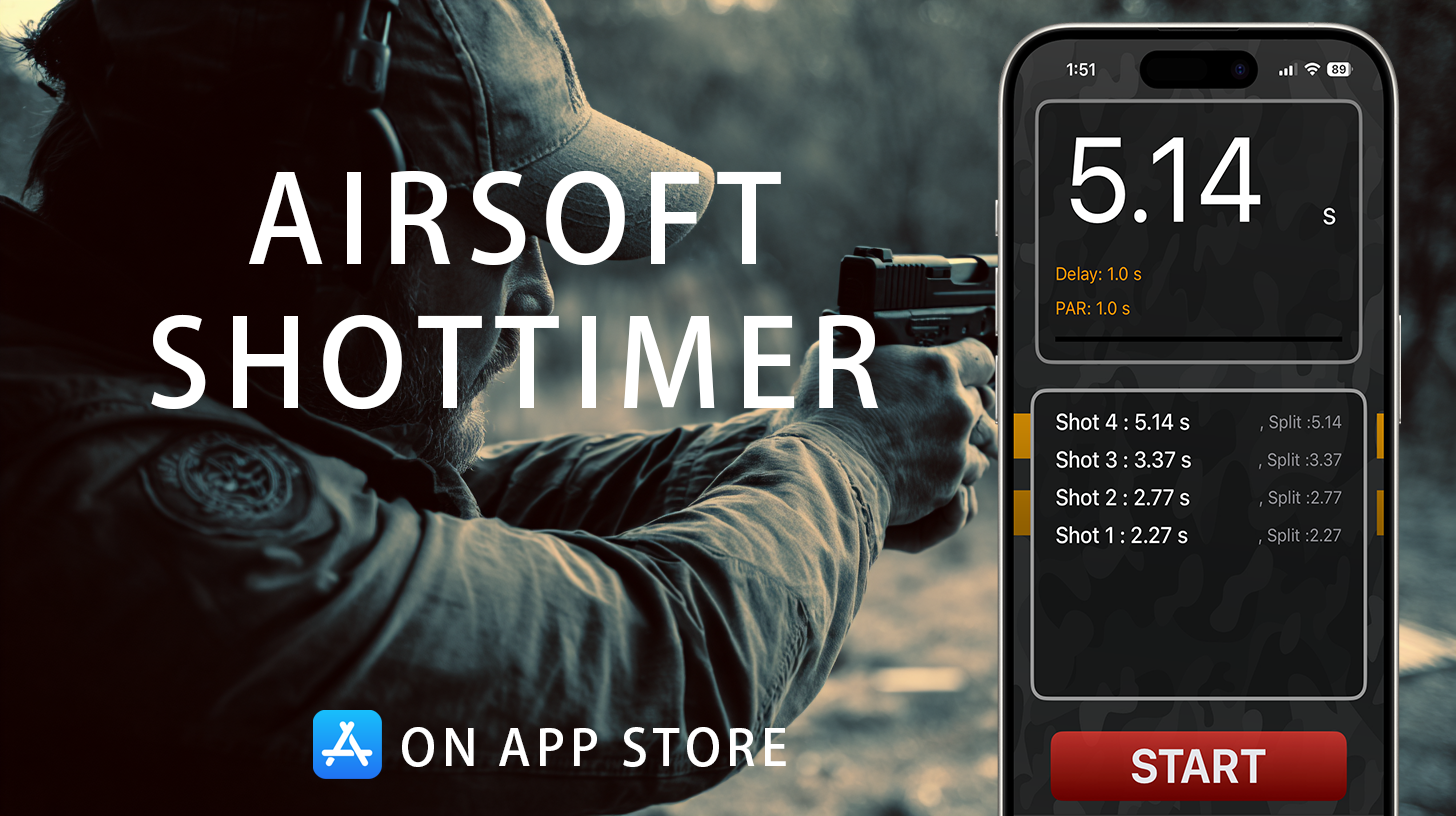
Airsoft Shot Timer is a free shot timer app tuned for airsoft and Action Air — it picks up BB gun shots, tracks your split times, and saves you the cost of a $150+ hardware timer for IPSC/IDPA practice.

- Airsoft Plate Carrier
- Airsoft Plate Carrier Setup
- Best Airsoft Plate Carrier
- Airsoft Plate Carrier Sizing
- Airsoft Plate Carrier With Real Plates
- Plate Carrier for Airsoft
- Airsoft Vest
- Tactical Vest
- MOLLE
- Plate Carrier
- JPC
- Crye AVS
- Ferro Concepts Slickster
- Spiritus LV119
- Speedsoft Vest
- Airsoft Loadout
- Airsoft Gear
- MilSim
- CQB
- Airsoft
- How to Set Up a Plate Carrier
- Plate Carrier Setup
- Plate Carrier Loadout
- Airsoft Vest Setup
- Cummerbund
- Three Line Gear
- IFAK
- Dump Pouch