Best Airsoft Tactical Headset 2026: Earmor M32 vs Tac-Sky vs Peltor — Which Is Actually Worth It?
Why You’ll Eventually Need a Tactical Headset
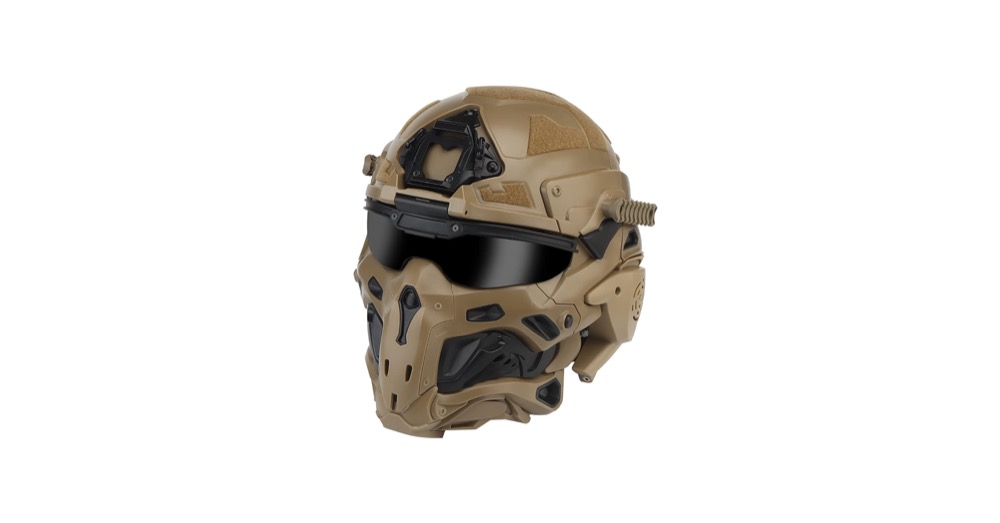
The first time you attend a MilSim event, you’ll probably notice something interesting: the squads with the best coordination barely raise their voices. Corner clearing, flanking maneuvers, building entries — it all seems like the result of years of teamwork. Then you look closer and realize every member has a tactical headset mounted on their helmet, relaying information in quiet whispers through their radios.
In airsoft, the gap in communication capability matters far more than the gap in gun performance. The practical difference between a mid-range AEG and a high-end AEG at typical engagement distances is marginal, but the difference between having real-time comms and not having them is night and day. Picture this: you’re holding a position on the second floor of a CQB building when your teammate downstairs spots enemies moving toward the stairwell. Without comms, by the time your teammate runs up to warn you, the enemy might already be at the top of the stairs. With a headset and radio, a quick “heads up, contact coming up the left stairwell” gives you time to pre-aim and wait.
Beyond communication, tactical headsets offer an often-overlooked benefit: electronic hearing protection. The cumulative noise from BBs hitting hard surfaces in indoor fields, thunder-B grenades going off, and even the cycling of GBB guns is more impactful on your hearing than you’d think. Electronic headsets instantly suppress sounds above a safe threshold while amplifying ambient sounds — letting you hear enemy footsteps while blocking harmful noise spikes. This “hear what you need, block what you don’t” capability is the true core value of a tactical headset.
The Earmor Lineup: M32, M31, and M20 Explained
When it comes to airsoft tactical headsets, Earmor has become almost synonymous with the category. They deliver near-military-grade functionality at a price point that airsoft players can actually afford, democratizing electronic hearing protection and communication integration that was once reserved for real-steel shooters. Earmor’s three most popular models each target different needs, and understanding the differences is the first step to choosing the right one.
Earmor M32 — The Full Communication Package
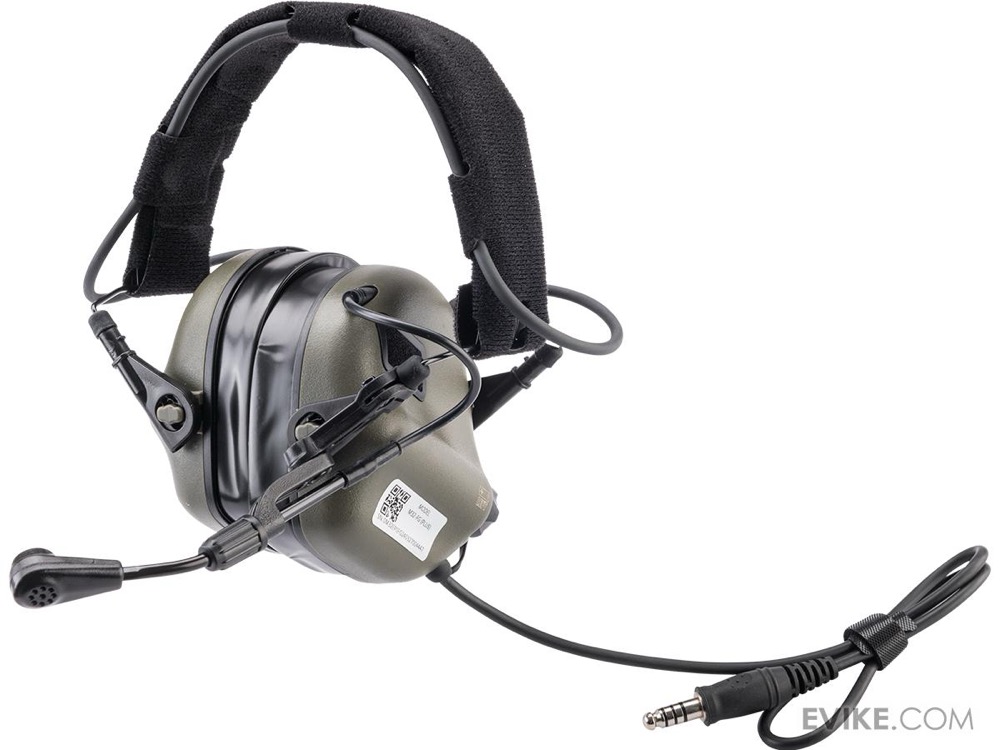
The M32 is the most feature-complete model in Earmor’s lineup and the go-to choice for MilSim players. Its defining feature is the integrated detachable boom microphone and communication port, allowing you to connect to a two-way radio via a PTT (Push-To-Talk) adapter for real-time voice communication. The microphone uses an adjustable boom arm that positions precisely near your mouth, delivering clear voice transmission even in noisy environments.
The first time you put on the M32, you’ll be pleasantly surprised by how light it feels. The ear cushions are thick and soft with excellent coverage, yet they don’t feel stuffy. They remain comfortable even with glasses on — a critical detail for airsoft players who need to wear eye protection. The headband padding distributes weight evenly, so even after hours of wear, you won’t feel pressure points on the top of your head.
The M32’s electronic noise reduction system runs on two AAA batteries (one per side), with an impressive rated battery life of 350 hours. Built-in pickup microphones continuously monitor ambient sound, amplifying anything below 82 dB to a comfortable listening level — you can clearly hear whispered callouts, distant footsteps, even rustling leaves. The moment noise exceeds 82 dB, the circuit cuts amplification within 0.5 seconds, protecting your hearing from sudden loud sounds.
For communications, the M32 uses a NATO-standard Nexus TP120 connector, compatible with Earmor’s M51 or M52 PTT adapters for connecting to various radio brands. One important note: the M32’s connector is not compatible with Z-Tactical or Element brand PTTs, so make sure you’re pairing it with the correct PTT model.
One source of confusion when shopping for the M32 is the version maze: you’ll see Mod 3, Mod 4, and “M32 Plus” listed side by side. The Mod 4 (the current 2026 revision) bundles in a handful of genuinely useful refinements over the older Mod 3 — a three-second button delay so you stop accidentally switching it off mid-game, an improved metal battery cover, dynamic voice tracking for clearer transmission, better RF immunity around radios, IPX-5 water resistance, and an auto shut-off after four hours of inactivity to save batteries. Whole unit weighs about 400 grams. The “Plus” branding usually signals the version shipping with soft gel ear cups instead of foam — and if you’ve ever worn over-ear muffs for an eight-hour MilSim, that gel upgrade is the single thing most worth paying a few extra dollars for. Foam pads get hot and start pressing on your jaw after a few hours; gel cups stay comfortable far longer and seal better over glasses straps. If you’re choosing today and the price gap is small, go Mod 4 with gel cups.
Earmor M31 — Pure Protection at a Lower Price
If you don’t need communication capabilities yet and just want electronic hearing protection with ambient sound amplification, the M31 is the more budget-friendly option. It shares the same noise reduction platform as the M32 with the same 22 dB NRR rating, and the electronic amplification and auto-cutoff features are identical. The difference is simply that the M31 lacks the boom microphone and communication port, giving it a cleaner profile.
The M31 does include a 3.5mm audio input jack for connecting your phone to listen to music or take calls. This comes in handy at the shooting range or during breaks — you can listen to music while maintaining environmental awareness. For players who primarily shoot at ranges and only occasionally play airsoft, the M31’s features are more than sufficient.
It’s worth remembering that the same electronic muffs you wear on the airsoft field are exactly what you’d reach for during a live-fire range trip or an at-home dry-fire session — and that crossover is where a lot of airsoft players quietly level up their pistol skills. If you’re already protecting your hearing, the natural next step is measuring whether your reps are actually getting faster. A free shot timer app running on your phone turns vague “I think I’m quicker” into real draw and split times you can track week to week, whether you’re dry-firing at home or running drills at the range.
Price-wise, the M31 typically runs $20–30 less than the M32. If you’re not yet committed to investing in a radio system, starting with the M31 is a smart strategy — experience the benefits of electronic hearing protection first, then upgrade to the M32 with a full comms setup when you’re ready.
Earmor M20 — Ultra-Light In-Ear Option
The M20 is Earmor’s electronic earplug, taking a completely different approach. Its tiny form factor and negligible weight make it ideal for Speedsoft players who don’t want bulky over-ear headsets. The M20 features electronic noise reduction as well, though with a slightly lower NRR, offering less sound isolation than the over-ear M31/M32.
The M20’s biggest advantage is perfect helmet compatibility — since it sits entirely inside your ear canal, there’s zero conflict with helmet edges and no need for mounting hardware. For players using mid-cut or low-cut helmets like the MICH, the M20 eliminates the problem of over-ear headsets clashing with the helmet’s ear coverage. The trade-off is that long-wear comfort varies by individual, as ear canal shapes differ and not everyone finds in-ear designs comfortable for extended periods.
Brand Comparison: Earmor vs. Tac-Sky vs. Peltor Comtac vs. Howard Leight
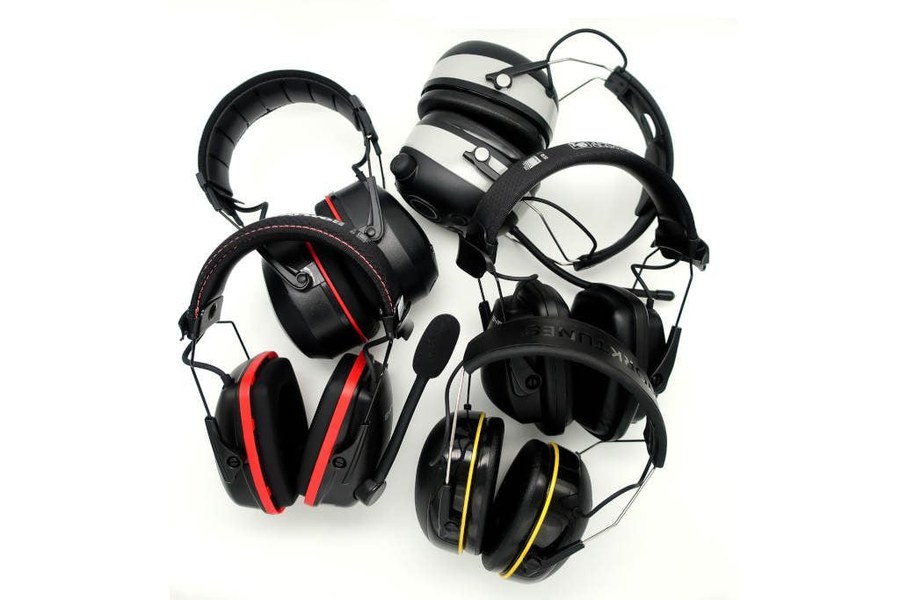
When shopping for tactical headsets, the same handful of brands come up over and over in forums and communities, and the question that dominates every airsoft thread is “Earmor vs. Tac-Sky vs. the real deal — what should I actually buy?” Each option targets a different audience and price point, so understanding where they sit will help you spend your money in the right place.
The Peltor Comtac series is the gold standard in the military and law enforcement market — from U.S. special operations to counter-terrorism units worldwide. Genuine Comtacs deliver unmatched audio quality, noise reduction, and communication clarity — the ambient sound reproduction is so natural you almost forget you’re wearing headsets. But authentic Comtacs cost $500 and up, which is clearly excessive for airsoft. That price gap is exactly why the replica market exists.
This is where the most important honest warning belongs. The cheapest “tactical-looking” headsets — Z-Tactical (Z-Tac) and the no-name Comtac II/III clones in the $20–40 bracket — are best thought of as costume pieces, not field gear. Long-term airsoft reviewers who’ve actually run them report the wires fraying within months, microphones cutting out, and units dying after roughly eight months of regular play. They nail the look in photos, but the electronic noise reduction is inconsistent and some are barely more than passive muffs with a fake mic. If a headset is going to live on your helmet through rain, BB strikes, and being yanked on and off, the $20 option is a false economy.
Tac-Sky has quietly become the durability sweet spot that experienced players keep landing on. Sitting around $130–150, a Tac-Sky Comtac typically uses soft gel ear cups, survives years of hard use (two-and-a-half years with zero failures is a commonly reported figure), and delivers solid amplification and directional awareness so you can tell which way a sound is coming from. The gel cups are the standout — players routinely wear them for ten-hour MilSim days without the hot-spot fatigue foam pads cause. If your budget stretches past entry level and you want something you’ll never have to rebuy, Tac-Sky is the headset most airsofters end up recommending as “completely enough.”
The Howard Leight Impact Sport is the most common electronic earmuff at shooting ranges, offering 22 dB NRR electronic protection for under $50. Its strengths are comfort and value — the slim profile doesn’t interfere with rifle stocks, and it remains comfortable during long sessions. However, the Howard Leight isn’t designed for tactical use: no communication capability, no helmet mounting options, and it doesn’t look the part. It’s better suited as dedicated range hearing protection rather than an airsoft tactical accessory.
So where does Earmor land? Right in the value pocket. Priced similarly to Howard Leight (M31 around $50–60, M32 around $70–90) but with features and design fully oriented toward tactical use — communication ports, helmet mounting kits, military aesthetics — Earmor is the headset most reviewers name as the smart first tactical headset. It’s “decent, not the best, but genuinely decent,” with plenty of two-year-plus reliability reports behind it. Compared to the throwaway clones it’s a legitimate brand with real quality control and warranty support; compared to Tac-Sky it saves you fifty-odd dollars at the cost of a little long-term ruggedness. For most players buying their first proper comms headset, Earmor is the most pragmatic place to start, with Tac-Sky as the obvious upgrade once you know you’re in the hobby for the long haul.
Earmor vs. Peltor: The Head-to-Head Everyone Actually Searches For
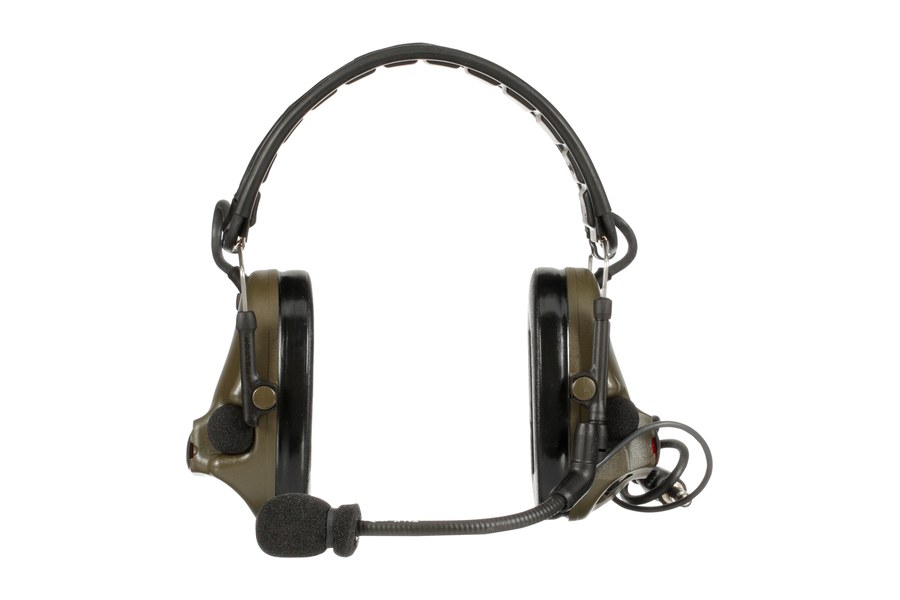
Strip away the brand loyalty and this question has a short answer: a genuine Peltor ComTac is a better headset, an Earmor M32 is the better airsoft purchase, and the gap between them is smaller than the price gap suggests. One reviewer who ran both back to back put it as bluntly as anyone could — asked whether the Earmors were “Peltor ComTac killers,” his answer was simply no, followed immediately by the observation that they work, they work well, and for anyone getting into tactical comms on a budget they’re a genuinely good alternative. That is the honest shape of it.
Look at where the money goes. A ComTac V carries a 23 dB NRR rating, runs somewhere between 150 and 200 hours on a set of batteries, and costs roughly $600–860 depending on configuration; the newer ComTac VI and VII trade battery life down to 30–50 hours in exchange for certified MIL-STD-810G and 461G environmental and electromagnetic testing. An Earmor M32 rates around 22 dB NRR, runs about 350 hours on two AAAs, shuts itself off after four hours of inactivity so you don’t find dead batteries on game day, and costs around $80. On paper the noise reduction numbers are within a decibel of each other. That single decibel is not where the extra $700 goes.
Where it goes is everything around the electronics. Pick up an M32 and the first thing you notice, as that same reviewer did, is that the 3 mm “shock resistant” shell feels like cheap plastic in the hand. The battery caps are plastic, held on by a thin rubber lanyard that looks exactly as durable as it sounds. The headband has essentially no padding — it’s a wrap that holds the cable, and Earmor will happily sell you a pad separately. None of that stops it working, but it tells you what got cut. Earmor’s own answer is the MIL-PRO line at around $300: metal battery caps, a rigid metal boom with full rotation, a metal cable, an O-ring seal and IP67 water resistance, and the control buttons moved to the left cup so you can adjust volume with your support hand while the gun stays in your strong hand. Sound quality on transmit and receive is noticeably better than the standard M32. It is, in other words, Earmor closing most of the gap for a third of the price — and it’s the option almost nobody searching “Earmor vs Peltor” knows exists.
For airsoft, the decision resolves cleanly. Your headset lives on a helmet in the rain, gets yanked off during breaks, takes BB hits, and rides in a bag with everything else you own. Spending ComTac money on that duty cycle only makes sense if you’re buying used. Buy the M32 if this is your first proper comms headset. Step up to a MIL-PRO or a Tac-Sky if you already know you’re in for the long haul. Buy the real ComTac when you find one second-hand at a price that doesn’t hurt — and read the used-market section below before you do.
Peltor vs. Sordin vs. Earmor: Where MSA Fits In
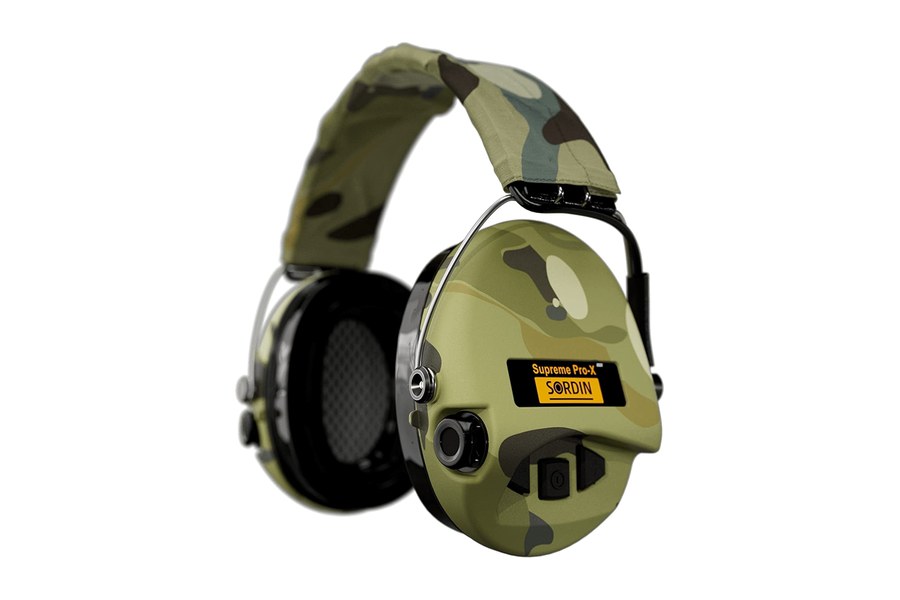
The three-way comparison is the one experienced shooters actually argue about, and the shortest useful framing is that Peltor is the issued option, Sordin is the audio-and-comfort option, and Earmor is the value option — with Tac-Sky sitting alongside Earmor as the durability pick. Most people searching for “Earmor vs Peltor” have never seriously considered the third name, and it’s often the one that fits them best.
MSA Sordin’s Supreme Pro-X is the model that keeps winning these arguments. It carries a 28 dB SNR (21 dB NRR), runs roughly 400 hours on two AAAs — comfortably the longest runtime of anything discussed here — comes with IP67-rated microphones and a five-year electronics warranty, and lands around €250. The cups are deliberately low-profile so they clear a rifle stock when you get down behind a gun, which is exactly the thing over-built tactical cups get wrong. If you want the helmet-rail version, the Supreme T2 ARC pushes to 29 dB SNR (23 dB NRR), survives 2 m immersion for 35 minutes, carries MIL-STD-810H and 461G certification, and mounts through Sordin’s own SordinFLEX rail platform — at €599–690 it’s priced against the ComTac, not against the Earmor.
What that actually feels like on a range is worth spelling out, because one reviewer ran an Earmor M32 and a Sordin Supreme Pro side by side across pistol, 12-gauge and .308 and reported something the spec sheets don’t capture. The Earmor is lighter on the head, but it let more noise through, and its compression circuit is over-eager — it clamps down on sounds that aren’t gunfire at all, so racking a slide or setting something down on the bench gets muted along with the shot. The Sordin only ducks when there’s genuinely something to duck, which is the difference between hearing protection you forget you’re wearing and hearing protection that keeps interrupting you. His verdict, from someone who owns the expensive ones: at two to two and a half times the price the Sordin does look and feel more premium and sits more comfortably, but if you’re on a budget and want something that will genuinely work for airsoft, range and general tactical use, the Earmor does the job.
So pick by what you’re actually doing. If you shoot live fire often and never need a radio, a Sordin Supreme Pro-X is the best-value serious headset on this page and the Earmor M300X at around €49 is the sensible answer for occasional range days. If you need comms on a budget, an M32 plus a PTT lands near €124 all-in. If you’re mounting to a helmet and want it to survive weather, the Sordin T2 ARC and the Earmor M32H Plus (around €114–118, and it ships with ARC, M-LOK and EXFIL adapters in the box) are the two ends of that bracket. And if your unit or team is already standardised on the ComTac ecosystem, that decision is made for you.
Is Tac-Sky Just a Peltor Clone? What “ComTac” Actually Means
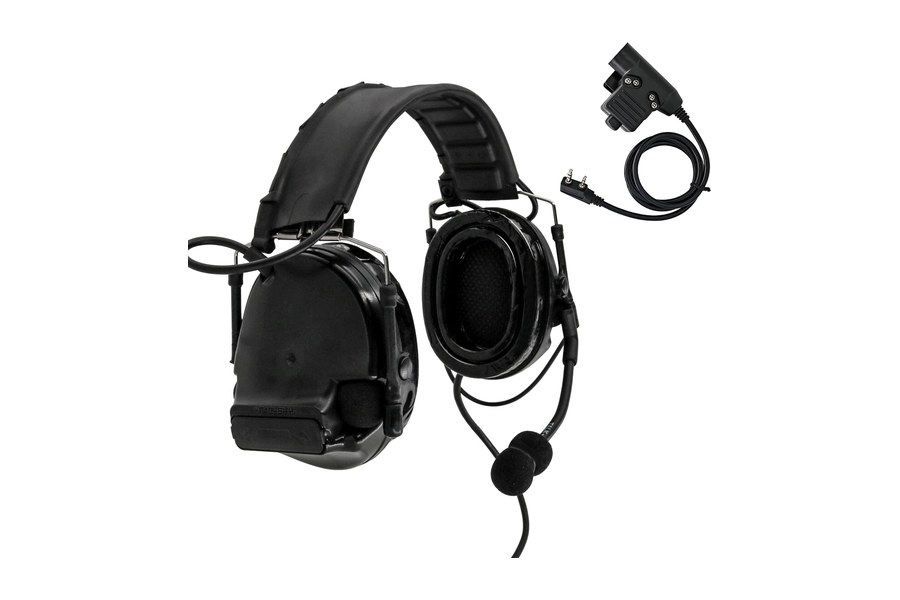
A surprising number of people arrive at this topic searching some mangled combination of “Peltor Tac-Sky,” “peltor tacsky” or “peltor sky tac,” which tells you the confusion is real. Here is the untangling: ComTac is 3M Peltor’s own product line name, running from the ComTac II through to the current ComTac VII. Tac-Sky is a separate Chinese manufacturer that builds headsets in the same physical form factor and borrows the same model naming — you’ll see a “Tac-Sky ComTac III” or “ComTac V” on marketplace listings. There is no licensing relationship, no shared parts bin, and no 3M involvement. When airsoft players call them “the best clones,” they mean it literally and not unkindly.
What genuinely carries over is the shape and the ecosystem around it. The cup geometry, the folding headband, and the helmet arms are close enough that ARC rail adapters, gel ear cups and third-party headband pads made for the real ComTac generally fit. That interchangeability is a real practical benefit and part of why the Tac-Sky is the clone that experienced players keep recommending. What doesn’t carry over is everything inside: the drivers and compression electronics are Tac-Sky’s own, there’s no MIL-STD certification, warranty support is whatever the marketplace seller offers, and connector behaviour can be quirky in ways real ComTacs aren’t — the TRI-style replica radios in particular are known for only working with replica PTTs or with a modified military PTT, while genuine gear tends to accept both.
The practical upshot for anyone weighing this up: don’t buy a Tac-Sky expecting a Peltor at a tenth of the price, and don’t dismiss it as another $30 costume headset either. It sits in a genuine middle tier at roughly $130–150, with soft gel cups as standard and a reputation for surviving years of hard use — the thing it actually beats the Earmor at. If you’re choosing between them, the question isn’t “which is closer to a Peltor” but “am I going to keep playing long enough that a fifty-dollar difference stops mattering.” If the answer is yes, buy the Tac-Sky once. If you’re not sure yet, the Earmor is the lower-regret purchase.
Helmet Mounting: ARC Rail Installation Guide
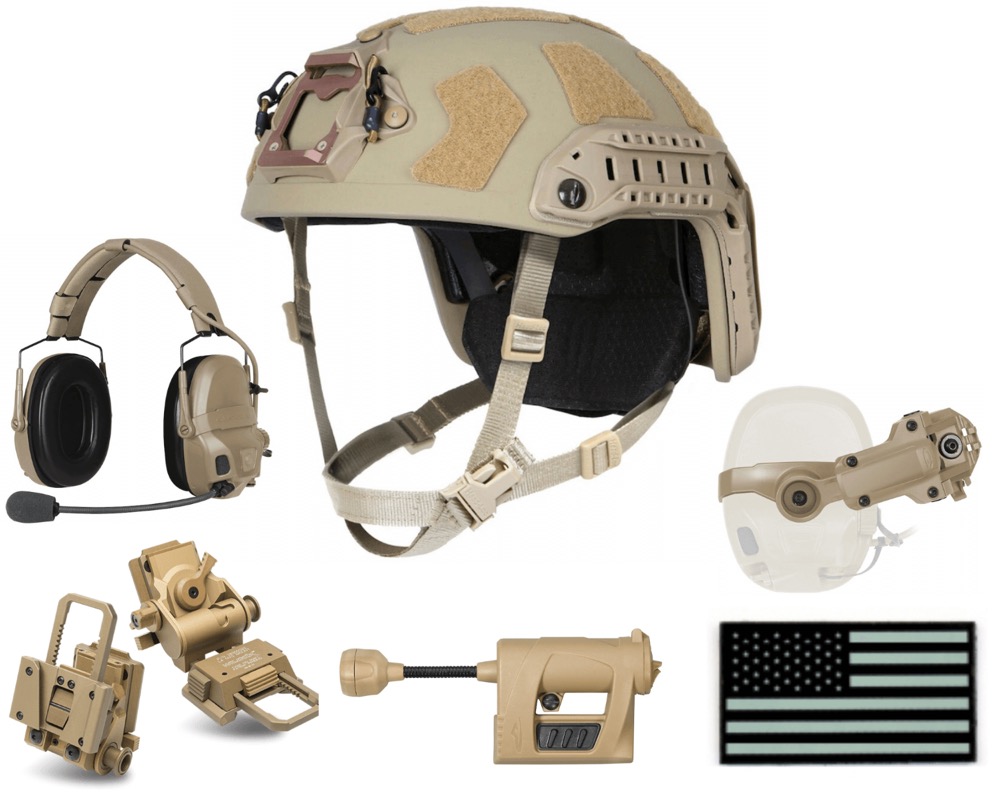
Mounting your headset on your helmet instead of using a headband is a significant upgrade in the tactical headset experience. Once helmet-mounted, the headset weight is distributed across the entire helmet rather than concentrated on the top of your head and above your ears, noticeably improving long-wear comfort. Even better, you can flip the ear cups up 90 degrees to temporarily move them off your ears — great for ventilation during breaks or face-to-face conversations without removing the entire headset.
The installation process is straightforward. Most FAST-series helmets feature standard ARC rails (Accessory Rail Connector) on the sides, and Earmor offers dedicated ARC rail adapter kits (sold separately). Installation simply requires removing the original headband, attaching the ARC mounting arms, and snapping them into the helmet rails. No tools needed, and the whole process takes just a few minutes. Earmor also offers pre-installed ARC-mounted versions (like the M32X) — if you know you’ll be pairing with a helmet, the integrated version is more convenient.
A few installation details worth noting. First, confirm your helmet’s rail specification — Ops-Core-style ARC rails and other brands’ rail systems aren’t always cross-compatible, so verify adapter compatibility before purchasing. Second, test that the ear cups seal completely around your ears without gaps after mounting, since helmet angle and individual head shape both affect the seal, and poor sealing reduces noise reduction effectiveness. Finally, if you’re also wearing goggles, make sure the goggle strap doesn’t conflict with the headset mounting arms — routing the strap above the ARC rail usually resolves this.
For players using MICH or other mid-cut/low-cut helmets, ARC rail mounting may not work well because the helmet’s lower edge interferes with the ear cups. In this case, stick with headband-style wear or consider the in-ear M20.
PTT and Radio: Building a Complete Comms System
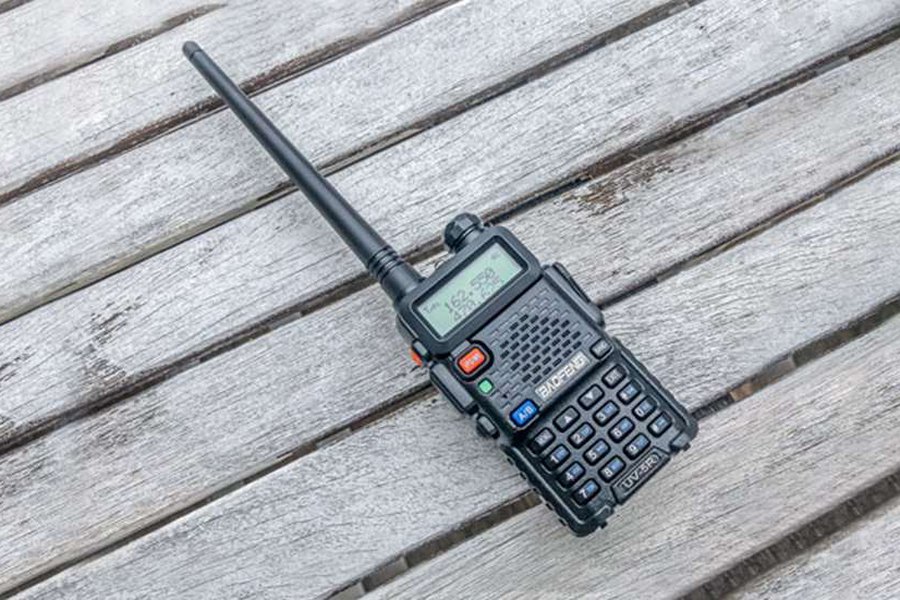
Having an M32 headset is only part of the communication equation. To achieve real-time squad communication, you also need a PTT button and a radio. This might sound complicated, but assembling the complete system is more intuitive than you’d expect — and it’s worth understanding as three distinct tiers, because most players buy the wrong tier first and then buy again six months later.
PTT stands for Push-To-Talk — it’s simply a button you press to transmit your voice. In tactical setups, the PTT is typically mounted on your chest rig or plate carrier, easily accessible with your index finger or thumb. Earmor’s official M51 PTT is the simplest pairing option, supporting the Kenwood two-pin connector that nearly all budget airsoft radios use. Connection is straightforward: plug the M32’s Nexus connector into the M51 PTT’s headset port, then plug the M51’s other end into your radio’s headset jack. Done.
Tier One: Walkie-Talkies and the Squawk Box
The cheapest way onto a team net is a pair of decent consumer walkie-talkies, and for a casual weekend game they genuinely work. What you’re giving up is control. Consumer walkie-talkies are locked to FRS channels, usually around twenty of them, with no programming and no channel naming. Everybody in your region shares those same channels, so expect to hear strangers’ conversations bleeding into your squad net and to spend half the morning hunting for a clear one. There’s also a detail that catches people out constantly: screwing a longer aftermarket antenna onto an FRS radio doesn’t buy you range, because the limitation is the regulated power and channel plan, not the antenna.
The single most underrated piece of kit in this whole category is the squawk box — the palm-sized speaker-microphone you’ve seen clipped to a police officer’s or trucker’s shoulder. It solves a problem beginners don’t anticipate: your radio lives in a pouch on your back or side, and you can’t talk into something that isn’t near your face. A squawk box breaks the microphone away from the radio body and puts it on your chest where your hand naturally falls. The better ones, such as the BTECH units, include a headphone jack, so you can plug in any earpiece you already own and the box automatically cuts its own speaker while still working as your microphone. That’s a closed comms setup for about the cost of two BB bottles, and plenty of experienced players keep using one alongside a $400 headset simply because it’s fast to throw on.
Tier Two: Baofeng, CHIRP, and the Connector That Decides Everything
The Baofeng UV-5R and its many cousins are the default airsoft radio for good reason. They cost $20–40, cover far more range than any field needs, and — critically — they’re programmable. A free desktop program called CHIRP plus a cheap Kenwood-to-USB cable lets you load a full library of named channels onto the radio, so instead of squinting at “channel 14” you see “SQUAD” or “BASE” on the display. You can even give the radio a custom boot-up name. A trick worth stealing from experienced comms players: program a handful of FRS channels into your Baofeng as well, so that when half your team turns up with consumer walkie-talkies you can drop onto their frequency instantly rather than reorganising everyone.
Before you buy anything, understand this one rule, because it causes more wasted money than any other decision in airsoft comms: what matters is the connector standard, not the brand on the box. The overwhelming majority of budget airsoft radios use the Kenwood two-pin jack, and the overwhelming majority of headsets terminate in a NATO Nexus TP-120 plug. The PTT is the translator between those two worlds, and if you buy a PTT wired for a different radio family — Motorola Talkabout, Motorola two-pin, ICOM two-pin — nothing will work, no matter how expensive the headset is. Players who’ve assembled a lot of these setups tend to converge on the same advice: standardise on Kenwood, and if you ever move up to military-style gear, get a Kenwood-to-six-pin adapter and everything downstream keeps working.
Battery behaviour is worth a sentence too, because it differs more than the spec sheets suggest. The larger 152-style replica radio bodies tend to run absurdly long on a charge — weekend players report going close to a full season without plugging one in — whereas a stock UV-5R drains noticeably faster and, more annoyingly, starts losing transmit reliability as the battery sags rather than simply switching off. Carrying a spare battery is cheaper than losing comms in the last game of the day.
Tier Three: 152-Style Replica Radios
The AR-152 and TRI-style Harris replicas are what people are usually pointing at when they say “real comms” in an airsoft context. They look the part, they take genuinely cheap surplus 152 batteries, and the battery slides out as a small standalone brick rather than forming the entire back half of the radio, which makes carrying a spare far less awkward. They also give you a six-pin port, which is the gateway to military-standard PTTs and headsets.
There are two catches nobody mentions until you’ve already bought one. First, you can’t simply plug a PTT in and start talking the way you can with a Baofeng — the radio has settings that must be matched to the PTT type you own, and getting this wrong produces the classic “my mic doesn’t key” panic on game morning. Second, you lose some of the easy channel programming that makes the Baofeng so friendly. For most players a 152 replica is an aesthetic and ergonomic upgrade rather than a communication upgrade, and there’s no shame in running a $30 Baofeng in a radio pouch and spending the difference on a better headset.
The total budget for a complete, working comms system breaks down roughly like this: M32 headset around $70–90, M51 PTT around $30–40, Baofeng radio around $25–35. All together, you’re looking at under $150 for a fully functional squad communication system. Compared to genuine military comms gear that costs well over a thousand dollars, this price point is incredibly accessible for airsoft players.
Replica Comms, and What Real-Steel Actually Costs
There’s a category of gear this guide has been circling that deserves its own honest treatment: replica comms headsets. These are the Comtac-lookalike sets from Element, Z-Tactical and similar brands, usually sold as a bundle with a matching PTT, and they are the single most common source of comms frustration in airsoft. Players who’ve genuinely tried to make them work — buying multiple pairs, multiple PTTs, multiple wires, experimenting with civilian versus military plug standards — frequently report never getting a reliably usable setup out of any of them. When they do work, one side is inaudible: either your teammates can barely hear you, or you can barely hear them. The look is convincing in photos and the function almost never is.
If you want the aesthetic without the heartbreak, there are two workarounds worth knowing. The first is to run your replica headset purely as passive-looking ear pro and put your actual comms through a squawk box, which is what a lot of players quietly do — you give up a fully closed comms loop, but everything works. The second is the one genuine exception the community keeps naming: FMA’s replica of the Ops-Core AMP. For whatever reason, that specific model behaves itself with both real and civilian PTTs where the Comtac clones don’t. It’s priced high enough that you should ask yourself whether you’d rather save a little longer, but it’s the replica that doesn’t waste your season.
That question — save a little longer for what? — has a better answer than most airsoft players assume. Genuine Peltor ComTac Vs are the military standard for a reason, and beyond the sound quality they offer a configuration worth knowing about: they’re sold with no down lead, a single down lead, or a dual down lead. The dual version runs two separate leads, one from each ear cup, letting you monitor two radios on one headset. In practice that means your squad net in one ear and platoon or base command in the other, which is the sort of capability that changes how a MilSim team operates. Prices on the used market are wild in both directions — some sellers ask $800, and gear that changes hands through Discord marketplaces, eBay and Instagram or Facebook reseller circles routinely lands nearer $200.
The other name that belongs in this conversation and almost never appears in airsoft buying guides is MSA Sordin. Sordins are the older-school alternative to the Peltor, and a lot of long-term users prefer them: the sound profile is cleaner and less muffled, to the point where it barely registers that you’re wearing hearing protection at all, and they typically sell for less than the equivalent Peltor. Complete used Sordin setups with a PTT have been assembled for around $150 by patient buyers. If your plan is to buy once and stop thinking about comms, a used real-steel headset from the resale market is very often cheaper than the third replica you were going to buy — and unlike the replica, it will still be working in five years.
One shared upgrade applies to every headset in this section: gel ear cups. They’re what nearly everyone converges on, they seal better and stay comfortable through a ten-hour day, and they do wear out. The gel compresses over time and needs replacing, which is a maintenance item rather than a defect — budget for a new set roughly once a year if you play regularly.
Choosing by Playstyle: MilSim, CQB, and Speedsoft
Different game styles have surprisingly different requirements for communication headsets. Thinking about which type of event you attend most often before buying can save you from the frustration of getting the wrong setup.
MilSim is where communication headsets deliver the most value. Extended missions, complex tactical operations, squad members spread across large maps — these conditions make real-time comms indispensable. MilSim events typically run four to eight hours or even overnight, making headset comfort and battery life critical factors. Recommended setup: Earmor M32 mounted on a FAST helmet, paired with M51 PTT and a handheld radio. If budget allows, carry two spare sets of AAA batteries — while the theoretical 350-hour battery life is generous, nobody wants to discover dead batteries mid-mission.
CQB fields are fast-paced and close-quarters, so communication needs are actually less pressing than in MilSim — your teammates are usually within line of sight, and a hand signal or quick shout gets the job done. But CQB fields tend to be the noisiest environments: BBs ricocheting off walls in enclosed spaces, GBB cycling sounds, thunder-B grenades echoing in hallways — it’s a constant assault on your hearing. Here, the hearing protection function matters more than communication. An Earmor M31 works perfectly — block harmful noise, amplify footsteps to help track enemy positions, no need for the extra comms investment.
Speedsoft demands maximum weight savings and agility. Bulky over-ear headsets add head weight and restrict the freedom of quick head turns, which contradicts the Speedsoft philosophy entirely. If you’re a Speedsoft player who still wants hearing protection, the Earmor M20 in-ear earplugs are currently the best compromise. Virtually zero weight and bulk, no interference with any gear, and basic electronic noise reduction functionality.
Usage and Maintenance Tips
Tactical headsets are electronic devices, and proper usage habits and maintenance can significantly extend their lifespan. Here are some practical tips accumulated from real-world use.
Battery management is the most commonly overlooked detail. The AAA batteries used in the M31/M32 are cheap, but if you forget to turn off the power before stowing the headset in your gear bag, you might find them completely dead next time. Build the habit of switching off after every game, or simply remove the batteries when storing. Standard alkaline batteries work fine — no need to buy lithium batteries when 350-hour battery life on alkalines is already more than sufficient.
Ear cushion pads are the first component to deteriorate. Sweat, sunscreen, and dust gradually degrade the foam material, causing it to harden, peel, or lose elasticity. Wipe the ear pad surfaces with a slightly damp cloth after each use and let them air dry before storage. Earmor sells replacement ear pad kits — swapping them every six months to a year is a reasonable schedule. When you install fresh pads, you’ll immediately notice the comfort and seal quality jump back to like-new levels.
Protecting the microphone and cables matters too. The M32’s boom microphone can get bent out of shape when stored carelessly, so consider using a small case or hard-shell pouch for protection. When connecting and disconnecting the PTT cable, pay attention to the angle and avoid yanking — while the Nexus connector itself is robust, the junction between cable and connector is the most vulnerable point.
Conclusion: Communication Is the Ultimate Force Multiplier
A good tactical headset doesn’t just change your personal game experience — it transforms how your entire squad operates. When your team can exchange battlefield information quietly, instantly, and precisely, your tactical execution takes a quantum leap forward. Those seamlessly coordinated assaults you’ve admired? They’re usually backed by nothing more than a brief radio callout.
If you’re still on the fence, my suggestion is to start with an Earmor M31 to experience electronic noise reduction. Once you find yourself increasingly drawn to team-based events that demand coordination, upgrade to the M32 with a full comms system. You don’t need to invest in everything at once — building your gear progressively based on actual needs and budget is the smartest approach.
Frequently Asked Questions
Is the Earmor M32 worth it for airsoft?
For most players, yes — it’s the best “first proper tactical headset” you can buy. Around $70–90, it gives you genuine electronic hearing protection, ambient sound amplification, and a communication port, all in a package that holds up for a couple of years of regular play. It isn’t the absolute best-sounding headset on the market, but for the price there’s nothing more sensible. The only players who should skip it are budget-capped beginners (start with the cheaper M31) and serious long-term players who’d rather pay once for a Tac-Sky.
Earmor vs. Tac-Sky — which should I buy?
Buy the Earmor if this is your first comms headset, you’re price-sensitive, or you’re not yet sure how deep into airsoft you’ll go. Buy the Tac-Sky if you already know you’re in the hobby long-term and want gear you’ll never have to replace — its gel cups are more comfortable for all-day MilSim and it has a strong reputation for surviving years of abuse. The rough rule players settle on: Earmor is the better value, Tac-Sky is the better long-haul purchase, and either one beats the no-name $20 clones by a wide margin.
Do cheap tactical headsets actually protect your hearing?
The very cheapest ones often don’t, at least not reliably. Sub-$40 Z-Tactical and no-name clones are frequently closer to costume props with a microphone than real electronic ear pro — inconsistent noise reduction, fragile wiring, and short lifespans are common complaints from people who’ve actually fielded them. A legitimate Earmor, Tac-Sky, Howard Leight, or genuine Peltor with a stated NRR (around 22 dB) is what you want if hearing protection — not just looks — is the goal. Your ears don’t grow back, so this is the one spot where the bargain option is a genuinely bad idea.
What’s the difference between the M32 Mod 3, Mod 4, and Plus?
Mod 3 is the older generation; Mod 4 is the current 2026 revision and adds a three-second power-button delay (so you stop knocking it off mid-game), an improved metal battery cover, dynamic voice tracking, better RF immunity around radios, IPX-5 water resistance, and an auto shut-off after four hours of inactivity. “Plus” generally denotes the version that ships with soft gel ear cups instead of foam, which is the single biggest comfort upgrade for long days. If the prices are close, the Mod 4 with gel cups is the one to get.
Can I mount any tactical headset on my FAST helmet?
Most FAST-style helmets use standard ARC rails, and Earmor (along with Tac-Sky and others) sells ARC rail adapter kits that swap out the headband in a few minutes with no tools. The catch is compatibility: Ops-Core-style rails and some other brands’ rail systems aren’t always cross-compatible, so confirm the adapter matches your helmet before buying. Mid-cut and low-cut helmets like the MICH can also interfere with over-ear cups, in which case headband wear or the in-ear M20 is the better route. Pairing the headset with the right lid is covered in our airsoft helmet buying guide.
What radio do most airsoft players use?
The Baofeng UV-5R and its variants are the default, and they’ve earned it — $20–40, plenty of range for any field, and fully programmable through the free CHIRP software with a cheap Kenwood-to-USB cable. Program named channels so you’re reading “SQUAD” rather than counting channel numbers under stress, and add a few FRS channels so you can still talk to teammates running consumer walkie-talkies. Consumer walkie-talkies themselves are fine for casual weekend play but are locked to shared FRS channels with no programming, and a bigger antenna won’t extend their range. Above the Baofeng sit the AR-152 and TRI Harris replicas, which look the part and take cheap surplus batteries, but they’re an ergonomic and aesthetic upgrade more than a communication one. Whatever you buy, check your local frequency regulations first and ask at field check-in which channels the site uses.
Will a Z-Tactical or Element PTT work with my Earmor headset?
Usually not, and this is the most expensive mistake in airsoft comms. Compatibility is decided by the connector standard, not the brand: Earmor headsets terminate in a NATO Nexus TP-120 plug, which Z-Tactical and Element PTTs don’t accept. On the radio side, budget airsoft handhelds almost all use a Kenwood two-pin jack, while Motorola Talkabout, Motorola two-pin and ICOM two-pin PTTs will physically fit nothing you own. The safe approach is to standardise your whole setup on Kenwood two-pin at the radio end and Nexus at the headset end — an Earmor M51 or M52 PTT does exactly that — and if you later move to military-style gear, a Kenwood-to-six-pin adapter keeps everything you already bought usable.
Sordin or Peltor — which is actually better?
For pure hearing protection and sound quality, most people who own both land on the Sordin. The Supreme Pro-X gives you a higher 28 dB SNR, about 400 hours of runtime on two AAAs, a five-year electronics warranty and low-profile cups that don’t fight your rifle stock, all at around €250 — roughly a third of ComTac money. Where Peltor wins is the ecosystem: if you need dual down leads to monitor two radio nets, specific issued configurations, or accessories your unit already stocks, the ComTac is the one built for that. For a civilian shooter or an airsoft player buying with their own money, the Sordin is usually the smarter premium purchase and the ComTac is the one to buy used.
What Peltors does the army actually use?
The ComTac family is the one you see on issued kit — the ComTac III and IV were the workhorses for years, with the ComTac V and VI now common, typically ARC-mounted to a ballistic helmet rather than worn on the headband. The features that matter in that role are the dual down lead for monitoring two radio nets simultaneously and the MIL-STD-810G/461G environmental and electromagnetic certification on the newer generations, neither of which shows up on a spec comparison as a headline number but both of which are why the price is what it is. For airsoft, neither capability changes anything about your game.
Are Earmor headphones any good?
Yes, with a clear caveat about which tier you’re buying. The M31, M32 and M300X are legitimate electronic hearing protection with real NRR ratings around 22–24 dB, directional microphones, long battery life and genuine quality control — they are not in the same category as the $20–40 no-name clones. What you’re giving up versus a Sordin or a ComTac is build feel (the shell plastic and the rubber battery-cap lanyard are the obvious cost cuts), a compression circuit that ducks more aggressively than it needs to, and long-term weather durability. If those bother you, the MIL-PRO line at around $300 fixes most of them. For the overwhelming majority of airsoft players, a standard M32 is more headset than the game requires.
Which Peltor ComTac should I buy?
If you’re buying new and want maximum battery life, the ComTac V at 150–200 hours is the practical pick. If you need certified environmental and electromagnetic performance and can live with 30–50 hours per battery set, the ComTac VI or VII are the current generation. If you’re buying used — which is what most airsoft players should be doing — the ComTac III remains extremely common on the second-hand market, takes the same gel cups and ARC arms as everything newer, and regularly sells for a fraction of what a new set costs. Check that both cups power on, that the down lead isn’t crackling, and budget for a fresh set of gel cups regardless of what the seller says.
Are Peltors worth the money, or is an Earmor good enough?
For airsoft specifically, an Earmor is good enough for most people, and that isn’t a consolation prize — it delivers real 22 dB electronic hearing protection, ambient amplification and a working comms port at a quarter of the price. Genuine Peltor ComTac Vs are meaningfully better in sound quality and offer configurations replicas don’t, notably the dual down lead that lets you monitor two radio nets at once. The catch is that new prices are hard to justify for BB guns. Where real-steel headsets become genuinely sensible is the used market: Discord marketplaces, eBay and reseller circles on Instagram and Facebook regularly move ComTacs for a fraction of the $800 some sellers ask, and MSA Sordins — cleaner-sounding than Peltors in many users’ opinion — often go for less again. If you’re on your second or third replica headset, price out a used real-steel set before buying another.
Related Articles
Airsoft Gear
- Airsoft Helmet Complete Buying Guide
- Airsoft Loadout Complete Guide
- Airsoft Plate Carrier & Tactical Vest Guide
- Airsoft Mask & Goggle Complete Guide
- Airsoft Gear Buying Complete Guide
Airsoft Tactics
- Airsoft CQB Tactics Complete Guide
- Airsoft Team Tactics Complete Guide
- Airsoft Field Selection Guide
Shooting Training
Use AirsoftShotTimer to track your training progress!
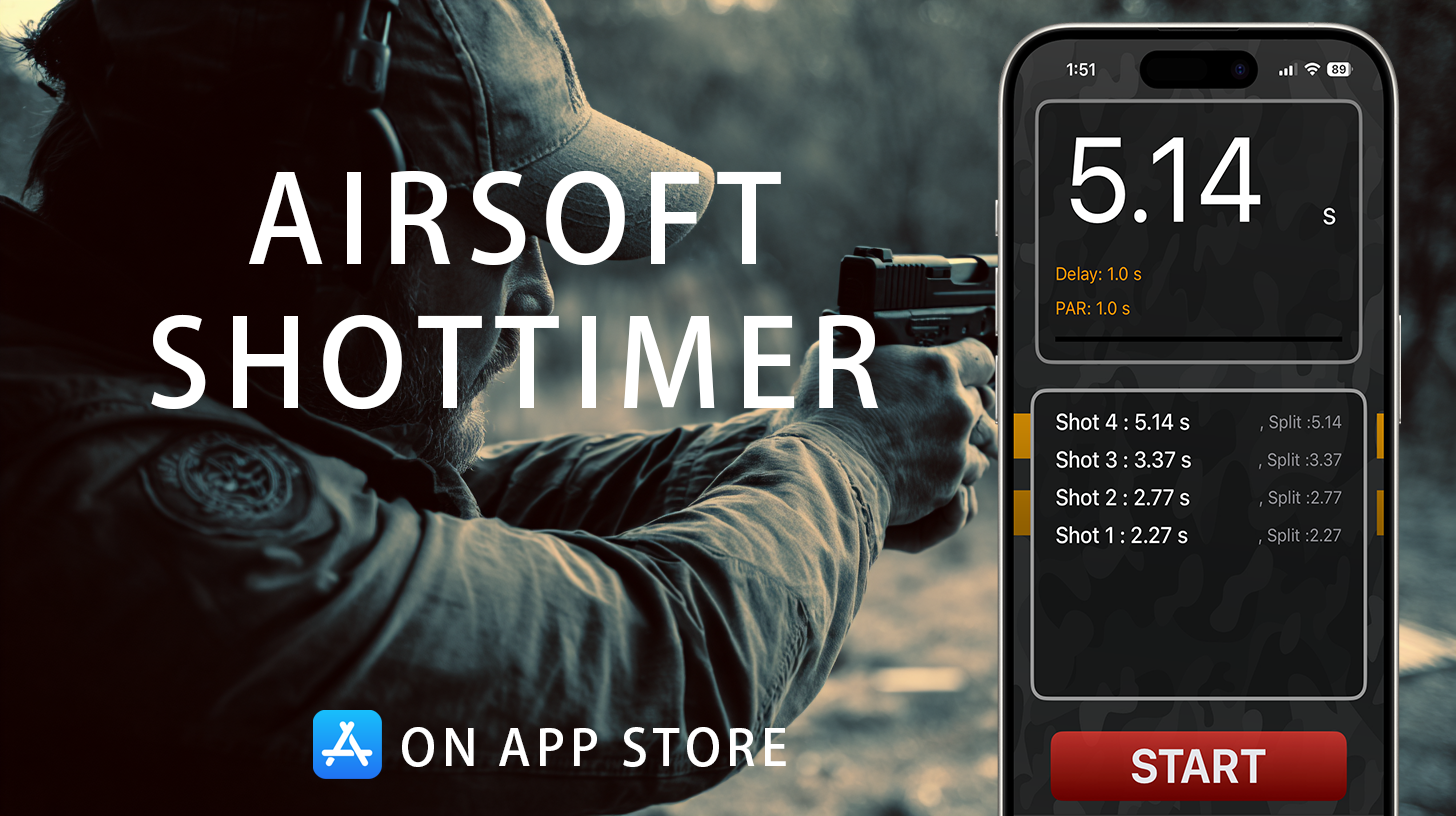
Put a Shot Timer in Your Pocket
Airsoft Shot Timer is a free shot timer app tuned for airsoft and Action Air — it picks up BB gun shots, tracks your split times, and saves you the cost of a $150+ hardware timer for IPSC/IDPA practice.

- Best Airsoft Headset
- Airsoft Headset
- Airsoft
- Earmor M32
- Earmor M32 Mod4
- Earmor M31
- Tac-Sky
- Tactical Headset
- Airsoft Communication
- Airsoft Comms
- Airsoft Radio
- Baofeng UV-5R
- AR-152
- CHIRP
- Squawk Box
- Kenwood 2-Pin
- Nexus TP-120
- Replica Comms
- FMA AMP
- MSA Sordin
- PTT
- ARC Rail
- Airsoft Gear
- MilSim
- CQB
- Gel Cups
- Hearing Protection
- Peltor Comtac
- Earmor vs Peltor
- Peltor ComTac V
- Sordin Supreme Pro X
- Sordin Supreme T2
- Earmor MIL-PRO
- Tac-Sky Comtac III
- Earmor M300X
- NRR
- Airsoft Helmet