Personal Shooting Training Plan Guide: From Goal Setting to Periodization
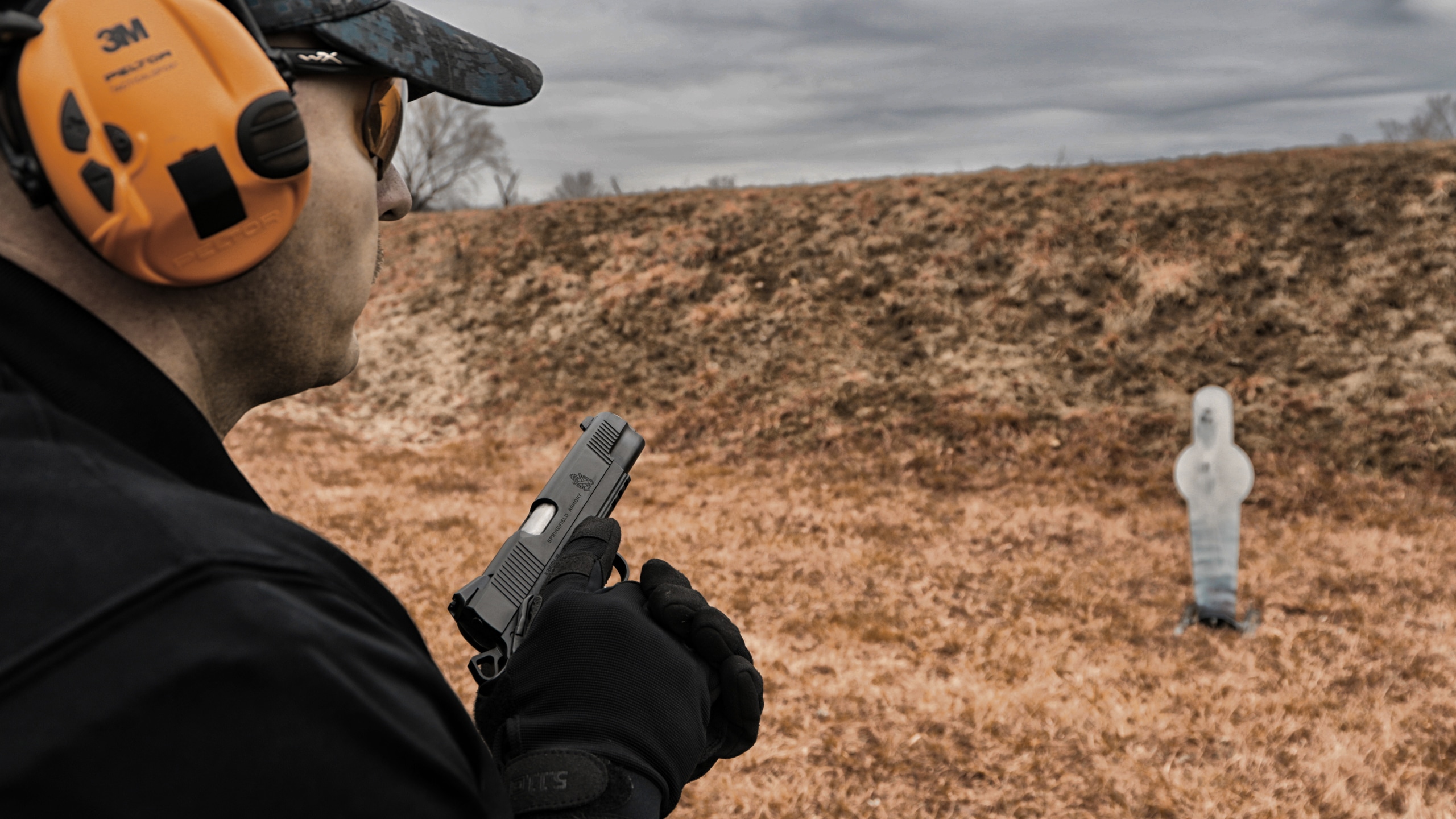
Why Do You Need a Training Plan?
“I go to the range every week, but I don’t seem to be improving.” — This is a common frustration among shooters. The problem often isn’t about not practicing enough, but rather the lack of a systematic training plan.
Imagine this: You arrive at the range, fire a few rounds randomly, practice your draw, run through a few drills, then go home. Next time, you repeat the same process. This “casual practice” approach is like driving without a map — you might be going in circles while thinking you’re making progress.
The difference between planned training and unplanned practice:
| Unplanned Practice | Planned Training |
|---|---|
| Practice different things each time | Systematically build specific skills |
| Don’t know your progress | Quantifiable progress tracking |
| Hit plateaus easily | Periodically break through plateaus |
| Practice becomes ammo consumption | Every round has a purpose |
| Long-term stagnation | Consistent steady improvement |
This guide will take you from zero to creating an effective shooting training plan. Whether you’re a beginner just starting out or an intermediate shooter looking to break through plateaus, you’ll find methods that work for you.
💡 Further Reading: Before creating your plan, it’s helpful to understand basic training drills. Check out Complete Guide to Classic Shooting Drills to learn about various standard training drills.
Step One: Assess Your Current Level
The first step in creating a plan is understanding where you currently stand. You need to establish a baseline to know where to start and where to go.
Self-Assessment Questionnaire
Before starting, honestly answer these questions:
Experience & Background
- How long have you been shooting?
- How often do you practice per week/month?
- How long is each practice session?
- What firearms do you use (live fire, airsoft, specific models)?
Current Abilities
- What’s your Bill Drill (7 yards, 6 shots) time?
- How long does it take from draw to first shot?
- How long does your reload take?
- Can you consistently pass Dot Torture (3 yards)?
Resources & Constraints
- How much time per week can you dedicate to training?
- What’s your budget for ammunition and range fees?
- Do you have space for dry fire training?
- Do you have a Shot Timer?
Establishing Baseline Tests
Choose 3-5 standard drills from below and record your scores as a baseline:
| Drill | Setup | Record |
|---|---|---|
| Bill Drill | 7 yards, 6 shots, IPSC target | Time + A-zone hits |
| Draw to First Shot | 7 yards, 1 shot | Draw to shot time |
| 2-Reload-2 | 7 yards, 4 shots (with reload) | Total time |
| Dot Torture | 3 yards, 50 shots | Hits (out of 50) |
| El Presidente | 10 yards, 12 shots | Time + total score |
💡 Tip: Use the Airsoft Shot Timer App to record this data. The app’s history feature helps you track long-term progress.
Identify Your Level
Based on baseline test results, you can roughly categorize yourself into one of these levels:
Beginner
- Bill Drill: 4.0 seconds or more
- Draw to first shot: 2.5 seconds or more
- Main needs: Establish fundamental movements, develop correct habits
Intermediate
- Bill Drill: 2.5-4.0 seconds
- Draw to first shot: 1.5-2.5 seconds
- Main needs: Increase speed, improve consistency
Advanced
- Bill Drill: Under 2.5 seconds
- Draw to first shot: Under 1.5 seconds
- Main needs: Detail optimization, maintain performance under pressure
Step Two: Set Training Goals
With your baseline established, the next step is setting clear goals. Vague goals (like “I want to get better”) can’t guide your training direction — you need SMART goals.
SMART Goal Framework
SMART is a widely-used goal-setting framework, with each letter representing an element:
| Element | Description | Shooting Example |
|---|---|---|
| Specific | Clearly define what to achieve | “Improve Bill Drill time” |
| Measurable | Numbers to track | “From 3.5 seconds to 2.8 seconds” |
| Achievable | Realistic with current resources | Consider weekly training time |
| Relevant | Aligns with long-term goals | Related to competition needs |
| Time-bound | Set a deadline | “Within 3 months” |
Goal Examples
Beginner Goal Examples
- “In 8 weeks, improve Bill Drill from 5.0 seconds to 4.0 seconds”
- “In 6 weeks, consistently pass Dot Torture at 3 yards”
- “In 4 weeks, reduce draw to first shot from 3.0 seconds to 2.5 seconds”
Intermediate Shooter Goal Examples
- “In 12 weeks, improve Bill Drill from 3.2 seconds to 2.6 seconds”
- “In 8 weeks, improve El Presidente from 9 seconds to 7 seconds”
- “By end of season, achieve B-class or higher in regional matches”
Advanced Shooter Goal Examples
- “Before competition season, consistently hit Cold Start Bill Drill under 2.2 seconds”
- “Achieve USPSA A-class by year end”
- “Place in top 20% at national match”
Goal Layering
It’s recommended to set three levels of goals simultaneously:
- Short-term goals (4-8 weeks): Specific, quickly verifiable technical improvements
- Medium-term goals (3-6 months): Overall skill improvement, match performance
- Long-term goals (1+ year): Classification achievements, major competition goals
This layering lets you feel progress in the short term while maintaining pursuit of long-term vision.
Step Three: Plan Training Cycles
Professional athletes use “periodization” to maximize training effectiveness. This concept applies equally to shooting training.
Basic Concepts of Periodization
The core idea of periodization is: Focus on different priorities during different periods to avoid stagnation from long-term single-focus training.
A complete training year can be divided into these phases:
| Phase | Duration | Focus | Volume | Intensity |
|---|---|---|---|---|
| Foundation | 6-8 weeks | Build technical foundation | High | Medium |
| Development | 8-12 weeks | Improve speed and overall skills | Medium-High | High |
| Competition | 4-8 weeks | Maintain condition, simulate matches | Medium | High |
| Rest | 2-4 weeks | Recovery, review, adjustment | Low | Low |
Foundation Phase Training Focus
The goal of the foundation phase is to establish solid technical fundamentals. This phase emphasizes correctness over speed.
Training Focus:
- Grip and shooting stance
- Trigger control (using coin method, dry fire practice)
- Aiming fundamentals
- Draw stroke breakdown practice
Typical Weekly Training Distribution:
- Dry fire training: 5 days × 20 minutes
- Live fire training: 1-2 sessions × 100 rounds
- Physical training: 2-3 sessions
Assessment Method:
- Weekly Dot Torture test
- Video recording of draw stroke for self-review
Development Phase Training Focus
The goal of the development phase is to increase speed based on correct technique and begin practicing combined skills.
Training Focus:
- PAR time training (progressively shorter target times)
- Multiple target transitions
- Shooting on the move
- Reload speed
Typical Weekly Training Distribution:
- Dry fire training: 5 days × 30 minutes
- Live fire training: 1-2 sessions × 150-200 rounds
- Physical training: 2-3 sessions
Assessment Method:
- Bill Drill, El Presidente test every two weeks
- Track PAR time achievement rate for each drill
Competition Phase Training Focus
The goal of the competition phase is to maintain peak condition and prepare for upcoming matches.
Training Focus:
- Simulate match scenarios
- Cold Start tests
- Mental conditioning training
- Pre-match visualization
Typical Weekly Training Distribution:
- Dry fire training: 4-5 days × 15-20 minutes (maintenance)
- Live fire training: 1 session × 100-150 rounds (light maintenance)
- Mental training: 10 minutes daily visualization
Notes:
- Reduce training volume 2-3 days before competition
- Avoid trying new techniques or equipment
- Focus on already-mastered skills
The Importance of Rest Periods
Rest periods are often overlooked but are crucial for long-term development.
Rest Period Activities:
- Reduce training volume (can drop to 30% of normal)
- Review season’s training log
- Analyze match videos
- Maintain and repair equipment
- Plan next season’s goals
Step Four: Design Weekly Training Plans
With overall cycle planning done, next is designing specific weekly training plans.
Training Frequency Recommendations
Based on your goals and available time, choose appropriate training frequency:
| Goal Level | Weekly Training Frequency | Description |
|---|---|---|
| Recreational | 2-3 times | Maintain enjoyment, slow progress |
| Amateur Competitive | 4-5 times | Steady progress, regional matches |
| Serious Competitive | 5-6 times | Active progress, aim for good results |
Dry Fire to Live Fire Ratio
Based on professional shooter experience, the ideal ratio of dry fire to live fire training is approximately 70:30.
Why is the dry fire ratio so high?
- Zero cost, allows massive repetition
- Focus on technique without recoil interference
- Practice anytime, not limited by range access
- More effective for building muscle memory
What live fire training provides that can’t be replaced:
- Validate dry fire training results
- Train recoil control
- Build shooting confidence
- Confirm point of impact
Weekly Training Templates
Here are three weekly training templates for different levels:
Beginner Weekly Training Plan (approximately 5 hours/week)
| Day | Training Type | Duration | Content |
|---|---|---|---|
| Monday | Dry Fire | 20 min | Draw breakdown practice, trigger control |
| Tuesday | Dry Fire | 20 min | Grip stance, aiming practice |
| Wednesday | Rest | - | - |
| Thursday | Dry Fire | 20 min | Reloads, draw combinations |
| Friday | Dry Fire | 20 min | Comprehensive review |
| Saturday | Live Fire | 1-2 hours | Dot Torture + Bill Drill + free practice |
| Sunday | Rest | - | Review week, plan next week |
Intermediate Weekly Training Plan (approximately 8 hours/week)
| Day | Training Type | Duration | Content |
|---|---|---|---|
| Monday | Dry Fire | 30 min | PAR time draws, target transitions |
| Tuesday | Dry Fire + Fitness | 30 min + 30 min | Moving shot dry fire, core training |
| Wednesday | Dry Fire | 30 min | Reloads, combination drills |
| Thursday | Rest | - | - |
| Friday | Dry Fire | 30 min | Pre-match simulation |
| Saturday | Live Fire | 2 hours | Cold Start + standard drills + stage simulation |
| Sunday | Light Dry Fire/Analysis | 30 min | Video review, next week planning |
Advanced Weekly Training Plan (approximately 12 hours/week)
| Day | Training Type | Duration | Content |
|---|---|---|---|
| Monday | Dry Fire + Fitness | 45 min + 45 min | High-intensity PAR training, full body workout |
| Tuesday | Live Fire | 2 hours | Technical specialty training |
| Wednesday | Dry Fire | 45 min | Weakness-targeted training |
| Thursday | Dry Fire + Mental | 30 min + 15 min | Pressure simulation, visualization |
| Friday | Light Dry Fire | 20 min | Maintain feel |
| Saturday | Live Fire/Match | 3-4 hours | Match or full simulation |
| Sunday | Rest/Analysis | 1 hour | Video analysis, strategy adjustment |
Step Five: Track and Adjust
Training plans aren’t set in stone. You need to continuously track progress and adjust based on actual conditions.
Establish a Training Log
A training log is the best tool for tracking progress. Record after each training session:
Basic Information
- Date, time, location
- Training type (dry fire/live fire)
- Training duration
- Ammunition consumed (live fire)
Training Content
- Drills practiced
- Performance on each drill (time, hit rate)
- PAR time achievement status
Self-Observations
- Physical state (mental alertness, fatigue level)
- Technical feel (which movements felt smooth/stuck)
- Areas needing improvement
Example Format:
Date: 2026-02-03 (Monday)
Type: Dry Fire Training
Duration: 30 minutes

Training Content:
- Draw practice × 30 (PAR 1.5 sec): Achieved 25 times
- Reload × 20 (PAR 2.0 sec): Achieved 18 times
- Target transitions × 15 sets

Observation Notes:
- Draw stage 3 (presentation) slightly slow, needs work
- Eyes looking down during reload, need to fix
- Overall condition good

Next Focus: Concentrate on draw presentation stage
Regular Assessments
Set fixed assessment time points:
Weekly Assessment
- Compare this week’s training volume with last week’s
- Review PAR time achievement rate trends
- Identify biggest improvements and challenges of the week
Monthly Assessment
- Re-test baseline drills
- Compare differences with previous month
- Evaluate if training focus needs adjustment
Quarterly Assessment
- Comprehensive review of goal achievement
- Analyze training log trends
- Adjust next quarter’s training cycle
When to Adjust the Plan
These situations require training plan adjustments:
Need to increase difficulty:
- PAR time achievement rate exceeds 80% for 2 consecutive weeks
- Baseline test scores consistently improving
- Training feels too easy
Need to decrease difficulty:
- PAR time achievement rate below 50% for 2 consecutive weeks
- Baseline test scores declining
- Signs of overtraining appear (persistent fatigue, decreased motivation)
Need to change focus:
- One skill has reached target, need to shift focus
- New weakness discovered that needs priority attention
- Competition requirements change
FAQ
Q1: I don’t have much time, can only practice 15 minutes a day. Is it useful?
A: Yes! 15 minutes of quality dry fire training is more effective than 1 hour of aimless practice. The key is:
- Focus on 1-2 technical points each time
- Use Shot Timer to ensure you have goals
- Stay highly focused, don’t check your phone while practicing
- Stay consistent — 15 minutes daily adds up significantly
Q2: Should I work on speed or accuracy first?
A: Accuracy first, then speed. This is the consensus of almost all professional coaches. The reasons:
- Fast incorrect movements form bad habits that are hard to correct
- Correct slow movements can gradually speed up
- “Slow is smooth, smooth is fast”
Recommendation: Don’t pursue speed until you can complete movements 100% correctly.
Q3: How often should I compete?
A: This depends on your goals:
- Beginners: Watch 1-2 matches first, then compete every 2-3 months
- Intermediate: Participate in 1-2 local matches monthly, 1 larger match per quarter
- Advanced: Based on competition schedule, typically 2-4 matches monthly
Competition is the best training and the best test. Don’t wait until you’re “ready” to compete — you’ll never be completely ready.
Q4: I’m frustrated because I keep missing PAR times during training. What should I do?
A: This means your PAR time is set too aggressively. Recommendations:
- First measure your current comfortable speed
- Set PAR time at 90% of comfortable speed (just slightly faster)
- When achievement rate exceeds 80%, shorten by 5-10%
- Progress gradually, don’t jump too much at once
Remember: The purpose of training is to build confidence, not destroy it.
Q5: Will dry fire training create bad habits?
A: No, provided your movements are correct. The risks of dry fire training are:
- Repeating incorrect movements reinforces errors
- No recoil means can’t train recoil control
- May become overconfident
Solutions:
- Regularly validate dry fire results with live fire
- Video record and review your movements
- Occasionally get feedback from coaches or experienced shooters
Q6: How should I adjust training before a competition?
A: Adjustment recommendations for 1-2 weeks before competition:
- Training volume: Reduce by 30-50% to avoid fatigue
- Training content: Focus on already-mastered skills, don’t try new things
- Mental preparation: Increase visualization training
- 2-3 days before: Light dry fire to maintain feel
- Competition day: Execute your established pre-match routine
Q7: I don’t have access to live fire, can only use airsoft. Is this training useful?
A: Very useful! Advantages of airsoft training:
- Low cost, allows massive practice
- Operating feel close to real firearms
- Can practice at home
- Suitable for practicing most technical movements
What airsoft can’t replace:
- Real recoil control
- Mental pressure of live fire
Recommendation: If possible, occasionally do live fire training for validation; if not, airsoft training can still significantly improve your skills.
Q8: How do I know if I’m overtraining?
A: Warning signs of overtraining include:
- Persistent fatigue that doesn’t recover after rest
- Noticeably decreased training motivation
- Consistent performance decline (not occasional)
- Increased irritability or low mood
- Decreased sleep quality
If these signs appear, recommendations:
- Mandatory rest for 3-5 days
- Reduce training volume by 50% for 1-2 weeks
- Review if training plan is too aggressive
- Ensure adequate rest and nutrition
Summary: Start Your Training Plan
Creating a training plan doesn’t need to be complicated. Start with these steps:
- Assess current level: Test baseline drills, understand your level
- Set goals: Use SMART framework to set short, medium, and long-term goals
- Plan cycles: Plan training cycles based on goals and available time
- Execute the plan: Train according to weekly schedule
- Track and adjust: Keep training log, regularly assess and adjust
Remember these principles:
- Consistency is more important than intensity: 20 minutes daily is more effective than 3 hours once weekly
- Quality is more important than quantity: 100 purposeful rounds beat 500 aimless shots
- Recording is key to progress: No recording means no management, no management means no progress
- Patience is a necessary virtue: Shooting skill improvement takes time to accumulate
Start now:
- Get your Shot Timer
- Test your Bill Drill baseline time
- Set a 4-week short-term goal
- Plan this week’s training content
Your improvement starts today!
Related Articles
- Shot Timer App Complete Guide
- Complete Guide to Classic Shooting Drills
- Complete Guide to Dry Fire Training
- Complete Guide to Shooting Psychology
- IPSC Practical Shooting Complete Training Guide
- IDPA Defensive Shooting Complete Training Guide
- Complete Guide to Pistol Draw Techniques
- Complete Guide to Fast Magazine Reload
- Shooting Training
- Training Plan
- Periodization
- IPSC
- IDPA
- Shot Timer
- Dry Fire
- Live Fire
- Goal Setting
- Practice Schedule