Complete Guide to Handgun Ammunition & Caliber Selection: From Basics to Competition Shooting
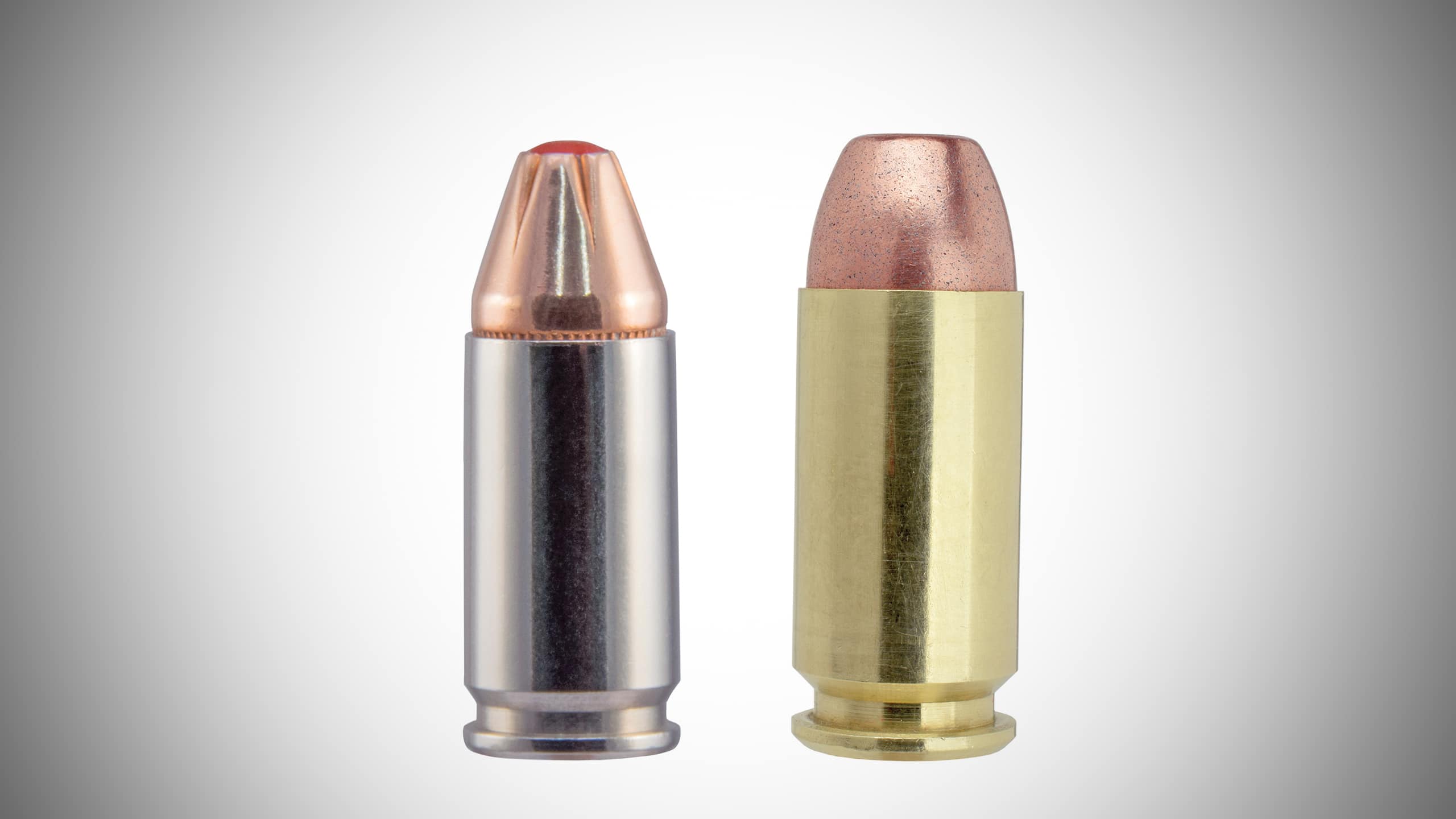
Why Does Ammunition Selection Matter So Much?
In the shooting sports world, most people focus on the firearm itself — the brand, model, and how it feels in hand — while often overlooking an equally important factor: ammunition. In reality, your ammunition choice directly affects shooting accuracy, felt recoil, training costs, and even determines whether you can legally compete in a match.
Imagine this: you spend top dollar on a CZ Shadow 2, carefully select a competition holster and belt, only to be disqualified on match day because your ammunition doesn’t meet Power Factor requirements — this situation is more common in actual competitions than you might think.
Whether you’re a beginner just getting into shooting, an intermediate shooter planning your training, or a competitive shooter preparing for IPSC/IDPA matches, understanding ammunition basics and selection principles is essential.
This Guide Covers
- Basic ammunition structure and components
- Complete comparison of popular handgun calibers
- Bullet types and their applications
- IPSC/USPSA and IDPA Power Factor rules
- Practice ammo vs. match ammo selection strategies
- Introduction to handloading (reloading)
- Ammunition storage and safety guidelines
Read more: After choosing your ammunition, you’ll need a solid training plan. Check out our Personal Shooting Training Plan Guide to learn systematic training methods.
Basic Ammunition Structure
Before selecting ammunition, understanding what a cartridge is made of provides the foundation for understanding all the different specifications.
Four Core Components
A complete handgun cartridge consists of four core components:
1. Bullet (Projectile)
The bullet is the part that actually exits the barrel when fired. Its weight is measured in “grains” (gr), where 1 grain equals approximately 0.065 grams. Bullet weight directly affects recoil, trajectory, and terminal performance. For 9mm, common bullet weights include 115gr, 124gr, and 147gr.
2. Casing (Case)
The casing is the outer shell that holds all components together. Common materials include brass, steel, and aluminum. Brass casings are most prevalent because they seal the chamber effectively during firing, prevent high-pressure gas leakage, and can be collected for reloading.
3. Powder (Propellant)
Powder is the propellant in the cartridge. When ignited, the powder rapidly combusts to generate high-pressure gases that push the bullet through the barrel. Different powder formulations burn at different rates, affecting chamber pressure, muzzle velocity, and recoil characteristics.
4. Primer
The primer sits at the base of the casing. When struck by the firing pin, the primer’s sensitive compound detonates and ignites the powder. Handgun ammunition primers come in two sizes:
- Small Pistol Primer: Used in 9mm, .40 S&W, .380 ACP, etc.
- Large Pistol Primer: Used in .45 ACP, 10mm, etc.
Reading Ammunition Labels
When purchasing ammunition, you’ll see labels like these:
| Label Example | Meaning |
|---|---|
| 9mm Luger 124gr FMJ | 9mm caliber, 124 grain bullet, Full Metal Jacket |
| .45 ACP 230gr JHP | .45 caliber, 230 grain bullet, Jacketed Hollow Point |
| .40 S&W 180gr TMJ | .40 caliber, 180 grain bullet, Total Metal Jacket |
| 9mm +P 124gr | 9mm overpressure, 124 grain bullet |
The +P designation means “Plus Pressure,” indicating higher chamber pressure than standard spec, resulting in faster velocity and more energy but also noticeably more recoil. Make sure your handgun is rated for +P ammunition before using it.
Complete Comparison of Popular Handgun Calibers
Caliber selection is an enduring topic in the shooting world. Here’s a comprehensive comparison of mainstream calibers covering competition, defense, and training perspectives.
9mm Luger (9x19mm Parabellum)
9mm is the most popular handgun caliber in the world today, dominating across law enforcement, military, and competitive shooting.
| Specification | Data |
|---|---|
| Common Bullet Weights | 115gr / 124gr / 147gr |
| Typical Muzzle Velocity | 1,100-1,400 fps |
| Typical Muzzle Energy | 320-400 ft-lbs |
| Felt Recoil | Low to moderate |
| Magazine Capacity | 15-21 rounds (full-size pistols) |
| Cost Per Round | ~$0.25-0.40 |
Advantages:
- Mild recoil enables faster follow-up shots and sight recovery
- Highest magazine capacity means fewer reloads
- Lowest ammunition cost, ideal for high-volume practice
- Nearly every major handgun platform offers a 9mm variant
- Modern bullet engineering has significantly improved defensive performance
Best For: IPSC/USPSA Production, IDPA SSP/CCP/CO, general training, defensive use
.40 S&W
The .40 S&W was championed by the FBI in the 1990s as a compromise between 9mm and .45 ACP.
| Specification | Data |
|---|---|
| Common Bullet Weights | 165gr / 180gr |
| Typical Muzzle Velocity | 950-1,200 fps |
| Typical Muzzle Energy | 400-500 ft-lbs |
| Felt Recoil | Moderate to high (snappy) |
| Magazine Capacity | 13-17 rounds |
| Cost Per Round | ~$0.35-0.50 |
Advantages:
- Can achieve Major Power Factor in USPSA Limited/Limited 10
- Higher energy than 9mm
- Uses similar-sized frames as 9mm pistols
Disadvantages:
- Felt recoil is sharper than .45 ACP due to higher chamber pressure
- Higher ammunition cost than 9mm
- Lower magazine capacity than 9mm
- Many agencies have transitioned back to 9mm in recent years
Best For: USPSA Limited division (Major Power Factor), shooters who prefer larger calibers
.45 ACP
The .45 ACP served the U.S. military from World War I through Vietnam and has over a century of history.
| Specification | Data |
|---|---|
| Common Bullet Weights | 185gr / 200gr / 230gr |
| Typical Muzzle Velocity | 830-1,050 fps |
| Typical Muzzle Energy | 350-450 ft-lbs |
| Felt Recoil | Moderate (slow push, softer feel) |
| Magazine Capacity | 7-14 rounds |
| Cost Per Round | ~$0.40-0.60 |
Advantages:
- Recoil has a slow “push” characteristic; many shooters find it more comfortable than .40
- Large bore diameter for terminal effectiveness
- Standard caliber for classic 1911 pistols
- Most .45 ACP loads are subsonic (under 900 fps), resulting in relatively lower noise
Disadvantages:
- Lowest magazine capacity
- Highest ammunition cost
- Pistols are typically larger and heavier
- Declining popularity in modern competitive shooting
Best For: 1911 enthusiasts, USPSA Single Stack, shooters who prefer the classic style
.380 ACP (9mm Short)
The .380 ACP is essentially a smaller version of 9mm, primarily used in compact concealed carry pistols.
| Specification | Data |
|---|---|
| Common Bullet Weights | 90gr / 95gr |
| Typical Muzzle Velocity | 900-1,000 fps |
| Typical Muzzle Energy | 170-200 ft-lbs |
| Felt Recoil | Low |
| Magazine Capacity | 6-10 rounds |
Best For: Concealed carry backup guns, recoil-sensitive shooters
.357 SIG
The .357 SIG replicates .357 Magnum ballistics in a semi-automatic platform.
| Specification | Data |
|---|---|
| Common Bullet Weights | 125gr |
| Typical Muzzle Velocity | 1,350-1,450 fps |
| Typical Muzzle Energy | 500-550 ft-lbs |
| Felt Recoil | High |
Best For: Shooters seeking high velocity, certain law enforcement agencies
Caliber Selection Summary
| Caliber | Recoil | Capacity | Cost | Competition Use | Recommended For |
|---|---|---|---|---|---|
| 9mm | Low | High | Low | Excellent | Best choice for most shooters |
| .40 S&W | Med-High | Medium | Medium | Good | USPSA Limited shooters |
| .45 ACP | Medium | Low | High | Fair | 1911 enthusiasts |
| .380 ACP | Low | Low | Medium | Poor | Concealed carry |
Recommendation: If you’re a beginner or primarily shoot competition, 9mm is the best choice in the vast majority of situations. Lower recoil helps you master fundamentals faster, lower cost allows more practice volume, and higher capacity is an advantage in competition.
Bullet Types and Applications
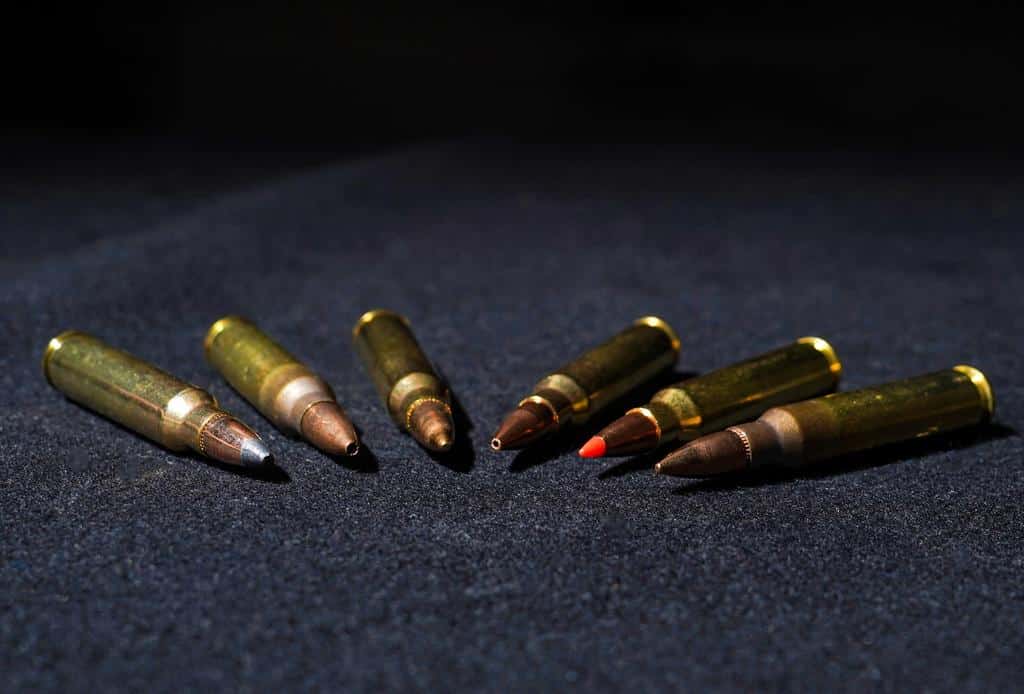
Different bullet designs serve different purposes. Choosing the wrong bullet type can affect training effectiveness or even violate match rules.
FMJ (Full Metal Jacket)
FMJ is the most common bullet type for practice and training. The bullet has a lead core enclosed in a copper alloy jacket.
- Use: Range practice, training, competition
- Characteristics: Does not deform or expand; higher penetration
- Pros: Affordable, reliable feeding, reduced lead exposure
- Cons: Not suitable for defensive use (over-penetration risk)
TMJ (Total Metal Jacket)
TMJ is similar to FMJ but the metal jacket completely encloses the bullet base, leaving no exposed lead.
- Use: Indoor range practice (reduced lead vapor)
- Characteristics: More environmentally friendly than FMJ
- Pros: Minimized lead exposure for shooters
- Representative Brands: Speer Lawman, Federal Syntech
JHP (Jacketed Hollow Point)
JHP bullets have a cavity in the tip that causes the bullet to expand upon impact, creating a larger wound channel.
- Use: Self-defense, law enforcement
- Characteristics: Expands on impact with soft targets, reducing over-penetration
- Pros: Greater stopping power, safer for bystanders
- Cons: Higher cost, potential feeding issues in some pistols
Common Competition Bullet Types
| Bullet Type | Competition Use | Notes |
|---|---|---|
| FMJ 115-124gr | IPSC Production Minor | Most economical option |
| FMJ/TMJ 147gr | IDPA, USPSA Minor | Heavier bullet, subsonic, soft recoil |
| FMJ 180gr (.40) | USPSA Limited Major | Achieves Major Power Factor |
| Syntech 150gr | USPSA/IDPA | Low recoil, protects steel targets, officially certified |
Match Tip: Federal Syntech Action Pistol 150gr is USPSA’s officially certified ammunition, designed specifically for competitive shooting. It uses a synthetic jacket instead of traditional copper, reducing damage to steel targets while delivering consistent Power Factor performance.
Power Factor Rules for Competition Shooting
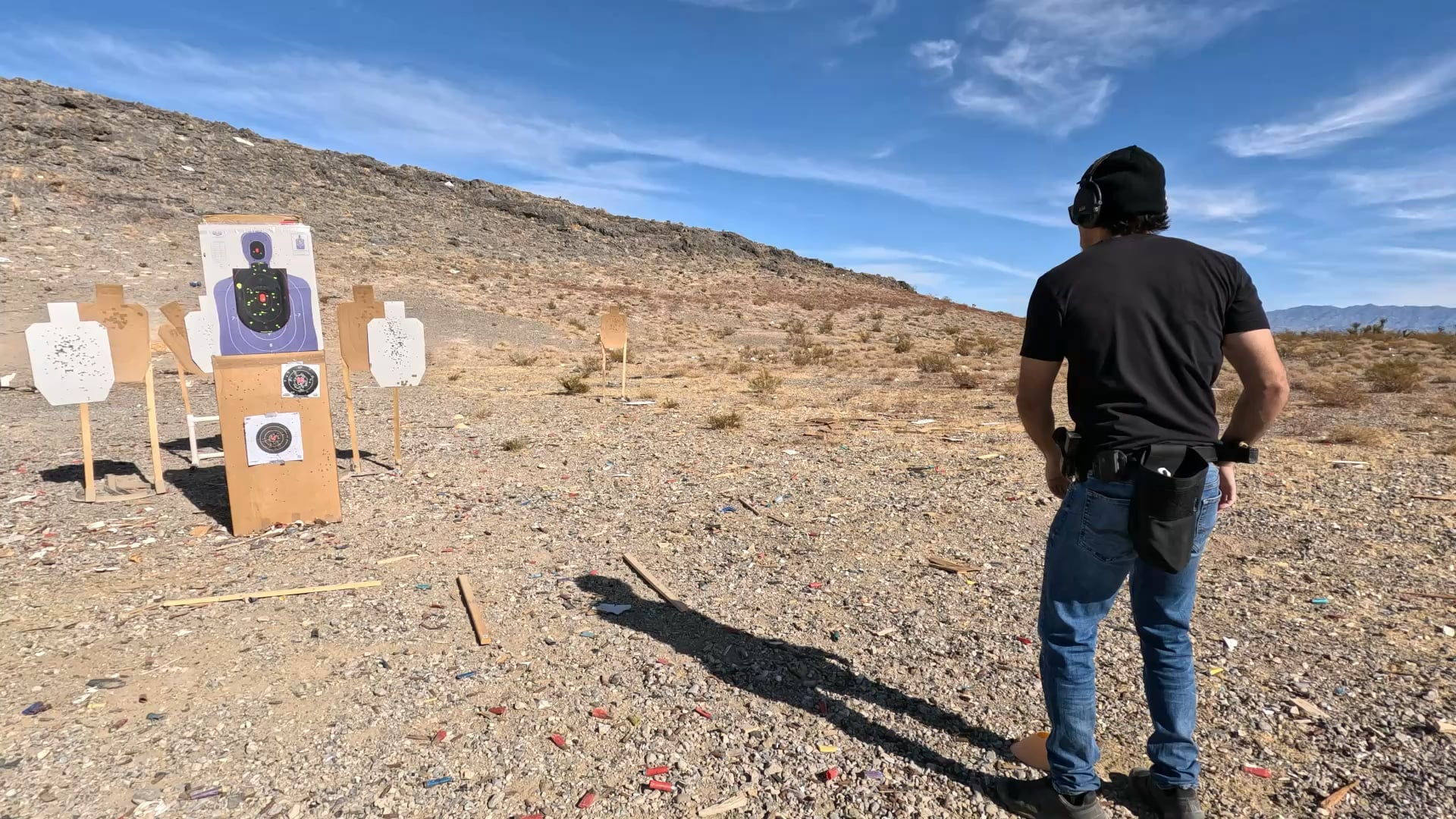
If you plan to compete in IPSC, USPSA, or IDPA matches, Power Factor (PF) is a core concept you must understand. It directly affects your ammunition selection and match scoring.
What Is Power Factor?
Power Factor is a standardized measurement of ammunition energy, calculated as:
Power Factor = Bullet Weight (grains) x Muzzle Velocity (fps) / 1,000
Example: A 124gr 9mm bullet fired at 1,050 fps:
- PF = 124 x 1,050 / 1,000 = 130.2
IPSC/USPSA Power Factor Requirements
| Classification | Power Factor | Scoring Difference |
|---|---|---|
| Minor | 125-164 | A=5, C=3, D=1 |
| Major | 165+ | A=5, C=4, D=2 |
Key Points:
- The minimum threshold for legal ammunition is PF 125
- A-zone scores are identical for Major and Minor (both score 5 points)
- The difference appears in C-zone and D-zone: Major scores 4 in C (vs. Minor’s 3) and 2 in D (vs. Minor’s 1)
- Ammunition velocity is verified at matches via chronograph — failure to meet the declared threshold results in reclassification or disqualification
Power Factor by Division
IPSC Divisions
| Division | Major PF | Minor PF |
|---|---|---|
| Open | 160 | 125 |
| Standard | 170 | 125 |
| Classic | 170 | 125 |
| Production | N/A | 125 |
| Production Optics | N/A | 125 |
| Revolver | 170 | 125 |
USPSA Divisions
| Division | Major PF | Minor PF |
|---|---|---|
| Open | 165 | 125 |
| Limited | 165 | 125 |
| Limited 10 | 165 | 125 |
| Production | N/A | 125 |
| Carry Optics | N/A | 125 |
| Single Stack | 165 | 125 |
| PCC | N/A | 125 |
Note: Production and Carry Optics divisions only accept Minor Power Factor. Even if your ammunition reaches Major standards, it will only be scored as Minor.
IDPA Power Factor Requirements
IDPA’s Power Factor rules differ from USPSA. IDPA does not differentiate between Major/Minor scoring, but each division has a minimum Power Factor threshold:
- SSP (Stock Service Pistol): Minimum PF 125
- ESP (Enhanced Service Pistol): Minimum PF 125
- CCP (Compact Carry Pistol): Minimum PF 125
- CO (Carry Optics): Minimum PF 125
- REV (Revolver): Minimum PF 125
In IDPA competition, if your ammunition fails to meet the minimum Power Factor for your division, your score will be recorded as a disqualification (DQ).
How to Ensure Your Ammo Makes Power Factor
- Buy branded ammunition: Choose reputable practice ammo brands — they typically exceed PF 125 consistently
- Use a chronograph: Purchase or borrow a chronograph to test your ammunition velocity
- Build in a margin: Target a PF at least 5-10 points above the minimum (e.g., aim for PF 133-135)
- Temperature effects: Cold weather reduces powder burn efficiency, potentially dropping velocity by 30-50 fps
Read more: Learn more about IPSC match rules in our IPSC Match Procedure and Preparation Guide.
Practice Ammo vs. Match Ammo Selection Strategy
Smart shooters use different ammunition strategies for practice and competition, controlling costs while ensuring match performance.
Practice Ammunition Selection Principles
The primary considerations for practice are cost and reliability:
Recommended Practice Ammo (9mm):
| Brand/Model | Bullet Weight | Type | Features |
|---|---|---|---|
| Magtech Target | 115gr | FMJ | Great value, stable supply |
| Federal American Eagle | 115gr | FMJ | Consistent quality, made in USA |
| S&B (Sellier & Bellot) | 115gr/124gr | FMJ | European made, excellent brass quality |
| Winchester White Box | 115gr | FMJ | Affordable, widely available |
| Blazer Brass | 115gr | FMJ | Budget-friendly |
Practice Ammo Tips:
- Prefer brass-cased ammunition — casings can be collected for future reloading
- Avoid steel-cased ammunition in precision pistols — it may accelerate wear
- For indoor ranges, use TMJ or Syntech to minimize lead exposure
- Buying in bulk (1,000+ rounds) typically yields significant discounts
Match Ammunition Selection Principles
Match priorities are consistency and Power Factor compliance:
Recommended Match Ammo (9mm Minor):
| Brand/Model | Bullet Weight | Features |
|---|---|---|
| Federal Syntech Action Pistol | 150gr | USPSA certified, low recoil |
| Atlanta Arms Competition | 124gr | Designed for competition, consistent PF |
| S&B 124gr FMJ | 124gr | Great value, consistent quality |
Match Ammo Tips:
- Practice with the same ammo you’ll use in competition to confirm feel and PF
- Use the same lot number throughout an entire match
- Chrono at least 10 rounds before a match to verify average PF
- Bring 20% more ammo than expected as a buffer
Cost Management for Practice and Competition
Assuming 500 rounds of practice per month and 12 matches per year (approximately 200 rounds each):
| Category | Quantity | Unit Cost | Annual Cost |
|---|---|---|---|
| Practice ammo (115gr FMJ) | 6,000 rounds | ~$0.28 | ~$1,680 |
| Match ammo (124gr/150gr) | 2,400 rounds | ~$0.35 | ~$840 |
| Total Annual Ammo Cost | 8,400 rounds | ~$2,520 |
Money-Saving Tip: Join a local shooting club — many offer group-buy discounts on ammunition. Also, collect your brass casings. If you start handloading in the future, those casings are a valuable resource.
Introduction to Handloading (Reloading)
Once your shooting volume reaches a certain level, handloading becomes a worthwhile option to consider.
What Is Handloading?
Handloading is the process where shooters purchase individual components — casings, primers, powder, and bullets — and assemble them into complete cartridges using specialized equipment. This process requires precise measurement and strict safety protocols.
Advantages of Handloading
1. Long-term Cost Savings
For 9mm, handloaded ammunition costs approximately $0.12-0.18 per round (using recycled brass), compared to $0.28-0.40 for factory ammo — significant savings over time.
2. Custom Ammunition
You can precisely adjust bullet weight, powder charge, and overall length (OAL) to find the most accurate and reliable recipe for your specific firearm.
3. Precise Power Factor Control
Competitive shooters can fine-tune their Power Factor, using the minimum powder charge that still meets the threshold for the lightest possible recoil.
4. Supply Independence
During ammunition shortages, shooters with reloading capabilities remain unaffected.
Initial Investment for Handloading
| Equipment | Price Range | Notes |
|---|---|---|
| Progressive Press | $500-1,500 | Dillon 550/750, Hornady Lock-N-Load |
| Die Set | $30-80 | One set per caliber |
| Powder Scale | $30-100 | Digital scales are more precise |
| Caliper | $20-50 | For measuring overall length |
| Other Tools | $50-200 | Depriming tools, case cleaner, etc. |
| Total Initial Investment | $650-1,900 |
When Is Handloading Worth It?
A simple break-even calculation:
- Savings per round with handloading: ~$0.15 (vs. factory practice ammo)
- Initial equipment investment: ~$800 (mid-range setup)
- Break-even point: $800 / $0.15 = approximately 5,300 rounds
If you shoot 500+ rounds per month, you’ll recover equipment costs in about 10-11 months. Every round after that is pure savings.
Handloading Safety Guidelines
Handloading requires a serious attitude and proper knowledge. These safety rules must never be overlooked:
- Always reference loading manuals: Use verified powder recipes and never exceed the recommended maximum charge
- Work up loads gradually: Start at the suggested minimum charge and increase incrementally to your desired Power Factor
- Inspect every round: Watch for double charges — this can cause catastrophic failure
- Use quality components: Never use deformed or cracked casings
- Maintain a clean workspace: Don’t get distracted while loading, and never consume alcohol
Read more: Learn about firearm maintenance to ensure your handgun safely handles various ammunition in our Pistol Cleaning & Maintenance Complete Guide.
Ammunition Storage and Safety
Proper ammunition storage is both a safety concern and affects ammunition reliability and lifespan.
Storage Environment Requirements
| Condition | Recommendation | Reason |
|---|---|---|
| Temperature | 15-25°C (room temperature) | High heat accelerates powder degradation |
| Humidity | Below 60% | Moisture damages primers and powder |
| Light | Avoid direct sunlight | UV affects powder stability |
| Container | Original packaging or ammo cans | Prevents impact damage and moisture |
Ammunition Safety Rules
- Store separately: Ammunition and firearms should be stored apart, especially in homes with children
- Lock it up: Use locked ammunition boxes or safes
- First in, first out: Use older ammunition first
- Regular inspection: Check ammunition appearance; discard any with oxidation, discoloration, or dents
- Transport safely: When heading to the range, keep ammunition in dedicated containers, separate from firearms
Ammunition Shelf Life
Modern factory ammunition stored properly can last 10+ years. However, it’s recommended to:
- Use practice ammo within 2-3 years of purchase
- Rotate defensive ammunition annually (use the old ammo for practice)
- Use handloaded ammunition within 1 year
Ammunition Knowledge for Airsoft Players
While airsoft uses BB pellets rather than live ammunition, understanding real ammunition is valuable for airsoft players — especially if your GBB pistol is a replica of a real firearm.
BB Weight Selection Guide
| BB Weight | Use Case | Notes |
|---|---|---|
| 0.20g | Indoor CQB | Standard weight, fast velocity |
| 0.25g | General purpose | Balance of accuracy and range |
| 0.28-0.30g | Outdoor | Less wind drift, stable trajectory |
| 0.32-0.40g | Sniping | Most stable long-range trajectory |
Quality Selection Tips:
- Choose reputable brands (BLS, G&G, Tokyo Marui)
- Avoid cheap BBs with rough surfaces — they can damage your inner barrel
- Use biodegradable BBs (Bio BBs) at outdoor fields to protect the environment
Read more: Learn more about airsoft equipment in our Complete Airsoft Gear Selection Guide.
Using a Shot Timer for Ammunition Testing
A Shot Timer isn’t just for training — it’s also a powerful tool for objectively comparing ammunition performance.
Testing Ammunition Impact on Shooting Performance
Using Shot Timer data, you can objectively compare how different ammunition affects your shooting:
Testing Method:
-
Split Time Comparison
- Use the same gun with different brands/weights of ammunition
- Run Bill Drills (6 rapid shots at one target from 7 yards)
- Record average split times for each ammunition type
- Lower-recoil ammunition typically produces faster split times
-
First Shot Time Comparison
- Test how different ammunition affects your draw-to-first-shot time (usually minimal difference)
- Focus on observing your mental response to different recoil levels
-
Accuracy Testing
- Shoot precision groups at 15-25 yards
- Record group sizes for different ammunition types
- Some pistols show better accuracy with specific bullet weights
Example Test Data:
| Ammunition | Bill Drill Avg Split | 25yd 5-shot Group |
|---|---|---|
| 115gr FMJ | 0.22 sec | 4.5 inches |
| 124gr FMJ | 0.20 sec | 3.8 inches |
| 147gr FMJ | 0.19 sec | 3.2 inches |
| 150gr Syntech | 0.18 sec | 3.5 inches |
The above data is illustrative only — actual performance varies by firearm and shooter. However, the trend is typically consistent: heavier bullets provide softer recoil impulse during rapid fire, enabling faster recovery times.
Frequently Asked Questions (FAQ)
Q1: What caliber should beginners choose?
9mm is the best choice for beginners. Mild recoil, affordable ammunition, wide gun selection, and compatibility with most competitive shooting divisions. Once you develop deeper shooting knowledge, you can consider other calibers.
Q2: Can I use the cheapest ammo for practice?
Yes, but ensure the ammunition comes from reputable brands. Unknown ultra-cheap brands may have quality issues (misfires, inconsistent velocity) or could even damage your handgun. Recommended brands include Magtech, S&B, Federal American Eagle, and similar.
Q3: Can +P ammunition be used in all 9mm pistols?
No. While most modern pistols (Glock, SIG P320, CZ Shadow 2) are rated for +P ammunition, you should verify with the manufacturer’s specifications first. Prolonged heavy use of +P ammunition accelerates parts wear — it’s best reserved for defensive applications.
Q4: Why did my ammo fail the match chrono?
Common reasons include:
- Temperature effects: Cold weather reduces velocity. If your PF barely clears the minimum, low temperatures could drop you below the threshold
- Chronograph variance: Different chronographs may show slight reading differences
- Lot-to-lot variance: Even within the same brand, different production lots may have velocity variations
It’s recommended to re-chrono close to match day to confirm.
Q5: Can I use steel-cased ammunition?
Steel-cased ammunition (Tula, Wolf, etc.) is cheaper but has several drawbacks:
- Cannot be reloaded
- May accelerate extractor wear in some pistols
- Prohibited at some indoor ranges
- Cannot be used for handloading
If you’re only doing casual practice and don’t plan to collect brass, steel-cased ammo is an acceptable budget option.
Q6: How much ammo should I bring to a match?
A typical IPSC/USPSA match requires 150-200 rounds (depending on the number of stages). It’s recommended to bring 30-50% more than needed to account for makeups, reshoots, or extra practice. Bringing 250 rounds to a standard Level 1 match is a safe amount.
Q7: How do I choose BB weight for airsoft?
It mainly depends on your gun and use case:
- Indoor CQB: 0.20-0.25g (short range, lighter is fine)
- Outdoor general: 0.25-0.28g (balanced accuracy and range)
- Outdoor precision: 0.28-0.32g (more stable trajectory)
- Sniping: 0.36-0.40g (maximum range and accuracy)
Your Hop-up system will also need adjustment based on BB weight.
Q8: How do I tell if ammunition has gone bad?
Check for these signs:
- Visible oxidation on the casing (green corrosion or white powder)
- Loose or misaligned bullet
- Primer dents or corrosion
- Casing cracks or deformation
- If you notice any of these conditions, do not use that ammunition
Conclusion
Ammunition selection may seem straightforward, but it actually involves physics, materials science, and competition rules across multiple dimensions. For most shooters, mastering these core principles is sufficient:
- Beginners: choose 9mm — affordable, easy to learn with, widest applicability
- Practice with quality ammo — choose reputable brands; don’t risk quality issues to save a few cents
- Chrono before matches — ensure your ammo meets Power Factor with margin to spare
- Consider long-term costs — high-volume shooters should consider handloading
Remember, the best ammunition is ammunition you can afford to practice with in volume. The most expensive match ammo in the world is counterproductive if it makes you reluctant to practice.
Related Articles
- IPSC Beginner Pistol Selection Guide - Pair your ammo with the right gun
- IDPA Beginner Pistol Selection Guide - IDPA divisions and gun selection
- Shooting Drills Complete Guide - Classic training drills to run with your chosen ammo
- Pistol Cleaning & Maintenance Guide - How different ammo affects gun cleaning
- IPSC Match Procedure & Preparation Guide - Understand match chrono procedures
- Shot Timer App Complete Guide - Use a Shot Timer to test ammunition performance
- Ammunition
- Caliber
- 9mm
- .40 S&W
- .45 ACP
- Power Factor
- IPSC
- USPSA
- IDPA
- Shooting Training
- Competition Shooting