Tokyo Marui M4 MWS GBB Complete Guide: The Gold Standard Gas Blowback Rifle – Specs, Upgrades & Field Performance
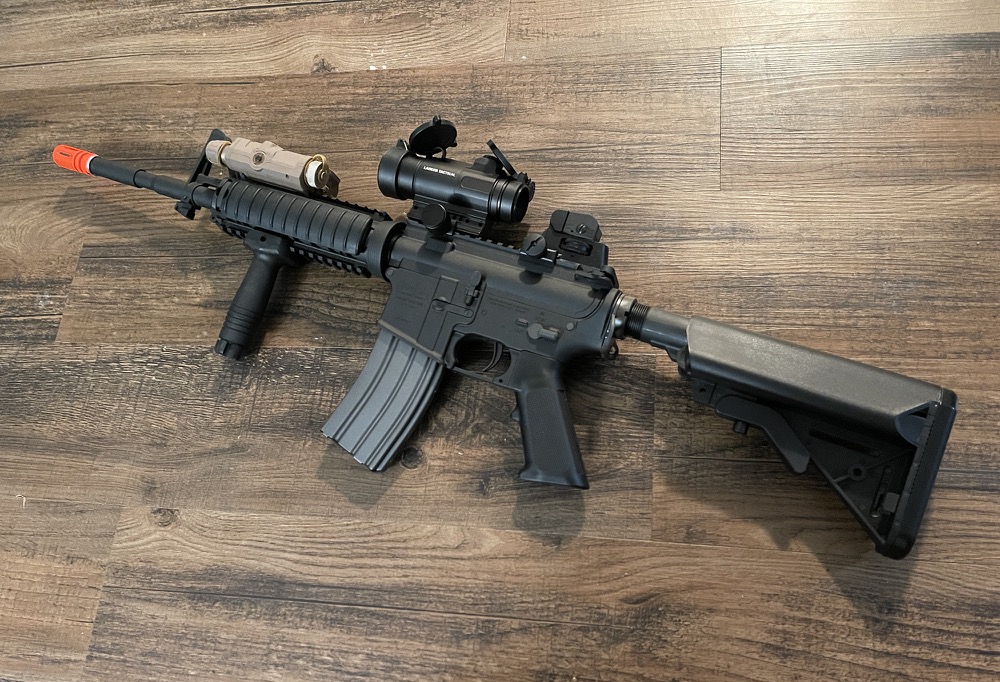
Why the M4 MWS Is Every GBBR Player’s Endgame
Once you’ve been playing airsoft for a while, you start craving something AEGs can never deliver — recoil. That satisfying jolt when the bolt carrier slams backward and snaps forward again, the vibration traveling through your palms, reminding you that what you’re holding feels like more than just a toy. That’s the magic of a Gas Blowback Rifle, and the Tokyo Marui M4A1 MWS is the benchmark of the entire category.
MWS stands for Modular Weapon System, and the name says it all. Since its launch in 2016, the TM M4 MWS has built an almost legendary reputation among GBBR enthusiasts worldwide. It’s not the cheapest option, nor the most externally realistic, but when you combine shooting performance, reliability, and upgrade flexibility, no other M4 GBBR truly surpasses it.
This guide will take you from the real steel M4’s history through the MWS’s core technology, hands-on impressions, competitor comparisons, and how to tune it into exactly the GBBR you’ve always wanted.
The M4 Carbine: The Modern Rifle Icon
Before diving into the airsoft version, it’s worth understanding why the M4 holds such an important place in the world of military firearms. The M4 carbine was developed in the 1980s by Colt as a shortened variant of the M16A2 — the barrel was cut from 20 inches to 14.5 inches, the fixed stock was replaced with a collapsible one, making the entire weapon shorter, lighter, and better suited for vehicle operations and close-quarters combat. After its official adoption by the U.S. military in 1994, the M4 quickly became one of the most widely used military rifles on the planet.
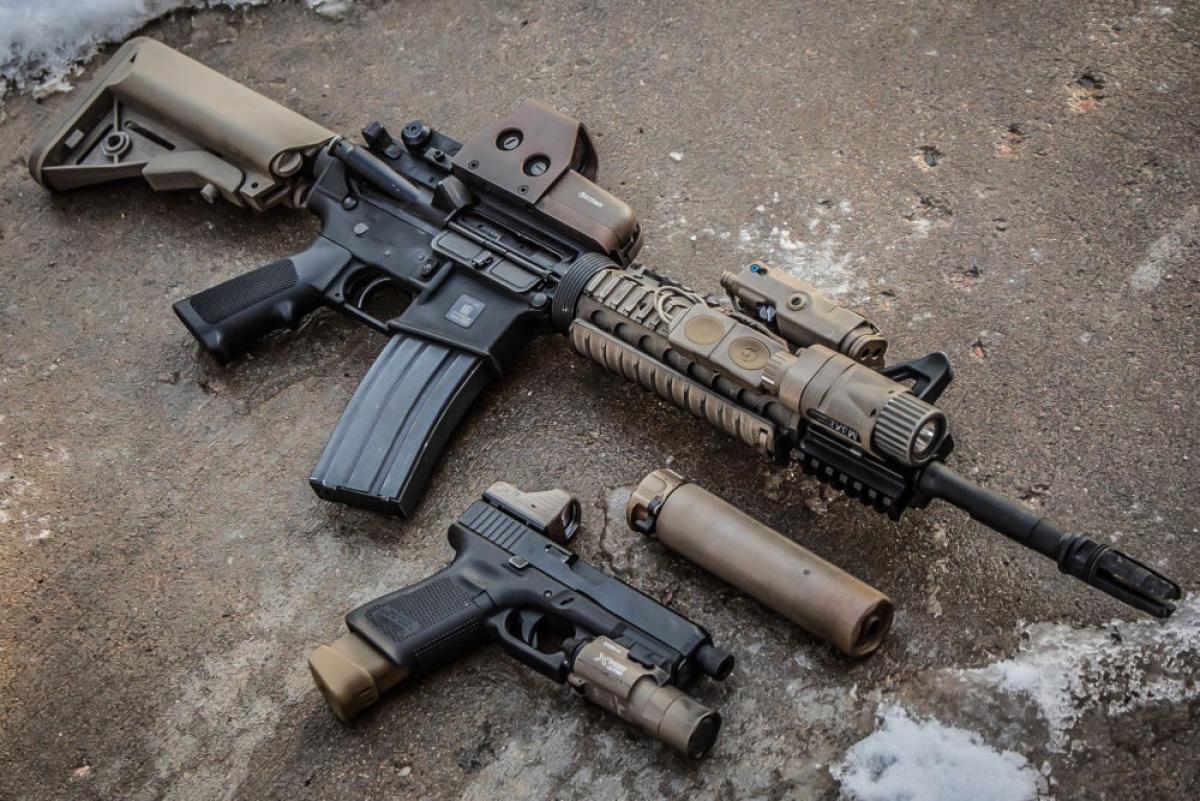
What truly elevated the M4 from an ordinary service rifle to a legend was the SOPMOD program. In 1992, U.S. Special Operations Command introduced the SOPMOD Block I kit, pairing the M4A1 with Knight’s Armament Company’s RIS handguard, AN/PEQ-2A infrared designator, Trijicon ACOG optic, and other accessories to create a truly modular weapon system. By 2002, Block II brought Daniel Defense’s RIS II handguard and the 10.3-inch CQBR configuration, expanding the platform’s versatility even further.
From Afghanistan to Iraq, from SEAL Team Six to Delta Force, the M4 has been present in virtually every major military operation of the 21st century. This “combat proven” pedigree, combined with unmatched modularity, makes the M4 the most popular platform in the airsoft world. And Tokyo Marui’s MWS aims to capture that essence through the Gas Blowback experience.
Unboxing the M4 MWS: First Impressions
Opening the MWS box, the first thing that hits you is the weight. At 2.95 kg, the full-metal rifle feels substantial in your hands — that cold metallic sensation is worlds apart from the polymer receivers of most AEGs. The upper and lower receivers are CNC-finished die-cast aluminum, and the latest ZET System version features Cerakote ceramic coating — a surface treatment commonly used on real firearms that’s scratch-resistant and gives the rifle that authentic matte finish that looks like it came straight from an armory.
Pulling the charging handle for the first time is addictive. The resistance feels just right, and when you release it, the bolt snapping forward produces a crisp metallic clank that’ll have you doing it again and again. Insert a magazine, rack the bolt, squeeze the trigger — the 19mm piston drives the bolt carrier backward with authority, the whole rifle kicks in your hands, then the bolt resets for the next round. This isn’t some wimpy vibration; it’s a solid punch. First-timers almost always break into a grin.
The quad-rail RAS handguard is the standard M4A1 configuration with Picatinny rails on all four sides. Admittedly, a full quad rail looks a bit old-school — everyone’s running M-LOK these days. But think of it this way: this is exactly what a classic M4A1 SOPMOD is supposed to look like. And with the MWS’s extensive aftermarket ecosystem, swapping to an M-LOK handguard is always an option.
The collapsible stock features six positions of adjustment, and the mil-spec buffer tube can even accept some real steel stocks. This is one of those delightful details about the MWS — in many areas, its dimensions match real steel specifications, which is a huge bonus for MilSim players chasing authenticity.
| Specification | Detail |
|---|---|
| Overall Length | 775mm (stock collapsed) / 860mm (extended) |
| Weight | ~2,950g (with empty magazine) |
| Magazine Capacity | 35 rounds |
| Muzzle Velocity | ~330-380 FPS (0.2g BB / varies with gas & temperature) |
| Power System | Gas Blowback (GBB) |
| Fire Modes | Safe / Semi-Auto / Full-Auto |
| Hop-Up | Adjustable |
| Inner Barrel | 6.08mm (245mm) |
| Construction | Die-cast aluminum receivers / Cerakote finish (ZET version) |
| Buffer Tube | Mil-Spec |
ZET System: Tokyo Marui’s Patented Engine
At the heart of the MWS lies the ZET System — Tokyo Marui’s patented Gas Blowback engine designed to deliver powerful recoil while maximizing component longevity.
Traditional GBBRs have a love-hate relationship with durability: the repeated impact between the bolt carrier group and other internal components gradually causes wear, and after a few thousand rounds, parts start needing replacement. Tokyo Marui addressed this fundamentally with the ZET System — by minimizing friction and impact forces during the bolt’s travel, the entire system passed factory stress tests exceeding 10,000 rounds, with bolt carrier and bolt lock lifespan far exceeding comparable designs.
Another hallmark of the ZET System is shot-to-shot consistency. Gas distribution is precisely calibrated for each shot, avoiding the issue some GBBRs have where the first and last rounds in a magazine show vastly different velocities. In practice, this translates to predictable trajectories — you can fine-tune your Hop-Up with confidence because the system delivers uniform power.
There are trade-offs, though. The ZET System prioritizes stability and durability, which means the raw recoil “punch” is slightly tamer compared to GHK’s system. Some players feel that the GHK M4 feels more “real” and hits harder, and that’s a fair observation. But Tokyo Marui’s philosophy is clear: rather than giving you maximum recoil that wears out parts in two months, they deliver ninety percent of the kick with triple the lifespan. Whether that trade-off works for you is a personal call, but from a total cost of ownership perspective, the MWS’s design philosophy is undeniably pragmatic.
Three Major M4 GBBRs Compared
In the M4 GBBR space, the Tokyo Marui MWS, GHK M4, and VFC M4 are the three main contenders. Each has a distinct personality suited to different types of players.
The Tokyo Marui MWS is the “all-rounder.” Shooting accuracy is the best of the three, with a Hop-Up system that offers wide adjustment range and excellent stability — it shoots impressively right out of the box. The ZET System’s durability means you’re not constantly worrying about internal wear. The aftermarket ecosystem is also the richest among the three — from AngryGun and HAO to Zparts, every conceivable cosmetic and performance upgrade is available. The downside is the lack of official Colt markings (though the ZET version has obtained licensing), and the stock RAS handguard looks somewhat dated. Pricing sits around $550-650.
The GHK M4 takes the “ultimate realism” route. Its internals more closely mirror real firearm mechanics, and the disassembly experience feels like handling an actual AR-15. Recoil is the strongest of the three — the bolt impact genuinely feels more violent. GHK magazines are heavier and more substantial, though that also means more weight on your loadout. Gas efficiency is slightly better than the TM, squeezing more shots per fill. The downside is occasionally inconsistent quality control, with some batches requiring user adjustment for proper part fitment. Pricing is similar at around $500-600.
The VFC M4’s biggest selling point is aesthetics. As a fully licensed product, VFC’s M4 lineup achieves the highest standard of external detail — trademarks, metal finish, and proportions are faithfully reproduced. VFC’s internals have also improved significantly in recent years, no longer plagued by the issues of earlier versions. However, in shooting performance and aftermarket support, VFC still trails TM and GHK. Best suited for players who prioritize collection display with occasional field use.
If your goal is “serious skirmishing and MilSim events,” the MWS is the safest choice. If you’re after “the thrill of stripping the rifle and the hardest recoil,” GHK deserves consideration. If you want “the best-looking rifle on the rack,” VFC is the answer.
Upgrades: Building Your Dream M4
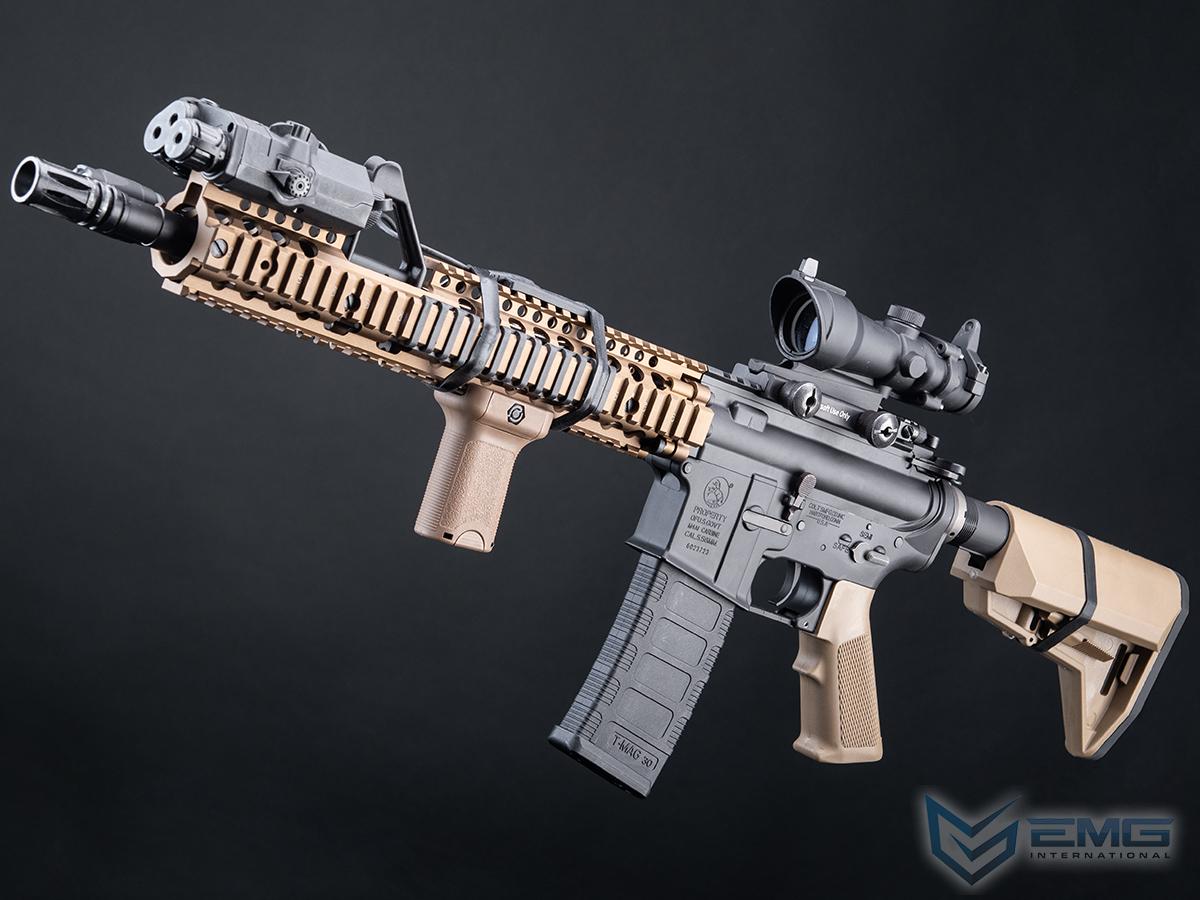
The MWS’s aftermarket ecosystem is the most comprehensive of any GBBR — virtually every component has upgrade options available. But upgrading isn’t about cramming in the most expensive parts; following the right priority order ensures every dollar delivers maximum value.
Step one is the Hop-Up system. This is the most direct path to improved accuracy. The stock Hop-Up rubber and 6.08mm inner barrel perform reasonably well, but swapping in a Maple Leaf Hop-Up bucking paired with a Prometheus 6.03mm precision barrel noticeably improves trajectory consistency. The Stalker C-Hop or U-Hop 80° are also popular choices — their contact patch design imparts more uniform spin on the BB, performing especially well at medium to long range. This upgrade runs about $50-80 and offers the best return on investment.
Step two is the nozzle. The nozzle controls gas flow per shot, directly affecting muzzle velocity and gas efficiency. If you need to comply with different field FPS limits, installing an NPAS (adjustable nozzle) saves enormous hassle — just use a hex key to dial in your velocity without disassembling the bolt group every time. This is a must-have upgrade for any serious GBBR player.
Step three is the external transformation — and this is where the MWS gets really fun. You can convert it from a standard M4A1 RAS configuration into anything you want. Want a MK18 CQBR? Swap in a 10.3-inch outer barrel and Daniel Defense RIS II rail. Want a modern URGI look? AngryGun’s MK16 rail with a 14.5-inch barrel. Want a lightweight CQB setup? HAO’s short M-LOK handguard with an 11.5-inch barrel. Every configuration has corresponding aftermarket parts available — this is the most captivating aspect of the M4 platform. You’re always building the next version.
Core components like the bolt carrier and recoil spring don’t need replacing unless the originals show wear that affects performance. The ZET System is specifically designed to extend the lifespan of these parts, and under normal use they’ll last tens of thousands of rounds. If you do want to upgrade, G&P and RA-Tech offer stainless steel reinforcement kits for even greater durability.
Field Performance and Tactics
The MWS isn’t a pure CQB weapon like the MP7 — it’s a full-size rifle that truly shines on medium to large outdoor fields. With the stock 245mm inner barrel and properly adjusted Hop-Up, effective range sits around 40-50 meters. Upgrade to a precision barrel and better Hop-Up bucking, and pushing 55-60 meters is entirely achievable.
The biggest mindset shift when fielding a GBBR is ammo management. You no longer have those 300-round AEG hi-cap magazines — the MWS magazine holds just 35 rounds, same as the real thing. This means you need to learn when to shoot rather than spraying at anything that moves. Every round has to count, and semi-auto becomes your primary fire mode. This might sound like a limitation, but many GBBR players actually feel this is the purest form of airsoft — when you know you only have 35 rounds, you start genuinely thinking about tactics instead of relying on suppressive fire.
Magazine weight is another consideration. MWS aluminum magazines loaded with gas and BBs weigh around 300+ grams each. Carrying five spare magazines adds nearly 1.5 kg of extra weight, plus the rifle itself at almost 3 kg — the total loadout is noticeably heavier than a typical AEG setup. A good plate carrier or chest rig to distribute the weight is essential, and M4 magazine pouches paired with a plate carrier are the most common configuration.
Weather is another variable for GBBRs. Gas guns are powered by liquid gas vaporization — higher temperatures mean better vaporization efficiency and more consistent velocity. Above 25°C, the MWS performs so well you’ll forget it’s not an AEG. But when temperatures drop below 15°C, you’ll notice velocity drops, weaker blowback, and potentially incomplete cycling. For cold-weather games, keeping spare magazines in inner pockets close to your body heat is a veteran trick that really works.
💡 Further Reading: For more loadout ideas, check out our Airsoft Loadout Complete Guide and Tactical Vest & Plate Carrier Guide.
Shot Timer Training Drills
One of the biggest advantages of a GBBR is that its manual of arms almost perfectly mirrors a real firearm. Every skill you develop on the MWS — charging handle manipulation, magazine changes, malfunction clearance — transfers directly to real steel training. Pairing practice with a Shot Timer to quantify your progress produces far better results than unfocused repetition.
The first drill is the ready-up. Hold the MWS in a low-ready position, and on the timer’s beep, raise the rifle, acquire the sight picture, and fire. At nearly 3 kg, the MWS is noticeably heavier than a lightweight AEG or SMG, but that’s exactly what a real rifle weighs. You might need over 2 seconds at first — the goal is to consistently hit 1.5 seconds or less. The key is never sacrificing aim quality for speed — a fast miss is worthless.
The second drill is the tactical reload. The MWS magazine release is positioned identically to a real AR-15. Press the mag release with your index finger, let the empty magazine drop free under gravity, retrieve a fresh magazine from your pouch with your support hand, insert it, slap the bottom to confirm it’s seated, then hit the bolt release to chamber a round. Time the entire sequence with your Shot Timer — the goal is under 3 seconds. This drill is all about smooth muscle memory, not raw hand speed.
The third drill is malfunction clearance. GBBRs are more prone to feeding issues or gas-related stoppages than AEGs, which actually makes them perfect for practicing the “Tap-Rack-Bang” drill. Set your Shot Timer and simulate a failure to fire: slap the magazine base (Tap), rack the charging handle to clear the chamber (Rack), re-acquire your target and fire (Bang). This procedure is fundamental in real firearms training, and a GBBR is the ideal tool for practicing it.
All these drills can be done at home with empty magazines. Combined with the methods in our Dry Fire Training Guide, you can dramatically improve your weapon handling without spending a single BB or drop of gas. Twenty minutes a week on these three drills, and your rifle manipulation will start approaching real steel shooter standards.
Maintenance and Care
GBBR maintenance is a bit more involved than AEG care, but once you build the habit, it’s really not that complicated. The MWS’s design makes routine maintenance fairly intuitive, and most tasks require no specialized tools.
The most basic post-game maintenance involves cleaning the inner barrel and lubricating moving parts. Run a cleaning rod from the muzzle end with a lightly oiled patch to remove BB residue. Then separate the upper receiver and apply a few drops of silicone oil to the bolt carrier rails and around the nozzle. Don’t over-lubricate — excess oil attracts dust and creates the opposite of what you want.
Magazine care is equally important. GBB magazines rely on O-ring rubber seals to maintain gas pressure, and these small components gradually degrade over time and use. If you notice a magazine starting to leak — hearing a hiss shortly after filling — swapping the O-rings usually fixes the problem. Regularly applying a drop of silicone oil to the output and fill valves also extends seal life.
When storing the rifle for extended periods, don’t leave magazines completely empty of gas. Maintaining a small amount of pressure prevents the seals from deforming. Similarly, don’t leave the Hop-Up rubber compressed for long periods — if you’re not using the rifle for a while, dial the Hop-Up to minimum or off to reduce the risk of the bucking taking a permanent set.
💡 Further Reading: For more cleaning and maintenance tips, check out our Pistol Cleaning & Maintenance Complete Guide.
Conclusion: The Gold Standard of GBBRs
The Tokyo Marui M4 MWS isn’t a cheap rifle. Factor in spare magazines and basic upgrades, and the total investment easily exceeds a thousand dollars. But if you’ve graduated from the AEG beginner phase and started craving a more authentic shooting experience with deeper operational depth, the MWS is the most reliable gateway into the GBBR world.
The ZET System’s reliability means you won’t be sending it in for repairs after a few thousand rounds. The massive aftermarket ecosystem lets you transform it from a standard M4A1 into an MK18, URGI, or whatever dream configuration you have in mind. Most importantly, the rifle handling skills you develop on the MWS are genuinely transferable — whether you eventually transition to real steel shooting or compete in MilSim events, that muscle memory becomes a lasting asset.
If you’re ready to step into the GBBR world, here’s my advice: pick up an MWS with three or four spare magazines, and run it stock for a few months. Once you truly understand the rifle’s personality, start upgrading step by step based on your actual needs. Don’t rush to swap every part at once — take it slow, savor each modification’s impact, and enjoy the journey. That’s what GBBR ownership is really all about.
Related Articles
- Tokyo Marui MP7A1 GBB Complete Guide — The ultimate CQB companion
- Tokyo Marui Hi-CAPA Complete Guide — The classic GBB pistol platform
- Airsoft Loadout Complete Guide — Gear configurations for every playstyle
- Tactical Vest & Plate Carrier Guide — Plate Carrier vs Chest Rig comparison
- Shot Timer App Guide — Quantify your training progress with a timer
- Dry Fire Training Complete Guide — Train at home without ammo
- Tokyo Marui
- M4 MWS
- GBB
- GBBR
- Gas Blowback Rifle
- Airsoft
- Airsoft Rifle
- M4A1
- ZET System
- MilSim
- Shot Timer
- Best Airsoft GBBR