Complete Guide to Shooting on the Move: Dynamic Pistol Techniques
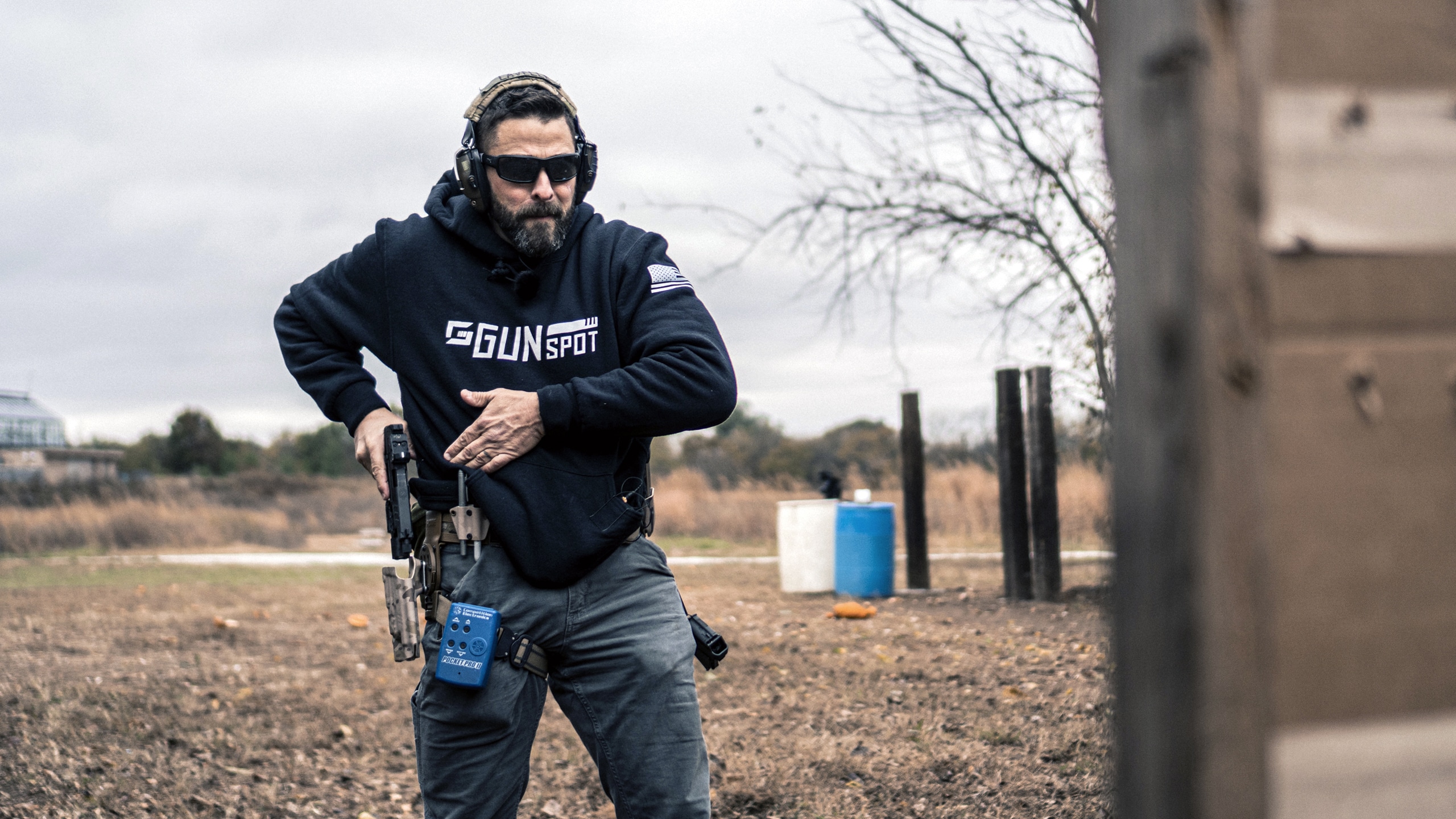
Why is Shooting on the Move an Essential Skill for Advanced Shooters?
Shooting on the move is the key ability that elevates your shooting skills from static to dynamic. In IPSC competitions, shooters who can engage targets while moving often save precious seconds; in tactical situations, a stationary shooter is the easiest target to hit.
Many shooters perform excellently in static shooting, but once they start moving, their shot groups spread significantly. This is because shooting on the move isn’t simply “walking plus shooting”—it requires special footwork techniques, body coordination, and a readaptation of trigger control.
Studies show that untrained shooters may see their hit rate drop by over 50% while moving. However, with systematic training, you can maintain accuracy close to static shooting while gaining tactical mobility advantages.
“A stationary target is easiest to hit—so don’t be a stationary target.”
Basic Principles of Shooting on the Move
Why Does Movement Affect Shooting?
When you walk or run, your body produces two main types of movement:
-
Vertical Bounce
- Each step’s push-off and landing causes your body to move up and down
- This vertical sway transfers directly to the muzzle
- The sights bounce up and down on the target
-
Horizontal Sway
- Alternating left and right feet causes side-to-side body shift
- Center of gravity transfers between feet
- The muzzle sways left and right accordingly
The core goal of shooting on the move: Isolate the lower body’s movement from the upper body, letting your legs absorb all the impact and sway, keeping the upper body (especially the arms holding the gun) stable.
Body Zone Concept
Imagine your body divided into two zones:
- Lower body (below the hips): Responsible for movement, like a tank’s tracks
- Upper body (above the hips): Responsible for shooting, like a tank’s turret
Ideal shooting on the move is like a tank: the tracks move over rough terrain, but the turret stays stable, with the barrel always pointing at the target.
Your hips, knees, and ankles are the “shock absorbers” in this system—they need to absorb the impact of movement, preventing vibrations from reaching your upper body.
Footwork Techniques for Shooting on the Move
Footwork is the foundation of shooting on the move. Different movement directions require different footwork techniques.
Forward Movement: Heel-to-Toe
Forward movement is the most basic and commonly used direction.
Technical Points:
-
Heel lands first
- The front foot lands softly on the heel
- Not a heavy stomp, but a “placement”
-
Roll to toe
- Weight smoothly rolls from heel to ball of foot
- Finally pushing off from the toe
-
Keep knees bent
- Knees stay slightly bent, about 15-20 degrees
- Knees act as shock absorbers
- Lowers center of gravity, increases stability
-
Minimize vertical bounce
- Imagine a low ceiling above your head
- Keep head height consistent while moving
- “Glide” rather than “bounce”
Common Mistakes:
- Flat-footing the ground (causes vibration)
- Straight knees (loses shock absorption)
- Steps too large (increases instability)
Backward Movement: Toe-to-Heel
Backward movement is more difficult than forward movement because you can’t see behind you, and the footwork feels unnatural.
Technical Points:
-
Toe lands first
- Opposite of forward movement
- Back foot lightly probes the ground with the toe
-
Slowly transfer weight
- Only shift weight after confirming stable footing
- Avoid tripping or stepping into empty space
-
Keep steps small
- Shorter than forward movement steps
- More frequent but smaller steps
- Maintain stability and balance
-
Lower speed expectations
- Backward movement is naturally slower than forward
- Don’t force acceleration
- Accuracy over speed
Important Note: Maintaining accurate shooting while moving backward is extremely difficult. If possible, consider turning and moving or moving laterally.
Lateral Movement: Side Shuffle
Lateral movement is very common in IPSC competitions, used for transitioning between shooting positions.
Technical Points:
-
Stay facing the target
- Front of body always faces the target
- Don’t turn and walk forward
-
Side shuffle movement
- Foot in the direction of movement steps first
- Other foot follows
- Never cross your feet
-
Waist rotation
- Lower body moves laterally
- Everything above the waist stays facing the target
- Creates a slight twist
-
Keep center of gravity centered
- Don’t lean too much toward the direction of movement
- Ready to stop or change direction at any time
Why can’t you cross your feet?
- Crossing feet easily causes tripping
- Difficult to recover when losing balance
- Can’t quickly change direction
Oblique Movement
Oblique movement combines forward and lateral elements.
Technical Points:
-
45-degree angle movement
- Between straight forward and lateral
- Stay facing the target
-
Mixed footwork
- Combines forward heel-to-toe
- And lateral no-crossing principle
-
Natural gait
- Don’t be overly stiff
- Find a comfortable movement rhythm
Combat Glide: The Tactical Walk
What is the Combat Glide?
Combat Glide, also known as the “Groucho Walk” or “duck walk,” is a footwork technique commonly used by military, law enforcement, and competitive shooters. The name comes from comedian Groucho Marx’s signature walking style.
Characteristics of Combat Glide
-
Lowered center of gravity
- Knees bent, body slightly leaning forward
- Center of gravity lower than normal walking
- Similar to a half-squat posture
-
Smooth steps
- Heel-to-toe rolling
- Extremely minimized vertical bounce
- Like gliding on ice
-
Stable upper body
- Almost no movement above the hips
- Stable muzzle pointing
- Eyes move horizontally
Advantages of Combat Glide
- Reduces vertical sway: Muzzle doesn’t bounce up and down
- Lowers profile: Become a smaller target
- Increases stability: Easier to maintain accurate shooting
- Controlled speed: Won’t lose control from walking too fast
Disadvantages of Combat Glide
- Unnatural: Requires practice to master
- Slower: Slower than normal walking
- More tiring: Consumes more energy over extended use
- Can be overused: Not needed in all situations
When to Use Combat Glide
- When precise shooting is needed: Medium to long range targets
- During tactical clearing: Uncertain threat location
- When advancing slowly: Situations with enough time
When Combat Glide Isn’t Needed
- Close-range rapid fire: Natural gait is sufficient
- Quick position changes: Normal running is more efficient
- IPSC sprint sections: Speed takes priority
Grip and Stance for Shooting on the Move
Strengthening Your Grip
Moving requires a stronger grip than static shooting, for two reasons:
-
Stabilizing the sights
- Movement-induced sway needs stronger control
- Grip helps counteract body movement
-
Compensating for trigger control
- Trigger control may not be perfect while moving
- Strong grip ensures the gun doesn’t move in your hand
Grip Recommendations:
- Support hand (non-shooting hand) grip increases 20-30%
- Strong hand (shooting hand) grip stays normal or slightly increased
- Avoid over-gripping that causes trembling
Upper Body Stance
-
Arms extended and stable
- Arms fully extended
- Elbows slightly bent but locked
- Gun and arms form a single unit
-
Shoulders leaning forward
- Center of gravity slightly forward
- Shoulders ahead of toes
- Helps absorb recoil
-
Eyes above the gun
- Head upright, not looking down
- Eyes aim along the barrel
- Both eyes stay open
Integration with Movement
Think of your upper body as an independent shooting platform:
- When lower body moves, upper body stays stable
- Gun follows eyes, not the body
- Hips act as the “dividing line” between upper and lower body
Trigger Control While Moving
Why is Trigger Control More Important While Moving?
The most common mistake in shooting on the move isn’t from the movement itself, but from trigger control failure.
Studies show that many shooters “jerk the trigger” while moving due to:
-
Brain exaggerates the wobble
- Seeing the sights move on target
- Psychologically feeling the wobble is huge
- Rushing to shoot in a “stable moment”
-
Rushing to fire
- Not wanting to “waste” a seemingly stable moment
- Suddenly accelerating trigger pull
- Actually causing greater deviation
Correct Moving Trigger Technique
-
Accept the wobble
- Accept that sights will move within a certain range
- This range is your “acceptable wobble zone”
- As long as you’re within this zone, you can shoot
-
Continuous, smooth trigger pressure
- Don’t wait for the “perfect moment”
- Continuously, smoothly increase trigger pressure
- Let the break happen naturally
-
Don’t chase the sights
- When sights move, don’t try to “catch up” to them
- Maintain stable grip and aim
- Let natural movement rhythm guide your shooting
Acceptable Wobble Zone
Acceptable wobble zone refers to the range where the sights move on target—as long as this range allows hitting an acceptable area (like IPSC’s A zone), you can shoot while wobbling.
| Target Distance | Acceptable Wobble Zone | Strategy |
|---|---|---|
| Within 5m | Very large | Rapid fire, no precise control needed |
| 5-10m | Medium | Maintain basic aim, smooth trigger |
| 10-15m | Smaller | Slow down, confirm aim |
| 15m+ | Very small | Consider stopping before shooting |
Shooting on the Move Strategies for Different Scenarios
IPSC Competition Shooting
In IPSC competitions, shooting on the move strategy depends on stage design.
Shooting While Moving:
- Suitable for: Long distance movement, multiple consecutive targets
- Strategy: Clear targets along the way while moving
- Advantage: Saves time
- Requirement: Stable moving shooting technique
Move Then Shoot:
- Suitable for: Short distance movement, precision targets
- Strategy: Quickly move to position, stabilize then shoot
- Advantage: Higher hit rate
- Requirement: Quick establishment of shooting stance
When to choose which strategy?
| Scenario | Recommended Strategy |
|---|---|
| Close-range large target (big A zone) | Shooting while moving |
| Long-range small target | Move then shoot |
| Multiple consecutive targets | Shooting while moving |
| Single difficult target | Move then shoot |
| Need to reload | Reload while moving, shoot after stopping |
IDPA Defensive Shooting
IDPA emphasizes tactical application more, with different considerations for shooting on the move.
“Get Off the X” Principle:
- First response is to move, don’t stand still
- Lateral movement preferred over backward movement
- Draw and shoot while moving
Cover Usage:
- Moving to cover is the priority
- Maintain shooting capability while moving between cover
- Don’t expose too much just for shooting
Threat Priority:
- While moving, engage nearest/biggest threats first
- Don’t ignore shooting just because you’re moving
- Balance movement and engagement
Tactical/Defensive Scenarios
In actual defensive situations:
-
Movement is key to survival
- Stationary targets are easiest to hit
- Even with lower hit rate, movement is worthwhile
-
Direction choice
- Lateral movement makes it harder for adversaries to track
- Backward movement increases distance but is slower
- Moving to cover is the best choice
-
Speed vs. accuracy tradeoff
- Close range: Speed priority, rapid movement and shooting
- Long range: Accuracy priority, may need to stop to shoot
Training Methods for Shooting on the Move
Dry Fire Practice
You can start practicing shooting on the move fundamentals at home.
Water Bottle Test:
This is a classic training method for shooting on the move:
- Take a bottle filled 3/4 with water
- Hold it with both hands like gripping a firearm
- Start moving with combat glide
- Observe the water surface movement
- Goal: Minimize water surface disturbance
Footwork Practice:
- Mark start and end points at home
- Practice movement in different directions
- Focus on smooth, bounce-free steps
- Video yourself to check if head moves level
Dry Fire + Movement:
- Confirm gun is empty (triple check)
- Set up indoor “targets” (posters, stickers, etc.)
- Practice maintaining aim while moving
- Execute dry fire trigger press while moving
- Observe if sights shift when pressing trigger
Live Fire Training
Basic Drill: Straight Line Forward
- Set up a 5-7 meter straight line distance
- Place 3 targets at the start
- Move in a straight line from start to end
- Fire 2 rounds at each target while moving
- Record time and hit rate
Advanced Drill: Lateral Movement
- Set up 3 targets arranged horizontally
- Start from one side and shuffle laterally
- Engage each target in sequence
- Don’t cross your feet
- Stay facing the targets
Comprehensive Drill: Figure 8 Movement
- Set up two obstacles (about 1.5 meters apart)
- Place targets in front
- Walk a figure 8 around the obstacles
- Continuously shoot targets while moving
- This drill forces you to change direction while maintaining shooting
Using Shot Timer
Use AirsoftShotTimer to track your shooting on the move progress:
Metrics to Record:
- Total time: From start of movement to last shot
- Hit rate: Percentage of A zone hits
- Per shot time: Split time
Progress Goals (for 10m, 3 targets):
| Level | Total Time | A Zone Hit Rate |
|---|---|---|
| Beginner | 8-10 sec | 60-70% |
| Intermediate | 5-7 sec | 75-85% |
| Advanced | 4-5 sec | 90%+ |
Common Mistakes in Shooting on the Move
Mistake 1: Vertical Bouncing
Symptom: Head noticeably bounces up and down while walking
Cause:
- Knees not bent
- Steps too large
- Flat-footing the ground
Correction:
- Lower center of gravity, bend knees
- Reduce step size
- Practice heel-to-toe rolling
- Use water bottle test to verify
Mistake 2: Crossing Feet
Symptom: Feet cross during lateral movement
Problem:
- Easy to trip
- Hard to recover when losing balance
- Can’t quickly change direction
Correction:
- Always keep feet from crossing
- Use side shuffle: foot in direction of movement moves first
- Slow down during practice, confirm footwork
Mistake 3: Jerking the Trigger
Symptom: Rushing to shoot in a “stable moment,” suddenly jerking trigger
Problem:
- Deviation from jerking is worse than from movement
- Hit rate actually decreases
- Forms a vicious cycle
Correction:
- Accept the concept of acceptable wobble zone
- Continuously, smoothly press trigger
- Don’t wait for “perfect moment”
- Extensive dry fire practice
Mistake 4: Moving Too Fast
Symptom: Movement speed exceeds ability to maintain accuracy
Problem:
- Hit rate drops significantly
- Wastes ammo and time
- May need makeup shots
Correction:
- Find your “sweet spot speed”
- Better slightly slower but hitting
- Increase speed as technique improves
Mistake 5: Ignoring Breathing
Symptom: Holding breath or irregular breathing while moving
Problem:
- Muscle tension
- Oxygen deprivation affects vision and judgment
- Exhaustion after long distance movement
Correction:
- Maintain natural, steady breathing
- No need to hold breath during moving shooting
- Match breathing rhythm with steps
Training Plan for Shooting on the Move
Beginner (Weeks 1-4)
20-30 minutes per session
| Item | Time | Focus |
|---|---|---|
| Footwork practice (no gun) | 10 min | Correct footwork for forward, backward, lateral |
| Water bottle test | 5 min | Minimize water surface disturbance |
| Dry fire + movement | 10 min | Maintain sight stability |
Weekly Goals:
- Week 1: Master heel-to-toe footwork
- Week 2: Master side shuffle without crossing
- Week 3: Integrate dry fire and movement
- Week 4: Begin live fire practice
Intermediate (Weeks 5-12)
30-45 minutes per session
| Item | Time | Focus |
|---|---|---|
| Footwork warm-up | 5 min | Review all direction movements |
| Straight line moving shooting | 15 min | Shooting while advancing and retreating |
| Lateral moving shooting | 15 min | Shooting while shuffling left and right |
| Comprehensive training | 10 min | Multi-direction, multi-target |
Using AirsoftShotTimer:
- Record time and hit rate for each session
- Track progress trends
- Identify directions needing improvement
Advanced (Week 13+)
45-60 minutes per session
| Item | Time | Focus |
|---|---|---|
| Speed training | 15 min | Complete moving shooting within PAR time |
| Precision training | 15 min | Long-range moving shooting |
| Scenario training | 20 min | Simulate IPSC/IDPA stages |
| Stress training | 10 min | Maintain performance after physical exertion |
Advanced Goals:
- Maintain A zone hits at full movement speed
- Choose best strategy based on scenario
- Maintain moving shooting quality under pressure
Frequently Asked Questions (FAQ)
Q1: Which is better—shooting while moving or move then shoot?
A: It depends on the scenario:
- Shooting while moving: Suitable for close range, large targets, continuous suppression needed
- Move then shoot: Suitable for long range, small targets, precision hits needed
In IPSC competitions, experts usually mix both, choosing strategy based on each target’s difficulty.
Q2: What speed should I move at?
A: “The fastest speed at which you can maintain acceptable hit rate.”
This speed varies by person and target difficulty. A practical test:
- Move and shoot at a speed you feel comfortable with
- If hit rate is below 80%, slow down
- If hit rate reaches 95%+, try speeding up
Q3: What should I do when moving backward?
A: Shooting while moving backward is the most difficult form of moving shooting. Suggestions:
- Lower speed: Backward movement should be much slower than forward
- Smaller steps: Shorter, more frequent steps
- Consider alternatives: If possible, lateral or turning movement may be more effective
- Accept lower accuracy: Hit rate when moving backward will naturally be lower than other directions
Q4: Do I need to control breathing while shooting on the move?
A: Unlike static precision shooting, you don’t need to hold your breath while shooting on the move.
Reasons:
- Wobble from movement is already much greater than from breathing
- Holding breath may cause muscle tension
- You need oxygen for long distance movement
Recommendation: Maintain natural, steady breathing, matching breathing rhythm with steps.
Q5: How can I practice shooting on the move if my range doesn’t allow movement?
A: You can do most fundamental training at home:
- Footwork practice: Doesn’t need a range
- Water bottle test: Verify movement smoothness
- Dry fire + movement: Practice maintaining aim
- Marching in place shooting: March in place at the range to simulate movement feeling
When you have a chance to train at a range that allows movement, you’ll already have a solid foundation.
Q6: Is combat glide always the best choice?
A: No. Combat glide is suitable for slow movement requiring precise shooting, but:
- Sprint sections: Normal running is faster
- Close-range rapid fire: Natural gait is sufficient
- Long distance movement: Combat glide is too tiring
Choose the appropriate movement method based on the scenario.
Conclusion
Shooting on the move is an important milestone in elevating shooting technique from static to dynamic. It combines all fundamental techniques—stance, grip, aiming, trigger control—and adds new elements of footwork and body coordination.
Key Takeaways
- The core of shooting on the move is letting the lower body absorb movement while keeping the upper body stable
- Footwork is fundamental: Use heel-to-toe forward, toe-to-heel backward, don’t cross laterally
- Combat glide is suitable for precise slow movement, but not the only choice
- Trigger control is more important than footwork—most misses come from jerking the trigger
- Accept the wobble zone: Don’t pursue perfection, shoot within acceptable range
- Use AirsoftShotTimer to record progress and quantify training results
Next Steps
- Start with footwork practice, without a gun first
- Use water bottle test to verify movement smoothness
- Integrate dry fire practice with movement
- Go to a range that allows movement for live fire practice
- Record progress with Shot Timer
Stance + Aiming + Trigger Control + Breath Control + Shooting on the Move = Complete Shooter!
Happy training!
Related Articles
Shooting Fundamentals Series
- Complete Guide to Shooting Stance - Stance foundation for moving shooting
- Complete Guide to Pistol Aiming - Dynamic aiming techniques
- Complete Guide to Pistol Trigger Control - Trigger control while moving
- Complete Guide to Shooting Breath Control - Breathing management while moving
- Complete Guide to Dry Fire Training - Home practice for moving shooting basics
Training Tools
- Complete Guide to Shot Timer - Track your moving shooting progress with data
- Complete Guide to Pistol Magazine Reload - Reloading while moving techniques
Competition Shooting
- Complete IPSC Training Guide - Competition moving shooting strategies
- Complete IDPA Training Guide - Tactical moving shooting applications
- IPSC Production Optics Beginner’s Guide - Moving shooting with red dots
- IPSC Match Procedure Guide - Movement strategies in competition
Pistol Guides
- Glock 17 Training Guide - Classic pistol moving shooting
- CZ Shadow 2 Complete Guide - Top competition pistol
- SIG P320 Complete Guide - Modular pistol training
Beginner’s Guide
- Airsoft Beginner’s Complete Guide - Start your Airsoft journey from zero
- Shooting on the Move
- Tactical Shooting
- IPSC
- IDPA
- Pistol Training
- Competition Shooting
- Footwork
- Dynamic Shooting