Complete Guide to Shooting Mental Game: Competition Pressure Management & Focus Training
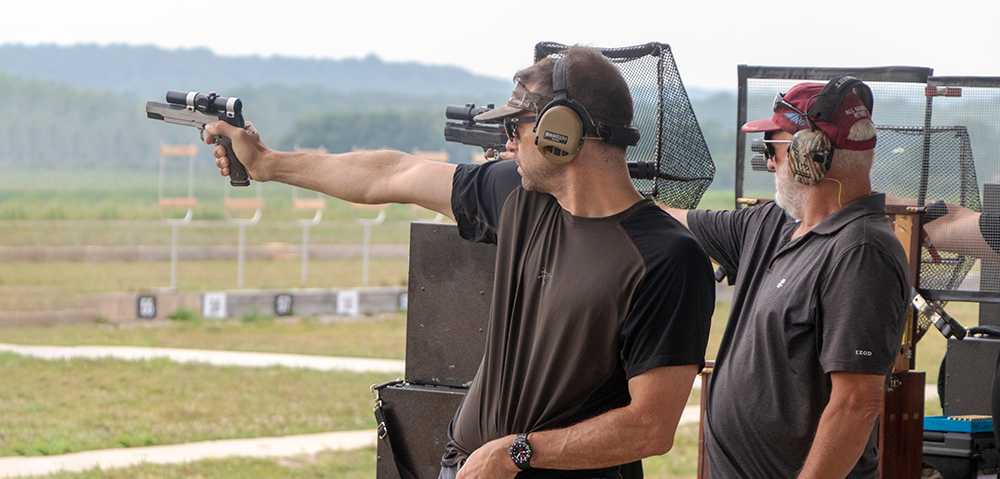
Why Shooting Is a Mental Sport
“Shooting is 90% mental, 10% physical” — you’ve probably heard this many times, but few shooters truly understand its meaning. When you stand on the line, hands trembling slightly, heart racing, mind going blank, you’ll understand why elite shooters prioritize mental training over technical practice.
In shooting sports, the physical actions are relatively simple: grip the gun, aim, press the trigger. But maintaining precision and consistency under pressure requires strong mental skills. Research shows that athletes who consciously train mental skills perform 15% better under pressure than those who don’t.
This guide explores the core concepts of shooting psychology, from understanding the sources of pressure to practical mental training techniques, helping you perform at your true level in competition.
💡 Further Reading: Mental training should be combined with technical training. See our Complete Guide to Classic Shooting Drills to learn how to build a systematic training plan.
Understanding Competition Pressure
The Physiology of Pressure
When you feel pressure, your body enters “fight or flight” mode, releasing adrenaline and cortisol. These hormones cause:
| Physiological Response | Effect on Shooting |
|---|---|
| Elevated heart rate | Tunnel vision, difficulty maintaining stable aim |
| Hand tremors | Unstable grip, poor trigger control |
| Rapid breathing | Unable to use normal breathing rhythm |
| Muscle tension | Stiff movements, slower reactions |
| Mental confusion | Forgetting stage plans, making poor decisions |
Sources of Pressure
Competition pressure typically comes from several areas:
External Pressure:
- Spectators watching
- Timer countdown
- Competitors’ performance
- Match importance (qualifiers, championships)
Internal Pressure:
- Expectations for results
- Fear of failure or embarrassment
- Overemphasis on outcomes
- Self-doubt
Important Insight: Research indicates that most of the pressure we feel is self-induced, often stemming from wanting to achieve a particular score or result. Understanding this is the first step in managing pressure.
Pressure Is Not the Enemy
Here’s a crucial mindset shift: Pressure itself isn’t the problem — your reaction to pressure is.
Moderate pressure (what psychologists call “eustress”) can actually enhance performance. It makes you more focused and reactive. The problem only arises when pressure exceeds your coping ability.
The most effective approach isn’t eliminating pressure, but learning to coexist with it and transforming it into motivation.
Five Core Mental Training Techniques
1. Visualization Training
Visualization is the most widely used mental training technique, and nearly all elite shooters incorporate it into their daily practice.
What Is Visualization?
Visualization involves creating vivid mental images of yourself successfully completing actions. Research shows that the brain processes “imagined experiences” and “real experiences” by activating the same neural pathways. In other words, your brain cannot fully distinguish between imagination and reality.
How to Practice Visualization
- Find a quiet place: Sit or lie down, close your eyes
- Relax with deep breathing: Take 5-10 deep breaths
- Build the scene: Imagine standing on the line, seeing the targets, hearing surrounding sounds, feeling the gun’s weight in your hands
- Execute the action: Mentally complete your stage plan — from “Stand by” to the buzzer, draw, shoot, move, reload
- Perfect execution: Imagine every shot hitting precisely, movements flowing naturally
- Repeat: Visualize for 3-5 minutes each time, at least once daily
Advanced Technique: Multi-Sensory Visualization
Don’t just use “vision” — engage all your senses:
- Visual: See the sights align, holes appearing in targets
- Auditory: Hear the buzzer, gunshots, magazine clicking into place
- Tactile: Feel the grip texture, trigger weight, recoil impulse
- Proprioception: Feel your body position, weight shifting
💡 Competition Application: While waiting to shoot, repeatedly visualize the upcoming stage. Research suggests visualizing at least 3-5 times before actually shooting, until you feel completely familiar with the plan.
2. Breathing Control Techniques
Breathing is the fastest way to influence your physiological state. When you feel nervous, consciously controlling your breathing can lower heart rate and relax muscles within 30 seconds.
Diaphragmatic Breathing
This is the most basic and effective breathing technique:
- Place one hand on your chest, the other on your abdomen
- When inhaling, let your abdomen expand outward (chest stays still)
- Inhale for 4 seconds, hold for 2 seconds, exhale for 6 seconds
- Repeat 5-10 times
Tactical Breathing (Box Breathing)
A stress management technique used by U.S. Navy SEALs:
- Inhale for 4 seconds
- Hold for 4 seconds
- Exhale for 4 seconds
- Hold for 4 seconds
- Repeat for 4 cycles
This technique’s advantage is its clear rhythm, making it easier to execute in high-pressure situations.
Pre-Shot Breathing Protocol
Use this protocol before each shooting sequence:
- After stepping onto position, take 2-3 deep diaphragmatic breaths
- While waiting for “Stand by,” maintain normal breathing
- At the buzzer, breathing naturally pauses (this is a natural response)
- After shooting, immediately resume deep breathing
💡 Further Reading: For more on breathing techniques during shooting, see our Complete Guide to Breathing Control in Shooting.
3. Positive Self-Talk
The conversation in your head directly affects your performance. Negative self-talk (“I’ll definitely miss,” “This stage is too hard”) triggers anxiety responses, while positive self-talk builds confidence.
Negative vs. Positive Self-Talk
| Negative Talk | Positive Talk |
|---|---|
| “Don’t hit the no-shoot” | “Aim at A-zone center, two shots” |
| “I’ll definitely mess this up” | “I’ve practiced this movement, I know what to do” |
| “Everyone else is better” | “Focus on my own plan” |
| “I’m not good enough” | “I’m prepared for this match” |
Key Principle: Use positive action language, not negation. The brain isn’t good at processing “don’t do” instructions. When you say “don’t hit the no-shoot,” your attention is actually drawn to the no-shoot.
Create Personal Affirmations
Choose 3-5 meaningful affirmations to repeat before matches or during pressure moments:
- “I am prepared”
- “Trust my training”
- “One shot at a time, focus on now”
- “I enjoy this challenge”
- “Relax, aim, fire”
When to Use:
- Night before the match, before sleep
- Match day morning
- While waiting to shoot
- When feeling nervous or doubtful
4. Focus Management
Shooting requires intense focus, but many shooters misunderstand what “focus” really means. Focus isn’t forcefully concentrating attention — it’s selectively allocating attention.
Three Levels of Focus
- Broad External: Observing the entire stage layout, planning routes
- Narrow External: Focusing on the relationship between sights and target
- Internal: Sensing your body state, breathing, trigger pressure
Skilled shooters can flow smoothly between these three levels.
Focus Allocation During Competition
| Phase | Focus Level | Attention Target |
|---|---|---|
| Stage briefing | Broad external | Target positions, movement routes, shooting sequence |
| Planning | Internal | Mental rehearsal, visualization |
| “Load and Make Ready” | Narrow external | Equipment check, gun status |
| “Stand by” | Internal | Breathing, relaxation, readiness |
| After buzzer | Narrow external | Sights, targets, trigger |
Entering “The Zone”
“The Zone” or “Flow” refers to the optimal mental state of complete immersion in the present task. In this state:
- Actions become automatic, requiring no conscious thought
- Time perception changes, may feel faster or slower
- Self-awareness disappears, only action and target remain
- Performance reaches optimal levels
How to More Easily Enter the Zone:
- Adequate preparation (both technique and plan are well-practiced)
- Appropriate challenge level (not too easy, not too hard)
- Clear goals (knowing what to do)
- Immediate feedback (seeing shot placement)
- Focus on process rather than outcome
5. Pre-Match Routine
Establishing a consistent pre-match routine helps you enter your optimal state and reduces anxiety from uncertainty.
Day Before the Match
- Prepare and check all equipment
- Confirm match time and location
- Eat a nutritious dinner
- Avoid heavy practice (light dry fire only)
- Go to bed early, ensure adequate sleep
- Practice visualization for 10-15 minutes
Match Day Morning
- Wake up early, allow yourself to fully awaken
- Eat a familiar breakfast (don’t try new foods)
- Practice breathing exercises for 5-10 minutes
- Review positive affirmations
- Arrive at venue early, familiarize yourself with the environment
Before Each Stage
- Stage briefing: Focus on RO explanation, note key points
- Plan your route: Decide shooting sequence, movement path, reload timing
- Mental rehearsal: Close eyes and visualize the entire stage 3-5 times
- Physical preparation: Light stretching, move shoulders and wrists
- Breath regulation: 3-5 deep breaths
- Waiting to shoot: Maintain positive self-talk, continue visualization
“On the Line” Routine
Establishing a fixed “on the line” routine is crucial:
- Step onto position, scan the stage once
- Take one deep breath, exhale slowly
- Check gun and equipment (magazine, holster, spare mags)
- Say your activation keyword mentally (like “Focus” or “GO”)
- Wait for “Stand by,” stay relaxed but alert
Handling Common Mental Challenges
Competition Anxiety
Symptoms: Trembling hands, racing heart, confused thoughts, excessive nervousness
Coping Strategies:
-
Reframe anxiety: Tell yourself “this is excitement, not fear.” Anxiety and excitement have nearly identical physiological responses — the difference is only in how you interpret them.
-
Accept rather than resist: Don’t try to eliminate anxiety; accept its presence. “I feel nervous, that’s normal, it means I care about this match.”
-
Return to breathing: When anxiety rises, immediately begin diaphragmatic breathing. This is the fastest physiological regulation method.
-
Focus on controllable factors: You can’t control opponents’ performance, weather, or scoring, but you can control your preparation, attitude, and effort.
Mental Recovery After Mistakes
Making mistakes during a match (missing, forgetting sequences, violations) is normal. The key is how quickly you recover.
“Red Light-Green Light” Technique:
- Red light: The moment the mistake occurs, acknowledge “that shot was off”
- Yellow light: Quick assessment “it happened, can’t change it”
- Green light: Focus on the next action “continue executing the plan”
Key Principle: Don’t analyze mistakes during the stage. Save analysis for after the stage ends. During execution, every shot is independent — the previous shot’s result shouldn’t affect the next one.
“The Yips”
“The Yips” refers to the inability to execute normally easy actions under pressure, common in golf putting and trigger pressing in shooting.
Coping Methods:
- Change focus: Don’t think about “pressing the trigger” — think about “letting your finger gently contract”
- Use external focus: Concentrate on sights or target, not on finger movement
- Seek help: If symptoms persist, consider consulting a sports psychologist
Excessive Competitor Awareness
Paying too much attention to competitors’ performance distracts you and adds unnecessary pressure.
Coping Strategies:
- It’s you vs. you: Your real opponent is yourself. Even if you shoot a personal best but lose the match, that’s still success.
- Don’t check rankings: Avoid looking at live standings during competition
- Focus on process goals: Set process goals (like “fully execute my plan on every stage”) rather than outcome goals (like “finish top ten”)
Using Shot Timer for Mental Training
A Shot Timer isn’t just a timing tool — it’s also an excellent mental training device.
PAR Time Pressure Training
Setting a PAR time creates time pressure, simulating competition urgency.
Training Method:
- First, without PAR time, record your comfortable speed (e.g., Bill Drill in 3.0 seconds)
- Set a PAR time slightly faster than comfort speed (2.8 seconds)
- Practice completing within PAR time, focusing on maintaining movement quality
- Gradually reduce PAR time
Mental Training Focus:
- Notice your mental state as PAR time approaches end
- Practice maintaining stable breathing under time pressure
- Record error patterns that emerge under pressure
Random Delay Training
Using the Shot Timer’s random delay feature trains you to handle uncertainty.
Setup:
- Delay time: 1-4 seconds random
- Each practice, you don’t know when the buzzer will sound
Training Value:
- Learn to stay relaxed yet alert while waiting
- Reduce dependence on specific timing
- More closely simulates real competition conditions
Dry Fire Mental Training
Dry fire practice is an excellent opportunity for mental training because you can focus entirely on mental techniques without worrying about ammunition costs.
Recommended Exercises:
-
Visualization + Dry Fire
- Close eyes and visualize the entire action
- Open eyes and execute dry fire
- Compare differences between imagination and reality
-
Pressure Simulation
- Set PAR time
- Deliberately create distractions (TV on, family members nearby)
- Practice maintaining focus amid distractions
-
Mistake Recovery Training
- Deliberately pause or “make a mistake” mid-sequence
- Practice quickly refocusing and continuing execution
💡 Recommended Tool: Airsoft Shot Timer App supports PAR time settings and random delay features, perfect for at-home dry fire mental training.
Building a Long-Term Mental Training Plan
Mental training, like technical training, requires consistent and systematic practice.
Daily Training (5-10 minutes)
- Morning: Positive affirmations + visualization (imagine today’s practice or competition)
- Evening: Deep breathing relaxation + review day’s mental state
Weekly Training
| Day | Focus |
|---|---|
| Monday | Visualization training (complete match stages) |
| Tuesday | Breathing control + dry fire practice |
| Wednesday | Positive self-talk practice |
| Thursday | PAR time pressure training |
| Friday | Combined practice (simulate match conditions) |
| Saturday/Sunday | Competition or live fire practice |
Competition Season Mental Preparation
One Week Before Match:
- Reduce high-intensity technical training
- Increase visualization and mental training
- Ensure adequate sleep
- Review match venue and stages (if information available)
Day Before Match:
- Light dry fire only
- Complete visualization practice
- Prepare all equipment
- Early to bed
Match Day:
- Execute your pre-match routine
- Trust your training
- Enjoy the competition
Frequently Asked Questions
Q1: I perform well in practice but not in matches. What should I do?
A: This is typical “practice shooter” syndrome. The main cause is too large a gap between practice and competition pressure. Suggestions:
- Add pressure elements to practice (timing, goal setting, simulated audience)
- Compete more frequently to make the competition environment familiar
- Lower expectations in matches — aim to “complete” before “perform”
Q2: How do I handle not sleeping the night before a match?
A: Difficulty sleeping is common pre-match anxiety. Suggestions:
- Accept that you might not sleep well — one night of poor sleep won’t seriously affect performance
- Use diaphragmatic breathing to help relax
- Avoid thinking about the match in bed; if you can’t sleep, get up and do light stretching
- Get good sleep both nights before, not just the night immediately before
Q3: When visualizing, I keep thinking of negative outcomes. What should I do?
A: This is common. Solutions:
- Start with simple scenarios (like visualizing just one perfect draw)
- When negative images appear, “switch channels” like changing TV back to positive images
- Increase visualization detail so your brain focuses more on “how to do it” rather than “the result”
- Keep practicing — the brain gradually becomes accustomed to positive thinking
Q4: How long until mental training shows results?
A: Like any training, mental training takes time to accumulate. Typically:
- 2-4 weeks: Start feeling effects of breathing control
- 1-2 months: Visualization becomes easier, more vivid
- 3-6 months: Noticeable improvement in competition performance
- Ongoing practice: Becomes automatic habit
Q5: Does airsoft require mental training too?
A: Yes. Although airsoft doesn’t have formal scoring pressure, team confrontations, timed missions, or competitive events still create pressure. Focus management, quick decision-making, and team communication all require good mental state.
Q6: How do I find the mental training method that suits me?
A: Everyone responds differently to various techniques. Suggestions:
- Try each technique for 2 weeks
- Record your feelings and effects
- Choose 2-3 methods that resonate most for deeper practice
- Adjust based on situation — some techniques are especially useful during matches, others suit daily practice
Q7: Can you recommend books on mental training?
A: Here are recognized classics in shooting psychology:
- With Winning in Mind — Lanny Bassham (founder of Mental Management System)
- Thinking Practical Shooting — Saul Kirsch
- The Inner Game of Tennis — Timothy Gallwey (though about tennis, principles fully apply)
- 10-Minute Toughness — Jason Selk
Q8: As a beginner, should I focus on technique or mental game first?
A: Initially, focus mainly on technique (80%) with mental as supplement (20%). But establishing basic mental habits from the start (like breathing control and positive self-talk) will help you progress faster. Once technique reaches a certain level, mental training proportion should gradually increase.
Summary
Shooting psychology isn’t mystical — it’s a set of skills that can be systematically learned and practiced. Mastering these techniques, you’ll be able to:
- Understand pressure: Know how pressure affects your performance and how to coexist with it
- Visualization training: Mentally rehearse success, building confidence and familiarity
- Breathing control: Quickly regulate physiological state, stay calm
- Positive self-talk: Use positive language to guide actions
- Focus management: Focus on the right things at the right time
- Pre-match routine: Build consistent preparation process, reduce uncertainty
Remember, mental training like technical training requires time and practice. Start today, spend 10 minutes daily on mental training, and you’ll notice significant improvement in a few months.
A final thought: “Technique gives you the ability to hit the target; mental game lets you use that ability under pressure.”
Related Articles
- Complete Guide to Classic Shooting Drills
- Complete Guide to Breathing Control in Shooting
- Complete Guide to Shot Timer App
- Complete IPSC Practical Shooting Training Guide
- Complete IDPA Defensive Shooting Training Guide
- Complete Guide to Dry Fire Training
- Mental Game
- Shooting Psychology
- Competition Pressure
- Focus
- Visualization
- IPSC
- IDPA
- Competitive Shooting
- Shot Timer
- Mental Preparation