Best GBB Airsoft Pistol 2026: 8 Picks From $90 to $380
Contents
The Short Answer
If you want one name: the Tokyo Marui Hi-CAPA 5.1 at about $170 (or $200 for the Gold Match) is still the best GBB pistol for most players, and the Action Army AAP-01 at about $100-130 is the best one under $150. The other six picks are here because your budget, your hands, your holster or your weather is different from the average buyer’s.
A gas blowback pistol is an airsoft pistol whose slide cycles on every shot, powered by green gas or CO2 stored in the magazine. That moving slide is the whole appeal: it gives you a recoil impulse, a slide that locks back on empty, and a reload that works like the real thing. It’s also why choosing one is different from choosing a rifle. Three things decide which GBB pistol is right far more than the brand on the slide:
- Which magazines it takes. A GBB pistol is a magazine system first and a gun second. Every spare mag costs $25-45, and you’ll want three or four. A pistol that takes Tokyo Marui-pattern magazines has cheap, plentiful mags from half a dozen brands; a licensed pistol with its own magazine has one supplier.
- The temperature you play in. Green gas loses pressure as the magazine cools, and below about 15°C (59°F) most pistols get sluggish halfway through a magazine. If you play through winter, a CO2 version of the same pistol is worth more than any feature on this list. The full pressure chart is in our CO2 vs green gas guide.
- What you’ll use it for. A sidearm for outdoor games, a primary for speedsoft and CQB, or a training pistol for IPSC Action Air and holster work are three different shopping lists.
The prices below are US street prices from Evike, Airsoft GI, Airsoft Station and the manufacturers’ own stores in November 2026. They move with sales, so treat them as tiers rather than quotes.
30-Second Picks
- Best GBB pistol overall → Tokyo Marui Hi-CAPA 5.1, about $170, or the Gold Match at $200.
- Best under $150 → Action Army AAP-01 Assassin, about $100-130, with semi and full auto.
- The cheapest one still worth buying → Army Armament R28 1911, about $90.
- A Hi-CAPA to build on, without the Marui price → Golden Eagle 3345 Hi-Capa, about $114.
- You play in the cold → SIG ProForce M17 in the CO2 version, about $170-210.
- Licensed Glock that fits real Glock holsters → Elite Force Glock 17 Gen 5, about $190.
- Full auto that survives being dropped → Novritsch SSP18, $199.
- Training pistol for holster and draw work → Tokyo Marui Glock 17 Gen 5 MOS, about $340-380.
The 8 Picks at a Glance
| Pistol | US price (Nov 2026) | Stock velocity, 0.20g | Takes these magazines | Best for |
|---|---|---|---|---|
| Army Armament R28 1911 | ~$90 | 300-330 FPS (0.84-1.01 J) | Tokyo Marui 1911 pattern | Cheapest one worth buying |
| Golden Eagle 3345 Hi-Capa | ~$114 | 300-340 FPS (0.84-1.07 J) | Tokyo Marui Hi-CAPA | Budget Hi-CAPA to upgrade |
| Action Army AAP-01 Assassin | ~$100-130 | ~310-340 FPS (0.89-1.07 J) | Tokyo Marui G-series (Glock) | Best under $150, speedsoft |
| Tokyo Marui Hi-CAPA 5.1 / Gold Match | $170 / $200 | ~320-330 FPS (0.95-1.01 J) | Tokyo Marui Hi-CAPA | Best overall, Action Air |
| SIG ProForce M17 (VFC) | $170-210 | ~320-330 green gas; ~350-400 CO2 | VFC P320 (proprietary) | Cold weather (CO2 version) |
| Elite Force Glock 17 Gen 5 | ~$190 | ~330 FPS (1.01 J) | Elite Force Glock (not Marui) | Licensed Glock, real holsters |
| Novritsch SSP18 | $199 | ~320 FPS (~1 J) | Novritsch Glock-pattern | Full auto, durability |
| Tokyo Marui Glock 17 Gen 5 MOS | ~$340-380 | ~270-300 FPS (0.68-0.84 J) | Tokyo Marui G17 Gen 5 | Training and holster work |
The joule figures in brackets are calculated from the listed FPS with E = ½mv², and they’re the column most “best pistol” lists skip. On green gas, every pistol here lands around 1 J or below, comfortably under every US outdoor limit and the 350-365 FPS (1.14-1.23 J) indoor limits in our airsoft rules guide. The one place a pistol can get you in trouble is CO2. The same ProForce M17 that shoots 320 FPS on green gas can run 350-400 FPS on a CO2 magazine, which is 1.14-1.49 J, over many indoor limits and over the 1.2 J pistol cap some Taiwanese fields set inside 10 metres. Chrono the CO2 version before your first indoor game; our FPS and joule calculator converts the reading for your BB weight.
How We Picked (and Why Shop Lists Look Different)
Most “best airsoft pistol” lists are written by shops, and each one leans toward whatever that shop stocks. That’s fine as long as you know it. We used four filters instead of a score:
- Still on sale in late 2026, at a price you can actually find. Several older lists still recommend pistols that are now hard to buy new.
- A magazine supply you can live with. A pistol with one $45 magazine and one supplier loses half its appeal by the time you own four mags.
- A stock velocity that suits real field limits on green gas, with a clear note where the CO2 version changes that.
- A consistent reputation across shops, owner threads on r/GasBlowBack, and review videos, not one glowing write-up.
What we didn’t do is pretend we chronographed every unit. Velocity figures come from manufacturer and shop listings, and gas pistols vary with temperature more than any other airsoft gun. Your own chrono reading, on your own gas, on the day you play, is the only number that counts.
Under $130: The Budget Tier
Army Armament R28 1911 — the cheapest one worth buying
At about $90, the R28 is where we’d draw the line: anything cheaper usually costs you more in frustration than it saves. It’s a full-metal 1911 with a three-dot sight picture, an accessory rail, a threaded outer barrel and a subtle flared magwell that makes reloads noticeably smoother than on a stock 1911. Shops list it at 300-330 FPS on 0.20g BBs with a 21-round magazine.
The reason it makes the list over other sub-$100 pistols is compatibility. Army Armament clones the Tokyo Marui 1911 inside and out, so parts, magazines and upgrades for the most-copied single-stack pistol in airsoft all fit. Review hosts who shot it side by side with other budget pistols liked the chunky, heavy-slide recoil, which feels more like a real 1911 than a lightweight competition gun does. The trade-off is gas. Single-stack 1911 magazines hold little gas, and the honest advice from owners is to refill after every magazine; don’t expect a second load of BBs on one fill. That’s acceptable for a sidearm you fire a few times a game, and annoying if the pistol is your primary.
Golden Eagle 3345 Hi-Capa — the Hi-CAPA to build on
At about $114, the Golden Eagle 3345 is a Tokyo Marui-compatible Hi-CAPA for roughly two-thirds the price of the real thing, and the reason to buy it is what you can bolt onto it later. It has a metal serrated slide, a polymer frame, a fibre-optic front sight with a blacked-out rear, a generously flared magwell, and a 29-round magazine. Airsoft GI lists 300-320 FPS; Airsoft Station lists 320-340.
The Hi-CAPA has the biggest aftermarket of any airsoft pistol, and because the 3345 is fully Marui-compatible inside, every part of that catalogue fits. Reviewers found it shoots exactly like a stock Marui clone, with an effective range around 130-140 feet, and the included magazine gets about two magazines’ worth of BBs on one fill. What it doesn’t have is an accessory rail or an optic cut, so if you want a red dot from day one, budget for a mount or start with the Marui. Think of it as a good chassis rather than a finished gun.
Action Army AAP-01 Assassin — best under $150
The AAP-01 is the best-performing pistol you can buy for about $100-130, and it doesn’t feel like a pistol at all. Instead of a slide, it has a fixed upper and an internal bolt, so there’s almost no felt recoil and the sights (or the red dot you mount on its top rail) never move. That’s why players report rifle-like accuracy and range out of a stock AAP-01, and why you’ll see them at speedsoft events running long barrels and carbine kits. It switches between semi and full auto, and listings put it at roughly 310-340 FPS on 0.20g with a 22-round magazine.
Two details make it a better buy than its price suggests. It takes Tokyo Marui G-series (Glock) magazines, so spare mags are everywhere. And Evike lists the US version at $99.95 gun-only, with Airsoft GI usually around $130 and periodically on sale near $105. The catch is the same thing that makes it accurate: with no reciprocating slide, it doesn’t train your recoil management or slide manipulation the way a Hi-CAPA or Glock does. One review host called it the most effective and least fun pistol on his list, which is about right. Full auto also empties the gas faster than it empties the BBs, especially in cool weather, so treat that switch as a party trick rather than a tactic.
$170-$210: The Benchmark Tier
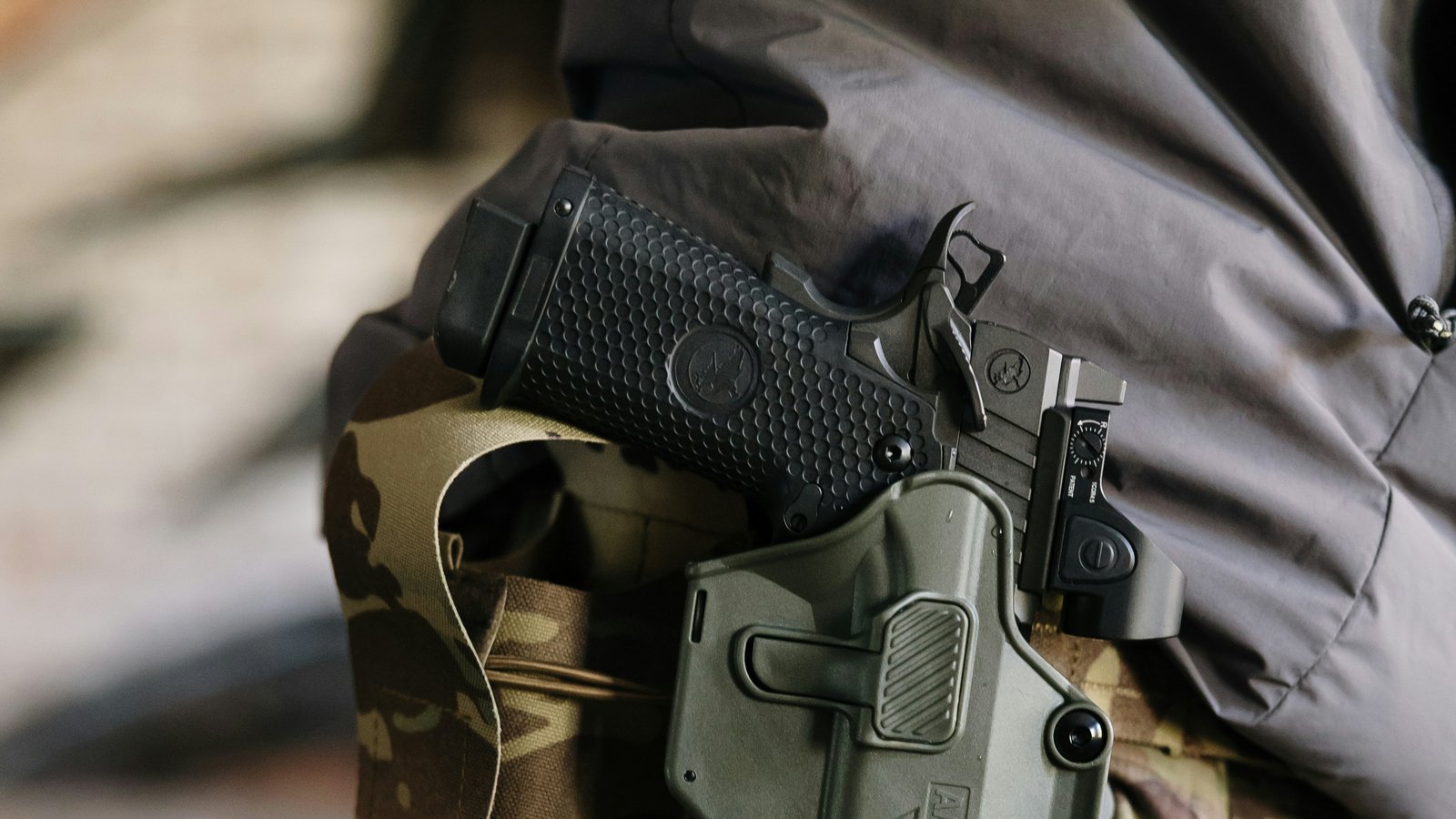
Tokyo Marui Hi-CAPA 5.1 — best GBB pistol overall
The Hi-CAPA 5.1 is the pistol every other one on this list is measured against: about $170 for the standard model, $199.95 for the Gold Match at Evike, and around 320-330 FPS on 0.20g. The Gold Match adds the competition look and a 31-round magazine, and it’s the one most Action Air shooters start with.
Its advantage isn’t any single number. It’s that a stock Hi-CAPA is accurate and reliable out of the box, and then has more upgrade parts, more compatible magazines and more people who know how to fix it than any other airsoft pistol. You can run it as a sidearm for years, turn it into a speedsoft race gun with a short-stroke kit, or take it to an Action Air match and look like everybody else on the line, which at a match is a good thing. The disadvantages are the ones every Marui pistol shares: a plastic slide on most models, and gas efficiency that drops off in cold weather. For the 5.1 vs 4.3 question, the nine differences owners actually notice, and the full upgrade path, see our Tokyo Marui Hi-CAPA review.
SIG ProForce M17 — the cold-weather pick (in CO2)
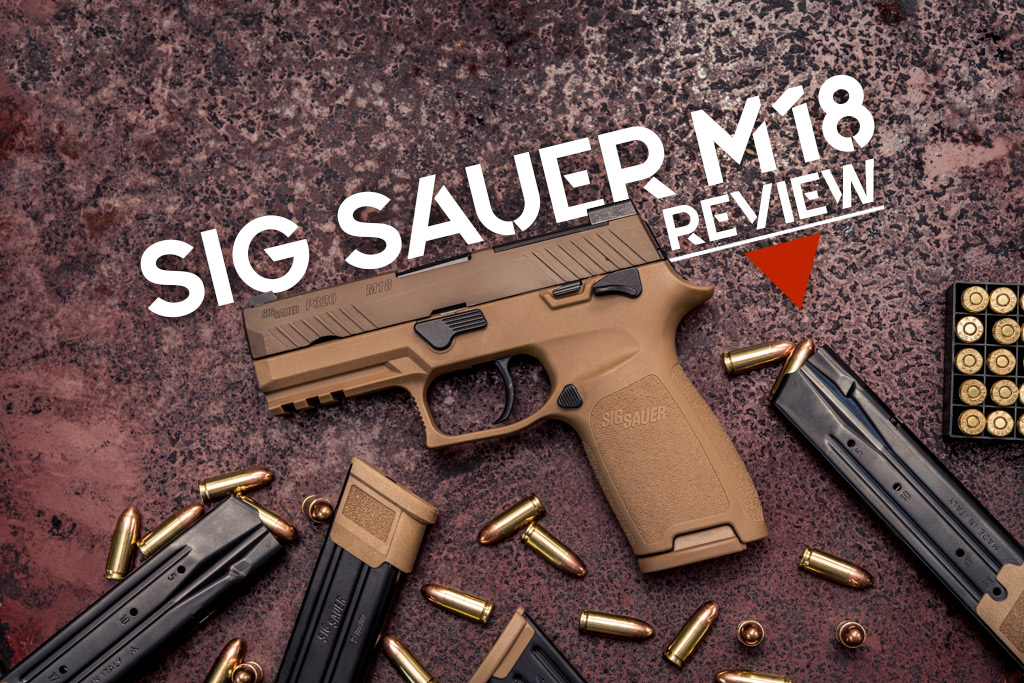
The ProForce M17 is a VFC-made, SIG-licensed P320 M17 at about $170 gun-only at Evike and $209.99 at SIG’s own store, and it’s the best pick here if you play below 10°C, because it comes in a CO2 version. On green gas it shoots around 320-330 FPS from a 21-round magazine; on CO2 it runs roughly 350-400 FPS with a harder, more convincing recoil.
The metal slide and the real trigger take-up make it feel like a service pistol rather than a toy, and it fits most holsters cut for the real P320. The magazines are VFC’s own, so you’re buying into one supplier, and the CO2 version needs the chronograph warning from the table above before you take it indoors. If you’re deciding between the full-size M17 and the compact M18, our ProForce M17 vs M18 comparison covers barrel length, gas and magazine differences.
Elite Force Glock 17 Gen 5 — the licensed Glock
For about $190, the Elite Force Glock 17 Gen 5 (Elite Force is Umarex’s airsoft brand) is the licensed Glock with the official trademarks, an aluminium slide, a polymer frame, and an official velocity of 330 FPS on 0.20g. If you carry a real Glock, or you want a training pistol that fits the holsters, lights and mag pouches you already own, this is the one to look at.
The thing to know before buying is that “Glock-pattern” airsoft magazines are not one system. Elite Force/Umarex Glock magazines and Tokyo Marui G-series magazines are not interchangeable, so the cheap Marui-pattern mags that fit the AAP-01 won’t fit this pistol. That’s not a dealbreaker, just a reason to buy your spare mags at the same time as the gun. Elite Force also sells a CO2 version of the Gen 5 MOS, which carries the same indoor-limit caveat as the ProForce M17.
Novritsch SSP18 — full auto that takes abuse
The SSP18 is $199 gun-only from Novritsch, about 1 J (roughly 320 FPS on 0.20g), and switches between semi and full auto at a claimed 17 rounds per second. Its 24-round magazine is the standard; a 49-round extended gas magazine is sold separately. It’s a Glock 18-style pistol with an aluminium blowback housing, built to be thrown in a dump pouch and dropped in the mud, and Novritsch says it handles stronger gases without problems.
It’s here because it’s the pistol that players who’ve broken a Marui tend to buy next, and because searches for Novritsch have been rising sharply this autumn, Taiwan included. The limitations are the price compared with the AAP-01, which does full auto for $70 less, and the fact that Novritsch warns against running the CO2 version above 15°C (59°F). Buy the gas version unless you only play in the cold.
$300+: The Training Pistol
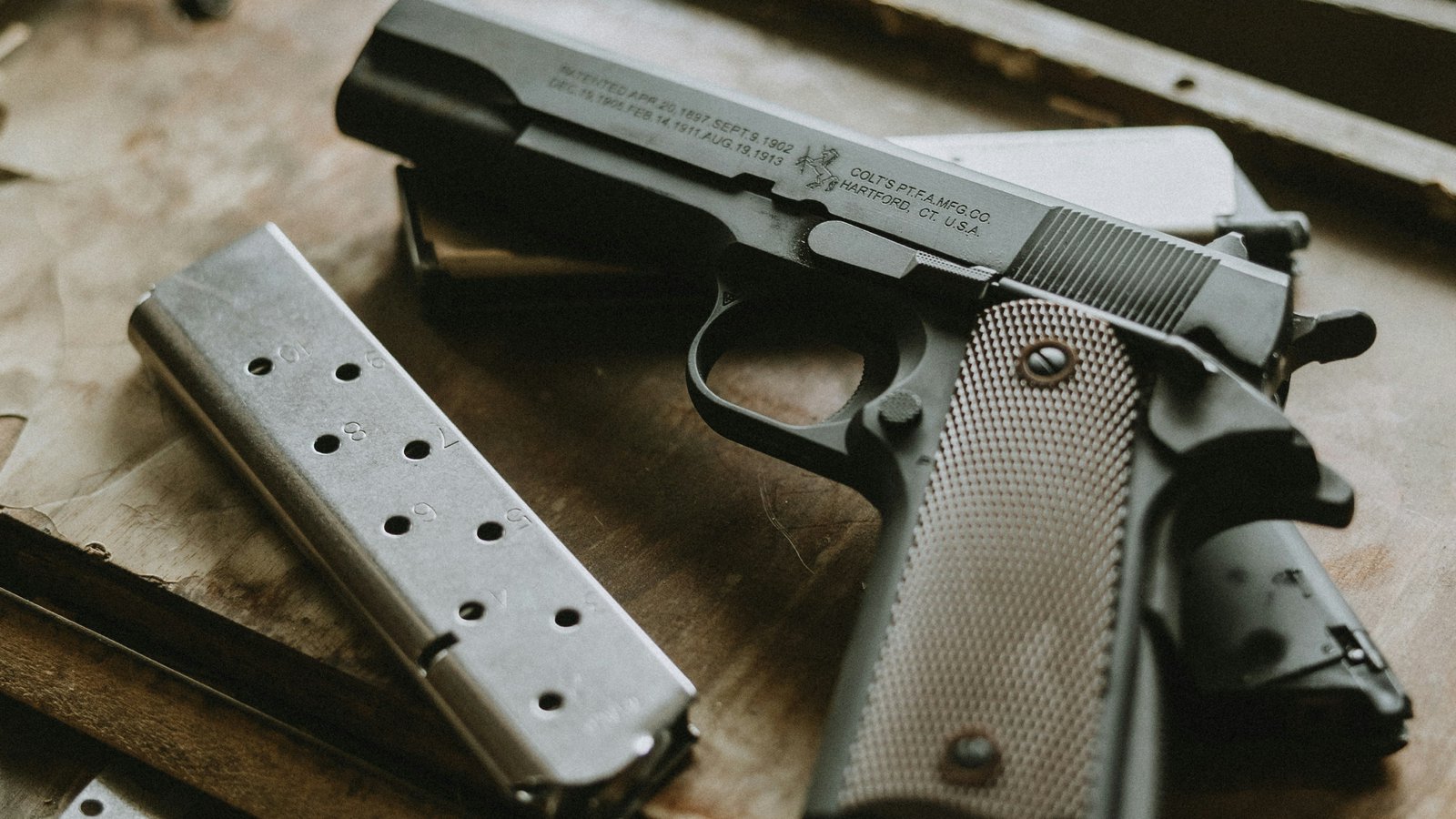
Tokyo Marui Glock 17 Gen 5 MOS — the one for holster and draw work
At about $340-380 in the US (it’s an import here; it’s much cheaper in Asia), the Marui Glock 17 Gen 5 MOS is the most expensive pistol on the list and the lowest-powered, at about 270-300 FPS on 0.20g. It’s on the list anyway because it’s the best GBB pistol for training rather than for games.
The trigger, the slide weight and the recoil are closer to a real Glock than anything else here, and it ships with MOS adapter plates so you can mount a red dot the way you would on the real pistol. Japanese power limits keep its velocity low, which makes it a poor outdoor sidearm and an excellent pistol for indoor practice, drawing from a holster, and dry fire–style drills with live BBs. Airsoft Station’s review of the G19 Gen 5 MOS, which shares its internals, found it still cycled on a 7°C (45°F) morning with velocity down 15-20 FPS, better than older Marui pistols. If you’re building a home training setup around a Glock, our Tokyo Marui Glock GBB guide goes through the G17 and G19 in detail.
Green Gas or CO2? The Two-Minute Version
Buy green gas unless you regularly play below about 10°C (50°F); buy the CO2 version of the same pistol if you do, and chronograph it before you play indoors. Green gas is propane with silicone oil, sits at about 107 psi at 20°C, and is gentler on the gun. CO2 sits at roughly 816 psi at the same temperature, which gives it headroom in the cold and a harder kick, and also wears slides and valves faster.
Neither is temperature-proof. Both lose about 40% of their pressure between 30°C and 0°C, and both cool down as you fire, which is why a pistol that’s crisp for the first eight shots can feel lazy by shot twelve. For most players the honest setup is a green gas pistol for most of the year and one CO2 magazine, if your pistol has a CO2 option, for winter mornings. The full chart and the “13°C rule” are in our CO2 vs green gas guide.
What’s Not on the List, and Why
HPA-tapped pistols are a modification, not a product, and they bring a line and a tank to a pistol you probably bought to be light. Electric blowback (EBB) pistols don’t need gas, but none we looked at gives you the slide action that is the reason to buy a GBB. Spring pistols and cheap non-blowback CO2 pistols are fine for plinking in the garage, but they’re not what this list is about. Real-steel steel-BB pistols (4.5 mm .177) sometimes appear in “airsoft pistol” search results, including a Umarex Glock 19 Gen 5 MOS that looks almost identical to the airsoft version. They are not airsoft, and they’re not allowed on airsoft fields. The KWA and WE lines are good pistols, but on the models we looked at, a Marui or one of the Marui-compatible picks above gave you the same thing with easier magazines.
Test Before You Buy: Draw, Splits and the Last Five Shots
The difference between a $100 pistol and a $200 one is rarely visible on a shop wall. You feel it in the draw, the trigger and the end of the magazine, and you can measure all three with a phone. If a friend or your field’s rental counter lets you try a few pistols:
- Open the Airsoft Shot Timer App, turn on a random start delay so you can’t anticipate the beep, and adjust the microphone sensitivity until it catches each pistol shot reliably. GBB pistols are loud enough that this usually takes a few seconds.
- Draw and first shot. Start with the pistol holstered or on a table. On the beep, pick it up and fire one shot at a target about 5 metres away. Run it five times and look at the average, not the best. A pistol with a clean sight picture and a grip that fits your hand will show a lower, tighter average than one that doesn’t.
- Splits. Fire five shots as fast as you can keep them on the target. The split times show you how quickly the slide resets and how fast you can track the sights. The AAP-01 will produce short, even splits because nothing moves; a heavy-slide 1911 will produce longer ones. Neither is wrong, but you’ll know which one you shoot better.
- The last five shots. Empty a full magazine at a steady pace and watch the splits at the end. When gas pressure drops, the slide slows down, and the last few split times stretch. On a cool day, that’s the clearest way to see which pistol’s magazine holds up, and it’s exactly the thing a shop description can’t tell you.
Once you’ve bought a pistol, the same app runs the pistol draw drill and Bill Drill par times, so the pistol you chose with a timer becomes the pistol you train with one.
The Real Cost of Your First GBB Pistol
The pistol price is never the whole price. Plan on two or three extra magazines ($25-45 each, less for Marui-pattern), a can of green gas ($12-17), quality 0.20g or 0.25g BBs, a holster that actually fits your model, and some silicone oil for the magazine seals. That’s typically $90-150 on top of the gun, which is why the magazine column in the table above matters more than a $20 difference in the gun price. If this is your first airsoft purchase rather than a sidearm for an AEG you already own, buy eye and face protection first; our beginner gear buying order puts the sequence in order.
Frequently Asked Questions
What is the best GBB airsoft pistol in 2026?
For most players, the Tokyo Marui Hi-CAPA 5.1 (about $170, or $200 for the Gold Match). It’s accurate out of the box, reliable, and has the biggest choice of magazines and upgrade parts of any airsoft pistol. If your budget is under $150, the Action Army AAP-01 is the best performer.
What is the best gas blowback airsoft pistol for beginners?
The Hi-CAPA 5.1 if your budget allows it, and the Action Army AAP-01 or Golden Eagle 3345 Hi-Capa if it doesn’t. All three take common Tokyo Marui-pattern magazines, which matters more in your first year than any feature.
What is the best airsoft pistol under $100?
The Army Armament R28 1911 at about $90 and the Action Army AAP-01, which Evike lists at $99.95 gun-only. Below roughly $80, most gas pistols use obscure magazine systems or lack basic features, and we wouldn’t recommend them.
Are GBB airsoft pistols worth it?
Yes, if you want realistic recoil, slide lock and reloads, or you plan to use the pistol for training or Action Air. They cost more to run than a spring or electric pistol and they’re sensitive to cold, so if you only want a cheap backup for summer games, a budget pick is enough.
Is green gas or CO2 better for an airsoft pistol?
Green gas for most players most of the year: it’s gentler on the gun and keeps most pistols under indoor velocity limits. CO2 is better below about 10°C and gives harder recoil, but it wears the pistol faster and can push velocity over indoor limits, so chronograph it first.
Do Glock airsoft magazines fit all Glock airsoft pistols?
No. Tokyo Marui G-series magazines fit Marui Glocks, the AAP-01 and many Marui-compatible clones. Elite Force/Umarex Glock magazines are a separate system. Check which one your pistol uses before you buy spare magazines.
How many FPS should an airsoft pistol shoot?
On green gas, most pistols shoot 270-340 FPS on a 0.20g BB, which is about 0.7-1.1 J, under almost every field’s limit. If your pistol reads above 350 FPS (1.14 J), it’s over many indoor limits, which usually only happens with CO2 versions.
The Bottom Line
The best GBB pistol is the one whose magazines you can buy, whose gas suits your weather, and whose job matches how you play. For most players that’s a Hi-CAPA 5.1. Under $150 it’s an AAP-01, if you can accept a pistol that doesn’t really kick. For winter it’s a CO2 ProForce M17, chronographed before you go indoors, and for holster training it’s the Marui Glock 17 Gen 5 MOS, even though it’s the weakest gun on the list. Whatever you buy, put a timer on it: the numbers will tell you more about the pistol, and about you, than the box does.
Image Credits
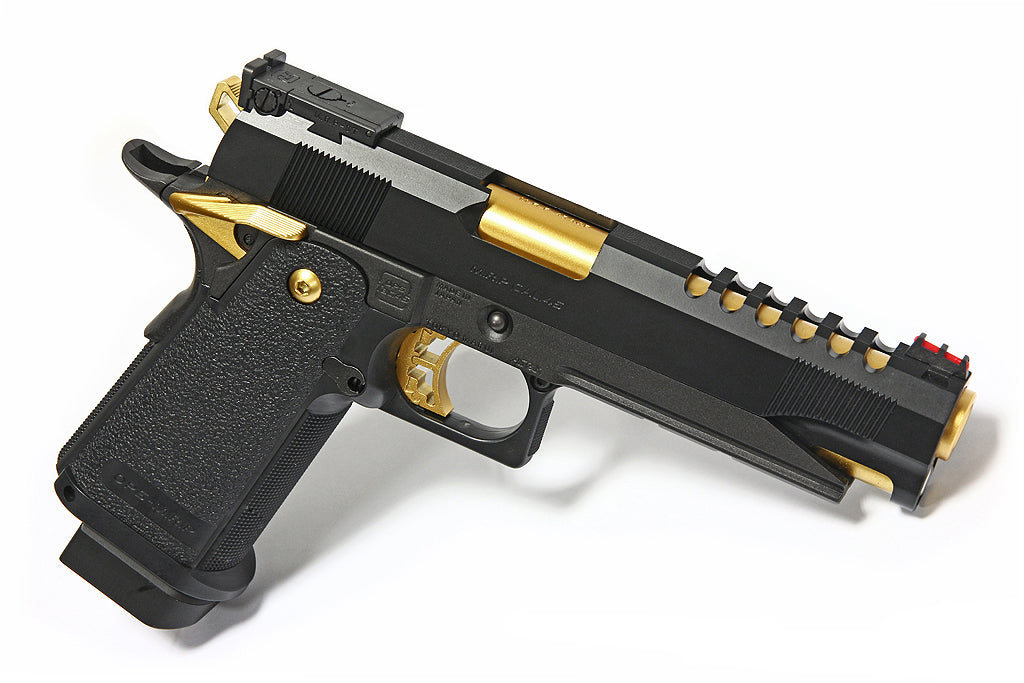
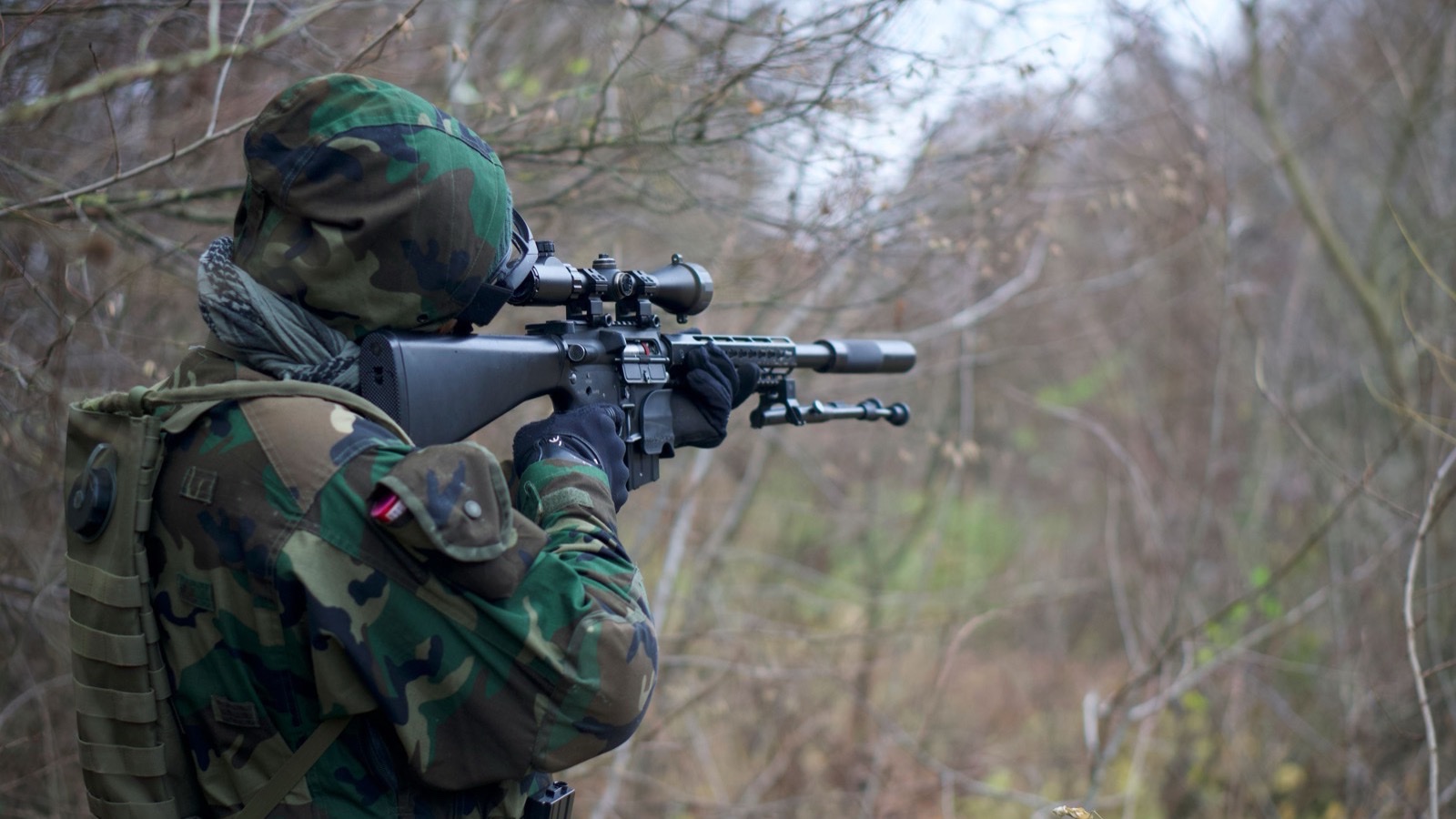
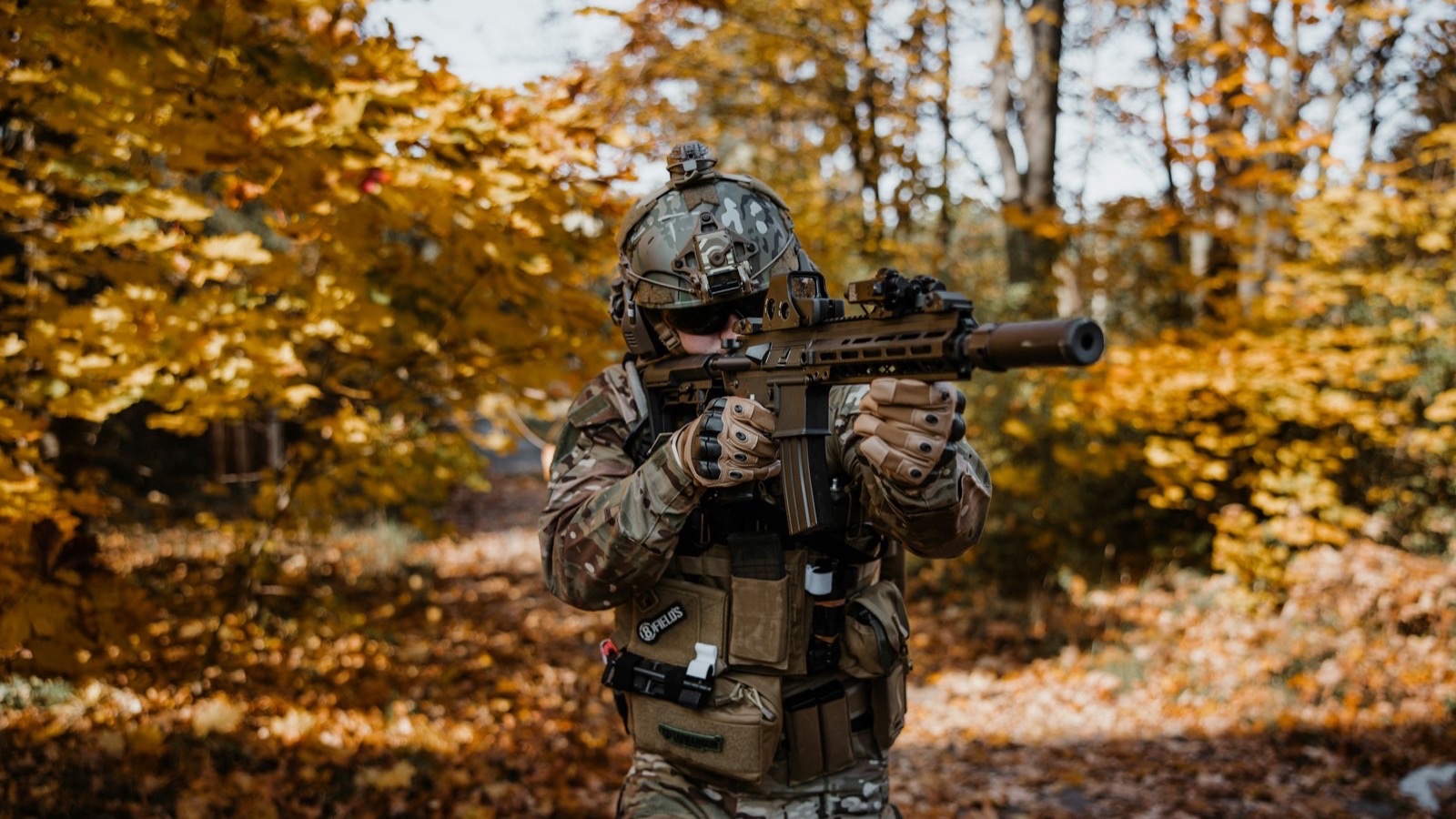
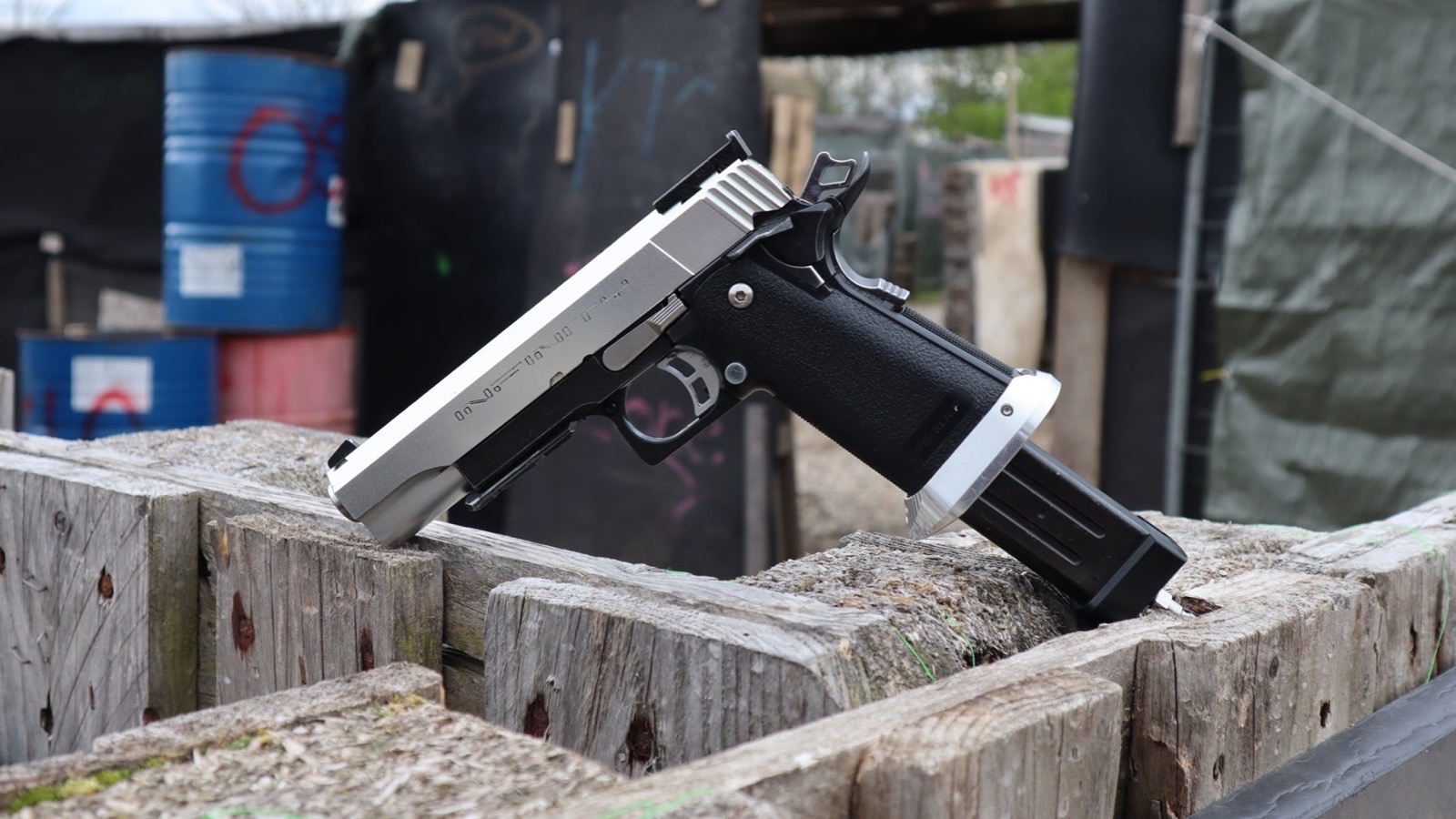
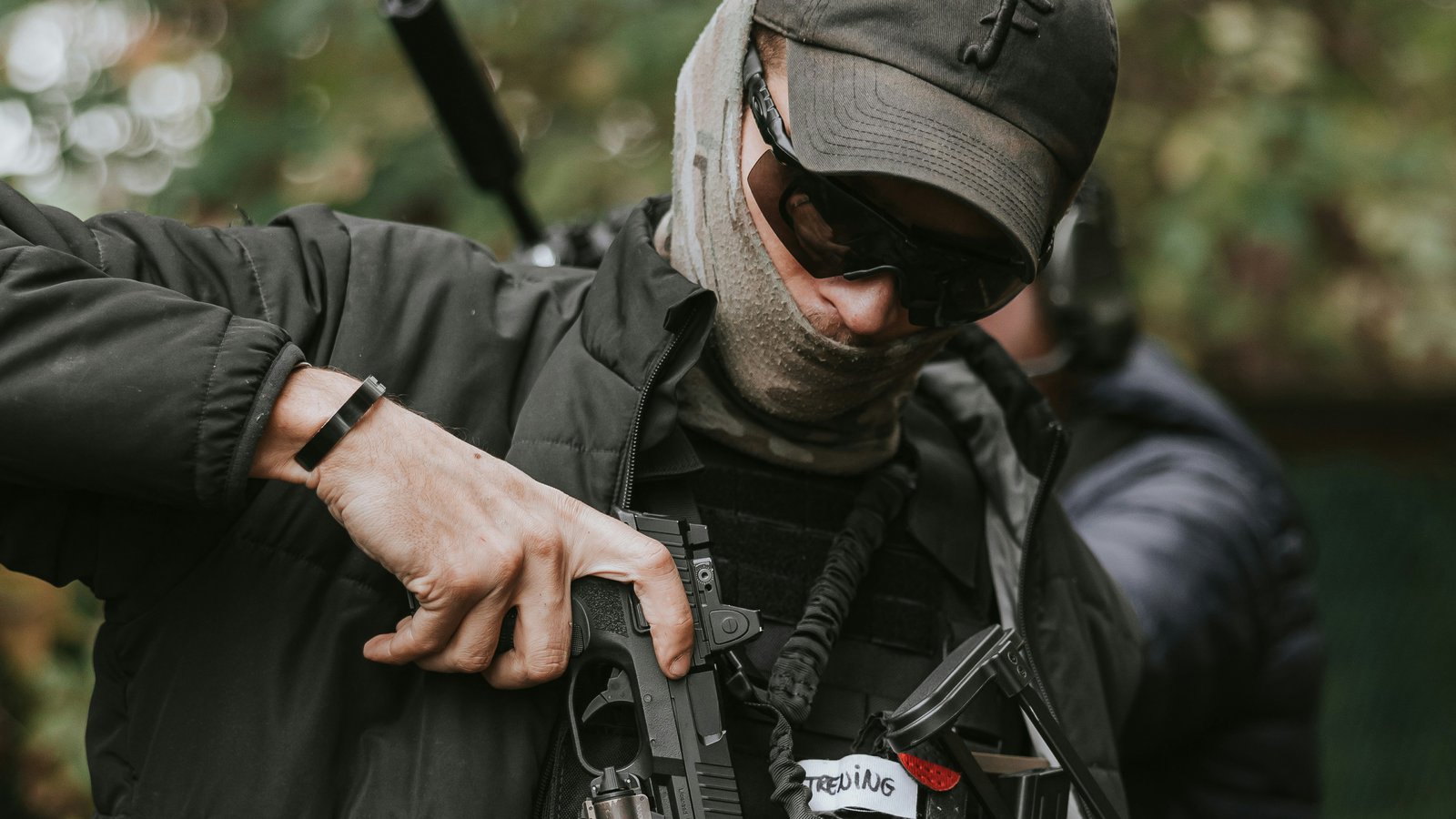
All photos by Taiwangun on Unsplash, used under the Unsplash License; cropped and resized to 16:9, not otherwise altered. The pistols shown are airsoft replicas, but not necessarily the models reviewed in this article.
- Cover: airsoft player during a game
- Two-handed pistol grip in an indoor arena
- Holstered pistol with red dot
- 1911-style replica and magazine
- Player drawing a pistol from a chest rig
Sources: product listings and pricing from Evike (Action Army AAP-01, Tokyo Marui Hi-CAPA 5.1 and Gold Match, Elite Force Glock 17 Gen 5, SIG ProForce M17), SIG Sauer ProForce M17, Elite Force Glock 17 Gen 5, Novritsch SSP18, Airsoft GI (Golden Eagle 3345, Army Armament R28), Airsoft Station (Tokyo Marui Gen 5 MOS review, Golden Eagle 3345), Airsoft GI “Dirt Cheap (But Actually Good) GBB Airsoft Pistols”, and owner discussion on r/GasBlowBack. Prices checked November 2026. Joule figures calculated with E = ½mv²; gas pressures from our CO2 vs green gas guide (NIST data).
Related Articles
Model Reviews
- Tokyo Marui Hi-CAPA 5.1 & 4.3 Review — the 9 differences, all models and the upgrade path
- Tokyo Marui Glock 17/19 Gen 5 MOS GBB Guide — the training Glock in detail
- ProForce M17 vs M18 Airsoft — full-size or compact, green gas or CO2
Gas, Power and Rules
- CO2 vs Green Gas Airsoft — pressure by temperature and the 13°C rule
- Airsoft FPS & Joule Calculator — check your chrono reading against your field limit
- Airsoft Rules Guide — FPS limits and MED by field type
Other Buyer’s Guides
- Best AEG Airsoft Rifle 2026 — the primary to go with your sidearm
- Best Airsoft Sniper Rifle 2026 — and why snipers need a good pistol
- Shot Timer App Guide — time your draw, splits and reloads
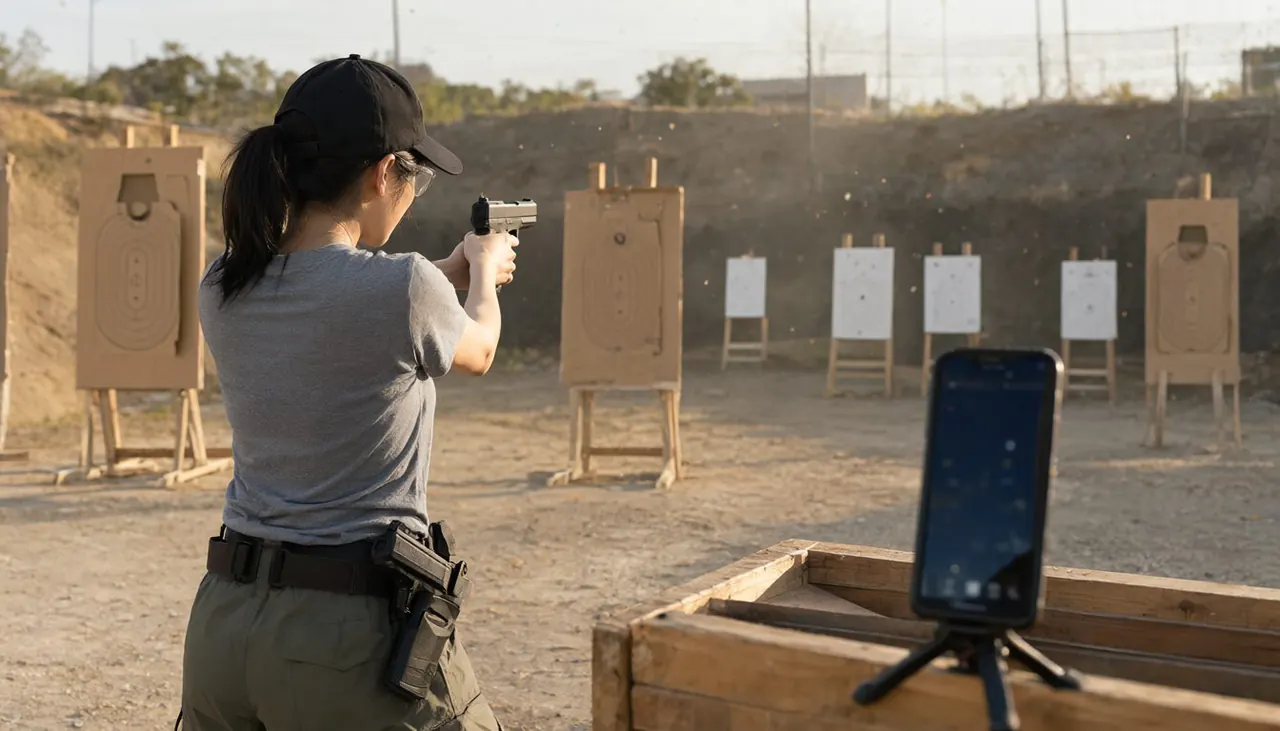
 Airsoft Shot Timer
Put a Shot Timer in Your Pocket
Automatic airsoft shot detection, split times, multiple PAR times and training records — no sign-up.


Related articles