ProForce M17 vs M18 Airsoft 2026: Specs, Performance & Which to Buy
ProForce M17 vs M18 Airsoft: The Three-Second Answer
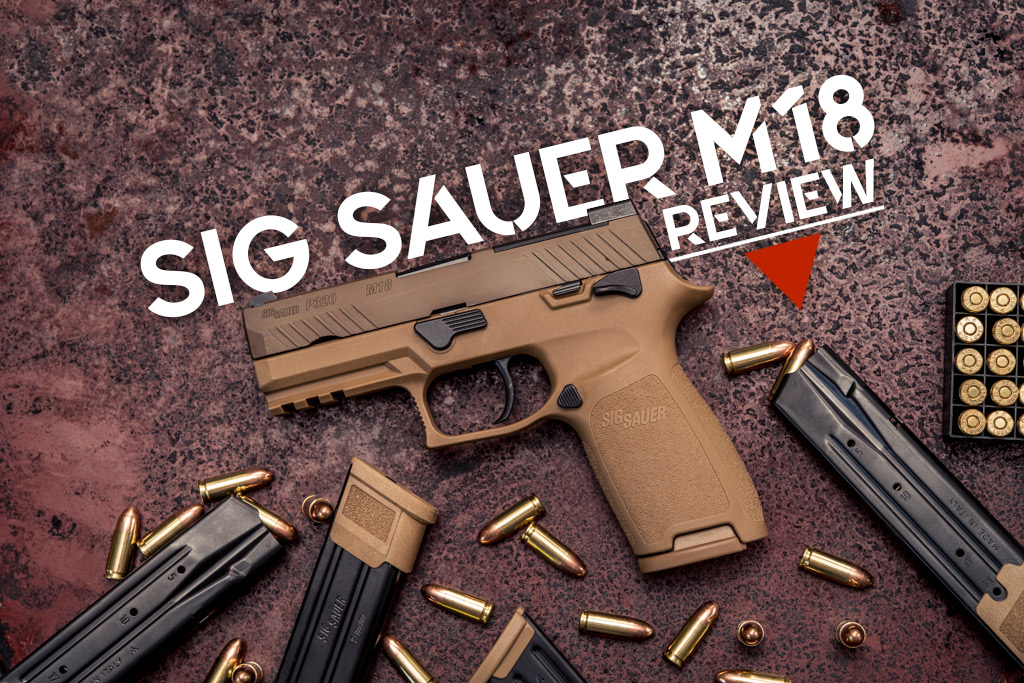
Short version: the ProForce M17 is the full-size airsoft replica of the U.S. Army’s M17 service pistol — 4.7" barrel, ~880 g loaded, Coyote Tan only, best for static-range work, IPSC Action Air practice, and anyone who actually shoots a real-steel M17. The ProForce M18 is the compact Marine Corps variant — 3.9" barrel, ~830 g loaded, Coyote Tan or Black, better suited for CQB, indoor draw drills, and shooters with smaller hands or concealed-carry training goals. Both are SIG-licensed and built by VFC, both run on green gas or CO2, and the 21-round magazines are fully cross-compatible.
If you searched “ProForce M17 vs M18” you probably hit the same wall most of us hit: Reddit threads, YouTube reviews, and a handful of product pages — but no single buyer’s guide that lays out the real differences without making you scroll through marketing copy. That’s what this guide is for. We’ll cover full specs side by side, how the two actually perform on the field (including cold-weather behaviour and hop-up quirks), the use-case decision framework most people short-cut wrong, how the ProForce stacks up against the Tokyo Marui Hi-CAPA for IPSC, and a six-question FAQ block that mirrors what most people are typing into Google after their first range session.
💡 Related reading: For the real-steel side of the platform, see our SIG M17 vs M18 Comparison and the Airsoft SIG P320 Guide. If you’re cross-shopping competition pistols, Tokyo Marui Hi-CAPA Review 2026 is the other half of this conversation.
Quick Specs Comparison: The Numbers That Actually Matter
Most spec sheets you’ll find for these two are inconsistent — partly because retailers list different inner-barrel measurements vs overall length, partly because the green-gas and CO2 magazines weigh slightly different. Below is a clean, normalized comparison based on SIG’s official ProForce documentation and the most consistent retailer listings.
| Specification | ProForce M17 | ProForce M18 |
|---|---|---|
| Type | Full-size GBB pistol | Compact GBB pistol |
| Real-steel reference | U.S. Army M17 | USMC / Special Ops M18 |
| Overall length | ~8.5" (216 mm) | ~7.2" (183 mm) |
| Barrel length | 4.7" (119 mm) | 3.9" (99 mm) |
| Weight (with mag) | ~880 g (~31 oz) | ~830 g (~28 oz) |
| Color options | Coyote Tan only | Coyote Tan or Black |
| Power | Green Gas or CO2 (separate mags) | Green Gas or CO2 (separate mags) |
| Velocity (Green Gas) | ~320 FPS | ~310 FPS |
| Velocity (CO2) | ~350-400 FPS | ~330-360 FPS |
| Magazine capacity | 21 rounds | 21 rounds |
| Magazine cross-compat. | ✅ Shares mags with M18 | ✅ Shares mags with M17 |
| Slide material | Metal | Metal |
| Frame | Polymer | Polymer |
| Optic-ready slide | Yes (removable plate) | Yes (removable plate) |
| Manual safety | Ambidextrous | Ambidextrous |
| Hop-up | Adjustable | Adjustable (slightly tighter access) |
| Field strippable | Yes | Yes |
| MSRP (USD) | $209.99 | $209.99 |
| Street price (USD) | $135-220 | $135-210 |
The pattern is the one you’d expect from the real-steel side: the M17 gives you the longer sight radius and slightly heavier feel that most range shooters prefer, the M18 gives up about 15-20 mm and 50 g for a noticeably easier draw out of a concealment rig. The detail nobody mentions is that the magazines fully interchange between the two, which means buying both later doesn’t double your magazine investment — you can still rotate the same mags through both pistols, and that quietly makes the “buy both” decision cheaper than it looks.
Performance & Reliability: How They Actually Run
Specs only tell you what’s on the box. The real question is what these feel like once you’re behind them on a hot August day or, worse, a 5°C December morning when the gas magazines are sweating cold.
The first time I cycled a ProForce M17 on green gas, the thing that surprised me wasn’t the FPS — it was how solid the slide felt coming back. SIG’s licensing arrangement with VFC isn’t decorative; the slide is real metal, the trigger has actual take-up and break (it’s not a CZ Shadow 2, but it isn’t a toy either), and the recoil cycle has enough mass to make holster work feel like training rather than dry-fire pantomime. The M18 cycles slightly faster — less mass to move — but loses a touch of that satisfying “thump” that makes the M17 feel like a real service pistol on the line.
Cold weather is where the platform shows its limits, like every GBB pistol on earth. Below about 12-15°C, green gas magazines lose pressure fast and you’ll start seeing short-strokes within five or six rounds. CO2 magazines fix this — they’ll run hard down into single-digit Celsius temps without flinching — but the trade-off is more wear on internal seals and a noticeably stiffer kick. Most ProForce owners I’ve talked to end up keeping one CO2 mag for winter and running green gas through the rest of the year, which is a reasonable middle ground rather than a compromise.
Hop-up access is one place the M18 is genuinely worse than the M17. Both are adjustable, but the M18’s hop-up wheel sits inside a tighter slide cutout that makes adjustment with a small tool fiddly until you’re used to it. On the M17 you can usually just turn it with a fingertip after racking the slide. Not a deal-breaker, but it’s the kind of detail you only notice on the field when you’re trying to dial in a new BB weight in a hurry.
Reliability across user reviews lands in the “good GBB” range — better than most KJW M17 clones, not quite Tokyo Marui consistent, but close enough that for a SIG-licensed product the value proposition is clear. The thing that genuinely matters is using the right gas at the right temperature, which is true of every gas pistol made.
Use Case Decision Framework: Pick the Right One
This is where most comparison articles fall apart — they list specs and then say “it depends on what you need.” That’s not useful. Here’s the actual decision framework, sorted by who you are and what you’re trying to do.
Pick the ProForce M17 if you’re a real-steel M17 owner using airsoft as off-range training, if you mostly shoot static-range or outdoor games where a longer sight radius helps, if you compete in IPSC Action Air’s Production division (where a full-size frame is the conventional choice), or if you collect military replicas and want the U.S. Army issue piece in Coyote Tan. The M17 also rewards a proper duty holster — its weight and grip length are close enough to the real M17 that draw-time training carries over meaningfully.
Pick the ProForce M18 if you’re primarily a CQB or Speedsoft player where every gram and every centimeter of holster footprint matters, if you’re rehearsing concealed carry with an airsoft surrogate, if you have smaller hands and find a full-size grip uncomfortable, or if you carry a real-steel M18 (Marine Corps issue, federal LE duty pistol) and want a training analog. The M18’s Black finish option also matches most law-enforcement P320 duty pistols better than the Coyote Tan-only M17.
Pick both if you’re a serious P320 platform user — the magazine cross-compatibility means a second pistol costs you about $200 instead of $400 once you account for the mag inventory you’d otherwise have to duplicate. Two-gun IPSC drills, husband-and-wife training pairs, and military re-enactors who want both the Army and Marine pistols are all common reasons people end up here.
Skip both and buy a Tokyo Marui Hi-CAPA instead if your only goal is winning IPSC Action Air. We’ll cover this comparison in detail in the next section, but the short version is: the Hi-CAPA out-of-the-box trigger, lighter slide cycle, and 31-round magazine give you a measurable competition edge that the ProForce platform — for all its real-steel fidelity — cannot match. The ProForce wins on realism; the Hi-CAPA wins on score sheets.
ProForce vs Tokyo Marui Hi-CAPA: The Cross-Brand Question
Almost nobody walks into the airsoft hobby looking specifically for a P320 replica. They walk in wanting a competition pistol, see the Hi-CAPA winning every IPSC video on YouTube, and then discover the ProForce when they cross-shop SIG-licensed alternatives. So this comparison matters more than the M17-vs-M18 internal one.
The Hi-CAPA’s strengths are well-documented in our full Hi-CAPA review: a lighter and more responsive trigger out of the box, a 31-round magazine instead of 21, a longer 5.1" barrel option for sight radius, and the largest aftermarket parts ecosystem in airsoft. If you want to upgrade — slides, hop-up units, recoil springs, custom triggers, the works — there are literally thousands of compatible parts. With the ProForce, you’re looking at a few dozen, mostly outer barrels and small accessories.
The ProForce M17/M18 wins on three things the Hi-CAPA can’t match. First, real-steel fidelity: if you actually own a P320, your draw stroke, grip angle, and trigger reach all carry over to the ProForce. The Hi-CAPA’s 1911-derived grip angle is steeper and feels different in the hand. Second, service-pistol training relevance: military, law enforcement, and federal duty shooters running real M17s or M18s benefit from training with the licensed replica more than from a competition-tuned Hi-CAPA. Third, magazine compatibility across two pistols — the M17 and M18 share mags, while different Hi-CAPA models often don’t (4.3 and 5.1 magazines aren’t always interchangeable depending on the year).
The cleanest way to think about it: the Hi-CAPA is a purpose-built airsoft competition gun, the ProForce is a licensed training analog for the real P320. Buy the tool that matches the job. If you do both — IPSC competition and real-steel training — most serious shooters end up owning both, which is more sustainable than it sounds because they fill genuinely different roles.
How to Use ProForce in IPSC and IDPA Training
Both ProForce variants pair extremely well with a shot timer app for systematic skill building. Below are the four drills I run regularly and the realistic time targets for each skill level. These targets assume green-gas operation at room temperature with the standard 21-round mag.
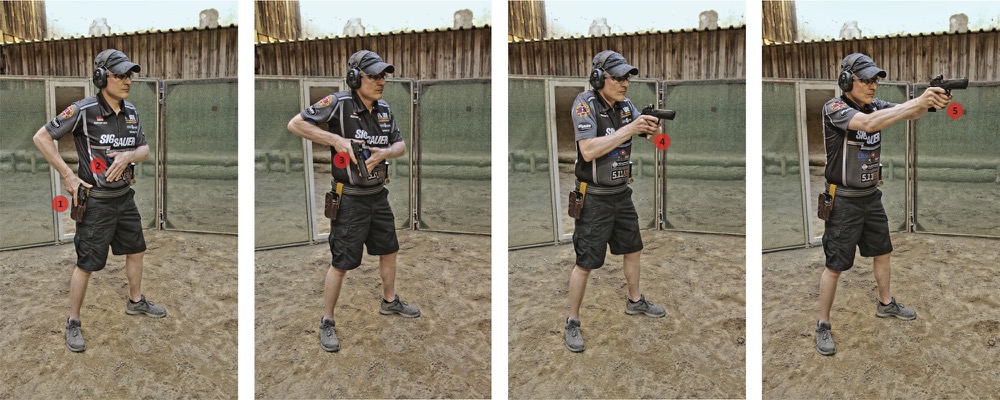
For draw to first A-zone hit at 7 yards, beginners should aim for under 2.5 seconds, intermediate shooters under 1.8 seconds, and competitive shooters under 1.4 seconds. The M18’s slightly shorter slide makes the draw maybe 0.05-0.1 seconds faster than the M17 from a duty holster — enough to matter in IDPA SSP but not enough to change which pistol you should buy.
For Bill Drill (six A-zone hits at 7 yards), target times are 4.5 seconds for beginners, 3.2 seconds for intermediate, and under 2.5 seconds for competitive. The M17’s longer sight radius and slightly heavier slide actually help here — recoil is more predictable, splits are more consistent. This is where the M17 shows its real-steel DNA most clearly.
For reload from slide-lock, target 3.0 seconds beginner, 2.0 seconds intermediate, 1.4 seconds competitive. Magazine drop from both pistols is clean once you’ve broken in the mag well; the magazines themselves are heavy enough to fall free without prompting, which isn’t always true on cheaper M17 clones.
For El Presidente (3 targets, 2 hits each, reload between strings), target 12 seconds beginner, 8 seconds intermediate, 5 seconds competitive. This is a good cumulative test — if your numbers cluster differently from the individual drill targets above, you’ve found your weakest skill component.
For more on competition shooting frameworks, see our IPSC Action Air Guide and Airsoft & Real-Steel Training Crossover Guide.
What’s Actually in the Box (and What Isn’t)
The ProForce M17 and M18 ship with the pistol, one magazine (specify CO2 or green gas at purchase — they’re not interchangeable housings), a hop-up adjustment tool, and a basic manual. What’s not included that you’ll want: a second magazine ($35-45 each), a holster (the M17 fits most P320-cut duty holsters, the M18 needs a compact-cut version), green gas if your first mag is a CO2 housing (or vice versa), and 0.25g or 0.28g BBs for serious accuracy work — the lighter 0.20g BBs that ship with starter packs are too light for consistent hopup engagement past about 15 meters.
If you’re buying for IPSC or IDPA practice, budget another $100-150 on top of the pistol price for two extra magazines and a competition-grade holster. For CQB-only use you can get away with one magazine and any cheap retention holster. The most common mistake I see new ProForce owners make is buying the pistol on impulse without budgeting for mags, then discovering that running a competition stage with one 21-round magazine isn’t realistic.
FAQ: Six Questions People Ask After Their First Range Session
Is the ProForce M17 worth it for training?
For real-steel M17 owners or anyone training toward a service-pistol context, yes — it’s the only mass-produced airsoft option with full SIG licensing and accurate trims. Trigger reach, grip angle, manual safety placement, and slide release ergonomics all carry over to the real platform. If your goal is purely competition airsoft, the Hi-CAPA wins on price-per-feature, but the ProForce wins on transferability to real-steel draw and reload skills. Worth the $210 if you have a real M17 in the safe; less compelling if you don’t.
Are ProForce M17 and M18 magazines interchangeable?
Yes — both use the same 21-round magazine, available in green gas or CO2 housings (the housings themselves aren’t interchangeable, but a green gas mag from one pistol will run in the other). This is one of the few real-world advantages the ProForce platform has over multi-pistol Hi-CAPA setups, where 4.3 and 5.1 mags aren’t always cross-compatible.
Does ProForce work in cold weather?
Green gas struggles below about 12-15°C as it does in every GBB pistol — you’ll see short-strokes and inconsistent FPS. CO2 magazines run reliably down to about 5°C and below if you’re patient with mag warm-up between shots. Most owners keep one CO2 mag for winter and run green gas the rest of the year. Don’t expect any GBB pistol — ProForce or otherwise — to perform like an AEG in genuine cold.
Can I run Hi-CAPA magazines in a ProForce M17?
No. The magazine geometry is completely different (Hi-CAPA double-stack vs P320 single-stack-style envelope). You’ll need ProForce-specific magazines, available from SIG, VFC, or aftermarket suppliers. KJ Works and other M17 clone magazines also won’t fit reliably — stick with VFC ProForce mags for consistent performance.
Where can I buy ProForce M17 or M18 in 2026?
In the U.S., Evike, Pyramyd Air, Airsoft Master, and direct from SIG SAUER’s airsoft store (sigsauer.com/airsoft) all carry both variants. Outside the U.S., RedWolf Airsoft, AirsoftPH, and Bang Bang Airsoft (Hong Kong) typically have stock. Street prices range from $135 (older stock or sales) to $220 (CO2 + competition packages). MSRP is $209.99 for both.
Are ProForce M17 and M18 IPSC Action Air legal?
Yes — both meet IPSC Action Air rules for power factor, magazine capacity, and physical dimensions. They’re typically run in Production division, where the full-size M17 has a slight sight-radius advantage over the M18. That said, almost no one wins Action Air with a ProForce — Hi-CAPA dominates the podium because of its competition-tuned trigger and 31-round magazine. The ProForce is legal but not optimal for serious competition. See our IDPA Divisions Guide for related rule frameworks.
Final Verdict: Which One to Buy in 2026
If you want one short answer: buy the M18 for general airsoft use (CQB, indoor games, casual outdoor games, any use where compact frame helps), buy the M17 if you own a real M17 or train for full-size service-pistol contexts, and buy both if you’re serious about the P320 platform because magazine cross-compatibility makes the second pistol effectively half-priced from a complete-loadout perspective.
If you’re cross-shopping airsoft pistols broadly and don’t have a specific tie to the SIG platform, the Tokyo Marui Hi-CAPA 5.1 remains the smarter choice for competition, and a Glock 17 GBB the smarter choice for tactical and CQB-focused play. The ProForce sits in a specific lane — SIG-licensed real-steel training — that’s narrow but valuable if you’re in it.
Whichever you choose, pair it with structured drill work and a shot timer to actually measure improvement. The pistol is just a tool; what makes the difference is how you train with it.
💡 Related reading: IPSC Action Air Complete Guide | SIG M17 vs M18 Real-Steel Comparison | Tokyo Marui Hi-CAPA Review 2026 | Airsoft Firearms Training Crossover
Put a Shot Timer in Your Pocket
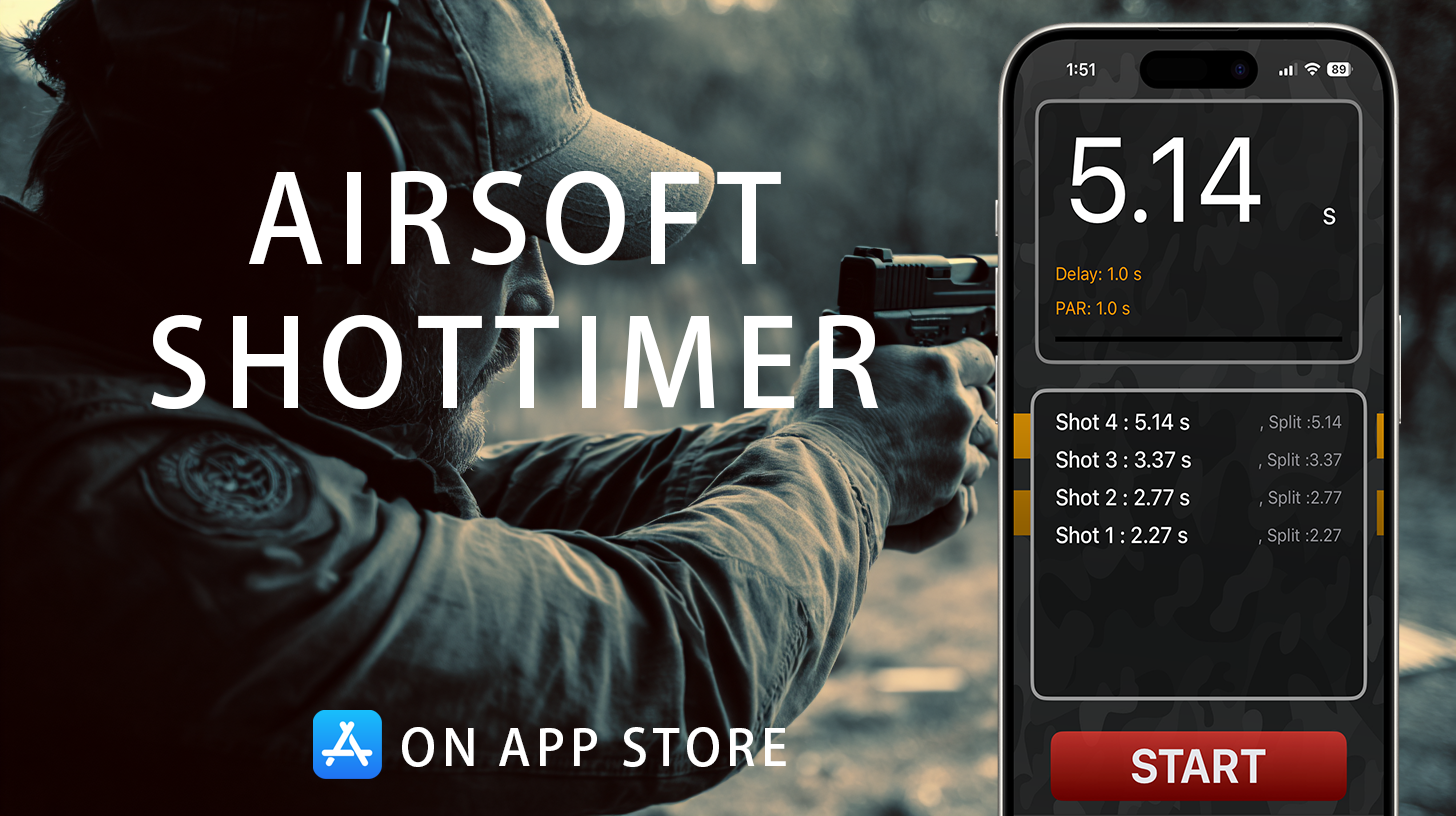
Airsoft Shot Timer is a free shot timer app tuned for airsoft and Action Air — it picks up BB gun shots, tracks your split times, and saves you the cost of a $150+ hardware timer for IPSC/IDPA practice.

- ProForce M17
- ProForce M18
- ProForce M17 vs M18
- SIG ProForce M17
- SIG ProForce M18
- VFC ProForce P320
- Airsoft SIG M17
- Airsoft SIG M18
- M17 M18 Airsoft Difference
- Best SIG Airsoft Pistol
- SIG Airsoft
- Airsoft GBB Pistol
- M17 Airsoft Review
- M18 Airsoft Review
- Airsoft Buyer Guide
- IPSC Action Air
- IDPA SSP
- Airsoft Training Pistol
- CQB Airsoft
- Speedsoft Pistol
- Airsoft Pistol 2026
- Hi-CAPA vs ProForce
- CO2 vs Green Gas Airsoft
- Airsoft Magazine Compatibility
- SIG P320 Airsoft
- P320 ProForce