Complete Pistol Aiming Guide: From Sight Alignment to Visual Focus Techniques
Why Are Aiming Techniques So Important?
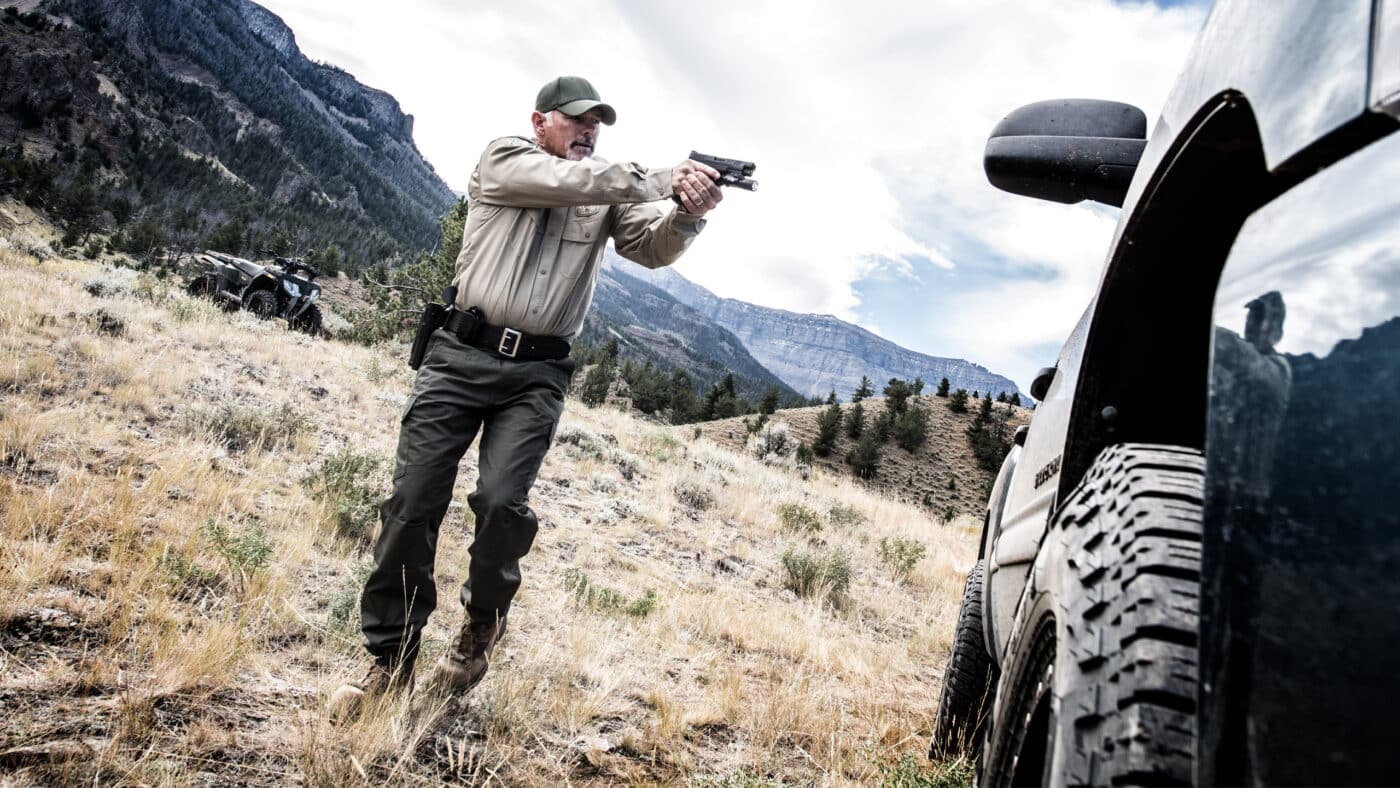
Aiming is the core of shooting accuracy. No matter how stable your grip is or how perfect your trigger control, if your aiming technique is incorrect, bullets won’t hit the target. Aiming consists of two key elements:
- Sight Alignment: Properly aligning the front sight with the rear sight
- Sight Picture: Placing the aligned sights in the correct position on the target
Many new shooters think aiming is simple—“just point the sights at the target.” In reality, aiming involves physiological limitations of the eye, different visual focus techniques, and multiple aiming methods to choose from. Master these concepts, and your shooting accuracy will improve dramatically.
“Accurate aiming is the foundation of shooting—a fraction off at the sights means missing by inches at the target.”
Sight Alignment Fundamentals
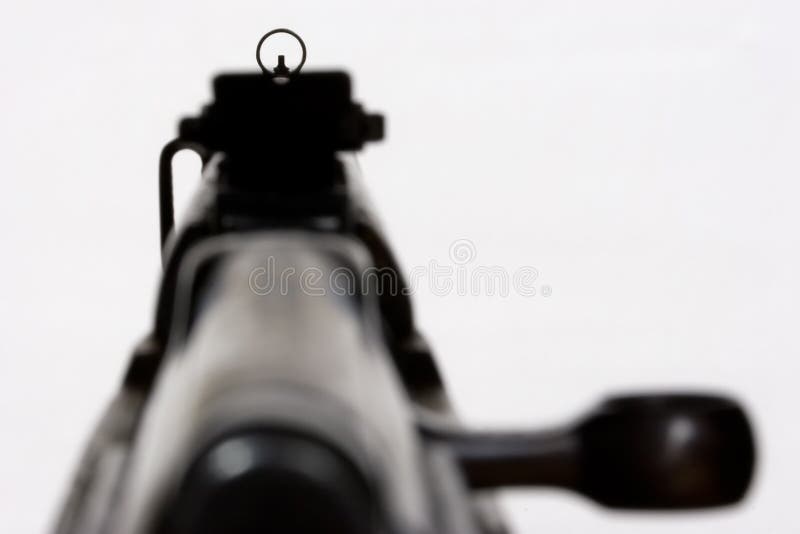
Sight Alignment is the technique of properly positioning the front sight within the rear sight notch. This is the first and most important step in aiming.
The “Equal Height, Equal Light” Principle
Proper sight alignment follows the “Equal Height, Equal Light” principle:
-
Equal Height
- The top of the front sight is level with the top of the rear sight
- Neither higher nor lower, perfectly horizontal
-
Equal Light
- Equal gaps on both sides of the front sight within the rear notch
- Front sight centered in the notch
Why Is Sight Alignment So Critical?
Small deviations in sight alignment are amplified at the target. This amplification is proportional to distance:
| Sight Deviation | Impact at 5m | Impact at 15m | Impact at 25m |
|---|---|---|---|
| 0.5mm | ~1cm | ~3cm | ~5cm |
| 1mm | ~2cm | ~6cm | ~10cm |
| 2mm | ~4cm | ~12cm | ~20cm |
Conclusion: The farther the distance, the more critical sight alignment becomes. In IPSC long-distance stages, sight alignment precision directly determines scores.
Common Sight Alignment Errors
Error 1: Front Sight Too High or Too Low
Symptom: Front sight top is above or below the rear sight top
Result:
- Too high → Impact point high
- Too low → Impact point low
Correction: Ensure front sight top is level with rear sight top
Error 2: Front Sight Left or Right
Symptom: Front sight not centered in the rear sight notch
Result:
- Left → Impact point left
- Right → Impact point right
Correction: Check that light gaps on both sides are equal
Error 3: Canting the Pistol
Symptom: Pistol tilted left or right
Result: Impact point shifts both toward the tilt and downward
Correction: Ensure rear sight top remains horizontal
Types of Sight Pictures
Sight Picture is how you place the aligned sights on the target. There are four main aiming methods for different applications.
1. Center Hold
Definition: Front sight top bisects the target center (bullseye)
Characteristics:
- Point of aim = point of impact
- Most intuitive aiming method
- Default setting for most modern pistols
Advantages:
- Simple and intuitive, easy to learn
- “Point of aim equals point of impact”
- Works at all distances
Disadvantages:
- Front sight obscures part of the target
- Difficult to precisely aim at small targets
Best For:
- Daily practice and self-defense training
- IDPA defensive shooting
- Most IPSC stages
2. Six O’Clock Hold
Definition: Front sight top positioned just below the target, like the bullseye “sitting” on the front sight
Characteristics:
- Also called “pumpkin on a post” or “lollipop hold”
- Point of aim below target, point of impact at bullseye
- Requires sight adjustment or remembering the offset
Advantages:
- Target fully visible, not obscured by front sight
- Very precise for round targets (like bullseyes)
- Standard method for bullseye shooting
Disadvantages:
- Requires pre-adjustment or remembering offset
- Not intuitive, needs extra training
- Difficult to apply to irregular-shaped targets
Best For:
- Bullseye precision shooting
- Fixed-distance competition
- Precise shooting on small targets
3. Combat Hold
Definition: Front sight completely covers the target, point of impact below front sight top
Characteristics:
- Also called “3-dot hold”
- Front sight completely obscures target
- Fast acquisition, emphasizes speed
Advantages:
- Fastest acquisition
- Ideal for close-range rapid fire
- Easiest to execute under pressure
Disadvantages:
- Target completely obscured
- Lower precision
- Not suitable for long-range shooting
Best For:
- Close-range defensive shooting
- High-pressure situations
- Rapid response shooting
4. Flash Sight Picture
Definition: Only verify front sight is roughly within rear sight area, not seeking perfect alignment
Characteristics:
- Emphasizes speed over precision
- Relies on peripheral vision to confirm alignment
- Efficient close-range shooting technique
Advantages:
- Fastest aiming method
- Suitable for very close range (3-7 meters)
- Commonly used by IPSC/USPSA experts
Disadvantages:
- Lowest precision
- Requires extensive practice to stabilize
- Accuracy drops sharply with increased distance
Best For:
- IPSC close-range paper targets
- Rapid multi-target transitions
- Emergency self-defense situations
Comparison of Four Aiming Methods
| Aiming Method | Speed | Precision | Learning Difficulty | Suitable Distance |
|---|---|---|---|---|
| Center Hold | Medium | High | Easy | All distances |
| Six O’Clock | Slower | Highest | Medium | Medium-long range |
| Combat Hold | Fast | Medium | Easy | Close range |
| Flash Sight | Fastest | Lower | Difficult | Very close range |
Visual Focus Techniques
The human eye cannot simultaneously focus clearly on three objects at different distances (rear sight, front sight, target). Therefore, shooters must choose where to place their focus.
Front Sight Focus
Definition: Eyes focused on the front sight, rear sight and target appear blurry
Why Choose Front Sight Focus?
The front sight determines bullet direction—it tells you where the muzzle is pointing. When you focus on the target, both sights are blurry, and small sight misalignments go unnoticed.
How to Execute:
- First look at the target to confirm position
- Raise the pistol, shift vision to front sight
- Front sight should be clear and sharp
- Target and rear sight will appear blurry
- Confirm sight alignment, then press trigger
- Maintain front sight focus throughout
Advantages:
- Highest precision
- Easy to detect sight misalignment
- Standard method in traditional shooting training
Disadvantages:
- Cannot clearly see target details
- Difficult to track moving targets
- Hard to maintain under pressure
Best For:
- Bullseye precision shooting
- Medium to long-range shooting
- Situations requiring high accuracy
Target Focus
Definition: Eyes focused on the target, front and rear sights appear blurry
Why Do Some Choose Target Focus?
Research shows that in self-defense situations, most people instinctively look at the threat (target), not their sights. Target focus works with this natural response.
How to Execute:
- Keep eyes focused on target
- Raise pistol into field of view
- Use peripheral vision to confirm rough sight alignment
- Aim blurry sights at clear target
- Press trigger
Advantages:
- Faster speed
- Can clearly see target movement
- More natural under pressure
- Consistent with red dot sight usage
Disadvantages:
- Lower precision
- Difficult to detect small sight misalignments
- Not suitable for long-range shooting
Best For:
- Close-range rapid fire
- Moving targets
- Using red dot sights
- Self-defense training
When to Use Each Focus Technique?
Use Front Sight Focus When:
- Distance exceeds 10 meters
- Small targets
- Maximum accuracy needed
- Precision shooting competitions
Use Target Focus When:
- Distance within 7 meters
- Large targets (A-zone size)
- Fast shooting required
- Pressure situations or self-defense
Related Reading: IPSC Production Optics Beginner’s Guide - Learn about target focus with red dot sights
Dominant Eye and Cross-Dominance
What Is the Dominant Eye?
The Dominant Eye is the eye that the brain prefers for receiving visual information. Just as people have a dominant hand, they also have a dominant eye.
About 70% of people are same-side dominant (dominant hand and eye on the same side), while 30% are cross-dominant.
How to Test Your Dominant Eye?
Method 1: Triangle Test (Recommended)
- Extend both arms in front of you
- Form a small triangle with thumbs and index fingers (about 5cm)
- With both eyes open, center a small distant object (like a doorknob) in the triangle
- Close your left eye—if the object stays in the triangle, you’re right-eye dominant
- Close your right eye—if the object stays in the triangle, you’re left-eye dominant
Method 2: Pointing Test
- With both eyes open, extend your index finger to point at a distant object
- Close your left eye, observe if finger shifts
- Close your right eye, observe if finger shifts
- The eye where the finger doesn’t shift is your dominant eye
Solutions for Cross-Dominant Shooters
If you’re right-handed but left-eye dominant (or vice versa), here are solutions:
Solution 1: Shift Pistol to Align with Dominant Eye (Recommended)
Method:
- Grip normally
- When raising the pistol, shift it slightly toward your dominant eye
- The pistol will move slightly across your body’s centerline
- Aim with your dominant eye
Advantages:
- No need to change dominant hand
- Relatively easy to adapt
- Maintains ability to keep both eyes open
Solution 2: Tilt Head Slightly
Method:
- Raise pistol normally
- Tilt head slightly toward dominant eye side
- Align dominant eye with sights
Advantages:
- Minimal adjustment
- Quick execution
Disadvantages:
- Less stable posture
- May cause neck fatigue
Solution 3: Close Non-Dominant Eye
Method:
- Raise pistol normally
- Close non-dominant eye
- Aim with dominant eye
Advantages:
- Simplest and most direct
Disadvantages:
- Loss of peripheral vision
- Loss of depth perception
- Not recommended for self-defense or competition
Solution 4: Switch Shooting Hands
Method: Shoot with non-dominant hand, aligning pistol with dominant eye
Advantages:
- Theoretically most correct alignment
Disadvantages:
- Requires extensive practice
- Weaker control with non-dominant hand
- Long adaptation period
The Importance of Both-Eyes-Open Shooting
Strongly recommend developing the habit of shooting with both eyes open:
- Maintains full peripheral vision
- Preserves depth perception
- Reduces eye fatigue
- Allows awareness of surroundings in tactical environments
- Nearly all IPSC/IDPA experts shoot with both eyes open
Common Aiming Errors and Corrections
Error 1: Recoil Anticipation
Symptom: Wrist pushes down at the moment of trigger press, trying to “resist” anticipated recoil
Impact Point: Low (right-handed shooters typically low-left)
Diagnosis Method:
- Mix snap caps randomly in magazine
- When striking a snap cap, you’ll clearly see muzzle dip
- This is the “Ball and Dummy” drill
Correction Methods:
-
Extensive Dry Fire Practice
- 50-100 times daily
- Focus on not moving the sights
-
Penny Test
- Place a coin on the slide
- Coin shouldn’t fall when pressing trigger
-
Counting Method
- Count “1, 2, 3…” while pressing trigger
- Let the shot become an “expected surprise”
-
Start with Smaller Calibers
- Practice fundamentals with .22
- Gradually transition to larger calibers
Related Reading: Complete Dry Fire Training Guide - Practice eliminating recoil anticipation at home
Error 2: Blinking
Symptom: Involuntarily closing eyes at the moment of discharge
Problem: Cannot see sight position at moment of discharge, cannot determine hits
Correction Methods:
- Consciously practice keeping eyes open
- Wear eye protection for added confidence
- Build confidence starting with smaller calibers
- Pay special attention during dry fire
Error 3: Over-Aiming
Symptom: Spending too much time pursuing a “perfect” sight picture
Problems:
- Delays shooting timing
- Muscle fatigue increases wobble
- Loses significant time in IPSC matches
Correction Methods:
- Learn the concept of “good enough”
- Decide aiming precision based on distance and target size
- Use Shot Timer to develop speed awareness
- Remember: An A-zone hit beats chasing X-ring but timing out
Error 4: Focus Drift
Symptom: Visual focus drifts between target and sights during shooting
Problem: Unstable sight alignment, increased shot dispersion
Correction Methods:
- Decide which focus technique to use and stick with it
- Maintain focus unchanged during final aiming phase
- Don’t change focus until trigger “breaks”
Error 5: Neglecting Follow-Through
Symptom: Immediately relaxing or looking away after pressing trigger
Problems:
- Cannot confirm hits
- Affects accuracy in follow-up shots
- Develops bad habits
Correct Approach:
- Maintain aiming posture for 0.5-1 second after pressing trigger
- Observe where sights are after discharge
- Evaluate need for follow-up shot
- Only transition targets after confirming hit
Natural Point of Aim (NPA)
What Is Natural Point of Aim?
Natural Point of Aim (NPA) is where the muzzle naturally points when your body is relaxed.
Why Does NPA Matter?
If your NPA isn’t on target, you need muscular effort to “pull” the gun onto target. This causes:
- Muscle fatigue
- Aiming wobble
- Point of aim drift during rapid fire
- Decreased shooting consistency
How to Test Your NPA
- Assume your shooting stance, aim at target
- Close your eyes
- Take 2-3 deep breaths, let your body relax
- Open your eyes
- Observe where the sights are now pointing
If sights aren’t on target, your NPA is off.
How to Correct NPA
Key Principle: Move your body, not your arms
- Sights left: Move both feet right
- Sights right: Move both feet left
- Sights high: Shift weight forward
- Sights low: Shift weight back
Don’t “pull” the gun back to target with your arms—this creates muscle tension.
Iron Sights vs Red Dot Sights
Iron Sights
Advantages:
- Reliable, no batteries needed
- Not affected by electronic failures
- Low profile
- Lower cost
- Required in certain IPSC/USPSA divisions
Disadvantages:
- Must align three planes (rear sight, front sight, target)
- Steeper learning curve
- Difficult in low light
- Challenging for shooters with presbyopia
Best For Iron Sights:
- IPSC Limited, Production divisions
- Prioritizing reliability
- Limited budget
- Building shooting fundamentals
Red Dot Sights
Advantages:
- Single focal plane (target focus)
- Fast target acquisition
- Friendly for shooters with presbyopia
- Excellent in low light
- Improved precision
Disadvantages:
- Depends on batteries
- Can malfunction
- Higher cost
- Requires adjusted training methods
Best For Red Dot Sights:
- IPSC Carry Optics, Production Optics divisions
- Shooters with presbyopia
- Seeking maximum speed
- Modern defensive pistols
Training Tips for Transitioning from Iron Sights to Red Dots
-
Don’t Use Irons to Find the Dot
- This wastes the red dot’s advantage
- Build proper presentation mechanics directly
-
Tape Over Backup Irons
- Force yourself not to rely on backup irons
- Build pure red dot aiming habits
-
Extensive Dry Fire Practice
- Build consistent presentation
- Let dot naturally enter field of view
-
Keep Both Eyes Open
- Red dot’s greatest advantage
- Target focus shooting
Related Reading: IPSC Production Optics Beginner’s Guide - Red dot sight application in competitive shooting
Aiming Training Plan
Beginners (Weeks 1-4)
Daily Training: 15-20 minutes
| Exercise | Duration | Focus |
|---|---|---|
| Dominant Eye Check | Day 1 | Determine dominant eye, choose aiming strategy |
| Sight Alignment Drill | 5 min | Wall dry fire, focus on equal height/light |
| Sight Picture Drill | 5 min | Choose center hold, build habit |
| Front Sight Focus Training | 5 min | Practice focusing on front sight |
| NPA Testing | 5 min | Close-eye test, correct stance |
Weekly Goals:
- Week 1: Familiarize with sight alignment
- Week 2: Stabilize front sight focus
- Week 3: Integrate NPA correction
- Week 4: Start using Shot Timer
Intermediate (Weeks 5-12)
Daily Training: 20-30 minutes
| Exercise | Duration | Focus |
|---|---|---|
| Presentation to Aim | 10 min | Pursue consistent sight acquisition |
| Multi-Distance Practice | 10 min | Adjust aiming precision for 5m/10m/15m |
| Multi-Target Transitions | 5 min | Maintain sight quality while transitioning |
| Ball and Dummy | 5 min | Diagnose recoil anticipation |
Using AirsoftShotTimer:
- Record presentation to first shot time
- Analyze balance between sight quality and speed
- Intermediate goal: High-quality aim within 1.5 seconds
Advanced (Week 13+)
Daily Training: 30-45 minutes
| Exercise | Duration | Focus |
|---|---|---|
| Speed Aiming | 15 min | Complete aiming and shooting within PAR time |
| Distance Adaptation | 10 min | Adjust aiming precision based on distance |
| Pressure Aiming | 10 min | Maintain sight quality after physical exertion |
| Focus Switching | 10 min | Practice switching between front sight and target focus |
Advanced Goals:
- Presentation to A-zone hit: Under 1.0 second
- Automatically adjust aiming strategy based on target/distance
- Maintain sight quality under pressure
Frequently Asked Questions (FAQ)
Q1: Which aiming method should beginners use?
A: Start with Center Hold + Front Sight Focus. This is the most intuitive combination—“point of aim equals point of impact”—making it easy to build correct habits. Learn other aiming methods after mastering this.
Q2: Should I close one eye when aiming?
A: Strongly recommend shooting with both eyes open. Closing an eye loses peripheral vision and depth perception. If you’re cross-dominant, use methods like shifting the pistol or tilting your head instead of closing an eye.
Q3: Why do I always shoot low?
A: The most common cause is recoil anticipation. The wrist pushes down before trigger press, causing low impacts. Solutions:
- Extensive dry fire practice
- Ball and Dummy drills
- Build confidence starting with smaller calibers
Q4: Do I need precise aiming at close range?
A: Depends on target size. In IPSC matches:
- A-zone within 5 meters: Flash sight picture is sufficient
- Beyond 10 meters or small targets: Precise aiming needed
Principle: Use minimum aiming time for sufficient accuracy.
Q5: Will a red dot make me a better shooter?
A: Red dots are tools, not magic. They can:
- Simplify aiming (single focal plane)
- Amplify your mistakes (inconsistent presentation loses the dot)
- Help shooters with presbyopia
Recommendation: Build solid fundamentals with iron sights first—transitioning to red dots will then be much easier.
Q6: How do I balance speed and precision?
A: This is the core question in shooting. Remember this principle:
“Use minimum aiming for sufficient accuracy”
- Close range, large targets: Speed priority, flash sight picture
- Long range, small targets: Precision priority, front sight focus
- Medium distance: Quick but solid center hold
Use AirsoftShotTimer to find your personal optimal balance.
Conclusion
Aiming is the cornerstone of shooting accuracy. From “equal height, equal light” sight alignment to choosing appropriate sight pictures and visual focus techniques, every detail affects the final point of impact.
Key Takeaways
- Sight Alignment follows “equal height, equal light”—the foundation of aiming
- Four Aiming Methods each suit different scenarios; choose based on distance and target
- Front Sight Focus offers highest precision; Target Focus offers fastest speed
- Confirm your dominant eye and choose appropriate aiming strategy
- Correct your NPA—move body, not arms
- Use AirsoftShotTimer to quantify training progress
Next Steps
- Test and confirm your dominant eye
- Choose aiming method and focus technique that suit you
- Practice 15-30 minutes of aiming dry fire daily
- Record progress with Shot Timer
- Regularly use Ball and Dummy to diagnose problems
Correct Aiming + Consistent Training = Never Miss!
Happy training!
Related Articles
Training Guides
- Complete Shooting Stance Guide - Foundation for stable aiming
- Complete Dry Fire Training Guide - Practice aiming techniques at home
- Complete Shot Timer Guide - Track progress with data
- Complete Magazine Reload Guide - Master reload techniques
Competitive Shooting
- Complete IPSC Training Guide - Core competitive shooting techniques
- Complete IDPA Training Guide - Tactical-oriented training
- IPSC Production Optics Beginner’s Guide - Red dot sight competition application
- IPSC Match Procedure Guide - Complete competition guide
Pistol Guides
- Glock 17 Training Guide - Classic pistol training
- CZ Shadow 2 Complete Guide - Top competition pistol
- SIG P320 Complete Guide - Modular pistol training
Beginner Guides
- Complete Airsoft Beginner’s Guide - Start your Airsoft journey from zero
- Aiming Techniques
- Sight Alignment
- Sight Picture
- Visual Focus
- Shooting Training
- IPSC
- IDPA
- Pistol Training
- Dominant Eye