G&G ARP9 / ARP556 CQB Guide: The Ultimate Compact AEG for Indoor Airsoft in 2026
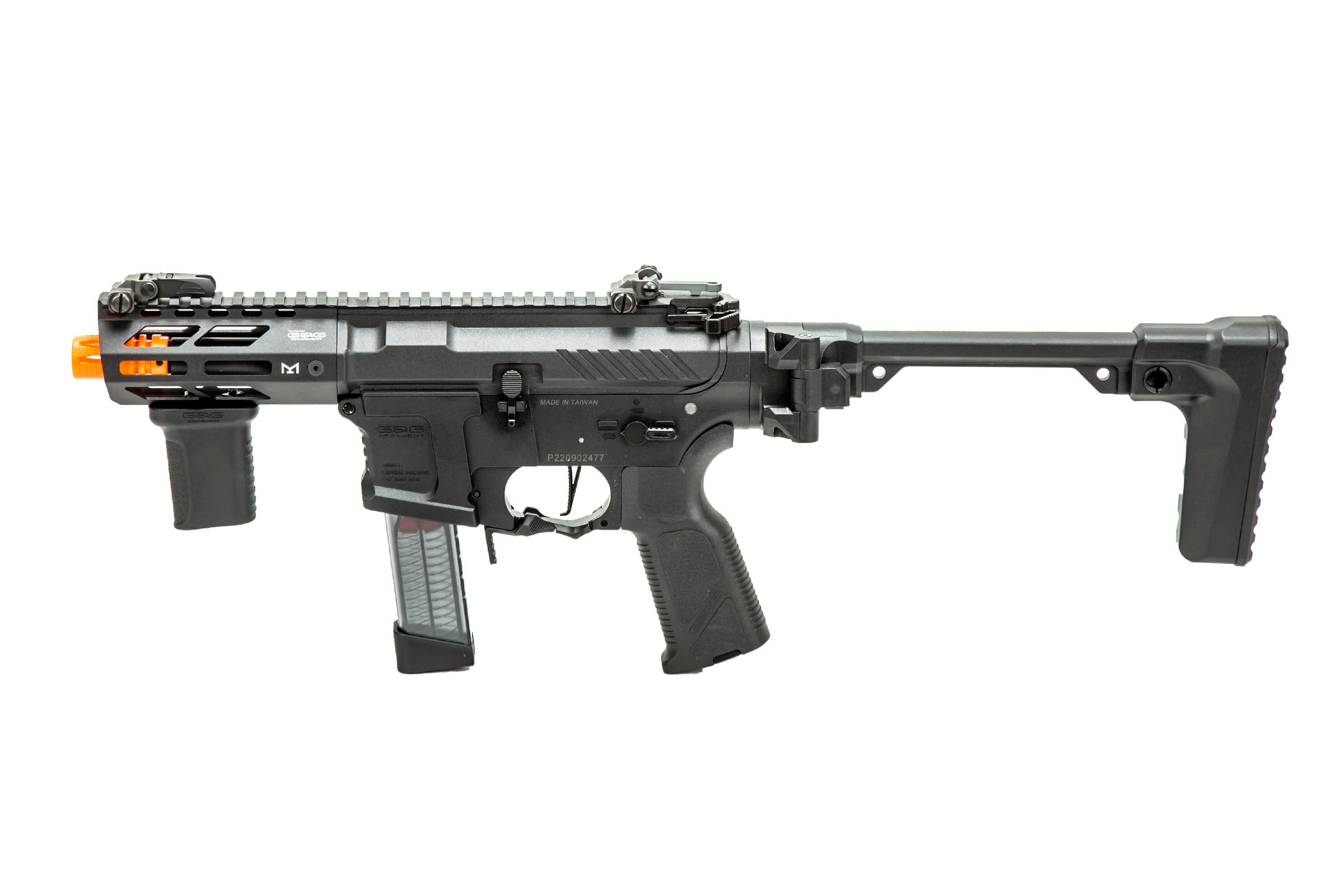
In Tight Corridors, Shorter Means Surviving
Anyone who has brought a full-length M4 into a CQB arena knows the feeling. You try to slice the pie around a corner, but your barrel pokes out first, announcing your presence like a flag. You attempt to push through a doorway, and your stock catches the frame while your muzzle scrapes the opposite wall. By the time you finally squeeze into the room, the defender already has you dead to rights. That moment teaches you a lesson no YouTube video can: in indoor combat, every centimeter you shave off your gun is another percentage point added to your survival rate.
The G&G ARP series was born to solve exactly this problem. Since their release, the ARP9 and ARP556 have become practically synonymous with CQB airsoft. Walk into any indoor arena anywhere in the world, and you will almost certainly spot at least one player running an ARP. Light enough to wield one-handed, short enough to maneuver in the tightest hallways, yet packing enough firepower and magazine capacity to outperform a sidearm — these compact carbines hit a sweet spot that few other platforms can match. This guide takes you through everything about the ARP family: why it exists, how to choose between the two models, and how to maximize its advantages on the field.
The Birth of ARP: When the PCC Wave Hit Airsoft
To understand why the ARP9 became a phenomenon, you need to know its design inspiration. In the real firearms world, Pistol Caliber Carbines (PCCs) exploded in popularity during the late 2010s. Platforms like the SIG MPX, CZ Scorpion EVO, and KRISS Vector — compact rifles chambered in 9mm — became favorites for home defense and law enforcement thanks to their low recoil, intuitive handling, and exceptional maneuverability indoors. IPSC and USPSA even created dedicated PCC competition divisions, proving that these firearms had moved firmly into the mainstream.
When G&G launched the ARP9 in 2017, they captured this trend perfectly. Rather than replicating an existing real-steel firearm like the MP5 or P90, G&G asked a different question: “What if the M4 platform shrank down into a 9mm PCC?” The result was something entirely unique in the airsoft world. A slim 9mm-style magwell, a compact receiver, and M4-derived controls — the ARP9 defined the airsoft PCC category from scratch and inspired other manufacturers to follow with similar concepts.
Hands-On with the ARP9: An Unsettlingly Light Combat Machine
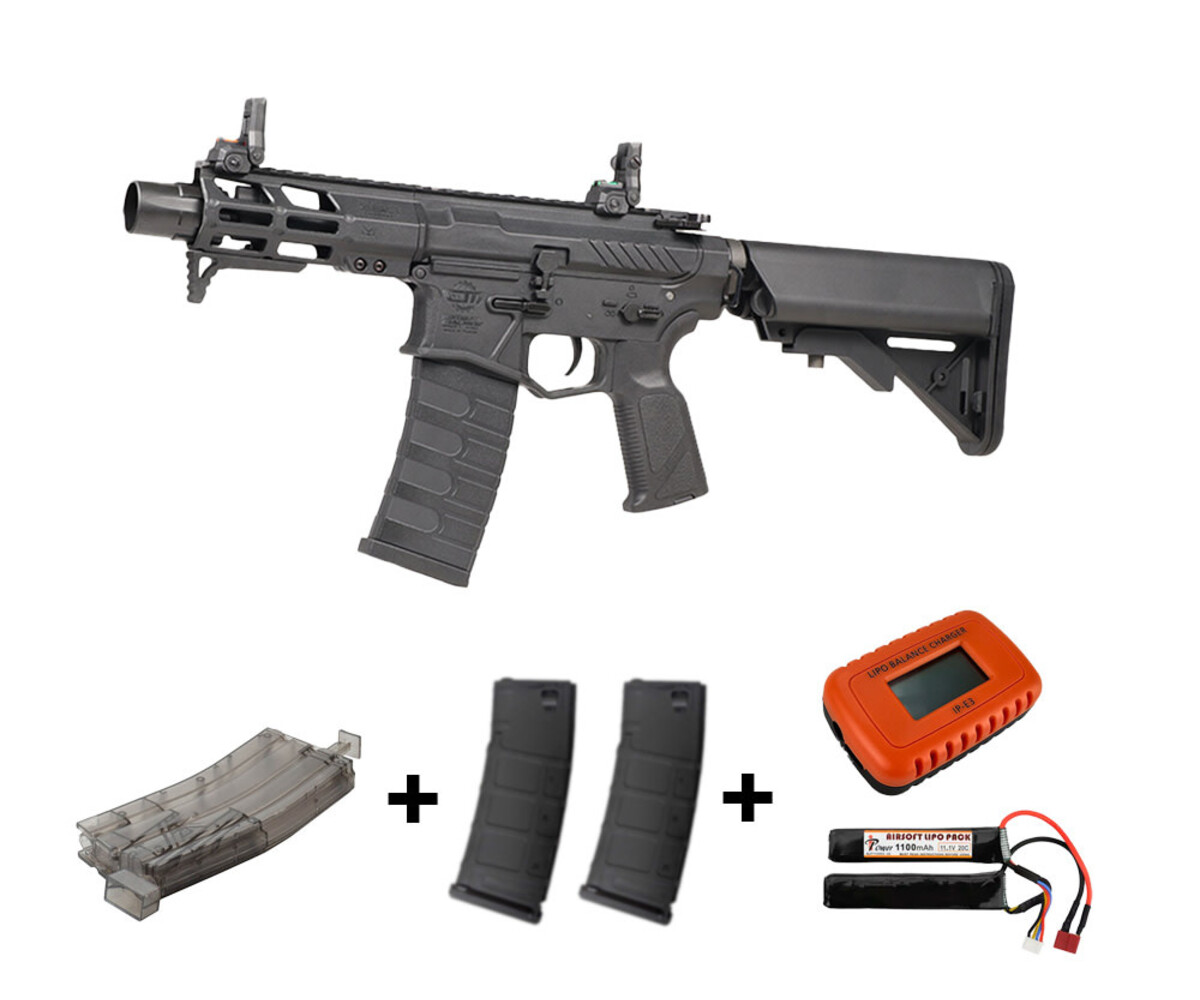
The first time you pick up an ARP9, your reaction will probably be “That’s it?” — not disappointment, but genuine surprise at how light it is. The entire gun with an empty magazine weighs roughly 2 kilograms (4.4 pounds), barely more than a large filled water bottle. If you are used to the heft of a full-metal M4, this weightlessness takes some getting used to. But after sprinting through three rooms in a row during a CQB match, you will be grateful for every gram saved.
The pistol grip angle follows the M4 system, so anyone with previous M4 experience will feel immediately at home. The magazine release, safety selector, and charging handle are all in their familiar positions. The trigger feel is quite good for an entry-level AEG — crisp feedback without the sloppy, loose sensation common in cheaper polymer triggers. Paired with the factory-installed ETU (Electronic Trigger Unit) and MOSFET, semi-auto response is excellent. Press as fast as you can, and the gun keeps up without noticeable delay between trigger pull and shot.
The stock is adjustable for length of pull. At its shortest setting, the overall length shrinks to roughly 500mm (19.7 inches); fully extended, it reaches about 590mm (23.2 inches). At minimum length, operating the ARP9 feels more like wielding an oversized pistol than a rifle — a massive advantage in extremely confined spaces. The tradeoff is that such a short weapon provides fewer stabilization points than a standard rifle. Beginners may need to practice proper stance and grip to keep it steady, especially during full-auto fire when the lightweight body makes muzzle climb more pronounced.
The ARP9 chronographs at approximately 350-380 FPS with 0.20g BBs. This puts it right at the boundary for most indoor field limits. Stricter venues that cap at 350 FPS may require a softer spring, which is straightforward to swap thanks to the standard V2 gearbox design. The inner barrel measures only about 150mm, significantly shorter than a standard M4’s 363mm, which is why effective range stays firmly in the close-quarters zone. But honestly, that is exactly why you bought it.
ARP9 vs ARP556: 9mm Mags or M4 Mags?
G&G released the ARP9 and ARP556 simultaneously. Internally, they are nearly identical. The core difference comes down to one thing: the magazine system.
The ARP9 uses proprietary 9mm-style magazines. These narrower mags give the gun a more authentic PCC aesthetic and maintain visual consistency with the slim receiver. The included hi-cap magazine holds 300 rounds, more than enough for typical use. The downside is limited magazine selection — mainly G&G factory mags and a few compatible options from PTS. Prices per magazine also tend to run slightly higher than M4 mags. The factory mid-cap holds 60-170 rounds depending on version, so carrying three or four will get you through most short CQB rounds.
The ARP556 accepts standard M4/STANAG magazines. This means virtually any M4 AEG magazine on the market works — from budget hi-caps to premium mid-caps, even drum magazines. If you already own an M4 AEG with a stack of spare magazines, the ARP556 lets you share that inventory, saving significant money. Borrowing magazines from teammates on the field is also effortless.
Externally, the ARP556 looks more like a shrunken M4 due to its standard magwell, while the ARP9’s narrow magwell gives it that distinctive PCC character. The ARP556 features a full aluminum alloy receiver, lending it a more premium feel but adding about a pound of weight (ARP556 at roughly 2.4kg vs ARP9 at roughly 2kg). Price-wise, the ARP556 typically costs $40-50 more, reflecting the metal construction.
How to choose? If you prioritize maximum weight savings and a unique PCC look, go ARP9. If magazine compatibility and metal build quality matter more, the ARP556 is your pick. On the field, actual combat performance between them is virtually identical — outcomes depend on your skills and reaction speed, not magazine shape.
Version Evolution: From Gen 1 to 3.0
The ARP series has gone through three major iterations since launch, each with targeted improvements.
The original ARP9 and ARP556 debuted in 2017 with a basic V2 gearbox, 5-inch handguard, and 128mm inner barrel. First-gen performance was already impressive, but there were some weak points: the short handguard offered limited front-hand grip space, the standard 60-round mid-cap magazine felt inadequate, and there was no MOSFET protection.
Version 2.0 addressed all of these issues. The handguard extended to a 7-inch full aluminum M-LOK design, improving both aesthetics and front grip ergonomics. The inner barrel grew from 128mm to 168mm, noticeably boosting effective range and accuracy. The standard magazine upgraded to a 170-round mid-cap, dramatically improving practicality. Most importantly, an ETU and MOSFET were added, protecting the circuit while improving trigger response and enabling safe 11.1V LiPo use.
Version 3.0 is a limited-production premium edition (only 3,000 units worldwide) introducing the MIG (MOSFET Integrated Gearbox) with a QD spring guide for tool-free spring changes. The highlight is the CHFS (Conductive Hinge Folding Stock) — a side-folding stock with integrated wiring that allows the gun to fire normally even when folded. This makes the already compact ARP even more maneuverable in the tightest spaces.
For most players, the widely available 2.0 version offers the best value. The 3.0’s limited availability makes it more of a collector’s piece, and the 2.0’s baseline performance is already mature and reliable.
The Competition: ARP9 vs MP5 vs Scorpion EVO
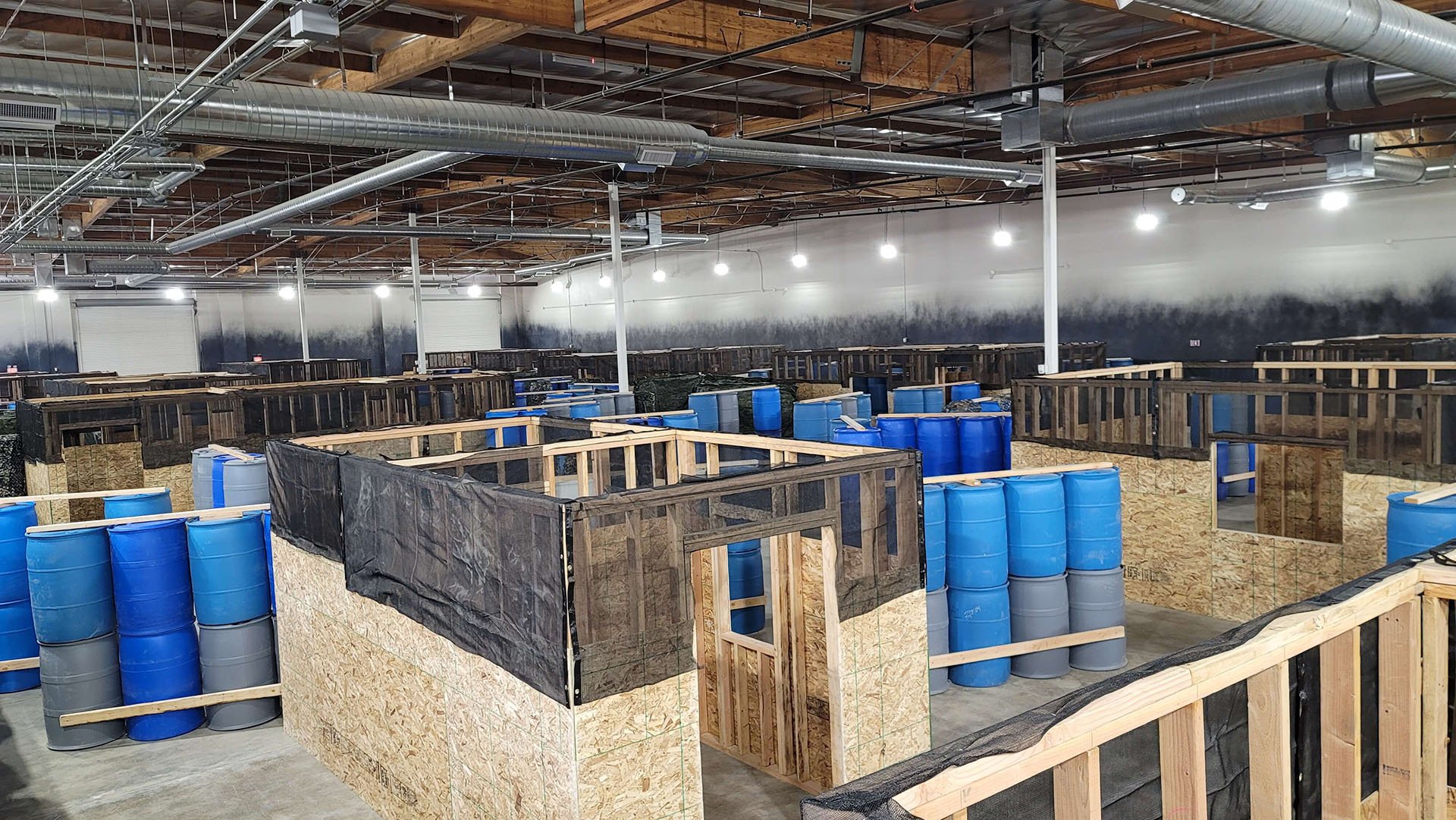
When choosing a CQB weapon, the ARP9 is not the only option. The MP5 and CZ Scorpion EVO each represent different design philosophies, and understanding their differences helps you find the best fit.
The MP5 is the CQB veteran. Decades of history in both real steel and airsoft have refined its handling to near perfection. VFC and Tokyo Marui both produce excellent MP5 replicas, with VFC’s GBB version offering stunningly realistic blowback. The MP5’s strengths lie in its ergonomics — the HK slap charging handle is arguably the most satisfying and practical manipulation in the SMG world. Multiple variants (A5 retractable stock, SD suppressed, K shorty) allow configuration for different scenarios. The downside is that most MP5 AEGs use proprietary magazines, and the upgrade ecosystem is less extensive than M4-based systems.
The ASG CZ Scorpion EVO 3 A1 is the technical benchmark for CQB AEGs. It ships with a programmable MOSFET, quick-change spring system, and outstanding out-of-box accuracy, backed by excellent quality control. The trade-off is a noticeably higher price point (typically $100-150 more than an ARP9) and a more limited aftermarket parts selection compared to M4-compatible platforms.
The ARP9’s core competitive advantage comes down to value. At around $200, you get a built-in MOSFET, the entire M4 upgrade ecosystem, an ultra-lightweight design, and G&G’s long-standing quality reputation. It may not top every category individually, but much like the CM16 in the beginner rifle segment, the ARP9 captures the sweet spot of CQB guns through balanced performance at a reasonable price. For a first dedicated CQB weapon, the ARP9 is nearly a risk-free choice.
Upgrades: Making Your ARP Deadlier Up Close
Both the ARP9 and ARP556 run V2 gearboxes, meaning the vast majority of M4 AEG upgrade parts are directly compatible. However, since the ARP is built for CQB, your upgrade priorities differ from a standard rifle — you are not chasing long-range precision but maximizing close-range responsiveness and reliability.
First priority is trigger response. If you are running a first-gen model without a MOSFET, adding one is essential. Even on the 2.0 with its factory ETU, upgrading to a higher-end programmable MOSFET (such as the GATE Aster or Perun V2 Hybrid) gives you finer firing mode control and faster response times. In CQB, the fraction of a second between trigger press and BB exit often determines who gets hit first. Pair this with an 11.1V LiPo battery, and the semi-auto response becomes almost telepathic.
Second is the inner barrel and hop-up. The stock inner barrel measures just 150-168mm. Swapping in a same-length Prometheus or PDI precision barrel noticeably improves shot-to-shot consistency. Replacing the hop-up bucking with a Maple Leaf MR Hop or Modify flat-hop, combined with a quality nub, gives you reliable hits out to 30 meters even from the short barrel. There is no need to chase 50-meter range — most indoor engagements happen within 15 meters.
Third depends on your needs. If you want higher rate of fire, a high-speed motor (ASG Infinity 22000 or SHS High Speed) does the job. If you prefer better trigger response for semi-auto shooting, a high-torque motor is the right move. The stock 18:1 gear ratio is already well-balanced, so leave it alone unless you have a specific performance goal.
For external accessories, a short foregrip significantly improves handling stability — the ARP’s handguard is compact with limited real estate for your support hand, and an M-LOK stub grip makes your hold much more comfortable. A lightweight open red dot or holographic sight is practically mandatory. The top Picatinny rail makes mounting effortless. As for suppressors, beyond looking cool, they let you hide a longer inner barrel inside for extended effective range — a common ARP trick. A 250-300mm inner barrel paired with a short suppressor gives you near-standard rifle accuracy without dramatically changing the overall silhouette.
ARP Tactics for Indoor Fields
The moment you step into a CQB arena with an ARP9 in hand, you have a mobility advantage that most other players on the field do not. The key is using that advantage, not wasting it.
The ARP’s greatest tactical value shows at corners and doorways. Because the gun is so short, you can perform the Slice the Pie technique at extremely close range without your barrel betraying your position. Practice cutting angles at just one arm’s length from the wall — with a standard rifle this distance is nearly impossible to work with, but the ARP handles it effortlessly. This means you can engage while exposing minimal body area, gaining a significant first-shot advantage in corner encounters.
When entering rooms, the ARP’s lightness lets you cross the Fatal Funnel faster. Many experienced CQB players tuck the gun into a high-ready position close to their body as they pass through the doorframe, then extend to aim once inside. The ARP’s compact size makes this transition silky smooth, without the extra adjustment space a long barrel demands.
In long hallway scenarios, the ARP’s short inner barrel is genuinely disadvantaged — if someone is posted up at the far end with a full-length M4 or AK, their effective range and accuracy likely exceed yours. The correct play is not to trade shots but to use your mobility to find an alternate route. CQB arenas typically offer multiple paths to the same objective. Leverage map knowledge and your speed advantage to bring the fight back to your preferred close-range engagement distance.
A hidden ARP advantage is noise. A lightweight polymer gun produces far less clatter during movement than a full-metal rifle. In quiet indoor environments, this translates into a real tactical edge — you can approach target positions more silently rather than announcing your location with every step.
Shot Timer CQB Training Drills for Short Carbines
The core skills for a CQB short carbine — fast presentation, instant sight acquisition, multi-target transitions — are all quantifiable and trackable with a Shot Timer.
The first drill is low-ready to fire. Hold the ARP at low-ready position (muzzle angled about 45 degrees down). On the Shot Timer beep, raise the gun, acquire the target, and fire. Because the ARP is so light, you should be noticeably faster than with a standard rifle. Beginners should aim for under 1.5 seconds; experienced players can challenge 1.0 seconds. Focus not just on speed but on whether your red dot or sights land on target immediately upon presentation — if you are fast but need extra time to adjust your aim, your gun mount habits need work.
The second drill is rapid target transitions. Set up two to three target points (wall markings work fine) and practice swinging the muzzle between them, firing at each. Use the Shot Timer to record split times between transitions. The ARP’s low mass is a clear advantage here — less inertia means snappier muzzle movement. Target split times of under 0.5 seconds between targets.
The third drill simulates corner engagements. Using a wall or doorframe as cover, step out to engage a target, fire, then return to cover. Time the entire sequence from initial movement to shot completion with the Shot Timer. This drill directly replicates the most common CQB tactical action and is where the ARP’s compactness shines brightest.
The fourth drill is magazine changes. The ARP9’s narrow 9mm magazine feels different from standard M4 mags when inserting into the magwell, requiring dedicated practice. Press the magazine release, strip the empty mag, insert a fresh one, confirm it seats — time the entire sequence. Target under 3 seconds.
All of these can be practiced at home using dry fire training with no BBs required. Ten minutes of daily practice will produce a noticeable improvement in your field performance within two weeks.
Frequently Asked Questions
Is the ARP9 good for beginners?
Absolutely. The ARP9 is lightweight, intuitive to operate (same controls as an M4), and performs excellently out of the box at CQB fields. Priced between $150-200, it will not break the bank for newcomers. The only caveat is that if your field includes outdoor areas, the ARP9’s short inner barrel puts you at a disadvantage at medium to long range — you may need a full-length rifle to supplement it.
Can I use the ARP9 at outdoor fields?
You can, but with limitations. The ARP9’s effective range sits around 25-35 meters, making mid-range outdoor engagements challenging. However, adding a suppressor with a longer inner barrel hidden inside can extend effective range to 40+ meters. If you primarily play outdoors but occasionally visit CQB arenas, the ARP556 with its universal M4 magazine compatibility might be the better choice.
Are ARP9 and ARP556 internal parts interchangeable?
Mostly yes. Both guns share the same V2 gearbox specification, so gears, pistons, motors, hop-up buckings, and inner barrels are fully interchangeable. The main differences are external: magazine systems, magwells, and receiver shells.
Can I use third-party magazines with the ARP9?
Yes. Beyond G&G factory magazines, PTS also makes compatible ARP9 magazines. However, the selection is significantly smaller than for M4 magazines, which is one reason some players choose the ARP556 instead.
Can I use 11.1V LiPo batteries in the ARP9?
If your ARP9 is a 2.0 or 3.0 version (with built-in MOSFET), yes — 11.1V LiPo is safe to use. First-gen models lack MOSFET protection, and prolonged 11.1V use will damage the trigger contacts. Either install a MOSFET first or stick with 7.4V LiPo batteries.
Conclusion: The CQB Player’s Ultimate Companion
In the world of airsoft, there is no single “best gun” — only the best gun for a given scenario. In the CQB scenario, the G&G ARP9 and ARP556 are about as close to a definitive answer as you will find.
They will not win every spec-sheet comparison — range falls short of full-length rifles, build quality does not match premium all-metal SMGs, and accuracy cannot compete with heavily upgraded builds. But when you are weaving through a warehouse maze, trading split-second shots at a corridor corner, or seizing the initiative in a doorway breach — those are the moments you will be thankful you brought this light, nimble little weapon instead of a heavy, unwieldy full-length rifle.
If you already own a full-length rifle as your primary, the ARP9 or ARP556 makes an excellent CQB-dedicated secondary. If indoor fields are your main battleground, it could be the only gun you need. Pair it with the AirsoftShotTimer App for structured speed training, and turn the ARP’s inherent mobility advantage into real battlefield wins — that is the ultimate goal every CQB player should chase.
Related Articles
- Airsoft CQB Close Quarters Battle Guide — Indoor tactics and room clearing techniques
- G&G CM16 Raider 2.0 Complete Guide — G&G’s best-selling beginner AEG
- Airsoft Gear Buying Guide — Complete gear selection guide
- Airsoft Loadout Guide — Equipment configurations for every playstyle
- Pistol Draw Techniques Guide — Essential draw speed training for CQB
- Shot Timer App Guide — Quantify your training progress with a timer
- G&G
- ARP9
- ARP556
- CQB
- SMG
- Airsoft AEG
- Airsoft CQB
- PDW
- Pistol Caliber Carbine
- Shot Timer
- Indoor Airsoft
- Best CQB Airsoft Gun