Best Shot Timer Guide 2026: Hardware Timer Reviews & Buyer Recommendations
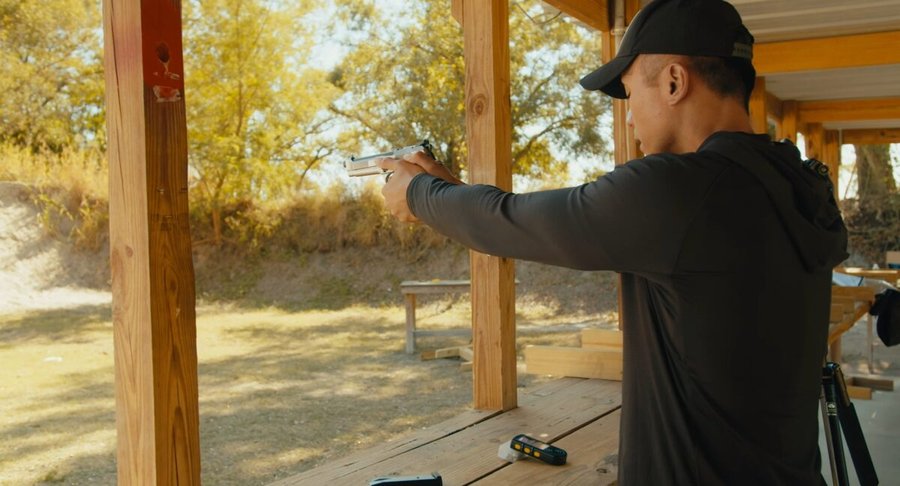
Why You Need a Dedicated Shot Timer
If you’ve ever practiced your draw, reloads, or follow-up shots at the range and thought “yeah, that felt faster,” you know how vague training without a timer can be. Shooting is a sport measured in hundredths of a second, and the gap between how fast you think you are and how fast you actually are is usually bigger than you’d expect.
I remember the first time I timed my draw-to-first-shot with a shot timer — 2.3 seconds. I’d been convinced I was somewhere around 1.5. That number was a wake-up call, but it also gave my training a clear direction. Watching that time drop from 2.3 to 2.0, then 1.8, then 1.5 over weeks of focused practice — that kind of measurable progress is something you simply cannot get by going off feel alone.
Whether you’re an IPSC competitor pushing stage times, an IDPA shooter working on defensive draws, a dry fire enthusiast training at home, or an airsoft player timing tactical movements, a quality shot timer is one of the best investments you can make in your shooting development. The question is: with options ranging from $60 to $330, which one should you buy?
Hardware Shot Timer vs Shot Timer App: When to Buy Hardware
Before diving into specific products, let’s address the question many people have: if shot timer apps on your phone work well enough, why spend money on dedicated hardware?
Shot timer apps are genuinely useful for getting started, especially for dry fire practice in a quiet environment. But once you step onto an actual range — particularly one with other shooters firing simultaneously — the limitations become obvious. Phone microphones are designed to pick up human speech, not gunshots. In a noisy environment, they’ll often record other shooters’ shots as yours, or miss your shots entirely.
The other practical issue is buzzer volume. With shooting ear protection on, a phone speaker is simply inaudible. Hardware shot timers have purpose-built buzzers designed to cut through ear protection — that crisp, loud “BEEP” is clearly audible from dozens of meters away on the range. This is irreplaceable for competition and group training.
The simple version: apps work great for at-home dry fire. For live fire training or competition, you need hardware. If you only practice dry fire once a week, an app might be all you need. But if you train seriously, hit the range regularly, or plan to compete in IPSC/IDPA, a hardware shot timer is an inevitable purchase.
Related reading: Want to learn about shot timer app features and techniques? Check out our Shot Timer App Complete Guide.
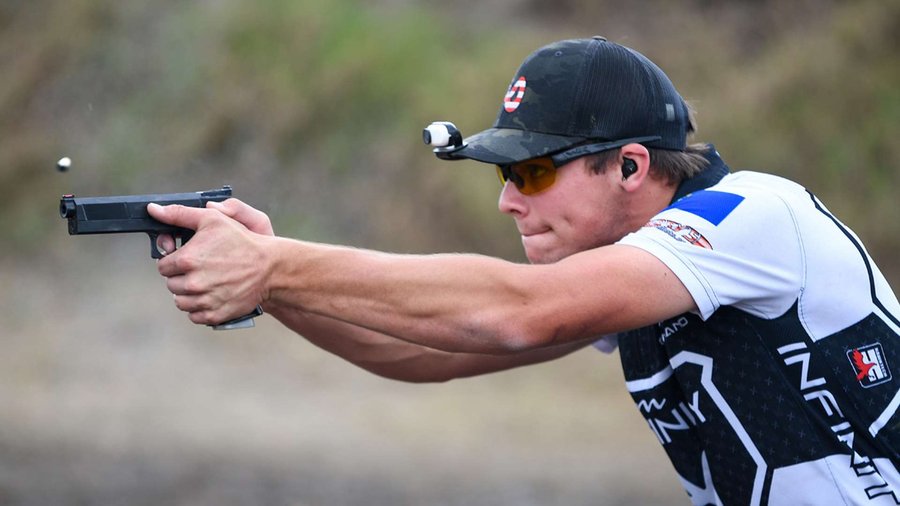
Five Shot Timers: In-Depth Reviews
The shot timers worth serious consideration boil down to a handful of models, each with distinct positioning and trade-offs. Rather than dumping spec sheets, let me walk you through each one from a user’s perspective.
CED 7000: The Most Popular All-Rounder
The CED 7000 is probably the best-selling shot timer in the world. Walk into any IPSC or IDPA match and you’ll see them everywhere. The reason is straightforward — reasonable price, comprehensive features, and a remarkably compact form factor.
The first thing you notice picking up a CED 7000 is how small it is. At just 82 grams (2.9 oz), it’s lighter than most smartphones and practically disappears in a pocket. The interface is intuitive — a few buttons handle all the settings without needing to consult the manual. The display is crisp and readable even in direct sunlight.
The CED 7000 has several standout features. It’s the only rechargeable timer in its price range — USB charging means no scrambling for batteries mid-competition. It stores up to 999 shot records, more than enough for a full day of matches or training. It can also connect to the CED BigBoard display system, projecting timing results on a large screen for spectators during matches.
However, the CED 7000’s weakest point is its performance in noisy environments. During indoor range testing with multiple active shooters, its echo filtering proved inconsistent — roughly 82% correct shot isolation, meaning about 18% of the time it misjudges or misses shots. If you mainly train at a quiet outdoor range, this won’t matter. But if you frequently shoot at busy indoor ranges, it’s something to consider.
At roughly $130, the CED 7000 offers the best value among mainstream options. If this is your first shot timer, it’s usually the safest entry point.
PACT Club Timer III: The Reliable Workhorse
PACT is one of the oldest names in the shot timer game, and the Club Timer III is their flagship seller. If the CED 7000 is a nimble pocket knife, the PACT Club Timer III is a sturdy, dependable utility knife — no fancy features, but everything it does, it does solidly.
The Club Timer III’s most praised qualities are its buzzer volume and screen clarity. The buzzer is loud enough to hear clearly from across an outdoor range, even through double ear protection. The large-font display is easy to read in any lighting condition without squinting.
The operation logic is equally straightforward. Review mode lets you quickly scroll through each shot’s time and split data, and setting a Par Time takes just a few seconds. No confusing menu hierarchies — all common functions are one or two button presses away.
The Club Timer III’s downsides are its slightly larger size compared to the CED 7000 and its reliance on a 9V battery rather than rechargeable power. During busy competition seasons, you’ll find yourself swapping batteries regularly. It also lacks Bluetooth or app connectivity — all data stays on the timer itself, with no option to export to your phone for deeper analysis.
Priced at roughly $130, it sits right alongside the CED 7000. If you particularly value buzzer volume and rock-solid basic functionality, the Club Timer III is an excellent choice.
Competition Electronics Pro Timer BT: Feature-Rich Classic
Competition Electronics (CE) Pro Timer series enjoys strong name recognition in North American shooting circles. The latest BT version adds Bluetooth connectivity, finally bringing this classic timer into the modern era.
The Pro Timer BT offers the richest menu system among traditional timers. Beyond the standard Review, Par Time, and Start Delay options, it includes Comstock mode (commonly used in USPSA) and various customization settings. If you shoot USPSA, the Pro Timer BT’s feature set feels tailor-made for your needs.
The biggest BT version upgrade is Bluetooth connectivity. Through the PTLink app, you can view timing data on your phone in real-time, add notes and target photos to each shot string, and export complete training logs. For shooters who keep detailed training journals, this is incredibly practical — no more bringing pen and paper to the range to copy down numbers.
In terms of feel, the Pro Timer BT is slightly larger and heavier than the previous two options. It feels more like a piece of equipment than a pocket gadget. For Range Officers who clip the timer to their belt and run stages all day, the extra weight accumulates noticeably.
Priced at roughly $160-189, it’s a step up from the first two. If you need Bluetooth connectivity and rich feature options — especially for USPSA/IPSC competitors and match staff — the Pro Timer BT justifies the premium.
SG Timer 2: The Tech Flagship
Shooters Global’s SG Timer 2 is currently the most advanced shot timer on the market, with a price to match. If the previous timers are “timers,” the SG Timer 2 is more like a “shooting training computer.”
The SG Timer 2’s most impressive feature is its acoustic detection technology. It uses a custom-engineered Acoustic Amplifier, making it the loudest shot timer ever made according to the manufacturer. More importantly, its smart sensing system can accurately isolate only your shots even at a busy indoor range — dramatically reducing false detections. It can even detect airsoft AEG guns, CO2 pistols, and suppressed firearms, a detection range that traditional timers simply can’t match.
The display is another highlight. The 172PPI high-resolution screen uses a bottom layer that reflects sunlight to create internal illumination, providing exceptional contrast that actually improves in bright outdoor conditions. A single charge lasts up to 30 days of use, essentially eliminating battery anxiety.
Paired with Shooters Global’s dedicated app, the SG Timer 2 becomes a complete training ecosystem. Bluetooth connectivity enables real-time data viewing on your phone, video sync capability, and long-term progress tracking. The video overlay feature is particularly useful — you can see timing markers directly on your training footage, making it clear exactly which shot took too long during review.
At roughly $330, it’s more than double the price of a CED 7000. That’s steep for casual shooters, but for serious competitors, coaches, and frequent match officials, the SG Timer 2’s detection accuracy and app integration deliver efficiency gains that justify the investment.
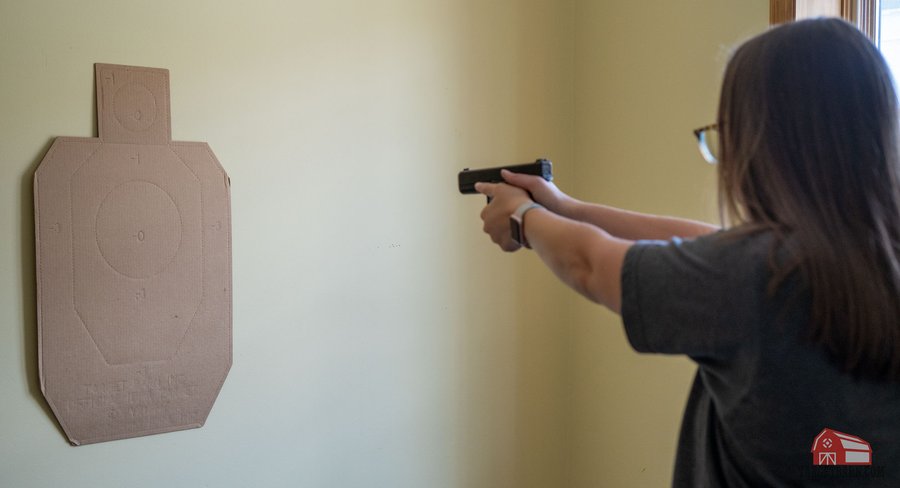
AMG Lab Sidekick: The Dry Fire Specialist
If your training is primarily at-home dry fire and you don’t need live-fire timing capability, the AMG Lab Sidekick is a smart, focused choice. It’s a pocket-sized timer designed specifically for dry fire practice, priced at around $60.
The Sidekick is small enough to fit in your palm — barely larger than a lighter. Despite its size, the feature set is comprehensive: 9 par times, 5-string memory review, 3 presets, instant/delayed/random start signals, metronome mode, stopwatch mode, and a coin battery that lasts a remarkably long time. For dry fire training needs, it checks every box.
Its standout capability is its sensitivity to dry fire clicks. Standard hardware shot timers are designed to detect live gunfire and react inconsistently to the subtle “click” of a dry trigger pull. The Sidekick’s sensor is specifically optimized for that faint sound, reliably capturing dry fire clicks from most pistols and rifles.
The Sidekick’s limitations are equally clear — its buzzer is too quiet to hear through shooting ear protection, making it essentially unusable on a live-fire range. It’s purely a dry fire tool. But if that matches your needs, $60 for a purpose-built, full-featured dry fire timer is exceptional value.
Related reading: Want to learn complete dry fire methodology? Check out our Dry Fire Training Guide.
Choosing by Scenario: Which Shot Timer Fits You Best?
Now that you know each timer’s characteristics, let me help you choose based on your actual use case. Different training styles and competition types have very different demands.
For IPSC or IDPA competitors, the CED 7000 or Pro Timer BT are the mainstream choices. The CED 7000 likely has the highest market share at IPSC events thanks to its compact size, rechargeable battery, and BigBoard display compatibility. The Pro Timer BT offers deeper functionality, particularly Comstock mode for USPSA matches. If budget allows, the SG Timer 2 provides the most reliable detection accuracy in noisy competition environments.
For primarily at-home dry fire trainers, the Sidekick is the most direct solution. The $60 price tag buys more features than most people need. Of course, if you’d rather not spend anything extra, a shot timer app works perfectly well for dry fire timing in a quiet room.
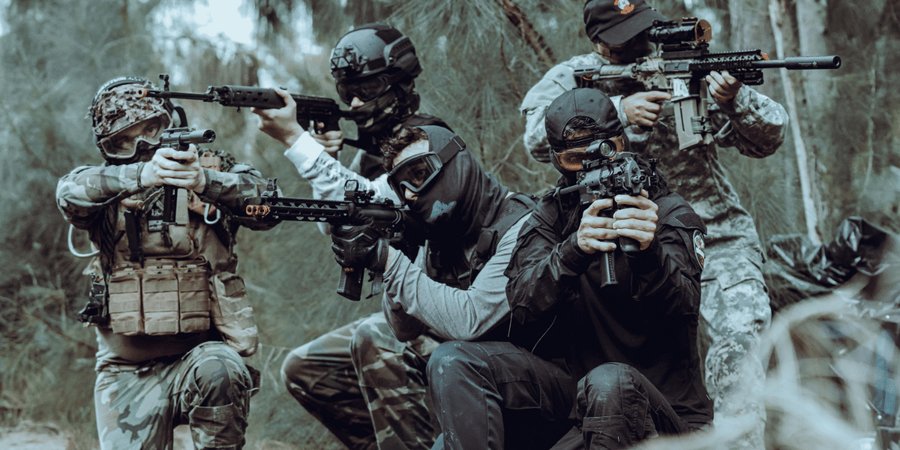
For airsoft players wanting to time magazine changes, draws, or tactical movements, the SG Timer 2’s wide detection range is a clear advantage — it can detect AEG and CO2 pistol sounds. Other traditional timers respond inconsistently to airsoft gunfire. That said, for most airsoft training, a phone app is honestly sufficient.
For shooting instructors or frequent Range Officers who need a timer that works reliably every day across all environments, the SG Timer 2 is the most worthwhile investment. Its detection accuracy, app integration, and build durability hold up best under high-frequency, long-term use. The Pro Timer BT is a solid runner-up — Bluetooth connectivity and logging features add real value to teaching workflows.
Picking Your First Shot Timer
If you’ve read this far and still can’t decide, here’s a simple decision framework.
Your budget and primary use case are the two factors that matter most. If your budget is around $130, both the CED 7000 and PACT Club Timer III are safe, reliable choices. The differences between them are honestly small — the CED 7000 is lighter and rechargeable; the Club Timer III has a louder buzzer and simpler operation. Pick whichever advantage matters more to you.
If you can stretch to $160-190, the Pro Timer BT’s Bluetooth features and rich menu system bring more structure to your training records. If you’re transitioning from an app to hardware and are used to viewing data on your phone, the Pro Timer BT offers the smoothest transition.
If budget isn’t a concern and you’re serious about your training, the SG Timer 2 is the current top of the line. But honestly, for most shooters just starting timed training, the $130 entry-level options deliver 90% of the core functionality. Buy one and start training — then consider upgrading once you have a clearer understanding of your needs. That’s far better than deliberating for weeks and not buying anything.
Ultimately, regardless of which timer you choose, what matters most is using it. A flagship timer collecting dust in a drawer is worth less than an entry-level timer that comes to every practice session. Build the habit of timing every training session, and the speed of your improvement will surprise you.
Wrapping Up
A shot timer is one of the highest-ROI investments in shooting training. You don’t need to spend a fortune — a $130 timer can double your training efficiency. It transforms “I think I’m getting faster” into “my splits dropped from 0.35 to 0.28,” giving every practice session a clear target and trackable results.
Choose the shot timer that fits your needs, and start training with intention. Whether you’re working on IPSC rapid fire, IDPA tactical reloads, or airsoft gear manipulation, a shot timer will become your most valuable training partner.
Related Articles
- Shot Timer Complete Guide - Deep dive into shot timer training methods and techniques
- Shot Timer App Complete Guide - Turn your phone into a professional training system
- Dry Fire Training Guide - Professional shooting practice at home
- Shooting Drills Guide - Timer-based training drills and exercises
- Practical Shooting Guide - IPSC competitive shooting from beginner to advanced
- IDPA Divisions Guide - IDPA competition rules and division breakdowns
- Airsoft Loadout Guide - Optimize your gear setup with shot timer benchmarking
- Shot Timer
- Best Shot Timer
- Shooting Timer
- CED 7000
- PACT Club Timer
- Competition Electronics
- SG Timer
- Training Guide
- Shooting Training
- IPSC
- IDPA
- Airsoft
- Dry Fire Training
- Shot Timer for Shooting