2011 vs 1911: What's the Difference? Double-Stack vs Single-Stack (2026)
One Number Apart — How Different Can a 2011 and a 1911 Really Be?
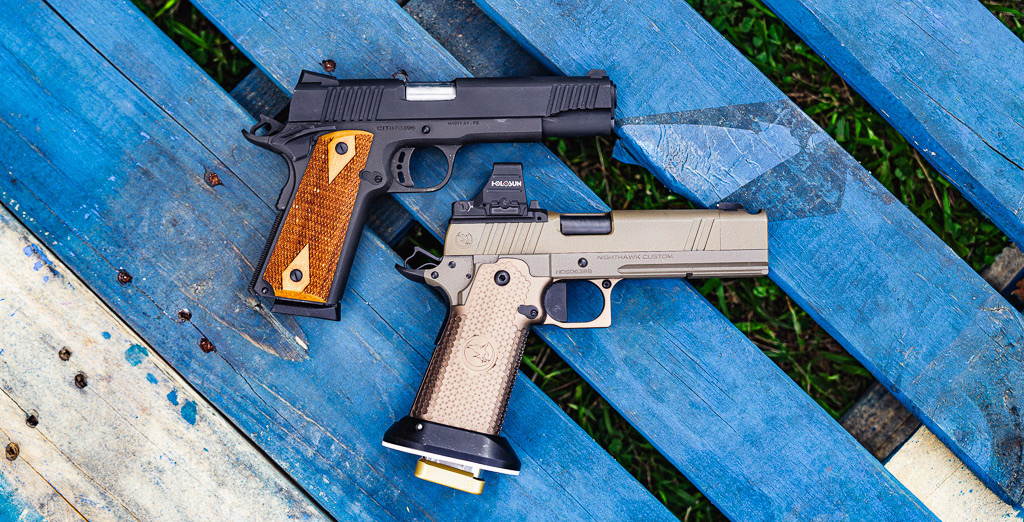
The first time I saw a friend’s 2011 at the range, I stared at it for a good while. The side profile, the slide, the hammer, that familiar grip safety — it all looked like the century-old 1911 classic. Then I picked it up, and it was a completely different animal: the grip was noticeably chunkier, the magazine seated with a solid click and held 20 rounds, while my old 1911’s single-stack mag tops out at 8.
If you’ve searched “2011 vs 1911,” you’re probably stuck on the same question: the names are nearly identical, so are they even the same kind of gun? The short answer — the 2011 is the “double-stack, modular-grip” evolution of the 1911. Under the skin it still runs the 1911’s single-action fire-control system and operating logic, but it splits that one-piece grip frame into a two-piece modular design, which makes room for a high-capacity double-stack magazine. This guide breaks down the differences, the competition angle, the price, and even the airsoft equivalents — all from the perspective of someone who has actually shot both.
The Core Difference in 60 Seconds
If you’ve only got a minute, these three points are all you need. First, the magazine: the 1911 is single-stack, roughly 7+1 in standard .45 ACP; the 2011 is double-stack, usually 17 to 26 rounds in 9mm — more than double the capacity. Second, the grip frame: the 1911 is one solid metal frame where you can only swap the grip panels; the 2011 splits the frame into a metal upper (which carries the serial number) plus a replaceable polymer grip module, so feel, size, even color are all changeable. Third, the mission: the 1911 is the century-old classic, the standard-bearer for heritage and single-action feel; the 2011 is a modernized high-capacity platform born for practical shooting competition.
Get those three and the rest of the details start to make sense.
A Hundred-Year Bloodline: From Browning to Staccato
To understand the 2011, you have to start with the 1911. The 1911 came from John Moses Browning, the “father of modern firearms.” Adopted by the U.S. military in 1911, it served all the way to 1985 before the M9 replaced it — the longest-serving standard-issue handgun in American military history. It established short-recoil operation, the slide, single-action fire control, and the grip-safety-plus-thumb-safety layout that the industry still uses today. For a lot of longtime shooters, the 1911’s “built for my hand” feel and crisp single-action trigger are things no modern gun can replace.
The 2011 is much younger. In the early 1990s, STI International (later renamed Staccato) and SVI Infinity — founded by Sandy Strayer and Virgil Tripp — set out to solve the 1911’s biggest competition pain point: it just didn’t hold enough rounds. Their fix was to cut the grip frame in two: keep a metal upper structure to handle firing stress, and make the lower a wider polymer module sized for a double-stack magazine. The name “2011” is itself a Staccato trademark — so strictly speaking, many similar double-stack 1911s can’t legally print “2011” on the gun, but in everyday talk people now use it as the catch-all term for the whole “double-stack 1911” category.
The Real Dividing Line: Modular Grip and Double-Stack Mag
If the 1911 is a gun carved from “one block of steel,” the 2011 is an “assembled system.” This is the most fundamental difference between them, and the heart of the “2011 vs 1911 frame” question that keeps coming up on Google.
The 1911’s frame is one piece, so grip circumference and angle are locked in — at most you swap wood or rubber panels to change the surface feel, but the girth is fixed. The 2011 is different: that lower polymer grip module is a replaceable part, available in various sizes, textures, and even colors. Shooters with smaller hands fit a slimmer module; bigger hands go thicker. In practical shooting that’s a real advantage, because how the grip fits directly affects your stability during fast follow-up shots. The first time you fit a module that actually matches your hand and run a stage, that “the gun grew out of my hand” feeling is something a fixed-frame 1911 simply can’t give you.
The capacity gap is even more direct. The traditional 1911 runs single-stack .45 ACP — big punch, low count; the mainstream 2011 runs double-stack 9mm with softer recoil and far more rounds. In a match full of reloads, skipping one mag change often means shaving off a few tenths of a second — and once you put a shot timer on it, those tenths show up right there on the scoresheet.
Specs at a Glance
The table below lays out the “typical” differences between the two platforms for quick reference. Note that real numbers vary by brand and model; these are the most common representative configurations.
| Item | 1911 (typical single-stack) | 2011 (typical double-stack) |
|---|---|---|
| Magazine Capacity | ~7+1 in .45 ACP | ~17–26 in 9mm |
| Common Caliber | .45 ACP (also 9mm) | 9mm (also .45, 10mm) |
| Grip Frame | One-piece metal, panels only | Modular two-piece, swappable module |
| Weight & Feel | Slimmer, easy to conceal, classic | Wider, larger girth, stable balance |
| Main Use | EDC, collecting, Single Stack division | High-capacity competition, Open/Limited |
| Price Range | Budget to full custom | Generally high, but budget options exist |
Why Does the 2011 Dominate Competition?
This is the part we most want to talk about, because it’s where the 2011 truly shines — and an angle most general gun blogs skim over. In practical shooting sports like IPSC and USPSA, capacity is an advantage. The high-level Open and Limited divisions, where firepower and speed rule, are almost entirely owned by the 2011 platform. The reason is simple: a double-stack mag means fewer reloads in a stage, and a heavier all-steel build in soft-shooting 9mm keeps muzzle rise low and recovery fast during rapid double taps.
The 1911 hasn’t vanished from competition — it just retreated to its own stage. USPSA’s Single Stack division and IPSC’s Classic division are built precisely for single-stack 1911s, where everyone runs the same single-stack platform and skill, not capacity, decides the winner. So rather than the 2011 replacing the 1911, the two have settled into different competitive niches.
Whichever you end up with, what actually decides your score is practice. Draw speed, time to first hit, reload rhythm — you can only see those improve by measuring them with a shot timer, over and over. Our Airsoft Shot Timer App is a timing tool built for exactly this kind of dry-fire and live-fire training, so whether you’re running a 2011, a 1911, or an airsoft pistol, you can drill to the same rhythm.
Price and Brands: Who Makes These Guns?
Price is often the final straw in any decision. The 1911 spans an enormous range, from budget-brand models to Colt, Springfield Armory, Kimber, and fully hand-built customs in the multi-thousand-dollar tier — there’s something at every budget. The 2011, with its more complex construction and largely premium positioning, was for years a “rich man’s toy” — Staccato regularly starts well above $2,000, and custom builds from STI, Atlas, and Infinity climb far higher.
The good news is that double-stack 1911s have started getting affordable. Brands like Springfield’s Prodigy, Rock Island, and Tisas have pushed entry prices down to half or less of what they used to be, putting the 2011 platform within reach of more new competitors. There’s even an emerging variant called the 2311 — a polymer striker-fired take on the double-stack 1911 — that’s the family’s newest branch, aiming at a friendlier price and worth keeping an eye on.
Airsoft Players, Look Here: The Hi-CAPA Is the “Airsoft 2011”
If you came to handguns through skirmish or IPSC Action Air, this section is the most useful for you. A lot of people don’t realize that Tokyo Marui’s Hi-CAPA series is essentially the airsoft version of a 2011 — same double-stack magazine, extended grip, competition-oriented design, and the overwhelmingly dominant choice on the Action Air field. In other words, when you’re shooting a Hi-CAPA, you’re holding the gas-powered twin of a 2011. To dig deeper into this airsoft star, check out our Tokyo Marui Hi-CAPA Complete Guide.
For players who want that single-stack, slim, classic 1911 feel, there are plenty of GBB 1911 airsoft options out there too. Using airsoft to experience both grip feels and operating differences before deciding whether to invest in a live-fire version is actually a smart, money-saving move — after all, an airsoft pistol costs a fraction of a real 2011.
So Which One Should You Buy?
In the end it comes back to what you want to do with it. If you’re chasing competition scores, high capacity, soft recoil, and modern features and the budget allows, the 2011 (or a budget double-stack 1911) is the smarter pick — especially if you shoot IPSC/USPSA Open or Limited. If you value classic feel, a slim concealable profile, and the ritual of a single-action trigger, or you want to shoot Single Stack division and simply love the 1911’s cultural roots, that century-old design remains irreplaceable.
On a tight budget but want to handle both? Start with airsoft. Use a Hi-CAPA to feel the 2011’s double-stack grip, a GBB 1911 for the single-stack classic, then decide where to spend your live-fire money. Whichever road you take, pair it with a timer — the data never lies.
Frequently Asked Questions
What’s the difference between the 1911 and 2011 grip frame?
The frame is the key difference. The 1911 has a one-piece metal grip frame, and you can only swap the grip panels to fine-tune surface feel — the girth is fixed. The 2011 splits the frame into two parts: a metal upper that handles firing stress (the serial number is usually here) and a replaceable polymer grip module that houses the double-stack magazine and can be swapped for different sizes to fit your hand. That modular design is the 2011’s signature.
Is the 2011 basically a new 1911?
In a sense, yes. The 2011 keeps the 1911’s single-action fire-control system, slide operation, and operating logic — it’s a double-stack, high-capacity evolution built on the 1911’s foundation. That said, “2011” is a Staccato trademark, so not every double-stack 1911 can legally be called a 2011; these days the term works more like a casual umbrella name for the whole category.
Who makes the 2011 pistol?
The best-known maker is Staccato (formerly STI International) — practically synonymous with the 2011. Other high-end names include SVI Infinity and Atlas Gunworks, mostly in the premium custom space. In recent years Springfield Armory (Prodigy), Rock Island, and Tisas have released budget double-stack 1911s that dramatically lower the cost of entry into the platform.
How many rounds does a 2011 typically hold?
It depends on the magazine and caliber, but a standard 9mm 2011 mag holds roughly 17 to 20 rounds, with extended mags reaching 26 or more. By comparison, a traditional single-stack .45 ACP 1911 usually carries just 7+1 or 8+1 — a stark capacity gap, and one of the 2011’s biggest competition advantages.
Which is more reliable, the 1911 or the 2011?
Both can be extremely reliable when properly tuned. Conventional wisdom holds that the single-stack 1911 has a simpler feed path and a mature design; meanwhile the modern 2011 has been proven over years of competition, and reputable brands’ double-stack feeding is now very stable. What actually drives reliability is usually magazine quality, maintenance habits, and ammo matching — not single-stack versus double-stack itself. Pick a good brand and maintain it, and either platform will serve you for a long time.
Want to turn practice into data and see your draw and reload improve, rep by rep? Download the Airsoft Shot Timer App and track your training with real reaction times. Further reading: Tokyo Marui Hi-CAPA Complete Guide, M1911 Complete Guide: A Century of Legend, IPSC Practical Shooting Training Guide.
Put a Shot Timer in Your Pocket
Airsoft Shot Timer is a free shot timer app tuned for airsoft and Action Air — it picks up BB gun shots, tracks your split times, and saves you the cost of a $150+ hardware timer for IPSC/IDPA practice.