Airsoft Battery Guide 2026: LiPo vs NiMH, 7.4V vs 11.1V, and What mAh & C Rating Actually Do to Your AEG
The 60-second version (BLUF)
- Three numbers matter: volts, mAh and C. Voltage sets how hard the motor is pushed (trigger response and rate of fire), mAh sets how long the battery lasts, and the C rating sets how fast it can hand that energy over.
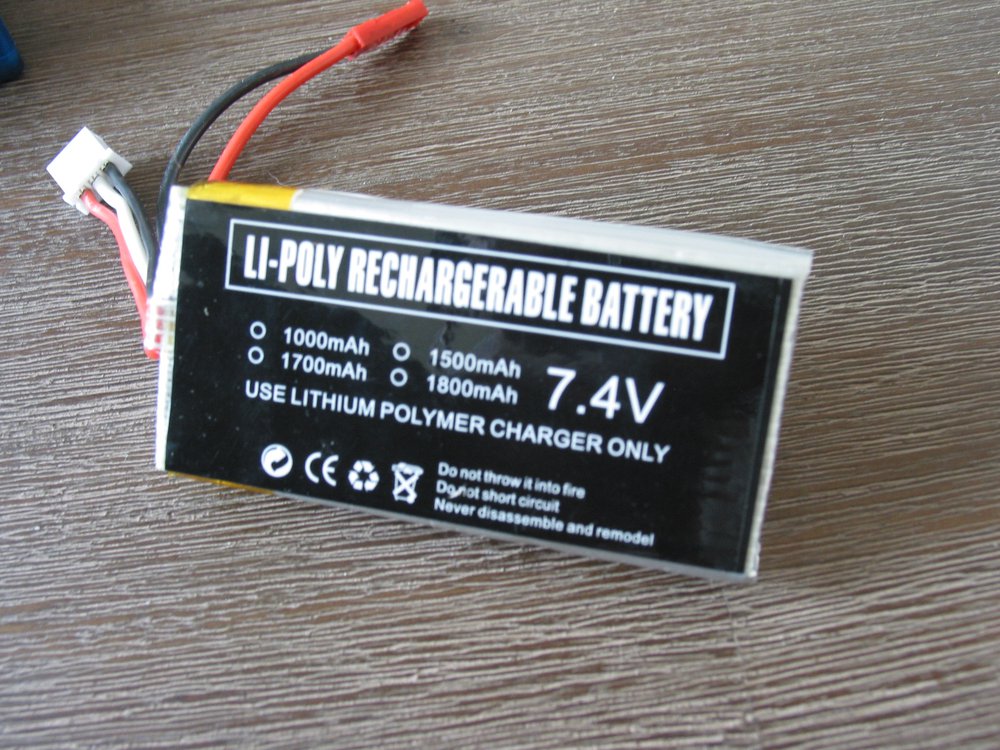
- A 7.4V LiPo is the safe modern default for almost any stock AEG. It performs like a 9.6V NiMH, fits in half the space, and in most guns needs no extra parts.
- 11.1V is a tuning decision, not a free upgrade. It makes the same gun snappier and faster, and it also makes it wear faster. If your gun has no MOSFET or electronic trigger unit, don’t.
- The maths is simple: max continuous amps = C rating × capacity in amp-hours, so a 1,000 mAh 20C pack can deliver 20 A. Rounds per charge land somewhere between 0.7 and 1 round per mAh on a normal AEG, so a 1,200 mAh pack is roughly 800–1,200 shots.
- Per-cell voltages are the whole LiPo safety story: 4.2 V full, 3.7 V nominal, 3.8–3.85 V for storage, and 3.3 V is the floor. A “7.4V” pack is 8.4 V straight off the charger.
- Deans (T-plug) is the standard, Tamiya is the bottleneck. If a new gun still ships with a Tamiya plug, that tells you something about the rest of it.
- Whether 11.1V actually made you faster is a number, not a feeling. A shot timer app will tell you your semi-auto split times on both batteries in about two minutes.
There’s a moment nearly every airsoft player has had. You’ve just unboxed your first AEG, you’ve charged your phone twice with excitement, and then you realise the box has no battery in it. Ninety percent of electric guns on the market ship that way, and the shop’s answer is a wall of little packs with numbers on them: 7.4V, 9.6V, 11.1V, 1,200 mAh, 25C, Deans, Tamiya, stick, nunchuck. You buy one because it fits. Six months later you’re on a field watching a mate with the same rifle out-shoot you on trigger response, and it turns out the entire difference was the thing in the buffer tube.
The other version of that story is less fun. It’s the player who read that 11.1V makes the gun faster, bought one, plugged it into a stock rifle with no MOSFET, and spent a season replacing burnt trigger contacts and wondering why the gun kept “double-feeding”. Nobody told them that a battery is a tuning part.
This guide is the thing I wish somebody had handed me at that shop counter. It explains what the numbers mean, when each chemistry and voltage makes sense, the connector and shape you actually need, the arithmetic for how long a pack lasts and how long it takes to charge, and the handful of per-cell voltages that separate a LiPo that lasts three seasons from one that puffs up in three months. And because this is a training site, it ends with the bit nobody else covers: how to measure what a battery change did to your gun, instead of arguing about it on a forum.
What the Numbers on an Airsoft Battery Actually Mean
Every airsoft battery is described by three numbers, and the water-hose analogy that gets passed around at fields is honestly the best one. Voltage is the pressure. Capacity is the size of the tank. The C rating is the diameter of the hose.
Voltage is what the motor feels. A higher-voltage pack spins the motor faster, which means the gearbox cycles faster, which you experience as a snappier trigger and a higher rate of fire. Airsoft lives between 7.4 V and 11.1 V for lithium packs, and 8.4 V to 10.8 V for the older nickel chemistry. Those numbers are nominal voltages, and the very first thing to understand is that a fully charged pack reads higher than its label: a 7.4V LiPo comes off the charger at 8.4 V, and an 11.1V LiPo at 12.6 V. That’s not a fault. It’s how lithium cells work, and it’s why a fresh 7.4V LiPo feels about as strong as a 9.6V NiMH.
Capacity, measured in milliamp-hours, is how much energy the pack holds and therefore how many rounds you get before it goes flat. It has a second, smaller effect: a bigger pack can usually deliver more current comfortably, so it also nudges trigger response a little. The practical range for a rifle is roughly 900 to 2,000 mAh, and we’ll put real numbers on that below.
The C rating is the one most players ignore and the one techs care about most. It’s the maximum continuous discharge rate, expressed as a multiple of the pack’s capacity. A 20C rating means the pack can safely deliver twenty times its capacity in amps: a 1,000 mAh (1 Ah) pack rated 20C can give 20 A continuously; a 3,000 mAh pack rated only 10C can give 30 A. The C rating is what you feel as trigger response — how fast the battery can dump current into the motor the instant you press the trigger — and a high-voltage pack with a poor C rating will feel sluggish even though the label looks impressive. Common airsoft packs sit between 20C and 30C, and that range is right for almost everybody.
One warning that Airsoft GI’s techs put front and centre, and it’s worth repeating: the numbers on an RC-car or drone LiPo look identical, and those packs are often cheaper and higher-rated. Don’t. Those batteries aren’t built to fit an airsoft gun’s compartments or wiring, and the “most powerful pack I can find” approach is the fastest way to break a gun. Buy airsoft-specific packs from an airsoft retailer.
LiPo vs NiMH (and LiFe): Which Chemistry for Which Gun
There are three chemistries you’ll actually meet, and one museum piece.
The museum piece is nickel-cadmium, the battery the very first AEGs ran on. It was low-discharge, low-capacity (a bulky 7.2V pack might hold 500 mAh) and it suffered from a real memory effect: drain it halfway, recharge it, and you’d lost part of its capacity for good. Players used to buy dedicated dischargers to kill the pack completely before every charge. If somebody hands you one of these with a used gun, thank them and put it in the recycling.
Nickel-metal hydride is what most of us grew up with, and it’s still sold in 2026. Cells are 1.2 V each, so the common packs are 8.4 V (seven cells), 9.6 V (eight cells) and 10.8 V (nine). NiMH is tolerant: it charges on a simple wall charger, it doesn’t care much about being left half-charged, it’s very hard to set on fire, and for a stock entry-level AEG in the $150–200 bracket it works perfectly well. Its two problems are size and discharge. The cells are physically large, so a 9.6V nunchuck barely fits a crane stock, and the chemistry can’t deliver current quickly, which is why a 400 fps beginner rifle on a stock NiMH feels a beat late on the trigger. The old price argument (NiMH $20, LiPo $50) has also mostly evaporated as lithium got cheap, which is why NiMH now lives in a strange limbo: still adequate, no longer cheaper, and slowly disappearing from new builds.
Lithium polymer is the modern standard, and Novritsch’s tech team puts it plainly: in about 95% of cases a LiPo is the right battery for your replica. Cells are 3.7 V nominal, so a two-cell (2S) pack is 7.4 V and a three-cell (3S) pack is 11.1 V. LiPo has far higher energy density, so a pack of the same capacity is a fraction of the size and weight, which is the reason modern guns can hide the battery in a slim PDW stock or a handguard instead of a bulky crane stock. It holds voltage flat across the discharge instead of sagging, so the gun feels the same on the last magazine as on the first. It self-discharges slowly, so it’s fine if you only play once a month. It has effectively no memory effect. The price of all that is care: LiPo needs a balance charger, it must never be over-discharged, and a punctured or swollen pack can burn — not explode, as the horror videos suggest, but burn hot and fast. Everything in the charging section below exists because of that.
Lithium iron phosphate (LiFe or LiFePO4) is the newer option you’ll see on a few shelves. It’s more stable in extreme temperatures and holds up better than LiPo in real cold, at the cost of lower power: it won’t give you quite the same trigger response or rate of fire. If you play winter games in a cold climate it’s worth a look. Otherwise it’s a niche.
The honest summary for a new player: if your gun is stock and you’re not ready to think about MOSFETs, a 7.4V LiPo gives you the LiPo advantages with NiMH-level stress on the gun, and that’s the one to buy.
7.4V vs 11.1V: What the Extra Cell Really Does to Your AEG
This is the argument that fills every airsoft forum on earth, so let’s separate the physics from the folklore.
A 7.4V (2S) LiPo behaves, in the gun, like a 9.6V NiMH: the nominal voltages differ, but a 2S LiPo holds its voltage under load where NiMH sags, and comes off the charger at 8.4 V. Owners moving from a 9.6V NiMH to a 7.4V LiPo consistently report a couple of extra rounds per second and a noticeably quicker trigger. A 7.4V pack is the drop-in upgrade that almost any stock AEG can accept safely, which is why one Airsoft GI tech says he ran nothing else for five or six years in guns that had no MOSFET at all.
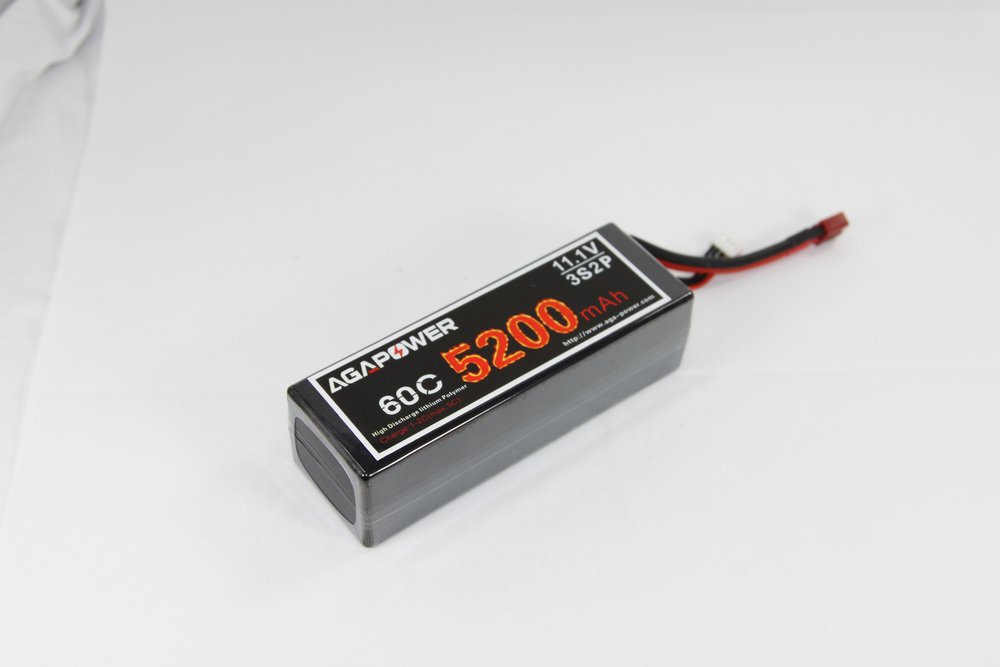
An 11.1V (3S) LiPo adds a third cell, so the motor sees roughly fifty percent more voltage and reads 12.6 V straight off the charger. The gun becomes dramatically snappier and faster, and that’s exactly the problem: everything in the gearbox is now moving faster and hitting harder. Piston, sector gear, spring, anti-reversal latch, and above all the mechanical trigger contacts, which now arc every single time you release the trigger. The forum rule of thumb that 11.1V wears a gearbox out about a third faster is a guess, not a measurement, but the direction is right. You will also hear the term “trigger contacts burnt out”, and that is the specific, predictable failure of running 11.1V through a gun with an old-style mechanical switch and nothing to protect it.
So the rule is simple, and every tech says the same thing. Before 11.1V goes anywhere near your gun, it needs an electronic control unit between the battery and the motor: a MOSFET, an electronic trigger unit (ETU) or a microswitch trigger. Those turn the trigger into a signal instead of a power switch, so the arcing stops and the contacts live. Higher-end guns now come with a MOSFET pre-installed. Mid-range guns like the G&G CM16 Raider 2.0E carry one in the “E” version and not in the base model, which is a good illustration of how thin the line is. A basic MOSFET costs $20–30 and is one of the best-value upgrades in the hobby.
Even with a MOSFET, 11.1V remains a tuning choice. Novritsch’s own recommendation for their guns is 7.4V for replicas under one joule and 11.1V only for guns designed to take it. Airsoft GI’s tech line is that a 20C 11.1V pack is the sensible ceiling for a normal MOSFET-equipped gun, and that the 30C mini-bricks they sell for their custom Typhoon and Cyclone builds are for guns that were built around that battery from the start. If you plug a 30C 11.1V into a stock gun, it will be spectacular for a while and then you’ll be buying gears.
The way I’d put it to a friend: 7.4V is a battery. 11.1V is a modification.
The Only Chart You Need: mAh, C Rating, Amps and Rounds per Charge
Everything on this table falls out of two lines of arithmetic. Maximum continuous amps is the C rating multiplied by capacity in amp-hours. Rounds per charge on a normal AEG land between about 0.7 and 1 round per mAh, a range that comes from Amped Airsoft’s estimate of 800–1,200 shots from a 1,200 mAh pack and lines up with Novritsch’s guidance that a semi-auto-heavy day needs about 1,000 mAh and a full-auto day at least 2,000 mAh. The 1C charge current is simply the capacity in amps, and a full charge at 1C takes about an hour on paper and 60–90 minutes in practice once the charger tapers off at the end.
| Capacity | Max continuous amps at 20C | at 25C | at 30C | 1C charge current | Rounds per charge (est.) |
|---|---|---|---|---|---|
| 900 mAh | 18 A | 22.5 A | 27 A | 0.9 A | 630–900 |
| 1,000 mAh | 20 A | 25 A | 30 A | 1.0 A | 700–1,000 |
| 1,200 mAh | 24 A | 30 A | 36 A | 1.2 A | 840–1,200 |
| 1,450 mAh | 29 A | 36 A | 43.5 A | 1.45 A | 1,000–1,450 |
| 2,000 mAh | 40 A | 50 A | 60 A | 2.0 A | 1,400–2,000 |
| 3,000 mAh | 60 A | 75 A | 90 A | 3.0 A | 2,100–3,000 |
A few things the table makes obvious that the shop shelf doesn’t. First, capacity and C rating multiply: a small 900 mAh 30C brick can actually push more current than a big 2,000 mAh 10C NiMH, which is why the little brick feels snappier despite lasting half as long. Second, the rounds column is a planning number, not a promise. An efficient stock rifle on 7.4V semi-only can beat one round per mAh (one UK forum regular reports about 2,000 rounds from a 1,000 mAh pack), while a high-speed build on full auto in the cold will fall below 0.7. Third, and this is the one that catches people, a pack rated for 1,200 mAh doesn’t give you 1,200 mAh of usable energy, because you should never run a LiPo flat. The widely repeated “80% rule” says to use no more than 80 percent of the rated capacity before recharging; Novritsch’s more conservative line is to never go below 10 percent. Either way, plan on the low end of the rounds column and carry a spare.
How much do you need? Airsoft GI’s field rule is 900–1,000 mAh for a normal day of semi and short bursts. Novritsch says 1,400 mAh and above will get most players through a day, and that if you fire a lot of full auto you want 2,000 mAh across your packs. Nobody has ever regretted bringing a second battery.
Connectors: Tamiya, Deans and XT (and Why the Plug Is the Bottleneck)
The plug on the end of the wires is more important than it looks, because it’s the narrowest point in the whole circuit.
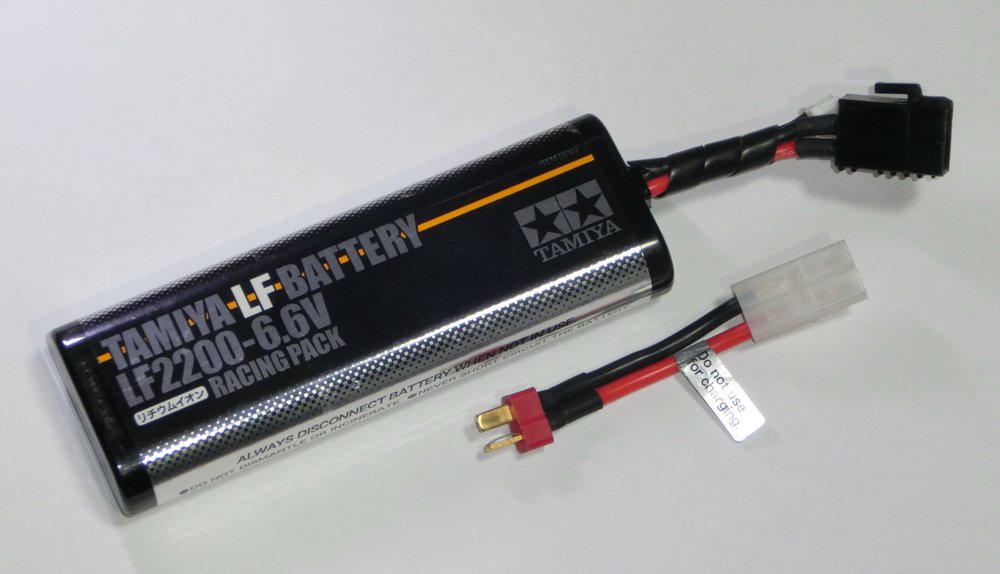
Tamiya connectors, in mini and large sizes, were the airsoft standard for two decades and are still fitted to a lot of budget guns and NiMH packs. They’re easy to find and easy to swap, and they are electrically poor: the contacts are small and loosely sprung, resistance is high, and in a high-current setup they restrict the power flow enough that you can feel it in the trigger. Novritsch’s guide says flatly to stay away from them, and Airsoft GI describes them as a bottleneck. If your gun came with a mini Tamiya, converting it is a cheap, meaningful upgrade — and the fact that a new gun still ships with one is a decent hint about the design age of everything else inside.
Deans, also called T-plugs, are the current standard. Lower resistance, tougher, a positive lock, and they cope with high-performance builds. A mini-Deans variant exists for tight compartments like electric pistols. A Deans plug on a new gun is a reliable sign of an up-to-date design.
XT60 and XT30 are the RC-world connectors and, electrically, arguably the best of the lot: excellent conductivity, very durable, and easier to plug and unplug than Deans. Their weakness is purely social. Almost nobody on an airsoft field carries an XT battery, so if yours dies at lunch, nobody can lend you one. EC3, EC5 and HXT turn up on custom builds; JST-RCY is the standard on HPA engines.
Two practical rules. Match battery, gun and charger to one connector standard, because adapters add exactly the resistance you were trying to remove. And treat the small white balance lead on every LiPo as a charger-only connector: it’s for balancing the cells, it always goes into the charger alongside the main lead, and it never goes anywhere near the gun.
Shapes and Fit: Stick, Nunchuck, Brick, and Where It Goes in Your Gun
Once you’ve picked chemistry, voltage and plug, the last question is whether the thing physically fits, and this is where a tape measure beats a spec sheet.
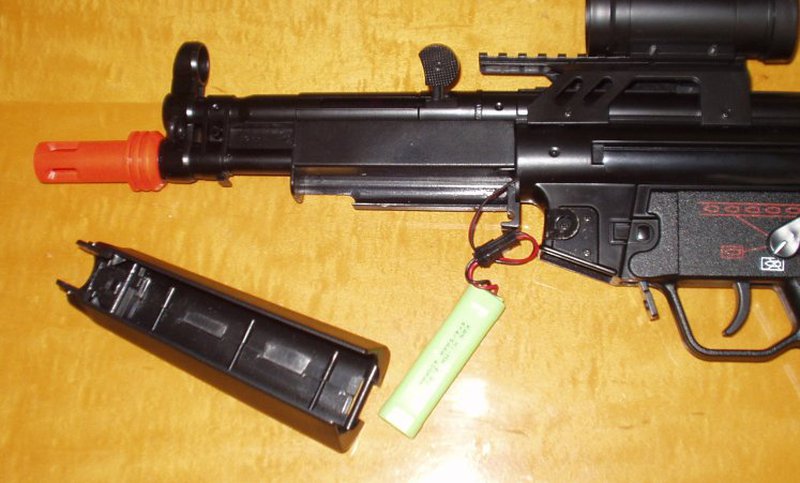
Rear-wired M4-pattern rifles with a crane stock traditionally took a nunchuck pack: two cylinders joined by a strip of wire, one down each side of the buffer tube. It was universal in the NiMH era because nothing else fit. Modern slim stocks and PDW-style stocks take a stick LiPo, a single slim cylinder or flat pack that slides into the buffer tube itself — and if your gun has a “battery in buffer tube” design, measure the tube’s length and inner diameter before you buy, because stick packs vary by a few millimetres and a few millimetres is the difference between “fits” and “doesn’t”. Front-wired guns keep the battery under the handguard, which limits you to whatever fits between the barrel and the rail: usually a short stick or a small brick. AK-pattern guns famously carry a long stick pack under the dust cover. And the little mini-brick packs (a 900 mAh 30C 11.1V is a typical size) exist because compact PDWs and speedsoft builds have almost no room and need a lot of current.
The LiPo’s size advantage is the whole reason modern guns look the way they do. A 7.4V 1,200 mAh stick is a fraction of the volume of the 9.6V NiMH nunchuck it replaces, which is how a slim MTR-style stock or a 10-inch handguard can hide a full-day battery. If you’re still running a crane stock because “that’s where the battery goes”, a LiPo may let you finally change it.
Charging, Storage and the Numbers That Keep a LiPo Alive
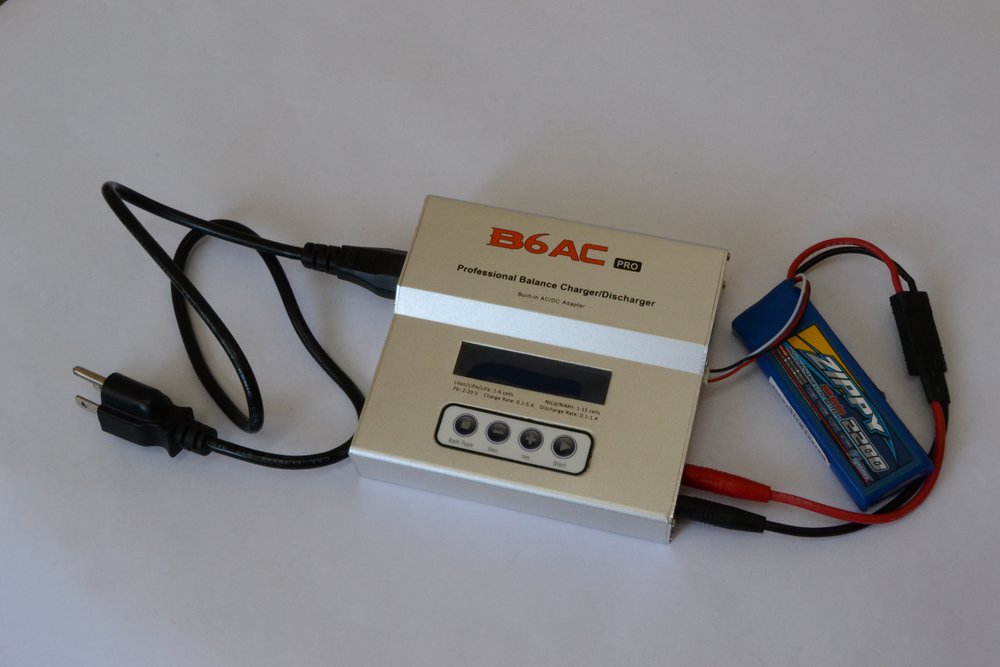
LiPo horror stories almost always trace back to one of four things: the wrong charger, an over-discharged pack, a damaged pack that kept being used, or a pack left charging alone. Every rule below removes one of those.
Use a LiPo balance charger, always. A LiPo needs two features a NiMH charger doesn’t have: overcharge protection and cell balancing. Balancing matters because a 7.4V pack is two cells and an 11.1V pack is three, and if those cells drift apart in voltage they damage each other. The cheap dedicated airsoft LiPo chargers (under $20) do both jobs and can only charge 2S or 3S packs, which is fine if that’s all you own. A proper hobby charger adds storage, discharge and fast modes and will charge every chemistry you have; it’s the right tool if you have more than a couple of packs. Charge at 1C by default: a 1,500 mAh pack at 1.5 A. Don’t go faster unless the pack is explicitly rated for it.
Learn five per-cell voltages and you know everything. A lithium cell is 4.2 V full, 3.7 V nominal, 3.8–3.85 V for storage, 3.3 V minimum at rest and 3.0 V under load. Multiply by two or three for your pack. A 2S pack reads 8.4 V full and should never sit below 6.6 V; a 3S reads 12.6 V full and should never sit below 9.9 V. If a cell has fallen below 3.3 V, don’t charge it: the big hobby chargers will refuse anyway, and a basic charger that does “revive” it is doing so at your risk and never unattended.
Never run it flat. The moment the gun starts to slow down, or the ETU beeps its low-battery warning, stop. Squeezing out ten more shots is how you kill a pack. Over-discharge is permanent, it’s the number-one cause of swelling, and swelling is the point at which a battery becomes a fire risk.
Check it. A LiPo checker costs a few dollars, draws no power of its own, plugs into the balance lead, and shows you total charge and the voltage of each cell. Cells should sit within a few hundredths of a volt of each other; Novritsch draws the line at 0.02 V. If one cell is consistently low and won’t balance back, retire the pack. A multimeter does the same job if you know how to use it.
Store it properly. For anything longer than a month, use the charger’s storage function to bring every cell to 3.85 V. Store at room temperature — Badlands’ safety guide gives 4–27 °C — in a LiPo-safe bag, away from sunlight, and not inside a flammable piece of furniture. Don’t throw a loose pack into a kit bag with gas bottle nozzles and sharp edges; punctures are the other classic way a pack becomes a barbecue. The easiest habit is to put the pack in the gun the night before, disconnected.
Retire damaged packs. Swollen, puffy, a torn wrapper, exposed wire, cells that won’t balance: any of those and it’s done. Don’t try to repair it. Dispose of it through a battery recycling point, ideally discharged and with the leads taped.
Charge attended, on something that doesn’t burn. A LiPo bag on a tile floor or concrete, nothing flammable nearby, and you in the room. If a pack does start to smoke or burn, the advice you’ll find is contradictory: Badlands says never water and use a Class D extinguisher or sand, while the Austrian fire brigade Novritsch consulted said to get it out of the building and, if you can, drop it in a bucket of water. What everyone agrees on: don’t breathe the fumes, get it outdoors onto a non-flammable surface, and don’t assume a household extinguisher has finished the job, because lithium fires re-ignite.
Does 11.1V Actually Make You Faster? Measure It Instead of Arguing
Here’s the part I’ve never seen another battery guide cover, and it’s the reason this article is on a training site.
Every claim in the 7.4V-versus-11.1V debate is a claim about time. “Snappier trigger” means the interval between pressing the trigger and the shot got shorter. “Higher rate of fire” means the interval between shots got shorter. Both are things a shot timer measures directly, and the Airsoft Shot Timer app is built around exactly those intervals. So rather than trusting a forum post, run the test on your own gun in two minutes.
Set the app to a random-delay start. On the beep, fire a five-shot semi-auto string as fast as you can press the trigger. The app records the time to the first shot and the split between every shot after it. Do it three times on your 7.4V pack, swap to the 11.1V, let the gun settle for a minute, and do three more. The average split on semi is the honest measure of trigger response plus cycle time, which is precisely what the extra cell is supposed to improve. For rate of fire, hold a one-second burst on full auto and let the app count the shots; that number is your rounds per second, and it’s the one to compare against the retailer’s claim.
Two things tend to come out of this. The first is that the 11.1V improvement on a stock gun is real but often smaller than the forum makes it sound, and a lot of it can be had from a 7.4V pack with a better C rating and a Deans plug. The second is that the split you’d need to beat to matter in a game is your own: if your reload takes four seconds and your first shot off the beep takes 0.8, the battery is not where your time is going. That’s the whole point of measuring. The same tool that shows you what the battery changed will also show you what it didn’t, and our guides to the pistol draw and the Bill Drill will give you something better to spend the gearbox wear on.
Frequently Asked Questions
What battery should I get for my airsoft gun?
For almost any stock AEG, a 7.4V LiPo of the largest capacity that physically fits, rated 20–25C, with a Deans plug. It gives NiMH-level stress on the gun with LiPo size, weight and consistency. Only move to 11.1V once the gun has a MOSFET or electronic trigger unit and you’ve decided you want the extra wear.
Which is better for airsoft, NiMH or LiPo?
LiPo, in about 95% of cases. It’s smaller, lighter, holds voltage under load, self-discharges slowly and has no memory effect. NiMH’s remaining advantages are that it’s tolerant of neglect, charges on a simple charger and is very hard to set on fire, which still makes it a reasonable choice for a beginner’s first stock gun.
What’s the difference between a 7.4V and an 11.1V LiPo?
One cell. A 7.4V pack is two 3.7 V cells (2S) and reads 8.4 V full; an 11.1V pack is three cells (3S) and reads 12.6 V full. The extra cell spins the motor faster for a snappier trigger and higher rate of fire, and also wears the gearbox and trigger contacts faster. 11.1V needs a MOSFET, ETU or microswitch in the gun.
Do I need a MOSFET to run an 11.1V battery?
Yes, in practice. A MOSFET, ETU or microswitch turns the mechanical trigger into a signal instead of a power switch, so the contacts stop arcing at 12.6 V. Without one you’ll get a temporary performance boost and then burnt contacts and accelerated gearbox wear. A basic MOSFET is $20–30.
How long does a 1,200 mAh battery last in airsoft?
Roughly 800–1,200 rounds on a normal AEG, which is a full day for most semi-auto-heavy players. Full auto, a high-speed build or cold weather push you toward the low end; an efficient stock rifle on semi can exceed it. Plan on the low number and carry a spare.
What is the 80% rule for LiPo batteries?
Never use more than 80 percent of a LiPo’s rated capacity before recharging, so a 1,000 mAh pack should be back on the charger after about 800 mAh of use. Some makers are more conservative and say to keep at least 10 percent in reserve. The hard number behind both rules is the cell floor: 3.3 V per cell at rest, 3.0 V under load.
What does the C rating on an airsoft battery mean?
It’s the maximum safe continuous discharge rate as a multiple of capacity. A 1,000 mAh pack rated 20C can deliver 20 A continuously; a 3,000 mAh pack rated 10C can deliver 30 A. A higher C rating means faster trigger response because the pack can dump current the instant you press. Most airsoft packs are 20–30C.
Can I use an RC car or drone LiPo in my airsoft gun?
The chemistry is identical but the packs aren’t built for airsoft compartments or wiring, and the higher-rated ones can push more current than a stock gun’s switch and gears can take. Every tech source says the same thing: buy airsoft-specific packs from an airsoft shop.
What voltage should I store a LiPo at?
3.8–3.85 V per cell, so about 7.6–7.7 V for a 2S pack and 11.4–11.55 V for a 3S. Use the charger’s storage mode for anything longer than a month, keep the pack at room temperature in a LiPo-safe bag, and never store it fully charged or flat.
Deans or Tamiya: which connector should I use?
Deans (T-plug). It has far lower resistance and a positive lock, which is why it’s the modern standard and why converting a Tamiya gun is one of the cheapest upgrades that you can actually feel. XT60/XT30 are electrically even better but rare on airsoft fields, so nobody can lend you a battery.
Does a bigger battery increase FPS?
No. Muzzle velocity comes from the spring, cylinder and barrel; the battery only changes how fast the motor cycles the gearbox. If your gun is coming in hot or cold at the chrono, the battery isn’t the reason.
Image Credits
- Cover, 7.4V LiPo pack: photo by Daniel van den Ouden, CC BY 2.0, via Wikimedia Commons — resized, not otherwise altered.
- Deans-to-Tamiya adapter and Tamiya pack: photo by Shingo.a, CC0 1.0, via Wikimedia Commons — resized. (The pack shown is a 6.6V LiFe racing pack; the connectors are the point of the photo.)
- Balance charger: photo by KundaliniZero, CC BY-SA 3.0, via Wikimedia Commons — resized, not otherwise altered.
- 11.1V 3S LiPo pack: photo by Wikimedia Commons user RC Lipo battery, CC BY-SA 3.0, via Wikimedia Commons — resized, not otherwise altered. (An RC-sized hard-case pack; the label layout — voltage, cell count, capacity, C rating — is the same one you’ll read on an airsoft pack.)
- MP5 AEG with handguard removed: photo by Zhyla, CC BY-SA 3.0, via Wikimedia Commons — resized, not otherwise altered.


The thing about batteries is that they’re the one part of an AEG that most players never think about and every tech thinks about first. Pick the chemistry for how you play, the voltage for what the gun can take, the capacity for how long your day is, and the plug that doesn’t strangle the rest of it. Then treat the LiPo like the small, energetic thing it is: balance-charged, never run flat, stored at 3.85 V a cell, and in a bag when it isn’t in the gun.
And when somebody tells you their 11.1V made them “so much faster”, smile and ask them what their split time is. If you’ve read this far you already know how to find yours. If you’re still building the rest of the kit, our airsoft beginner’s guide covers the gun choice itself, the G&G CM16 Raider 2.0 guide is a good look at what a MOSFET-equipped mid-range AEG actually gives you, and the chronograph guide covers the other number the safe zone cares about.
Put a Shot Timer in Your Pocket
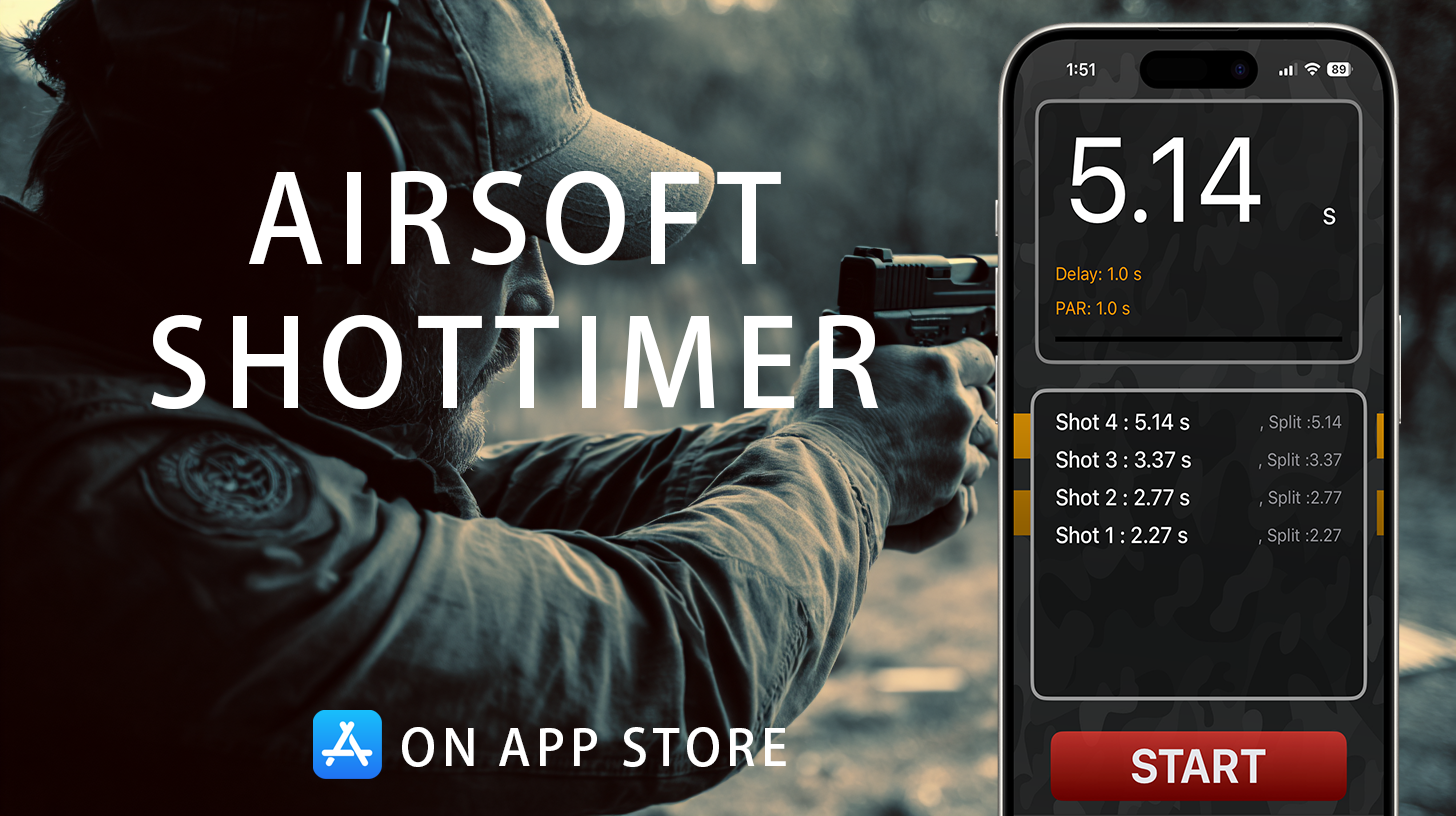
Airsoft Shot Timer is a free shot timer app tuned for airsoft and Action Air — it picks up BB gun shots, tracks your split times, and saves you the cost of a $150+ hardware timer for IPSC/IDPA practice.

- Airsoft Battery
- Airsoft LiPo Battery
- LiPo vs NiMH
- 7.4V vs 11.1V
- Airsoft Battery Guide
- Best Airsoft Battery
- Airsoft Battery Connector
- Deans vs Tamiya
- C Rating
- MAh
- MOSFET
- AEG
- Airsoft Battery Charger
- LiPo Safety
- LiPo Storage Voltage
- Trigger Response
- Rate of Fire
- Airsoft Tech
- Airsoft Beginner
- Airsoft Gear