All 37 Glock Models: Complete Number & Caliber Chart (2026)
What Does the Glock Number System Actually Mean?
If you’ve ever stared at a Glock display case and wondered why there’s a Glock 17, a Glock 19, and a Glock 45 that somehow isn’t chambered in .45 — you’re in good company. The Glock number system is one of the most misunderstood naming conventions in the firearms world, and it trips up beginners and experienced shooters alike.
Here’s the short answer: Glock model numbers are sequential patent and design numbers assigned by the company during development. They don’t tell you the caliber, the magazine capacity, or the frame size. The Glock 17 earned its name because it was founder Gaston Glock’s 17th patent — not because the magazine holds 17 rounds (though it does, by pure coincidence).
This numbering system has continued for over four decades, and every new design gets the next available number regardless of what caliber or size category it falls into. That’s why the Glock 45 is a 9mm pistol, the Glock 40 fires 10mm Auto, and the actual .22 LR Glock is the Glock 44. Once you accept that the numbers are essentially serial numbers for Glock’s engineering department, the whole system suddenly makes a lot more sense.
Why the Glock Numbering System Confuses Everyone
The biggest source of confusion comes from a handful of coincidences that make the numbering system look like it should mean something. The Glock 17 happens to hold 17 rounds, the Glock 21 shoots .45 ACP (close to “21” if you squint), and the Glock 22 was adopted by countless American police departments — leading people to assume the numbers carry significance.
But try applying any pattern and it falls apart immediately. If “17” meant magazine capacity, the Glock 19 should hold 19 rounds (it holds 15). If the numbers tracked caliber, the Glock 20 should fire .20-something (it fires 10mm Auto). And if higher numbers meant newer designs, the Glock 22 and 23 wouldn’t have been released before the Glock 20 and 21, even though the latter pair started development first.
The reality is that Glock assigns model numbers when a design project begins, not when the pistol ships. Some projects get shelved, some get fast-tracked, and the release order ends up looking random to anyone on the outside. It’s not a puzzle to solve — it’s just an internal filing system that became public-facing.
If what you actually want is why the numbers are meaningless — the three myths, the patent story, and what every suffix letter stands for — that’s covered in Why Is It Called a Glock 17?.
How Many Glock Models Are There? All 37 in One Chart
Short answer: 37 distinct Glock model designations exist — 33 consecutively numbered models running from the Glock 17 to the Glock 49 with no number skipped, plus four letter variants that are sold as models in their own right (17L, 19X, 30S, 43X). They are spread across eight chamberings: 9mm, .40 S&W, .357 SIG, 10mm Auto, .45 ACP, .45 GAP, .380 ACP and .22 LR.
That is the number people are usually looking for when they ask “how many Glocks are there,” and it is a lot lower than the “over 50” figure that gets repeated online — that larger count comes from stacking generations and regional variants on top of the model numbers. Here is every one of the 37, in numerical order:
| Model | Caliber | Size class | Notes |
|---|---|---|---|
| Glock 17 | 9mm | Full-size | The original, 1982 |
| Glock 17L | 9mm | Long slide | 6.02" barrel |
| Glock 18 | 9mm | Full-size | Select-fire, military/LE only |
| Glock 19 | 9mm | Compact | Best-selling Glock |
| Glock 19X | 9mm | Crossover | G17 frame + G19 slide |
| Glock 20 | 10mm Auto | Full-size | Outdoor/wildlife favourite |
| Glock 21 | .45 ACP | Full-size | |
| Glock 22 | .40 S&W | Full-size | Former US LE standard |
| Glock 23 | .40 S&W | Compact | |
| Glock 24 | .40 S&W | Long slide | |
| Glock 25 | .380 ACP | Compact | Non-US markets |
| Glock 26 | 9mm | Subcompact | The “Baby Glock” |
| Glock 27 | .40 S&W | Subcompact | |
| Glock 28 | .380 ACP | Subcompact | Non-US markets |
| Glock 29 | 10mm Auto | Subcompact | |
| Glock 30 | .45 ACP | Subcompact | |
| Glock 30S | .45 ACP | Subcompact | G30 frame + slimline slide |
| Glock 31 | .357 SIG | Full-size | |
| Glock 32 | .357 SIG | Compact | |
| Glock 33 | .357 SIG | Subcompact | |
| Glock 34 | 9mm | Competition | 5.31" barrel, IPSC/IDPA |
| Glock 35 | .40 S&W | Competition | |
| Glock 36 | .45 ACP | Slimline | Single-stack |
| Glock 37 | .45 GAP | Full-size | |
| Glock 38 | .45 GAP | Compact | |
| Glock 39 | .45 GAP | Subcompact | |
| Glock 40 | 10mm Auto | Long slide | MOS as standard |
| Glock 41 | .45 ACP | Long slide | |
| Glock 42 | .380 ACP | Slimline | Smallest Glock |
| Glock 43 | 9mm | Slimline | 6-round single stack |
| Glock 43X | 9mm | Slimline | Extended grip, 10 rounds |
| Glock 44 | .22 LR | Subcompact | Hybrid polymer slide |
| Glock 45 | 9mm | Crossover | Gen 5 take on the 19X |
| Glock 46 | 9mm | Full-size | Rotary-block, European LE |
| Glock 47 | 9mm | Full-size | Modular, US CBP contract |
| Glock 48 | 9mm | Slimline | Compact-length slimline |
| Glock 49 | 9mm | Crossover | G47 frame + G19 slide |
Two things jump out of that chart. First, 9mm accounts for 14 of the 37 — almost double any other caliber — which tells you where Glock actually puts its engineering attention. Second, the numbers genuinely do run in a straight line from 17 to 49 with no gaps, which is the strongest evidence you’ll find that they are just a patent counter rather than a code.
Worth knowing before you shop: the .40 S&W, .357 SIG and .45 GAP families are being quietly wound down, and the Gen 6 transition is thinning the catalogue further. The chart above is the full historical lineup, not the list of what your local dealer can order today.
The Core Glock Model Families by Caliber
Rather than memorizing all 30+ model numbers, it helps to think of Glock’s lineup in terms of caliber families. Within each caliber, Glock follows a consistent sizing pattern: a full-size model, a compact, a subcompact, and sometimes a competition or slimline variant.
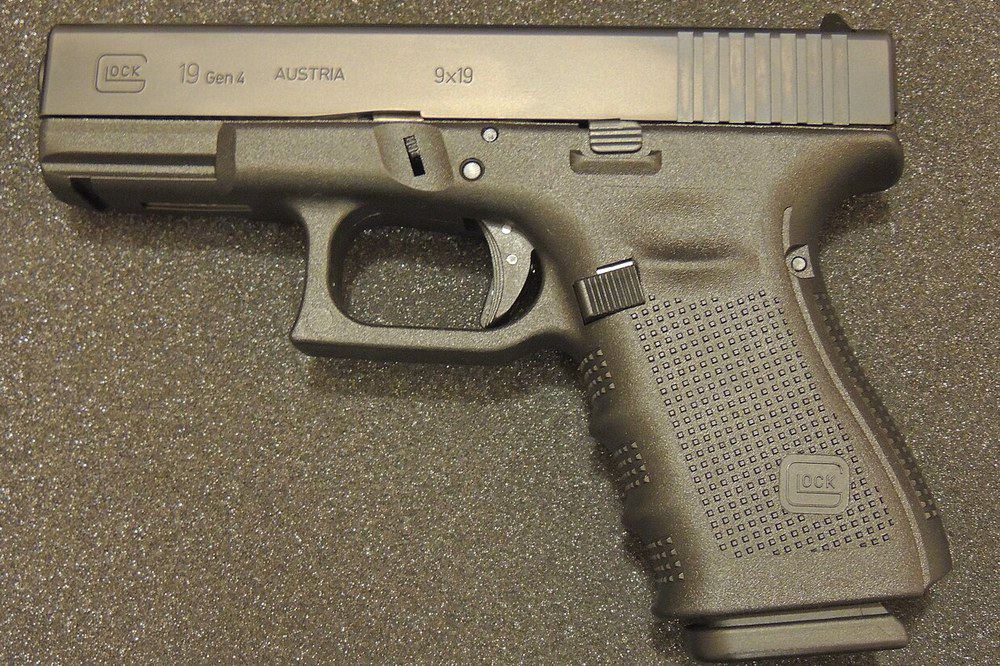
The 9mm family is by far the most popular and includes the Glock 17 (full-size), Glock 19 (compact), Glock 26 (subcompact), and Glock 34 (competition). Then there are the newer crossover models like the Glock 19X and Glock 45, which mix a full-size grip with a compact slide for shooters who want more to hold onto without the extra barrel length. The slimline 9mm options — the Glock 43, 43X, and 48 — were designed specifically for concealed carry, with single-stack or slim double-stack magazines that make the gun nearly disappear under a T-shirt.
The .40 S&W family mirrors the 9mm lineup almost exactly: the Glock 22 is full-size, the Glock 23 is compact, the Glock 27 is subcompact, and the Glock 35 is the competition variant. These were the standard-issue pistols for U.S. law enforcement for over two decades, though many agencies have since transitioned back to 9mm.
For shooters who want more power, the 10mm Auto family offers the Glock 20 (full-size), Glock 29 (subcompact), and Glock 40 (long slide competition). The Glock 20 has become a favorite for hikers and outdoorsmen who need serious stopping power for wildlife encounters. The .45 ACP family rounds things out with the Glock 21, Glock 30, Glock 36, and Glock 41, covering everything from full-size duty use to slim concealed carry.
There are also smaller families in .357 SIG (Glock 31, 32, 33), .45 GAP (Glock 37, 38, 39), .380 ACP (Glock 25, 28, 42), and .22 LR (Glock 44). The .380 and .22 models are excellent low-recoil training options, while the .357 SIG and .45 GAP models cater to more niche markets.
Understanding Glock Suffix Letters
The letters after the number are the part of the naming that does carry information. “L” is a long slide (the Glock 17L runs a 6.02-inch barrel against the standard 4.49). “C” is compensated, with ports cut through barrel and slide to vent gas upward and flatten muzzle rise. “MOS” — Modular Optic System — is the one that matters most in 2026, because the slide arrives pre-milled for a red dot, which is what you want if you’re heading into IPSC Production Optics. “X” does double duty: the 19X is a crossover frame-and-slide combination, while the 43X simply has a taller grip than the 43.
There are several more — SF, S, MB — and each one has a specific history worth knowing if you’re reading a used-gun listing. Our Glock naming and suffix guide breaks down every letter, along with the three myths about the numbers that refuse to die.
Glock Generations: From Gen 1 to the V Series
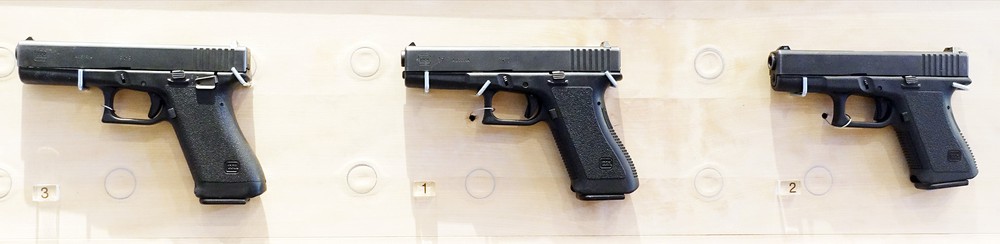
Every Glock generation brings meaningful improvements, and knowing which generation you’re looking at matters as much as the model number itself. The original Gen 1 (1982-1988) was only the Glock 17 — a smooth-grip polymer pistol that revolutionized the industry simply by proving that plastic-framed handguns could outperform steel ones in military trials.
Gen 2 (1988-1998) added grip texturing and expanded the lineup to multiple calibers. Gen 3 (1998-2010) introduced the finger grooves and accessory rail that became iconic Glock features. Gen 4 (2010-2017) brought interchangeable backstraps, a reversible magazine release, and a dual recoil spring — all addressing decades of user feedback about the one-size-fits-all grip.
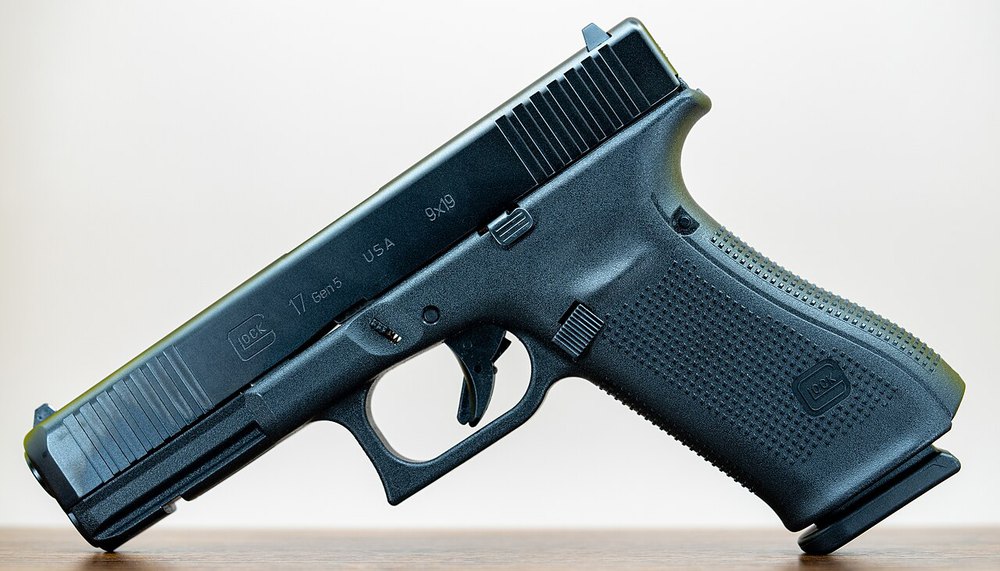
Gen 5, launched in 2017, is the current standard for most models. It removed the finger grooves (which many shooters found more annoying than helpful), added a flared magwell for faster reloads, an ambidextrous slide stop, and the Glock Marksman Barrel (GMB) with improved polygonal rifling. For competition shooters, the Gen 5 barrel accuracy improvement alone makes it worth the upgrade.
In late 2025, the V Series introduced anti-conversion features and a redesigned slide cover plate to prevent illegal full-auto modifications. Then came the big one: Glock officially launched the Gen 6 lineup at SHOT Show in January 2026, marking the brand’s 40th anniversary of U.S. operations. The Gen 6 brings a redesigned frame geometry, a flat-faced trigger that feels noticeably crisper than the Gen 5’s hinged design, factory front slide serrations, and a new Gen 6 optic-ready system that makes mounting a red dot cleaner than ever.
Perhaps the most significant business move is that Glock has begun phasing out Gen 3 through Gen 5 production in favor of the Gen 6 and V Series. If you’re shopping for a new Glock in 2026, Gen 6 is the generation to buy — and if you find a Gen 5 at a discount, it’s still an excellent pistol that will serve you well for years.
For a detailed breakdown of every generation’s changes, see our Glock Generations Overview and the latest Glock Gen 6 Guide.
How to Pick the Right Glock for Your Purpose
Choosing a Glock becomes much simpler once you stop worrying about the number and focus on what you need the gun to do.
For competitive shooting, the Glock 34 is the go-to choice in both IPSC and IDPA circuits. Its longer barrel and sight radius give you an edge in accuracy without being unwieldy, and the competition-ready trigger is noticeably better than the standard models. If you’re shooting Production Optics division, the Glock 34 MOS or Glock 17 MOS are your best bets. Many serious competitors start with a Glock 17 Gen 5 because it’s the most widely supported platform for aftermarket upgrades — triggers, sights, magwells, you name it.
For everyday concealed carry, the Glock 19 remains the gold standard. It’s compact enough to carry inside the waistband without printing, yet large enough to shoot well at the range. If you need something even smaller, the Glock 43X offers a good balance between concealability and shootability with its 10-round slim magazine. The Glock 48 gives you a compact-length slide on a slimline frame — perfect if you want better sight radius without extra width.
For home defense, most instructors recommend the full-size Glock 17 or Glock 19. The larger grip and higher capacity give you every advantage when concealment isn’t a concern. And for outdoor use in bear or wildlife country, the Glock 20 in 10mm has earned a devoted following for its stopping power in a relatively lightweight package.
If you’re deciding between the two most popular models, our detailed Glock 19 vs Glock 17 Comparison breaks down exactly where each one shines.
Training with Your Glock
Owning the right Glock is only half the equation — consistent practice is what actually makes you faster and more accurate. Whether you’re training with a real firearm or an airsoft replica, a shot timer is essential for measuring your progress in draws, transitions, and reloads.
The AirsoftShotTimer app turns your phone into a training tool that works in your garage, living room, or backyard range. Pair it with dry fire practice using our Dry Fire Training Complete Guide and you can make real measurable improvements without spending a cent on ammunition.
For Glock-specific training programs, our Glock 17 Training Guide covers draw drills, accuracy fundamentals, and competition-ready skill progressions. And once your fundamentals are solid, work on your magazine reload techniques — a fast reload can save you a full second per stage in competition, which adds up to a massive advantage over a full match.
Frequently Asked Questions About Glock Models
What do the numbers on a Glock mean?
Glock model numbers are sequential patent and design numbers assigned internally during development. They don’t indicate caliber, capacity, or size. The Glock 17 was Gaston Glock’s 17th patent — the fact that its magazine also holds 17 rounds of 9mm is pure coincidence. Each new design gets the next available number, which is why the Glock 45 is a 9mm and the actual .22 LR model is the Glock 44.
What is the most popular Glock model?
The Glock 19 has been the best-selling Glock for years, and the new Gen 6 version launched in January 2026 continues that dominance. Its compact size works equally well for concealed carry, home defense, and range shooting. The Glock 17 is a close second, especially popular with competition shooters in IPSC and IDPA who want the longer sight radius.
How many Glock models are there?
There are 37 distinct Glock model designations: 33 numbered models running unbroken from the Glock 17 to the Glock 49, plus the 17L, 19X, 30S and 43X. They cover eight chamberings — 9mm, .40 S&W, .357 SIG, 10mm Auto, .45 ACP, .45 GAP, .380 ACP and .22 LR — and 9mm alone accounts for 14 of them. The “over 50” figure you’ll see quoted elsewhere counts generations and regional variants as separate models. See the full chart above for every one in numerical order. With the Gen 6 transition in 2026 the catalogue is shrinking, particularly in .40 S&W and .357 SIG.
Which Glock is best for beginners?
For most beginners, the Glock 19 is the ideal starting point. It’s compact enough to carry yet large enough to shoot comfortably, and the 9mm recoil is very manageable. If you’re specifically interested in competition shooting, step up to the Glock 17 or Glock 34 for the longer barrel and sight radius. Our Glock 17 Training Guide has structured drills to build your skills from day one.
What does MOS mean on a Glock?
MOS stands for Modular Optic System. Glock MOS models come with a pre-milled slide that accepts red dot sights without needing aftermarket machining. With the Gen 6’s improved optic-ready system, factory-mounted red dots sit lower and more securely than ever. If you’re getting into Production Optics competition or want a modern carry setup, MOS is the way to go.
Is Glock discontinuing older generations?
Yes. Starting in 2025-2026, Glock has been phasing out Gen 3 through Gen 5 production to focus on the Gen 6 and V Series. Existing Gen 5 pistols remain excellent firearms, and you may find them at reduced prices as dealers clear inventory. But for new purchases in 2026, the Gen 6 represents the latest in Glock’s engineering.
Further Reading
- Why Is It Called a Glock 17? — The patent story, the three numbering myths and every suffix letter
- Glock Generations Overview — Gen 1 through Gen 5 changes
- Glock Gen 1-5 Representative Models — Key models from each era
- Glock Gen 6 Guide — The latest V Series features
- Glock Caliber Comparison — 9mm vs .40 vs .45 vs 10mm
- Glock 19 vs Glock 17 — The ultimate compact vs full-size showdown
- Glock 17 Complete Training Guide — Training drills and skill progression
Put a Shot Timer in Your Pocket
Airsoft Shot Timer is a free shot timer app tuned for airsoft and Action Air — it picks up BB gun shots, tracks your split times, and saves you the cost of a $150+ hardware timer for IPSC/IDPA practice.

- Glock
- All Glock Models
- Glock Model Chart
- Glock Calibers
- How Many Glock Models
- Every Glock Model
- Glock Models in Order
- Glock Gen 6