Below you will find pages that utilize the taxonomy term “AEG”
Posts
read more
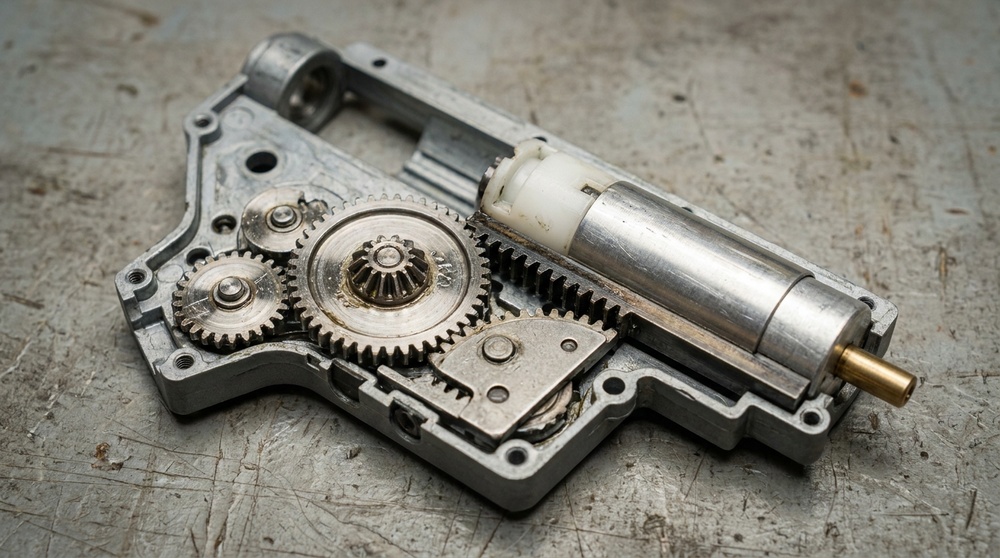
Airsoft Gearbox Versions Explained 2026: V2 vs V3, Which Gun Uses What, and Which Parts Actually Swap
The 60-second version (BLUF)
- The version number is a shape, not a quality grade. It tells you which receiver the gearbox fits and which parts bolt into it. A V3 is not “better than” a V2 in the way a 2.0 is better than a 1.0.
- If you own an AR-pattern gun you own a V2. M4, M16, MP5 and G3 replicas all run it, which is why the V2 has an aftermarket nothing else comes close to.
- AK, G36 and AUG replicas run a V3, and the V3’s one-piece lower shell is genuinely more rigid at the front, which is why high-FPS and DMR builds tend to live there.
- The five differences that matter are how the shell opens, where the motor hangs, whether you can test-fire it on the bench, the trigger group and wiring, and where it cracks.
- Gears, shims, pistons, cylinders and piston heads cross over between V2 and V3. Shells, tappet plates, nozzles, spring guides and trigger assemblies do not.
- Gear ratio is motor turns per piston cycle: 18:1 is standard, 16:1 is a mild step up in speed, 13:1 and 12:1 are high speed, and 26:1 to 32:1 are high torque for heavy springs.
- A cracked V2 is almost always a cracked cylinder window. Radius the corners, fit a sorbo pad, correct your angle of engagement, and stop reaching for an M130 you don’t need.
- Every upgrade claim is a claim about time. Trigger response and rate of fire are both intervals, so measure them with a timer instead of arguing about them.
Nobody buys an airsoft gun because of its gearbox. You buy it because it looks right, because the reviews were decent, because it was the one in stock. Then one Saturday, usually about forty minutes into a game day, the trigger clicks and nothing comes out, and you discover that the thing you never thought about is the only thing that matters.
Posts
read more
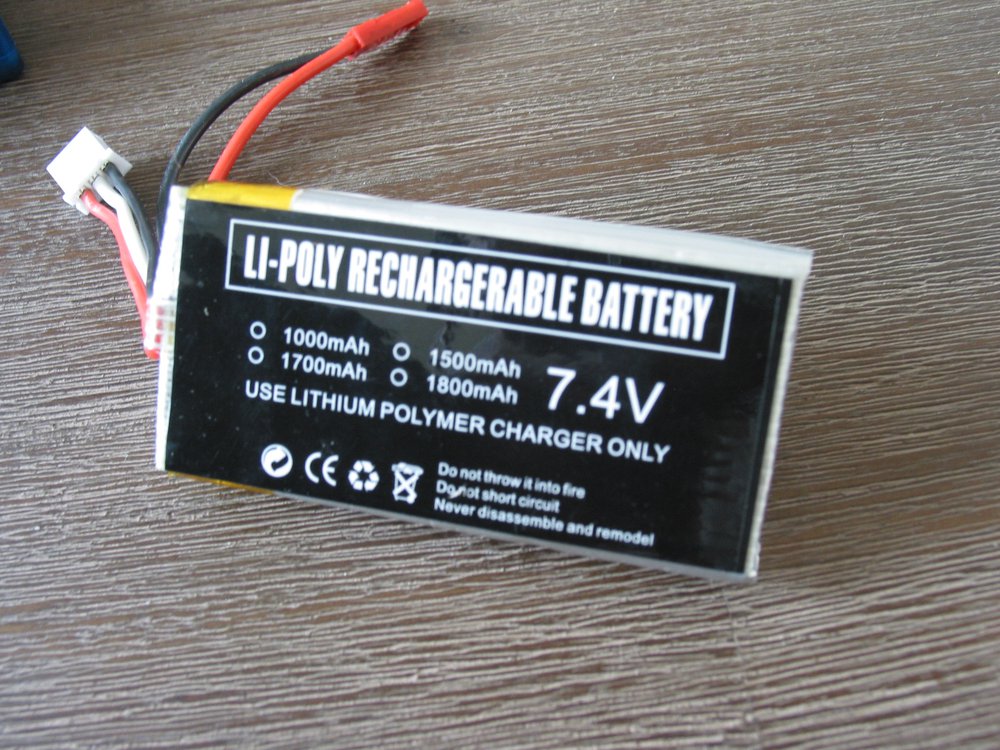
Airsoft Battery Guide 2026: LiPo vs NiMH, 7.4V vs 11.1V, and What mAh & C Rating Actually Do to Your AEG
The 60-second version (BLUF)
- Three numbers matter: volts, mAh and C. Voltage sets how hard the motor is pushed (trigger response and rate of fire), mAh sets how long the battery lasts, and the C rating sets how fast it can hand that energy over.
- A 7.4V LiPo is the safe modern default for almost any stock AEG. It performs like a 9.6V NiMH, fits in half the space, and in most guns needs no extra parts.
- 11.1V is a tuning decision, not a free upgrade. It makes the same gun snappier and faster, and it also makes it wear faster. If your gun has no MOSFET or electronic trigger unit, don’t.
- The maths is simple: max continuous amps = C rating × capacity in amp-hours, so a 1,000 mAh 20C pack can deliver 20 A. Rounds per charge land somewhere between 0.7 and 1 round per mAh on a normal AEG, so a 1,200 mAh pack is roughly 800–1,200 shots.
- Per-cell voltages are the whole LiPo safety story: 4.2 V full, 3.7 V nominal, 3.8–3.85 V for storage, and 3.3 V is the floor. A “7.4V” pack is 8.4 V straight off the charger.
- Deans (T-plug) is the standard, Tamiya is the bottleneck. If a new gun still ships with a Tamiya plug, that tells you something about the rest of it.
- Whether 11.1V actually made you faster is a number, not a feeling. A shot timer app will tell you your semi-auto split times on both batteries in about two minutes.
There’s a moment nearly every airsoft player has had. You’ve just unboxed your first AEG, you’ve charged your phone twice with excitement, and then you realise the box has no battery in it. Ninety percent of electric guns on the market ship that way, and the shop’s answer is a wall of little packs with numbers on them: 7.4V, 9.6V, 11.1V, 1,200 mAh, 25C, Deans, Tamiya, stick, nunchuck. You buy one because it fits. Six months later you’re on a field watching a mate with the same rifle out-shoot you on trigger response, and it turns out the entire difference was the thing in the buffer tube.
Posts
read more
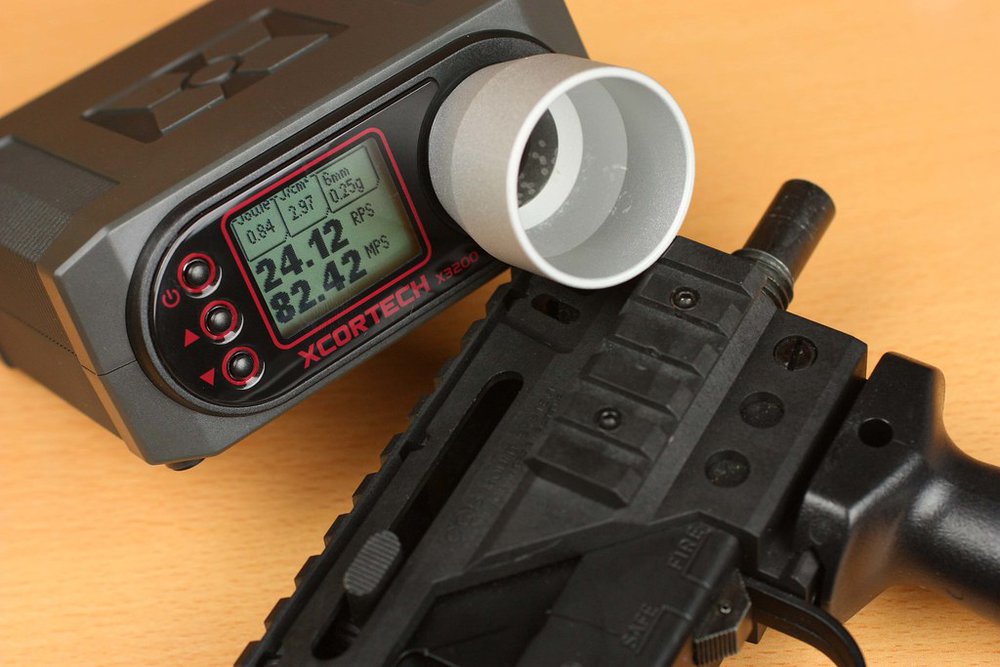
Airsoft Joule Creep & FPS Limits 2026: The 3-Weight Chrono Test (+ Full Joule Chart)
The 60-second version (BLUF)
- A chrono measures speed. Fields care about energy. Those are not the same number, and the gap between them is where almost every chrono argument comes from.
- The formula is simple: energy in joules = ½ × BB mass in kilograms × velocity in metres per second, squared. A 0.20g BB at 100 m/s (328 fps) is exactly 1.00 joule. Everything else on this page falls out of that one line.
- The single most useful anchor: 400 fps with a 0.20g BB = 1.49 J. 350 fps = 1.14 J. 300 fps = 0.84 J.
- Joule creep is real, but it is not universal. In one documented test an HPA rifle went from 1.45 J on 0.20g to 1.89 J on 0.40g without a single setting being touched. In another, a correctly-volumed AEG went the other way — 1.56 J on 0.20g down to 1.39 J on 0.48g.
- Which one your gun does depends on air volume, not on brand or price. The only way to know is to chrono your own gun on the weight you actually play with.
- You can test it yourself in five minutes, with arithmetic instead of opinion. Chrono on 0.20g, then on 0.30g. If energy were conserved, the 0.30g reading would be your 0.20g figure × 0.8165. Divide what you actually measured by that expected number, square it, and you have your creep index. Above about 1.10 you creep; the volume-matched rifle below came out at 0.97.
- “Is 400 fps allowed?” Almost everywhere outdoors, yes — on a 0.20g BB, which is 1.49 J. Indoor CQB is usually 350 fps / 1.14 J. The UK caps you at 1.13 J by site policy long before the statutory 1.3 J, and Japan at 0.98 J by law. The answer always depends on the weight it was measured with.
- Chrono with your game ammo, not with 0.20s you’ll never use. Passing on 0.20g and playing on 0.32g is how a legal gun becomes a hot gun.
- Measure, don’t guess. It’s the same habit that makes a shot timer worth carrying: the number on the screen beats the feeling in your hands, every time.
There’s a very particular flavour of embarrassment that only exists in airsoft. You’ve driven an hour to a new field, you’re in the safe zone, your rifle is on the chrono stand, and the marshal reads the display and says the thing nobody wants to hear: “Yeah, that’s hot, mate.”
Posts
read more
Bill Drill Time Standards 2026: Par Times for Pistol, Concealment & Rifle
The Bill Drill in 60 seconds (BLUF)
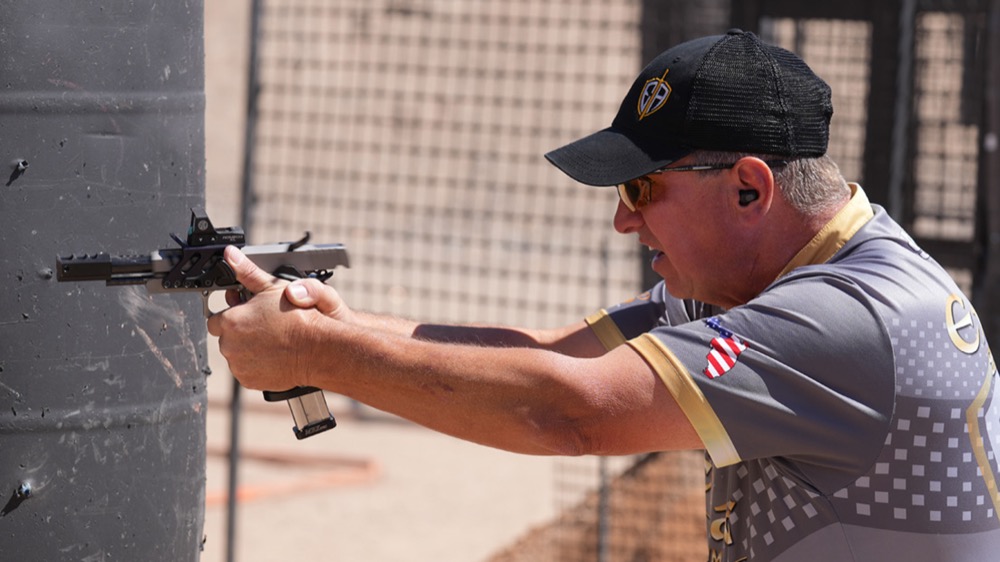
- What it is: Draw and fire six rounds into the A-zone of one target at seven yards, as fast as you can keep them all in. That’s the whole drill.
- Why it’s brutal: Six shots leaves nowhere to hide. A bad grip, a slow draw, or flinching all show up instantly in your hits and your times.
- What’s a good time? From an open holster: roughly 4.5s for a new shooter, sub-3s for a solid club shooter, sub-2s for someone who can genuinely shoot. From concealment, add roughly half a second to every one of those — a clean sub-2 from concealment is genuinely rare, not a weekend goal.
- How fast is the record? Around 1.1 seconds for six A-zone hits, with a draw near 0.40s. It’s a legitimate number and a terrible training target — see below for why.
- What do real people shoot? In a documented advanced handgun class, students ran it in 2.85–4.03 seconds raw. Sub-2 is an internet standard, not an average one.
- With a rifle? Same six rounds, same seven yards, but from low ready instead of the holster — which puts the whole score on your recoil control. Around 1.5 seconds is the working par; under a second is the real ceiling.
- Does the gun matter? Not to the course of fire — six rounds and no reload means a revolver, a 1911 or a 21-round double-stack all run it unmodified. It matters enormously to the number: a compact carry pistol typically costs you a few tenths against a full-size competition gun, so log the gun next to the time.
- The two levers: Your draw (first shot) and your splits (time between shots). A shot timer breaks both out for you so you know which one to fix.
- Train it anywhere: You don’t need live fire to build the pattern. An airsoft pistol or a dry-fire rep with a par time on a free Airsoft Shot Timer app trains the exact same draw-and-run mechanics.
If you’ve ever watched someone at the range draw and rip six shots into a single target in about two seconds, you’ve probably seen a Bill Drill without knowing its name. To a bystander it looks like a John Wick impression. To anyone who trains seriously, it’s one of the most revealing tests in shooting — because there is absolutely nothing to it, and that’s exactly why it’s so hard to fake.
Posts
read more
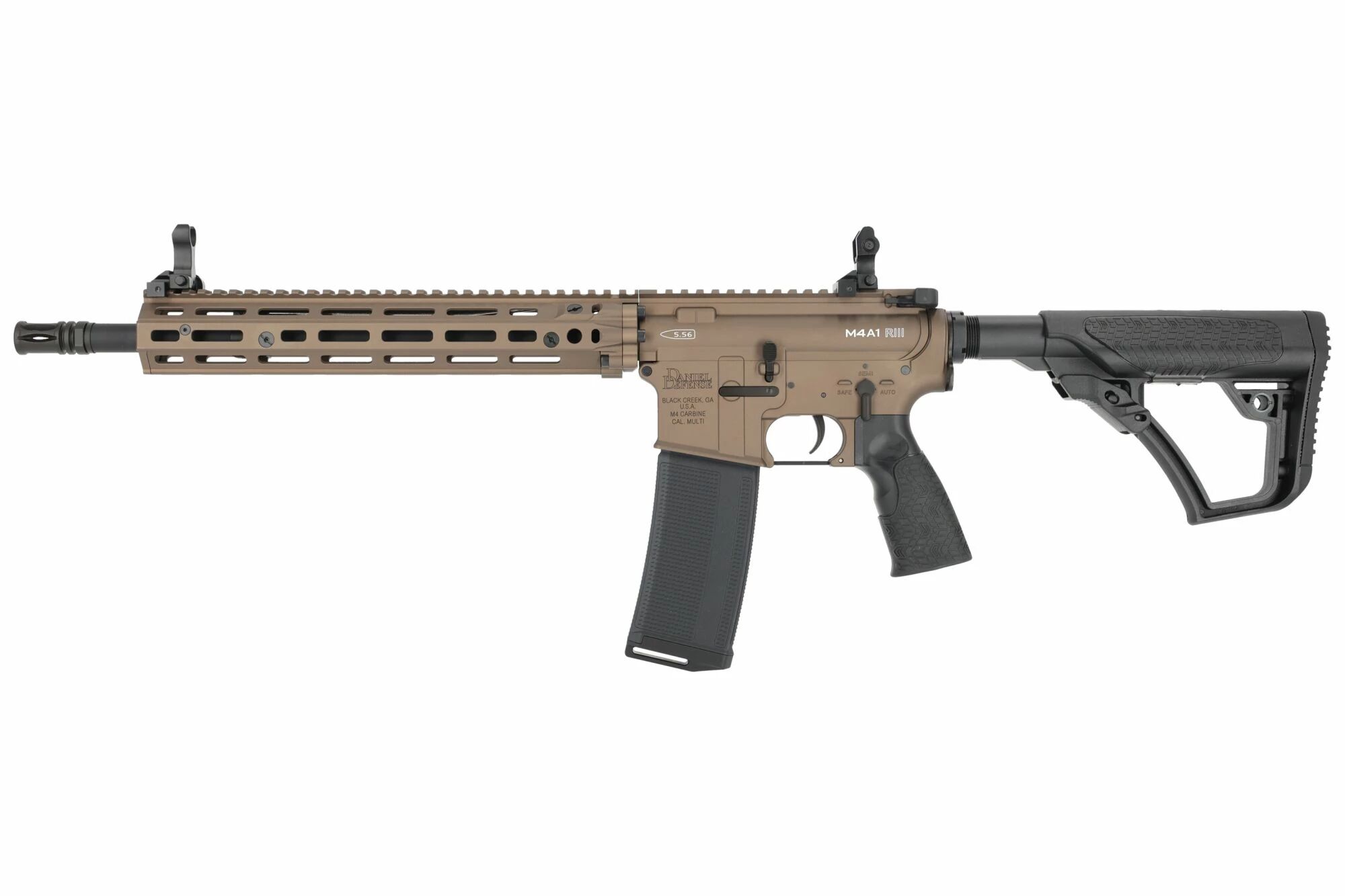
G&G CM16 Raider 2.0 Review (2026): Is It the Best Beginner AEG?
The Short Answer (2026)
The G&G CM16 Raider 2.0 is a polymer-bodied M4 AEG that runs roughly $150-180 for the standard version and $200-230 for the 2.0E, chronographs around 350-380 FPS on 0.20g BBs, and is still the single most recommended first airsoft gun in the hobby. It earns that recommendation not by winning any one category, but by being reliable enough that you spend your weekends playing instead of repairing, light enough at about 2.3kg that a full game day doesn’t wreck your arms, and built on the M4 platform so magazines, spare parts and troubleshooting advice are everywhere.
Posts
read more
Complete Airsoft Gear Guide: From Guns to Tactical Equipment

Why Gear Selection Matters
Choosing the right gear is essential to enjoying airsoft. Wrong choices not only waste money but can also affect your gameplay experience and safety. An unsuitable gun may leave you struggling on the field, while an ill-fitting vest may restrict your movement.