IPSC Production Optics Guide: Complete Red Dot Competition Shooting Tutorial
What is IPSC Production Optics?
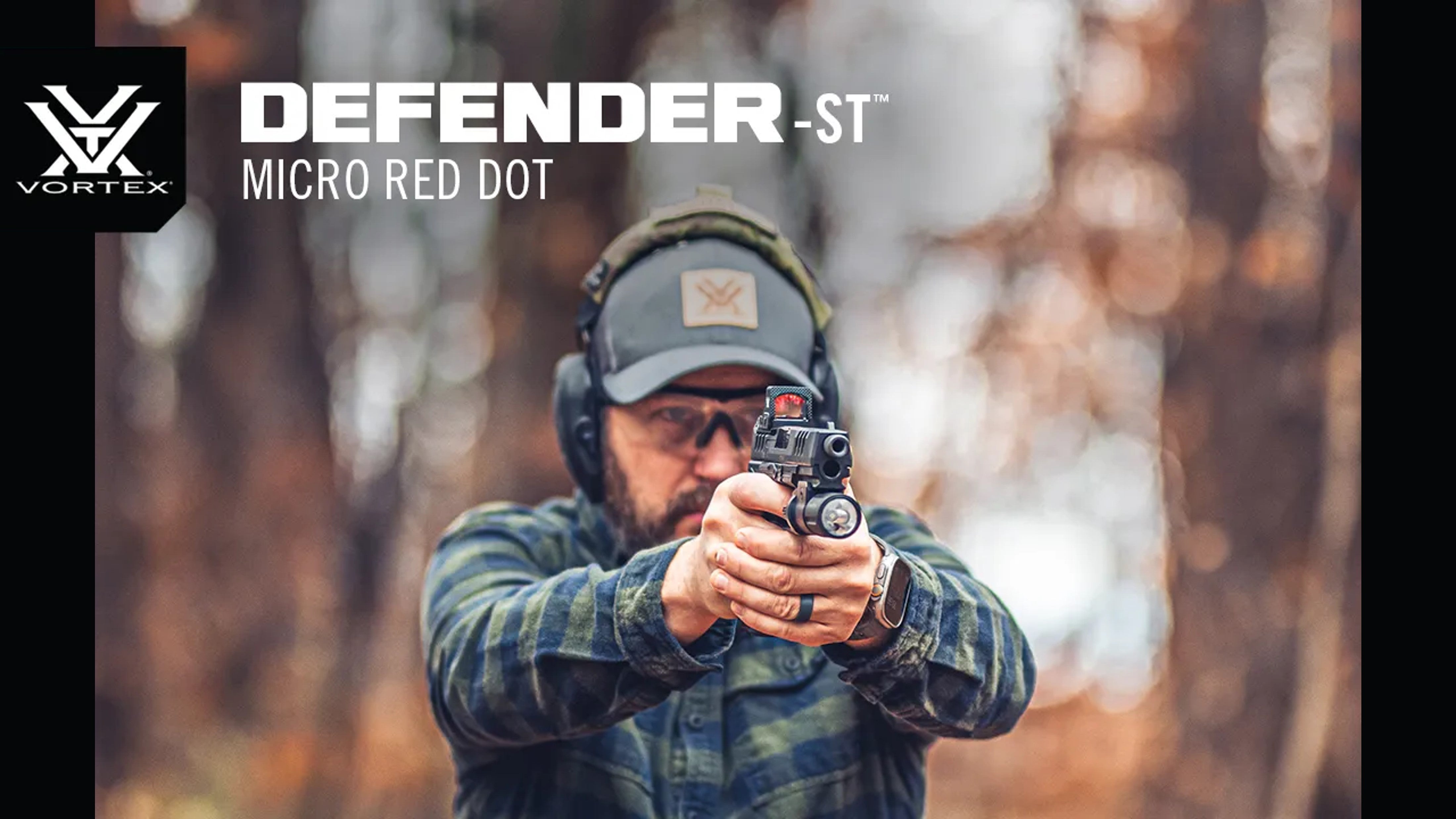
IPSC Production Optics (PO) is one of the most popular divisions in IPSC practical shooting. This division combines the handgun specifications of the Production division with the mandatory use of red dot sights, allowing shooters to enjoy the fast aiming advantages of modern optical sights while maintaining the reliability of factory pistols.
Since its introduction as a trial division in 2017 and official inclusion in IPSC rules in 2018, Production Optics participation has continued to grow. For shooters who want to experience red dot sights without entering the unlimited modification Open division, this is the ideal entry point.
💡 Further Reading: Want to learn about traditional Production? Check out our IPSC Practical Shooting Complete Training Guide
Key Differences Between Production Optics and Production
| Comparison | Production | Production Optics |
|---|---|---|
| Sight Type | Iron sights | Red dot (mandatory) |
| Magazine Capacity | 15 rounds | 15 rounds |
| Handgun Source | IPSC approved list | IPSC approved list |
| Modification Limits | Almost none | Slide milling for optics allowed |
| Trigger Pull | Minimum 1.36kg | Minimum 1.36kg |
Why Choose Production Optics?
1. Advantages of Red Dot Sights
Red dot sights have fundamentally changed pistol shooting. Compared to traditional iron sights:
Faster Target Acquisition
- Single focal plane: Eyes focus on target, red dot automatically aligns
- No need to align three points (front sight, rear sight, target)
- Especially suitable for dynamic shooting and multi-target transitions
Improved Accuracy
- More precise aiming point (2-3 MOA dot)
- Easier long-range shooting
- Reduced aiming errors
Age-Friendly
- Presbyopic shooters no longer need to focus on front sight
- Reduced vision correction requirements
- Extended shooting career
2. Reasonable Entry Barrier
Compared to Open division requiring expensive race guns and large optic frames, Production Optics:
- Uses factory handguns with added red dot sights
- Controllable modification costs (slide milling + red dot)
- Rich selection of holsters and accessories
- Can continue upgrading or switch divisions later
3. International Competition Opportunities
Production Optics is an official IPSC World Championship division with increasing participation. Practicing in this division allows you to:
- Compete in national and international matches
- Compete with shooters worldwide
- Build complete competition experience
Production Optics Rules Overview
Approved Handguns
Only handguns listed on the IPSC Production Division List can compete. Common approved handguns include:
- Glock 17, 34
- CZ Shadow 2
- SIG P320 series
- Beretta 92 series
- Walther Q5 Match
⚠️ Note: Single-Action Only pistols are expressly prohibited in Production Optics.
Optics Regulations
According to IPSC rules:
- Installation Position: Red dot must be mounted on upper rear of slide
- No Charging Handles: Sight or mount cannot have charging handles or protrusions
- No Magnification: Only 1x (non-magnifying) optical sights allowed
- Laser Prohibited: Laser sights not allowed
- Slide Milling: Slide milling for optic installation permitted (only allowed slide modification)
Trigger Regulations
- DA/SA Pistols: First shot double-action, subsequent single-action
- Hammer Pistols: Must be fully decocked at start signal
- Minimum Trigger Pull: 1.36kg (3 lbs) per shot
Magazine Regulations
- Maximum Capacity: 15 rounds (regardless of actual magazine capacity)
- Aftermarket Magazines: Permitted
Production Optics Handgun Selection
Choosing the right handgun is the first step into Production Optics. Here are the most popular choices in 2025:
1. CZ Shadow 2 (Most Recommended)
Why is the CZ Shadow 2 the Top Choice?
The CZ Shadow 2 is considered the best Production Optics choice by many professional shooters, including Open division world champions who choose it when not sponsored.
Pros:
- ✅ Steel frame, moderate weight, excellent recoil control
- ✅ Factory trigger already excellent
- ✅ Ergonomic design, comfortable grip
- ✅ Extremely accurate
- ✅ Competition proven, outstanding performance
Cons:
- ⚠️ Higher price
- ⚠️ Heavier, slight burden for extended carry
Recommended Reading: CZ Shadow 2 Complete Guide
2. SIG P320 X-Five Legion
Modular Competition Weapon
The SIG P320 X-Five Legion has become the most popular choice in USPSA Carry Optics (similar to IPSC Production Optics).
Pros:
- ✅ Tungsten-weighted grip, excellent recoil distribution
- ✅ Modular design, interchangeable configurations
- ✅ Factory competition trigger
- ✅ Optics-ready slide
- ✅ 5-inch barrel, high accuracy
Cons:
- ⚠️ Medium-high price
- ⚠️ Some models require IPSC approval confirmation
Recommended Reading: SIG P320 Complete Guide
3. Glock 34 Gen5 MOS
Budget-Friendly Choice
The Glock 34 Gen5 MOS is the best choice for budget-conscious shooters. Its MOS (Modular Optic System) makes red dot installation simple.
Pros:
- ✅ Reasonable price (~$700-720 USD)
- ✅ Largest aftermarket accessory ecosystem
- ✅ Long-term proven reliability
- ✅ MOS system for easy optic mounting
- ✅ 5.31-inch barrel, long sight radius
Cons:
- ⚠️ Trigger needs upgrade for competition level
- ⚠️ Grip angle requires adjustment period
Recommended Reading: Glock 17 Training Guide
4. Walther Q5 Match Steel Frame
German Engineering Choice
The Walther Q5 Match Steel Frame combines striker-fired reliability with steel frame stability.
Pros:
- ✅ Steel frame, excellent recoil control
- ✅ Outstanding factory trigger quality
- ✅ Fine craftsmanship and feel
- ✅ Optics-friendly installation
Cons:
- ⚠️ Higher price
- ⚠️ Fewer accessory options
Handgun Selection Recommendations
| Budget Level | Recommended Handgun | Price Range |
|---|---|---|
| Economy | Glock 34 Gen5 MOS | $700-800 |
| Mid-range | SIG P320 X-Five | $800-1000 |
| Advanced | CZ Shadow 2 OR | $1200-1500 |
| Premium | SIG P320 X-Five Legion | $1400-1600 |
Red Dot Sight Selection Guide
Choosing the right red dot sight is crucial for Production Optics performance.
Competition Red Dot Recommendations
1. Trijicon SRO (Most Recommended)
Designed specifically for competition shooting:
- Window Size: 26mm, largest on market
- Dot Size: 1 MOA, 2.5 MOA, 5 MOA options
- Pros: Extra-large window makes dot easier to find and track
- Price: ~$500-550
2. Trijicon RMR Type 2
Classic durable choice:
- Window Size: ~22mm
- Dot Size: 1 MOA, 3.25 MOA, 6.5 MOA
- Pros: Durability proven over 15+ years
- Price: ~$450-500
3. Holosun 507 Comp
Value choice:
- Window Size: Large competition window
- Dot Options: Multiple reticle choices
- Pros: Affordable price, feature-rich
- Price: ~$350-400
4. C-More RTS2
Open division and Production Optics crossover choice:
- Window Size: Large window design
- Pros: Extreme durability, shooters report 6+ years of use
- Price: ~$400-450
Dot Size Selection
| Dot Size | Use Case | Recommendation |
|---|---|---|
| 1-2 MOA | Precision long-range | Advanced shooters |
| 3 MOA | Balance speed and precision | Most recommended |
| 6+ MOA | Close-range fast shooting | Specific purposes |
💡 Suggestion: For IPSC Production Optics beginners, 3 MOA is the best balance. Precise enough for 25+ meter shooting, yet easy to track during rapid fire.
Red Dot Installation Options
Option 1: Factory optics-ready slide
- Glock MOS system
- SIG P320 optics-ready slides
- Pros: No additional machining needed
Option 2: Slide milling
- Professional gunsmith mills the slide
- Accommodates various red dot models
- Pros: More stable mounting, lower height
Red Dot Training Methods
Transitioning from iron sights to red dots requires rebuilding muscle memory. Here are key training methods:
1. Presentation Drill
This is the most important foundation for red dot training.
Why is it Important?
Iron sights allow some “cheating”—even with imperfect presentation angles, you can still see sights in peripheral vision and adjust. Red dots are different; if presentation is incorrect, the dot won’t appear in the window at all.
Training Method: Press-Out Drill
- Pistol at low ready position in front of chest
- Eyes focus on target
- Push pistol forward while keeping it level
- Red dot should naturally appear in window
- If you can’t find the dot, retract and restart
Training Points:
- Focus on target, don’t “search” for the dot
- Keep pistol level when pushing out, no up-down movement
- Muzzle slightly higher (compared to iron sights)
- Practice repeatedly until dot appears naturally
2. Draw Training
Apply Press-Out technique to draw motion:
Training Steps with AirsoftShotTimer:
- Set random delay (1-4 seconds)
- Draw upon signal
- Goal: Red dot appears immediately
- Record first shot time
Target Times (Production Optics):
| Level | Draw to First Shot | Description |
|---|---|---|
| Beginner | 2.0-2.5 sec | Focus on correct presentation |
| Intermediate | 1.5-2.0 sec | Start increasing speed |
| Advanced | 1.0-1.5 sec | Competition level |
| Competition | < 1.0 sec | Elite level |
3. Maintain Target Focus
Core principle of red dot shooting: Always focus on the target.
Difference from Iron Sights:
- Iron sights: Final focus on front sight
- Red dot: Focus on target throughout
Training Tips:
- Red dot “overlays” on your target vision
- Don’t “look at” the dot, let it “appear” where you’re looking
- Dot doesn’t need to be centered in window—fire when it’s on target
4. Brightness Setting
Many beginners set the dot too bright—this is wrong.
Correct Setting Principles:
- Indoor: Lower brightness settings
- Outdoor: Adjust to ambient light
- Principle: Dot clearly visible but doesn’t distract from target
Wrong Brightness Settings Cause:
- Eyes drawn to dot instead of target
- Dot obscures target in low light
- Visual fatigue
5. Red Dot Zeroing
Recommended Zero Distance: 25 yards (~23 meters)
Why 25 yards?
- Most common shooting distance in IPSC matches
- Minimal point-of-impact shift from 5 to 50 yards with 25-yard zero
- Gold standard for experienced shooters
Zeroing Steps:
- Confirm basic horizontal and vertical at 10 yards
- Fine-tune at 25 yards
- Verify at 5 and 15 yards
Actual Offset (25-yard zero):
- 5 yards: ~0.5 inch low
- 10 yards: ~0.4 inch low
- 15 yards: ~0.2 inch low
- 25 yards: Zero point
- 50 yards: ~1 inch high
Production Optics Training Plan
Weeks 1-4: Building Red Dot Foundation
Train 3 times per week, 45 minutes each
Dry Fire Training (15 minutes daily):
- Press-Out practice: 50 reps
- Draw presentation: 30 reps
- Target focus practice: 20 reps
Live Fire Training:
- Fixed point shooting (7 meters): 50 rounds
- Draw shooting: 20 times
- Record each draw time
Key Goals:
- See red dot immediately on every draw
- Establish stable presentation habits
- Adapt to red dot aiming
Weeks 5-12: Skill Enhancement
Train 4 times per week, 60 minutes each
Training Content:
- Draw training: 50 reps
- Bill Drill (6-shot strings): 20 sets
- Magazine reload training: 30 times
- Multi-target transitions: 30 sets
- Moving shooting: 50 rounds
Target Times:
- Draw to first shot: 1.5-2.0 seconds
- Bill Drill (6 shots): Under 4.0 seconds
- Magazine reload: Under 2.5 seconds
Weeks 13-24: Competition Preparation
Train 4-5 times per week, 75 minutes each
Training Content:
- Comprehensive scenario training
- El Presidente: 15 sets
- Stress training
- Match simulation
- Cover utilization
Target Times:
- Draw to first shot: 1.0-1.5 seconds
- Bill Drill: Under 3.0 seconds
- El Presidente: Under 12 seconds
Training Production Optics with AirsoftShotTimer
Red Dot Specific Training Drills
Drill 1: Red Dot Acquisition Training
Purpose: Train ability to quickly find the red dot
Setup:
- AirsoftShotTimer with random delay
- Pistol at low ready
- Raise and aim upon signal
- Fire immediately upon seeing dot
Timing:
- Record time from signal to first shot
- Goal: Raise to fire < 1.0 second
Drill 2: Red Dot Tracking Training
Purpose: Train tracking red dot during continuous fire
Setup:
- Distance: 7 meters
- Fire 6 consecutive shots
- Record split times
Training Points:
- Observe dot returning to target after each shot
- Don’t rush shots, confirm dot position
- Gradually reduce split times
Target Split Times:
- Beginner: 0.30-0.40 sec
- Intermediate: 0.25-0.30 sec
- Advanced: 0.20-0.25 sec
Drill 3: Multi-Target Red Dot Transitions
Purpose: Train rapid transitions between targets
Setup:
- 3 targets, 1-2 meter spacing
- 2 shots per target
- Record total time
Technique Points:
- Eyes move to next target first
- Red dot follows line of sight
- Fire immediately when dot reaches target
AirsoftShotTimer Application:
- Record completion time
- Analyze each transition interval
- Identify transitions needing improvement
Frequently Asked Questions (FAQ)
Q1: Does the red dot block the target?
A: Not with proper use.
When focusing on the target, the red dot “overlays” on your target vision. A 3 MOA dot only covers about 0.75 inches at 25 yards, not blocking the entire target.
Q2: Should iron sights be kept?
A: Recommended as backup.
Most competition red dots allow backup iron sights mounted in front or on sides. If the red dot fails, you can switch quickly. However, don’t “cheat” using iron sights to find the dot during practice.
Q3: How does the red dot perform in rain or bright light?
A: Modern red dots perform excellently.
- Rain: Water drops may affect view, but dot remains visible
- Bright Light: Increase brightness for clear visibility
- Backlight: Red dot easier to aim at silhouette targets than iron sights
Q4: How often to replace batteries?
A: Typically 1-3 years depending on brand.
- Trijicon RMR/SRO: ~3-4 years
- Holosun: Solar assisted, longer life
- Suggestion: Replace batteries on fixed annual date
Q5: What’s the difference between Production Optics and Production Optics Light?
A: Mainly weight limit.
- Production Optics Light: Pistol (with optic, empty magazine) ≤ 1000 grams
- Production Optics: No weight limit
Production Optics Light is designed primarily for polymer-framed pistols.
Q6: How long to transition from iron sights to red dot?
A: Usually 4-8 weeks to adapt basic operation, 3-6 months to reach iron sight proficiency level.
Key factors:
- Continuous dry fire practice
- Don’t cheat using iron sights
- Focus on target, not dot
Conclusion
IPSC Production Optics is the perfect division combining modern technology with traditional competition. The quick aiming advantage of red dot sights makes shooting more intuitive and precise. For shooters wanting to improve competition performance, this is one of the most worthwhile upgrades.
Steps to Enter Production Optics
- Choose the Right Handgun: CZ Shadow 2, SIG P320, Glock 34 are excellent choices
- Install Red Dot: Trijicon SRO, RMR, Holosun 507 Comp
- Retrain Presentation: Build correct red dot operation habits
- Use AirsoftShotTimer to Record Progress
- Compete: Test training results in actual matches
Advantages with AirsoftShotTimer
Using AirsoftShotTimer for Production Optics training:
✅ Precisely record draw-to-first-shot times ✅ Analyze red dot acquisition efficiency ✅ Track split time improvements ✅ Record multi-target transition performance ✅ Build quantifiable training data
Start your Production Optics journey and let the red dot become your competitive advantage!
Good luck with training and winning competitions!
Related Article Recommendations
IPSC Training Series
- IPSC Practical Shooting Complete Training Guide - Traditional Production training
- IDPA Defensive Shooting Complete Training Guide - Defensive shooting training
Handgun Selection
- CZ Shadow 2 Complete Guide - Production Optics top choice
- SIG P320 Complete Guide - Modular competition gun
- Glock 17 Training Guide - Budget-friendly choice
- Glock 19 vs Glock 17 Complete Comparison - Gun selection comparison
Fundamental Training
- Dry Fire Training Complete Guide - Foundation for red dot presentation
- Shot Timer Complete Guide - Timed training tools