IPSC Match Procedure Guide: Complete Guide from Registration to Finishing Your First Competition
Introduction: Your First IPSC Match
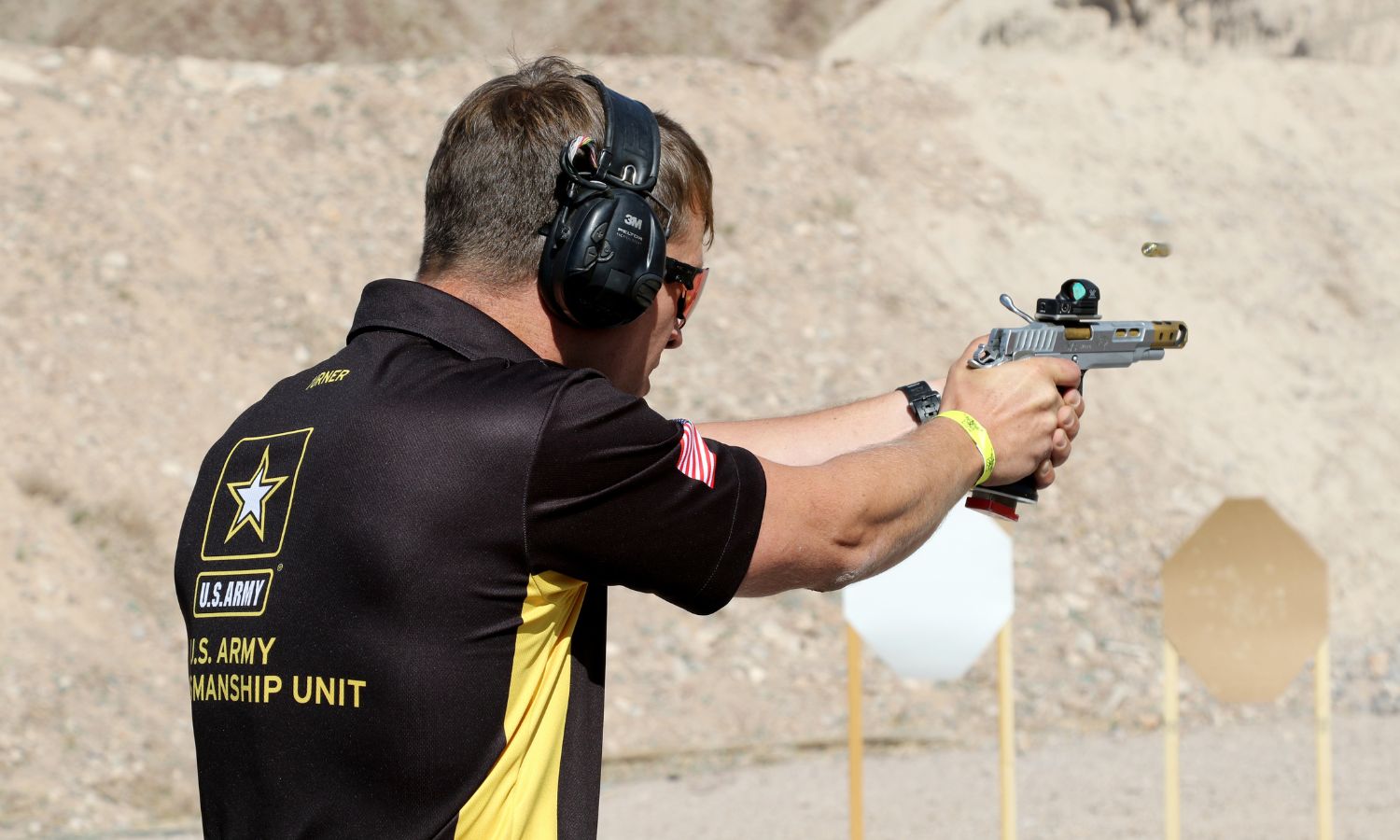
Stepping onto the IPSC range for the first time can be nerve-wracking. Facing unfamiliar procedures, strict safety protocols, and experienced shooters all around you, many beginners feel overwhelmed. But remember: every Grand Master once started as a complete beginner.
This guide will walk you through every aspect of an IPSC match—from pre-match preparation, check-in procedures, stage walkthroughs, to shooting execution and scoring. Whether you’re preparing for your first competition or looking to better understand match procedures, this guide will help you be fully prepared.
Looking for basic IPSC training? Check out our Complete IPSC Training Guide first.
Pre-Match Preparation: One Week to One Day Before
Confirm Eligibility and Registration
Before participating in an IPSC match, confirm the following:
Basic Requirements
- Completed IPSC Safety Course (Black Badge / ACC)
- Valid IPSC membership
- Legal firearms license for your jurisdiction
Registration Process
- Complete online registration on official website or designated platform
- Select your division (Production, Production Optics, Standard, Open, etc.)
- Pay registration fee
- Confirm your squad and check-in time
Equipment Checklist
The day before the match, use this checklist to verify all equipment:
Firearm and Ammunition
- Competition handgun (cleaned and maintained)
- Backup firearm (if available)
- 4-6 magazines (per division rules)
- 200-300 rounds of ammunition (bring 50% more than expected)
- Ammunition must meet division power factor requirements (Minor/Major)
- Cleaning kit and lubricant
Belt System
- Competition belt (double-layer recommended)
- Holster (division-compliant competition holster)
- 3-4 magazine pouches
- Verify all mounting hardware is secure
Personal Protection
- Eye protection (required, bring backup)
- Ear protection (electronic preferred)
- Knee and elbow pads (for some stages)
Other Essentials
- IPSC membership card / match confirmation
- Rulebook (digital version acceptable)
- Shot timer (for warm-up)
- Pen and notepad
- Sunscreen / rain gear (weather dependent)
- Water and snacks
- Portable charger
Ammunition and Power Factor
IPSC uses Power Factor to classify ammunition levels:
Calculation Formula
Power Factor = Bullet Weight (grains) × Velocity (fps) ÷ 1000
Division Requirements
| Division | Minimum PF | Notes |
|---|---|---|
| Minor | 125 | Most 9mm loads achieve this |
| Major | 160 | .40 S&W or special 9mm loads |
Note: Matches conduct chronograph tests. Ammunition failing power factor requirements will affect scoring.
Match Day: Check-in and Preparation
Arrival and Check-in
Arrive 30-60 minutes early to give yourself adequate time:
-
Registration Desk Check-in
- Confirm name and squad assignment
- Receive competitor number sticker (place on visible part of holster)
- Understand the day’s schedule
-
Equipment Check
- Firearm inspection and function check
- Holster position and draw test
- Magazine capacity verification
- Optics and accessories compliance
-
Chronograph Test
- Usually random sampling or full testing
- Prepare 8-10 rounds of your competition ammunition
- Test the actual ammunition you’ll use
Warm-up and Preparation
Between check-in and match start:
Physical Warm-up
- Arm and shoulder stretches
- Wrist rotations
- Simple squats and lateral movements
Dry Fire Practice
- Practice draws in the safety area
- Verify holster retention is working properly
- Practice magazine changes
Mental Preparation
- Deep breathing, stay relaxed
- Review your training rhythm
- Remind yourself: safety first, speed second
Stage Procedure: From Briefing to Completion
Stage Briefing
Before each stage, the Range Officer (RO) will brief the entire squad:
Briefing Content Includes
- Stage name and design description
- Round count
- Start position and stance
- Shooting procedure (if special requirements exist)
- Scoring target and penalty target locations
Tips for Beginners
- Listen carefully, don’t get distracted
- Ask if you don’t understand—ROs will patiently answer
- Note key information (target count, special rules)
Stage Walkthrough
After the briefing, competitors can physically walk through the stage:
Walkthrough Time
- Usually 3-5 minutes
- Same duration for all competitors to ensure fairness
Walkthrough Focus Points
- Plan your route: Decide movement sequence and direction
- Identify targets: Memorize each target’s position and distance
- Find shooting positions: Decide where to stop and shoot
- Calculate round count: Confirm how many shots at each position
- Note obstacles: Ground conditions, cover positions
Walkthrough Techniques
- Actually walk your planned route with your feet
- “Simulate” shooting with your hands
- Visualize your first move when the timer beeps
- Discuss with teammates to get different perspectives
Beginner’s Tip: Don’t chase the fastest route for your first match. Choose the safest, most stable way to complete the stage.
Shooting Execution
Range Commands
IPSC uses uniform English commands worldwide. You must memorize them:
| Command | Meaning | Your Action |
|---|---|---|
| “Load and Make Ready” | Prepare to start | Load, chamber, holster, assume start position |
| “Are You Ready?” | Confirm ready | No response needed if ready, say “Not Ready” if not |
| “Stand By” | About to start | Focus and wait for signal |
| (Beep) | Start shooting | Execute your plan |
| “Stop” | Stop | Immediately cease all action, finger off trigger |
| “If You Are Finished, Unload and Show Clear” | Clear weapon | Remove magazine, rack slide, show empty chamber |
| “If Clear, Hammer Down, Holster” | Confirm clear | Dry fire, holster |
| “Range Is Clear” | Stage complete | Relax, wait for scoring |
Shooting Process Notes
Safety First
- 180 Rule: Muzzle must never point past your body’s sides toward the rear
- Finger Discipline: Finger off trigger when moving
- Violation = DQ: Match disqualification
Execution Tips
- Execute according to your walkthrough plan
- Maintain steady breathing
- Confirm target hits before moving
- Don’t panic because of others’ speed
Scoring System: Hit Factor Explained
Target Zones and Points
IPSC paper targets have different scoring zones:
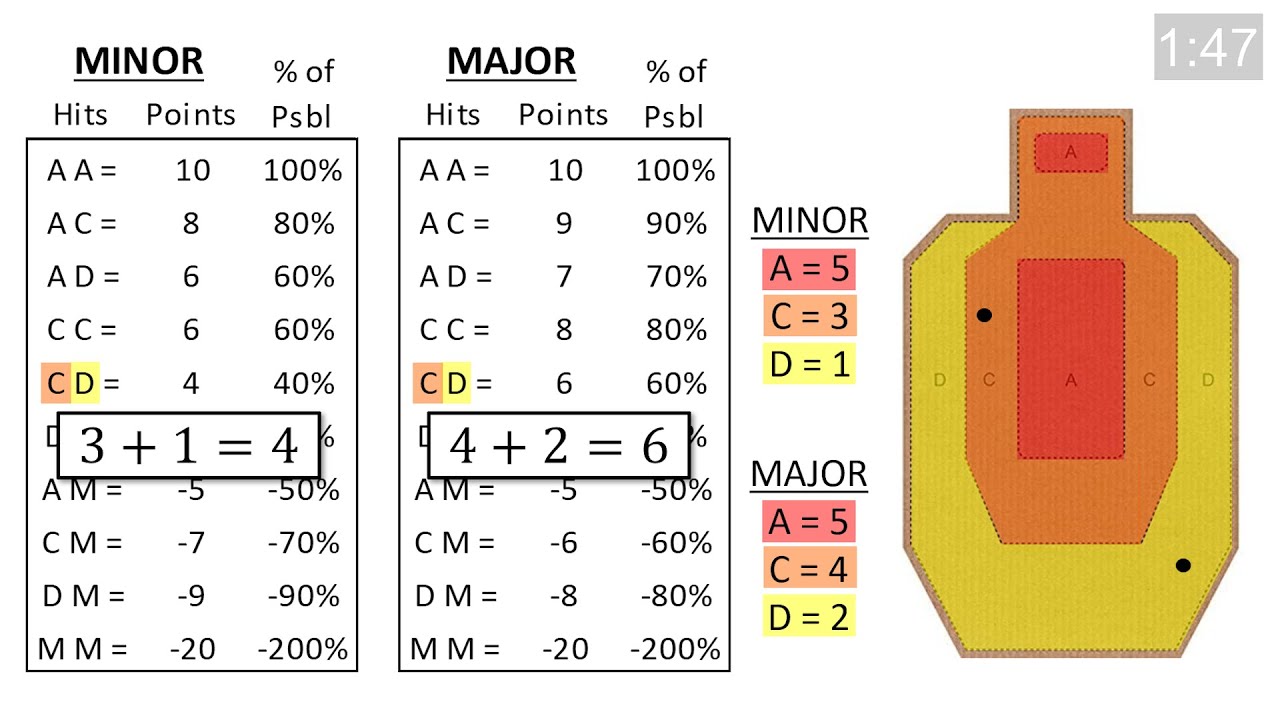
| Zone | Name | Minor Points | Major Points |
|---|---|---|---|
| A | Alpha | 5 pts | 5 pts |
| C | Charlie | 3 pts | 4 pts |
| D | Delta | 1 pt | 2 pts |
| M | Mike (Miss) | -10 pts | -10 pts |
| NS | No Shoot | -10 pts | -10 pts |
Hit Factor Calculation
IPSC uses Hit Factor as the primary scoring method:
Hit Factor = Total Points ÷ Time
Calculation Example
- 12 Alphas (12 × 5 = 60 points)
- 6 Charlies (6 × 3 = 18 points)
- 1 Mike (-10 points)
- Total Score: 60 + 18 - 10 = 68 points
- Time: 15.32 seconds
- Hit Factor = 68 ÷ 15.32 = 4.44
Ranking Method
- Highest Hit Factor on stage = 100%
- Other shooters calculated as percentage of winner
- All stage scores combined determine final placement
Balancing Speed and Accuracy
Hit Factor scoring means you need to find the balance between speed and accuracy:
All Alpha but Slow
- High points but long time
- Hit Factor may be low
Maximum Speed but Poor Hits
- Short time but many Charlie/Delta/Mike
- Penalties offset speed advantage
Best Strategy
- Consistent A-C zone hits
- Acceptable speed
- Zero Mikes and No Shoots
Beginner’s Goal: First aim for “zero Mikes,” then gradually increase speed.
Match Etiquette and Teamwork
Being a Good Squad Member
IPSC matches have no paid staff—everything runs on mutual assistance:
Post-Shooting Responsibilities
- Patch targets (after RO has scored)
- Reset steel targets (repaint or verify reset)
- Help collect brass (if range requires)
Observation and Learning
- Watch other shooters’ movement strategies
- Note their techniques and mistakes
- But don’t over-discuss and disturb others’ preparation
Interacting with ROs
Respect RO Decisions
- RO scoring and rulings are final
- If in doubt, ask politely
- Formal protests have specific procedures
Tell ROs You’re New
- Most ROs will be more patient
- They’ll give extra reminders on important matters
- Don’t feel embarrassed
Common Beginner Mistakes and How to Avoid Them
Mistake 1: Chasing Speed
Problem: Seeing other shooters finish quickly and trying to imitate them Result: Many misses, safety violations Solution: Remember “slow is smooth, smooth is fast”—stable execution beats fast and messy
Mistake 2: Inadequate Walkthrough
Problem: Only looking during walkthrough time, not actually walking Result: Forgetting route during match, missing targets Solution: Actually walk your route with your feet, verbally rehearse each action
Mistake 3: Ignoring Magazine Management
Problem: Unsure of remaining rounds in magazine Result: Reloading at wrong time or running dry Solution: Calculate shot count at each position during walkthrough
Mistake 4: Too Nervous
Problem: Excessive anxiety on match day Result: Shaky hands, slow reactions, more mistakes Solution:
- Deep breaths, remind yourself this is a learning opportunity
- First match goal is “safe completion”
- Enjoy the process, results aren’t most important
Mistake 5: Not Bringing Enough Supplies
Problem: Only bringing exactly what’s needed Result: Can’t handle equipment failures, run out of ammunition Solution:
- Bring 50% more ammunition
- Bring backup glasses and ear protection
- Basic tools and spare parts
Using AirsoftShotTimer to Prepare for Competition
Pre-Match Training Simulation
Use AirsoftShotTimer to simulate match scenarios at home:
Draw Reaction Training
- Set random delay (1-4 seconds)
- Simulate match start position
- Draw and shoot on signal
- Record first shot time
PAR Time Pressure Training
- Set target completion time
- Must complete specific actions within time limit
- Gradually reduce time to increase pressure
Match Day Warm-up
Quick Reaction Check
- Warm up with timer in safety area
- Verify body and equipment are ready
- Establish match rhythm
Post-Match Analysis
Record Each Stage Performance
- Use phone to record stage times
- Analyze which skills need improvement
- Set improvement goals for next match
Post-Match: Learning and Growth
Performance Review
After the match ends:
-
Get Your Score Sheet
- Analyze each stage performance
- Identify lowest-scoring stages
- Confirm scoring issues (time? accuracy? penalties?)
-
Network with Experienced Shooters
- Ask about their movement strategies
- Inquire about technical questions
- Build shooting community connections
-
Set Improvement Goals
- Arrange training for weak areas
- Set specific goals for next match
Continuous Improvement
Regular Competition
- Participate in at least one match per month
- Competition experience can’t be replaced by practice
- Pressure reveals true weaknesses
Diversified Training
- Use AirsoftShotTimer for daily training
- Mix dry fire and live fire practice
- Compete at various difficulty levels
Conclusion
IPSC competition is a comprehensive test of technique, strategy, and mental fortitude. For beginners, the first match goal isn’t winning, but:
- Safe Completion: Zero DQ, follow all safety rules
- Full Experience: Understand match flow and atmosphere
- Enjoy the Process: Feel the thrill of competitive shooting
- Learn and Grow: Find areas for improvement
Remember, every world-class shooter started with their first match. Use AirsoftShotTimer for continuous training, regularly compete to accumulate experience, and you’ll find your progress faster than you imagined.
Good luck with your first IPSC match!
Related Articles
IPSC Training Series
- Complete IPSC Training Guide - Fundamental technique training
- IPSC Production Optics Guide - Red dot division
- Magazine Reload Complete Guide - Reload technique training
Handgun Selection
- CZ Shadow 2 Complete Guide - Popular competition pistol
- SIG P320 Complete Guide - Modular competition gun
- Glock 17 Training Guide - Classic beginner choice
- Walther PDP Complete Guide - Modern striker-fired pistol
Fundamental Training
- Dry Fire Training Complete Guide - Home training methods
- Shot Timer Complete Guide - Timing training tools